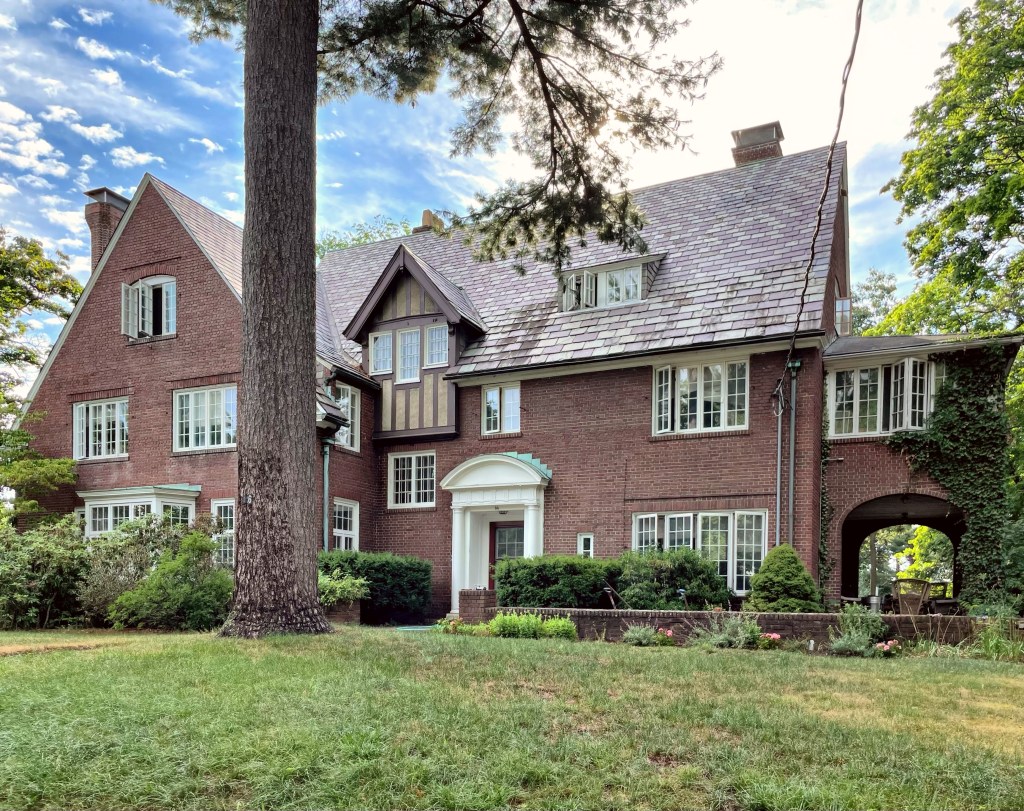
LeClear House // c.1915

Waban in the late 19th and early 20th centuries was a hotbed for architect-designed houses as their own residences. This Colonial Revival/Tudor Revival style estate was designed by Gifford LeClear (1874–1931), a prominent architect in the Boston area. Gifford LeClear was born in Rutherford, New Jersey to Thomas and Cornelia (King) LeClear. He was educated in the private schools in Boston before entering Harvard University. He graduated with a Bachelor of Arts degree in 1895 and Master of Arts in 1896. He then worked for a year in the engineering department of the West End Street Railway before forming his partnership with Densmore in 1897. The partnership of Densmore & LeClear was formed in April 1897, practicing as mechanical and electrical engineers. One of the firm’s major projects in this role was the design of the building systems for the new campus of the Harvard Medical School in Boston.
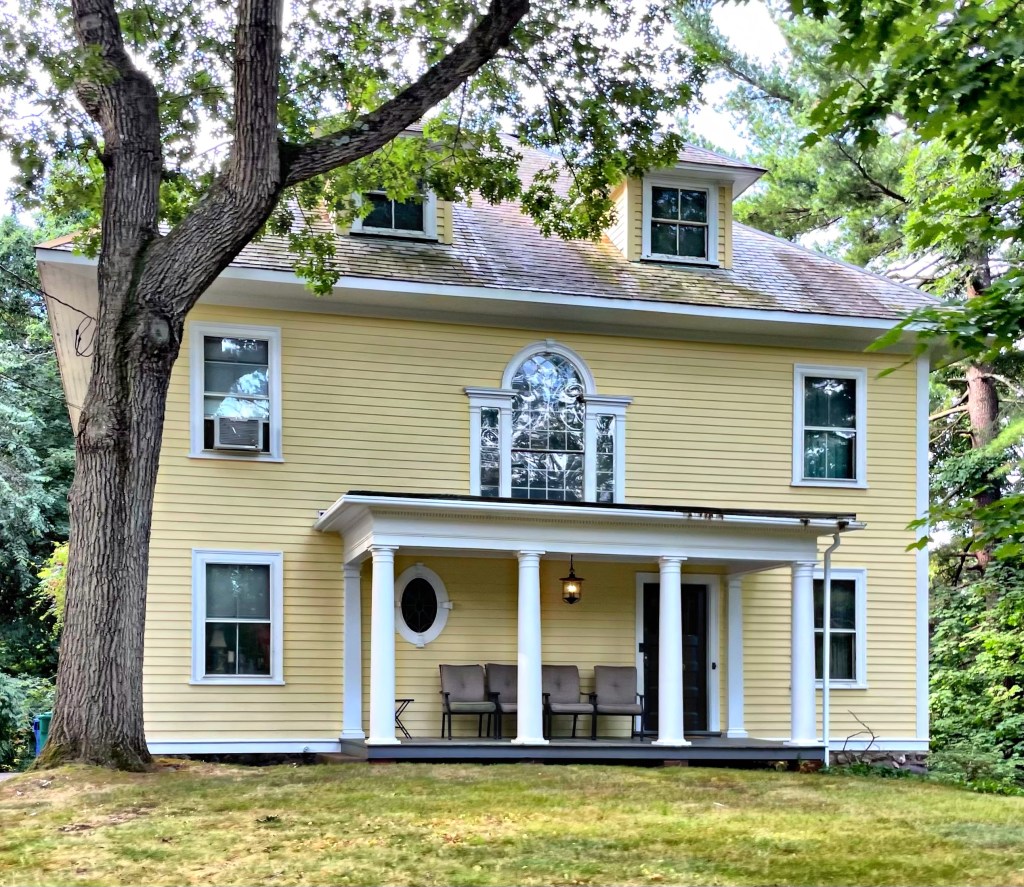
Eva Southwick House // 1898

Okay, there is just something about this house that is so intriguing and unique and stands out among all the other (thousands) of Colonial Revival style houses I have seen. I just can’t quite put my finger on it! This late 19th century beauty was built in 1898 for Eva Bailey and Francis Southwick eight years after their marriage and after the birth of their children. It is unclear who the young family hired as an architect to design the home, but they definitely went with a loose adaptation of the Colonial Revival style in an American Foursquare form. The house has a large Palladian window and a minimal front portico supported by Doric columns.

Ernest Zeiss House // 1897

Another eclectic house in Waban is this beauty, a blending of Queen Anne and Colonial Revival styles under an impressive gambrel roof. The home was occupied by Ernest L. Zeiss, a salesman. Waban, which was once a neighborhood within the reach of the middle-class, has since become one of the most desirable neighborhoods in one of the most exclusive towns in the Boston metro. It is safe to say an ordinary 9-5 salesman would not be able to afford a house like this today!

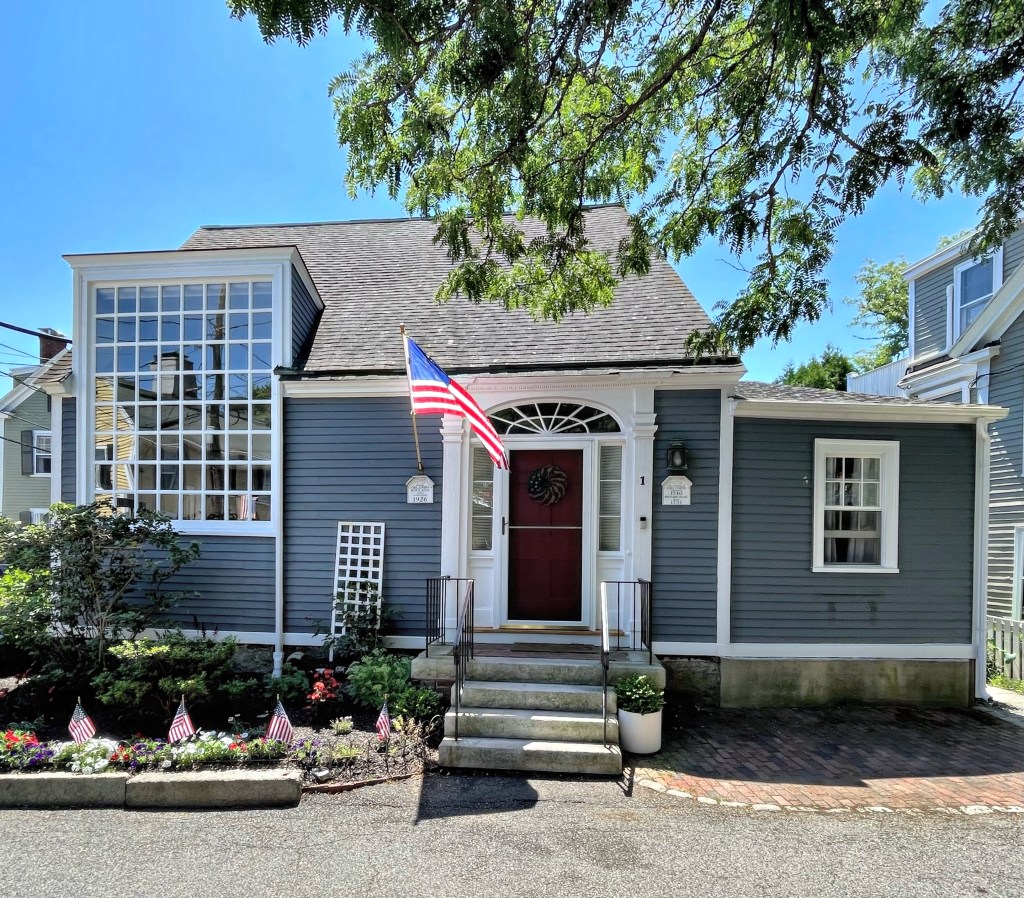
Orlando Rouland Art Studio // 1926

Born in Illinois, Orlando Rouland (1873-1945) became a painter of rural landscapes, scenes of New York City, and portraits of actors, inventors and Presidents. He lived in New York and resided in Marblehead in summers, taking advantage of the natural scenery and rustic homes for his landscapes. In Marblehead, Rouland formed the Marblehead Arts Association and was President of the North American Artists Group. He built this small building in 1926 as his studio while he spent time in the seaside town, with the large window to provide natural light into the interior. The Colonial Revival style studio has been converted to a residence.

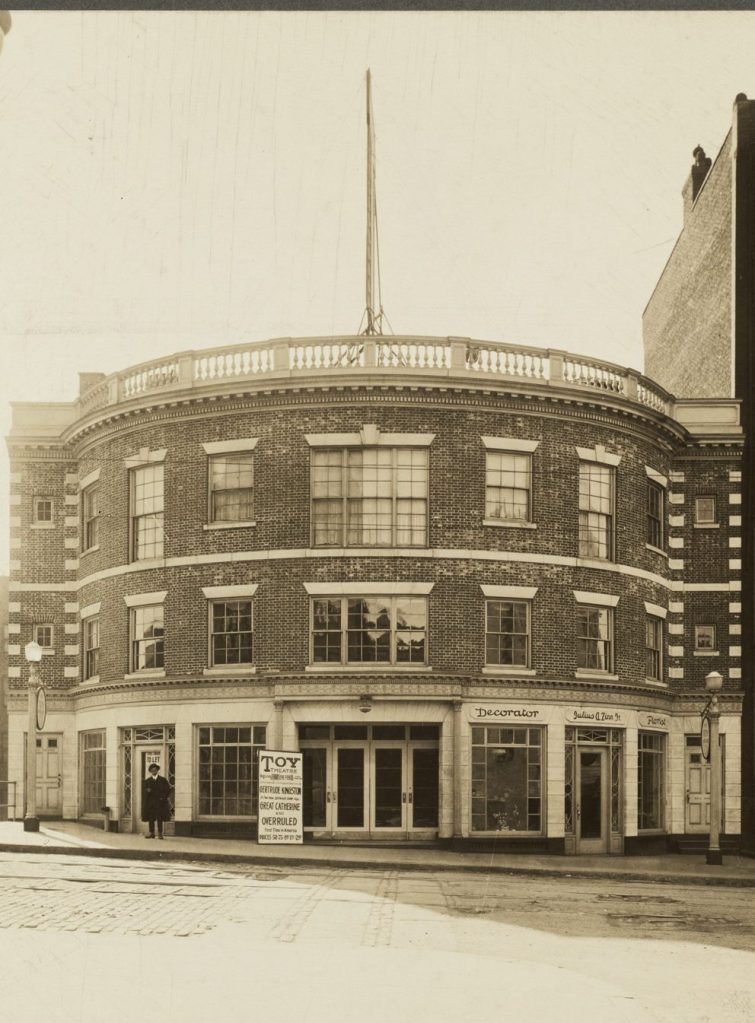
Toy Theatre // 1914-1922

When the Toy Theatre on Lime Street in Beacon Hill (last post) was formed in the early 20th century, the members of the small (but growing) theatre group of well-connected artists and actors had their sights on something with permanence. By 1914, the group had funding and acquired land on Dartmouth street, a block away from Copley Square, and ground was broken to build a large new theatre. The fashionable Colonial Revival style building featured a large rounded bay and was constructed of brick and limestone. The theatre group could not support the building, and it was rebranded as the Copley Theatre within a couple years. Continuing the bad luck, the City of Boston decided to extend Stuart Street by 1921, and this building was along the proposed route. The street was extended and a new “Copley Theatre” was built on Stuart Street, a stone’s throw from this building. And so goes the short-lived history of the Toy Theatre.

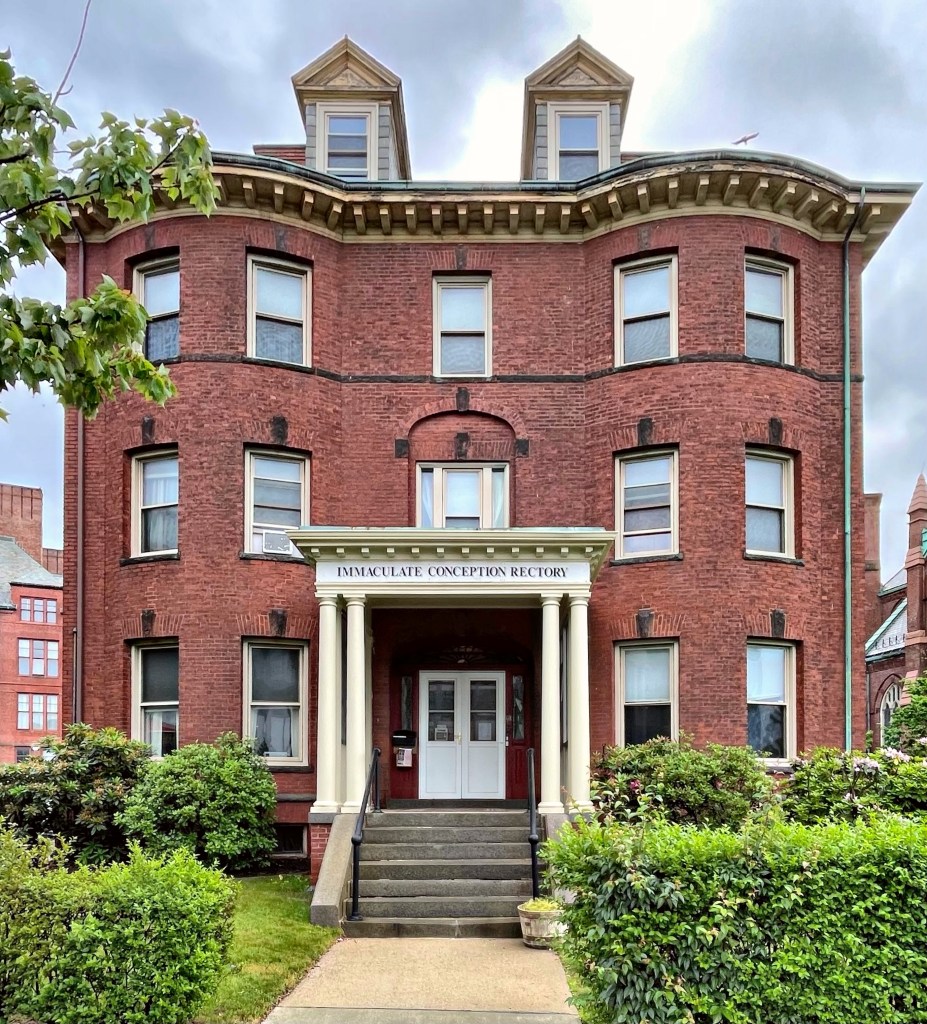
Immaculate Conception Rectory // 1904

Next door to the Immaculate Conception Roman Catholic Church (last post) in Everett, you will find the church rectory, which completes the city block. Though very different in architectural style, the building is compatible with its more grand neighbor with the use of materials and setbacks. The rectory was built in 1904 in the Colonial Revival style, which was very popular at the time in New England. The three-story, hip-roofed building has bowed bays that flank a single-story porch with Doric columns that shelters a central entrance with fanlight and sidelights. Other Colonial-inspired details include the tripartite window set into the recessed arch above the porch, modillion cornices and splayed brick lintels with keystones. It is not clear who designed the rectory, but they did a great job at it! Rectories served as the residence of the priest of the church. Not bad digs if you ask me!

St. Stephen’s Episcopal Church // 1914

When Ridgefield, Connecticut was settled in 1708 by Europeans, there was only one Episcopal Church in the state, and the general assembly allowed dissenters their own churches so long as they continued to pay taxes to support the Congregational Church. Ridgefield’s first Episcopal church, St. Stephen’s was built in 1740 on land granted by the Proprietors who founded the town and laid out lots along the towns new Main Street. In 1776, St. Stephen’s minister, Epenetus Townsend, a Tory (loyal to the British), was ordered to leave town with his wife and five children when the Revolution picked up steam. He was appointed chaplain to a British regiment and in 1779, the battalion was ordered to Nova Scotia. En route by vessel, a severe storm arose and all passengers were lost. The church was taken over by the commissary department of the American Army. During the Battle of Ridgefield, British troops set it on fire as a statement to the townspeople. The church was replaced two more times until 1914 when the present building was constructed. The Colonial Revival church is absolutely stunning and built from plans by (unknown to me) architect Walter Kerr Rainsford. The rubblestone church is one of the most pleasing designs I have seen in Connecticut!

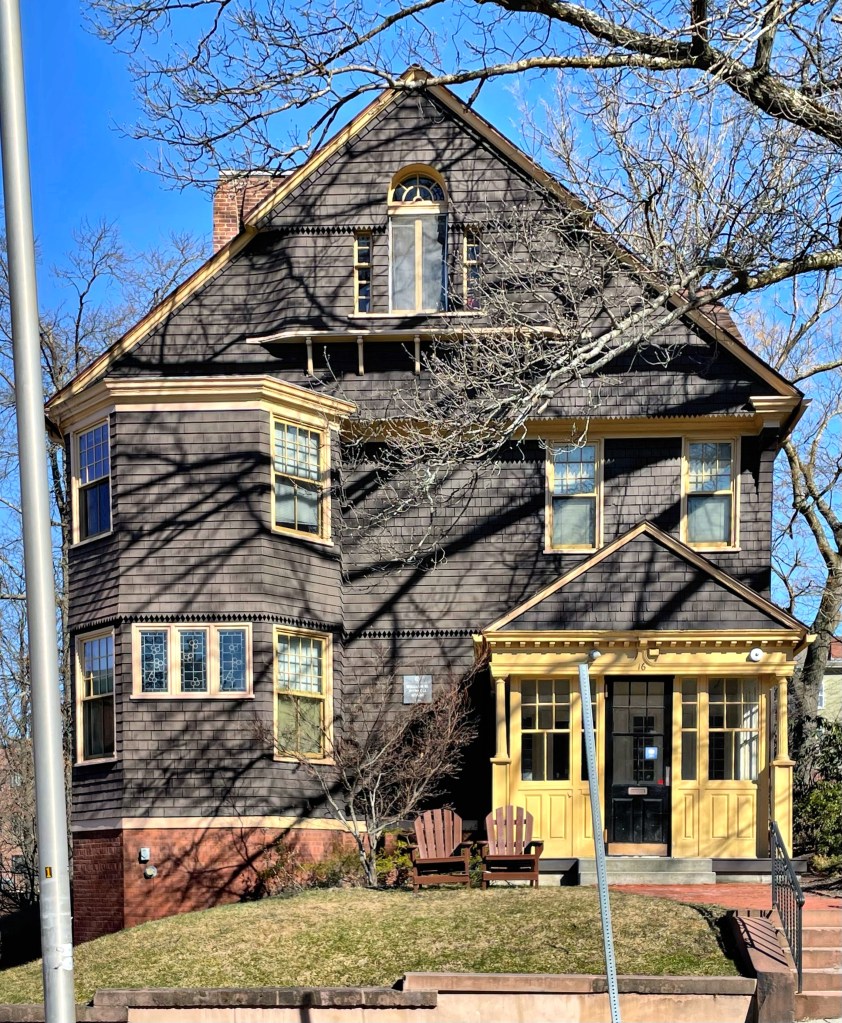
Dunnell House // 1884

William Wanton Dunnell (1850-1933) was born in Pawtucket, Rhode Island and was educated in Rhode Island schools. He eventually helped run his family’s cotton goods business, which grew over the next decades. The Dunnell Finishing Works factory was a success in Apponaug (Warwick) Rhode Island, and he had over 500 employees turning out over 1,000,000 yards of printed cloth a week! Before all this, William had this amazing house built in College Hill, Providence for his family. The local architectural firm of Stone, Carpenter & Willson was hired and blended Shingle, Queen Anne, and Colonial Revival styles elegantly under one roof. I am particularly fond of the sawtooth shingles, Palladian motif windows in the gable, and undulating facade. The house is owned today by RISD.

Emmel Building // 1896

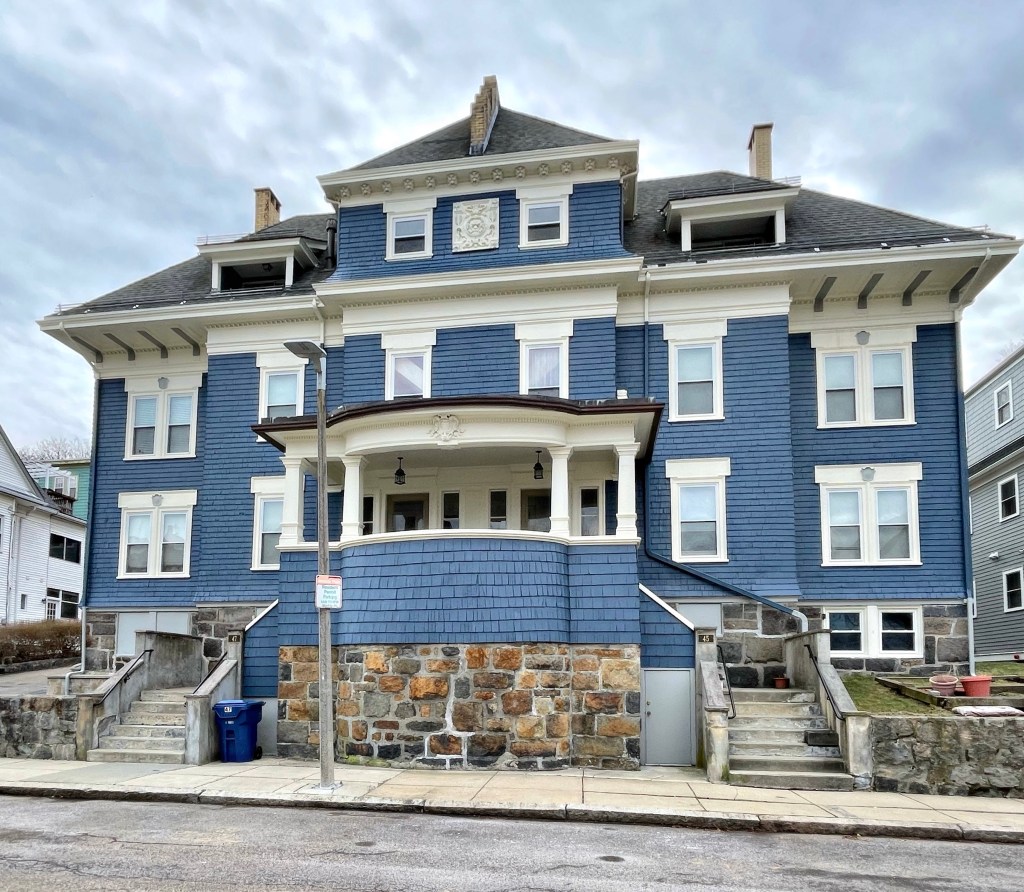
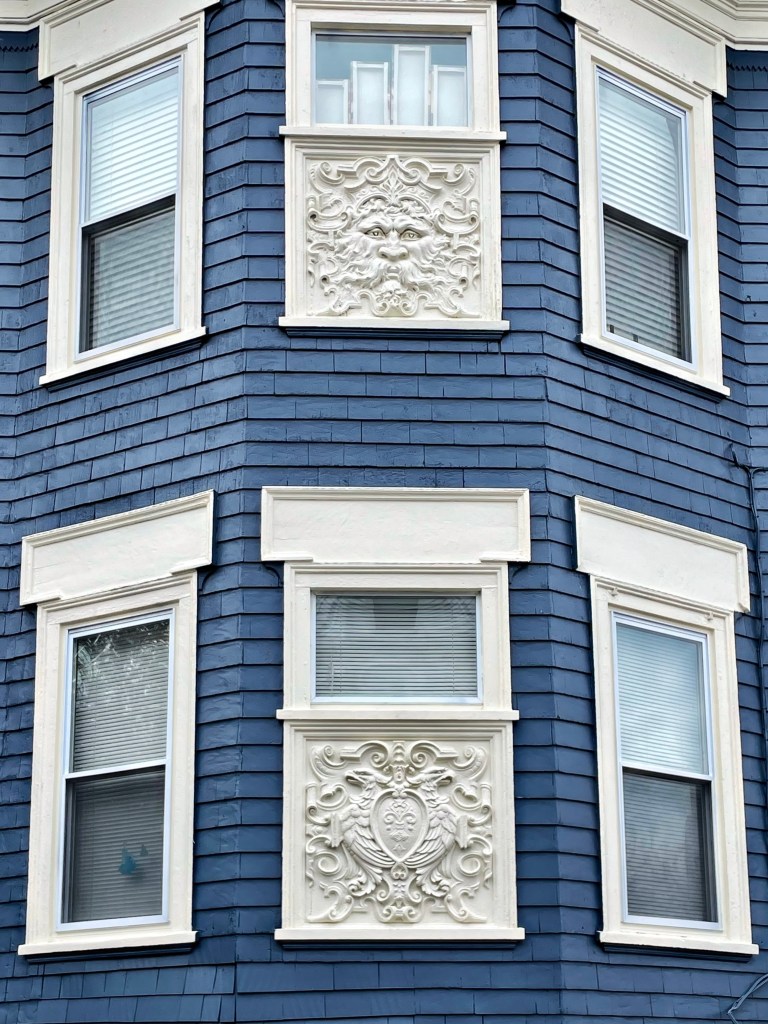
In 1896, architectural sculptor Charles Emmel purchased land in the rapidly developing Forest Hills section of Jamaica Plain, Boston. He hired local architect George Zimmer, to design a massive double-house which would serve as an income-producing investment, and could also be a sort of advertisement for his sculpture work. The result is this massive Colonial Revival style property, perched atop a puddingstone foundation. Architectural ornament has been lovingly preserved, a testament to the owners of the building today and the amazing work of the original owner, Mr. Emmel. I found myself staring at the building for a while when walking by, looking at all the hidden detail and architectural ornament which adds so much to the building.

Stetson House // 1897

Waban is full of eclectic homes from the end of the 19th century, and this example is probably my favorite! The Herbert and Georgia Stetson House was built in 1897 and demonstrates how elements of the Colonial Revival style were incorporated into a less rigid Queen Anne style plan. Herbert was a lumber dealer, and likely used his own product in his home. The mixture of ornament includes Colonial
Revival style pedimented dormers, a Palladian motif window, oval windows, and a modillion cornice in combination with bays, oriels, a dramatically overshot gable roof, and a swept dormer reminiscent of the Queen Anne style. Together, the composition is perfection, and really makes you stop and analyze all the details!