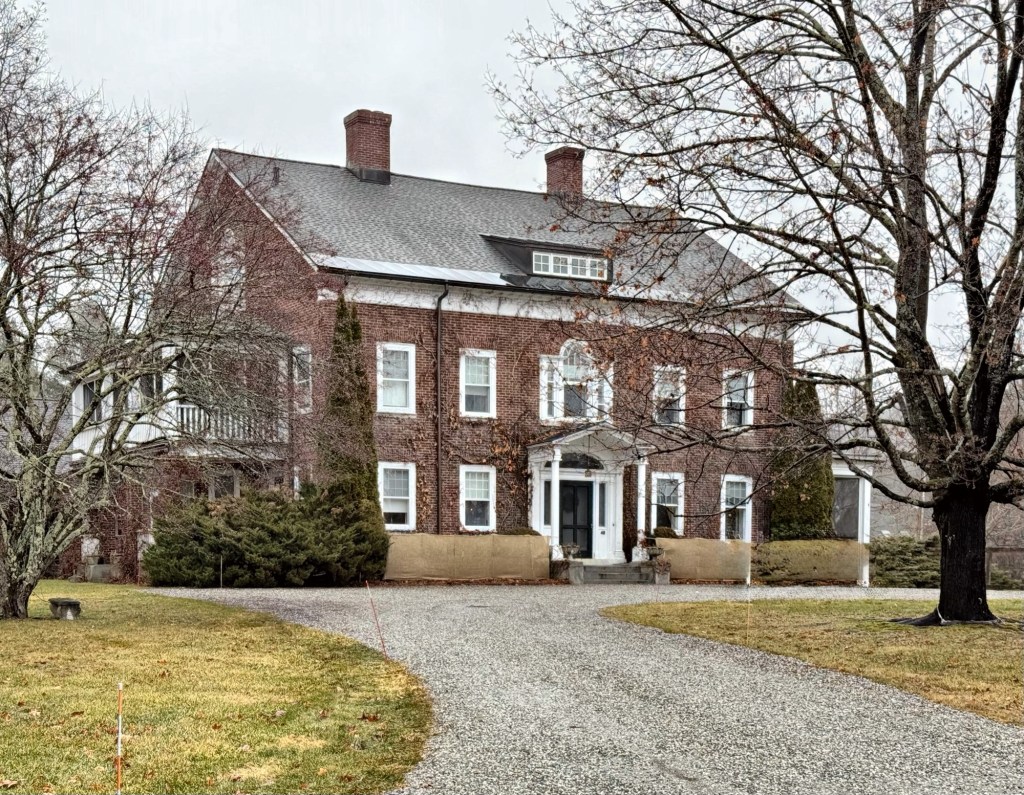
John E. Calhoun House // c.1912

This site, in the heart of Cornwall village, was once occupied by an early 19th century Federal style residence, built by the wealthy Pierce family in town. The Pierces’ large home was acquired by John E. Calhoun (1859-1940), a successful New York businessman, who retreated to his father’s hometown for summers away from the city. In 1911, a fire destroyed the home, which was wood-frame construction. This event mobilized Mr. Calhoun, who was untrained but interested in architecture, to begin planning a new summer residence, but of fireproof construction. Calhoun is said to have designed (and funded) the town’s library just years before, and modeled his home in line with the Colonial-era residences in the village, just larger and of brick. From the 1950s through the 1990s, the house was occupied by the headmaster and administration of the local Marvelwood School, but was re-established as a private home, a use that remains today.

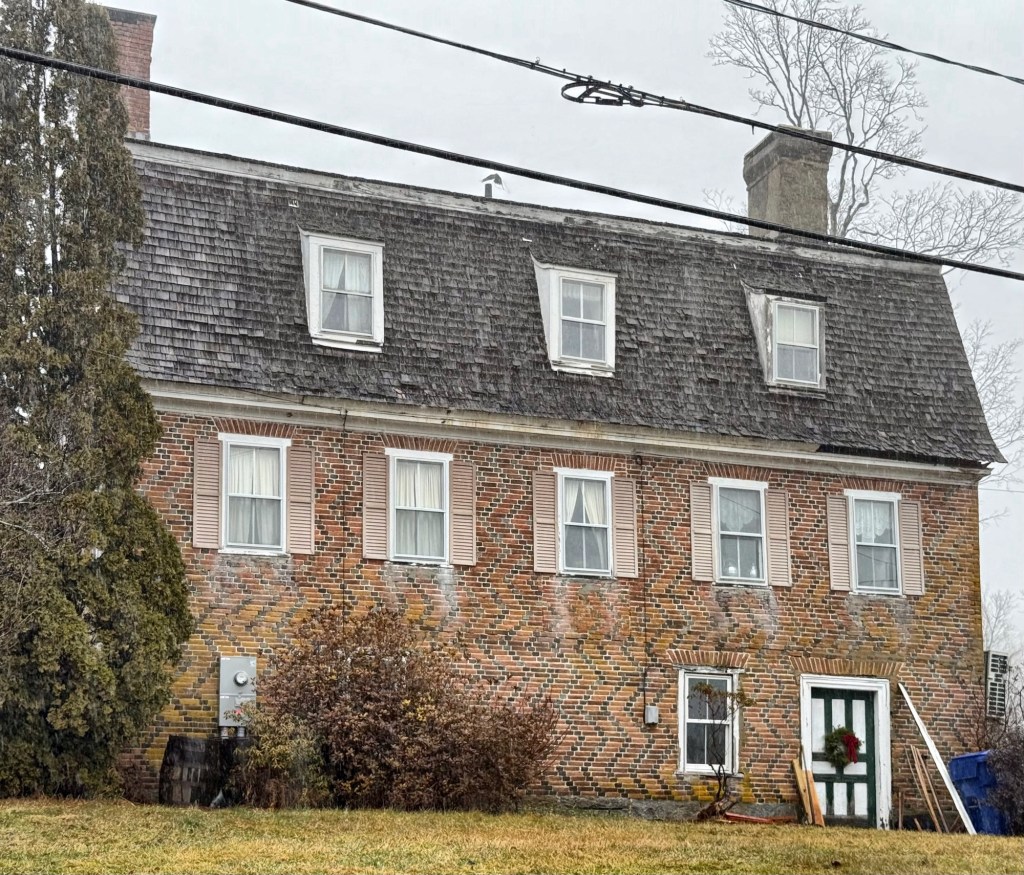
Wright Homestead // 1767

This large, brick gambrel-roofed Colonial home in West Goshen, Connecticut, was built over decades beginning before the American Revolution and has remained in the same family ever-since! In 1767, Captain Jabez Wright (1737-1813) married Martha Baldwin of Goshen, and began constructing this farmhouse of brick. When the war broke out, he fought in New York, he also served as captain of a company of Connecticut militia, turning out to repel the British forces at New Haven. He would largely complete the home by 1787, and ultimately died in 1813. After successive ownership of generations of the Wright family, the property was owned by Henry G. Wright (1831-1917), a farmer who represented Goshen in the state legislature and held many town positions. The first Methodist sermons in town were also held in the home. Henry Wright died at 86 years old on this property, after being attacked by a bull. When entertaining guests, he showed others a prized bull, and possibly fell into the pen, and was trampled and attacked. The Wright Homestead is unique for its brickwork with bonds and burned headers, resembling many Colonial-era homes in Virginia, but this house can be found on the back roads of Goshen, Connecticut!

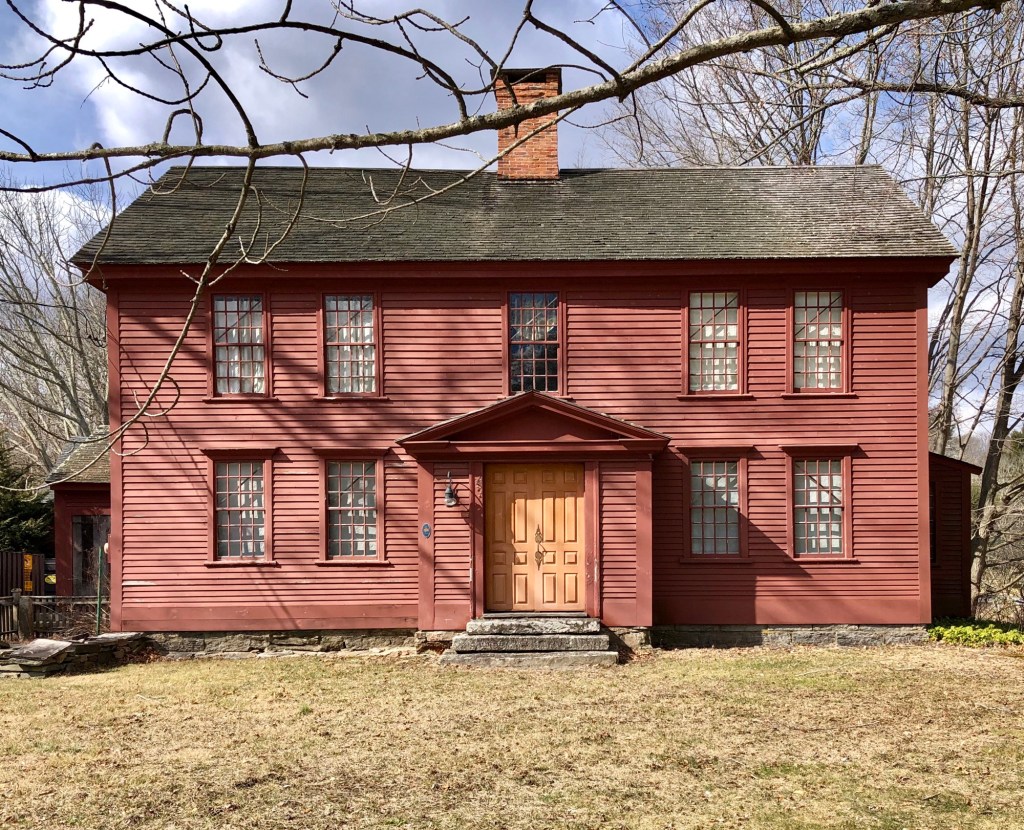
Eleazar Spofford House // 1765

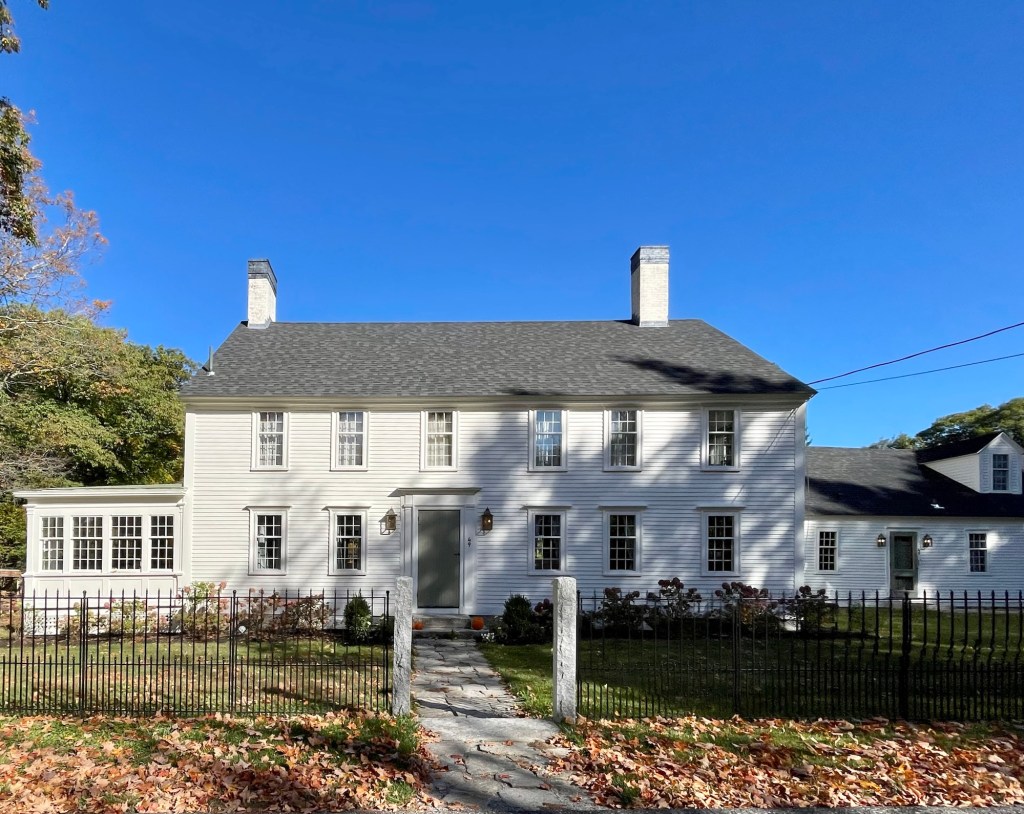
One of the many pre-Revolutionary homes in Georgetown, Massachusetts, the Spofford House is located on Andover Road, an important route which was occupied by many residences of the Spofford Family. In 1667,  John Spofford and his family became the first permanent (European) residents in what would become Georgetown. Generations later his ancestor, Eleazar Spofford (1739-1828) would build this home in 1765 to be occupied by his new wife married that year, Mary Flint, and their new family. The Georgian farmhouse has been significantly altered since its original date of construction, but retains its general form and character even with later 19th and 20th century additions, porches, and windows. The Spofford’s had six children in this home and would later move to Jaffrey, New Hampshire after the Revolution, but returned and settled in nearby Groveland. Later generations of the Spofford’s would live-in and modify the home until it finally sold out of the family in the 20th century.

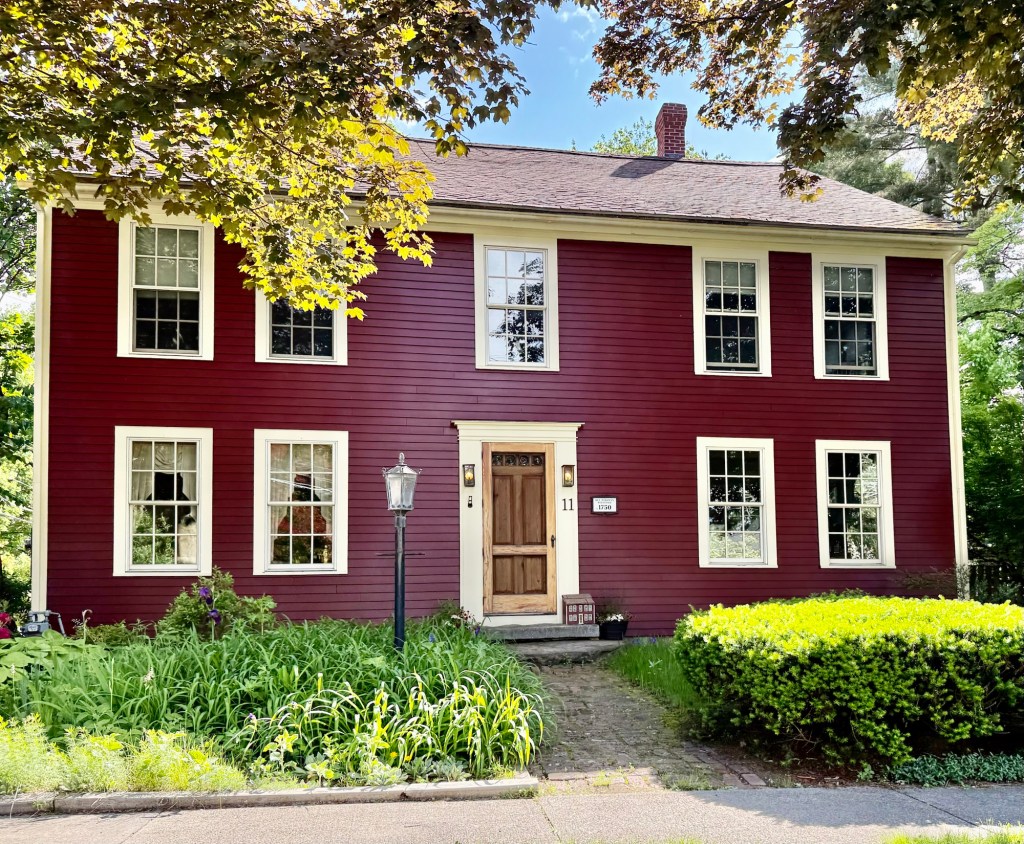
Preston-King House // 1764

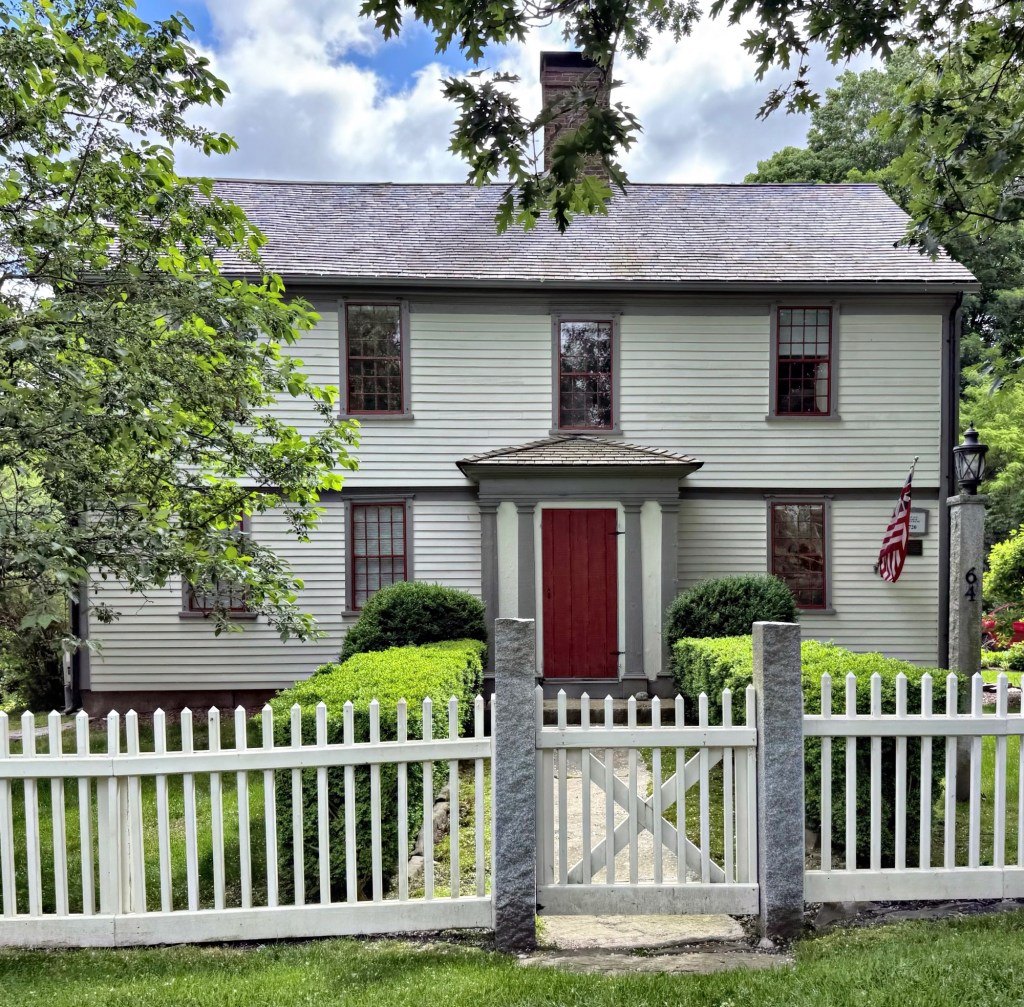
The Preston-King House of New Ipswich, New Hampshire, is a 2 1/2-story wood frame Georgian house and unique for its asymmetrical six-bay facade. John Preston I (1739-1803) built this house in 1764. Preston was a doctor, a profession followed by his son of the same name. As well as being the town’s leading physician, he was a member of the first Board of Selectmen and a member of the Convention for framing the State Constitution, also holding many local offices. Following his death, the house passed to his youngest daughter Anna, and her husband, Seth King, a manufacturer, in 1808. The house has been restored to its Colonial appearance and makes a statement without the frills and detailing of the Victorian style.

Reverend Graham-Howard Richmond House // c.1715

Who doesn’t love a good Colonial house in Connecticut!? This house in Southbury was originally built at the beginning of the 18th century and was later altered and expanded in the fashionable Federal style at the end of the century. The house was built around 1715 by a Nathan Strong, who sold the property to Reverend John Graham who was the town’s pastor for over forty years. The house was later owned by antiques dealers Daniel and Marguerite Croucher. They used the former White Oak Schoolhouse (nextdoor) to store and sell some of their finds! After later owners, the property (which includes the schoolhouse) was purchased by Howard K. Richmond had been a graphic designer and art director in New York. He created the original layout and logo for Life magazine in 1936. He also did advertising and publicity work for Lord & Taylor, Bloomingdale’s, Elizabeth Arden and Saks Fifth Avenue. So many layers of history in over 300 years!

Pelatiah Fitch House // 1754

One of the oldest extant homes in the charming fishing village of Noank, CT, is the 1754 Pelatiah Fitch House which has survived nearly 300 years on the waterfront site. The home was built for a Pelatiah Fitch (1722-1803) upon the time when he relocated to Noank to work as a doctor. Dr. Pelatiah Fitch came from a long line of distinguished ancestors, and was born in Norwich, CT. After practicing medicine twenty-eight years in Noank, he removed to Vermont, later moving a to Salem, NY about 1780 where he lived out his final days. This Georgian seaside cottage was built by Dr. Fitch and his new wife Elizabeth when they were in their mid-twenties. After the Fitch Family moved out, the cottage was expanded a few times, notably with the addition of the oversized dormer at the roof.

Jabez Fitch House // 1725

Portsmouth, New Hampshire is one of the most charming towns in New England to explore by foot, largely due to its walkable network of streets and tight blocks filled with preserved Revolution-era homes. Like many other cities all over the region (and nation), Portsmouth was hit by Urban Renewal, a planning tool used nationwide to provide Federal funds to address “urban blight” and revitalize downtown cores after decades of suburbanization and loss of tax revenue. An urban renewal district for Portsmouth was its North End neighborhood, which similar to Boston’s, was home to a vibrant Italian-American population.

In 1964, federal funds were allocated to the North End project area in Portsmouth, for urban renewal. Prior to redevelopment, the North End was a mix of residential and commercial buildings, with many older houses converted into storefronts with apartments above. In the mid-1960s, the area was considered overcrowded, run down, and a fire hazard. As a result, the Portsmouth Housing Authority proposed the destruction of approximately 200 buildings, a school, and a church and redevelopment for commercial, industrial, and public use, rather than for residences. The project would displace approximately 300 families as a result. In 1968, Portsmouth Preservation Inc., a preservation organization was formed to attempt to save some of the historic building stock in the area slated for redevelopment. After bitter fighting and preservation advocacy, just fourteen houses were saved and mostly moved to an area known today as “The Hill”. This building is one of them. It was constructed around 1725 for Rev. Jabez Fitch, the new minister of the North Church in town. Fitch graduated from Harvard College in 1694 first settling in Ipswich, MA, before becoming minister of the North Church in 1724, a position he held until his death in 1746. The house was one of the few in the urban renewal area to not have been moved.

Rev. Thomas Hawley House // 1713


This old Georgian house was built in 1713 on the Proprietors Lot 5, on Ridgefield’s Main Street. Constructed for the first minister of Ridgefield, the home was originally occupied by 25-year-old Reverend Thomas Hawley (1689-1738) not long after his graduation from Harvard in 1709. In addition to being minister of the newly formed Congregational Church, Hawley (also spelled Hauley) also served as school teacher and town clerk. The house employs Dutch Colonial detailing from the gambrel roof to the extended portico over the front door, common in the Dutch colonies in the Hudson River Valley in New York.

Keeler Tavern // 1713

Around the year 1713, Benjamin Hoyt built a home for himself and his family on Lot 2 of the laid out building lots along Main Street of Ridgefield CT. The building was originally a one room dwelling with a stone fireplace and no basement and was located next to the David Hoyt mansion (aka The Fountain Inn). After several years, he expanded the property by building around and above the structure, to give it the gambrel roof and size we see today. More than 50 years later, in 1769, the property was purchased by Hoyt’s son-in-law, Timothy Keeler. Timothy Keeler and his wife converted the building into an inn in 1772, just prior to the beginning of the American Revolutionary War. Keeler sided with the American revolutionaries and was active in the local militia. After the Battle of Ridgefield, British forces fired on the Keeler Tavern, because Keeler was an enemy. One of the cannons used to pummel the tavern is still lodged in a corner post of the house to this day. After later owners in the Keeler Family, the property was purchased by world-renowned architect Cass Gilbert, who turned it into his family’s summer home in 1907. In doing so, he made various improvements and additions to the building, in particular he designed a Garden House and added a sunken around the year 1910. Gilbert would also design a fountain as a gift to the town, which sits almost opposite his family’s summer residence. The property was purchased in the 1960s and has since been a historical museum.

Elias Danforth House // 1832

On the southern end of Center Village in Lancaster, MA, this gorgeous late-Federal style home holds a stately presence built into and atop a sloping hill. The home was built for Elias Danforth (1788-1868) in 1832 and has been so little-altered in the nearly 200 years since. The house features amazing full-length side porches with bold columns, an early sign of the emerging Greek Revival style. The home sold a couple years ago for just over $600,000, which is a STEAL for the location and high-quality house and interior. Wow!