White-Dickey Cottage // c.1844

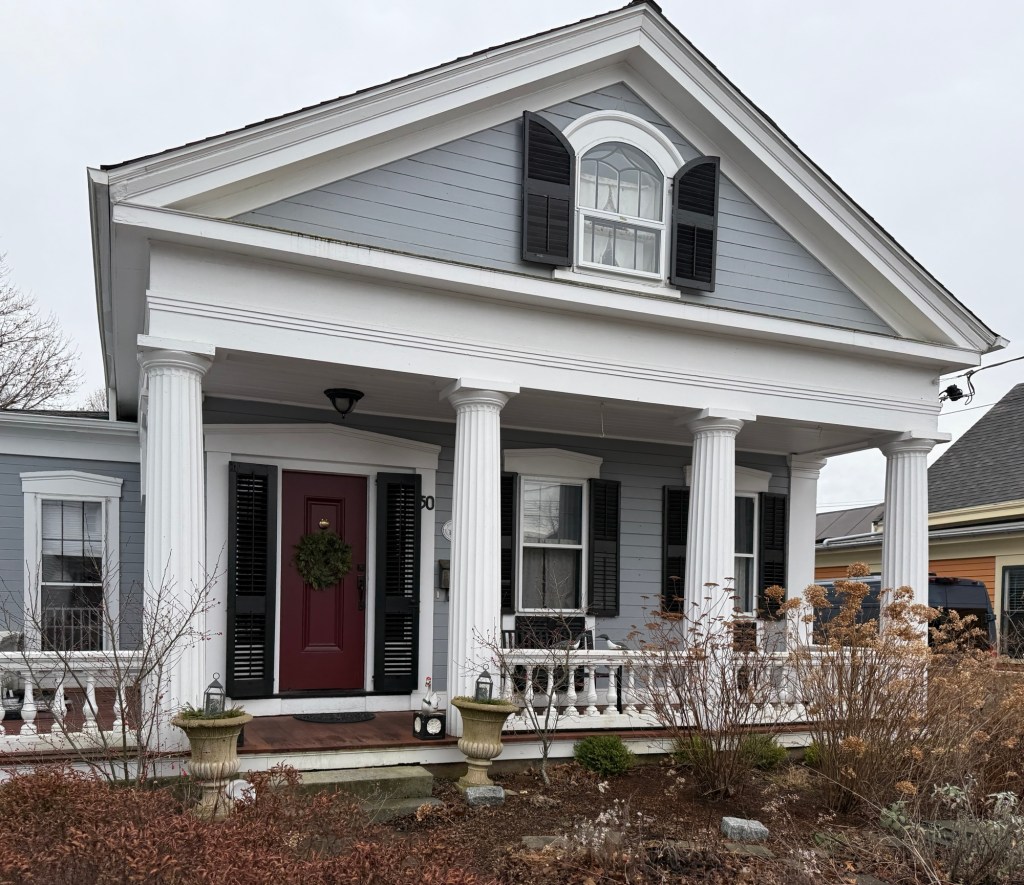
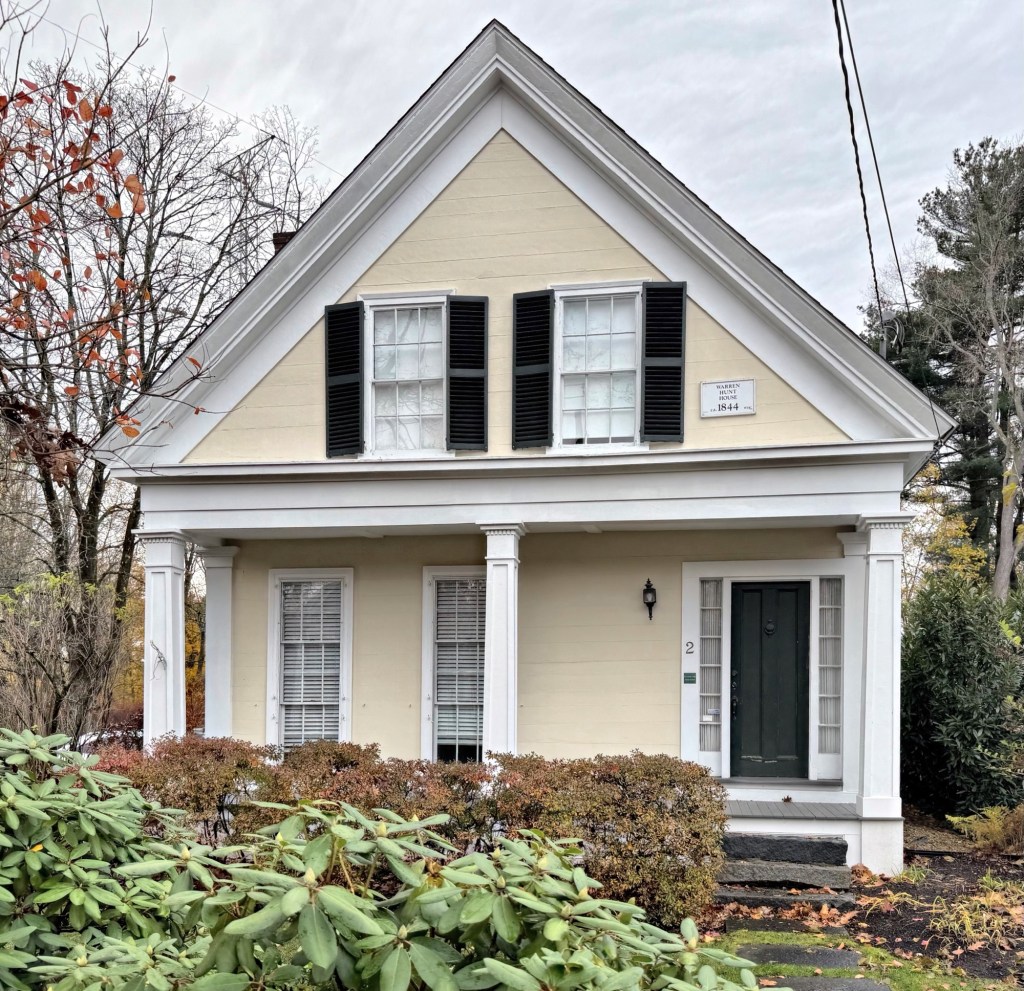
Located in the Wayland Center village, this c.1844 Greek Revival style cottage stands out not for flourish or scale, but for its excellent design, proportions, and state of preservation. The three-bay facade has a recessed first story set under the pediment extending over the open porch. The pediment is carried by squared, tapered columns with dentils and the facade retains its unique flush-board siding and triple-hung first-story window sash. The house was built by 1844 for Warren Hunt, who operated a small dry goods store near the town common. Not long after he had the house built, Hunt sold the property and store to Luther B. White (1822-1884), who lived here for at least two decades. In 1888, Mrs. Alice Dickey and her husband, Charles F. Dickey, a carpenter, purchased the house and expanded it at the rear.

Upland Farmhouse // 1929

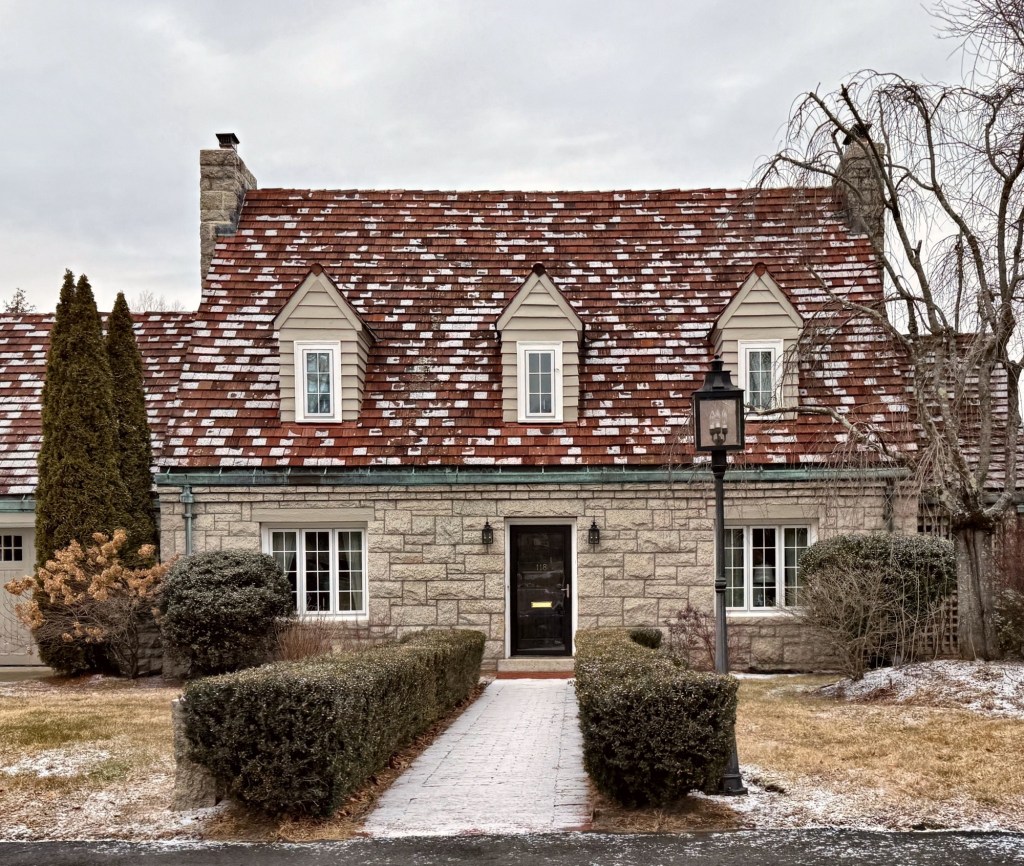
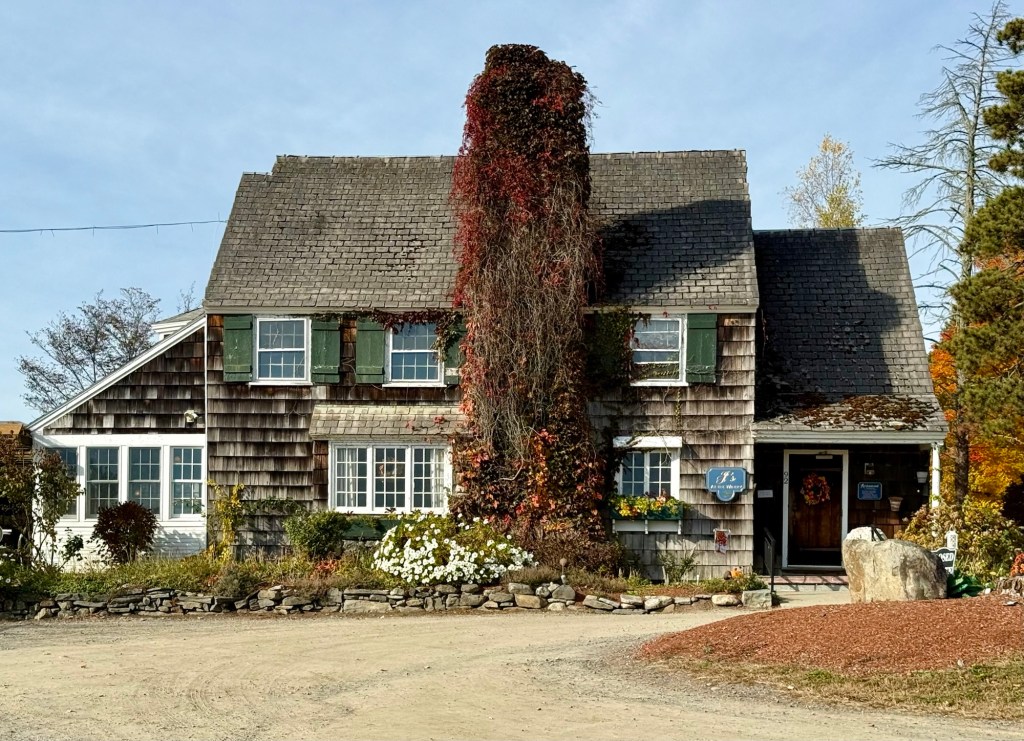
The Nashoba Valley Winery in Bolton, Massachusetts, is one of Bolton’s most successful examples of the adaptation of an old agricultural property in the state. The land here was first developed as a farm in the early 19th century by Captain Martin Houghton (1779-1833). The farmland here, which has always had a scenic view, was called “Valley View Farm” later owner, William N. Felton (1835-1920). Sadly, the old farmhouse burned down in 1928, and the property was sold that year to Roy Clemens, an osteopathic doctor, who had this charming shingled cottage built in 1929. Roy and his wife, Laura, planted an apple orchard on the hills and named the property “Upland Farm”. Roy died in 1969 and Laura followed in 1981. With suburban development likely, the property was ultimately saved when it was purchased by Jack Partridge as the new home of the Nashoba Valley Winery, which was founded in Somerville in 1978. The winery specializes in fruit wines, and grows most of the fruits and berries for them on the property. The business expanded, adding a distillery, brewery and restaurant, and the beautiful grounds are often host to weddings and events.

Brown-Crocker House // c.1836

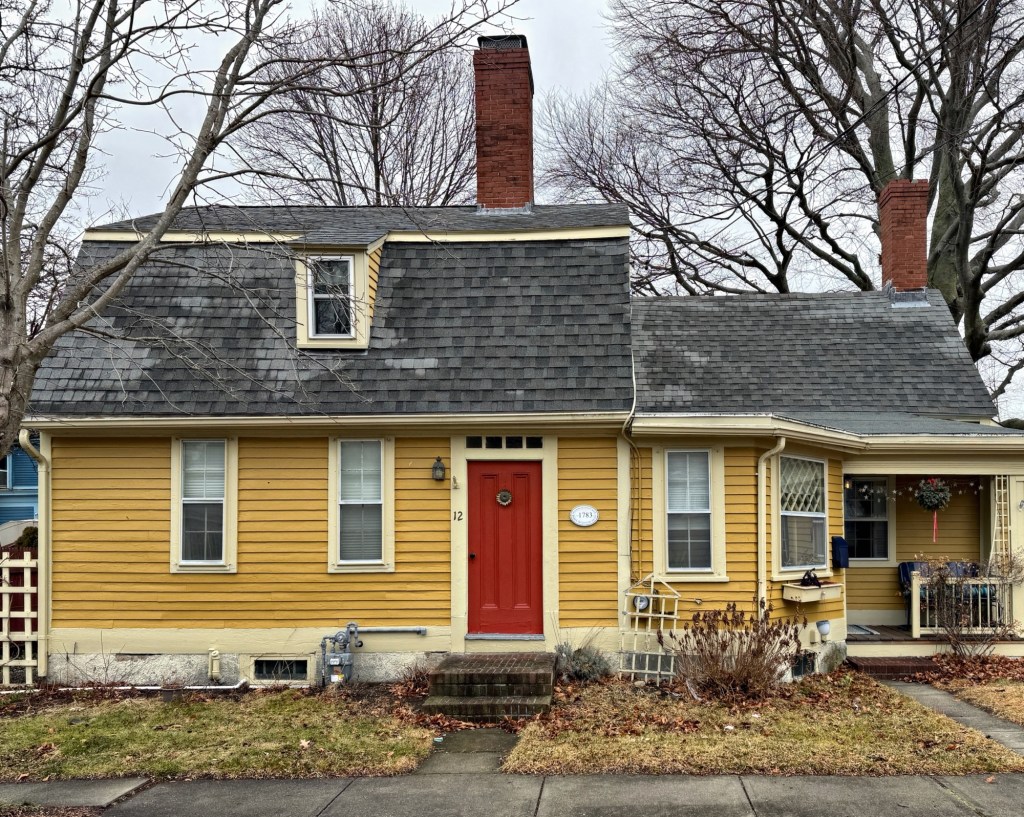
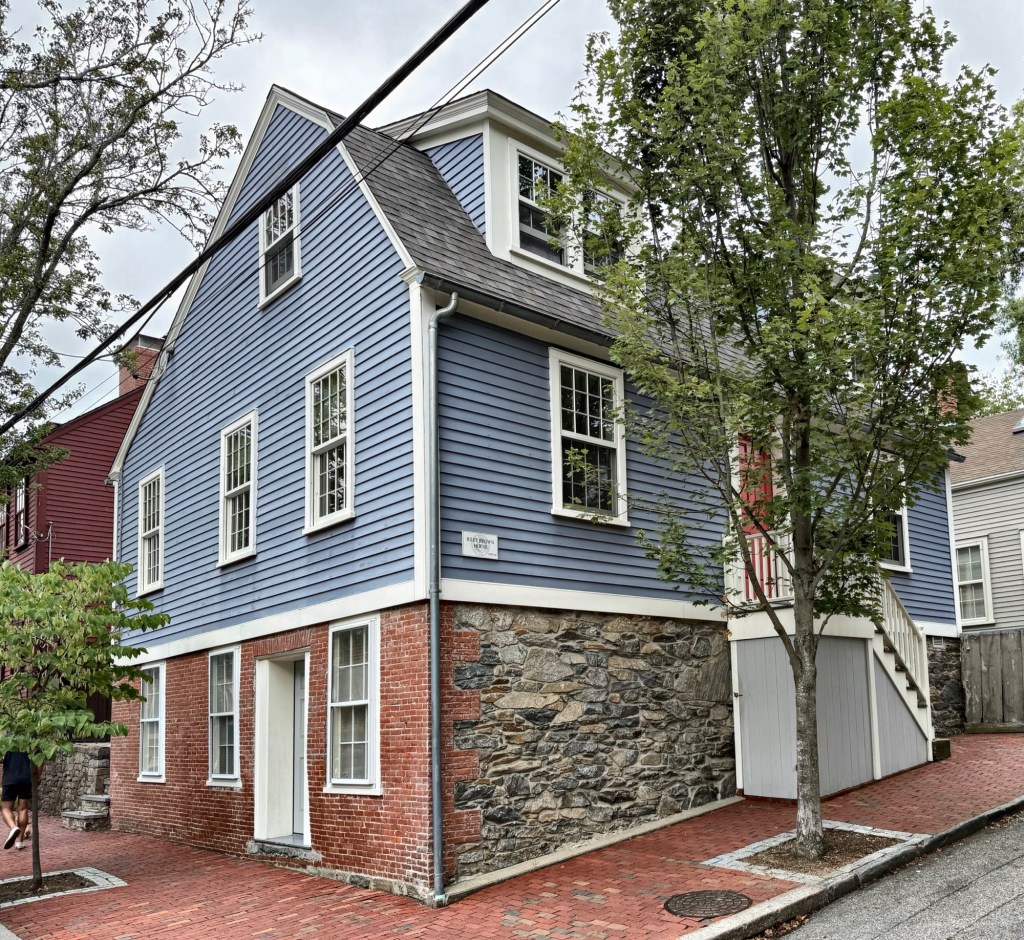
In 1829, Riley Brown, a housewright, purchased a house lot at the corner of Thayer and Transit streets in Providence, and by 1836, built this charming gambrel-roofed cottage, which is one of the most charming in the city. Riley Brown lived in the house next-door at 6 Thayer Street (1829) and on available land, built this 1-1/2-story dwelling on a full-height raised basement on speculation. It is possible that the house could have dated to the 18th century, and was possibly moved to the site from a nearby location, given the distinct gambrel roof and Georgian qualities. The residence here was sold in 1836 to John Crocker, who resided here with his family until his death in 1865. The Brown-Crocker House stands out for its unusually high basement of brick and stone, with a stair ascending up to the central entry and the gentle saltbox roof off the rear. Two shed dormers were likely added in the 20th century to make the house’s second floor more liveable.

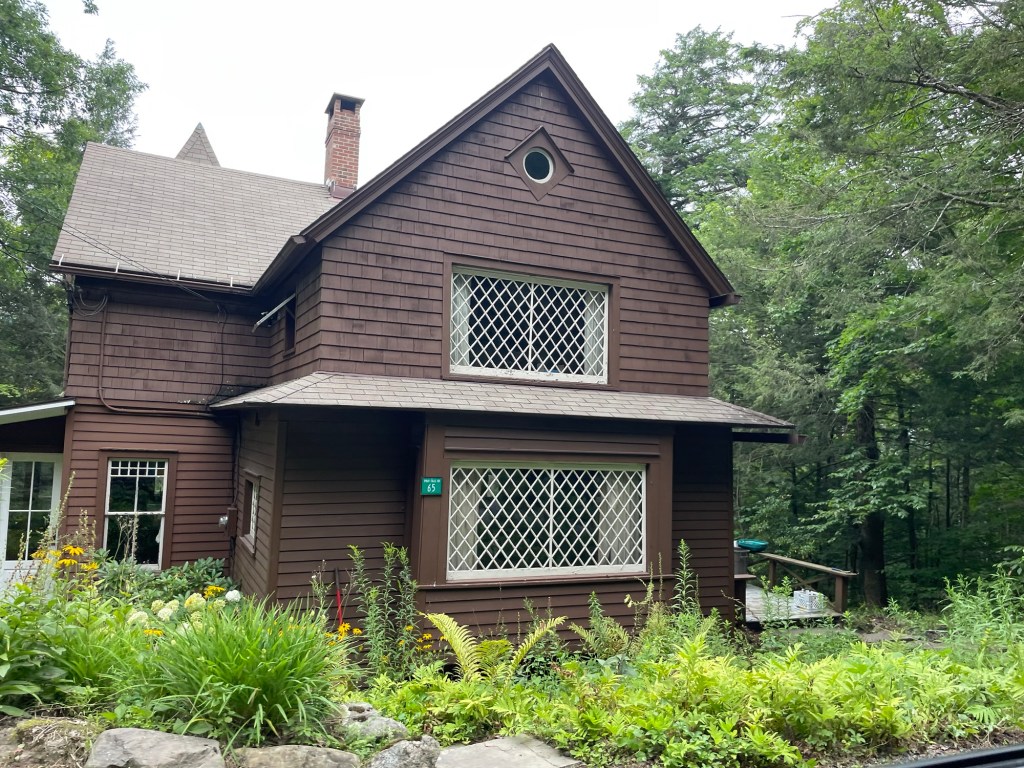
Sans Souci Cottage // 1894

Tucked away in the town of Hunter in the Catskill Mountains of New York, the summer colony of Twilight Park has stood as an exclusive and private resort community established in the late 19th century. Twilight Park was born out of the Twilight Club, a Manhattan social club in the late-19th century and brought to life by founder, Charles F. Wingate. Mr. Wingate traveled to the mountaintop in 1887, and became enamored by its natural beauty. He arranged for the purchase of a former sheep’s meadow and led the construction of the first cluster of cottages in what would become a large community of over 100 summer homes. Cottages were laid out on roughly parallel roads at different elevations and on old connecting paths that later became roads with all lots built on ledges overlooking the Catskills. The first cottages were log cabins, and quickly followed by larger, Queen Anne style “cottages” as others invested in the development. This cottage, known as Sans Souci Cottage, was built in 1894 in Twilight Park, during the “rustic” period, where Queen Anne Victorian styles made way for a more rustic, Arts and Crafts mode. The cottage was built for owner John McClure and it is notable for its varied siding, diamond-pane windows and large porch overlooking the Catskills.

Cosy Cabin // 1887

Tucked away in the town of Hunter in the Catskill Mountains of New York, the summer colony of Twilight Park has stood as an exclusive and private resort community established in the late 19th century. Twilight Park was born out of the Twilight Club, a Manhattan social club in the late-19th century and brought to life by founder, Charles F. Wingate. Mr. Wingate traveled to the mountaintop in 1887, and became enamored by its natural beauty. He arranged for the purchase of a former sheep’s meadow and led the construction of the first cluster of cottages in what would become a large community of over 100 summer homes. Cottages were laid out on roughly parallel roads at different elevations and on old connecting paths that later became roads with all lots built on ledges overlooking the Catskills. The first six cottages were log cabins, with this example, likely in the first batch. From maps and a report on the area, this early cottage appears to have been named “Cosy Cabin” and was first occupied by Mr. Wingate, the founder of the Twilight Club and Twilight Park. The cottage is unique for its vertically laid logs still containing their bark, and the rustic porch balustrade and detailing.

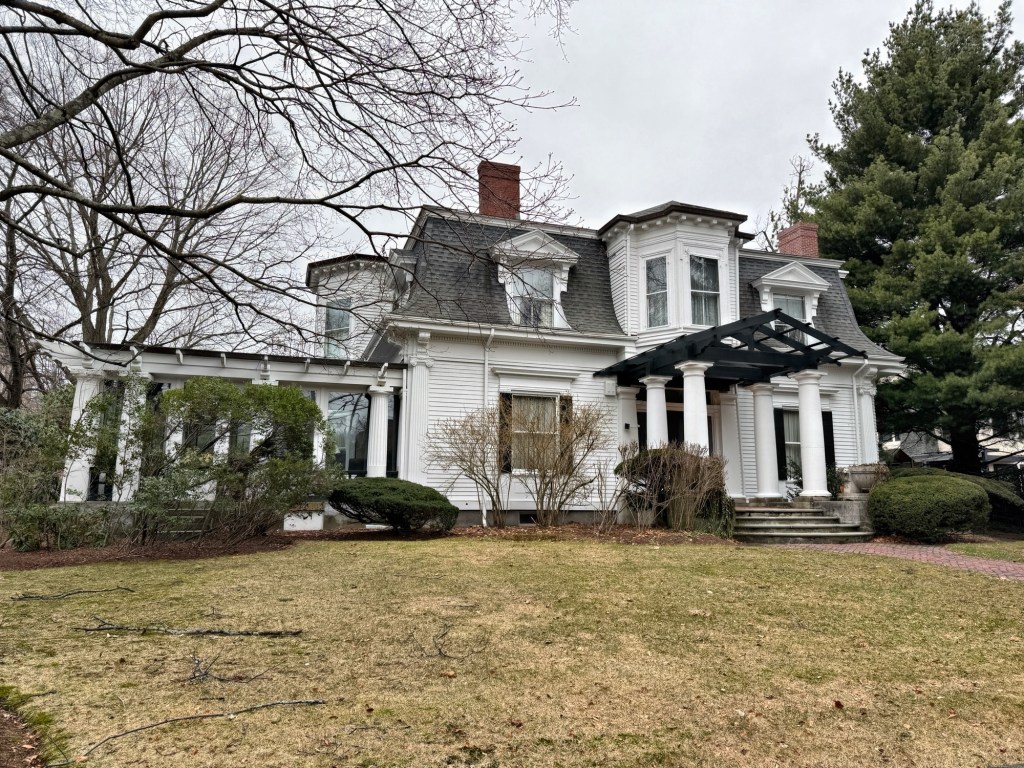
Reed-Loring House // c.1872

Another of the early houses built in the Ashmont Hill neighborhood by George D. Welles, a young man who inherited and subdivided his family estate in Dorchester, is this mini-Mansard on Harley Street. Like a few others in the neighborhood, this house was built for Welles, likely as a rental property. The house was rented by Charles and Nellie Reed, who had painter, Frank Henry Shapleigh over as a guest. Shapleigh would paint the house in the 1870s, shortly after a stint in Paris. The property would be purchased by Stephen L. Emery, a coal and wood merchant in Boston, and later by Clara Reed, the daughter of Charles and Nellie Reed, who took up permanent residence in this house with her husband Royden Loring, the vice president of the Arnold Roberts Company on Congress Street. Clara Reed Loring lived here until the early 1970s. The Second Empire style house and large, preserved barn at the rear of the lot, provides a glimpse into the early development of Ashmont Hill.

Joseph Lindsey Cottage // 1886

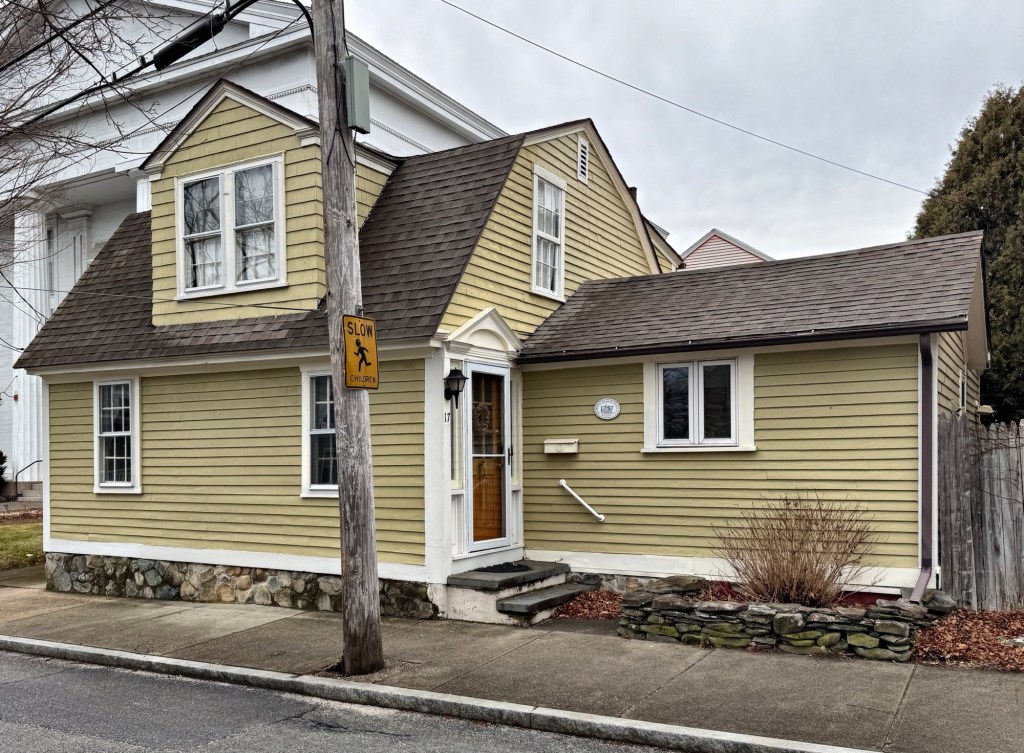
While Marblehead is best-known for its Georgian and Federal period houses, there are some great examples of later styles, sometimes tucked behind and in side yards of earlier residences. This is the Joseph Lindsey Cottage on Washington Street, a vernacular, Folk Victorian style residence built in 1886 by carpenter and housebuilder, Joseph W. Lindsey (1823-1902). Mr. Lindsey lived nearby on High Street, and purchased an earlier house at 45 Washington Street by 1881, building this cottage five years later and rented both out to boarders. Joseph Lindsey worked his entire life as a carpenter, except for a few years when he and his brother, Philip B. Lindsey, travelled west to seek gold and fortune during the California Gold Rush. The Lindsey Family Papers are part of the collections of the Marblehead Museum. 

Richmond J. Lane House // c.1860

Located next door to his brother’s house on Union Street in Rockland, Massachusetts, Richmond J. Lane, a shoe manufacturer, built this charming cottage for his family. Built around 1860 in the Second Empire style, this residence includes a concave mansard roof, dentilled cornice with brackets, and arched windows and dormers, and a stable at the rear. Richmond J. Lane (1826-1905) worked in shoe manufacturing and was said to have been instrumental in establishing the Hanover Branch Railroad, and served as president of local banks. The Richmond J. Lane house is an important, and well-preserved example of the Second Empire style in Rockland.

Frederick Sears Cottage // 1851

The Frederick Sears Cottage in the Cottage Farm neighborhood of Brookline, Massachusetts, is significant as one of the major surviving examples of Gothic Revival domestic architecture in the Boston area. In 1849, wealthy Bostonian, David Sears (1787-1871) laid out parks and squares in the Cottage Farm neighborhood, and built houses for himself and his children. His own house, erected in 1843, was the oldest, soon followed by houses for his four daughters, Ellen d’Hautville, Harriet Crowninshield, Anna Amory, Grace Rives, and son, Frederick. The Frederick Sears Cottage is the only surviving Sears residence in the Cottage Farm neighborhood. Frederick Sears‘ cottage was built in 1851, though he did not occupy the house long, as just three years after he and his wife married in 1852 to move into this home, Marian died. The house was inherited by Frederick Sears Jr. , and was acquired by Boston University in 1960, who began to expand into this neighborhood. They maintain the significant property very well. The Sears Cottage is an excellent example of the Gothic Revival style in stone with scalloped vergeboards, quatrefoil motifs, corner quoins, and projecting entry. The house is constructed of Roxbury Puddingstone and is said to have been designed by George Minot Dexter.

Lawrence-Parker House // 1864

Built in 1864 as one of the rental properties owned by Amos A. Lawrence as part of his exclusive Cottage Farm neighborhood in Brookline, this house has been extensively altered and even moved but retains significance as a surviving mid-19th century “cottage” in the neighborhood. The house was likely constructed as a one-story, stone cottage with a second floor contained within a mansard roof. In 1903, Mrs. Francis W. Lawrence hired the well-known architect and Brookline resident, Julius A. Schweinfurth, to make extensive alterations to the cottage, replacing the mansard roof with a new second floor with gable roof, along with a new porch. Schweinfurth’s design included wood shingle siding for the upper floors, which were replaced with stucco in 1970. The house was moved to its current site at the corner of Carlton and Mountfort streets in 1929 when the street was re-oriented to follow the old Boston & Albany Railroad tracks. When moved, the cottage was occupied by Philip Stanley Parker, a judge, and his wife, Eleanor. Today, the cottage is owned by Boston University and known as the Core House.