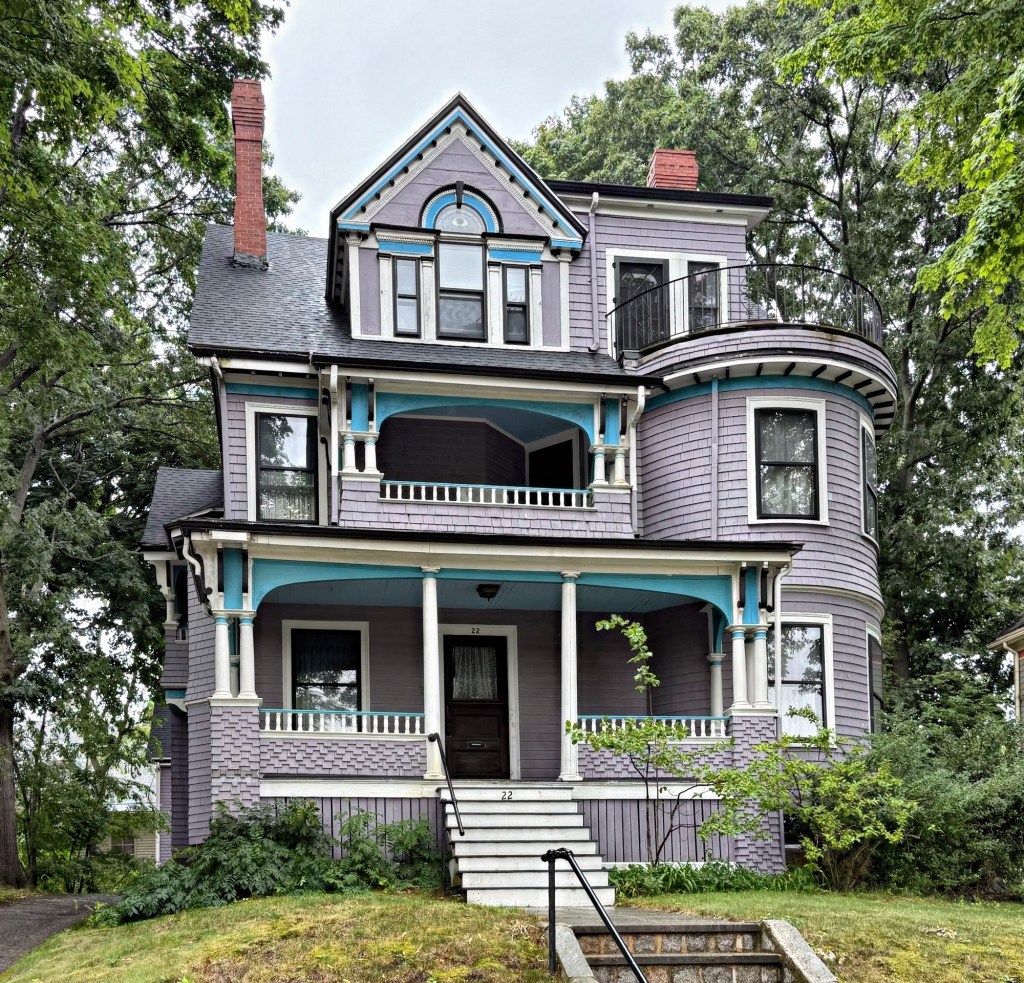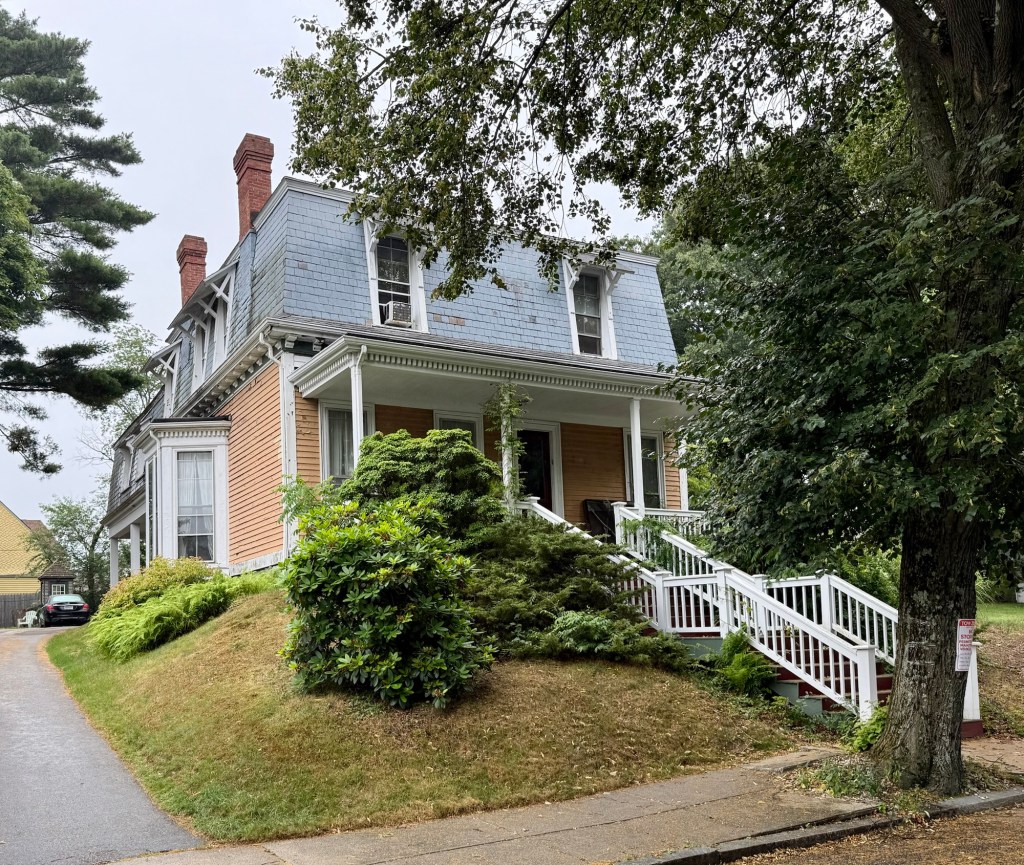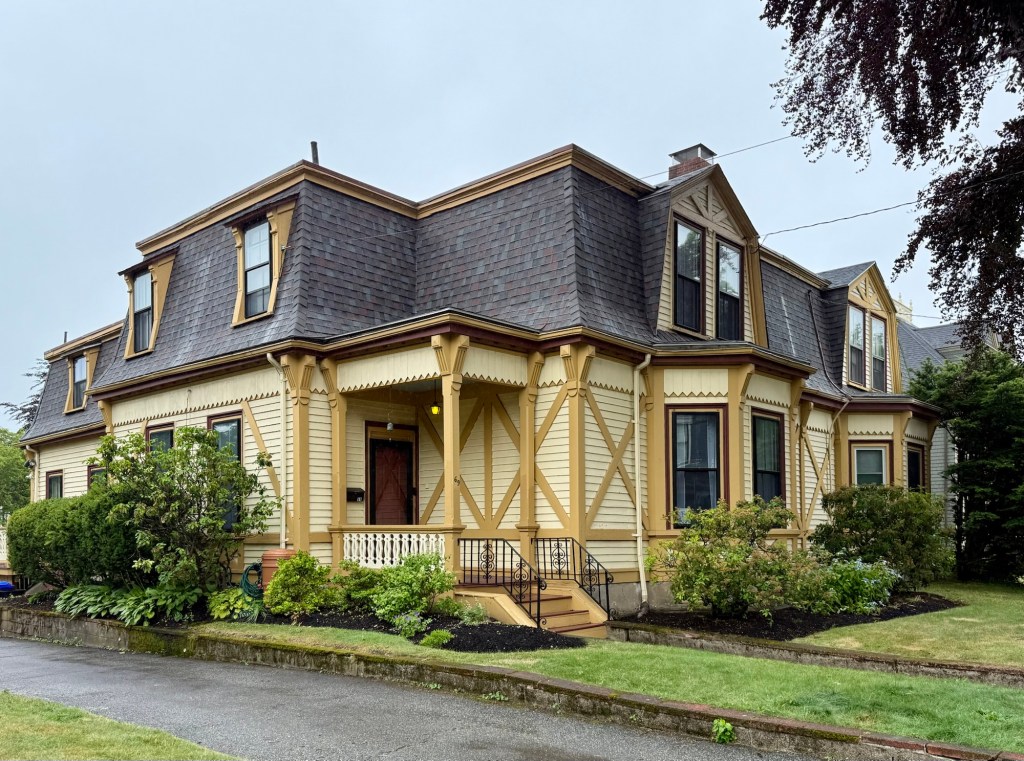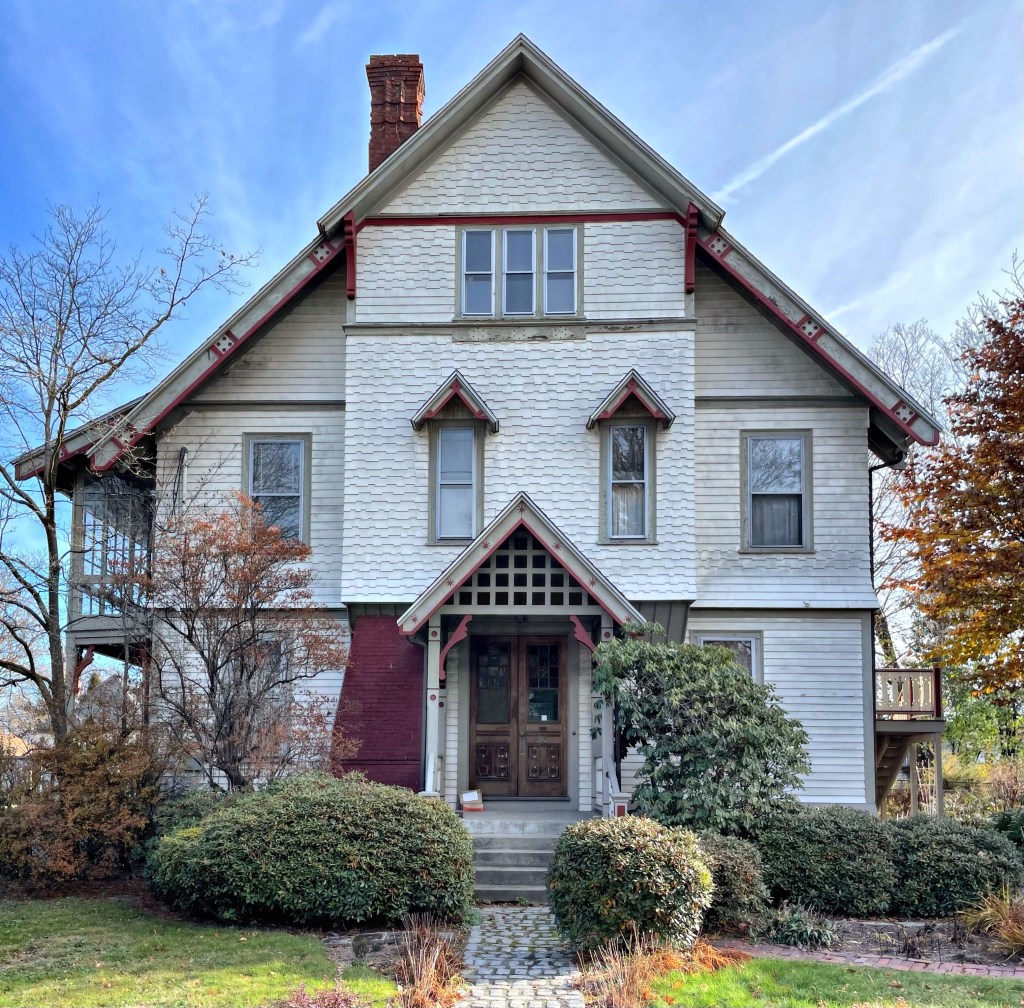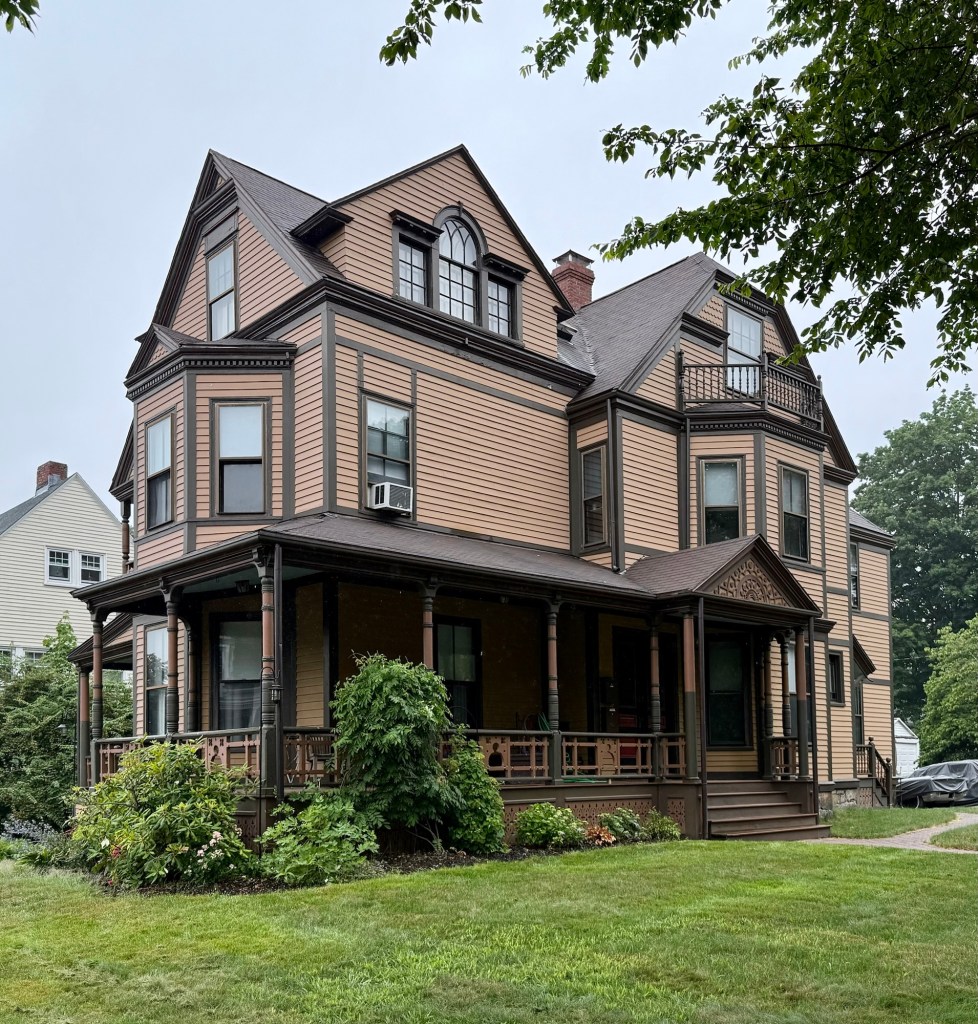
Thomas T. Hartford House and Stable // 1884

Situated at the corner of Harley and Roslin streets in the Ashmont Hill neighborhood of Dorchester, this property showcases the flair and ornate features of the eclectic Victorian styles, along with an original stable. The property was developed in 1884 by Thomas T. Hartford. Thomas Thurston Hartford (1845-1916), was a shoe machinery manufacturer with offices in the Leather District near downtown Boston, continuing in his father’s company, Hartford Brothers Co. The house and stable are said to have been designed by architect Edwin J. Lewis, Jr., or John A. Fox, who blended Stick and Queen Anne styles. Interestingly, the house features Palladian windows in the gables and was restored by owners, who even went the extra mile to repaint the house in its historic colors.
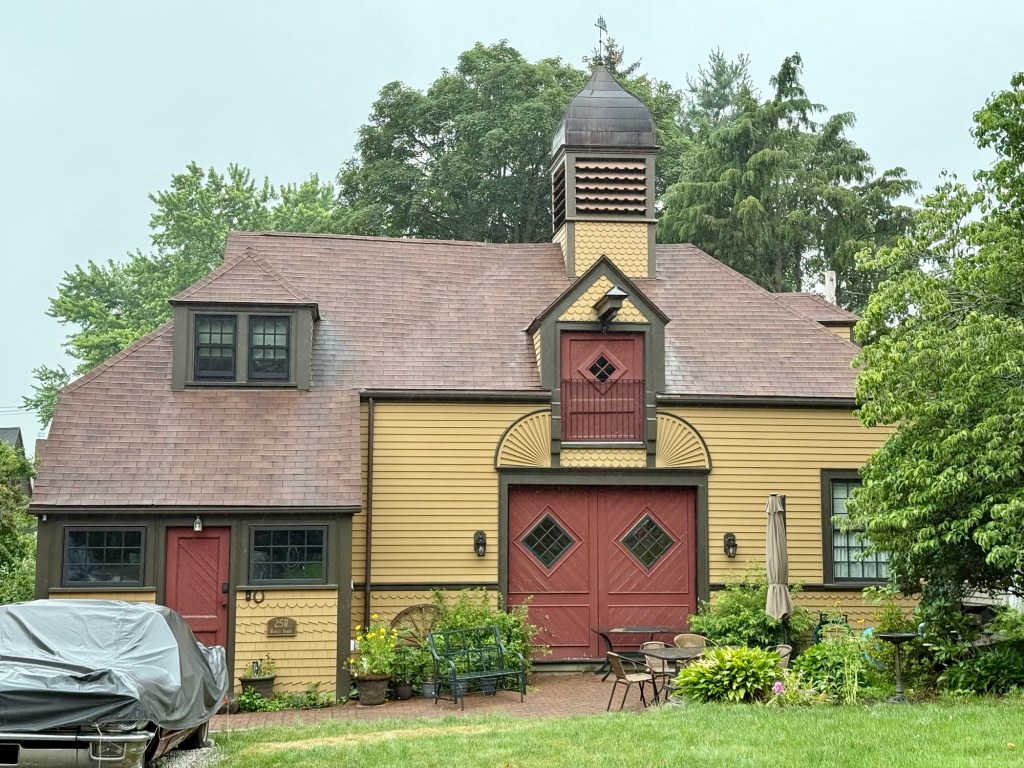
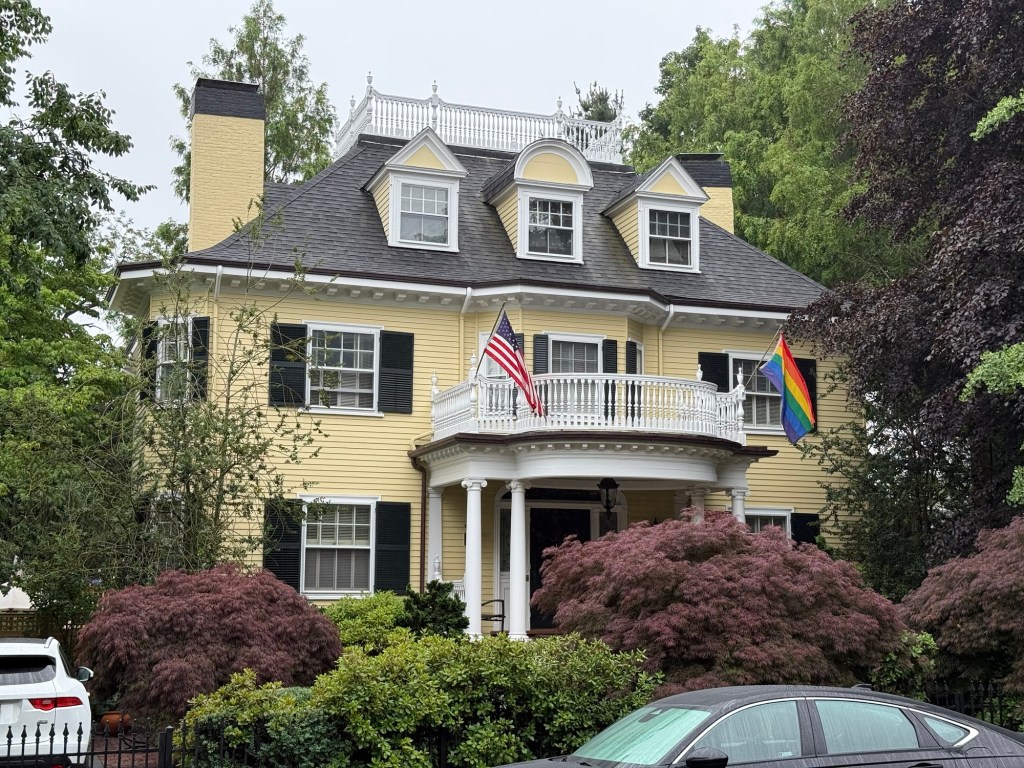
King-Murdock House // c.1894

Located on Ashmont Street in the Ashmont Hill neighborhood of Dorchester in Boston, this handsome Colonial Revival style residence was one of many large homes constructed here at the end of the 19th century. This house was built by 1894 for owner Franklin King and rented to tenants for supplemental income. Franklin King was part owner of the E & F King Company, a major paint and stain manufacturer in Boston. Franklin died in 1898 and the property was inherited by his son, Samuel Gelston King, who continued to rent the home. A notable renter of the house was Harold Murdock, a cashier and amateur historian and author who wrote various books of everything from the American Revolution to the Reconstruction of Europe. The architect is said to be Clarence Blackall of Cambridge, which makes sense as this house is clearly the work of a trained architect. Symmetrical in plan, the center-hall residence features a preserved entry portico, hipped roof, and detailed dormers.

Chansonetta Stanley Emmons House // 1893

Chansonetta Stanley Emmons (1858-1937) was born in Kingfield, Maine, and was one of the great women photographers in the 19th and early 20th century, often depicting domestic life and New England scenes. The young Chansonetta Stanley grew interested in photography after her brothers’ (Francis E. and Freelan O. Stanley) dry-plate printing invention, they also invented the steam-powered automobile known as the Stanley Steamer. She married James Nathaniel Whitman Emmons in 1887 and in 1894, James hired architect Henry McLean, to design a residence for him and Chansonetta, this lovely home on Harley Street on Ashmont Hill. The couple occupied the house until 1898, when James died of blood poisoning at the age of 41. Chansonetta sold the home and moved to Newton, where her two brothers lived and operated their business. The house blends Queen Anne and Colonial Revival styles and originally had a conical roof over the corner rounded bay. The roof was replaced with a flat roof at about the time of the large balcony and extended dormer.

Reed-Loring House // c.1872

Another of the early houses built in the Ashmont Hill neighborhood by George D. Welles, a young man who inherited and subdivided his family estate in Dorchester, is this mini-Mansard on Harley Street. Like a few others in the neighborhood, this house was built for Welles, likely as a rental property. The house was rented by Charles and Nellie Reed, who had painter, Frank Henry Shapleigh over as a guest. Shapleigh would paint the house in the 1870s, shortly after a stint in Paris. The property would be purchased by Stephen L. Emery, a coal and wood merchant in Boston, and later by Clara Reed, the daughter of Charles and Nellie Reed, who took up permanent residence in this house with her husband Royden Loring, the vice president of the Arnold Roberts Company on Congress Street. Clara Reed Loring lived here until the early 1970s. The Second Empire style house and large, preserved barn at the rear of the lot, provides a glimpse into the early development of Ashmont Hill.

George Derby Welles Rental House // c.1872

From the 1780s until 1870, almost all of Ashmont Hill (west of the present train station) was a farm, with the large farmhouse dating to about 1720, located at the corner of Washington and Welles streets, now the home to the Codman Square Branch of the Boston Public Library system. The farm was owned for a time by General Henry Knox. Sometime before 1850, the estate and mansion came into the possession of the Honorable John Welles, who died in 1855. The property would eventually be deeded to John Welles’ grandson, George Derby Welles, who was then just 26 years old and living in Paris with his wife, Armandine V. Derby. Welles wasted no time in developing the property through his agent, Boston Attorney Edward Ingersoll Browne. Streets were laid out and house lots were platted and sold, with some early properties built with much of the neighborhood developing by the turn of the century. The old Knox-Welles farmhouse would be razed by 1889, but the remainder of the neighborhood has since become a landmark neighborhood of Victorian-era homes. This mansard double-house at 67-69 Ocean Street dates to around 1872 and is one of the earliest properties in the area. Blending the Second Empire and Stick architectural styles, the handsome double house is said to have been designed by architect Luther Briggs for George D. Welles and rented to tenants.

Krogman-McManus Mansion // c.1890

Built ca. 1890 for Boston salesman Washington Libby Krogman (1858-1894), one of Boston’s finest Queen Anne style homes can be found in the Clam Point neighborhood of Dorchester. The pronounced sculptural qualities of this residence, together with the juxtaposition of clapboards and patterned shingles, variety of window sizes, and ornamentation place this house squarely within the pantheon of important Queen Anne designs within the city of Boston. Painted in a manner that showcases its sheathing and ornament to great advantage, this well-preserved house is particularly noteworthy for its graceful verandah that encircles a distinctive, round, conically-capped tower at its northeast corner. The home was only occupied by Washington Krogman for less than four years when he died unexpectedly in 1894 at just 35 years of age. The property was deeded to his widow Carrie for a few years before she sold the property to Thomas Francis McManus, a noted naval architect (schooner designer). The home remains one of the finest mansions in Dorchester.

Wales House // 1883

Built in 1883 for a member of the Thomas Wales family, this house in Clam Point, Dorchester, possesses a compact essentially rectangular clapboard and wood shingle-clad form. The architect, John A. Fox, designed the main façade elegantly with an open Stick style porch projecting from the center of the first floor which is enclosed by a steeply-pitched roof. The pitch of the porch roof is echoed in the small and shallow gable-like lintels which are really unique to the area. The treatment makes the facade read somewhat like a face.

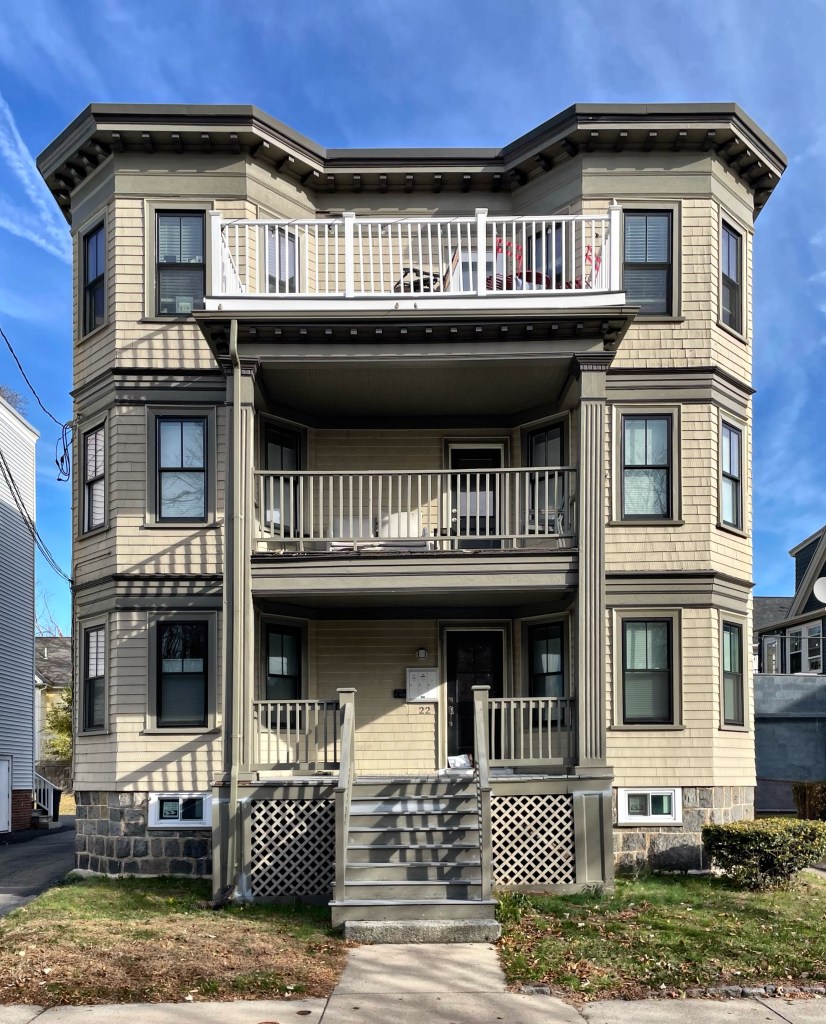
Piotti Three-Decker // 1911

One of the features that sets the Clam Point neighborhood apart from other Dorchester neighborhoods is that the majority of its houses are still surrounded by ample yards. In most Dorchester neighborhoods, the electric streetcar triggered explosive growth in the form of three-deckers, which have arguably become the symbol of the neighborhood’s housing. Three-deckers (also called triple-deckers) are housing types that surged in popularity in the late 19th and early 20th centuries as they provided housing where each floor usually consists of a single apartment. Frequently, extended families lived in two, or all three floors, providing access and generational wealth to immigrant families who otherwise may not be able to afford land and building a single-family home. This example was built in 1911 by Italian-born contractor Ambrogio Piotti, who lived in a large mansion on Melville Avenue nearby. The three flats were rented out to families and the three-decker is clad in wood shingles, has polygonal bays with three-leveled porches with monumental Classical Revival columns.

Elisha T. Loring House // c.1840

Elisha T. Loring (1804-1889) was born on Cape Cod and began his career in the Chilean tin and copper trades, moving to Boston in 1839. His house at 21 Mill Street in Dorchester’s Harrison Square neighborhood was built in the early 1840s, showcasing his wealth and stature in the community. Based out of this house, Loring made a large fortune in the Lake Superior mines, also known as the Calumet and Hecla mines. By 1862 he was the treasurer to the Pewabic and Franklin Mining Companies, and a decade later is listed as “President, National Dock Company.” Loring’s Dorchester mansion is Greek Revival in style and consists of a three bay by three bay main block and a substantial rear ell. The house’s original clapboards were replaced by wood shingles sometime in the 20th century. The main elevation’s pedimented center pavilion exhibits a small front porch whose Ionic columns support a heavy, cornice-headed entablature. The porch’s roof is set off by an ornate cast iron railing. The side elevation is unusually wide and culminates in broad pedimented attics containing elliptical lunette windows.

Preston Double-House // c.1830

Until recently, the Clam Point neighborhood of Dorchester was called Harrison Square. The name commemorated President William Henry Harrison’s visit to Dorchester during the presidential campaign of 1840 and honored his memory, as he died of pneumonia shortly after taking office. Development in the neighborhood was initiated following the arrival of the Old Colony Railroad depot (1844). When rail service to Harrison Square was discontinued in 1957, the Harrison name began to fade from the memories of area inhabitants. The name “Clam Point” is said to have been coined during the 1970s by realtors intent on touting the area as a desirable coastal community of antique homes, it stuck. Likely the oldest extant house in the neighborhood (built before the railroad depot) is this house on Mill Street, constructed as a double-house around 1830 for brothers Elisha and John Preston. The vernacular, late-Federal style house has later shed dormers and lancet windows in the side gables. The Preston’s land holdings and sale before the Civil War led to much of the later development in the neighborhood.

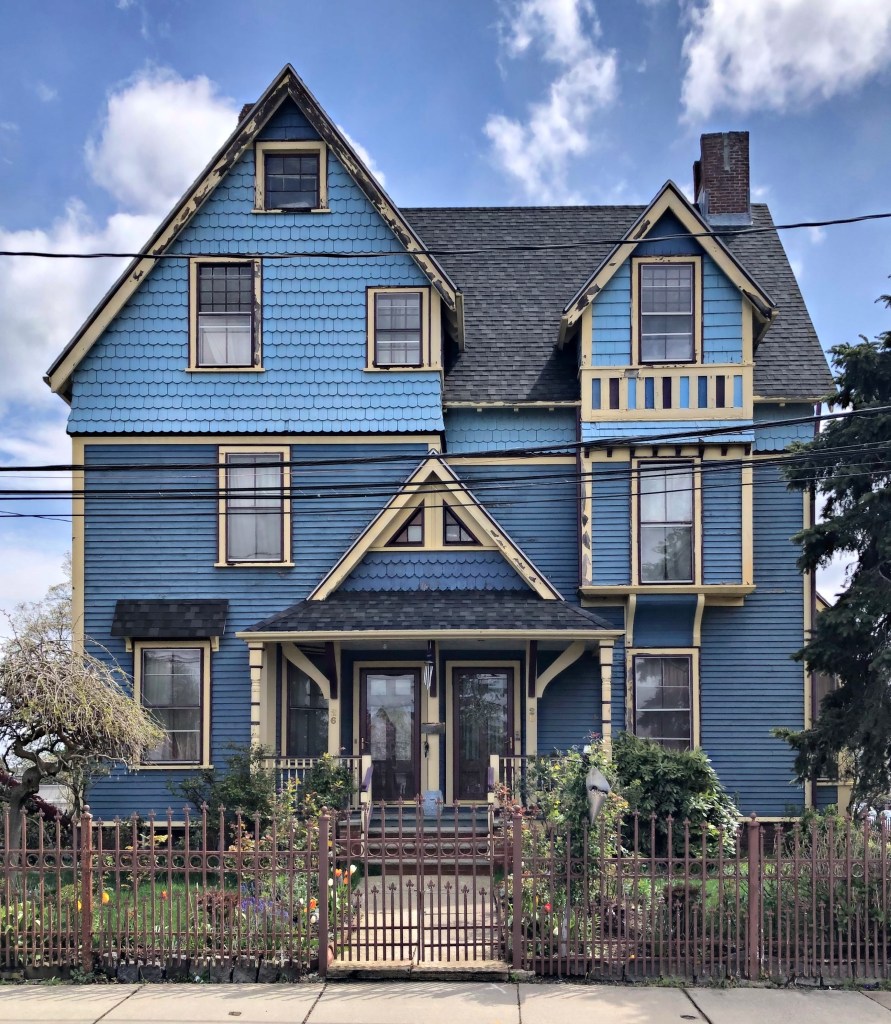
Hersey-Noyes Double House // 1879

Nothing beats a good Victorian-era house! This example in the Clam Point neighborhood of Dorchester does not disappoint. The Stick-style double-house was built for miss Mary E. Noyes and Ms. Hersey replacing an older house on the lot. The women hired architect John A. Fox to design the house which possesses one of the most complex forms and roof configurations in the neighborhood. Clad with clapboards at the first and second stories, its six intersecting gables are sheathed with scalloped shingles. At the main entrance on the façade is an open porch with square posts and railings with turned balusters. The side façade is even more complex with two side gables and a two-tier porch enlivened by Chinese Chippendale and spool work railings. The Herseys, along with Mary E. Noyes, co-owned the house until 1884; thereafter it was owned by Mary E. Noyes until around World War I. The stick style home really pops with that blue color, what do you think?

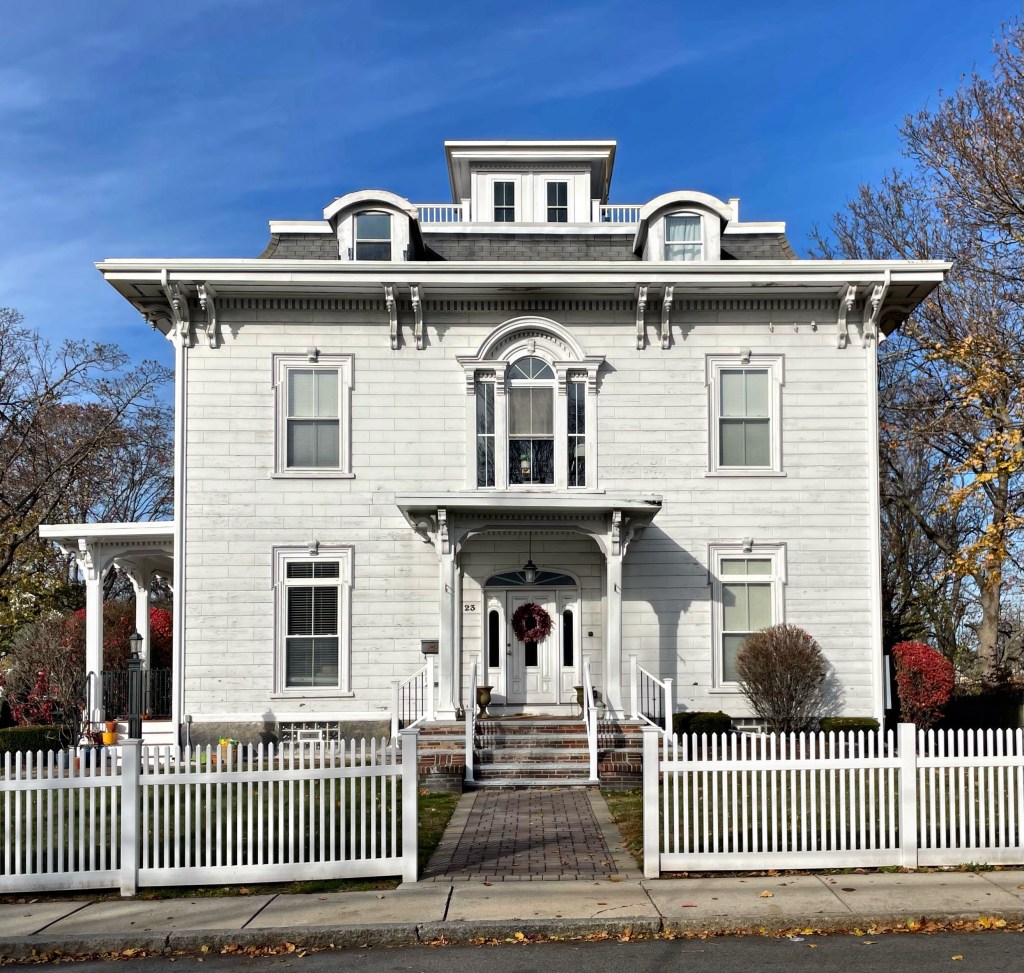
Shaw-Shepard House // c.1860

Originally built for Charles E. Jenkins, a partner in Bailey & Jenkins, suppliers of doors and blinds, this house in Dorchester’s Clam Point neighborhood stands out as one of the earliest and high-style mansions in the area. It appears to have been designed by local architect Luther Briggs, Jr. Shortly after its completion, the property was purchased by Theron and Rebecca Shaw. Theron was a partner at Lindsley, Shaw & Co., boot dealers in Downtown Boston. He died in 1870 and the house was sold to Dr. Luther Dimmick Shepard, a dentist. While the house (like many in Boston) is covered in later siding and has a plain white color scheme, the building retains its architectural integrity and would really shine when restored! What color would you love to see this Italianate/Second Empire style mansion be painted?

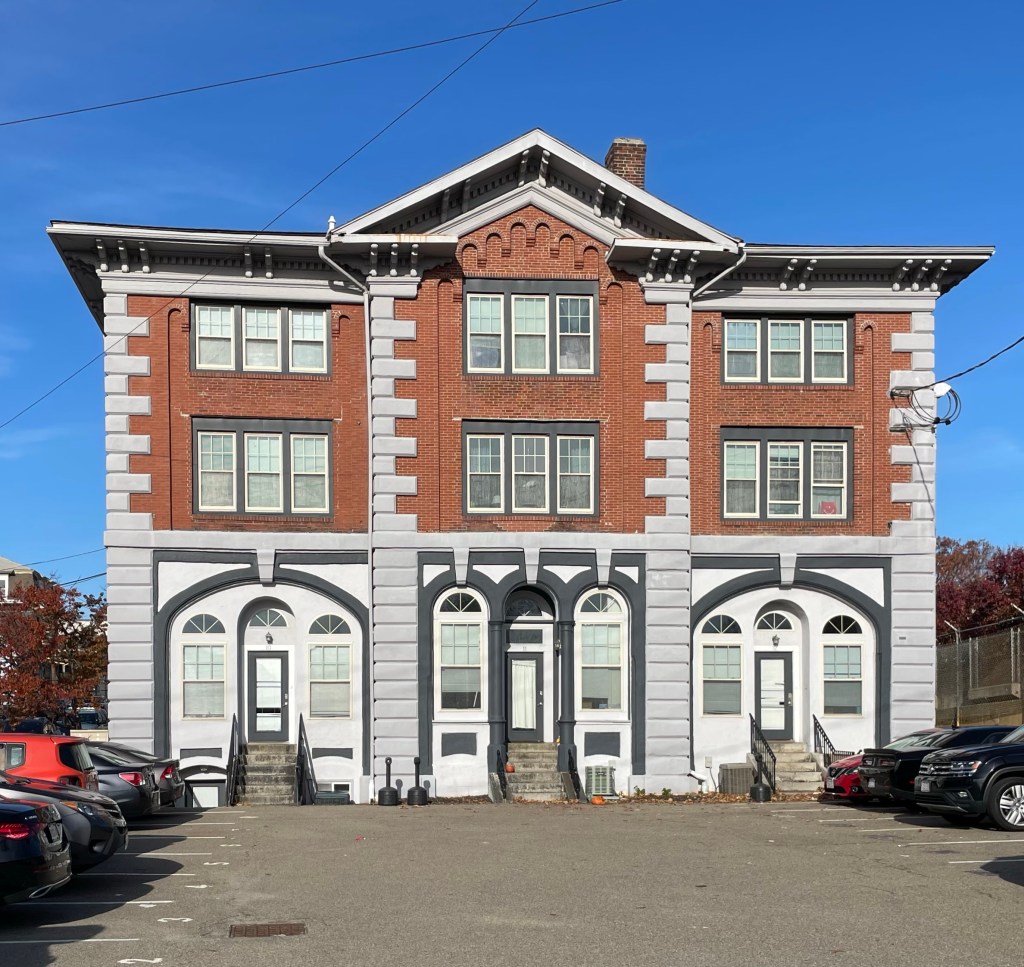
Dorchester Mutual Fire Insurance Building // 1860

This is your sign to take a different route! When exploring a new town or neighborhood, I love to explore the obscure streets just as much as the iconic Main Streets as hidden treasures can always be found! This building in Dorchester’s Port Norfolk neighborhood was constructed in 1860 as the new home of the Dorchester Mutual Fire Insurance Company, which was incorporated in 1855. The company seemingly hired Dorchester-based architect Luther Briggs, who also laid out the streets for Port Norfolk and the Clam Point neighborhoods and designed many buildings in the area at the time. The high-style Italianate building features bold proportions, quoins, and cornice. While the former round-arched windows have since been enclosed and are traditional double-hung windows, they building still stands out! At the rear, Second Empire style rowhouses were built for private ownership. The building is now all condominiums following a renovation.

Freeman House // c.1870

One of my favorites in Dorchester is this Second Empire manse, built c.1870 for cotton broker Freeman S. Packer. The house at 14 Everett Street in the Clam Point/Harrison Square neighborhood is a handsome, formal example of a Luther Briggs-designed Italianate Mansard residence. Although today sheathed in vinyl siding, much of the original siding and trim detail are likely still under there, preserved. Set back from the street facing an ample hedge-enclosed front yard, the three bay main façade exhibits a center pavilion and full-length front porch which undoubtedly appealed to summer guests who vacationed here when this house was known at the Russell House, an apartment hotel during the 1890s and early 1900s.