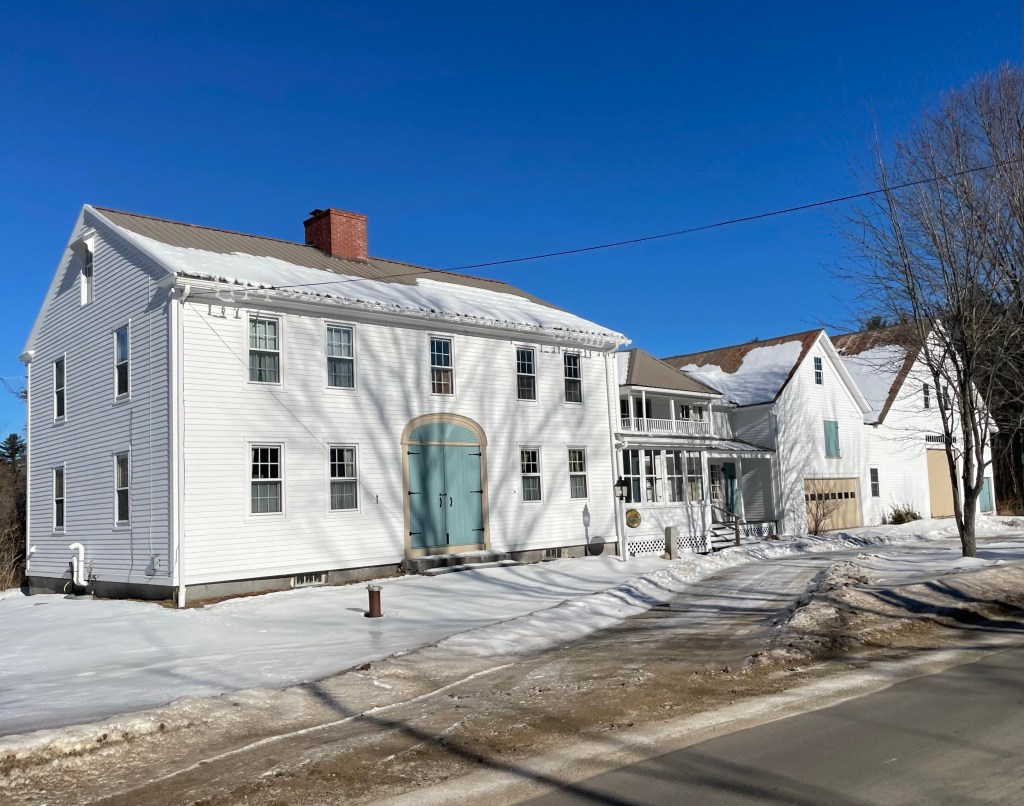
Nevers-Bennett Farmhouse // c.1820+

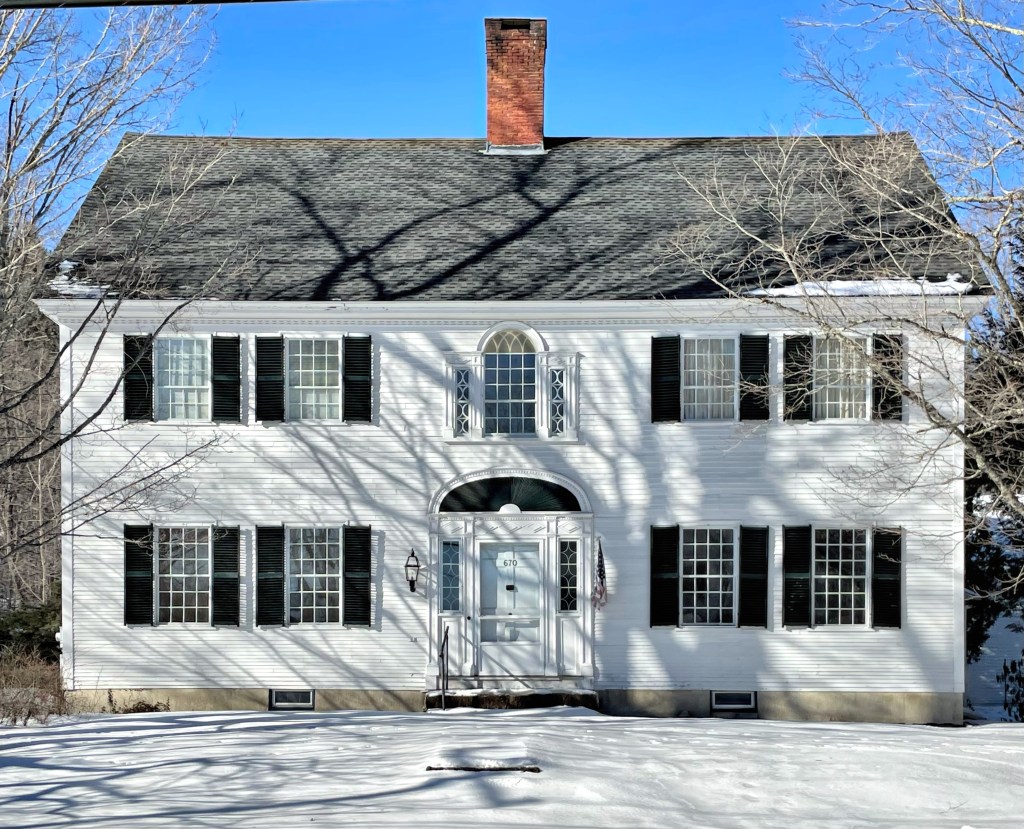
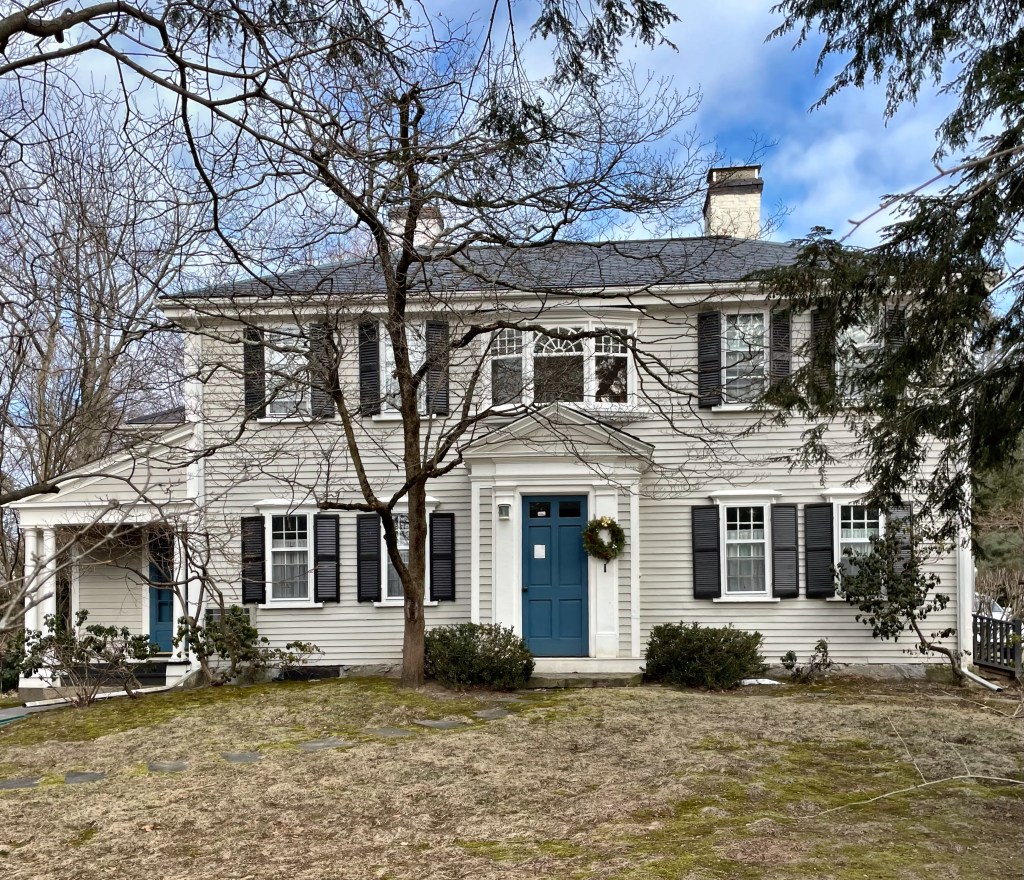
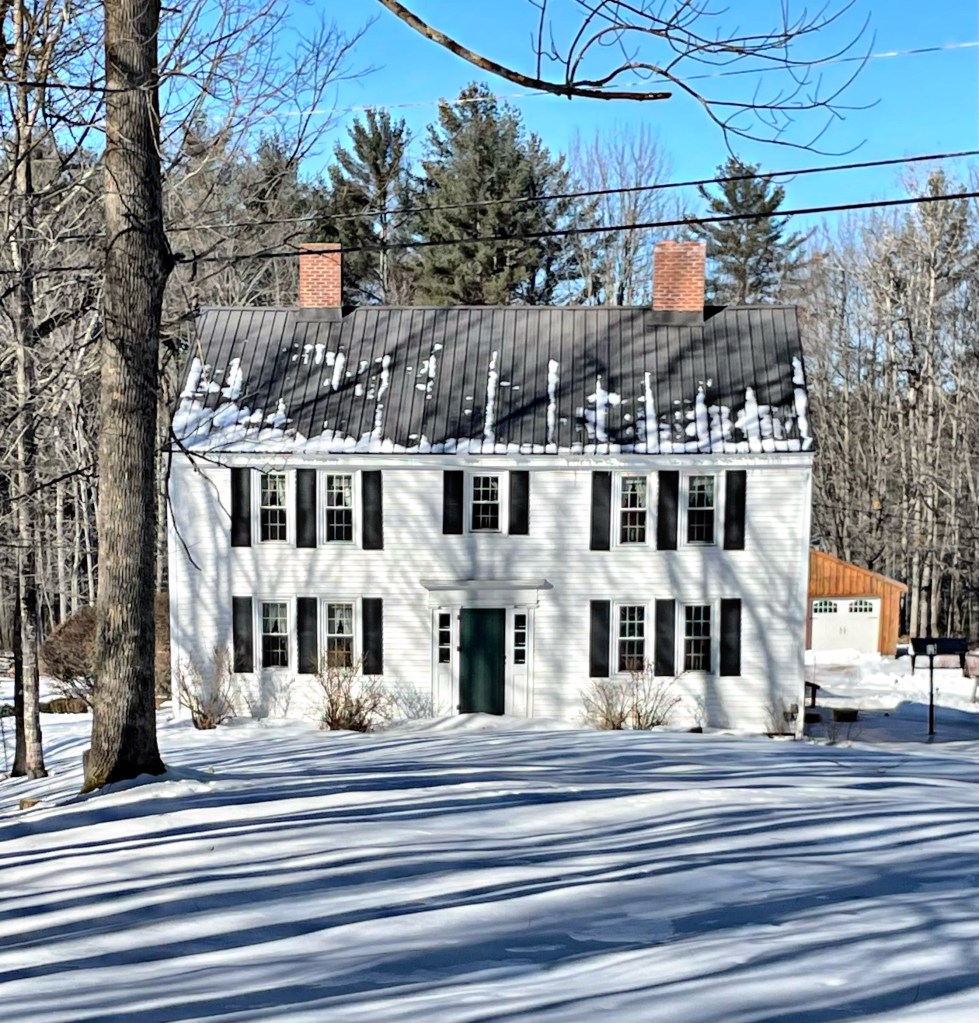
In 1820, just seven years after the incorporation of Sweden Maine, a homesteader, Amos Parker purchased fifty acres of land and began to erect a two-story, Federal house with a center chimney and a detached store beside it. Plagued by debt, Parker sold the unfinished house to Samuel Nevers circa 1833–1835, who purchased the property with the store for his recently married son, Benjamin. By 1860, Benjamin Nevers had a successful store and prospering farmstead. Benjamin died in 1883, and in the next two years, their daughter Charlotte, and her husband, Charles Bennett, dramatically remodeled and modernized the farmstead, adding a connected two-story ell building outward from the main house toward the old 1840 barn, connecting the entire property. I believe that the property remains in the Nevers-Bennett Family, as recently, Steve and Judy Bennett, recently negotiated an easement with the Maine Farmland Trust to protect their hay, beef, and maple sugaring acreage as farmland into the future.

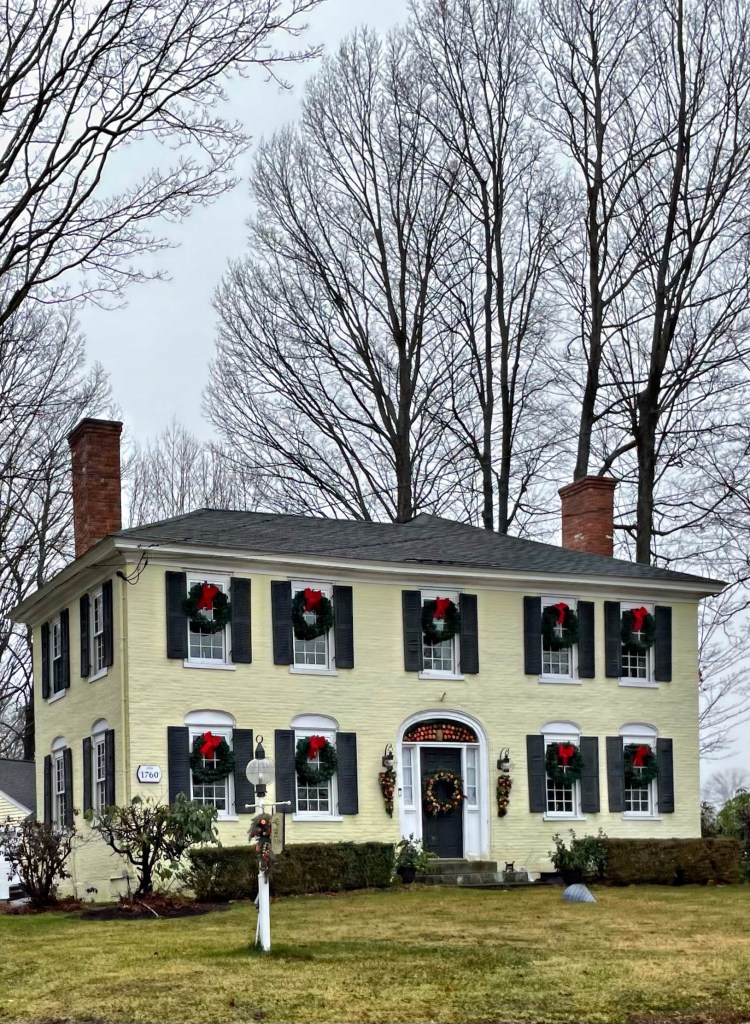
Asa Waters Mansion // 1829

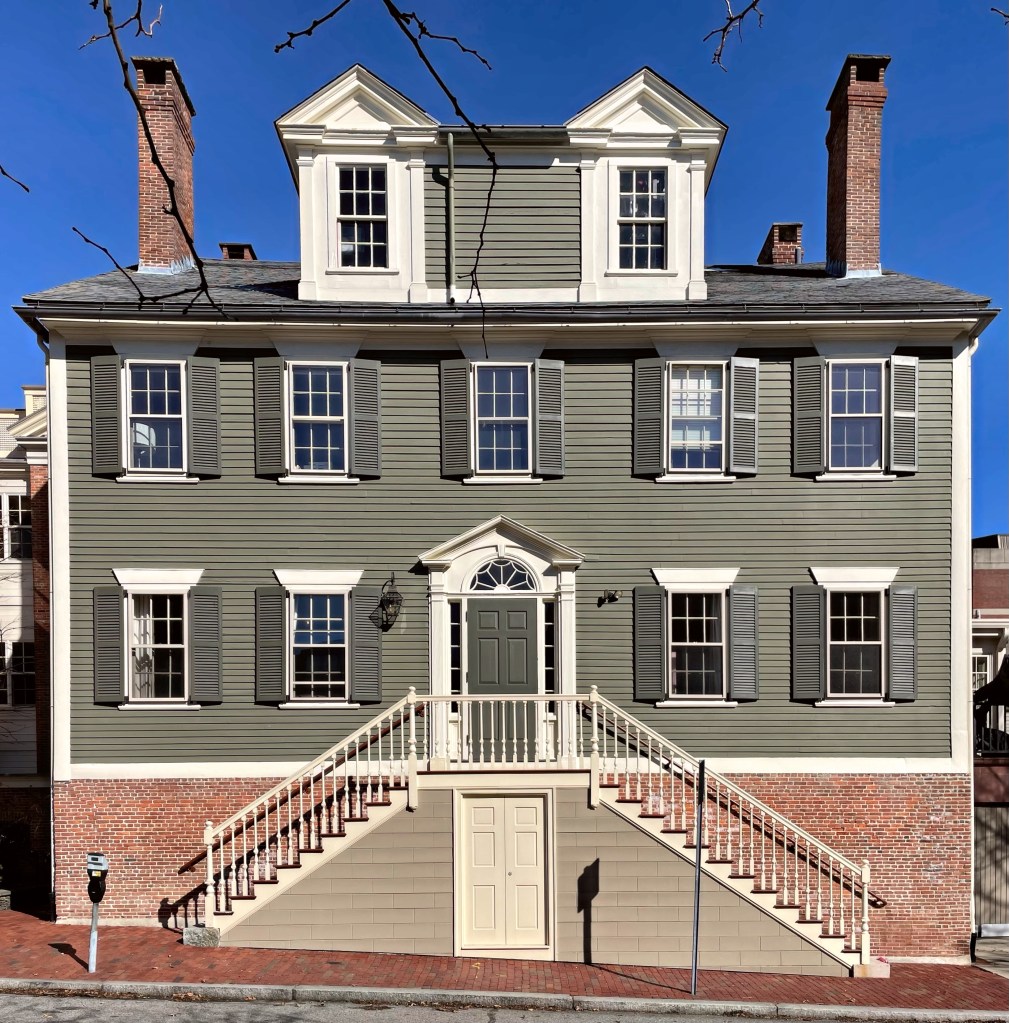
In 1824, prosperous gunsmith Asa Waters II set out to build the stateliest residence in the country. It took two full years to amass the necessary materials for what is now known as the Asa Waters Mansion and Mr. Waters spared no expense. Asa Waters II (1769-1841) was born in Millbury in 1813 to Asa Sr. and Sarah Waters. Asa earned the art of gunsmithing from his father, and in 1808 the junior Asa and his brother Elijah opened the Waters & Co. Armory along the banks of the Blackstone River, in what is now Millbury Center. Following the untimely death of his brother in 1814, Asa Waters carried on the business solo and secured lucrative arms contracts with the United States government. His invention of a lathe to turn gun barrels into the first seamless barrels revolutionized the manufacture of guns throughout the world, and provided his company a stockpile of cash. As a result, he hired Boston-based architect Asher Benjamin, to design a country house suitable of his stature. The mansion features two prominent facades with the primary distinguished by a colonnade of fluted two-story columns with composite capitals. The mansion remained in the Waters Family until 1929, when it was sold to the Roman Catholic Diocese of Worcester, as a rectory of a local church. In 1977 the Town of Millbury acquired the Asa Waters Mansion, and with little funding to maintain the property; in 1994, the Asa Waters Mansion had fallen into quite a bit of disrepair. The town proposed to demolish the mansion for a parking lot, but a group of locals worked together as the Asa Waters Task Force and petitioned to save the house: funds were raised, tradesmen in the community donated materials and labor. Saving the architectural landmark for generations to come.

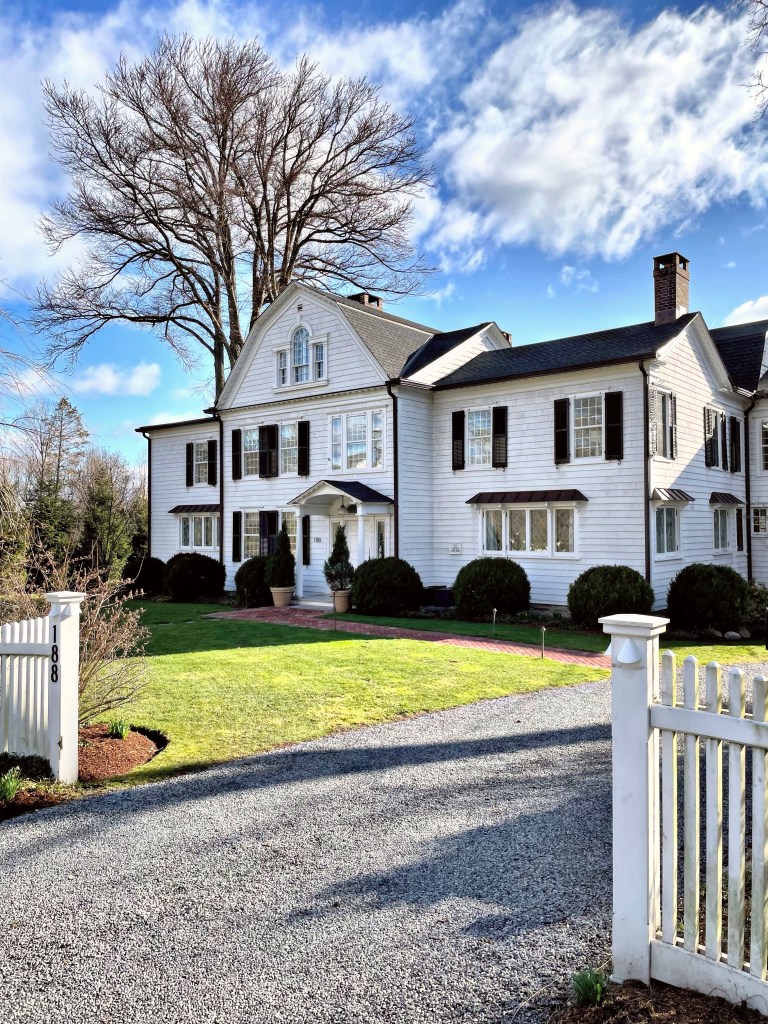
Hall-Balcom House // 1810

This historic house in West Millbury, Massachusetts, began in the end of the 18th century as a one-and-a-half-story wood-frame farmhouse. By 1810, the home was rotated 90 degrees and a more substantial, two-story brick house was constructed facing the street. The Federal style home was owned by Thaddeus Hall (1779-1855), and after his death, it was owned by his son, Orson Eddy Hall, who possibly rented the property for income while he resided in New Orleans and ran the iconic St. Charles Hotel there. The property was later acquired by Willard Balcom and remained in the family. Oh what I wouldn’t do to see the paint come off this old brick house!!

Alexander Jack Jr. House // 1811

Newport in 1774 had approximately 153 free Black residents residing in 46 households comprising of thirty-percent of Newport’s population at this time. One of these free Black families was the Jack family who resided around Levin Street (Memorial Boulevard today). The Jack Family appears to have been from Antigua and may have had ties to the Redwood Family (the namesake of the Redwood Library), who owned a plantation on the island and resided in Newport. Alexander Jack, Jr. was a free African American whose trade was a cordwainer or shoemaker. He bought his land in 1811 and is thought to have begun construction almost immediately. Jack heirs remained on this property until 1881. The Newport Restoration Foundation purchased the house in 1969, moved it that same year to Mill Street to save it from urban renewal and the widening of Levin Street as Memorial Blvd.

Canton First Congregational Church // 1814

In 1750, a new parish church was established as The First Ecclesiastical Society of West Simsbury, with parishioners meeting in members’ homes. Then, Canton Connecticut was still a part of Simsbury. In 1763, the Parish constructed a meetinghouse with the building also used for town meetings and other public gatherings. In 1806, Canton separated from Simsbury and the congregation soon after decided that the nearly 50 year old primitive building needed replacement. A new building was proposed and materials were harvested. Stories report that the first tree felled for lumber for the new church killed a parishioner. The beautiful Federal style church edifice features Palladian windows, a hallmark of the style. The congregation is active to this day.

Old Brick Tavern // 1804

The Brick Tavern was an important stopping point on the old Union Turnpike, and the original two-story brick structure was completed about the time of the turnpike construction by Paul Willard, who with his heirs, operated the inn for 25 years. In the first years of the 1800s, the Union Turnpike Company planned and built a road providing a link for travel from Boston to Albany. Realizing the possibility for an inn along the first leg of the route, Willard financed this substantial brick building for travellers to stop, eat and spend the night. The tollroad was later made free, and less people stayed at the inn. After subsequent ownership, the building started to suffer from deferred maintenance and it was sold to a local Quaker group. The Quakers modernized the building by constructing the mansard roof and updating the interior. They never occupied it, but rented it to tenants for income. After, it was a hospital, boarding house, and in WWII, as a barracks of sorts for soldiers training nearby at a military base. The building is now a house!

Newhall-Lane House // 1809

The Newhall-Lane House (could be the home of many wives) was built in 1809 by Pliny Newhall, a bricklayer. He purchased the land here at a prominent crossroads in Lancaster in 1808 from his employer who owned a brickyard across the street. At a previous home in town, Newhall’s wife Patty died giving birth to their son, at just 23 years old. Their son also died during childbirth. He remarried and had a full family to grow into the couple’s new house. They relocated to Lincoln and the home was sold to Captain Anthony Lane, who was the son of Deacon Jonas Lane, an important figure in Lancaster town history. Jonas had four wives, outliving three of them. Captain Lane himself, was married twice while living in this house; he had no children from either marriage. Although he was a talented craftsman and cabinetmaker, Captain Lane listed his occupation as farmer. The house is significant architecturally, as a fine example of Federal style architecture in Lancaster . Its sophisticated design is reflected in the graceful entrance. One of the unique features of the house is the pedimented gable of the facade which in combination with the narrow plan of the house, creates a delightful massing in this distinctive combination of Greek Revival and Federal styles.

Edwards-Machado House // 1807

Tucked away on Carpenter Street, one of my favorite Salem houses, the Edwards-Machado House stands out as the only brick house on the street, for good reason! In 1803, Joseph Edwards, a carpenter, purchased this piece of land and built a three-story wooden house for his family. Just three years later, a large fire destroyed the home, the family’s belongings, and at least two neighboring homes. Undeterred, Edwards built the present house to replace the one lost in the fire in 1807, once he received his insurance, but this time, he constructed the home of fireproof brick! He sold the house not long after, and the property went through many hands in the 19th century, many owners renting the property to families. In 1877, the property was sold to John Bertram, one of Salem’s greatest benefactors who lived at 370 Essex Street which he later gave his mansion to the city for use as a public library. Bertram rented out the former Edwards home to the Machado family.

Immigrants from Cuba, the patriarch, Juan (John) was a cattle rancher in Cuba. He came to the United States in the early 1850s to escape having to take the loyalty oath to Spain, as he believed in Cuban independence. In the U.S. he entered school in Manchester-By-the Sea in order to learn English. In Massachusetts, he met his future wife, Elizabeth, and took her back to Cuba where they remained for over ten years. In 1868, just before the beginning of the Ten Years War in Cuba, Juan, his wife and their children left for the final time after he had freed his slaves and distributed his cattle to various relatives. In Salem, he worked as a spanish teacher and translator. His son, Ernest, became famous as a prominent Cuban-American architect. Ernest attended MIT and studied architecture before entering the office of Shepley, Rutan & Coolidge, the successors of the great architect H. H. Richardson. In the late 1890’s Machado opened his own architectural firm, with offices in Salem and Boston, and designed many large Colonial Revival estates for wealthy New England families. Tragically, Ernest died in New Hampshire, when his canoe capsized, drowning at 39 years old.

Joseph Howard House // 1808

Salem, Massachusetts is probably the best town in the country to see amazing Halloween decorations everywhere and possibly the largest collection of high-style Federal period homes, a perfect pairing! This brick Federal home on Brown Street was built in 1808 for Joseph Howard (1780-1857) after his marriage to Anstiss Smith when they were in their 20s! Joseph worked as a shipping merchant in town. Together the couple had 11 children, with the last three dying in infancy. In 1827, the family relocated to Brooklyn, New York, and there, with his son, John Tasker Howard the two established the shipping and commission house of J. Howard & Son, with offices on South Street, and later at 34 Broadway. The family lived the remainder of their lives in New York. This house in Salem was sold to Thomas Downing, a dry goods dealer with a store nearby on Essex Street. Sadly, Downing suffered with severe depression in the later years of his life until 1859 when he took his own life in the stairwell of the eastern tower of the East Church in Salem (now the Salem Witch Museum). The Brown Street home was willed to his widow.

Murray Store // c.1825

Arguably the cutest little store in Newmarket is the Murray Store, right on the town’s vibrant Main Street. The brick building is one of the earliest such structures on the street and is a great example of a narrow Federal style building with a lunette in the gable end. The structure was built before 1830 and was occupied by a Ms. Charlotte Murray as a millinery (women’s hat store). Main Street USA! What is your favorite Main Street in New England?