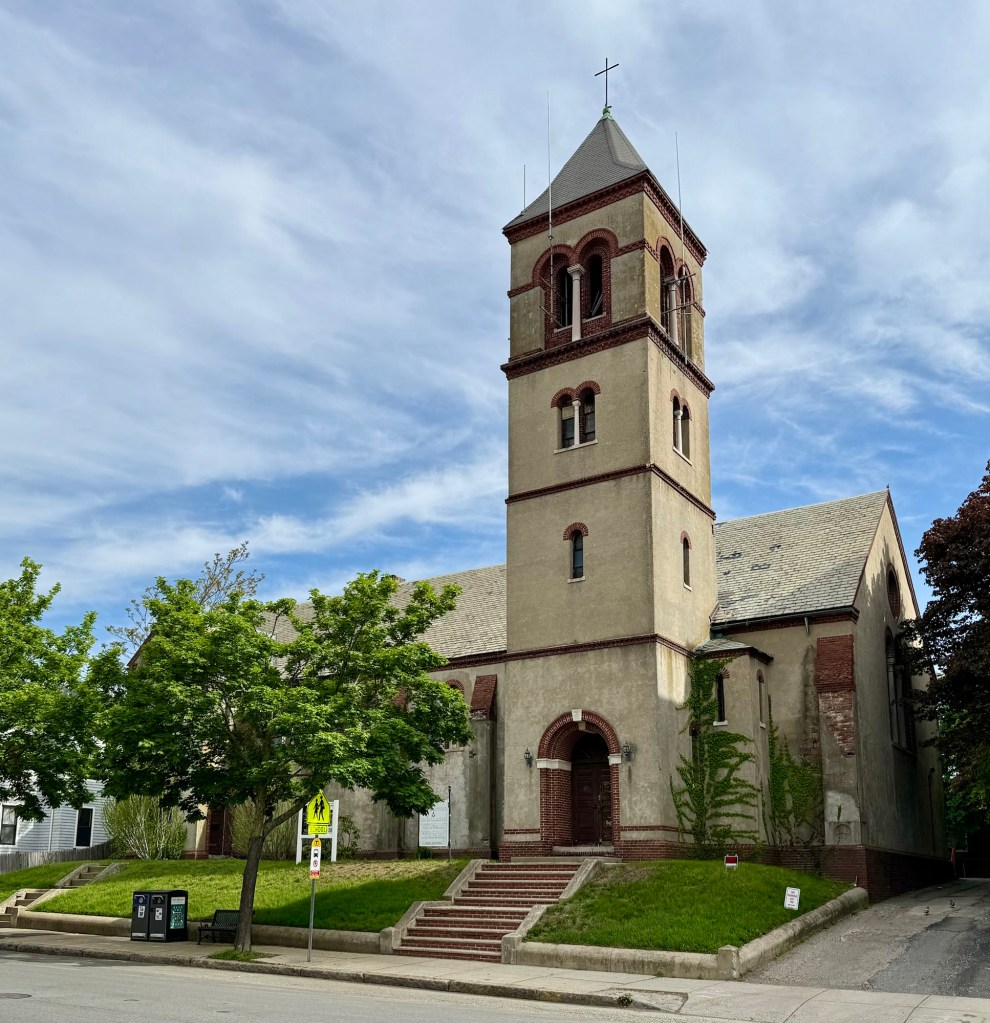
First Universalist Church of Somerville // 1917

The First Universalist Church of Somerville is located on the north side of Highland Avenue across from the First Unitarian Church of Somerville, in a completely different design. The congregation acquired this site in 1915, and the church was built from 1916 to 1923 to a design by the noted ecclesiastical architect Ralph Adams Cram, who produced a somewhat more Romanesque plan than the typical Gothical Revival work he is best known for. One of the key members of the building committee was Gilbert Henry Hood of the Hood Milk Company family. The new church was planned to house an “assembly room,” Sunday school classes, and a parish house. The church operated here for decades, but most recently was home to the Highland Masonic Building Association as the King Solomon’s Lodge. The lodge moved from the building and the property was purchased by a developer who hoped to demolish the building and erect a housing development. The building was deemed significant and “preferably preserved” by the Somerville Historical Commission, and landmark designation was initiated. The building was recently re-listed for sale, and would make a great adaptive reuse or even partial demolition for housing incorporated into the old church. Kudos to the Somerville Historical Commission for standing firm on this significant church by a nationally recognized architect.
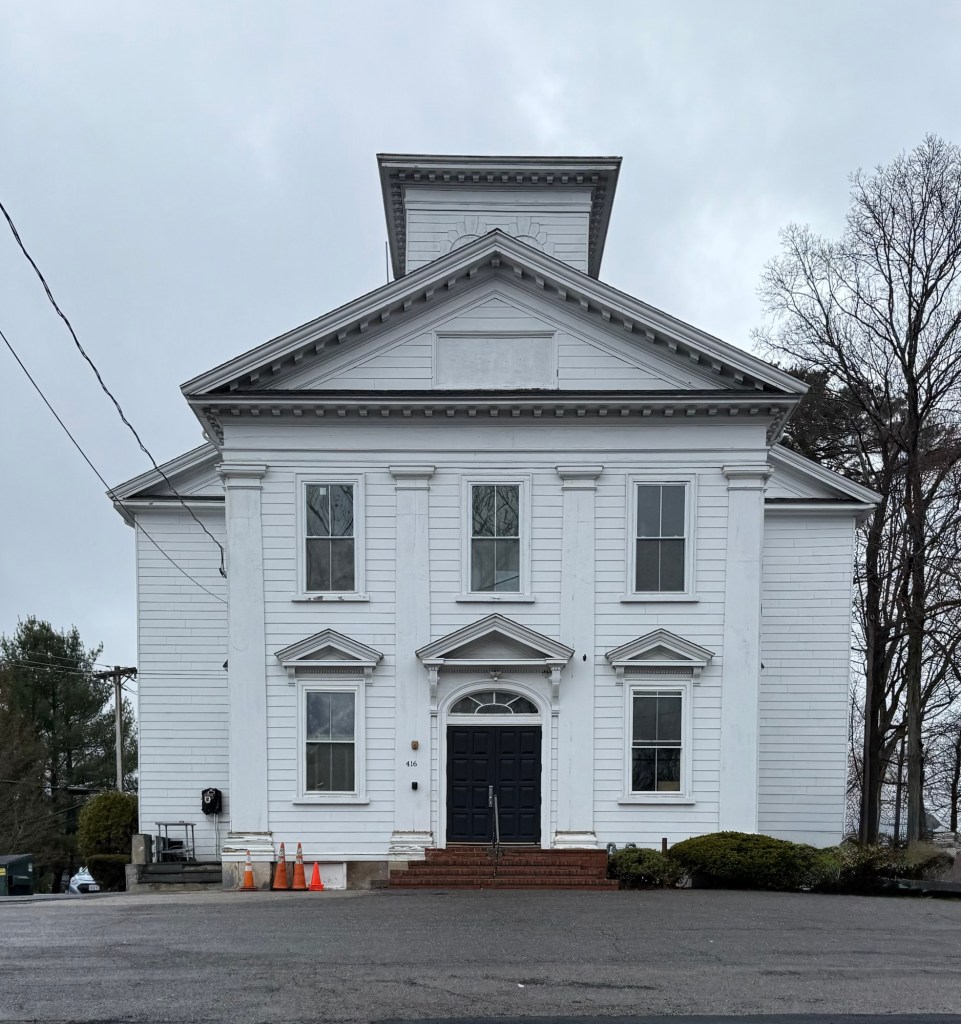
First Congregational Church of Abington – Abington Masonic Hall // 1819

The First Congregational Church of Abington, Massachusetts, was established in 1711. Besides the First Church, there were three additional churches founded in the town’s other villages: The Second Church in South Abington (now Whitman) Third Church of East Abington (now Rockland), and the Fourth Church at North Abington. This edifice was the third building of the congregation, and was built in 1819. The structure was only used as a church for 30 years until 1849, when the congregation built a new church nearby. This structure was sold and converted to a Masonic Hall and District Court for some years. Major changes to the building include the destruction of the steeple from the Gale of 1869, and in 1885, the present entryway was added, extending about 20 feet from the facade to provide a more adequate stairway to the second floor. Today, the building is used as a church for a local Brazilian congregation.

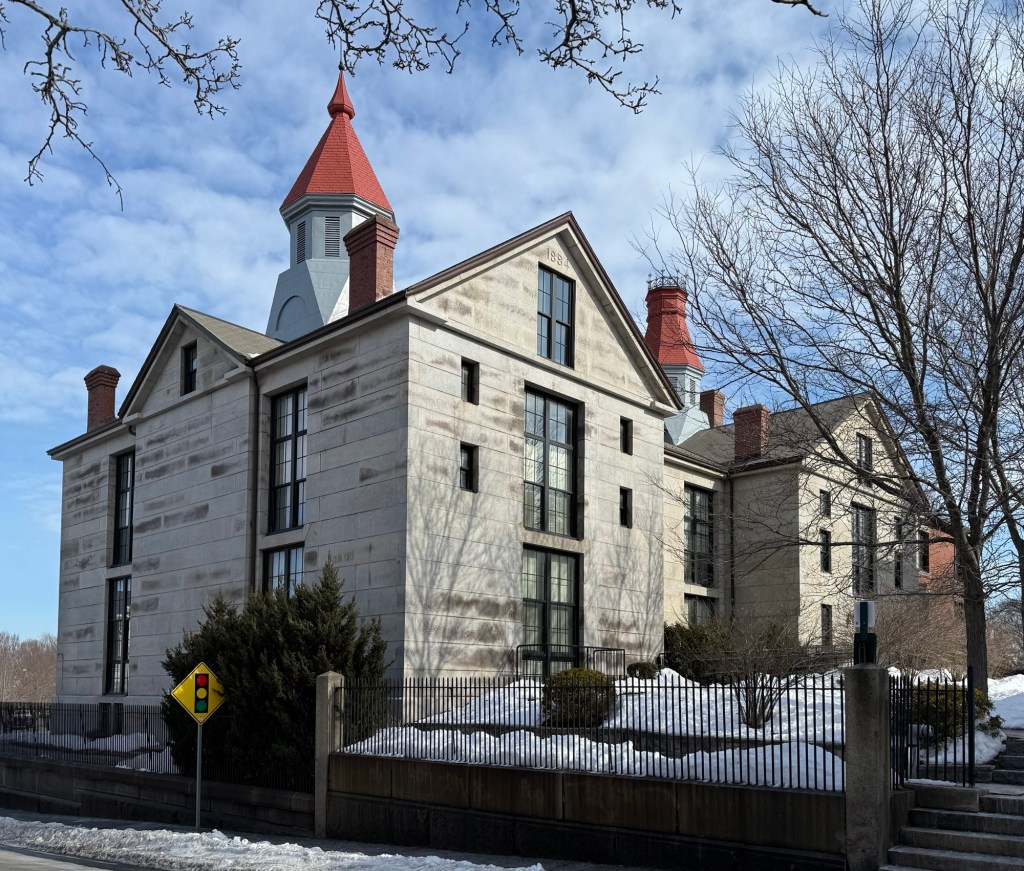
Former Essex County Jail // 1811

The former Essex County Jail is a large and significant building in Salem, Massachusetts, that has seen a recent rebirth thanks to the intersection of historic preservation and the demand for new housing in many New England communities. Constructed of large, Rockport granite blocks, the building was constructed in two phases—the section to the east was constructed in 1811-13 while the parallel west wing dates to 1884, with each of the construction dates inscribed at the top of the pediments on the south elevation. Completing the complex is the 1813 Jailer’s Residence which sits at the edge of the now enclosed courtyard. Those who were committed here were largely sentenced to short terms, many for the offense of drunkenness or petty theft. Inside, prisoners did all the labor, such as cooking, baking, firing the boilers, etc., with the female inmates making clothing for all inmates. The jail was in operation until 1991, and at that time was considered the oldest active penitentiary in the United States. Years prior, in 1984, several detainees had successfully sued the county for inadequate living conditions, leading to the closure of the building. A preservation restriction was established for the building and in 2009, the property was conveyed to a developer who converted the complex into 23 apartments, with 19 in the old jail, three in the old jail keeper’s residence, and one in a converted carriage house. The great preservation/adaptive reuse firm of Finegold Alexander Architects furnished the plans for the successful renovation that provided a new life for a once crumbling eyesore.

Essex County Registry of Deeds // 1909

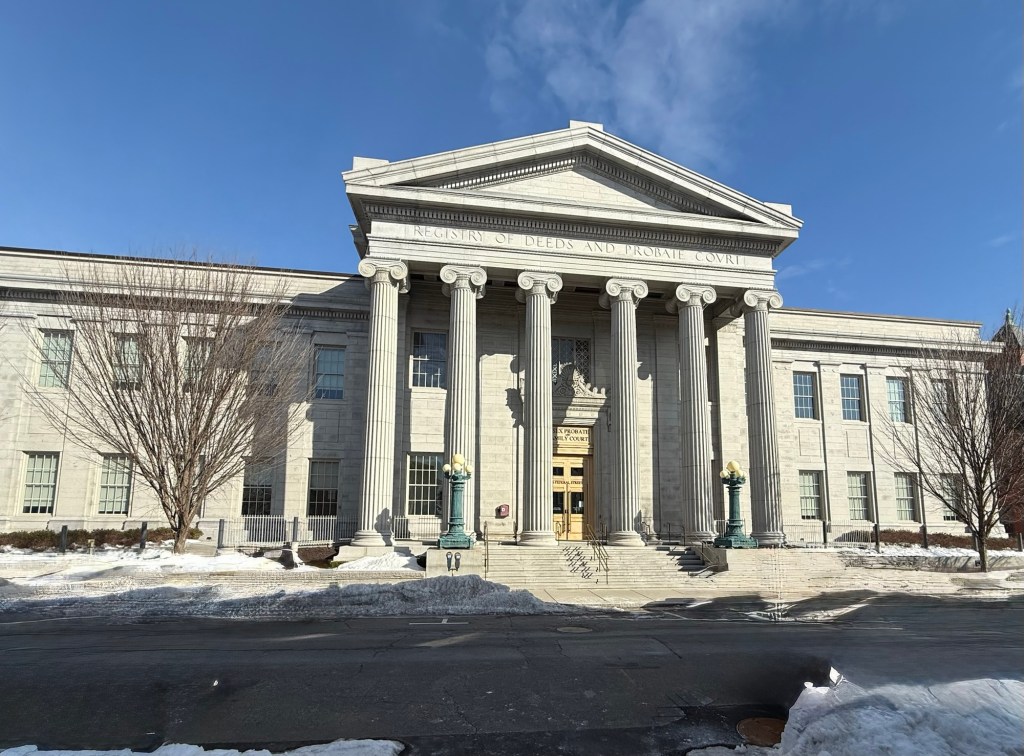
The Essex County Registry of Deeds and Probate Courthouse on Federal Street in Salem, Massachusetts, was built in 1909 from plans by Boston architect, Clarence Blackall. The Neo-Classical courthouse adds to the rich tapestry of Civic buildings there, showcasing the ever-evolving tastes in architecture as the buildings become more contemporary as you move westward down the street. The two-story granite and cast-stone faced brick masonry building is cross-shaped in plan, consisting of a three-bay wide gable-end entrance with Ionic porch of six fluted columns supporting a dentilled entablature and pediment. The central bay within the entry porch contains a large double-door entrance with elaborate architrave and a scrolling pediment incorporating Classical motifs and a Greek god bust. The building underwent a massive restoration in 2017, and was renamed the Thaddeus Buczko Building after retired First Justice Thaddeus M. Buczko.

Old Essex County Superior Courthouse // 1861

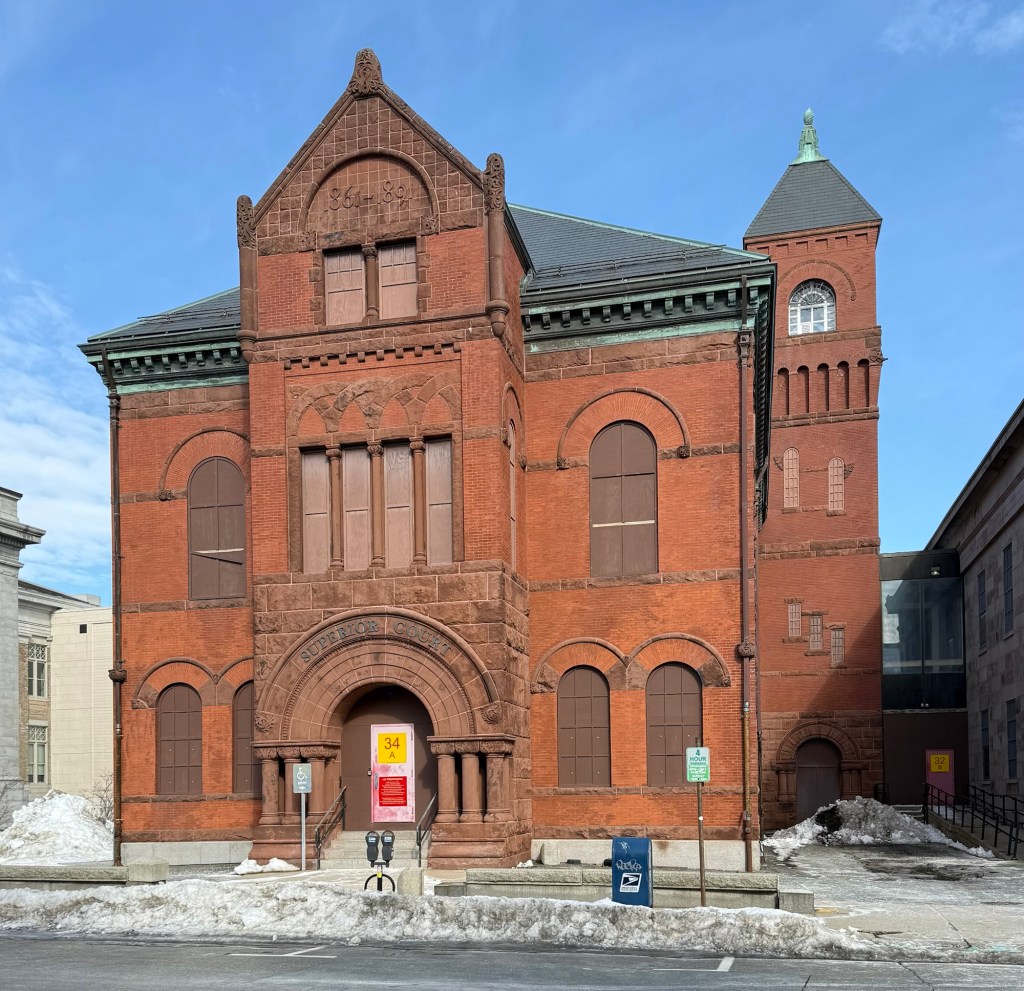
Located to the west of the Old Granite Courthouse on Federal Street in Salem, the Old Essex County Superior Courthouse is a visual depiction of the emergence of the Victorian styles from the more Classical Greek mode. Originally built in 1861 from plans by Salem architect, Enoch Fuller, the building was distinctly Italianate in style and built of brick until a major renovation in 1889 gave the building its present Richardsonian Romanesque appearance. The building was enlarged and renovated by architects Holman K. Wheeler and W. Wheelwright Northend which includes: changes to the roof line, creation of dormers, alterations to the window surrounds to create Romanesque arches and more. A three-story projecting pavilion, whose first floor is finished with rusticated brownstone, contains a recessed entry with a large semicircular arch supported on three columns with carved capitals at each end. The central pavilion resolves into a gable with corner pilasters with carved finials centering a blind arch containing the full date span of the complex, “1861-1891” in a field of square rusticated brownstone blocks. The courthouse remained in use until the J Michael Ruane Judicial Center at the end of the block was completed in 2012. The Old Granite Courthouse and adjacent Old Superior Courthouse were both vacated and have been essentially mothballed ever-since under the ownership of the Division of Capital Asset Management and Maintenance as surplus. The fate of the two buildings remains undetermined.

First Baptist Church of Salem – Essex Law Library // 1805

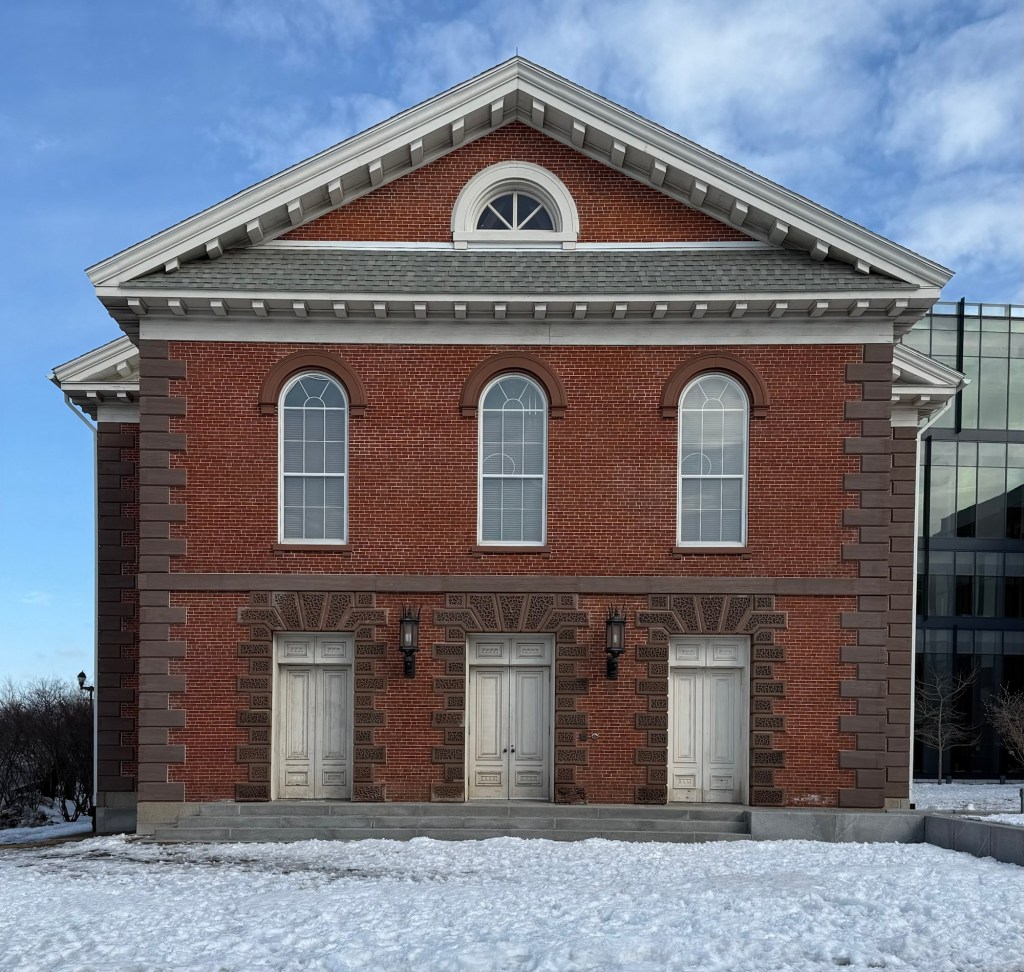
The First Baptist Church of Salem was built in 1805 on Federal Street and is the oldest brick meetinghouse in Salem. The local Baptist congregation was established in 1804 when 24 parishioners formed the First Baptist Church, and began gathering funds to elect a pastor and build a house of worship. At the time, Baptists were a religious minority in Massachusetts, where nearly all churches were Congregational, so against large odds, the parishioners funded a brick building and lot on the prominent Federal Street in Salem. The structure was completed by 1805 and is said to have been one of only fifty brick structures that stood in the city at the time. A major renovation to the building occurred in 1850, when the church was renovated in the Italianate style. Its three bays are articulated as an English basement containing three identical entrances framed in heavy rusticated brownstone. A belt course separates this basement from a principal story composed of tall arched windows capped by drip-molded brownstone. A lunette window is the centerpiece of the strongly projecting modillioned pediment. The entire composition is very pleasing and showcases the ever-evolving architectural tastes in the 19th century. A tower was later removed due to structural issues. In the early 21st century, the site of the church was needed for an expansion of the Essex County Courts. The congregation sold the property and in the following year, the old brick church was moved a couple hundred feet to the west and restored and was converted into a law library for the new courthouse. Talk about historic preservation at work!

Basilica of St. Stanislaus // 1908

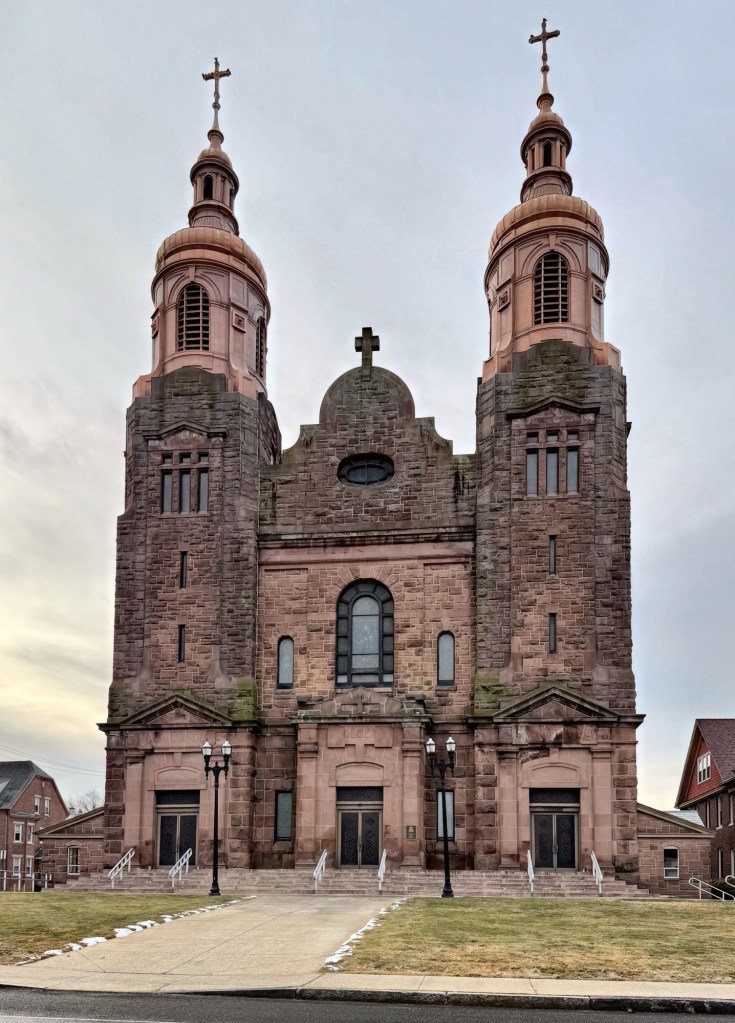
The Basilica of St. Stanislaus is a landmark church building in Chicopee, Massachusetts, with strong ties to the city’s industrial and immigrant past as well as a landmark of the city’s rebirth and growth. The congregation was founded and financed by Polish immigrants who had arrived in Chicopee, beginning in the 1880’s. The young Poles were determined to establish and finance their own church in which they could worship in their own native language and espouse their Polish customs and traditions with a sense of community. The church was founded at a time where Polish immigrants were settling in Chicopee, finding work at local factories. The Polish population of Chicopee surged in the late 19th into the early 20th centuries from just 200 residents in 1885 to over 9,000 in 1914. The first St. Stanislaus Church was a small frame structure built on this site in 1891. The present church was built in 1908 from the designs of architects Robert J. Reiley and Gustave E. Steinback and is Byzantine Revival in style. Constructed of brownstone with cathedral-like qualities, the facade is dominated by a pair of monumental masonry towers. Its spires are composed of copper drums which are surmounted by graceful belvederes and are pierced by arched openings. In 1991, Pope John Paul II raised the status of the church to a “minor basilica“, a classification that remains to today, one of just a handful in New England.

Dwight Manufacturing Company Complex // 1841+

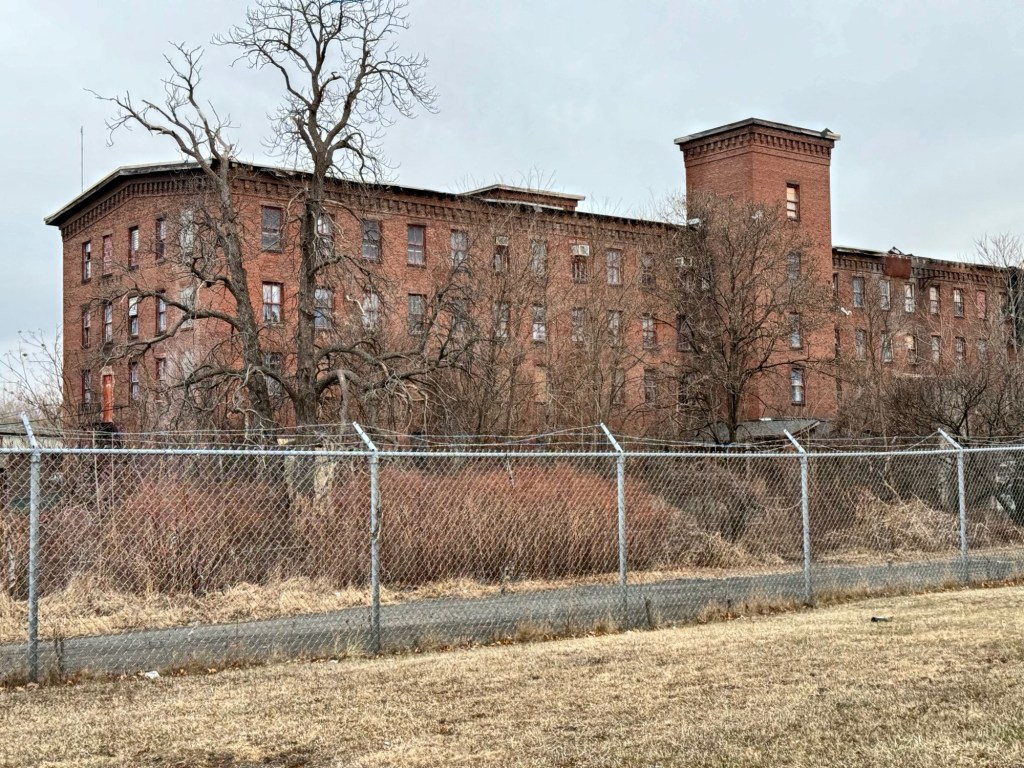
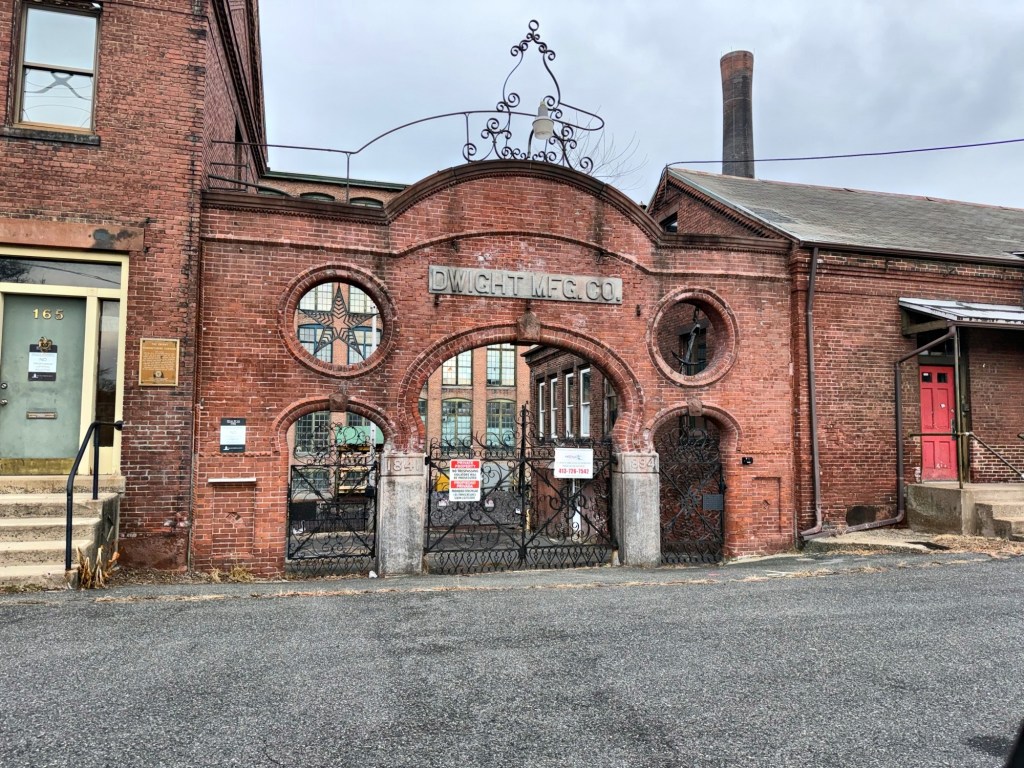
The Dwight Manufacturing Company is named for Edmund Dwight (1780-1849) of Boston, an industrialist who envisioned an industrial town on the Chicopee River. Dwight, having a country home in Chicopee, had begun a venture with his brother, Jonathan, at Chicopee Falls creating the Chicopee Manufacturing Company, to produce cotton cloth. Due to the company’s immediate success, the Dwights along with other investors formed the Springfield Canal Company in 1831, with the goal to create the “new Lowell”, an industrial community in what is now Chicopee Center. In 1856, the Dwight Mills purchased some earlier mill complexes, creating the Dwight Manufacturing Company and consolidating all their cotton cloth manufacturing into one organization. In addition to the mills, the Company also built employee housing
along Depot and Dwight Streets, a stone’s throw from the mills. The creation of employee housing allowed the Company to attract new employees in particular women and children, nearly all immigrants, who could be housed together. My favorite part of the complex is the entrance gate, built in 1894, connecting the Office and Cloth Building. It is amazing to think of all of the people who passed through this portal, working long hours for a better life. Overtime as production methods changed and technology evolved, nearly all the original mills would be replaced or retrofitted. Despite the changes, the Company could not remain profitable and shut down production in 1927 and ultimately selling the land and equipment in 1930. Some smaller manufacturing has since occupied some of these buildings, but they remain largely (if not entirely) vacant, awaiting a new life.

Hotel Essex – Plymouth Rock Building // 1900

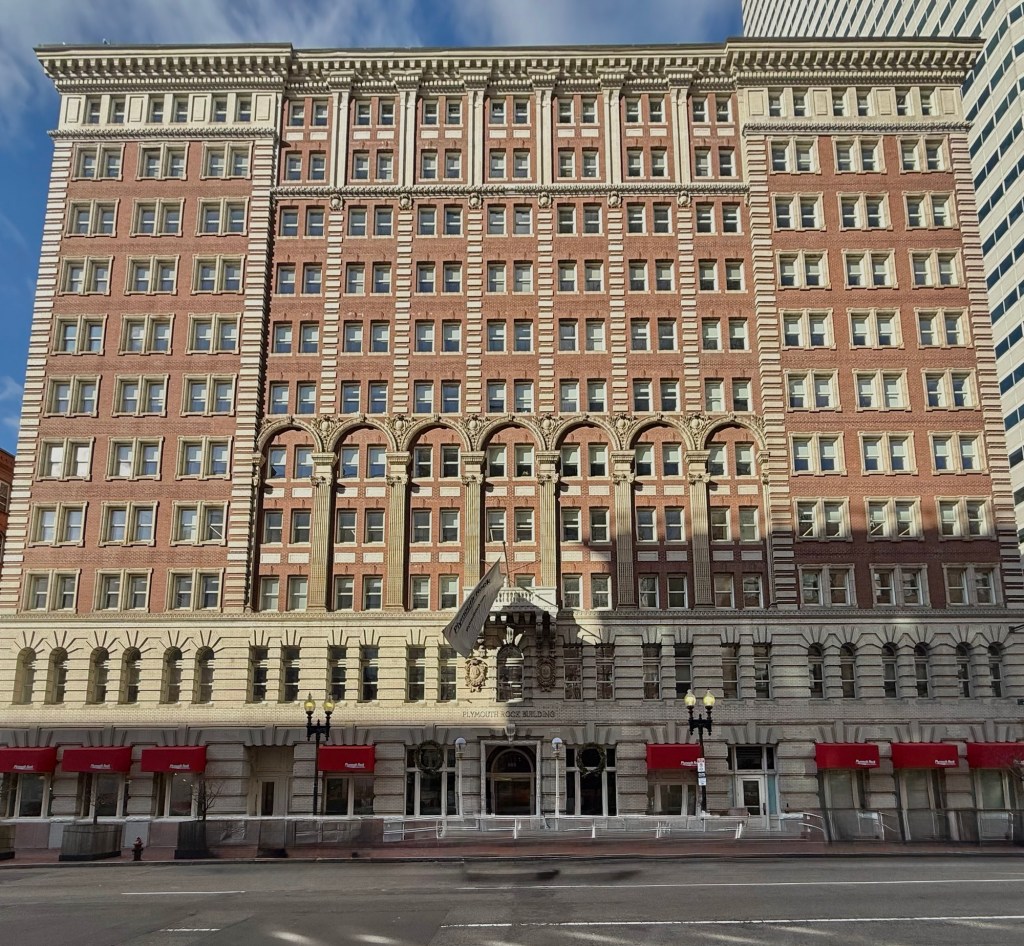
The construction of a new South Station Terminal in 1899, prompted a development boom for the nearby area, which had for the previous decades been almost entirely mercantile and centered around the leather and woolen industries. Due to increased land values and an influx of travelers to the area, developers saw an opportunity to erect this building to serve as a hotel for visitors to Boston via South Station. Boston architect, Arthur H. Bowditch, furnished plans for this building in the Beaux Arts/Renaissance Revival style, with use of brick and limestone construction, ornate finishes at the façade including the fluted pilasters, arches and cartouches in the spandrels. The building was completed in 1900 and known as Hotel Essex and featured a long, storied history as a hotel until it closed in the second half of the 20th century. After years of deteriorating conditions, the building was adapted as the corporate offices for Plymouth Rock Assurance Corporation in 1982. The building was restored and has been known as the Plymouth Rock Building ever since.

Colby Hall – Andover Newton Theological School // 1866

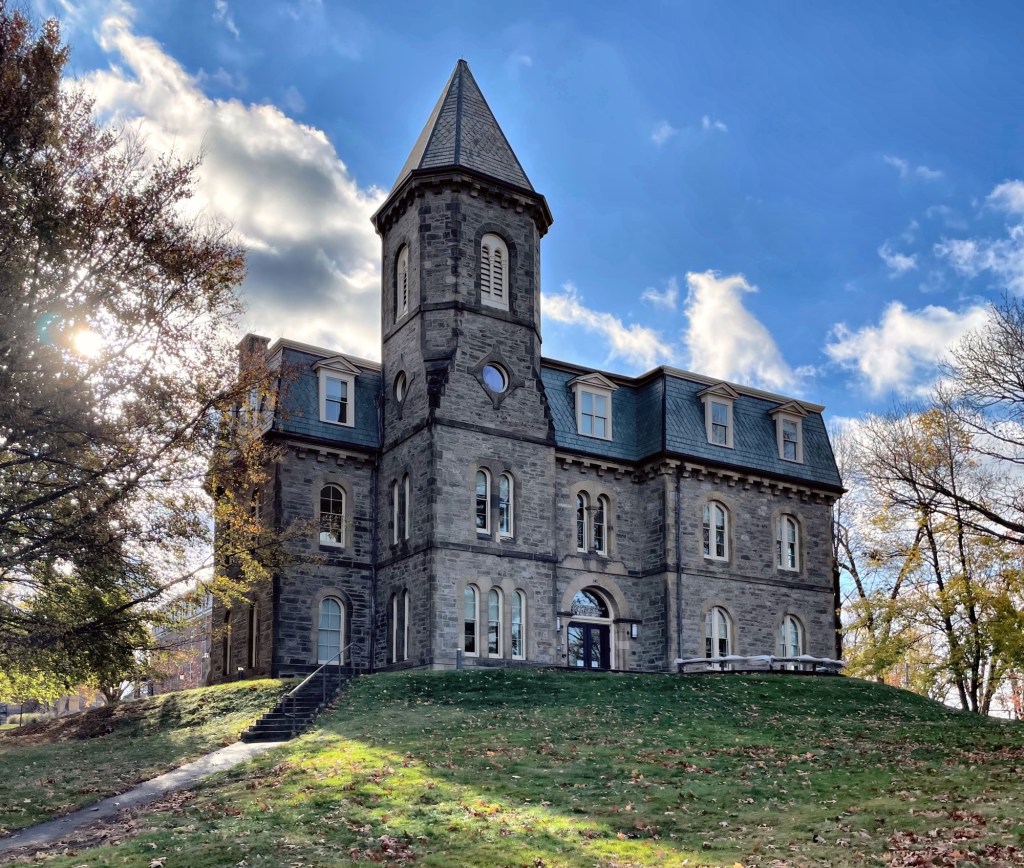
Colby Hall sits perched atop a hill overlooking Newton Centre, Newton, and is located in the Andover Newton Theological School campus. The building was constructed in 1886 for the Newton Theological Institution, which was founded on this site in 1825, and used for the a Baptist seminary, educating young students in theology. By the 1860s, the school had outgrown its space and following a donation from benefactor,  Gardner Colby (1810–1879), who was treasurer of the school (and was also the benefactor and namesake of Colby College in Maine) plans were drawn up for the new lecture spaces and chapel building. The unique building was designed by Alexander Rice Esty, a prominent architect at the time, and it blends Second Empire and Romanesque Revival styles under one roof. The three-story structure is of a light buff, rough cut stone with sandstone trim and features an imposing four-story tower at the eastern end. In November 2015, the school announced that it would sell its campus and become part of Yale Divinity School in New Haven, Connecticut. The Newton campus was purchased by the Windsor Park School with Colby Hall now occupied by the Boston Psychoanalytic Society & Institute.