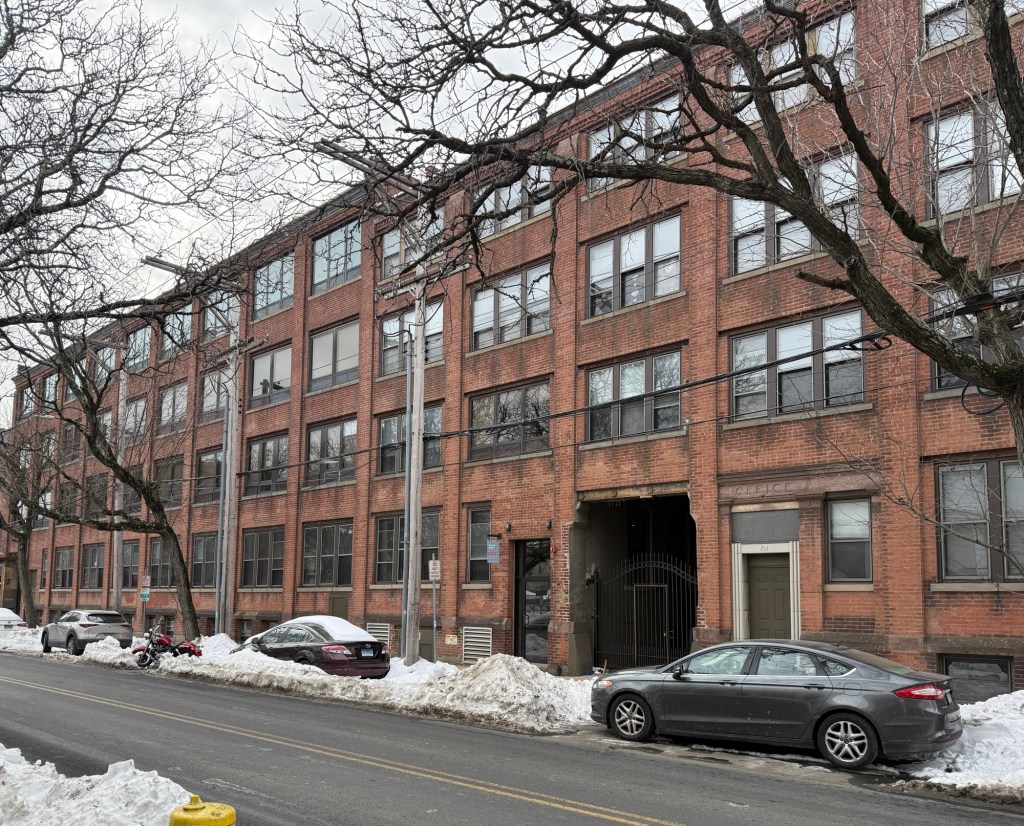
The Strouse, Adler Company Corset Factory is a historic factory complex at 78-84 Olive Street in New Haven, Connecticut that has been adaptively reused into apartments, serving an important second life. Developed between 1876 and 1923, the complex was the largest and oldest of New Haven’s several corset manufacturers, and remained in continuous operation for that purpose until 1998. The company was originally founded in 1861 as J.H. Smith and Company, and was the nation’s first manufacturer of corsets. The business was purchased the following year by Isaac Strouse, who took on Max Adler, a local dry goods retailer, as a partner. The company adopted the name Strouse, Adler in 1899 and was incorporated in 1927. The complex eventually closed and was converted to apartments, serving an important need for housing in the region.
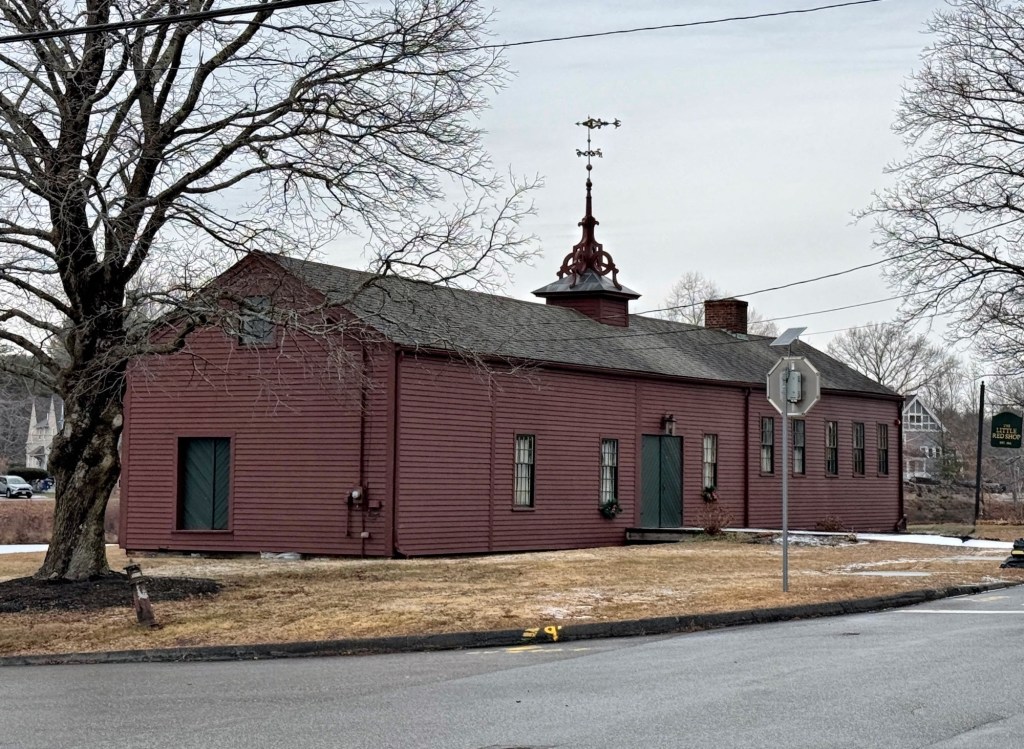
The area that is now the town of Hopedale, Massachusetts, was originally known simply as the “Dale,” a small, secluded agricultural area between Mendon and Milford, that beginning in 1842, was home to a communal Christian society called “Hopedale Community.” The communal agricultural and manufacturing society that eventually acquired over 600 acres and numbered more than 300 members at its peak before ultimately failing in 1856 due to socioeconomic inequalities and bankruptcy resulting from conflicts between its ideology and business organization. In that same year, the assets of Hopedale Community were purchased by the E.D. and G. Draper Company, led by Ebenezer and George Draper, who were the operators of Hopedale Community’s most successful manufacturing enterprise, textile machinery manufacturing. The Drapers had previously shared space in this old machine shop, which dates to around 1843, alongside fellow community workers who made hat and shoe boxes, sawed lumber, and ran an iron forge. As the Drapers founded the Draper Corporation, which became the largest maker of power looms for the textile industry in the United States, they never lost sight of their beginnings and preserved this building, which became known as the Little Red Shop. To preserve the building, it was moved four times in its life, to allow for the growth of the company factories, eventually being placed in its current location on town parkland, where it now houses a collection of Draper textile machinery as the Little Red Shop Museum. The Little Red Stop is just one story with nine bays and is vernacular in style, with its notable decorative feature being the metal weathervane mounted at the roof over an elaborate saw-cut wooden base.
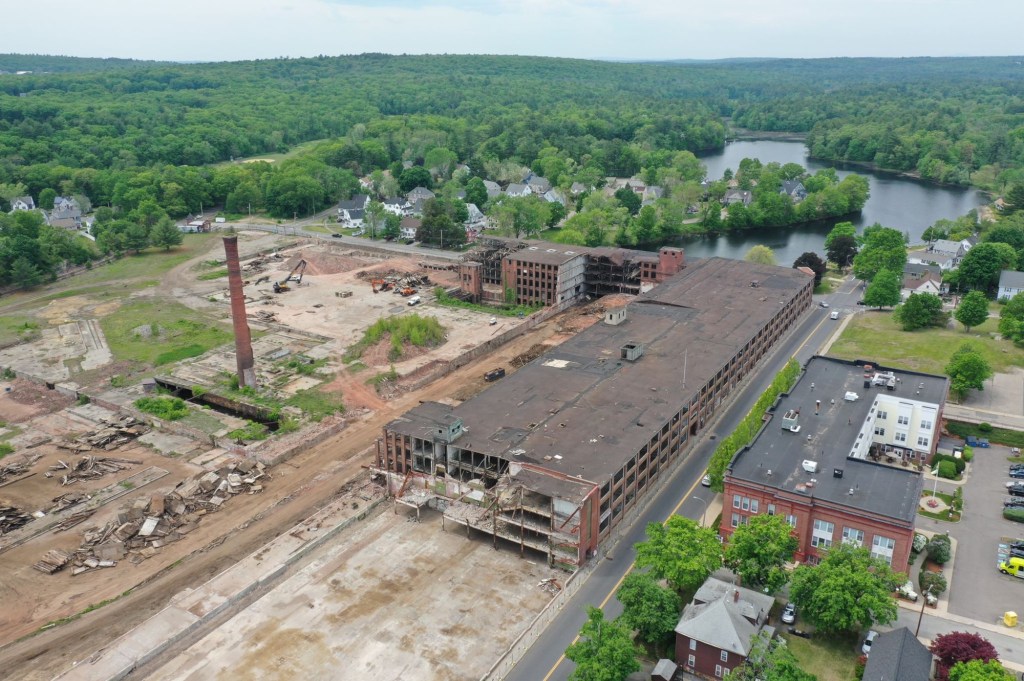
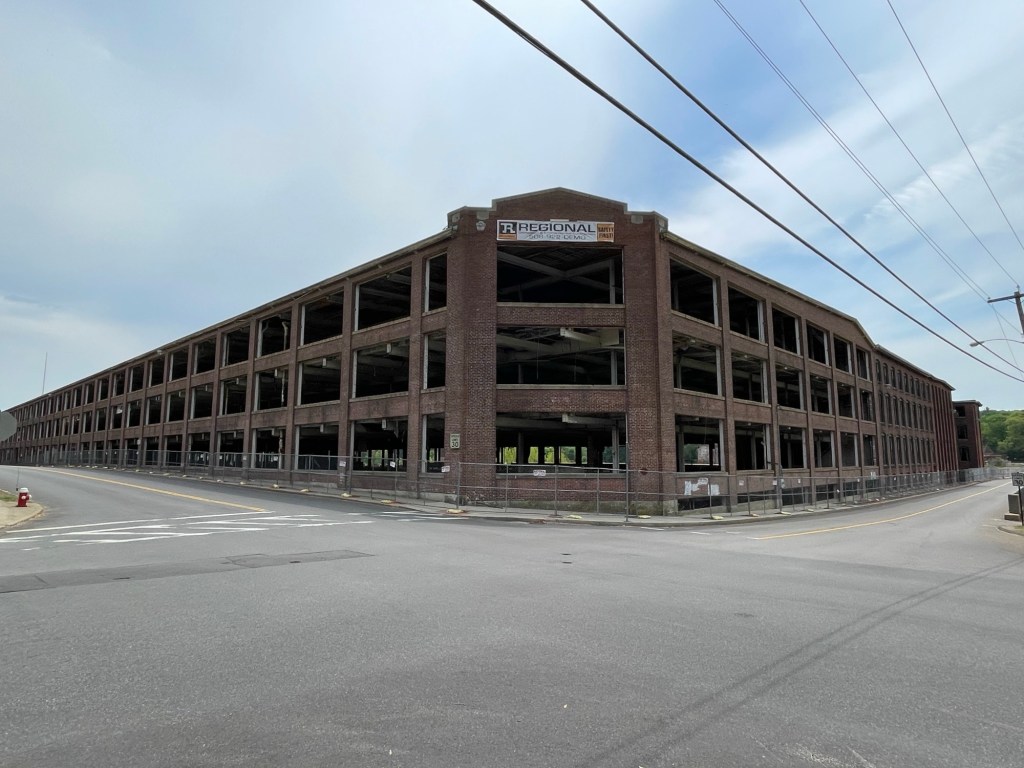
Hopedale, Massachusetts separated from Milford and incorporated in 1886. The “downtown” of the community encompasses industrial, institutional, and residential buildings in Hopedale Village, also known as Draper Village after the long-driver of the local economy, Draper Corporation. Hopedale was largely developed as a planned company town, and its architectural significance and ultimate preservation was largely due to the success of the Draper Corporation as majority owner until the 1950s. The Draper Corporation was originally a small operation in Hopedale in 1841 managed by George Draper (1817-1887), but grew exponentially thanks to his son, George Albert Draper (1855-1926), who had a passion for finding innovative technology to make the production of cloth more efficient. He led the company’s charge to become the nation’s leading producer of machines for the cloth-making industry. In the ensuing decades the factory village of Hopedale became a “model” company town under his leadership, with the business controlling every aspect of the town and worker life in a paternalistic program that extended beyond social structure to include architecture and urban planning of the village. The company developed hundreds of homes for workers, a town hall, library, churches, schools, a fire station, and recreational facilities, along with its factory complex at the center. In1892, with the advent of the Northrop Loom, Draper became the largest producer of textile machinery in the country. Due to their success at the end of the 19th century, much of the complex was built and rebuilt in fire-proof brick factory buildings with large windows to allow light and air into the facilities. Draper’s dominant position within the textile machine manufacturing industry began to erode shortly after World War II, and the company began to sell its company houses to their occupants as private homes in 1956. During the 1960s American textile machinery makers such as Draper lost their technological leadership to foreign manufacturers due to cheap labor, and the general American textile industry collapsed. The plant eventually closed in 1980, and sat vacant until it was decided by the local officials to raze the once great complex, as adaptive reuse was not feasible in the market for such large structures. The mill was demolished in the summer of 2021 and the lot at the center of town remains a brownfield site.
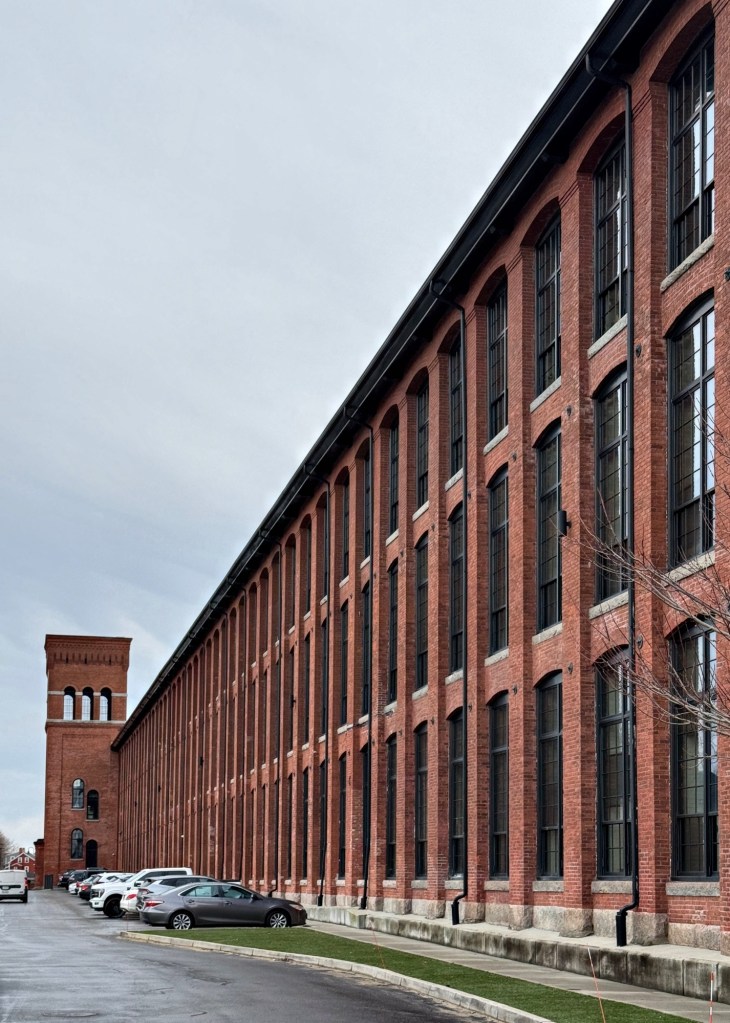
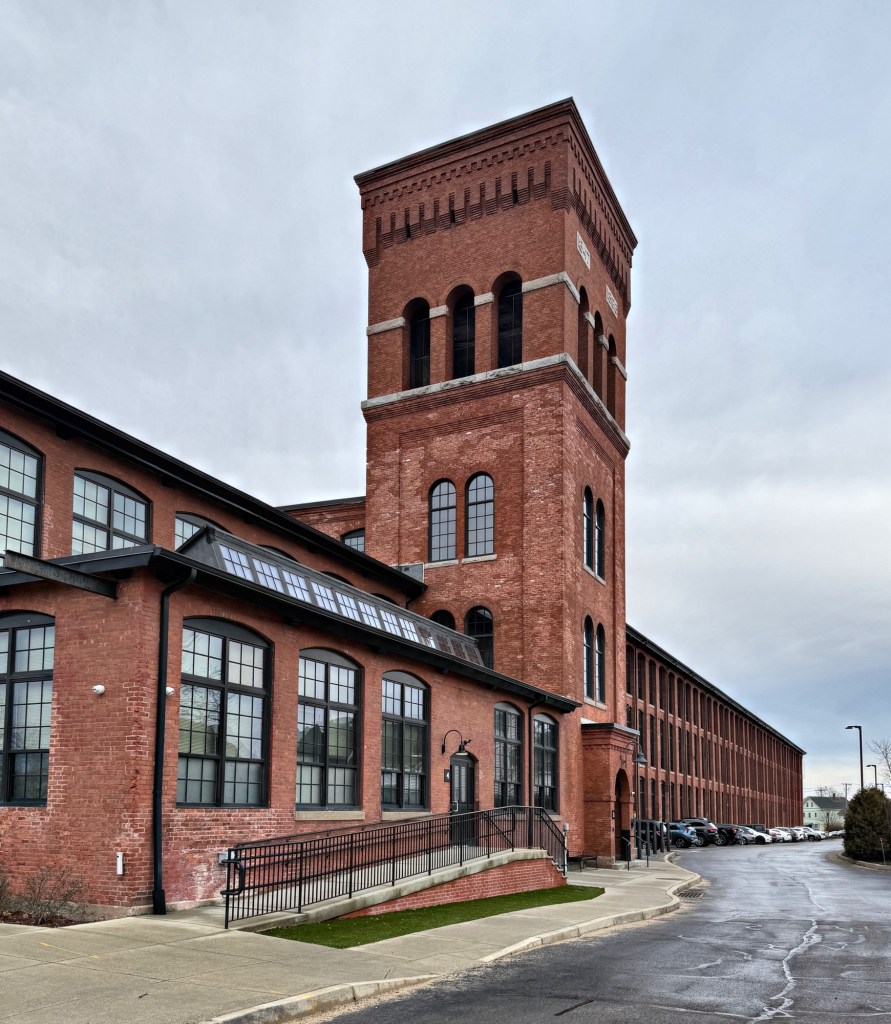
No single company had a greater impact on the town of Warren in the 19″ century than the Warren Manufacturing Company. The company built, expanded and rebuilt major mill buildings, established new streets in town, and provided mill housing for its workers, both native-born residents and immigrants who enlivened the community building new churches and housing. The company was founded in 1847, as whaling and shipping declined in Warren prior to the Civil War. Wealthy manufacturers and investors with ties to the South turned to textile manufacturing. The newly established company built three mills in the 19th century, all of which burned to the ground in a massive fire in 1895. A year later, in 1896, The Warren Manufacturing Company rebuilt this brick mill which features a handsome Romanesque tower with open belfry and brick corbelling, with a repeated pattern of pier-spandrel-and-arch construction running down the elongated facade. After the company closed, the building was occupied by the American Tourister Company, a luggage manufacturer. In 2015, the building was awarded federal and state preservation grants, and restored and adaptively reused as apartments, today known as Tourister Mill.
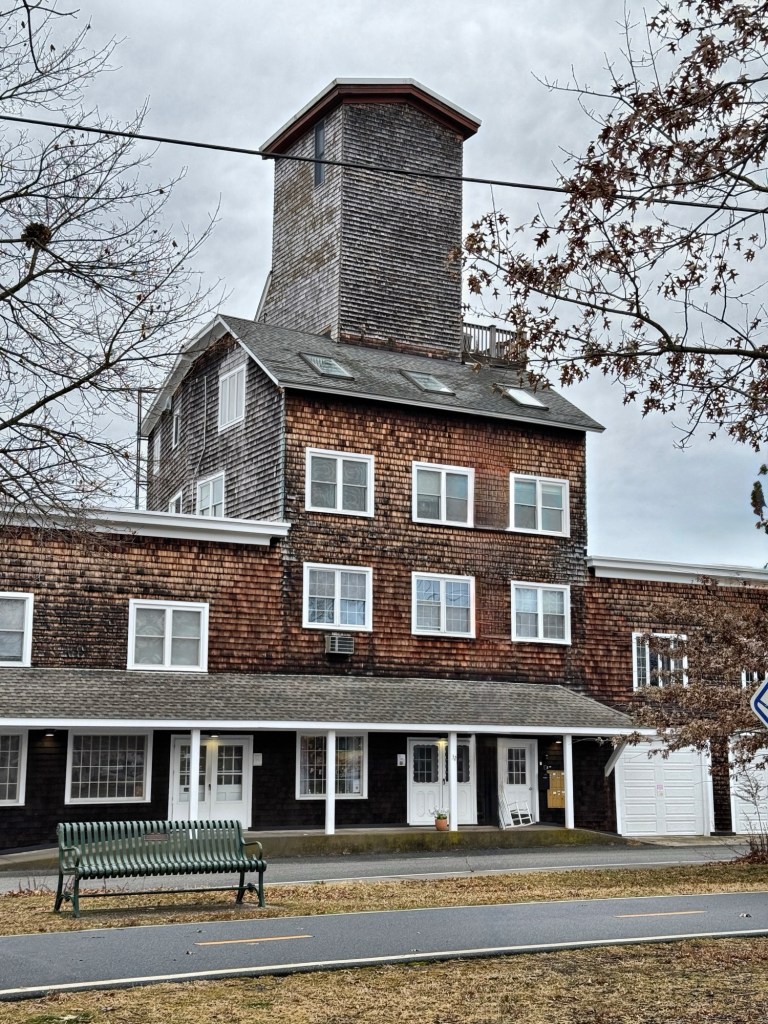
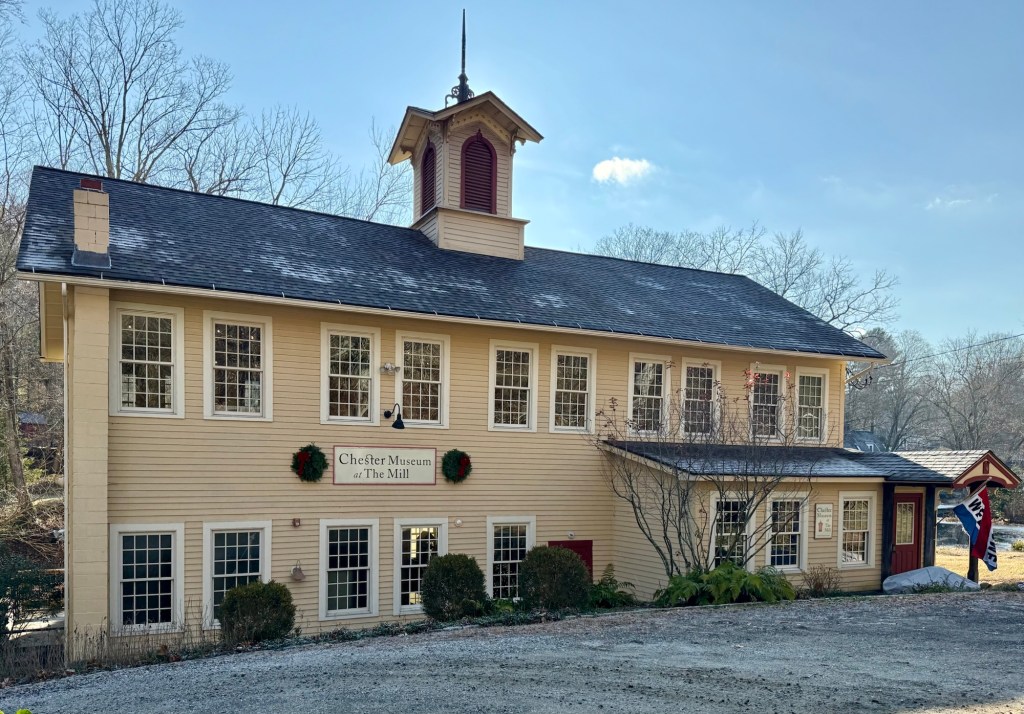
The Warren Foundry and Manufacturing Company began manufacturing metal goods in the 1870s in Warren, Rhode Island. The company was started by Benjamin Miller Bosworth, and at first, the company only made wrought iron goods, but later expanded into producing iron and brass items. Its location next to the railroad tracks made the site perfect for importing raw material and shipping out finished products to markets all over New England. The original factory and smelting facility burned down in 1892, but Bosworth’s son, Walter, rebuilt the facility with this present building by 1895. The business closed by the 1920s and the unique wood-frame building with unique tower, has been adaptively reused as “The Mill at Warren Junction”, containing office and manufacturing space for small businesses.
In 1860, Gardiner Hall Jr. (1839-1915) founded a spool cotton thread business called the Hall & Manning Company, and later renamed the Hall Thread Company. The new business failed in a year with the onset of the Civil War and the accompanying shortage of cotton. During the war, in 1861, Hall designed and patented a machine for finishing thread and moved to South Willington, Connecticut, founding the Gardiner Hall Jr. Company. He had a three-story mill building constructed around 1862 where his small operation took off. In the following decades, the factory complex expanded rapidly, and machine, blacksmith, and bleach and dye shops were built on the property to increase production. Coinciding with this growth, Gardiner Hall built tenements, a boarding house and a community building for his growing workforce in the 1870s nearby. Before his death in 1915, Hall donated funds to erect a memorial church in memory of his daughter, and donated generously to his workers. His son, William Henry took over operations and was succeeded by his sister, Rosa Hall, until the factory closed in 1954. The industrial buildings were used for decades from various manufacturing companies and today are occupied by retail stores, a tattoo parlor, and event space, perfect adaptive reuse!
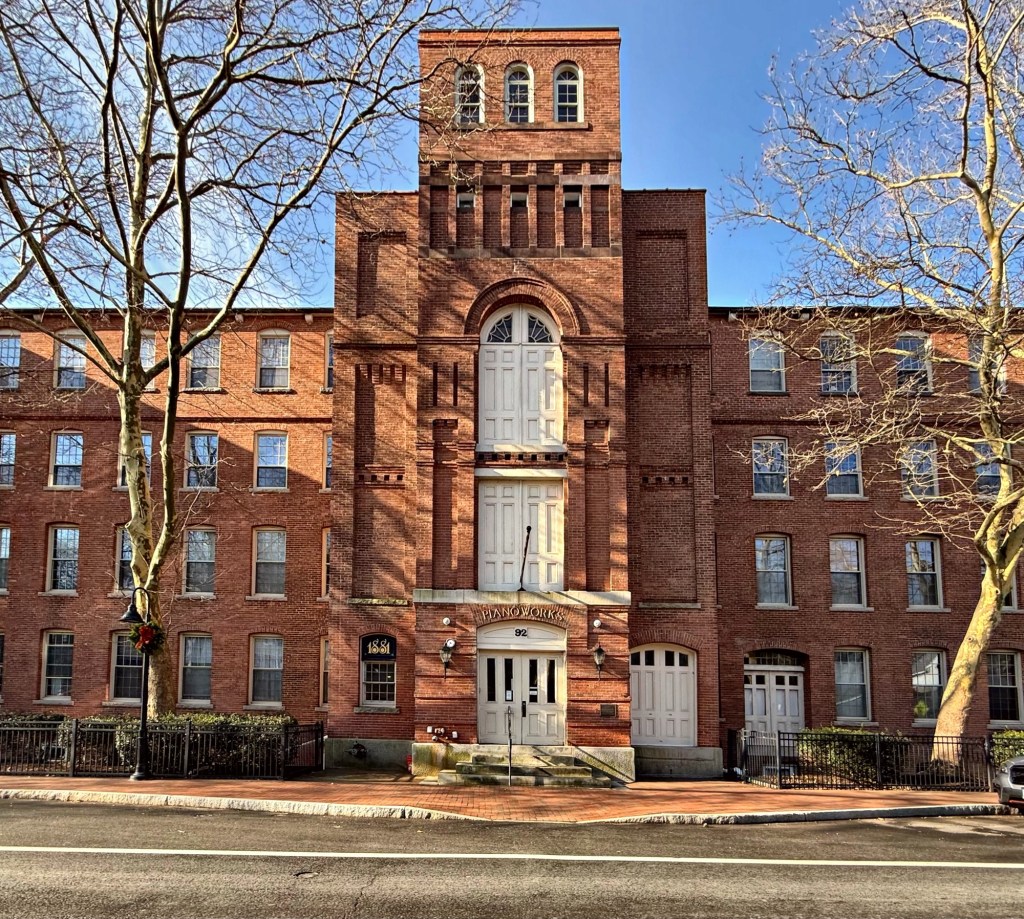
The Pratt, Read & Company Factory, located on Main Street in Deep River, Connecticut, was once the largest producer of ivory products in the world. The company was established in 1863, when Julius Pratt, George Read and their corresponding companies, merged to become Pratt, Read and Co. In 1866, the newly organized company built a new factory on this site. The business manufactured ivory combs, collar buttons, and toothpicks and specialized in the production of piano and organ keys. That factory burned in 1881 and as a result, over 160 employees were out of work. A year later, in 1882, the present factory was built of fireproof brick construction. The company, like many others, imported ivory from King Leopold’s Congo, where atrocities against indigenous people were common. The original Pratt, Read and Co. factory had an ornate pyramidal tower, which was removed in 1914. In 1936, the company merged with Comstock, Cheney & Co. and moved all operations to Ivoryton, CT. The Deep River factory was used for various manufacturing purposes throughout the rest of the 20th century until it was converted to condominiums as the appropriately named Piano Lofts.
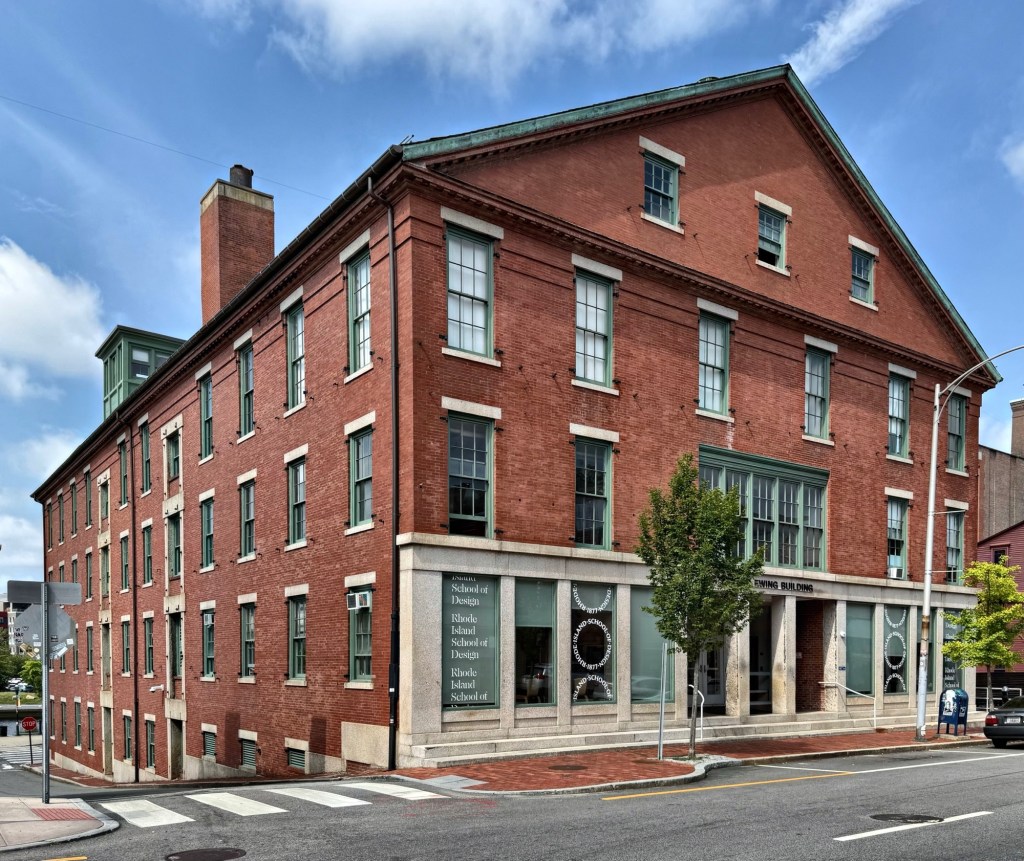
Located on South Main Street in Providence, this large Greek Revival style commercial building, with its gable pediment facing the street was built in 1848 by the Fall River Ironworks Company.The company was founded in Fall River, Massachusetts (then partly located within Rhode Island) in 1822 to manufacture nails. The company owned and occupied this building from its construction until 1881, when it was occupied by the Rumford Chemical Works, founded by Eben Horsford as a manufacturer of baking powder, with this building serving as its main office. In 1927, the Phillips Lead Company, a plumbing supply house, purchased the property and continued to use it until 1973, when it was acquired via taking as part of an Urban Renewal plan for the area. Luckily, the building was deemed significant, and preserved following its purchase by the Rhode Island School of Design (RISD) and converted to classroom and studio spaces in 1978 for several of the school’s departments. The restoration and adaptive reuse was overseen by local architect Irving B. Haynes. The building, now known as the Bayard Ewing Building, is one of the earliest such examples of adaptive reuse in Providence and showcases that old buildings can be repurposed for new ideas and uses.
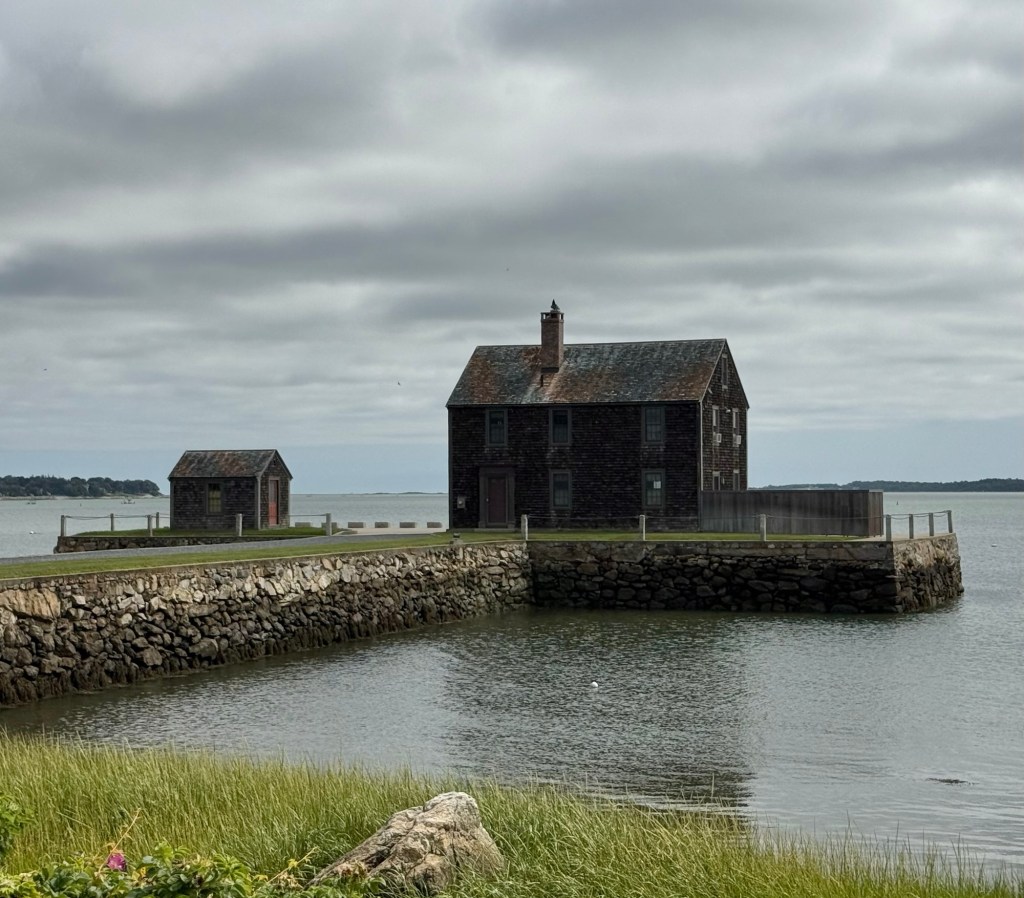
In 1802, Kingston-based merchants and landowners Benjamin Delano and brother-in-law Peter Winsor built this stone wharf and warehouse at Rocky Nook, a small peninsula at the end of the Jones River where it meets Plymouth Bay. The Rocky Nook had several warehouses in the early 1800’s which were used to hold cargo for the busy Kingston vessels that carried passengers and goods all down the eastern seaboard for transit, with larger vessels sent to the West Indies for trade. Benjamin Delano and his son Joshua either owned or partly owned 37 vessels between 1803 and 1882 and were a wealthy family that built their fortune on shipbuilding and trade. The warehouse, built at the end of the wharf was used to store goods and also served as a ship chandlery, a store selling goods needed for newly outfitted ships that were berthed up the Jones River. A combination of the coming of the railroad and the need for faster and bigger vessels caused the decline of the shipping business in Kingston in the late 19th century with the shipbuilding industry largely evaporating by the 20th century. The Delano warehouse at the end of the wharf has since been converted to a private residence yet retains its unique character and siting with arguably the best view in town.

 Buildings of New England