Old Boston Public Library // 1855-1898

Courtesy of BPL collections.

Established in 1848, the Boston Public Library was the first large, free municipal library in the United States. The Boston Public Library’s first building of its own was a converted former schoolhouse located on Mason Street that opened to the public in 1854. As soon as the library occupied the building, it was apparent that the amount of visitors and collections could not effectively be held in the cramped quarters. Planning began almost immediately for it’s first purpose-built library. Less than a year later, in December 1854, library commissioners were authorized to purchase a lot and fund the construction of the new library. A desirable building lot on Boylston Street, opposite the Boston Common, was purchased and a public invitation for proposals from architects was held. The requirements for the building included: a library hall with alcoves capable of containing on fixed shelves at least 200,000 volumes, a general reading room with ample accommodations at tables for at least 150 readers, a ladies reading room, an adjacent library room for the arrangement of 20,000 books “most constantly demanded for circulation,” and quarters for the Trustees and Librarian. The facade was to be of brick, with stone dressing”. The selected design by architect, Charles Kirk Kirby, was for this handsome Italianate style building which took nearly three years to build, opening in September 1858. Twenty years later, as the library outgrew that space, the Trustees asked the state legislature for a plot in the newly filled Back Bay, and planning began on the McKim Building, built in 1895 down Boylston Street. This building, the first purpose-built Boston Public Library building, was demolished in 1898, and replaced by the ten-story Colonial Theater Building. It stood just 40 years.

John T. Andrew Carriage House – Cornwall Historical Society Building // c.1865

This ornate carriage house on Pine Street in Cornwall, Connecticut was built by John T. Andrew around 1865 adjacent to his late 18th century home in the village. Andrews was born in Bethany, Connecticut in 1811, graduated from Yale College in 1839, becoming a minister and later a teacher. For health reasons he left both professions and turned to farming and stonework. After Andrews’s death the property was purchased in 1890 by Charles Marsh, a local undertaker, and his wife Inez. In 1954 the barn was converted to a home by their daughter, the town librarian Emily Elizabeth Marsh, a charter member of the Cornwall Historical Society. In 1966, the Society raised funds to buy the building from her estate, but could do little to adapt it for their specific exhibit and storage needs. The Society restored the exterior to its original appearance, down to the brackets, round arched windows and cupola.

General John Sedgwick House // 1860

The Major General John Sedgwick House is located in Cornwall Hollow, Connecticut, and stands out as one of the finest residences in this part of the state in a rural setting. The house was built by 1860 for General John Sedgwick (1813-1864), who was born in a house standing on this site, which had been built by his grandfather, a veteran of the Revolutionary War. In 1859, the Sedgwick family homestead burned to the ground. Sedgwick, then already well established in his military career, took leave to oversee construction of its replacement. This house was built, apparently on the foundation of the old house, in 1859–60. The work was done by Cyrus Marsh, a local builder, in the Italianate style with decorative brackets, window mouldings, hoods, and a large columned entry portico. Major General Sedgwick was active in many campaigns, and during the American Civil War, he was killed by a sharpshooter at the 1864 Battle of Spotsylvania Court House, he was the Union Army’s highest-ranking casualty of the war and never got to reside in his Cornwall home.

Foster Mansion // c.1860

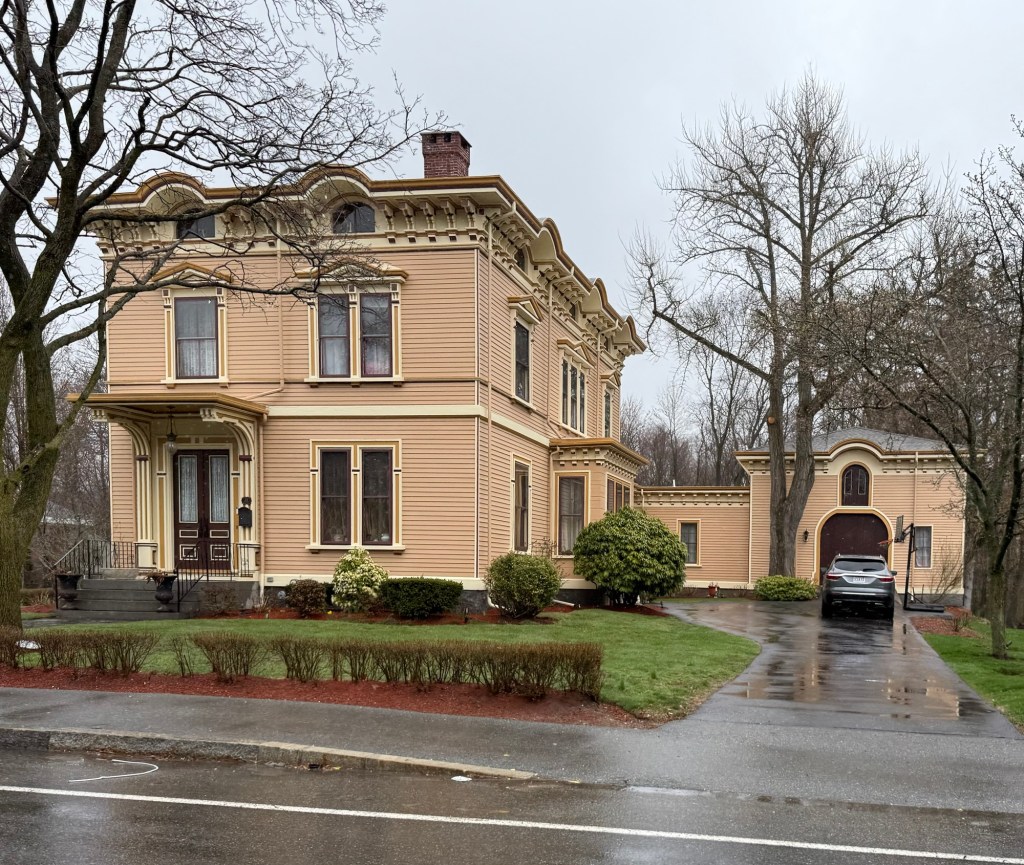
This large, Italianate style mansion is located at 417 Sharon-Goshen Turnpike, the main street through West Cornwall Village, Connecticut. The house was built around 1860 for Stephen Foster (c.1816-1863) a merchant and railroad contractor who had constructed a portion of the Housatonic Line railroad near West Cornwall. He and his wife, Helen, previously lived in a Greek Revival style house across the road until they moved into this stately residence. Mr. Foster would not get to enjoy his mansion long as he died in 1863. Helen Foster remained at the home until her death in 1875. The high-style Italianate residence was likely built by master-carpenter C. W. Marsh, and features all the hallmarks of the style: overhanging eaves with decorative brackets, elaborate window and door moulding, two-over-two windows, and a shallow hipped roof with dormer.

Amos Beckwith Mansion // 1861

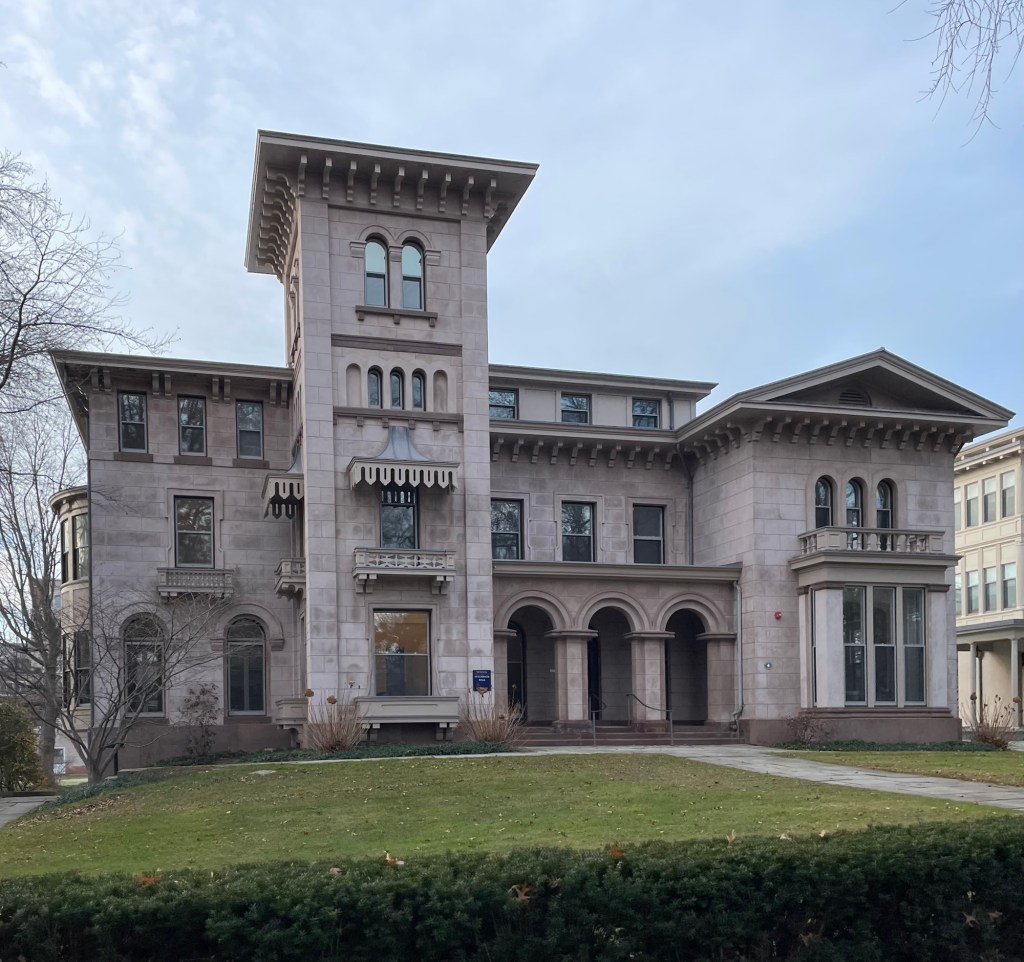
To conclude this series on Stimson Avenue houses in Providence, I will showcase the grand dame of Stimson Avenue, the Amos Beckwith Mansion. Built in 1861, the large estate was essentially a country villa when built, as this section of Providence was sparsely developed before the Civil War. Amos Beckwith (1822-1890) was the son of Truman Beckwith and, like his father, was a wealthy cotton broker. He hired architect Alpheus C. Morse to design the house, which is an Italianate Villa, with prominent four-story tower. thick moulded trim, projecting eaves and balconies supported by large brackets and corbels, and the rounded arch windows. In 1882, Beckwith subdivided his land in the area to make half the building lots on Stimson Avenue. Amos Beckwith lived in the home with his wife, Clara, until her death in 1879. Unknown to many, Amos would secretly remarry his housekeeper, a fact that came out after his death when discussions about the estate were raised. Maria Sherman, the 35-year-old housekeeper, stated she was in the will. It is not clear if the family fought this claim and who inherited the property, but what an interesting story!

Custom House Block // 1853

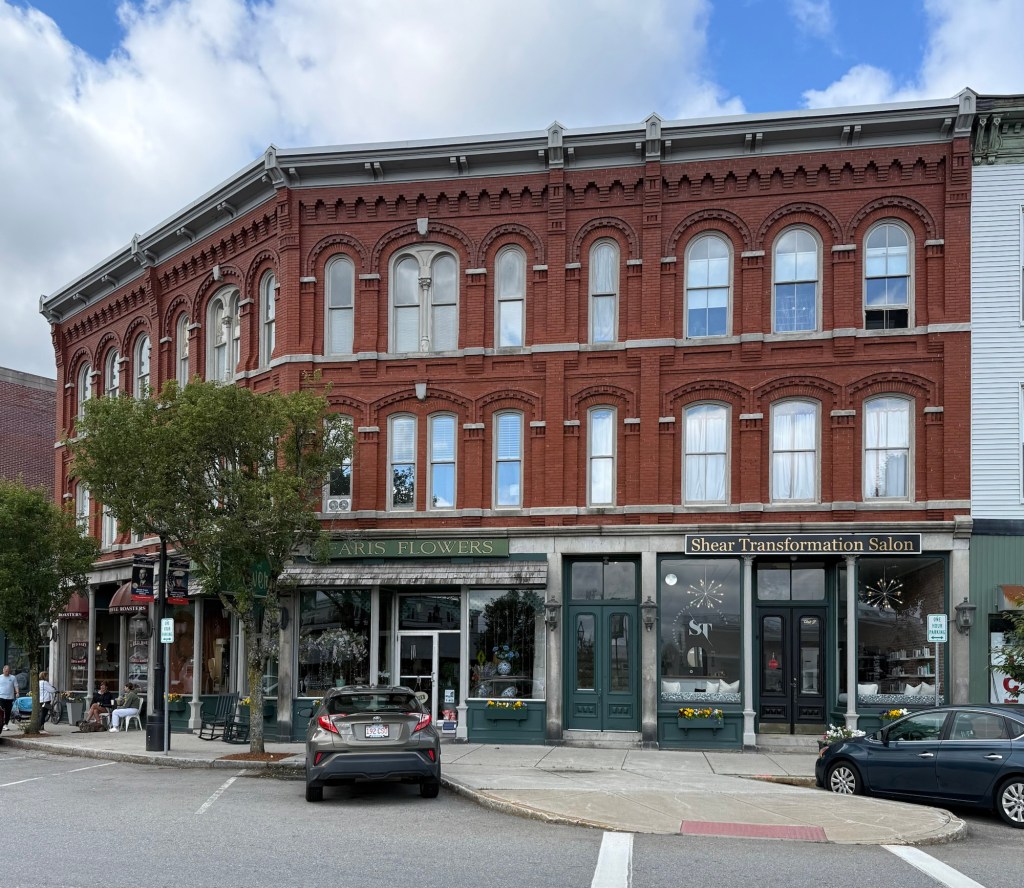
This stately commercial block is found on Main Street in Rockland, Maine. The block originally housed the local custom house (before a larger, purpose-built custom house was erected nearby in 1873) with other retail and commercial spaces at the ground floor with offices and meeting space above. The block is a great example of the Italianate style with an intricate brick corbeled cornice and cast iron and marble storefronts. The commercial space occupied by the First National Bank also exhibits a stone medallion with deer set within a wreath over the entrance. The detail that stood out to me most was the cast iron lintels over the windows, with the second floor lintels including a man’s face! The building is well preserved and is today occupied by local businesses.

Knox County Courthouse // 1874

The Knox County Courthouse stands in Downtown Rockland, Maine, and is a landmark example of a Civic building constructed in the Italianate style. Knox County was separated from adjacent Lincoln County in 1860, with the coastal city of Rockland established as its county seat. For its first fifteen years, county offices were dispersed amongst buildings until in 1874 when the county retained Boston architect Gridley James Fox Bryant to design the present building. The building was constructed at a cost of $83,000, well over the anticipated $50,000 cost, and opened in 1875. The first floor accommodated all the county offices, with fireproof storage areas for records. The second floor was be taken up by the courtroom, and at either end were rooms for judges, jury and counsel.

Pennell Institute Building – Gray Town Hall // 1886

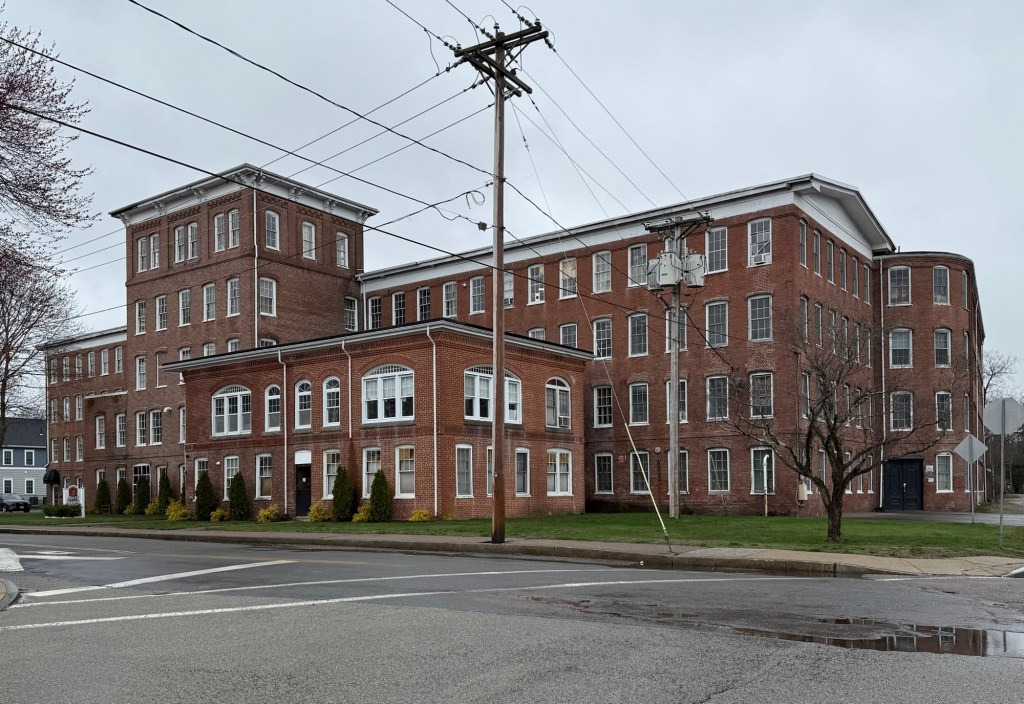
The Pennell Institute was built in 1886 as a privately funded, public school for the town of Gray, Maine. By 1870, Gray High School was located in the former Town Hall, and due to increased enrollment and ever-cramped quarters, demand for a standalone school was of grave importance. As a result, local resident Henry Pennell decided he would help his hometown. Henry Pennell (1803-1884) as a young man, worked as a butcher and traveled to Portland to sell his cuts of meat, later buying and selling livestock. After the Civil War, he dealt in real estate and mortgages, was sheriff of Cumberland County (1857-1858) and served in the State Senate (1872-1873), and became the richest man in the town of Gray. Mr. Pennell, who himself, never had received much formal education, saw the value in it for the youth of the town. Construction started on the school in 1876, where the foundation was laid, but it would take ten years until after the death and bequeathing of his estate in his will, that the building would be completed in 1886. Henry Pennell left the town the school building, the lot it stood on, a trust fund of $25,000 for the school’s general expenses, and a special fund of $5,000 for the library and for laboratory equipment and supplies. The school closed with students educated at a larger, modern building. After disputes between the Town of Gray and the local school district, the building has now been home to the Gray Town Hall, with the town clearly showing pride in their Italianate style building.

Loerzel Beer Hall // 1873

The Loerzel Beer Hall was built in 1873 in Saugerties, New York and is an important historical and architectural landmark in the Hudson Valley town. Operating independently as a brewery and beer hall by German immigrant Lorenz Loerzel (1821-1878), and later by his family for thirty years, the handsome Italianate style building became a popular meeting place for socialization and community for many immigrants who arrived to the town of Saugerties for work. The beer hall remained in operation until Prohibition in 1920. The building appears to now be occupied as apartments.

John Achorn House // c.1855

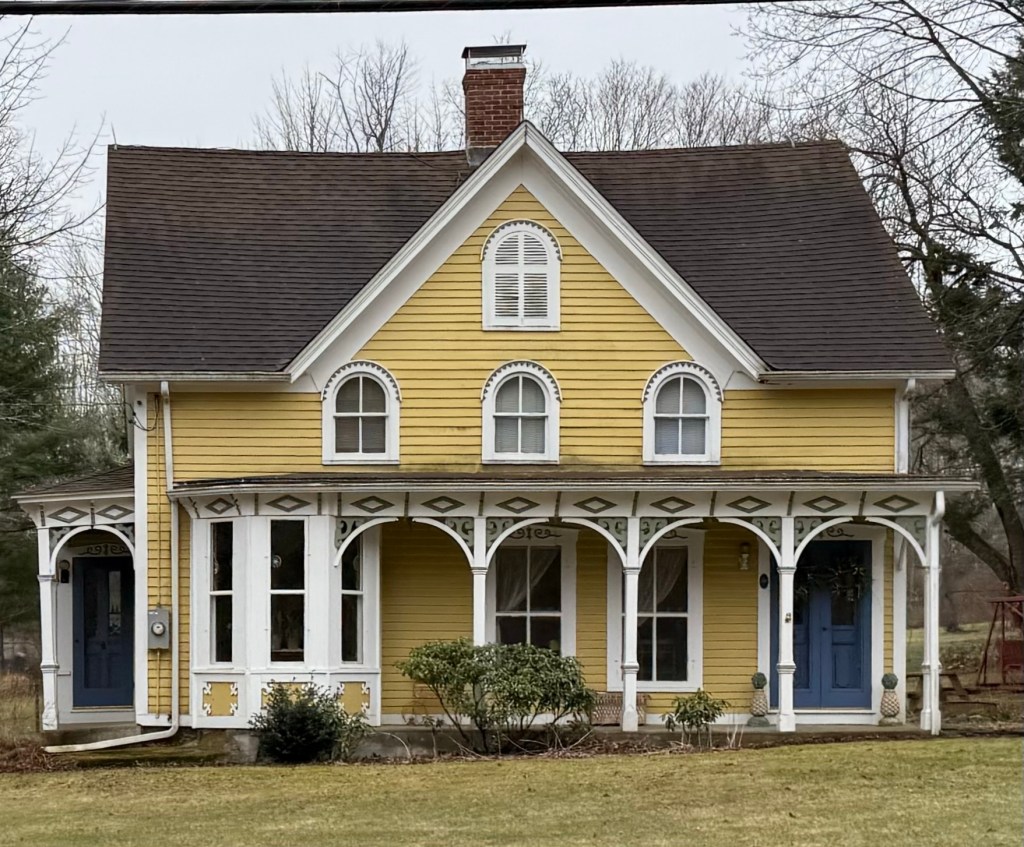
This stately Italianate style house is located at 46 Pascal Avenue in the quaint coastal town of Rockport, Maine. Built around 1855 by and for John Achorn (1825-1898) a ship-joiner and carpenter in town. Due to his profession in carpentry, Achorn is the likely culprit as the builder who designed the house and detailed the delicate pendant brackets, Palladianesque window, and the addition of the flushboard center bay.