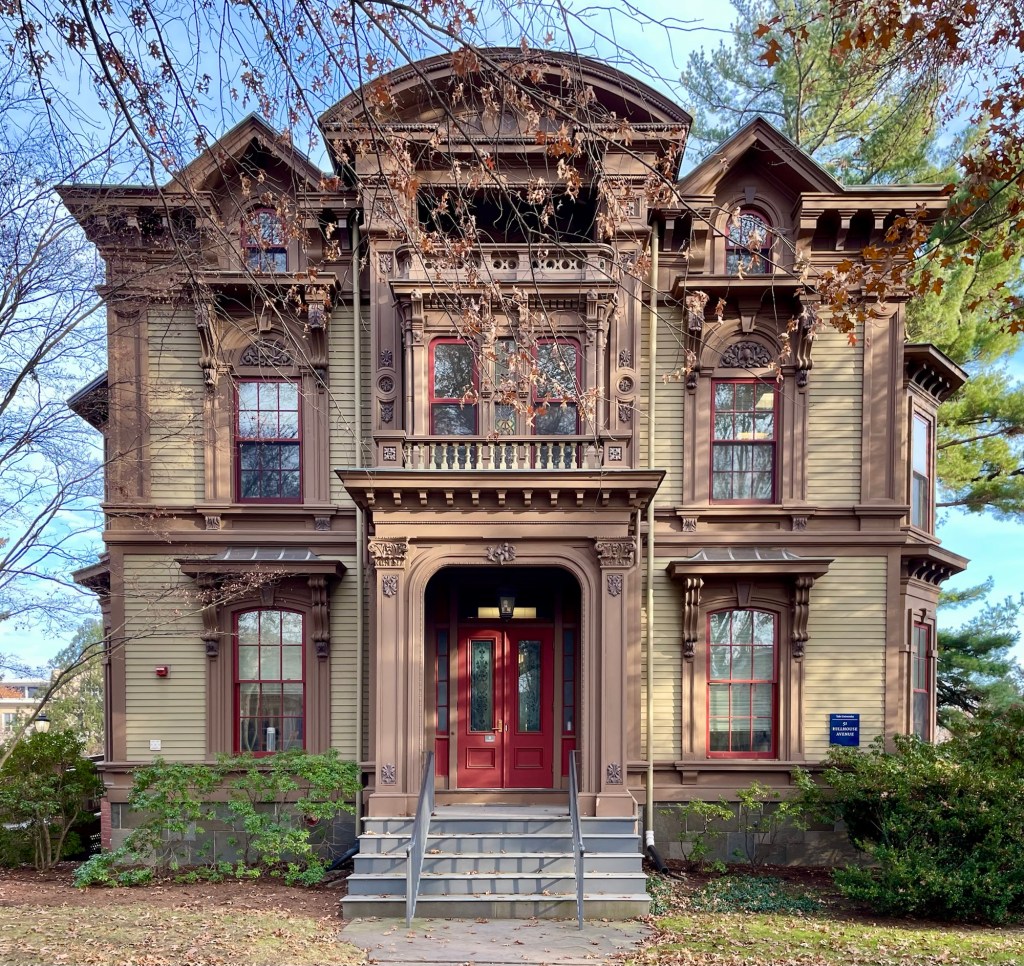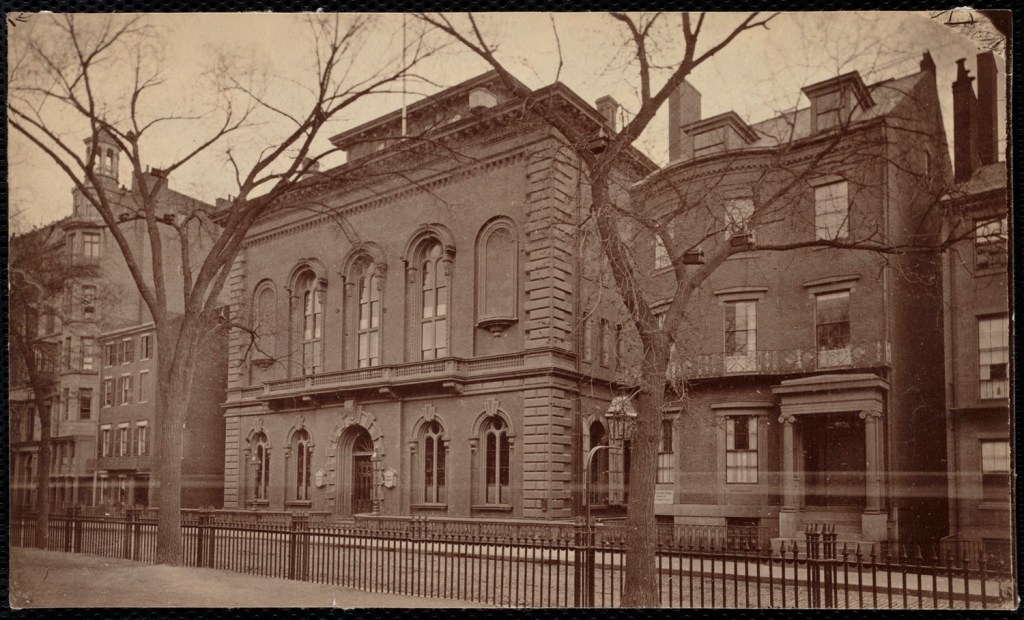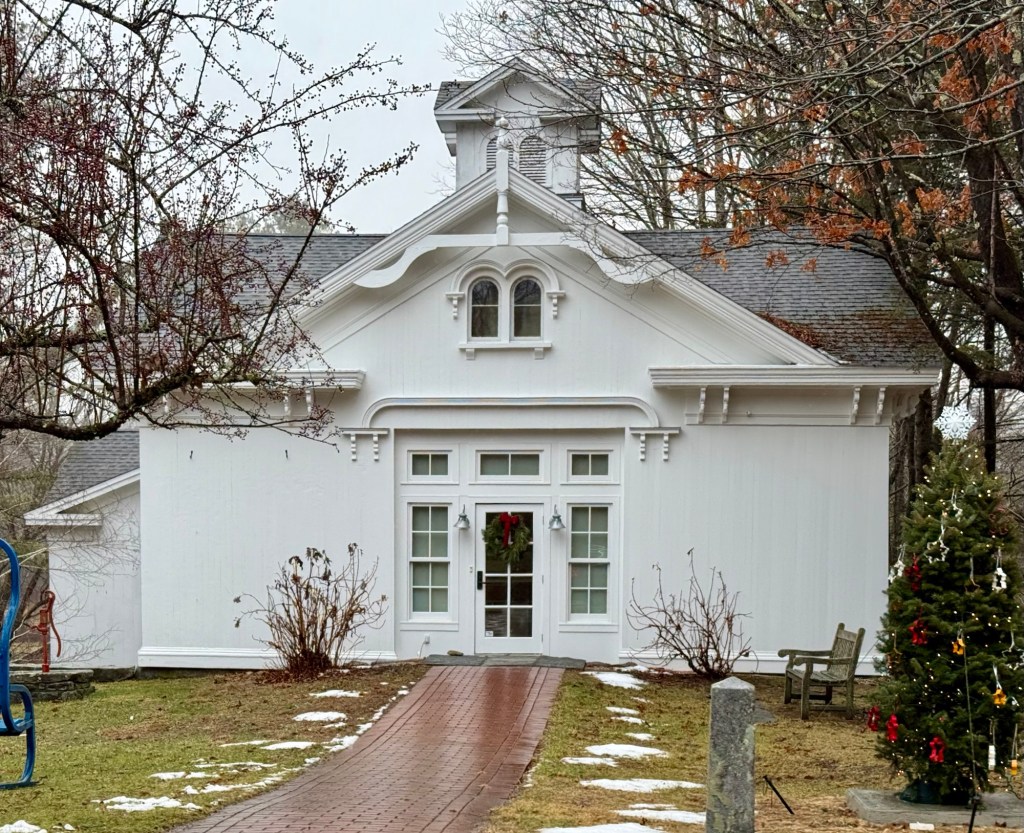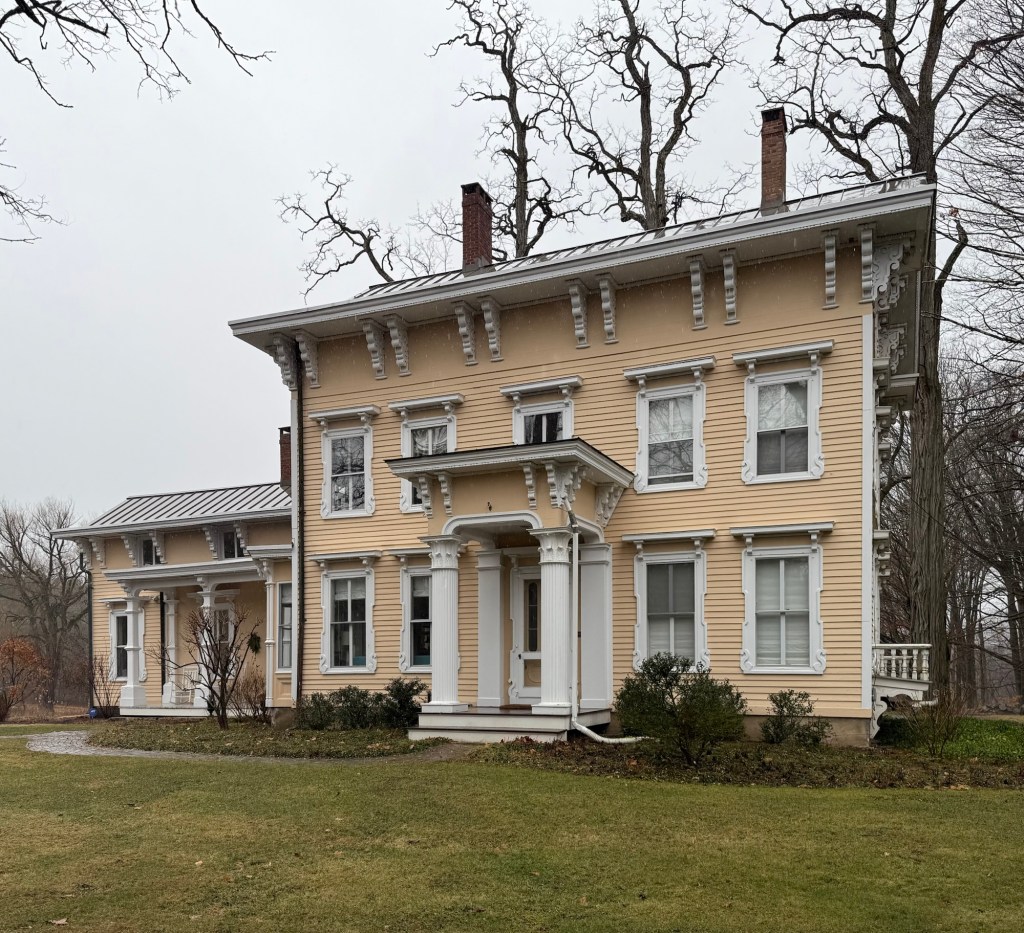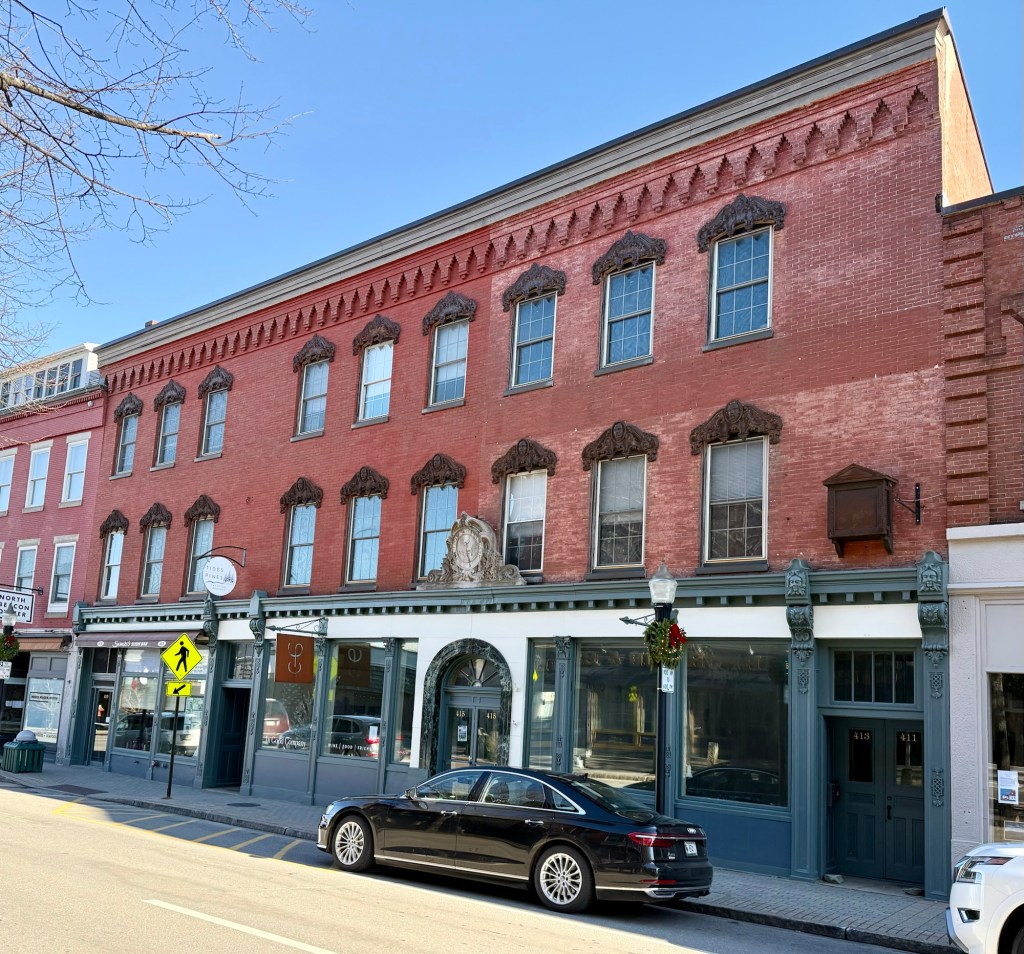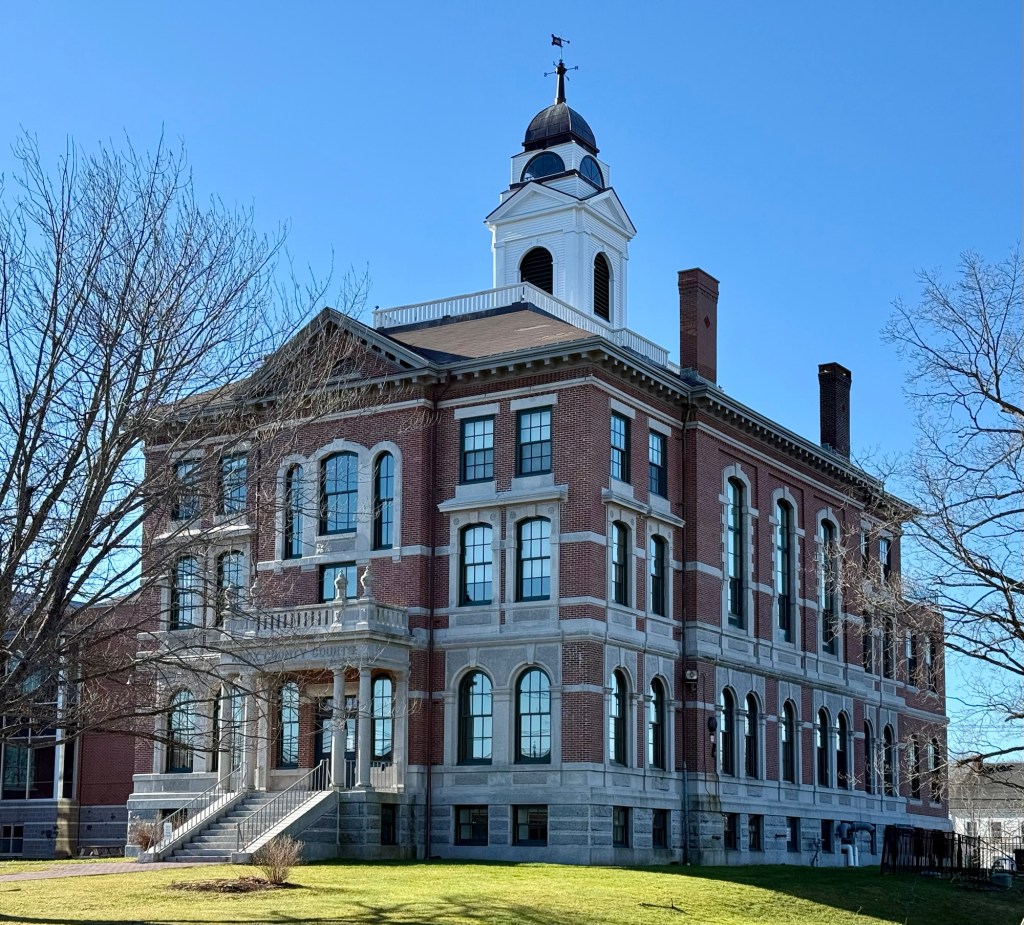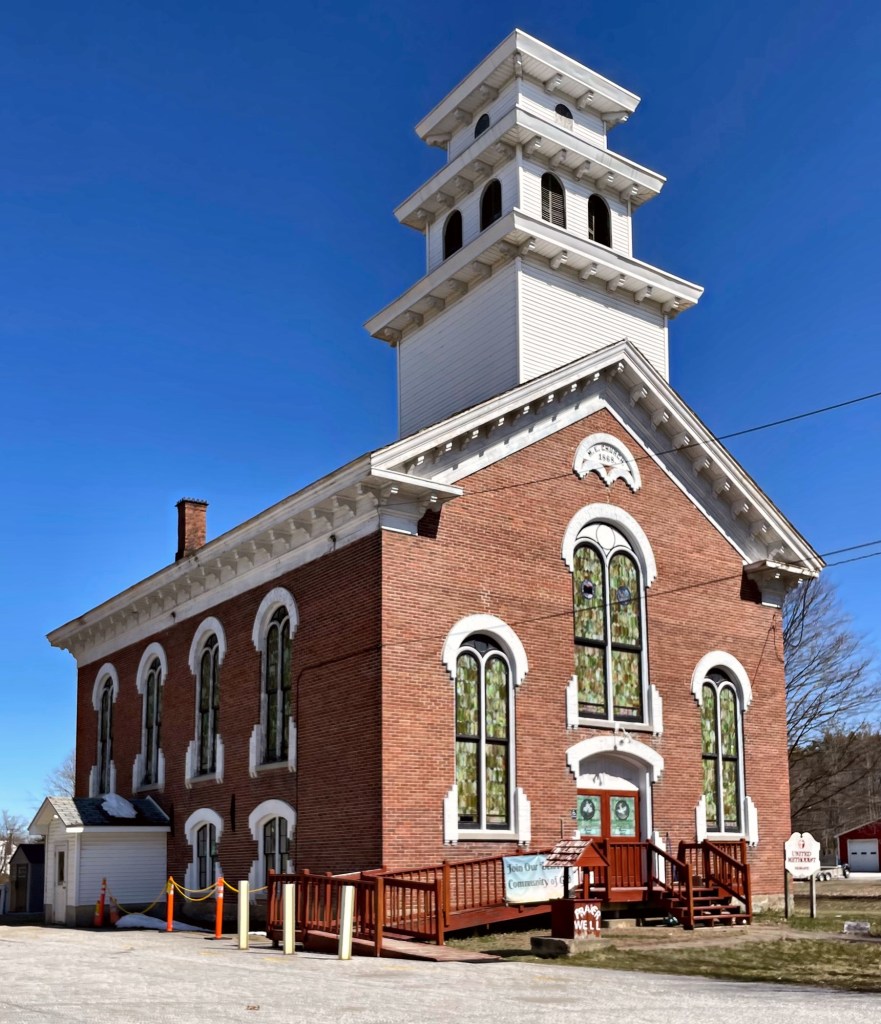
The Highgate Union Methodist Church in Highgate, Vermont was built in 1868 and is a high-style example of the Italianate architecture style in a relatively quiet part of the state. Built of brick, the church’s form is typical for small Vermont churches in the third quarter of the nineteenth century. Here, however, the builders were conscious of Italianate fashion, and they applied its round and segmental arches, corbels, and brackets, painted in a lighter color, with consistency and to remarkable effect.
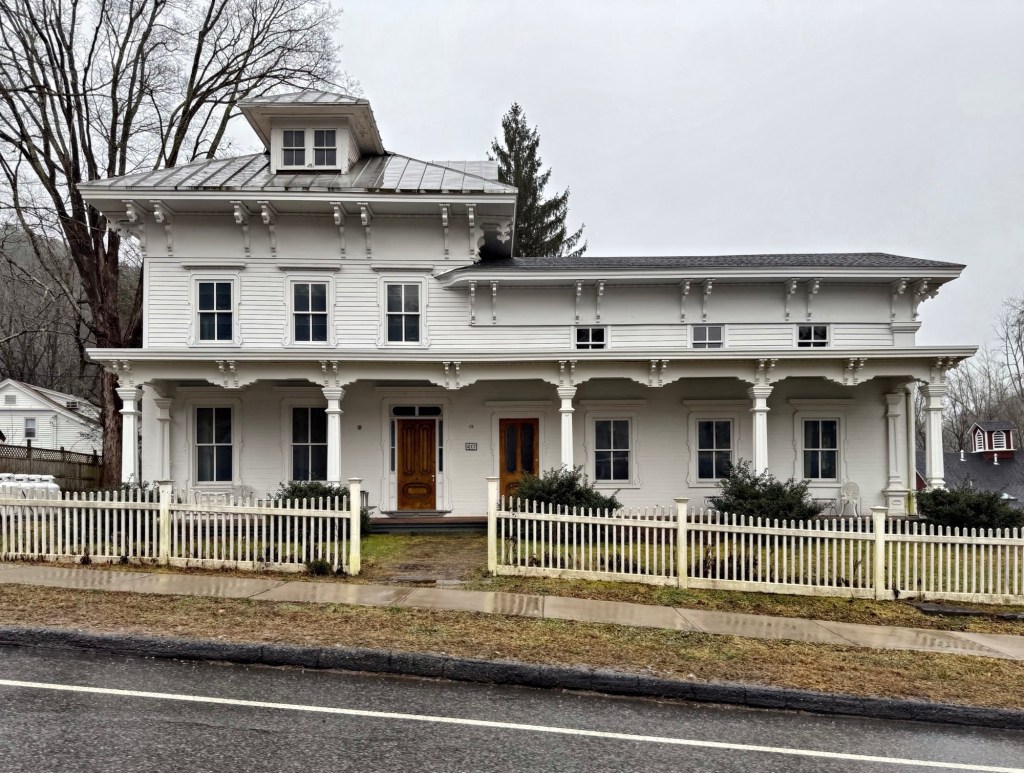
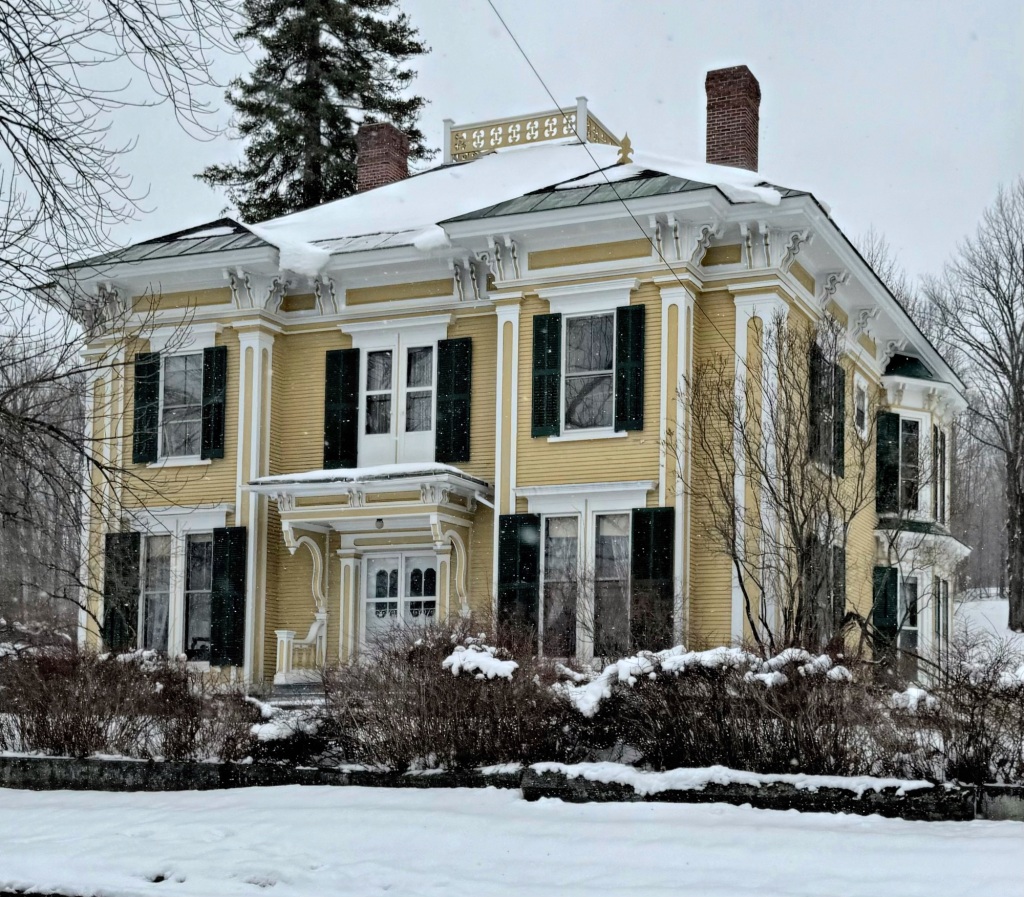
The Northeast Kingdom of Vermont is not necessarily known for stately houses, but no matter where you go in New England, you can always find interesting old buildings. This is the Cobb-Foster House of Derby Line, Vermont. The house was built in 1861 for Walter B. Cobb, a director of the People’s Bank of Derby Line. After later owners bought and sold the property in quick succession, the house was purchased by Stephen A. Foster, a lawyer and judge who would eventually move out of town, selling the property to Austin Theophilius Foster, a nephew. As architectural styles were later to arrive to rural parts of the country, this house expresses the Italianate style, but with holdover features from the Greek Revival style, which was already a decade out of style in 1861 around Boston and other well-connected areas.
Located across from the Winthrop-Eckley Double House on Corne Street, this gorgeous Italianate style summer cottage is a perfect blending of stature and whimsy. The house was built around 1850 and owned by Charles B. Peckham. Built in the Italianate style, the symmetrical house stands three-stories with covered side entrances divided by a projecting two-story bay. The house exhibits broad, overhanging eaves and paired and ganged round arched windows. The property was known as “Bay Crest” and remains one of the unsung landmarks of the 1850s in Newport.
One of the larger homes in Weare, New Hampshire is this sprawling mid-19th century residence, seemingly built around 1850 for Sumner Stanley and his wife, Ruth. Stanley and Ruth (née Dow) acquired land from Ruth’s family and they built their home here. By 1856, Stanley sold a small piece of land to town just to the east of his house for the construction of the North Weare Schoolhouse. The Italianate style house with its Stick style attached barn structure have some amazing detailing!
This is your sign to take a different route! When exploring a new town or neighborhood, I love to explore the obscure streets just as much as the iconic Main Streets as hidden treasures can always be found! This building in Dorchester’s Port Norfolk neighborhood was constructed in 1860 as the new home of the Dorchester Mutual Fire Insurance Company, which was incorporated in 1855. The company seemingly hired Dorchester-based architect Luther Briggs, who also laid out the streets for Port Norfolk and the Clam Point neighborhoods and designed many buildings in the area at the time. The high-style Italianate building features bold proportions, quoins, and cornice. While the former round-arched windows have since been enclosed and are traditional double-hung windows, they building still stands out! At the rear, Second Empire style rowhouses were built for private ownership. The building is now all condominiums following a renovation.
One of the most stunning Italianate style homes in Providence is this stately beauty which is located on Prospect Street. The house was built in 1854 on land sold from Oscar to Henry A. Dike (Dyke), a shoe manufacturer, who erected this stately residence for his family, who only remained there until the early 1860s when it was sold. The home was built on one lot, facing a second house lot, and not the street like many other residences. The property changed hands many times during and soon after the American Civil War, until 1870, when it was purchased by Albert Harkness (1822-1907), a Brown University Classics professor. It was in Professor Harkness’ ownership that the southern house lot was landscaped from plans by Frederick Law Olmsted‘s firm in 1887. The house, which recently sold in 2022, is well-preserved from its massive brackets to the oversized belvedere at the roof!
Roswell Burrows Fitch (1833-1908) was born in the seaside village of Noank to parents Elisha and Mary P. Fitch. At twelve years of age he commenced to be self-supporting, and from then until he was fourteen, occupied a clerkship in a general store in town. In his teens, summers were spent aboard ships fishing for a livelihood, and his winters attending school. Upon completing his education, he became clerk in a store, and was afterwards engaged to assume the management of a union store which was erected for the special purpose of being placed under his charge. This building was constructed as the union store in 1851 with eighteen-year-old Roswell becoming an active partner in the business. In his twenties, he slowly bought out, one-by-one, the twelve other owners, until he possessed absolute control. The eclectic Greek Revival and Italianate style building features classical detailing, but with a bracketed cornice and gambrel roof which is capped by a parapet. Mr. Fitch retired from business in 1890 and got to work “Victorianizing” his nearby home. Stay tuned for the next post which features his home in Noank.
There are always those houses that just stop you in your tracks… For my last post (for the time being) on Providence, I wanted to share this significant property, known as the Woods-Gerry House, perched atop College Hill. Owner Marshall Woods, who married into the Brown family and was active in the affairs of Brown University. Locally he was also involved on the building committee for St. Stephen’s Church where he was a factor in selecting renowned architect Richard Upjohn to design the church. He must have liked Upjohn so much (or got a good deal) that he hired Richard Upjohn to design his new home on Prospect Street. The exterior of the three-story brick building stands out amongst the other Italianate mansions built in the same decade nearby, but is elevated design-wise with a bowed centerpiece on its east elevation with the handsome new front entrance renovated in 1931 by then-owner, Senator Peter Gerry, who was a great-grandson of Elbridge Gerry, the fifth Vice President of the United States (who had given his name to the term gerrymandering). Today, this significant building is owned by the Rhode Island School of Design and houses the Woods Gerry Gallery. The grounds are also very well designed.
You honestly cannot beat Providence when it comes to brick Italianate mansions… The Smith Owen Mansion on College Hill was built in 1861 for jeweler and silversmith Smith Owen (1809-1889) and is one of the finest homes in a neighborhood full of historically and architecturally significant properties. Mr. Owen was in business with his brother George, and they manufactured and sold some of the best jewelery in the region, largely from their commercial block downtown (featured here previously). He hired Alpheus C. Morse and Alfred Stone, local architects who furnished the plans for the colossal home. Owen lived here until his death, which occurred less than a week after his wife’s passing. His daughter Lydia Dexter Owen Beckwith (1850-1947) inherited the property and lived here with her family until her death. It was under Lydia’s ownership that the Colonial Revival entrance details were added with projecting vestibule with columns and urns and central fan transom. It is really something special!
Incredible triple-decker vibes with this beauty on Providence’s College Hill neighborhood. In 1847, this home was built as a single-family, Greek Revival style home for Henry G. Mumford, who worked as a City Marshal for the City of Providence at City Hall. The house was likely originally a one-story or two-story Greek Revival cottage which was upgraded in a BIG way after Mumford’s death! His heirs sold the family house in 1859 it was owned by John A. Brown and his wife, Ellen. It was likely Ellen who had the property converted to a triple-decker with three units in the home. It was modernized with Italianate detailing, including the elaborate window hoods, front portico and side porch, round arched windows, and extra floor for additional rental unit. The property was later owned by Governor and member of the Taft Political familyRoyal C. Taft as an income-producing property.
This mansion, one of the finest in Providence, was built in the late 1870s by George H. Corliss for his second wife. Corliss (1817-1888) was the inventor of the most widely used industrial steam engine of the nineteenth century. Corliss’ first wife Phebe died in 1859. Seeking companionship, George remarried in 1866 to Emily Shaw who was eighteen years younger than he. Ms. Shaw suffered from poor health and she with the assistance of her doctor, convinced Mr. Corliss that she escape the cold winters of Rhode Island for Bermuda. It does not appear that they relocated to Bermuda, but Corliss stated, “I will build Bermuda for Mrs. Corliss.” He did, and this is it. Corliss used his engineering skills to build a state-of-the-art, climate-controlled building, cool in the summer, warm in the winter. The Italianate Villa is one of the largest in town but employed a style that was dated upon completion. In 1929, Corliss’s great-nephew, screen-writer and movie producer for Paramount Studios Charles Brackett inherited the house. He in turn eventually transferred the house over to Brown in 1955, who have maintained the old mansion to this day!
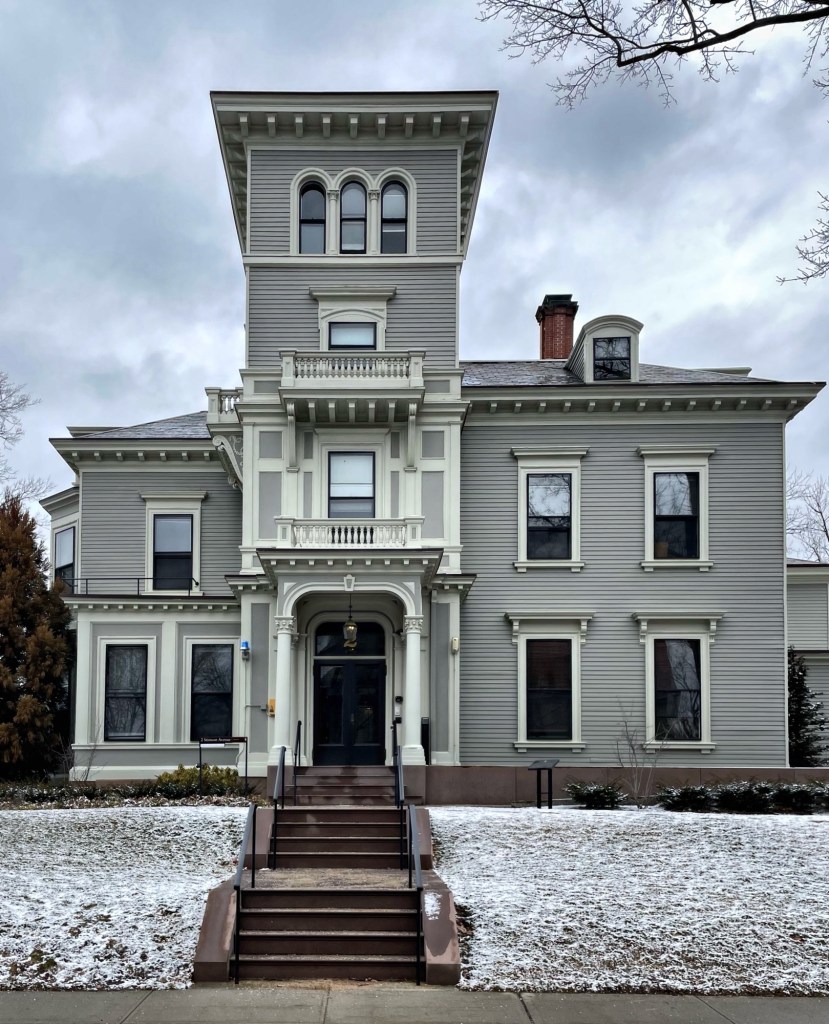
Another Italianate mansion on Angell Street in Providence is the Samuel B. Wheaton House which is presently occupied by Brown University’s English Department. Samuel Burr Wheaton (1807-1863) was a merchant who also served as president of the Phenix Bank. The building is capped by a shallow hip roof which is not visible from the street and wide, overhanging eaves supported by brackets. The house is a Villa in plan as it features irregular massing and not a symmetrical form, just sans tower. The Wheaton House was acquired by Brown University who has since added onto the rear of the house for the English Department offices and classroom spaces. LLB Architects is credited with the contextually designed additions which utilizes lead-coated-copper clad connectors that are recessed between sensitively-scaled brick pavilions that preserve the integrity of the original house by letting it stand proud of the later additions.
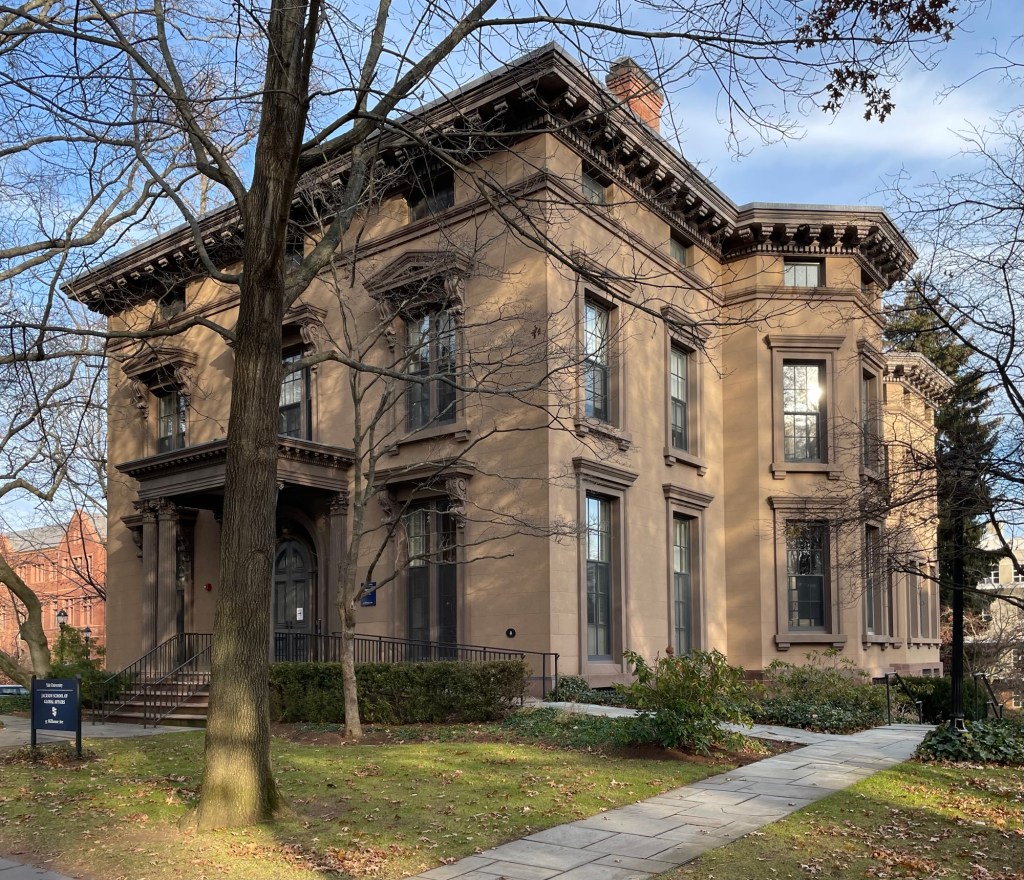
No town does Italianate architecture quite like Providence! Case in point, the Watson-Knight Mansion, a relatively overlooked example of the style found on Angell Street in College Hill. In 1854, a house lot here was purchased by an elderly Matthew Watson (1786-1857), who possibly lived in half of the house for a few years until his death. Directories also list his son Robert as living in the home in 1854. The three-story brick mansion has a boxy form with symmetrical facade. Brownstone hoods and sills are located at the windows and add depth to the otherwise blank facade. A projecting wooden door hood with hanging pendants covers the large entry. The home remained in the Watson Family until it came under the possession of Robert Brayton Knight (1826-1912) a businessman and mill owner who became the largest individual owner of cotton mills in the world, with upwards of twenty distinct establishments under his personal control. He co-founded what became the Fruit-of-the-Loom brand with his brother in the 1850s. The building has since been divided into apartment/condominiums.
Moving north from the Stonybrook section of Jamaica Plain, Boston, I explored around Roxbury, an area often overlooked by tourists, but has a lot of history and great buildings with rich stories! This old Victorian-era house was built around 1867 for Joseph W. Howard and his wife Lillie about the time of their wedding. The large Italianate style mansion was built in a period and location where wealthier Boston merchants could build large mansions with space in the inner suburbs of the city. The area remained fairly bucolic until the turn of the 20th century when housing development really picked up in Boston’s neighborhoods. By this time, owner Samuel Shuman sold his property on the busy corner lot to the Roman Catholic Archdiocese of Boston. In 1907, construction of the basement church on the site of the former Shuman Estate began. The original plans called for building a larger, upper church at a later date. However, due to a number of factors over the years, the upper church was never built. After WWII, Roxbury saw a demographic change and the church is largely home to a Black and Hispanic congregation to this day. The former Howard House is still owned by the Archdiocese as the rectory.
Isaac Harris Cary was born in the North End neighborhood of Boston, Massachusetts on November 3, 1803, the seventh child of Jonathan and Mary Cary. In 1824, Isaac and his brother William formed a partnership and ran a fancy goods imports business, Isaac H. Cary & Co. on Washington Street in Boston. The brothers opened a store in New York and William moved there full-time. In 1831, Isaac married Phebe P. Pratt of Roxbury and they would have three children, two of them living to adulthood. After doing business in New York City and later in New Orleans, Isaac and his family settled in the Jamaica Plain section of Boston, purchasing large land holdings and developing real estate. One of the finest lots he owned was developed for his country estate in 1850, an Italianate/Second Empire-style mansion perched atop an outcropping of Roxbury puddingstone. The large home with a rear three-story tower remained in the Cary family under his single daughter Susanna’s ownership until her death in 1913.