Stockbridge Town Offices // 1884

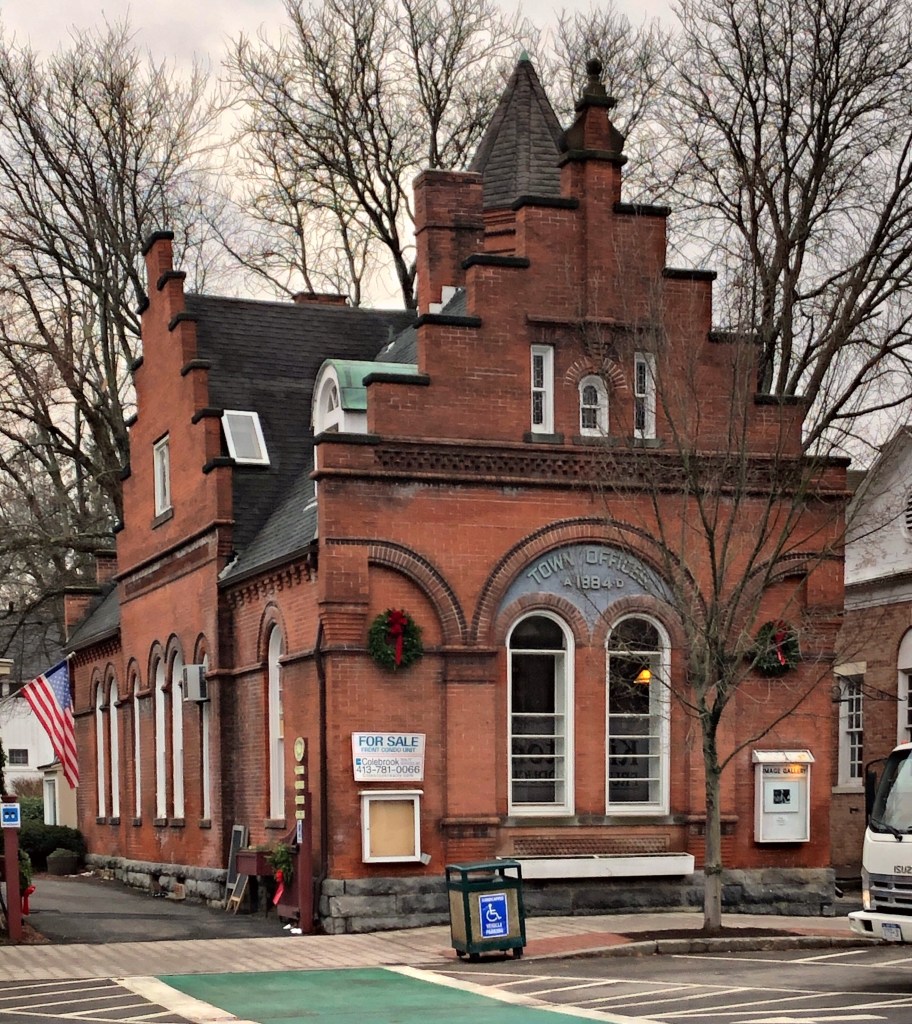
Built in 1884, the Town Office Building on Main Street in Stockbridge, housed more conveniently located government offices and came equipped with a basement jail. The building was constructed of brick to protect town records from fire and the adjacent buildings. The architecture is Flemish Revival with its stepped gables, a tower, and terra cotta and stained glass ornaments, a distinctive and different type of architecture on Main Street. The building was occupied after the Town Hall, further down Main Street, was deemed inadequate. The building displays the words “Town Offices” with the date 1884 A.D. as the town was sure to label the building as town offices over ‘town hall’ so they could retain the former town hall building after a deal with the First Congregational Church. The town sold the building to private owners in 1960 and has since been used as commercial space.
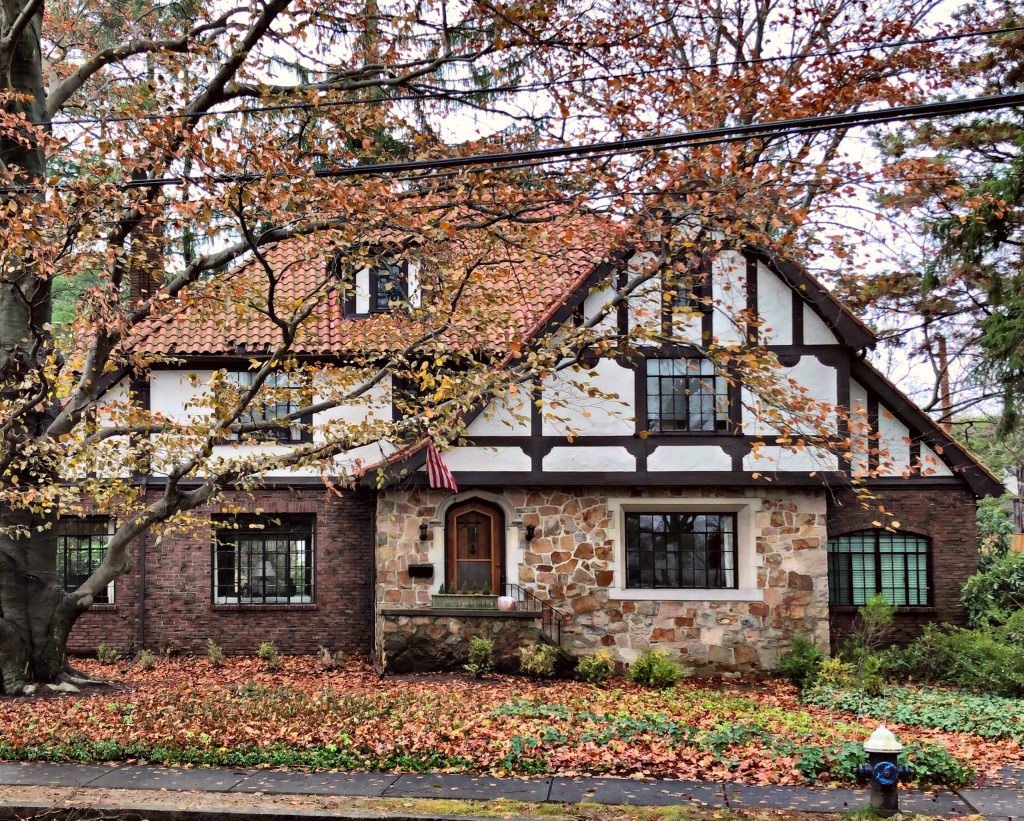
Glacy House // 1930

Residential architecture of the early decades of the 20th century is among my favorites as the Tudor Revival movement took off and was sometimes mixed with other revival styles at the time, creating really unique homes. The Glacy House in South Brookline, MA was built in 1930 as one of the earlier homes in the Walnut Hill development. It was likely designed and built by Walter L. Fernandez, a contractor who appears to have design-built a handful of spec homes to help get the neighborhood’s development going in the early stages. This home was originally occupied by George and Mary Glacy. George later worked as Vice President of the Boston & Maine Railroad, though he later got into legal trouble for hiring companies for railroad projects where he had financial interests, becoming indicted in an antitrust case by a Federal grand jury. The home features a first floor constructed of stone and brick with half-timbering on the floor above. The building is topped by a terracotta red tile roof, which is fairly uncommon for the region.

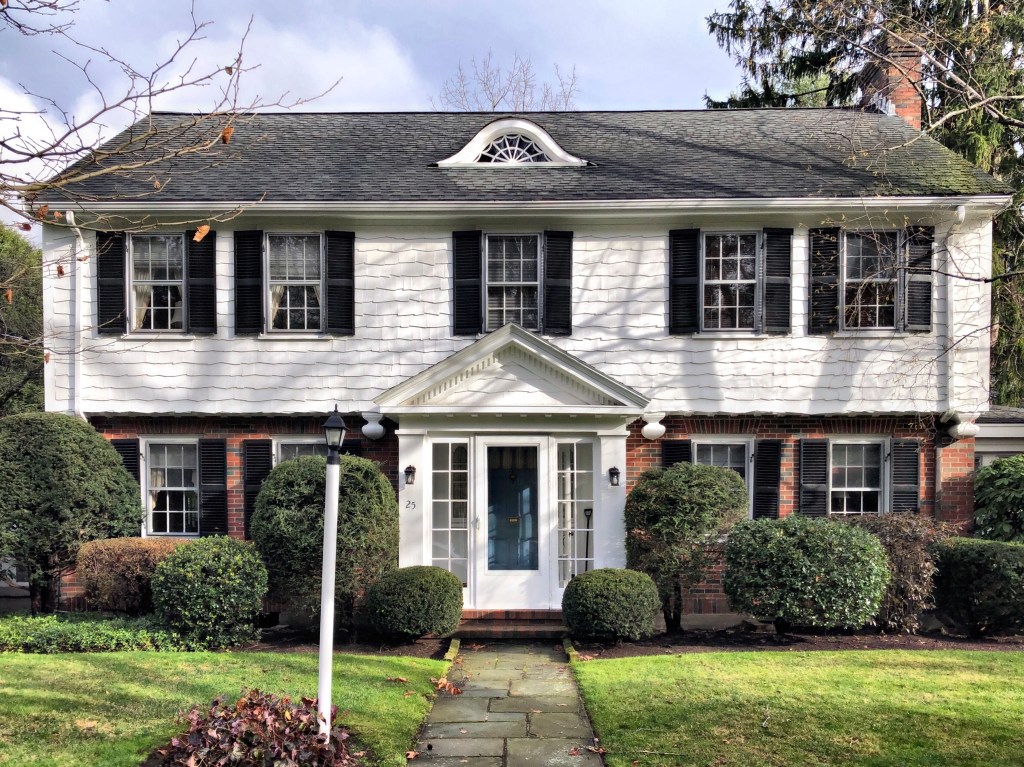
Webber House // 1935

Located in South Brookline, a neighborhood of mostly early-mid 20th century architecture, you can find amazing residential designs for middle-class suburban families in the Boston area. This home was built in 1935 for Max and Rebeccah Webber in the Garrison Colonial Revival style. The home, designed by architect Harry Morton Ramsay, is characterized by a second-story shingled overhang with decorative pendants reminiscent of 17th century American homes. Adding some extra flair, an eyebrow dormer can be found at the roof, as well as a glazed projecting entry porch with a broad pediment and corner pilasters.

Ames Shovel Works // 1852-1934

Oliver Ames began producing shovels in North Easton, Massachusetts at three pre-existing factory sites in the early 1800s. By 1852, O. Ames & Co., now run by Oliver Ames’s sons, Oakes and Oliver, Jr., was prompted to construct stone shops on the west side of the Shovel Shop Pond. In 1851, the original shovel shop was destroyed by fire. The company would soon rebuild, and by 1852 the first of the new shops, of fireproof stone construction had been completed. From 1852 to 1953 the company hired hundreds of men, women, and boys to make dozens of different kinds of shovels as well as hoes and, later, lawn and garden tools. Strong demand for shovels would continue in the mid 19th century, with the great expansion of railroads and later the American Civil War. Abraham Lincoln personally asked Oakes Ames to supply shovels to the Union Army, and he obliged. By 1879, the company is said to have produced 60% of all the shovels in the world!! The Ames Shovel Company ceased production in Easton in 1952. After, the buildings started to suffer from neglect with only a few buildings occupied by commercial uses. Thankfully, in 2014, the complex was redeveloped into a local YMCA and apartments as the Ames Shovel Works Apartments!

Thomas and Esther Smith House // c.1758

The Thomas and Esther Smith House in the Feeding Hills area of Agawam, Massachusetts is a 1½ story, vernacular Georgian style house with a gambrel roof. Feeding Hills, so named for its bountiful soils, is an agricultural plain approximately five miles west of the Connecticut River at the eastern foot of Provin Mountain. The land was highly sought after by farmers, with many agricultural uses still taking place here to this day. This parcel of land was purchased by Thomas Smith, a carpenter, in 1757, who likely built the home soon after for his new family. The family occupied the home into the mid-19th century, harvesting crops and raising cattle for sustenance and sale. The agricultural property was subdivided numerous times and now sits on just an acre. The home and remaining land was purchased by the Agawam Historical Society in 2002, who maintain the property and educate on Agawam’s agricultural heritage.

Church Street Tenements // 1872

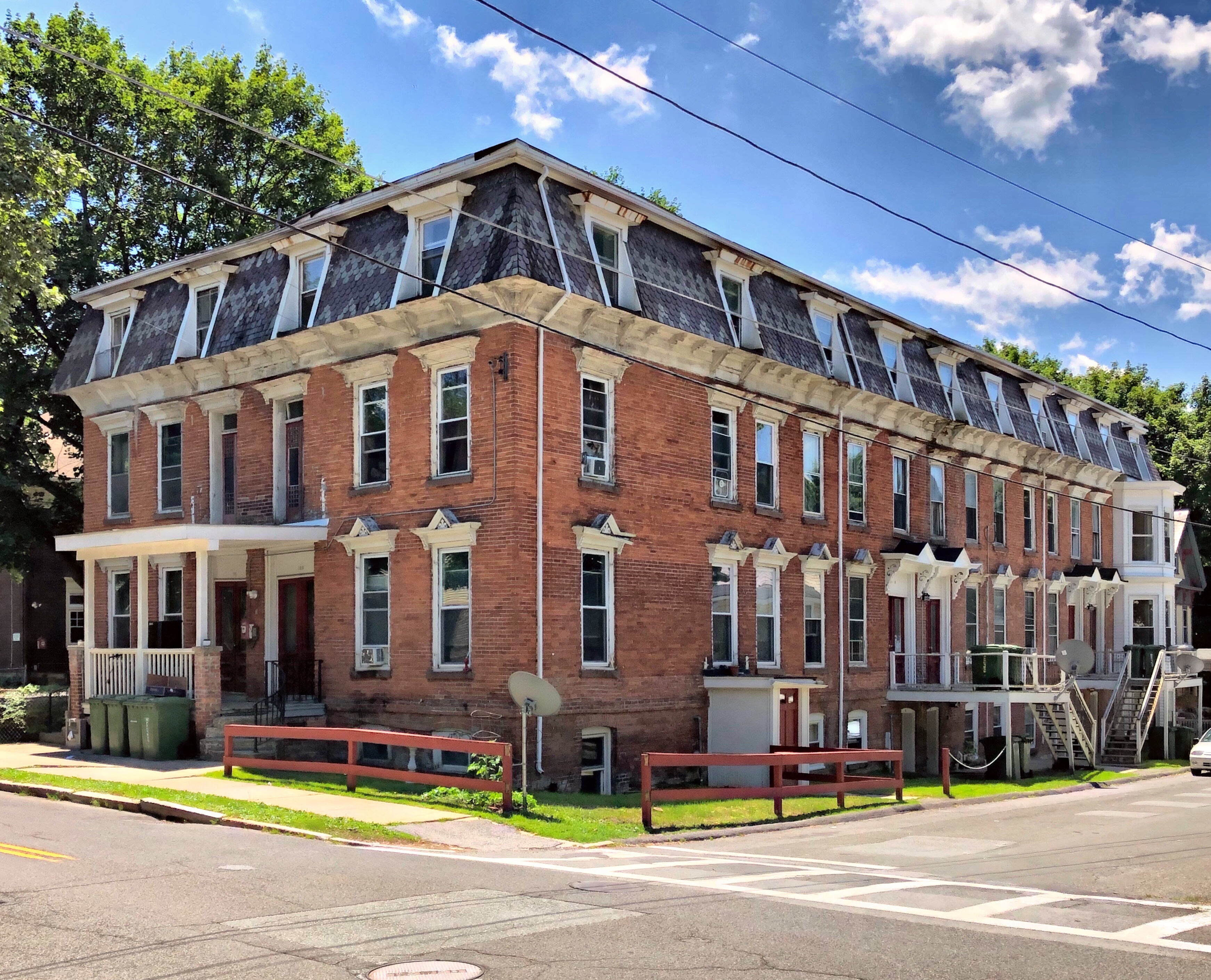
Industrial cities and towns all over New England drew in thousands of European immigrants looking for work. Due to the massive influx of workers and families, many towns and companies constructed tenement housing and other worker’s housing to provide living spaces close to factories and mills. This six-unit tenement house was built in 1872 and is a high-style Second Empire example of worker’s housing in North Adams. The use of brick, mansard roof, and window hoods was likely a concerted choice by the developers as they were located on a street lined by mill owners houses and the who’s who of North Adams.

Frank A. Ferris House // 1890

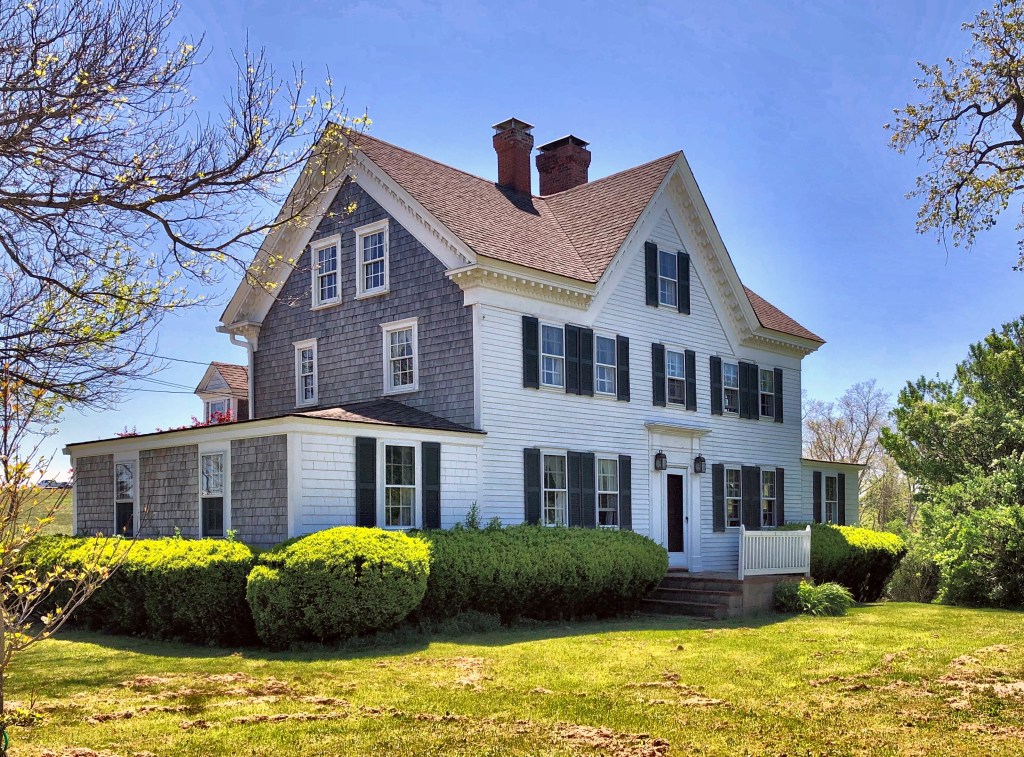
Located north of downtown Oak Bluffs, this oceanfront summer estate exemplifies the grandeur of Martha’s Vineyard at the end of the 18th century. This home was built in 1890 for Frank A. Ferris, a Manhattan meat dealer who processed and shipped his product to wealthy customers, markets, luxury hotels and restaurants all over the east coast. His processing plant on Mott Street in Manhattan remains an excellent example of Romanesque Revival architecture in the city. He lived at 5 Russell Terrace in Montclair, NJ, and in summers, stayed in this waterfront mansion overlooking the Atlantic. His summer home is a great blending of the Queen Anne and Shingle styles, both very common at the time.

Reuben Nickerson House // c.1835

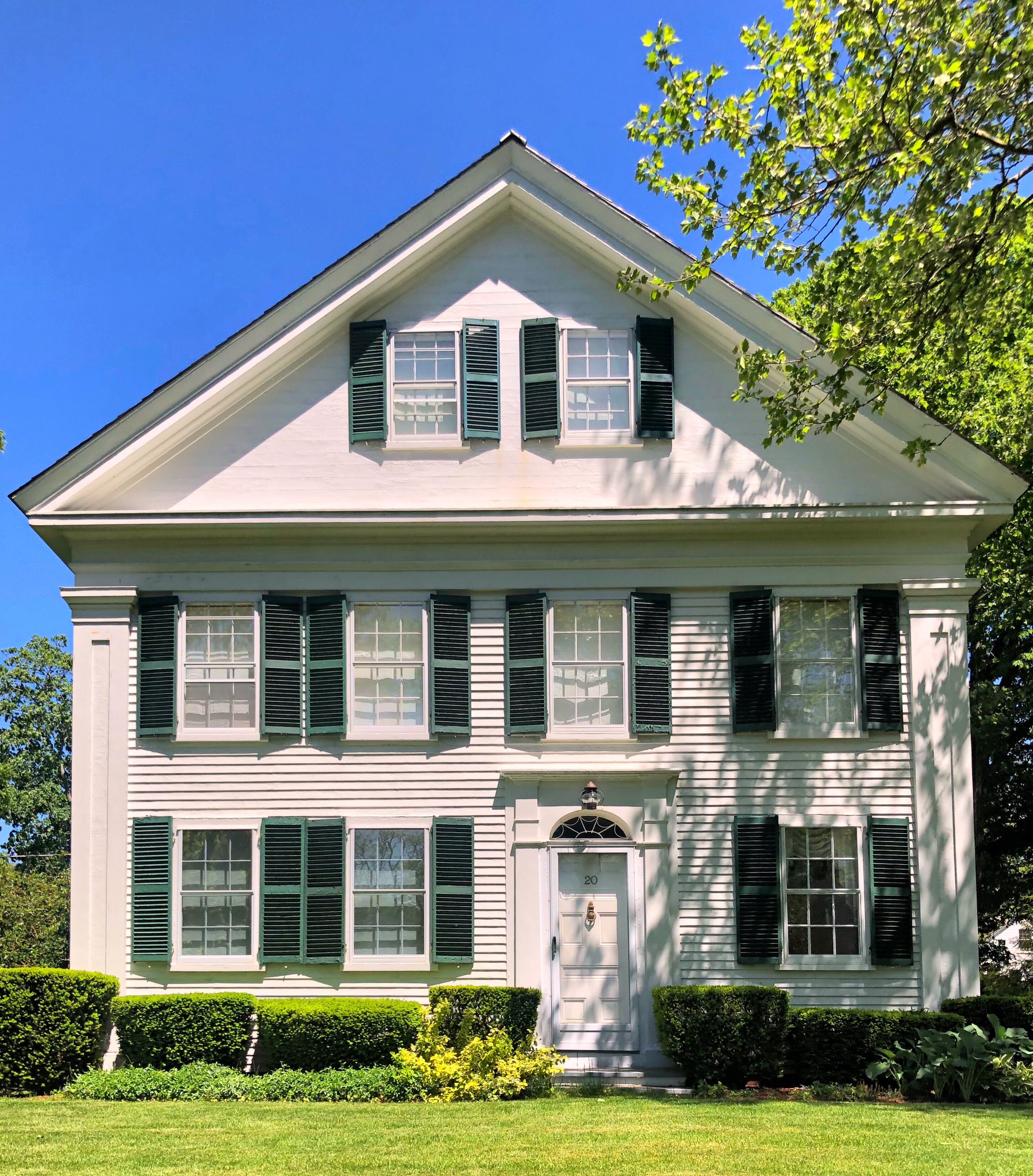
The gorgeous Reuben Nickerson House on Bridge Road in Eastham is an excellent example of a transitional Greek Revival home with hold-over features of the Federal style. Reuben Nickerson was born in 1814 on Cape Cod and worked as a farmer and saltmaker, he later served as a senator, school committee member, and representative. He was married twice; first to Elizabeth Doane who died in 1849, and he remarried Elizabeth’s sister Sarah Doane just a year later. By the 20th century, the home was operated by descendants of Reuben as a funeral home and residence. After WWII, the home was a bed and breakfast and has since been reverted to a single family home. Detail on the home includes: wide, paneled pilasters, boxed, molded cornice, a pedimented gable, a 2-part wide frieze, and a fanlight at the entrance.

Eastham Windmill // 1793

Built in 1793, the Eastham Windmill on the old Town Green is the oldest workable gristmill on Cape Cod. Typical of Cape Cod, Eastham’s windmill is an octagonal , “hat and smock” or Flemish design in which the revolving top or hat can be rotated to direct the sails into the wind. Local historians contend that Thomas Paine, a noted early millwright and resident of Eastham, most likely built the Eastham Windmill in the late eighteenth century. Some sources state that the windmill was likely built in Plymouth and later moved to Truro and eventually to Eastham in 1793. In 1895, the women of the Village Improvement Society raised money to purchase the windmill and two adjoining properties from private ownership for $ 113.50. Around the turn of the twentieth century, the windmill became a local tourist attraction and the subject of postcards and souvenirs. The windmill is now the main attraction of the annual Eastham Windmill Weekend.

Knowles House // c.1820

Located just a stones throw from the Penniman House, the c. 1780 Knowles House stands at the historic end point of Fort Hill Road. Accounts differ on its history. Some sources explain the home was built in c.1790 by Seth Knowles (who died in 1787) a prominent citizen of Charlestown, Mass., and one of the original members of the Bunker Hill Monument Association and of its board of directors. From my research, the home appears to have been built for Thomas Knowles, Seth’s son, and was later willed to his son, also named Thomas. Thomas Knowles Jr., was born in 1803, in Eastham, and in early life settled at New Bedford, engaging in the whale fishery industry. Deed research would be required to find out more. The gorgeous Federal home features a large, center cross gable with dentils at the cornice.