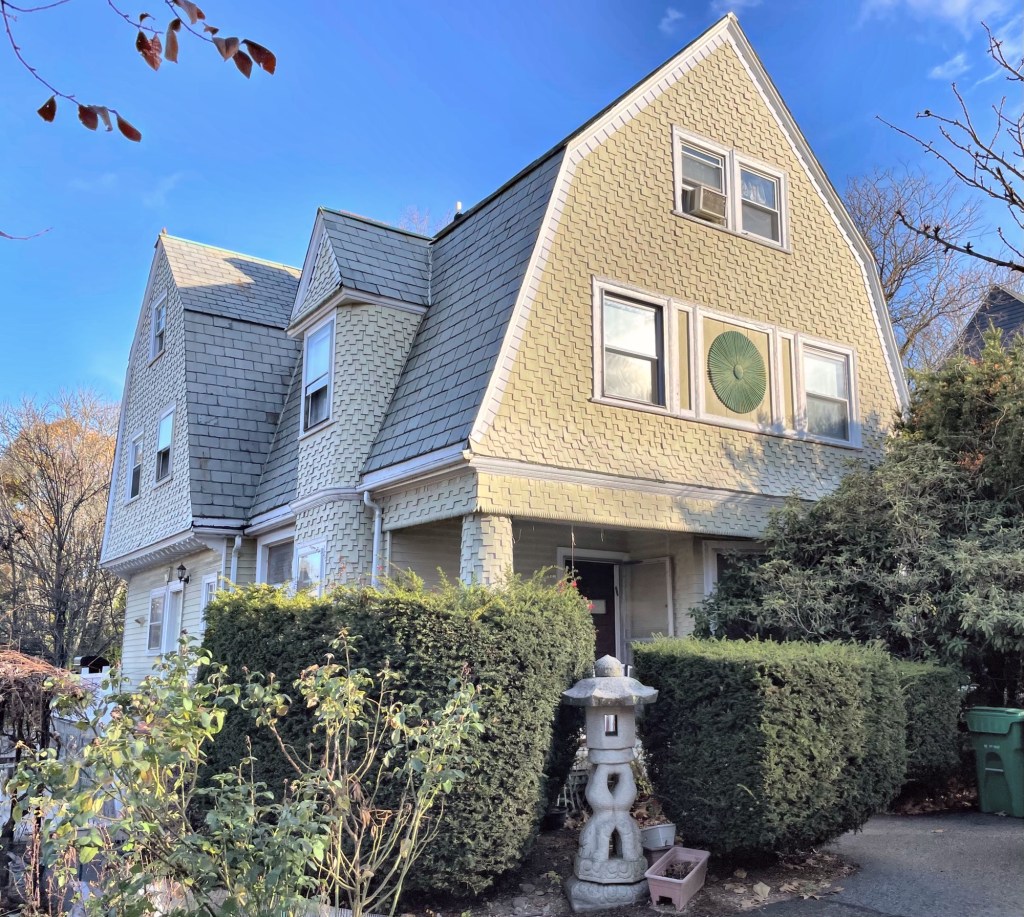
Frank and Elizabeth Ratcliffe House // 1890

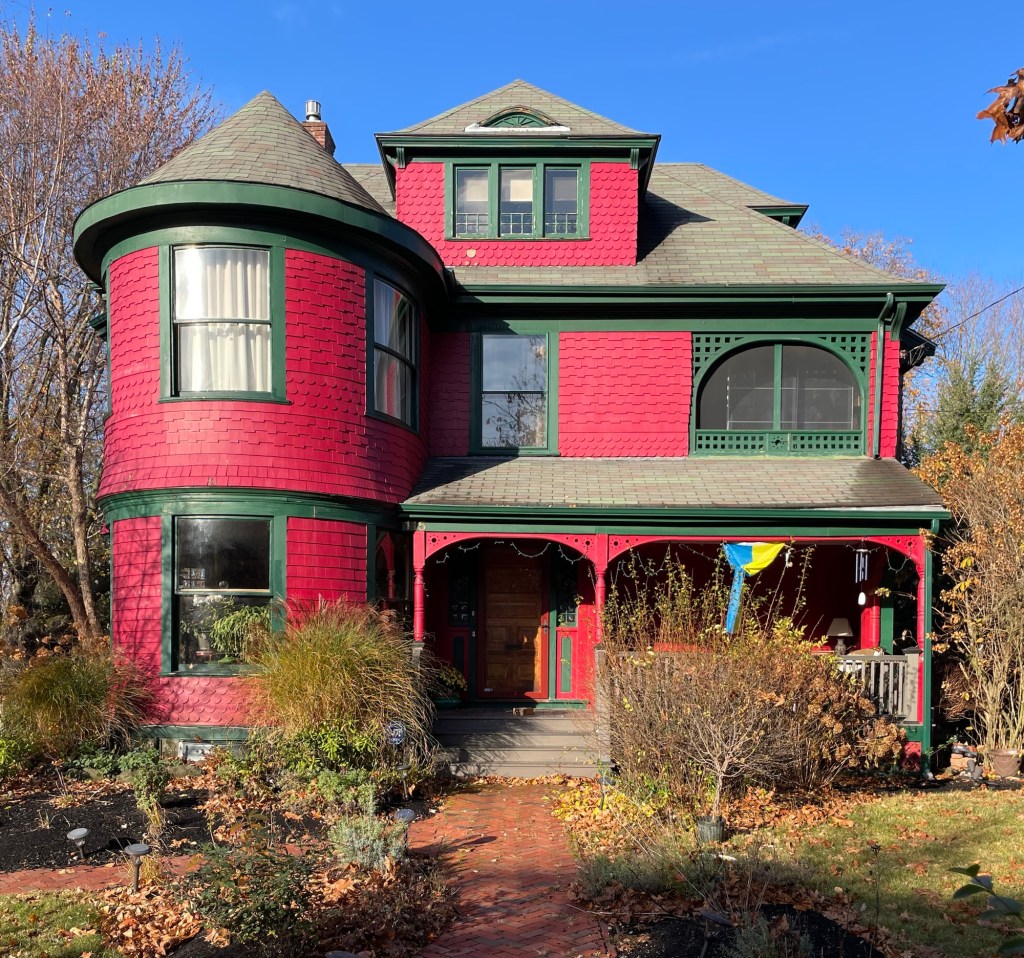
I do not think that I have ever seen rounded shingled columns like this before… What a treat! This house is located on Rice Street in Newton Centre, and was built in 1890 by Henry H. Read, a leather dealer who developed the entire street. This house was built on speculation and initially rented out to tenants before it was sold to Frank Ratcliffe and his wife, Elizabeth Ratcliffe. Frank Ratcliffe was born in England and would become treasurer of the Boston & Albany Railroad, which had a stop in Newton Centre. Frank and Elizabeth would sell or gift this property to their daughter, Mary Elizabeth Ratcliffe Holt and her husband, Warner R. Holt. Besides the unique shingled columns, the house features a broad gambrel roof and sunburst panels and a two-story rounded shingled bay. I could not locate the architect for this one, sadly.
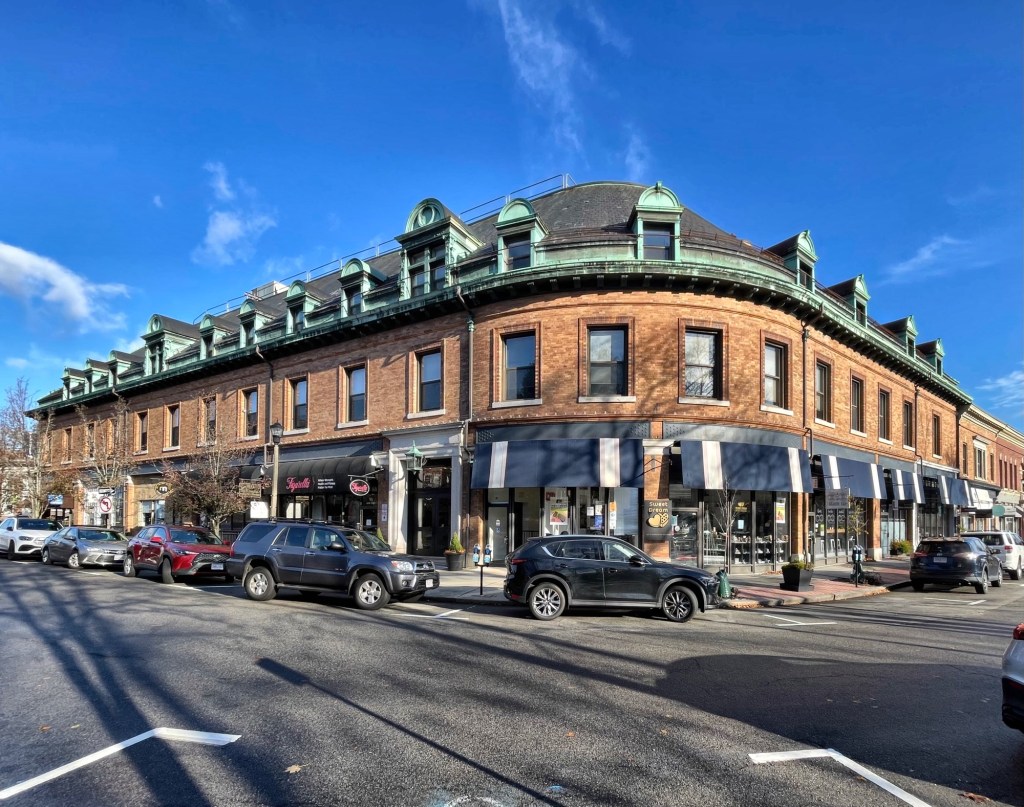
Bray’s Hall // 1893

As Newton Centre’s new railroad station and following development boom transformed the once sleepy village into the main commercial center for the city, landowners capitalized on the opportunity by developing commercial blocks to serve the community and line their own pockets. Mellen Newton Bray (1856-1946) became a major landholder in Newton Centre and would develop the areas directly surrounding the new train station there. On a curving site, he built Bray’s Hall, this three-story commercial block renting out spaces to local banks and stores with a large assembly hall and bowling alley in the building as well. Initially, Bray planned for an eight-story structure, having contracted a solid foundation that could support such a structure, pending the success of the initial construction. That is mixed use before it was “cool”. The building was designed by the firm of Kendall & Stevens, likely led by Henry H. Kendall, who resided in Newton Centre. Kendall would also design the apartment block across the street for Mr. Bray. The building is constructed of light Tuscan bricks and is notable for the bracketed cornice and dormers all in copper. The building was restored in the 1970s by owner David Zussman, and rebranded as Piccadilly Square, following his recent trip to London being impressed with by the atmosphere of Piccadilly Circus.

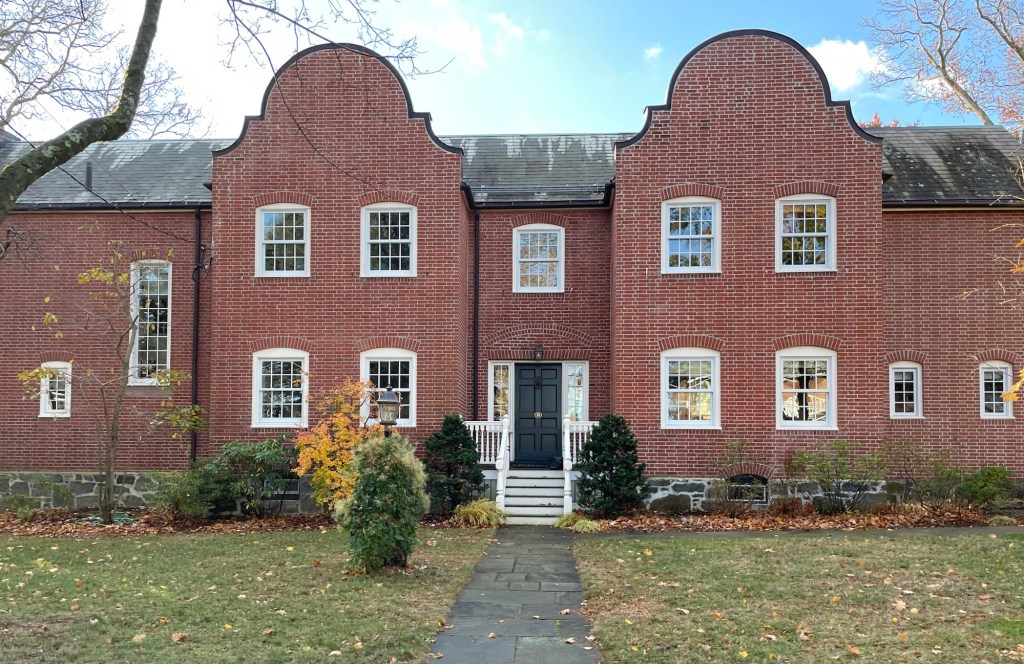
Chester-Rowley House // 1897

This unique brick house is located on Devon Road in Newton Centre, and was built in 1897 for Arthur Herbert Chester and Elizabeth S. (Rich) ChesterArthur H. Chester (1868-1898) worked in real estate, largely in the office of J. Montgomery Sears. He acquired a large house lot in Newton Centre, and had this unique Jacobean Revival residence built for his young family. Sadly, within a year of its completion, Arthur died of Malarial Fever at the age of just 30 years old in 1898. Elizabeth, his widow, would retain the house for a decade longer before it sold to Henry Esmond Rowley and his wife, Josephine. While it looks like a brick house, this residence is actually wood-frame with a brick veneer, a cost-saving measure to still give a stately appearance. The house is notable for its twin rounded gable parapets at the façade and lack of ornate trimmings. The house was covered in white paint for years, but the owners recently removed all the paint from the brick.

Daniel T. Kidder House // 1884

This charming Shingle/Queen Anne style house is located on Sumner Street in Newton Centre, a street of fine suburban houses built for businessmen who commuted into Boston. This house was built in 1884 for Daniel Tufts Kidder (1852-1941), a glass dealer. Daniel got his start under the employ of Hills, Turner & Harmon, jobbers of plate, window and mirror glass, and manufacturers of mirrors, eventually working his way up to salesman and later as president of the consolidated company, Boston Plate and Window Glass Co. It is believed that Mr. Kidder used antique and imported glass in his home when it was built. The house remains well-preserved and characteristic example of the fanciful Victorian styles.

Former Newton Centre Branch Library // 1927

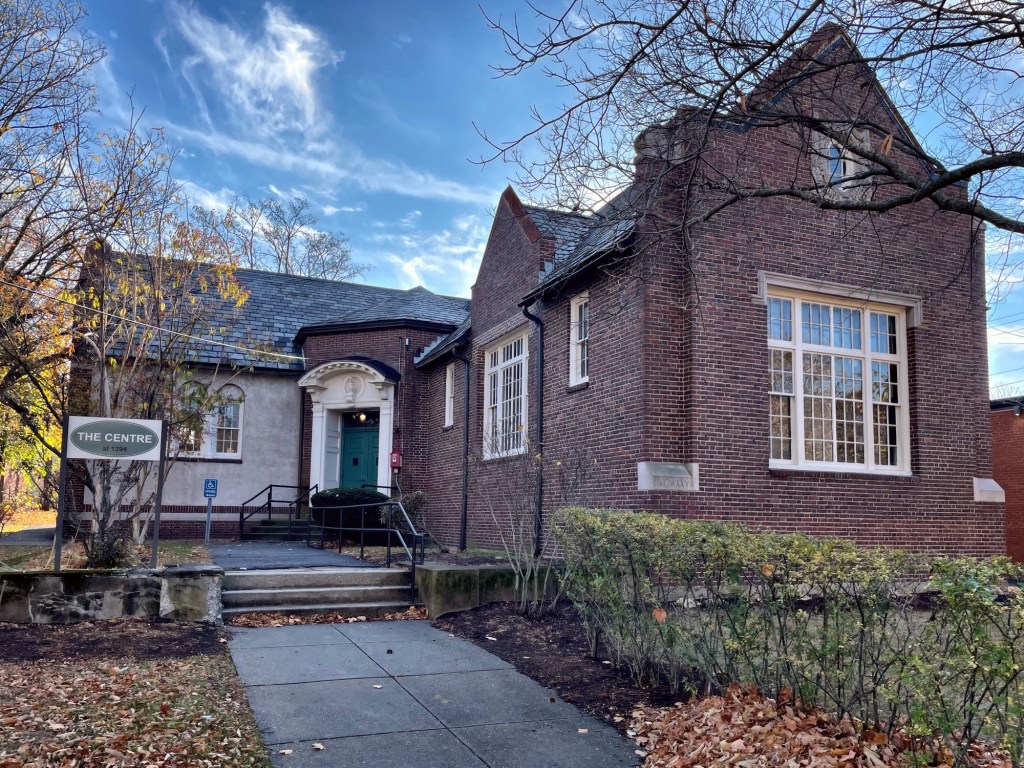
Formerly the Newton Centre Branch Library, this building was one of five branch libraries funded in Newton, Massachusetts by citizen subscription between 1926 and 1939 and turned over to the city. Like most of the others, the building is a small-scale, one story brick library of a Tudor Revival style. The building was designed by the firm of Ritchie, Parsons & Taylor and constructed in 1927. Architect James H. Ritchie was born and educated in Scotland, relocating to Boston and lived in Newton Centre, in two houses he built for his family. The Newton Centre Branch Library was one of the six branch libraries to close in 1991 when the main library opened, consolidating the neighborhood libraries under one roof; the remaining four closed in 2008 due to a budget cut. Today the Newton Centre branch library building serves as the Newton Health Department offices. Thanks to the Community Preservation Act, funds have been allocated to preserve and restore the building for another 100 years.

Former Newton Savings Bank Building // 1962

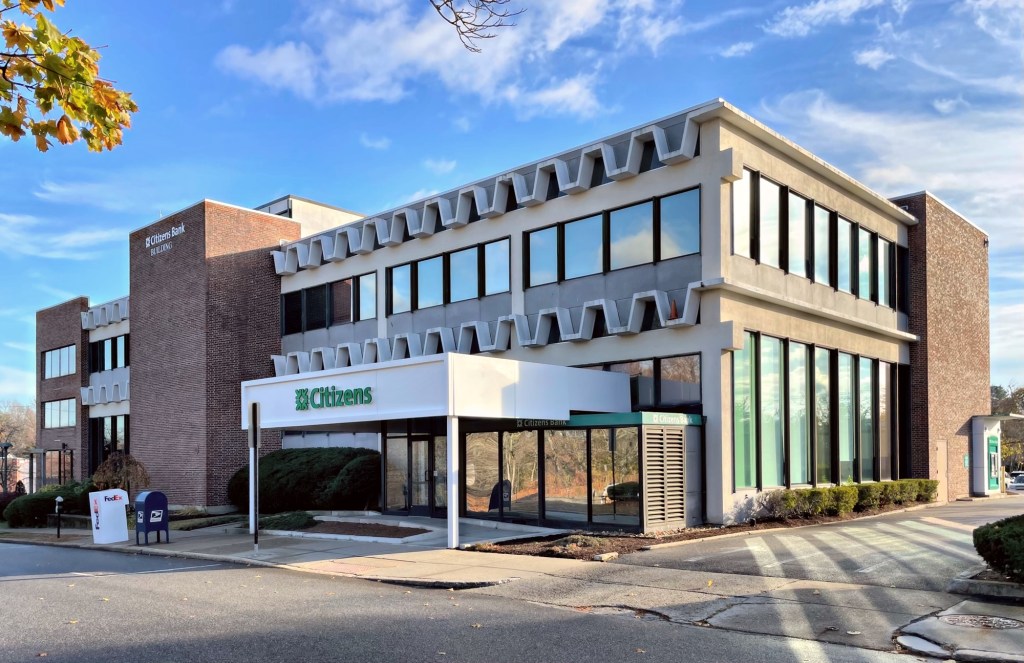
Opened in 1962 as the Newton Savings Bank, this unique Mid-20th century Modern banking structure showcases the forms and materials not conceived in previous decades. The building is located on the Newton Centre Green, adjacent to the former Newton Centre Methodist Episcopal Church, and provides a sharp contrast between the stone building in the Romanesque style and more contemporary forms. The bank was designed by Bastille and Halsey Associates, established in 1953 by partners, Robert Adams Bastille and William Ashbaugh Halsey. Now occupied by a Citizens Bank with professional offices also inside, the building exhibits precast concrete “zipper” banding between floors that are broken up by solid brick masses in the facade. What do you think of these corporate modern buildings?

Former Newton Centre Methodist Episcopal Church // 1899

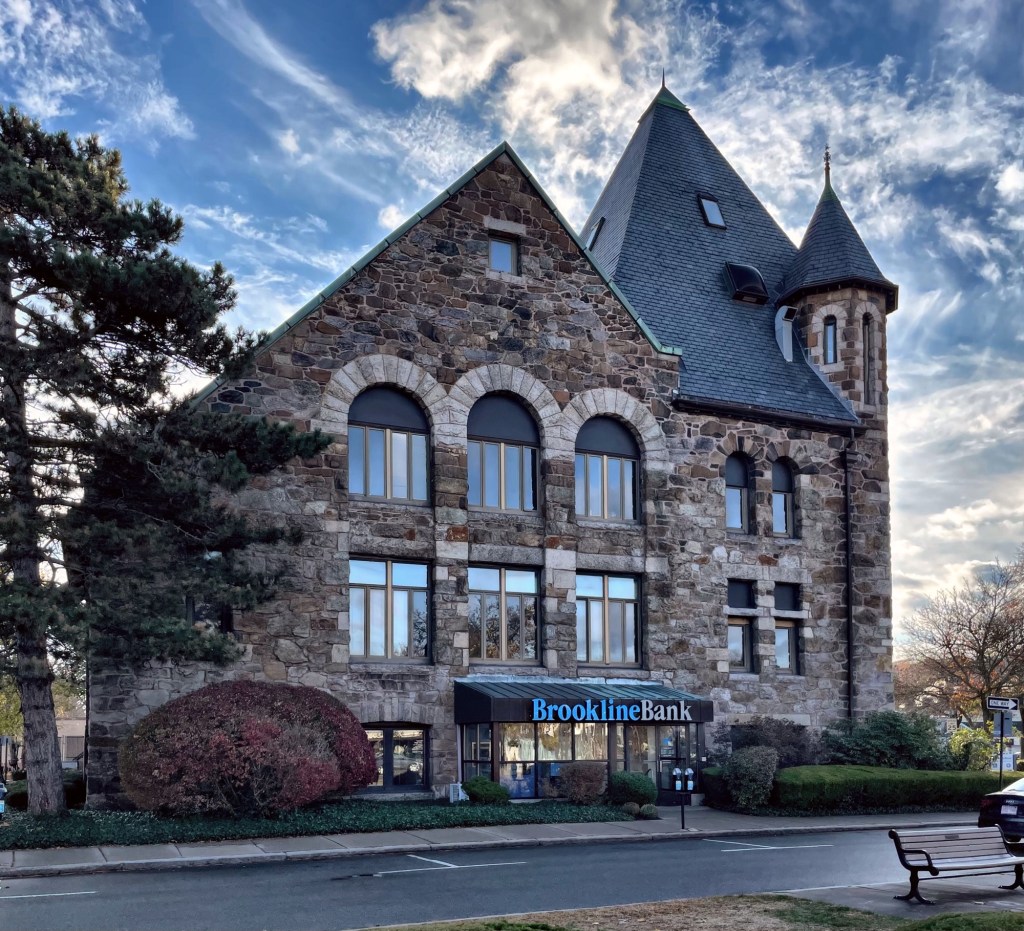
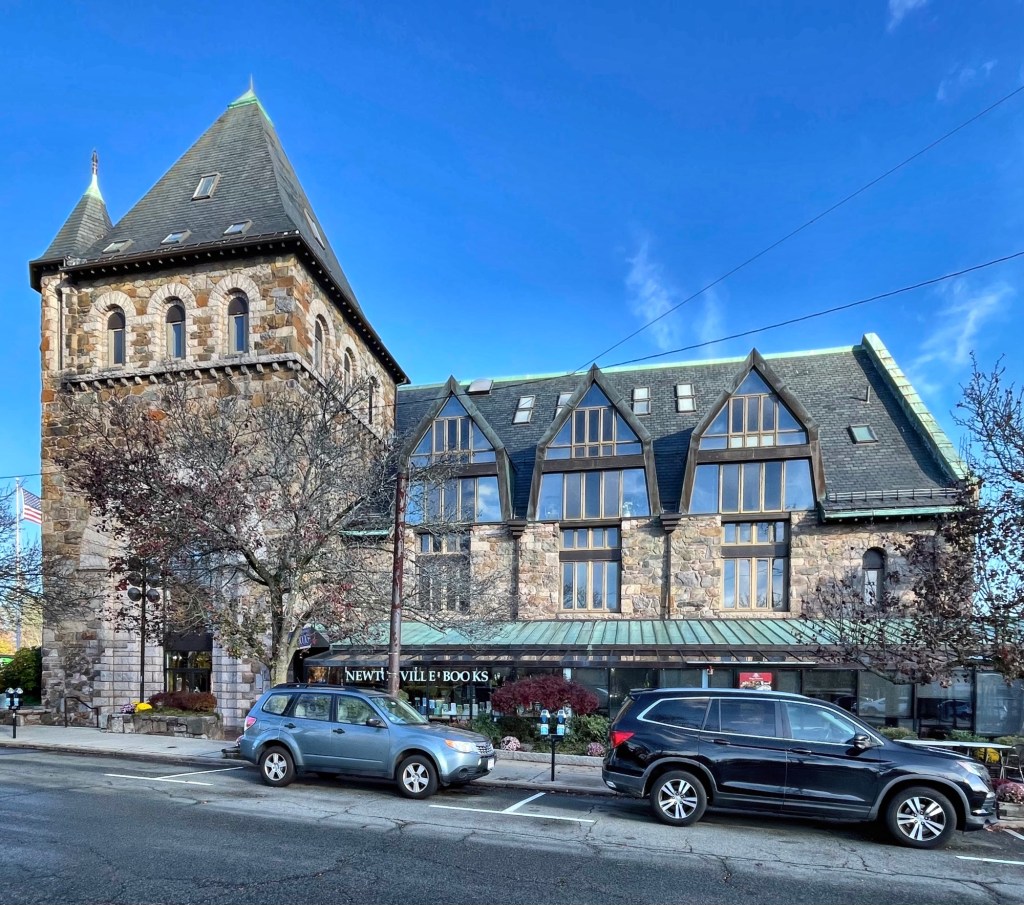
This building, the former Newton Centre Methodist Episcopal Church, is Romanesque in style, and is one of the more notable adaptive reuse projects in Newton. The church was designed by the esteemed architectural firm of Andrews, Jacques & Rantoul and completed in 1899 for the local Methodist Episcopal congregation. The edifice is built of locally quarried rubblestone, often called Roxbury Puddingstone, and trimmed with rough cut Milford granite. The granite is used at the windows, forming the arches and heads, and most strikingly in the large arched entrance. The church eventually closed and was renovated with modern windows, additions, and more, and currently houses a restaurant, bank, book store, and professional offices.

Samuel D. Garey House // c.1870

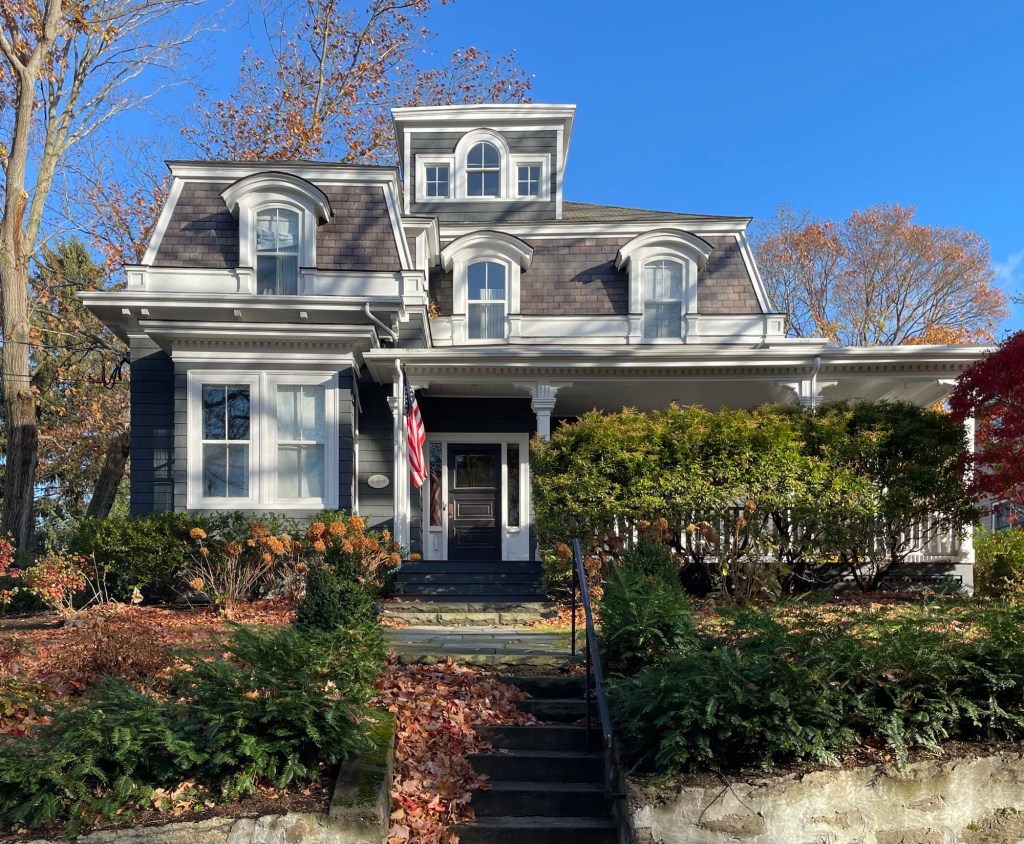
Samuel D. Garey (1825-1891) was born in Auburn, Maine, and worked as a carriage manufacturer there before moving to Newton, Massachusetts to use his carpentry skills building houses in the rapidly developing Boston suburb. He became a prominent builder and developer in Newton Centre, residing there and building this mini-mansard house on Gibbs Street before 1870. Garey likely rented the house out to tenants for supplemental income, with the family maintaining the charming cottage into the 20th century.

John H. Sanborn Mansion // c.1868

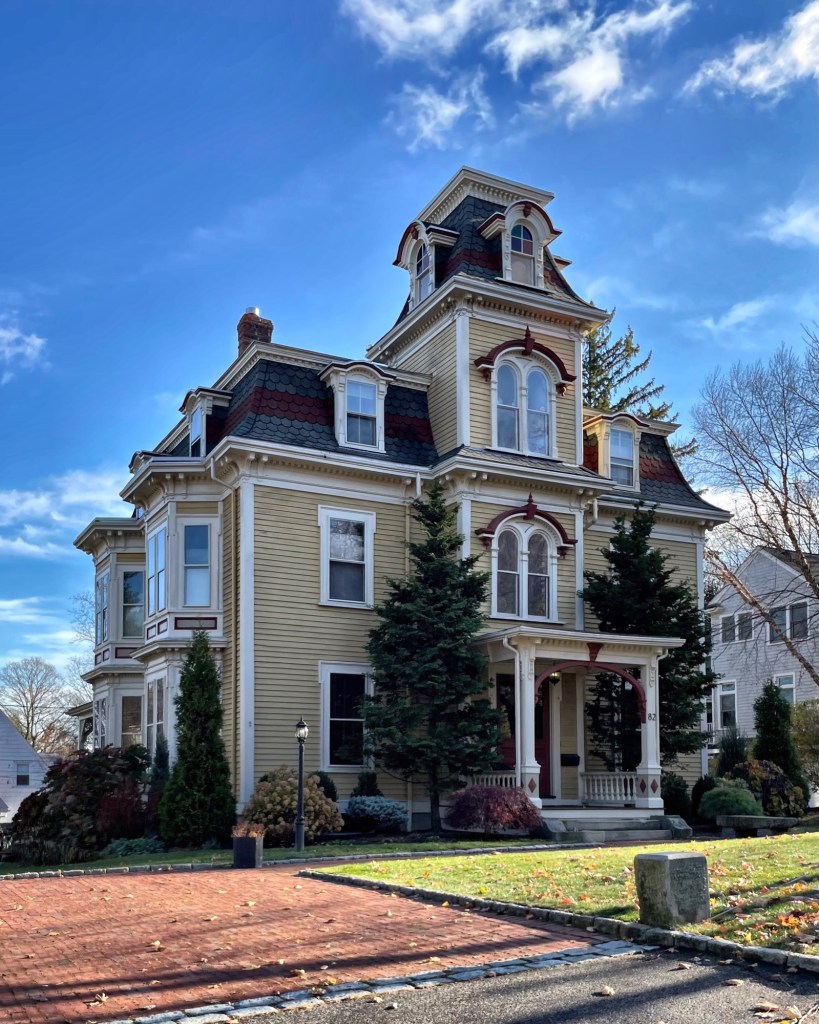
One of the finest Second Empire style residences in Newton, Massachusetts, can be found on Herrick Road in Newton Centre. This is the John H. Sanborn house, built before 1870 for John H. Sanborn, a Boston broker and commission merchant who also served as a Representative to the Massachusetts General Court. The imposing residence is a two-story house based on a rectangular plan, and capped with a bellcast Mansard roof of gray, fish-scale patterned slates. The focal point of the design is the four-story, towered entrance pavilion which dominates the facade.

Trinity Episcopal Church, Newton // 1915

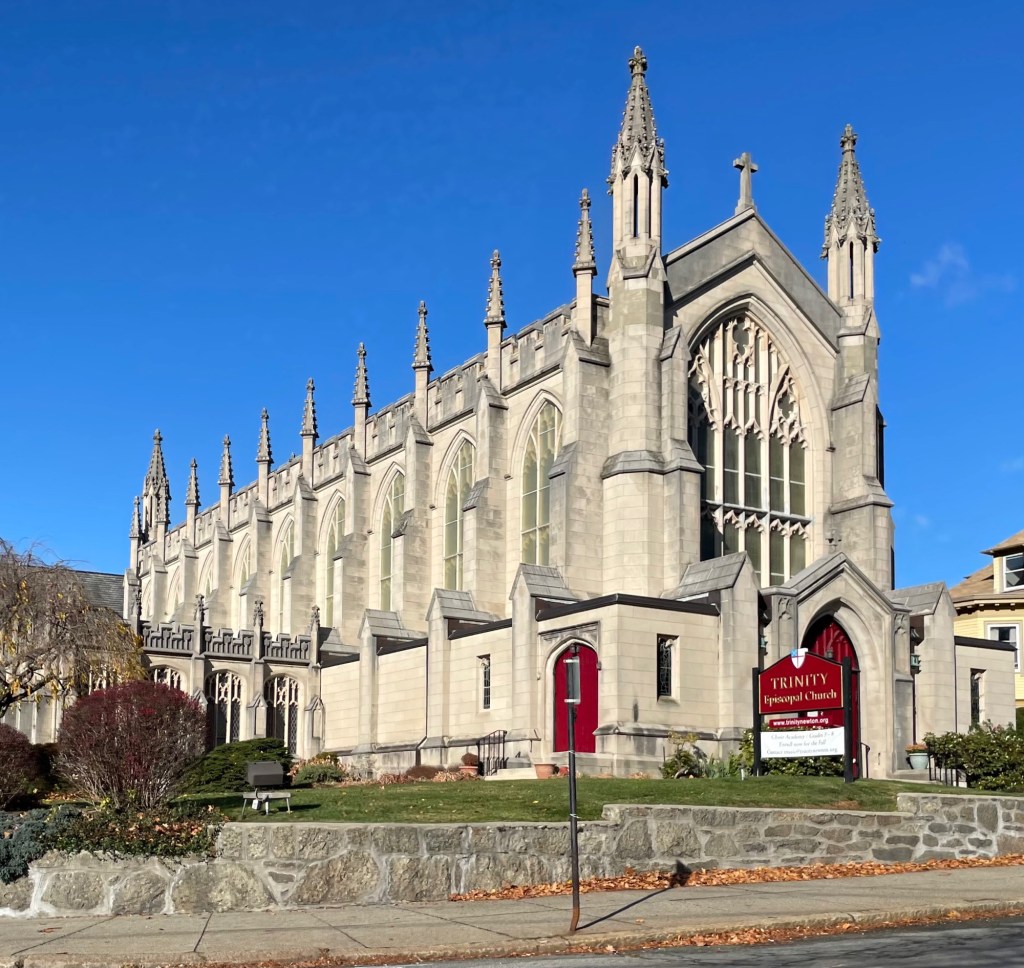
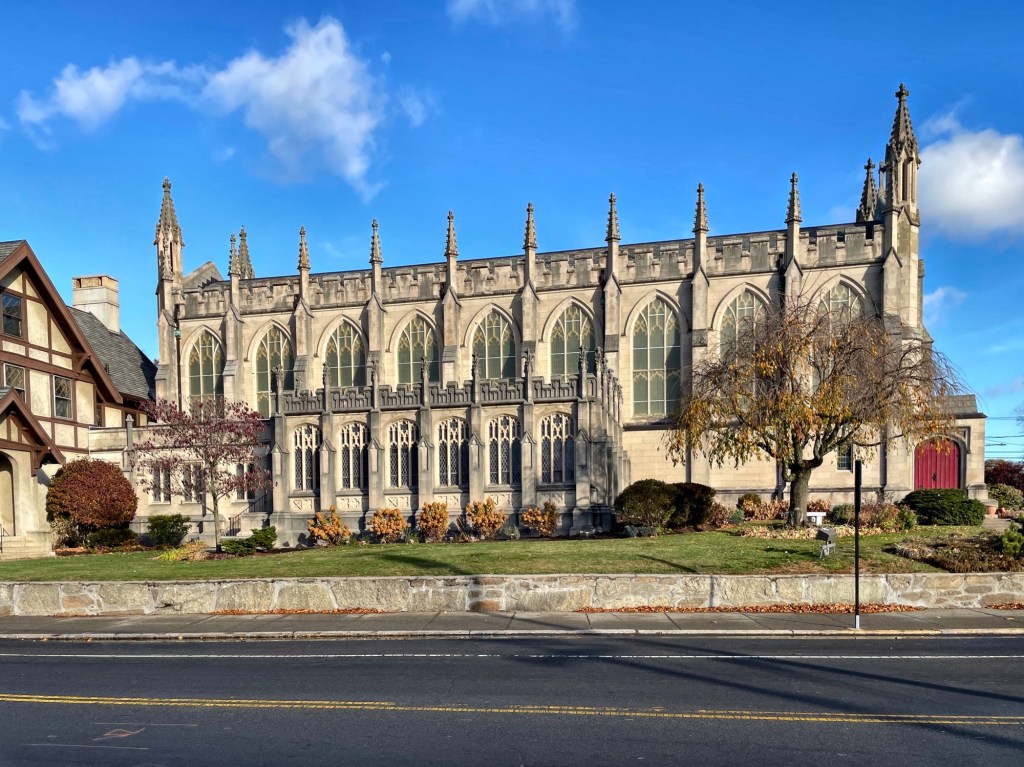
The Trinity Episcopal Church in Newton Centre is one of the most unique and architecturally significant buildings in the village. Episcopalians began meeting in Newton Centre by at least 1889 and began discussions about erecting their own church. A small wood-frame chapel was built (since relocated and used by the Newton Parks Department) and provided worship space for years until the 1910s when the congregation acquired enough funds to build a more substantial structure. The cornerstone for the new church, which was designed by architect George W. Chickering, was laid in May of 1915, and the building was completed in 1916. Modeled after the stunning King’s College Chapel in Cambridge, England, the high-style Gothic edifice is notable for the crenelated parapet and pinnacles rising above the buttresses.