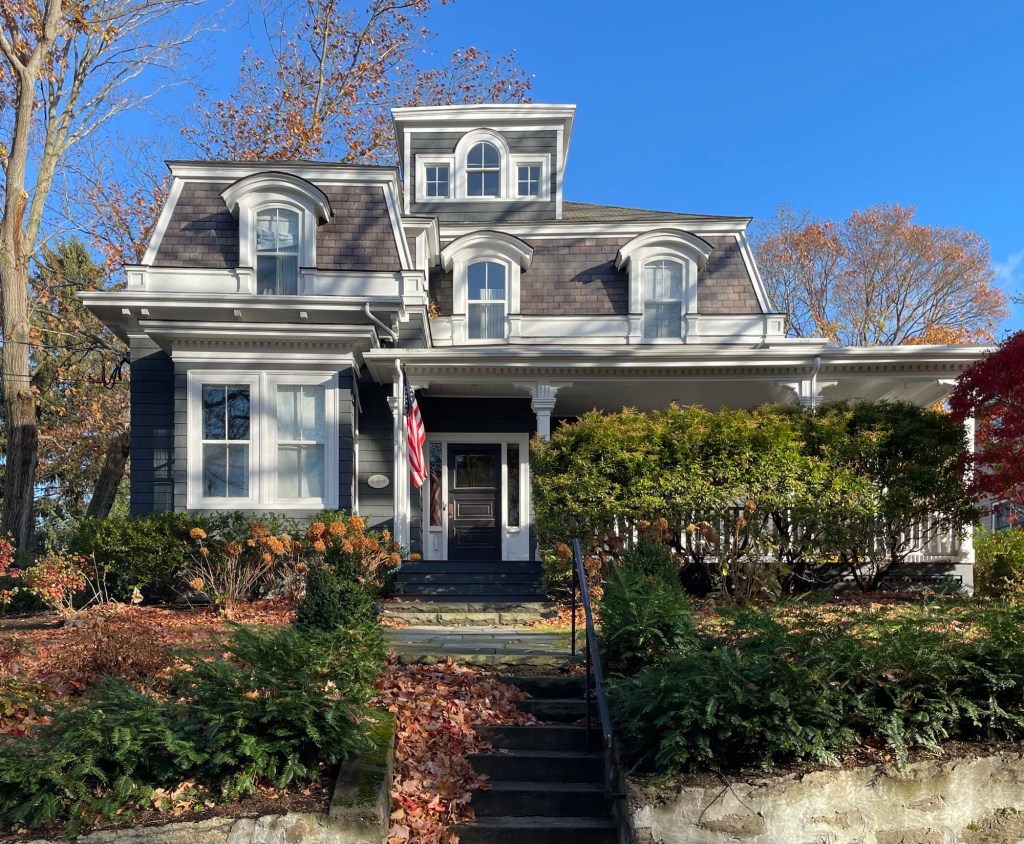
Samuel D. Garey (1825-1891) was born in Auburn, Maine, and worked as a carriage manufacturer there before moving to Newton, Massachusetts to use his carpentry skills building houses in the rapidly developing Boston suburb. He became a prominent builder and developer in Newton Centre, residing there and building this mini-mansard house on Gibbs Street before 1870. Garey likely rented the house out to tenants for supplemental income, with the family maintaining the charming cottage into the 20th century.
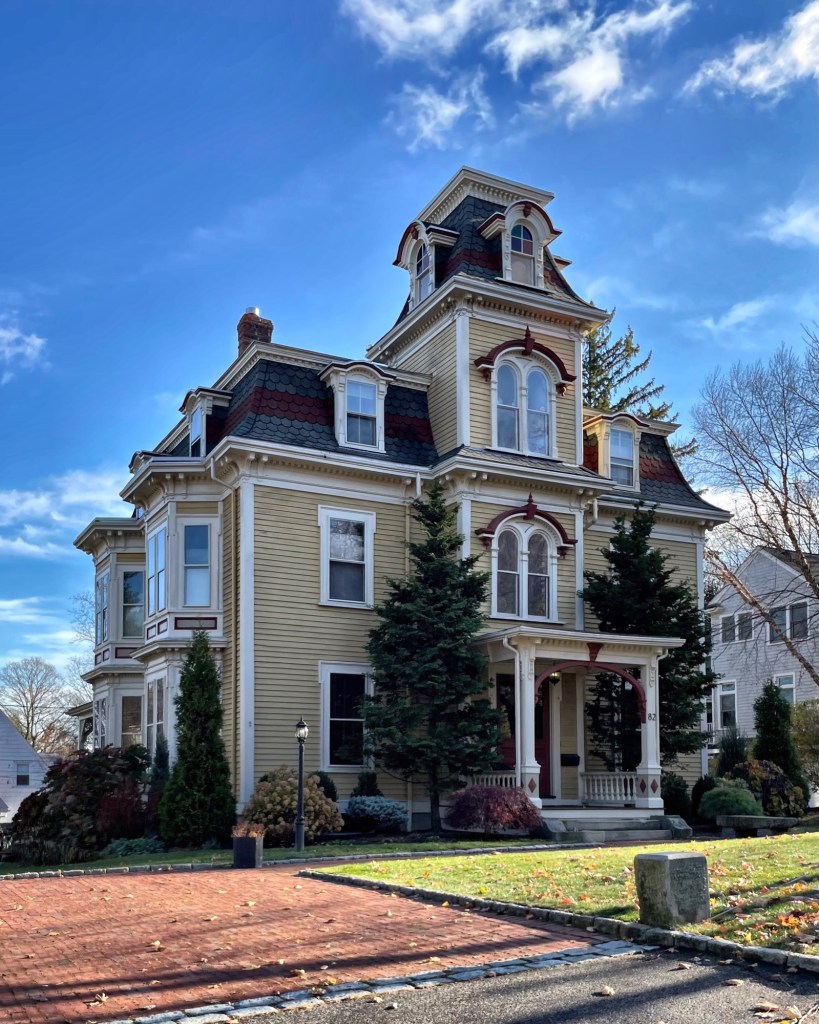
One of the finest Second Empire style residences in Newton, Massachusetts, can be found on Herrick Road in Newton Centre. This is the John H. Sanborn house, built before 1870 for John H. Sanborn, a Boston broker and commission merchant who also served as a Representative to the Massachusetts General Court. The imposing residence is a two-story house based on a rectangular plan, and capped with a bellcast Mansard roof of gray, fish-scale patterned slates. The focal point of the design is the four-story, towered entrance pavilion which dominates the facade.
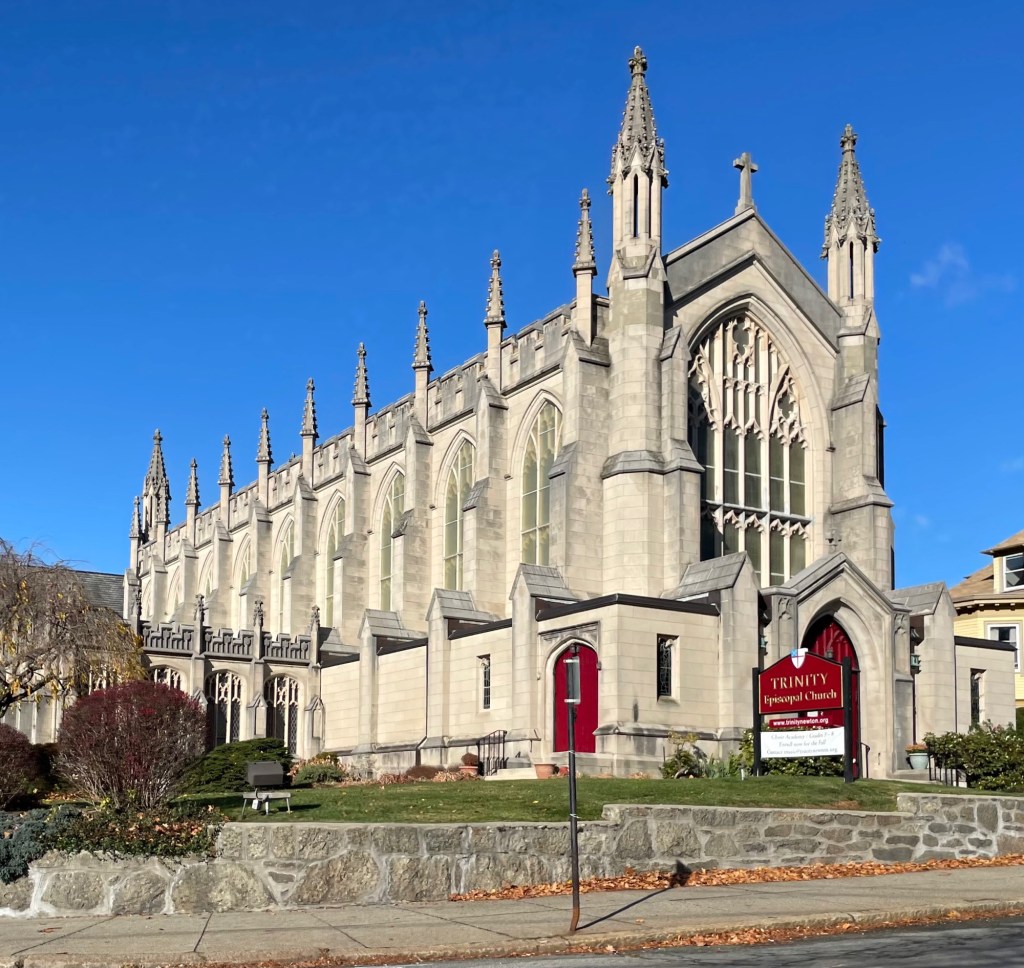
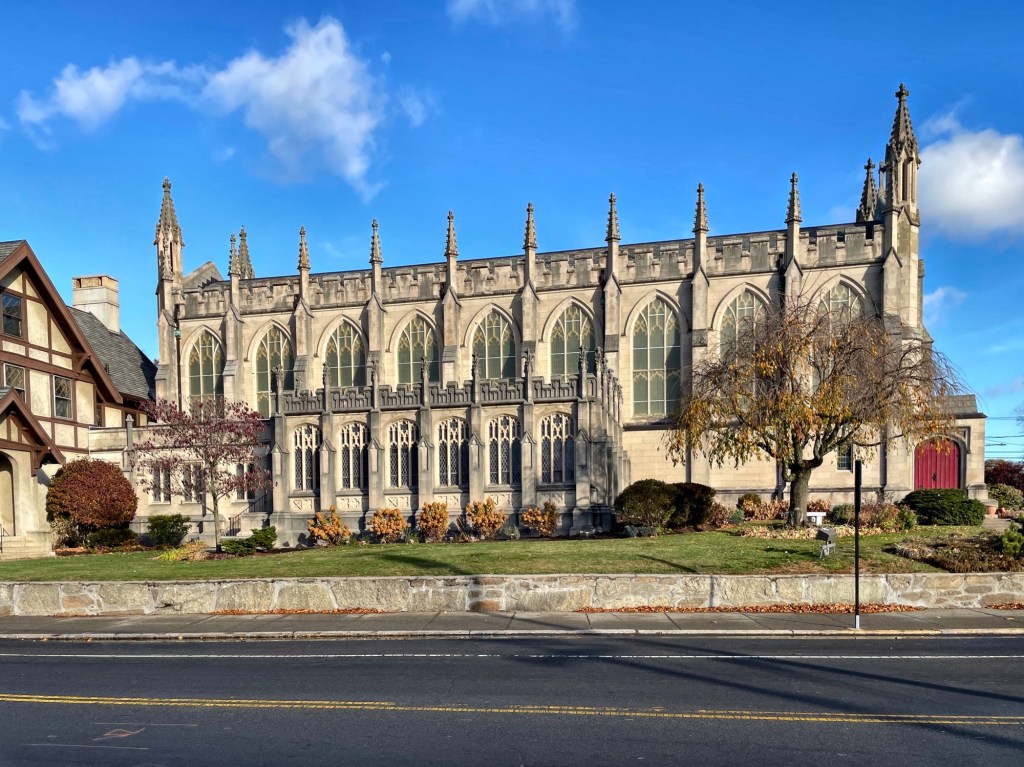
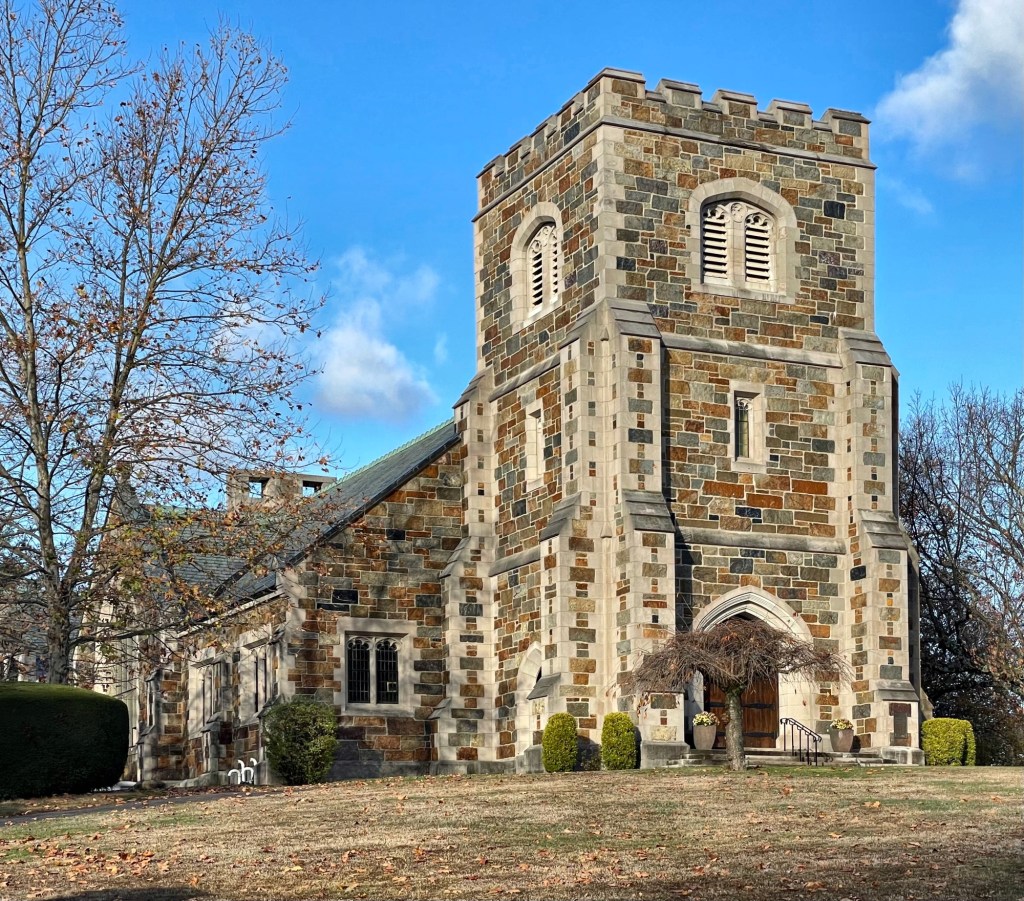
The former First Congregational Church (now the Greek Evangelical Church of Boston) of Newton Center, Newton, is a landmark example of the Neo-Gothic architectural style for a church building. Built in 1904, the structure resembles an English village church in the form of a Roman Cross with short trancepts. The structure is constructed of Quincy granite and was designed by the architectural firm of Shepley, Rutan & Coolidge. The First Congregational Church of Newton was originally established in 1664 as a parish church when Newton was still a part of Cambridge (then known as Newtowne). The parish has had six meeting houses built by the Congregation, with the last four on this site. Seeing dwindling membership in the mid-20th century, First Church in Newton dissolved in 1972, after more than 300 years of service to the Newton community. Luckily, the newly formed Greek Evangelical Church of Boston would buy the church that same year and has maintained the significant edifice ever-since!
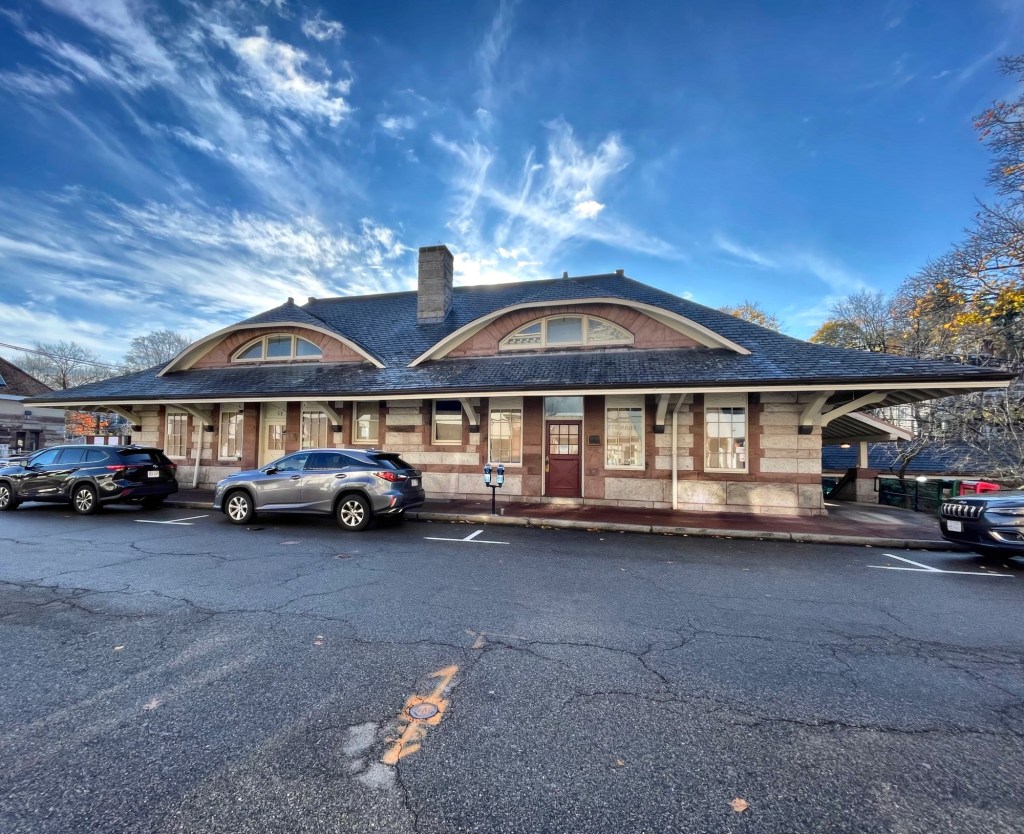
All aboard! Next Stop… Newton Centre! The Newton Centre station was originally commissioned by the Boston and Albany Railroad in 1884 as one of a series of new, highly designed stations in the Boston suburbs. Architect, H. H. Richardson designed five passenger stations for the Boston & Albany Railroad in Newton, and of which, only one survives. After his death in 1886, Richardson’s successor firm, Shepley, Rutan and Coolidge, followed the design vocabulary of Richardson for the remainder of the stations outstanding. The new station, built by the Norcross Brothers firm of Worcester, opened in 1891. The station was heavily modified in 1905–07 when the line was lowered below grade to eliminate street crossings. The Highland branch was closed in 1958 and quickly converted for streetcar use; streetcar service began in July 1959, with this station being located on the MBTA Green Line D. The station has long been leased to commercial stores and coffee shops but has been unused since 2022. Here’s to hoping the building can be used again in the future!
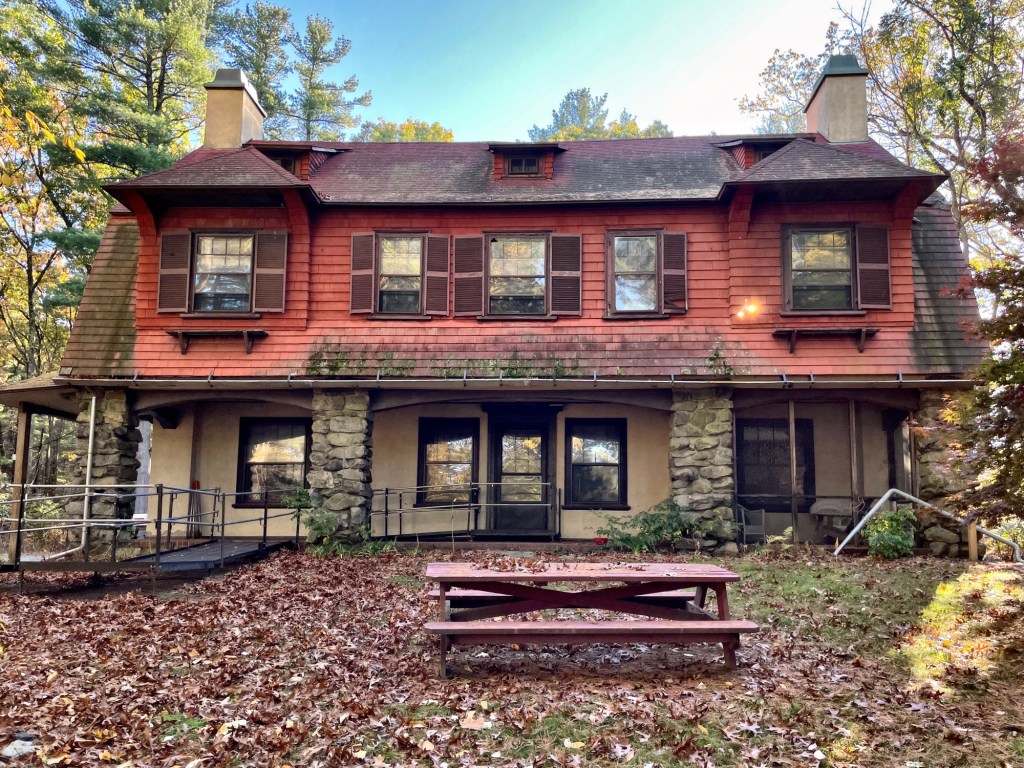
A significant house and grounds are tucked away, hidden off Dudley Road in Newton, Massachusetts. This is the Kennard Estate. Frederic Hedge Kennard (1865-1937) was born in Brookline and attended Harvard College. He did graduate work for a time at the Bussey Institution and the Lawrence Scientific School, and entered the employ of Frederick Law Olmsted, the noted landscape architect, with his office in Brookline. By 1906, he decided to open his own landscape architecture office, opening locations in Boston and Philadelphia. He would purchase this expansive wooded property, and had this house built by 1907. He laid out the grounds, creating paths and gardens on the property and planted native trees. It is unclear who designed the house, sadly. Mr. Kennard was also a noted ornithologist (an expert on birds) and would host visiting scholars at his home, walking the grounds and studying birds there. After his death in 1937, the property was inherited by his son, Harrison Eisenbrey Kennard, and ultimately willed to the City of Newton upon his death in 1982. Since then, Newton Parks and Recreation have maintained the house (though they could be doing more to preserve it), and opened the grounds as Kennard Park, a free public park comprised of wooded trails and streams.
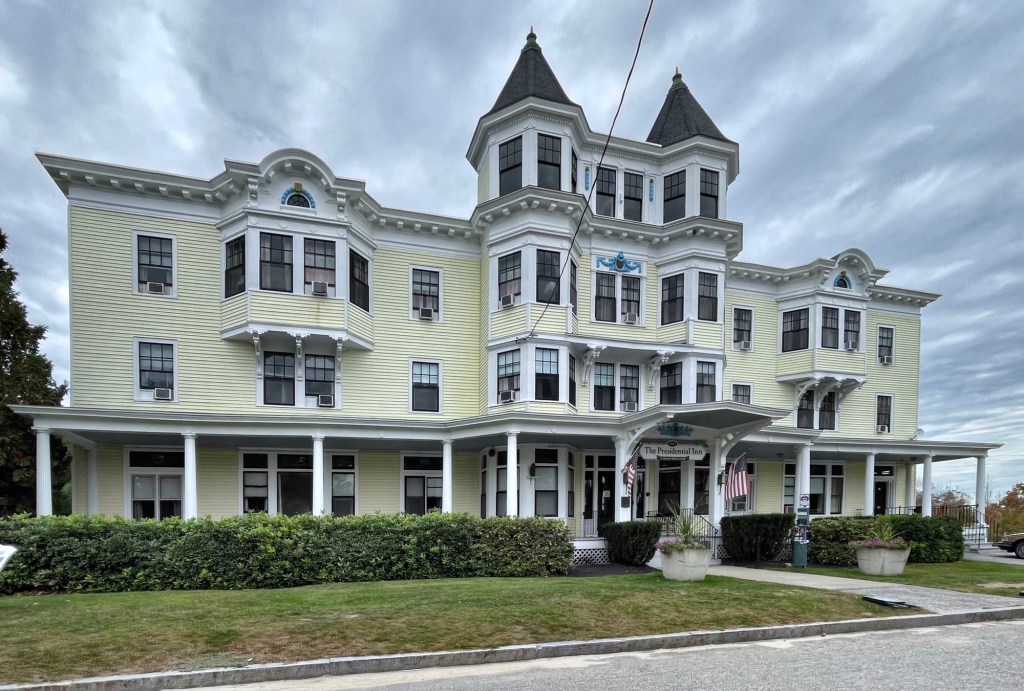
The Riccar Inn, now known as the Presidential Inn, was constructed in 1913 on the grounds of the former Poland Springs House. The structure was the last of the hotel buildings constructed by the Ricker family, who started the resort aimed at drawing in tourists to take in the area’s natural healing waters. The annex hotel building was named Riccar Inn, with the spelling “Riccar” from the historic surname used by members of the family before they emigrated to America. The Queen Anne/Colonial Revival style hotel building survived the 1975 fire that destroyed the main hotel, the Poland Springs House. Architecturally grand, this three-story irregular plan hotel has a flat roof and features a four-story projecting double bay in the front facade topped with two octagonal towers. While covered in vinyl siding, much of the original ornament still shines (and there is likely more underneath the siding to be uncovered at a future date). What a beautiful building.
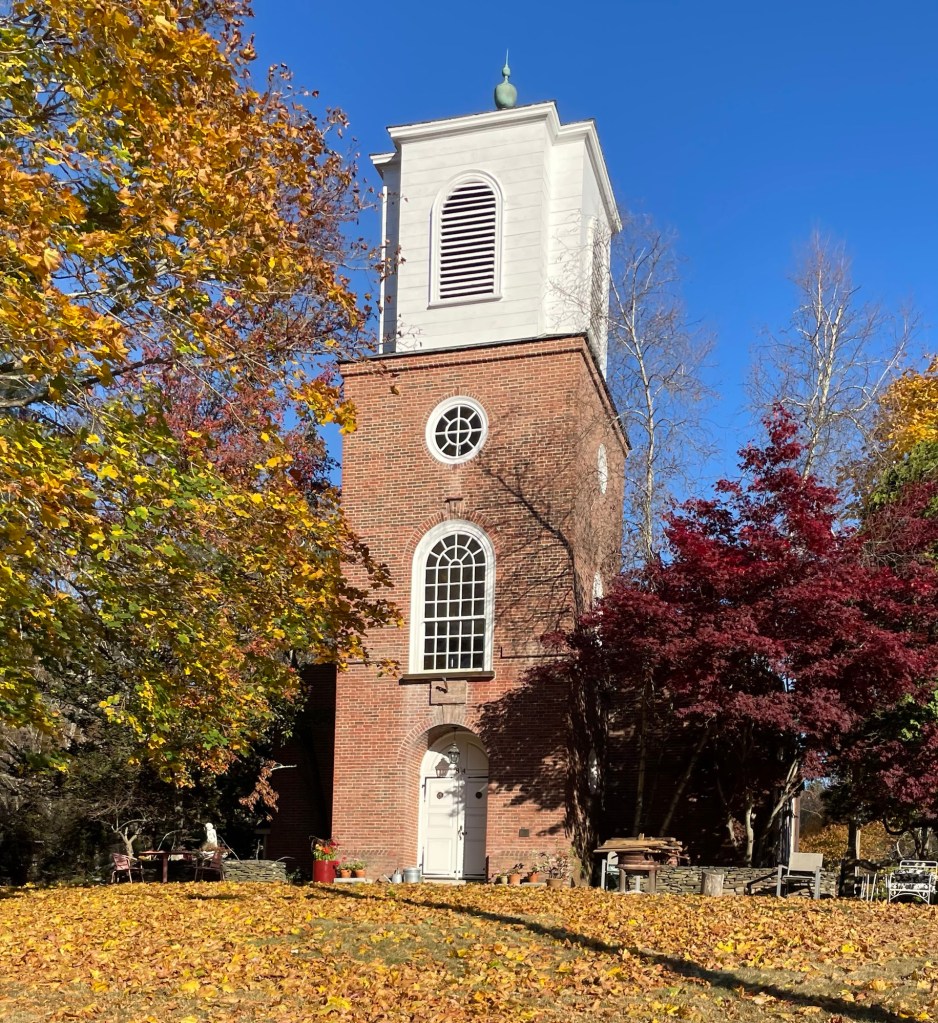
The Byfield Parish Church at 84 Warren Street in Georgetown, Massachusetts, was built in 1931 and is the fourth meetinghouse to occupy the site. The congregation dates to 1701, when sixteen families in this section of Rowley (now Georgetown) near Newbury were set off separate from the Rowley First Parish. Travel for religious services became too arduous, so the local residents petitioned to create their own parish, Byfield. Some accounts state that the first meetinghouse was built in 1702 and it is said to have been razed by 1746 to make way for a new wood frame church with a steeple, a spire, and a weathervane. This church burned in 1833, and it was replaced by a new meetinghouse soon after. The 1833 church was used for almost a century until, in March 1930, it was struck by lightning and burned to the ground. The congregation banded together and had this brick church built, its fourth. Completed in 1931, the Colonial Revival style building was designed by architect, George M. Champney, partner in the Boston office of Derby, Barnes & Champney. The church is sited within a historic cemetery containing the remains of many of the churches members, dating back to 1670. The Byfield Parish Church moved to a new building (its fifth) nearby in 1987, and in 1993, sold this church building to a private owner (retaining and maintaining the cemetery themselves) with the 1931 church converted to a single-family dwelling. How cool!
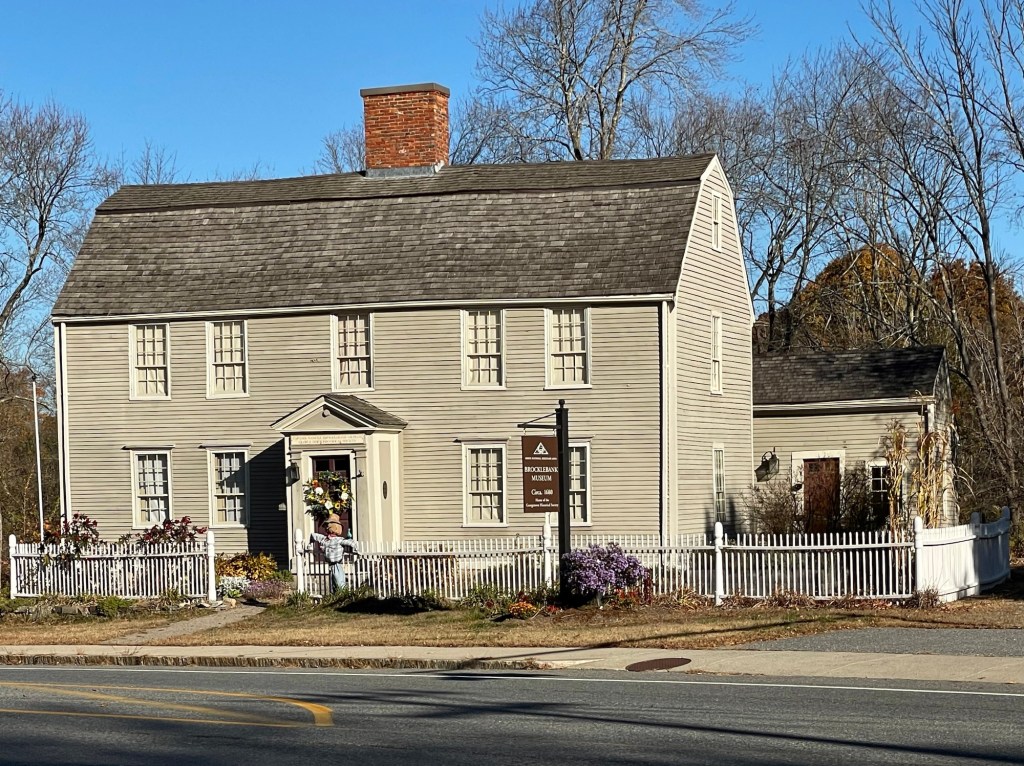
The Brocklebank-Nelson-Beecher House is a First Period structure in Georgetown, Massachusetts, believed to have been built in the 1660s. The land on which the house stands was granted in 1661 to Samuel Brocklebank (1628-1676) , a surveyor who, with his widowed mother and brother, left England and were among the first settlers of Rowley in 1639. It was built by Lieut. Samuel Brocklebank who also owned a farm of 72 acres on the site. Lieut. Brocklebank was appointed captain in a militia and was killed with his entire company in Sudbury in 1676 during a raid by Native people during the period of the King Philip’s War. Samuel’s wife remarried and moved to Newbury, and his son, Samuel Jr., resided in the family home which remained in the Brocklebank family until 1754. The house became a tavern by owner Solomon Nelson, who purchased the property in 1765 and made substantial additions and renovations to the house in its current Georgian style. In 1858 the house was bought by Rev Charles Beecher, brother of Harriet Beecher Stowe and Henry Ward Beecher. An ardent abolitionist, he was the pastor of the town’s Old South Congregational Church. Today, the Brocklebank-Nelson-Beecher House is owned by the Georgetown Historical Society, who maintain and showcase the town’s rich history from this important early residence.
Following a devastating fire in Georgetown in 1874, local residents of the town petitioned at a town meeting to purchase a fire engine and a lot to erect a new engine house to prevent such a loss again. Within a year, voters approved not only the construction of a new engine house on Middle Street, near the commercial center of town, but also to move this charming single-engine firehouse at to a site to “the south part the town”. This structure was deemed inadequate for the dense commercial village and instead of demolishing it, town voters decided it could be relocated to another area and put to use. A volunteer company was formed for the new engine house and the small structure remained as a firehouse until the early 20th century when modern fire apparatus would no longer fit in the building. The building was sold by the town and has remained in private ownership since the 1920s, and its use is unknown to me, but the owners are doing a great job maintaining this significant structure.
This residence sits on the historic Elm Street in Georgetown, Massachusetts, and is one of the best late-Georgian style dwellings in the town. The house was built in 1797 for Nathaniel Nelson (1767-1853), a banker who worked in Newburyport, just years after his marriage to Sally Chaplin. Nathaniel descended from Thomas Nelson (1615-1648), who was among the twenty families who had come to the New World in the winter of 1638 with the Puritan cleric Ezekiel Rogers (1590-1660). With Rogers most of these families settled at Rowley, incorporated in 1639 with Georgetown later setting off from Rowley, creating their own town in 1838. Nathaniel and many of his family worked as tanners, preparing the skins of animals into leather, and had shops in the area. Mr. Nelson was such an esteemed member of society, that when the War of 1812 broke out, he was asked to store money and gold from Newburyport in his basement, away from the coast, hiding it from the British forces. After successive ownership, the residence was purchased in 1936 by Everett A. and Mary A. Spaulding. A Georgetown native, Everett Augustus Spaulding made colonial revival furniture under the corporate name Spaulding Colonial Reproductions. The residence remains in spectacular condition, with its large central chimney, symmetrical façade, portico, and hipped roof punctuated by pedimented dormers.
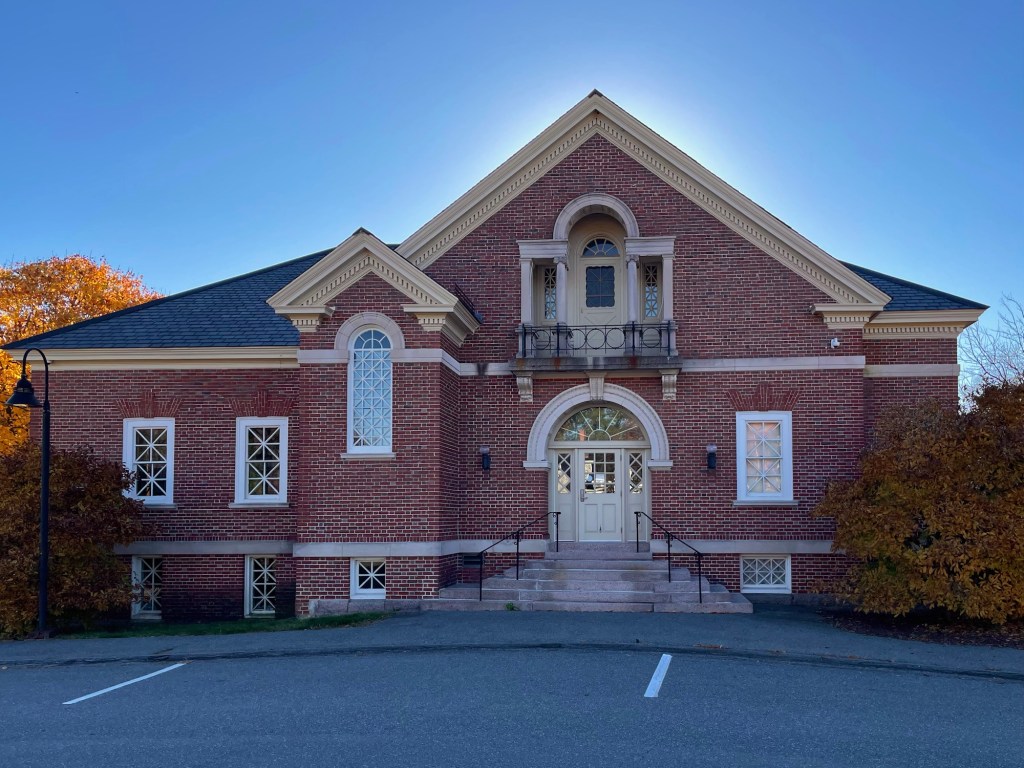
The Georgetown Peabody Library began on September 19, 1866, following a generous gift from George Peabody (1795-1869), a great man who is considered the father of modern philanthropy. George Peabody’s interest in the town was due to the fact that it was the birthplace of his mother, Judith (Dodge) Peabody, and for many years the home of his sister, Mrs. Judith Peabody Russell. Mr. Peabody decided to donate funds for the town’s first public library and also had 2400 books brought from London for its initial book collection. The wooden library building was designed by the Boston architectural firm of Bryant & Gilman and opened in 1869. After a few decades, the first library proved inadequate for the town’s needs and the present building was built with invested Peabody funds. In 1904, construction began on the new, present library building, a robust, brick structure in the Romanesque style with the firm of Cooper & Bailey furnishing the plans. The building has since been added onto as the town grew, but it retains its significance architecturally and historically for ties to Mr. George Peabody.
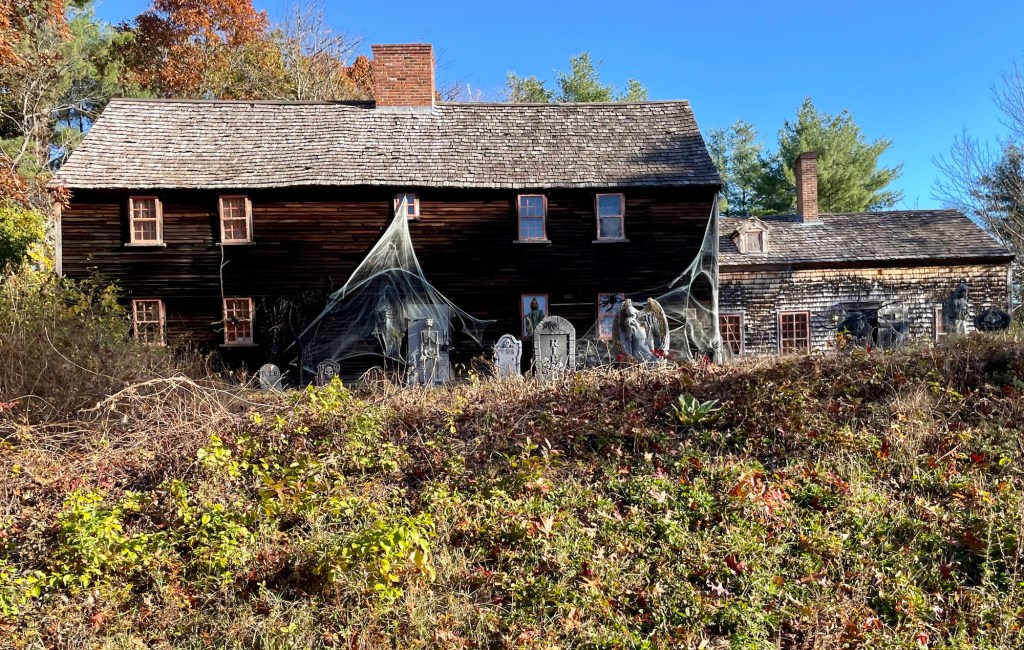
The Dickinson-Pillsbury House is believed to be over 320 years old and is significant as a well-preserved example of a First Period house in good condition. Located on Jewett Street in Georgetown, Massachusetts, the house was seemingly built before 1700 by James Dickinson Sr. or James Dickinson Jr. and was inherited by Samuel Dickinson (1754-1841). The house is notable for being the home of War of 1812 veteran and inventor Paul Pillsbury, who purchased the property about 1801. His inventions included devices for pegging shoes, milling bark off tree sections, and stripping kernels from ears of corn. Paul Pillsbury and his wife Elisabeth Frink had a family of seven sons and one daughter. Paul Pillsbury was also the uncle of abolitionist Parker Pillsbury and the great-uncle of attorney Albert E. Pillsbury who drafted the bylaws of the NAACP. What an incredible family! The house is well-preserved and a great example of a First Period residence from the 17th century.
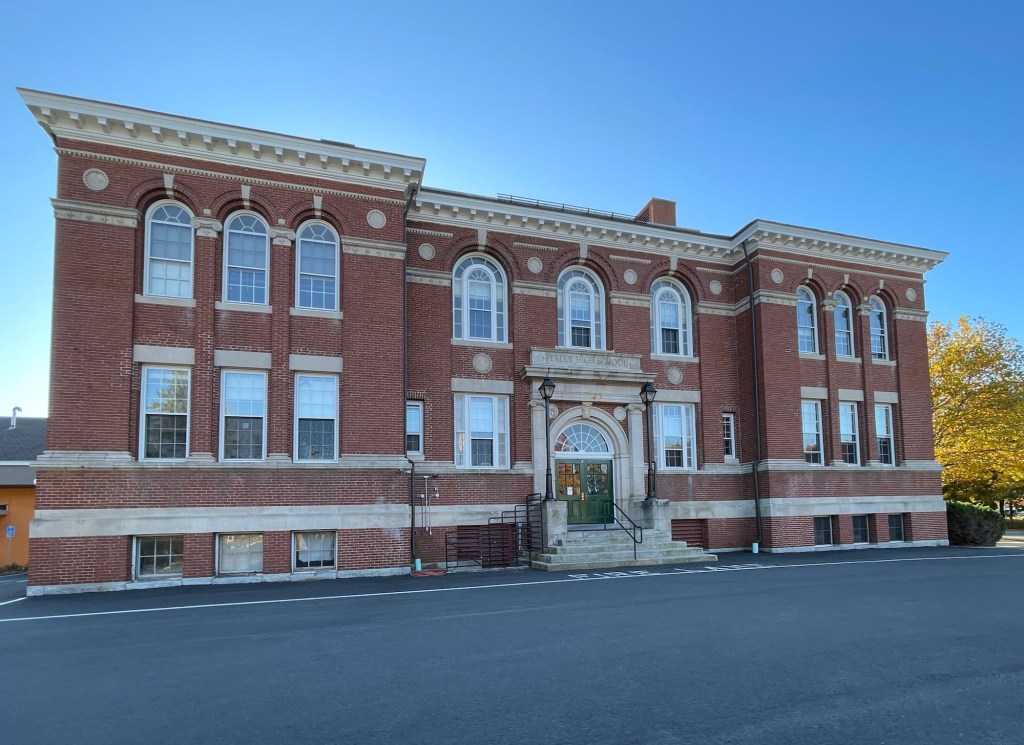
The Perley School, formerly known as the “The Perley Free School” is an architecturally and historically significant school building in Georgetown, Massachusetts, constructed in 1898 as a result of the former high school being lost to fire. The original funding for the Perley School was made possible by donations from the estate of John Perley. John Perley (1782-1860) was born in town and operated grocery stores, later getting involved in land speculation. He never married nor had children and lived frugally despite having a small fortune, that would end up being distributed to extended family and as gifts to the town, including funding this building and in the local Congregational church. He died in 1860 and was buried in a local cemetery, marked by the town’s most ornate memorial. The Colonial Revival style school would suffer a catastrophic fire in 1935, but was largely rebuilt and added onto, showing the community’s resolve and determination. It remains today as the town’s elementary school.
Just below the summit of Baldpate Hill in Georgetown, Massachusetts, stands an architecturally idiosyncratic old structure with a long history. The oldest part of the structure was built in 1733, as a residence for Stephen Mighill (1707-1783), a Deacon of the town’s church and brewer of beer. The early years were filled with much sadness, as Stephen and his wife Elizabeth, lost six of their nine children in youth or infancy, including an eight-year-old son who died after falling into a scalding hot vat of liquid in a malt house on the property. The Mighills also owned slaves, who tended to the house and malting operations here. In the 1890s, the property was acquired by Paul Nelson Spofford, a Georgetown native who moved to New York to make his fortune. It was Mr. Spofford who greatly enlarged the dwelling for use as an inn, naming it the Baldpate Inn. The gambrel-roofed tower was reportedly Spofford’s private space to look out over the rolling hills and forests. After Spofford’s death in 1912, coupled with the tourist trade falling off in the Depression years, the property was sold to a group of physicians who established a psychiatric facility, known as Baldpate Hospital, here in 1939. Today, the complex is known as the Baldpate Treatment Center, an addiction recovery center, who do a great job at maintaining the main structure and former stable on site.