Sunnyside // 1886

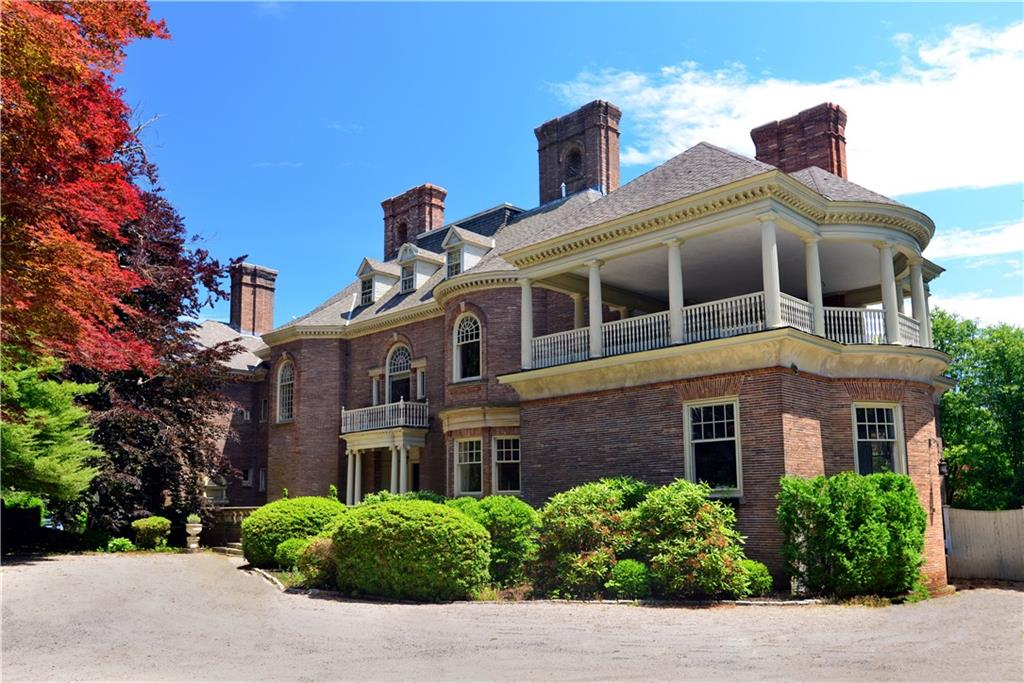
Photo from recent real estate listing

During the height of the Shingle and Queen Anne styles’ popularity, architect Stanford White of McKim, Mead & White completed plans for one of the earliest Colonial Revival style residences, “Sunnyside” in Newport, Rhode Island. The residence was built in 1886 for “Commodore” William Edgar (1810-1887) and his wife, Eliza Lucille Rhinelander (1832-1916). William was a co-founder of the New York Yacht Club in 1844 and heir to a New York fortune. Eliza was an aunt of Edith Wharton and a grand-daughter of William Rhinelander, co-founder of the Rhinelander Sugar Refinery. The property remained in the Edgar Family as Lucille Rhinelander Edgar (1858-1948), an unmarried daughter of the couple, would live here year-round with servants. The house is built of buff-Roman-brick with a large central block flanked by L-plan wings under a hipped roof punctuated by massive chimneys. Of special note on the facade are the rounded bays, entry portico with Palladian window above, and side porch.

Boxcroft // 1883

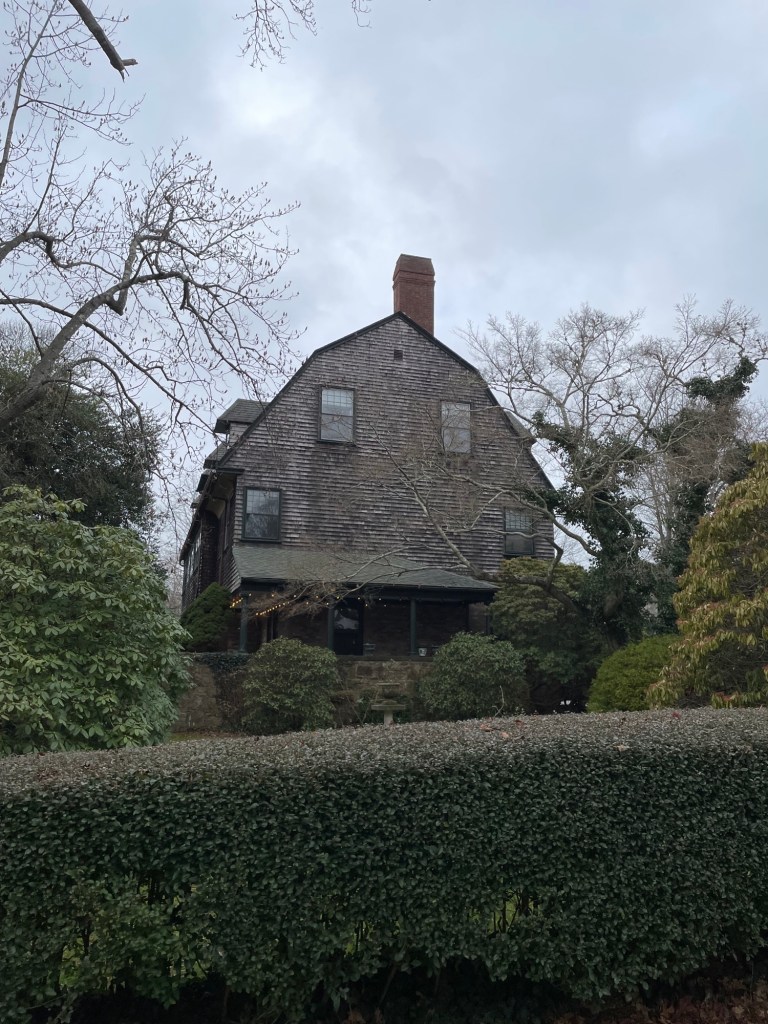
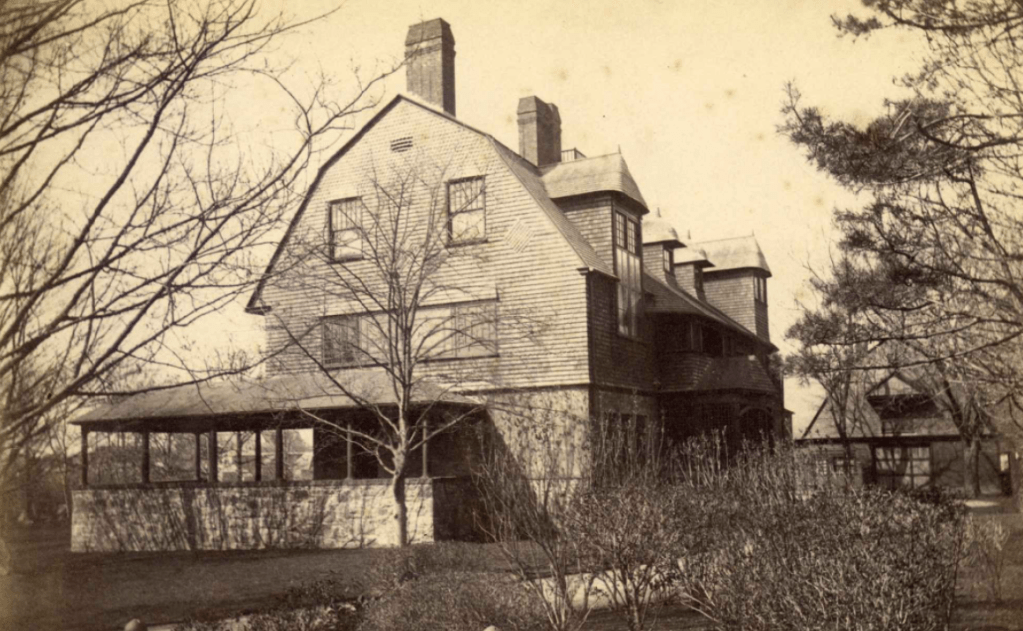
“Boxcroft” (also known as “Whileaway”) is a historic Shingle style summer “cottage” on Red Cross Avenue in Newport, Rhode Island. While it is surrounded by vegetation and tucked away, not facing the road, the house is a landmark example of the architecture style and very significant. The house was completed in 1883 from plans by the architectural firm of McKim, Mead & White a white shoe firm who designed many summer cottages in Newport for social elite. The original owner was Samuel Colman (1832-1920), a well-known landscape artist, the first President of the American Water Color Society, a connoisseur of Oriental art and an interior designer in business with Louis Comfort Tiffany specializing in fabrics and wallpaper. Colman lived here with his first wife, Ann Lawrence Dunham until her death in 1902. The property was later owned by Mary Appleton, an unmarried daughter of publisher William Henry Appleton. She would sell Boxcroft to lawyer and socialite J. Coleman Drayton, years following his bitter (and very public) divorce from Charlotte Augusta Astor, a member of the prominent New York Astor family, following a cheating scandal by Charlotte. Mr. Drayton died in Newport in 1934. Boxcroft remains an architecturally and historically significant piece of Newport’s Gilded Age.

“Villino” // 1882

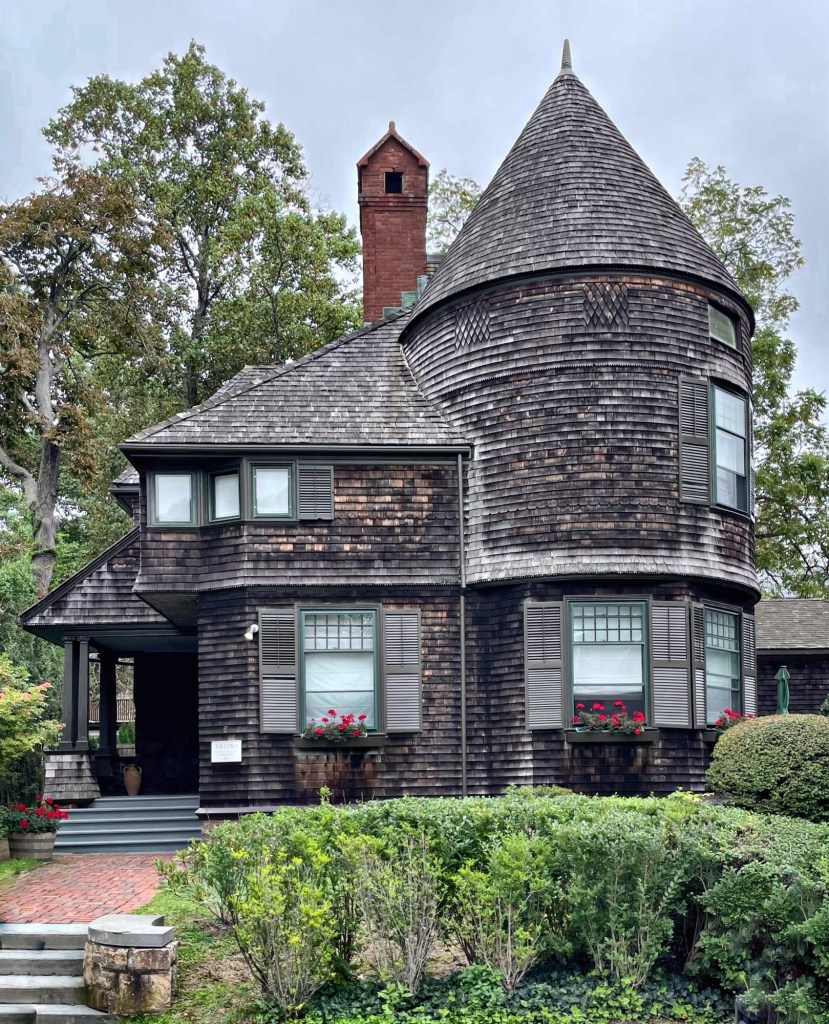
“Villino” was built in 1882 for $7,553, as a summer residence for Ms. Frances L. Skinner, a widow of the late Reverend Thomas Skinner. “Villino” was the work of the young firm of McKim, Mead & White, and it is one of the firm’s many Shingle style buildings, but one of the most compact. The asymmetrical 2½-story Shingle Style cottage sits atop a granite foundation with continuous shingles above. The entrance porch is tucked into the building mass on the side and its prominent tower with conical roof. The house is sited well into the landscape and unlike many other summer “cottages” the name Villino which is Italian for cottage, actually fits!


Katherine Prescott Wormeley House // 1876

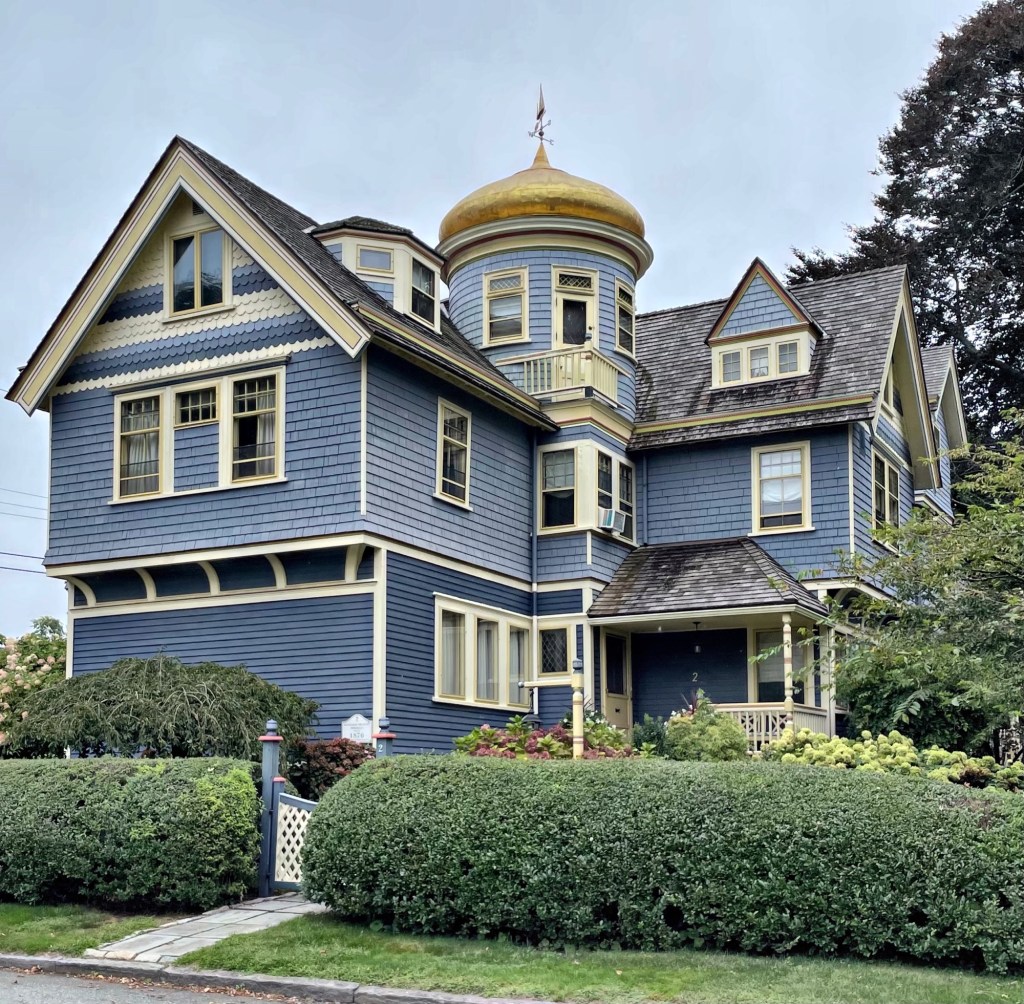
The Katherine Prescott Wormeley House is an eclectic and eye-catching Queen Anne architectural landmark on Red Cross Avenue in Newport, Rhode Island. Boston-based Katherine P. Wormeley (1830-1908), a native of England, served as a nurse for the Union Army during the Civil War and was one of the best-known translators of French literature into English. She built this double-house at a cost of $7,000 and rented another unit in the home for additional income. The Wormeley House is one of Charles Follen McKim’s early, independent works after working in the office of H. H. Richardson but before forming his own firm with William Rutherford Mead in 1877. Just years after she moved in, Ms. Wormeley in 1882, hired McKim, who was now under the firm, McKim, Mead & White to update and enlarge the home. By 1893, Wormeley had moved to New Hampshire and sold the house to Elizabeth Cabot Hayden and Dr. David Hyslop Hayden. The golden onion dome roof at the tower is a real treat!

Maynard Estate // 1901

One of the largest summer estates in Ridgefield is this Neoclassical residence on Peaceable Street, which was built in 1901 for Effingham Maynard and his wife Helen. Maynard was a partner in Clark & Maynard, a New York publishing house. Local lore states that the Maynard Family hired New York architect Stanford White, to design this property, but no definitive proof could be located to substantiate that rumor. The Olmsted Brothers landscape architecture firm designed the grounds which were elaborate with gardens and outbuildings. The two unmarried Maynard daughters, Mary and Helen spent their summers here every year until their deaths in the 1950s.

Tranquility Farm – Superintendent’s Cottage and Creamery // 1894

Any good gentleman’s farm needs a superintendent to actually oversee all the labor being done to harvest crops and take care of the livestock (because a millionaire owner cannot be burdened to deal with such mundane matters…) When John Howard Whittemore, a successful industrial-era businessman purchased an old farm in Middlebury, Connecticut to spend summers and time out of industrial malaise, he knew that along with a summer home for his family, he would need to build other structures on the 300-acres of rolling hills. The famed architectural firm of McKim, Mead & White was hired by Whittemore to design many of the buildings on the grounds, from the main house, to the superintendent’s cottage to a boathouse. The firm designed this superintendent’s cottage (which currently looks to be getting a new roof) and the creamery in the rear. Both are great examples of the Shingle style in modest, agricultural structures.

Tranquility Farm – Farmhouse and Barn // c.1840

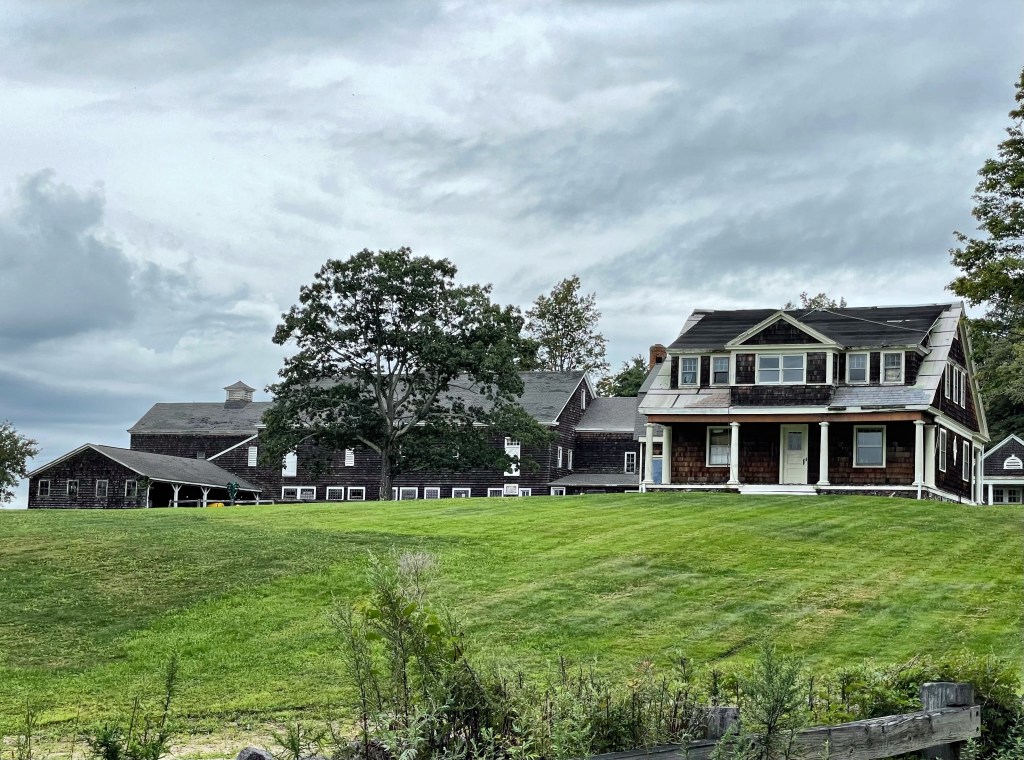
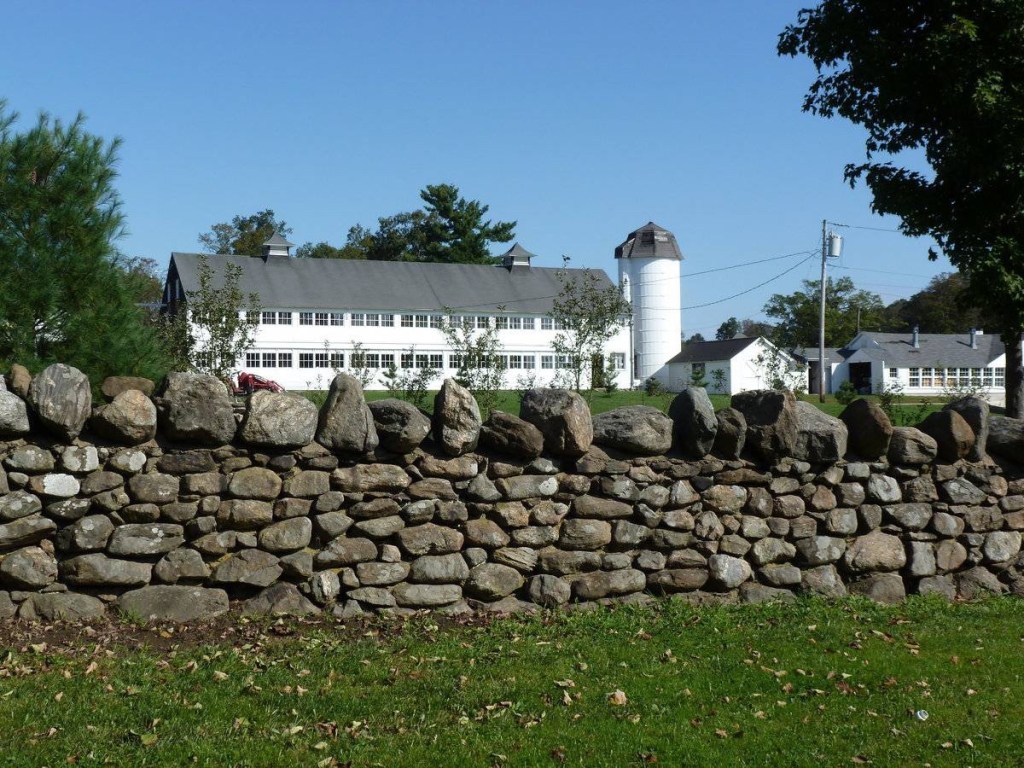
Tranquillity Farm, spanning the rolling hills around Lake Quassapaug in Middlebury Connecticut, was originally a 303-acre model/gentleman’s farm developed by John Howard Whittemore, a successful industrial-era businessman in Naugatuck, and his wife Julia Spencer Whittemore. Whittemore was a major figure in Naugatuck, sponsoring a series of commissions of McKim, Mead & White for buildings in the city center. For his country farm estate, he again commissioned McKim, Mead & White to design a new country house, a farm superintendent’s house, boat house on the lake, and other outbuildings for a working farm. An older farm was purchased, which included a modest Greek Revival style farmhouse dating to the early-mid 19th century (seen here) and a large wooden barn. Both of these were kept and incorporated into the estate near the southern entrance to the property, possibly to harken visitors back to the charm of rural living. The sweeping landscape, featuring miles of distinctive stone walls lining the roads and crisscrossing the fields, was designed by Charles Eliot and completed by Warren H. Manning – both protégée of Olmsted.

Samuel P. Tilton Cottage // 1880

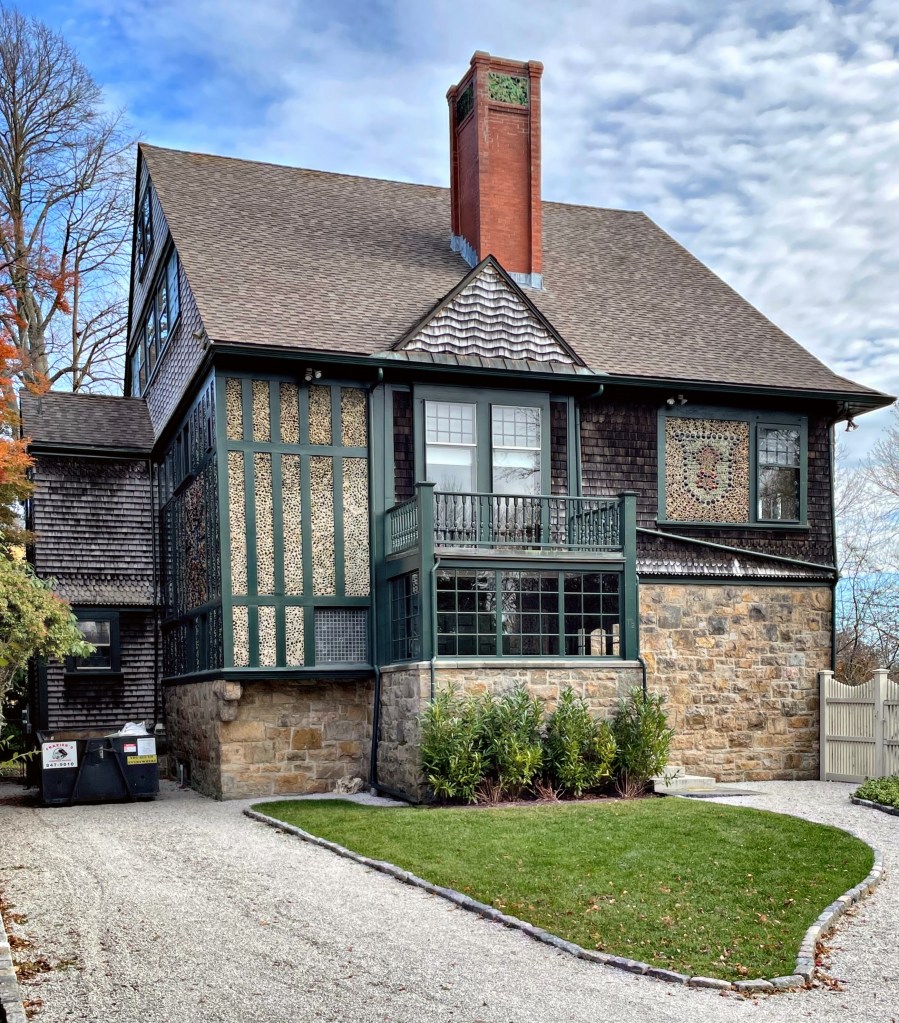
One of the most well-designed and least-pretentious summer cottages in Newport is this charming dwelling on a dead end street. The Samuel P. Tilton Cottage was designed in 1880 by the prestigious firm of McKim, Mead & White as an idiosyncratic blending of Queen Anne and Shingle architectural styles. Mr. Tilton was a milliner (maker and seller of women’s hats) with stores in Boston and Paris, France. He had this cottage built to summer close to the nation’s wealthiest, likely marketing some hats at elaborate Gilded Age events. The facade is assertively Queen Anne with its massing and decorative panels, with shingled side elevation seemingly sprouting from the earth. The architectural terminology for these unique decorative panels is “sgraffito” where here, cement or plaster siding is set and adorned with shells, pebbles, colored glass, and pieces of coal into a cartouche design. The house is one of the finest in Newport, and shows that bigger isn’t always better!

Berkeley House // 1885

In 1885, a 28-year-old Leroy King (1857-1895) and his wife Ethel Rhinelander King (1857-1925) hired one of the country’s most prominent architects, Stanford White, to design a Newport home for their family. Leroy was the son of Edward King, a prominent local merchant, and upon his fathers death in 1875, inherited some of the $100+million dollar fortune he had amassed in today’s dollars. The corner lot at Bellevue and Berkeley avenues was purchased and work was underway on the new mansion. The house is a really interesting take on the Shingle style, but instead of cedar shingle siding, employs fireproof construction. A central hall, large gabled masses, picturesque window arrangements, and a spectrum of surface textures (here conveyed largely in natural stone and brick with flourishes of shingle and pebble dash work), align this house with McKim, Mead & White’s earlier efforts in this style. The interior has been meticulously preserved and maintained by the owners.

Newport Casino – International Tennis Hall of Fame // 1880

Completed in 1880, the Newport Casino building is one of the best examples of Shingle style architecture in the world, and despite its name, it was never a gambling facility. Planning for the casino began a year earlier in August, 1879. Per legend, James Gordon Bennett, Jr., the influential publisher of the New York Herald and a summer resident of Newport, bet his polo partner, Captain Henry Augustus Candy, a retired officer of the Queen’s 9th Royal Lancers and skillful British polo player, to ride his horse onto the front porch of the exclusive gentlemen’s-only club, the Newport Reading Room. Candy took the dare one step further and rode straight through the clubrooms, which disturbed the members. After Candy’s guest membership was revoked, Bennett purchased the land across the street from his home, on Bellevue Avenue, and sought to build his own social club. Within a year, Bennett hired the newly formed architectural firm of McKim, Mead & White, who designed the U-shaped building for the new club. The Newport Casino was the firm’s first major commission and helped to establish MMW’s national reputation. The building included tennis courts, facilities for other games such as squash and lawn bowling, club rooms for reading, socializing, cards, and billiards, shops, and a convertible theater and ballroom. In the 20th century, the casino was threatened with demolition as Newport began to fall out of fashion as a summer resort. Saviors Candy and Jimmy Van Alen took over operating the club, and by 1954, had established the International Tennis Hall of Fame in the Newport Casino. The combination of prominent headliners at the tennis matches and the museum allowed the building to be saved. The building remains a National Landmark for its connections with gilded age society and possibly the first commission by McKim, Mead and White, who became one of the most prominent architectural firms in American history.