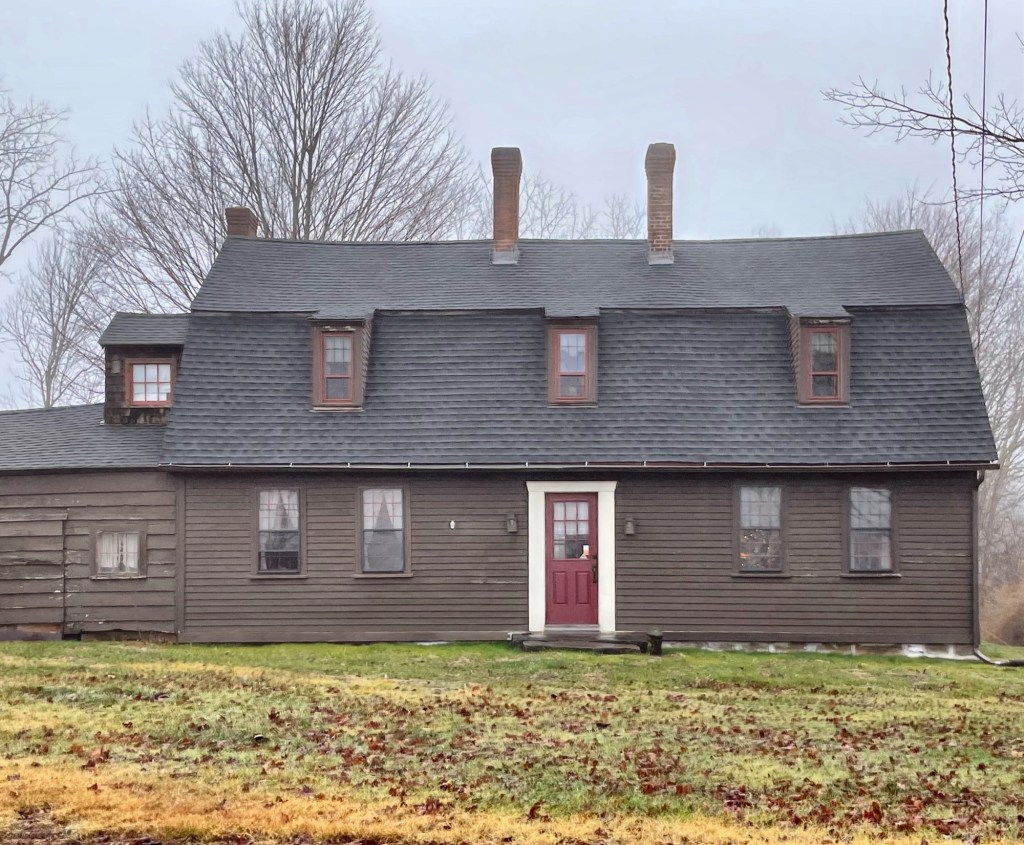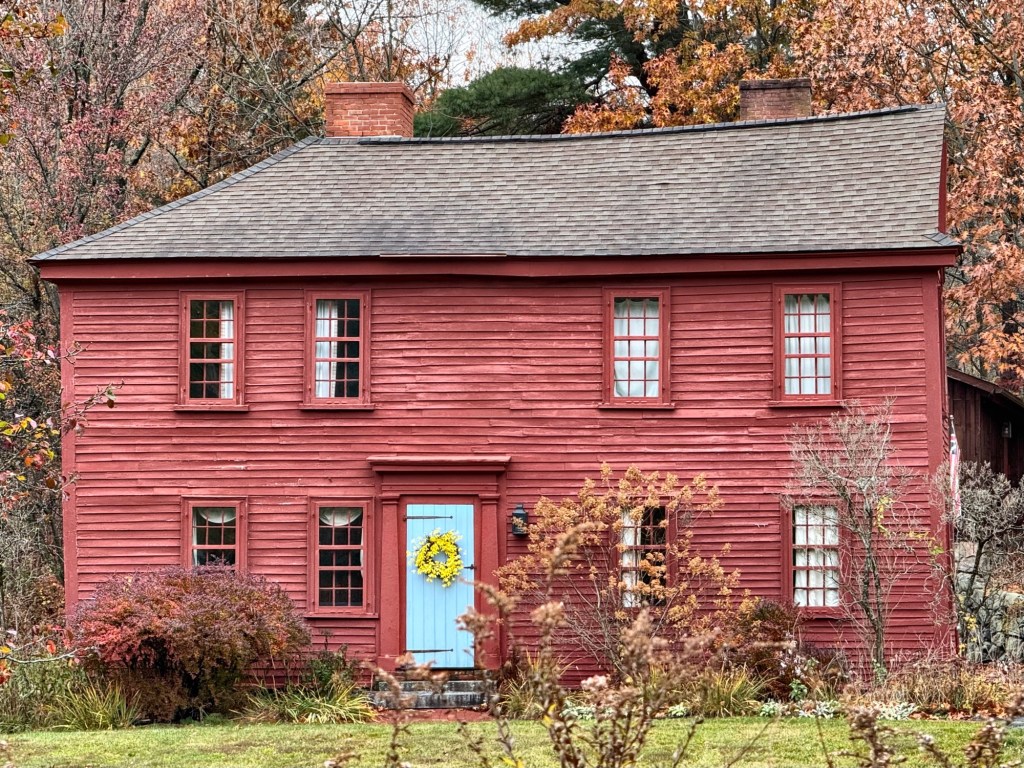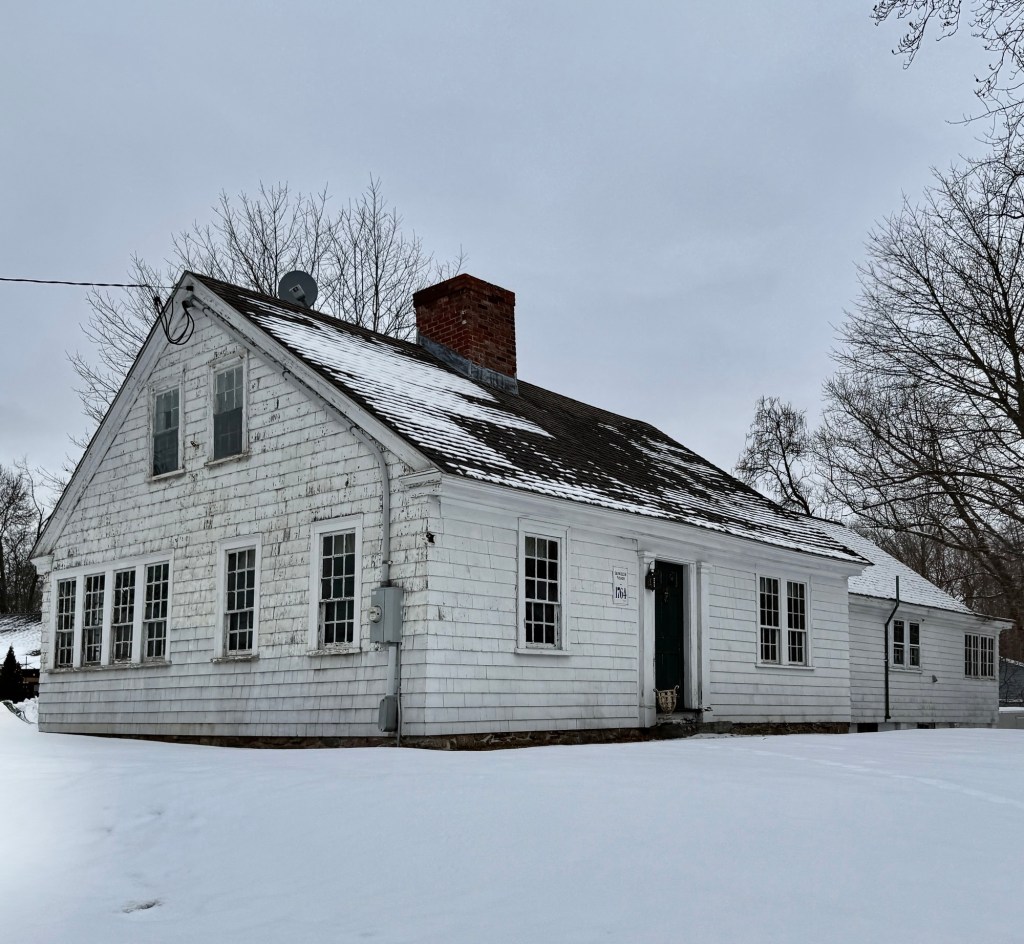
Hopestill Bent Tavern // 1710

The Hopestill Bent Tavern is a historic First Period tavern, now a private residence, in Wayland, Massachusetts, on the Old Connecticut Path, a Colonial postal road. The tavern was owned and occupied by Hopestill Bent (1672–1725), a veteran from the King William’s War (one of the French and Indian Wars). Hopestill Bent was the great-great-grandfather of Charles Bent, a fur trader and first territorial Governor of New Mexico during the Mexican-American War, who was later scalped and killed by Pueblo warriors, during the Taos Revolt. The Bent Tavern served as a tavern until about 1780, was moved to the present site farther back from the street in 1800, and enlarged to the current size.

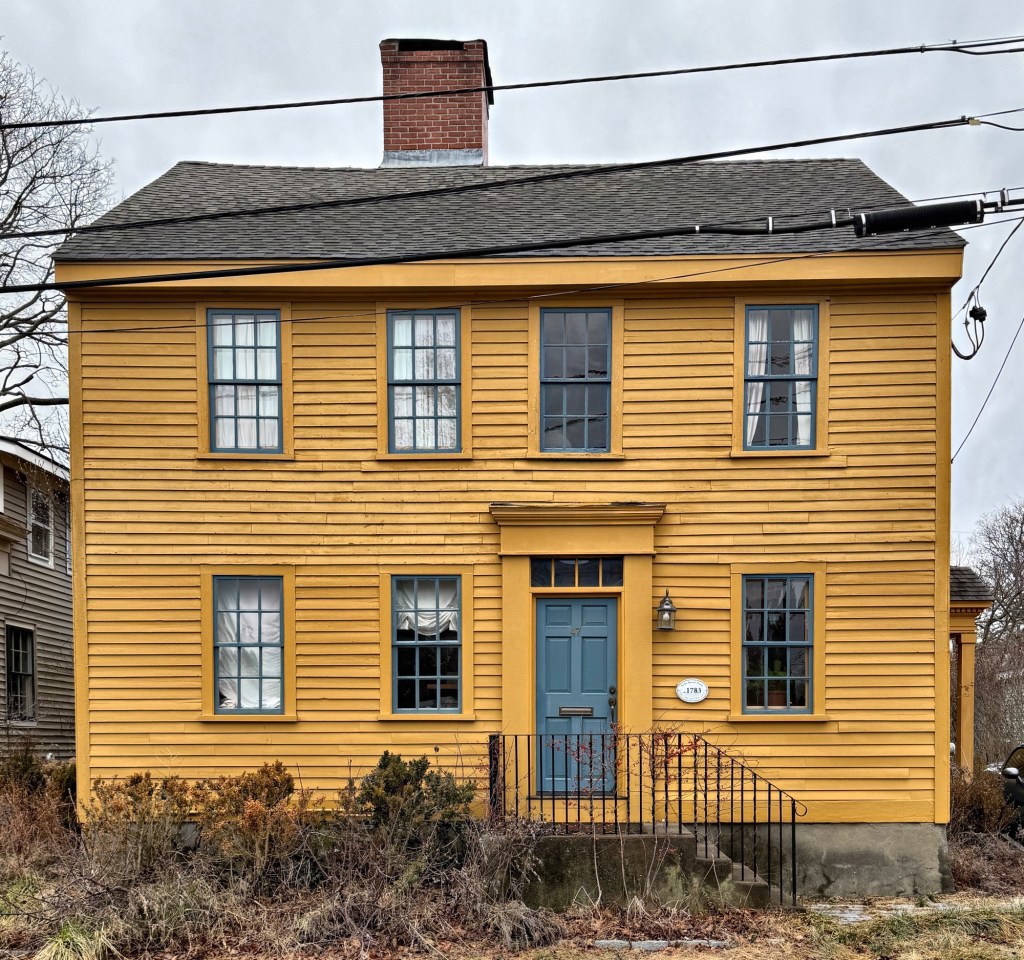
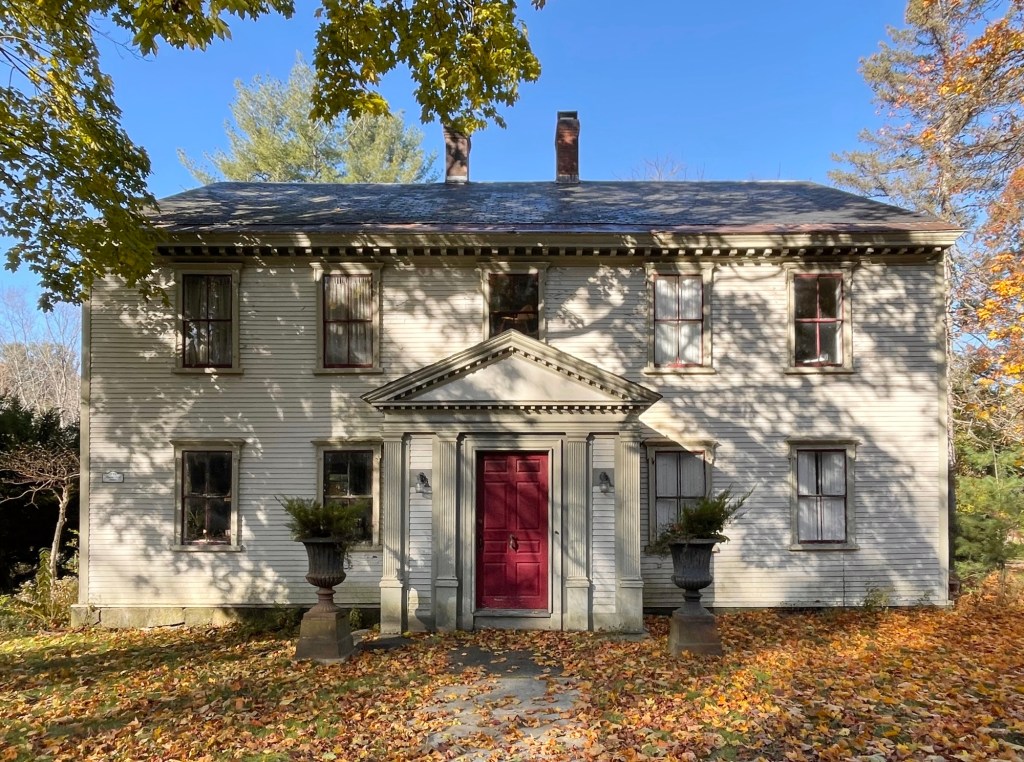
John Sprague House // 1785

Judge John Sprague (1740-1800) was a Harvard graduate and settled in Lancaster, Massachusetts as one of only three lawyers in Worcester County following the departure of his Tory colleagues during the Revolution. From this, a young Sprague climbed the professional ladder quickly and represented Lancaster in the General Court beginning in 1782 and occasionally sat in the Senate. He was first appointed judge in 1784 and in 1798 became chief justice of the Court of Common Pleas for Worcester County. After being appointed a judge in 1784, Sprague purchased a house lot on Main Street in Lancaster and hired local housewrights Eli Stearns and Jonathan Whitney, to design and build this stately home. Judge Sprague moved from his 1771 houseshort distance away, to this more substantial late-Georgian home with projecting entry with pilasters and pediment. After his death in 1800, the property was inherited by his daughter, Ann Sprague Vose and her husband, a merchant, Peter Thatcher Vose

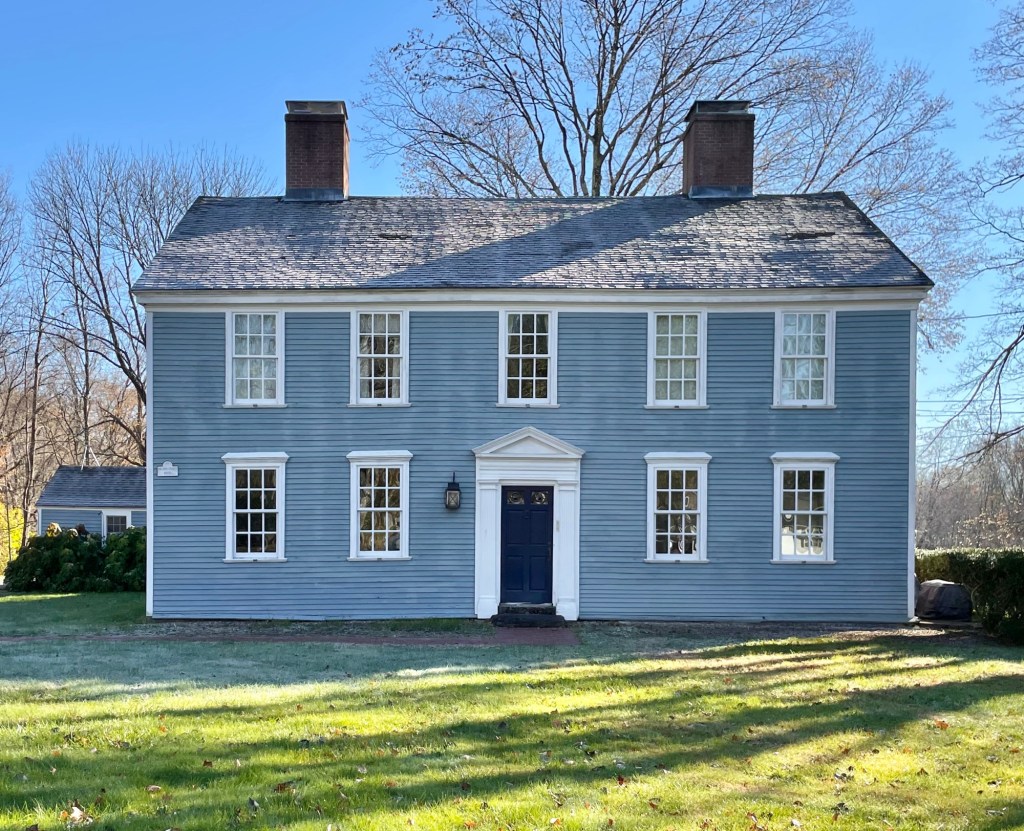
Sprague-Waldo House // c.1771

Just outside of the village center of Lancaster, Massachusetts, this Georgian style house stands out as one of the town’s finest Colonial residences. The residence was built for John Sprague (1740-1800), who settled in Lancaster and was one of only three lawyers in the county following the departure of his Tory colleagues during the Revolution. Sprague represented Lancaster in the General Court beginning in 1782 and occasionally sat in the Senate. He was first appointed judge in 1784 and in 1798 became chief justice of the Court of Common Pleas for Worcester County. He was active in Shays’ Rebellion, and later, along with John Hancock and Samuel Adams, was one of the antifederalists who converted and helped ratify the U.S. Constitution. Sprague moved to a new house in 1785, and sold this property to Daniel Waldo (1724-1808), a wealthy Boston merchant who started America’s longest-running hardware store, in Worcester (Elwood Adams). Waldo was a great-great-grandson of Anne Hutchinson, America’s first major female religious leader/dissenter. The house has had many other notable owners, all of whom have preserved this stunning five-bay colonial house for nearly 250 years.

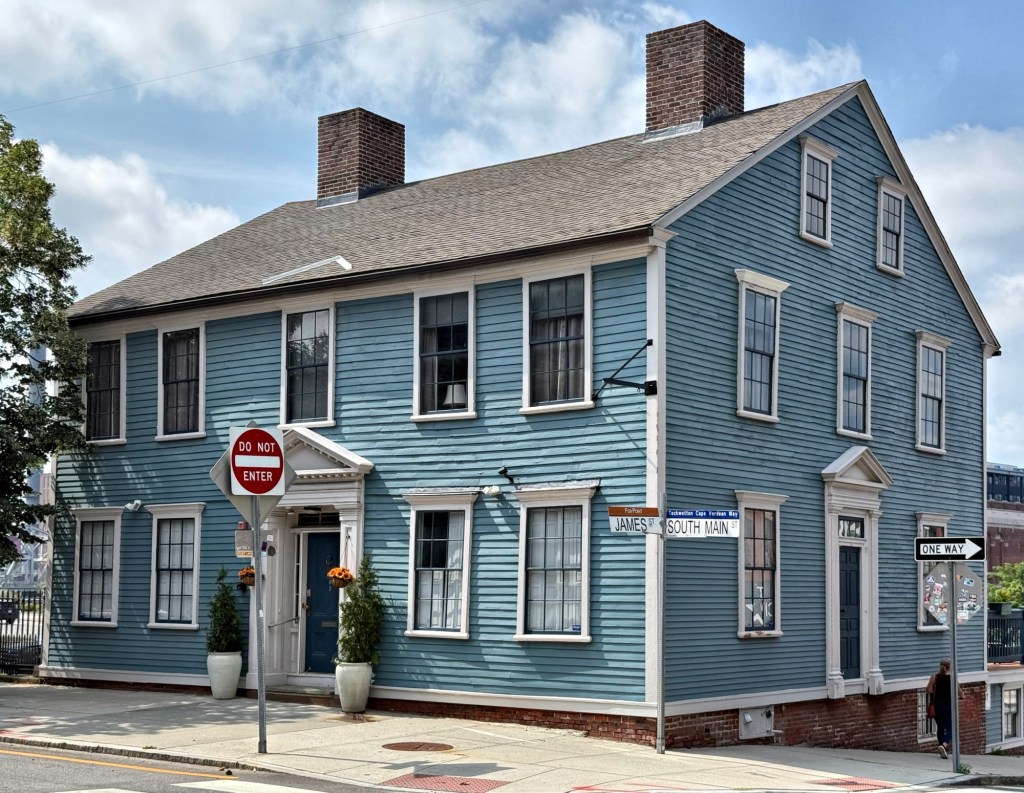
Captain Joseph Tillinghast House // c.1770

This Georgian house at 403 South Main Street in Providence’s East Side was built by Captain Joseph Tillinghast (1734-1816) a wealthy merchant and participant in the Gaspee Affair, a significant event in the lead-up to the American Revolution. The Gaspee Affair occured in 1772, when a group of men from Providence attacked and burned the British customs schooner, HMS Gaspee. The incident was fueled by colonial resentment towards British customs enforcement, and took place not too long after the Boston Massacre. Joseph built this house for his family on land he inherited from his family, who claimed the land in 1645. Tillinghast was also the owner of a line of packet boats (light shipping of domestic freight and mail) operating between Providence and Newport. After Joseph died in 1816, the property was occupied by members of the Tillinghast family until 1847. By the mid-20th century, urban renewal and the proximity to the new highways caused the surrounding area to suffer, with this historic home threatened. Throughout 2008, the building’s condition continued to rapidly deteriorate, and local preservationists advocated for the home’s future. After attention was brought to the residence and its significance, the house was restored with the assistance of the Providence Revolving Fund, including the stabilization of the foundation, roof and chimneys rebuilt, with clapboards and windows repaired.

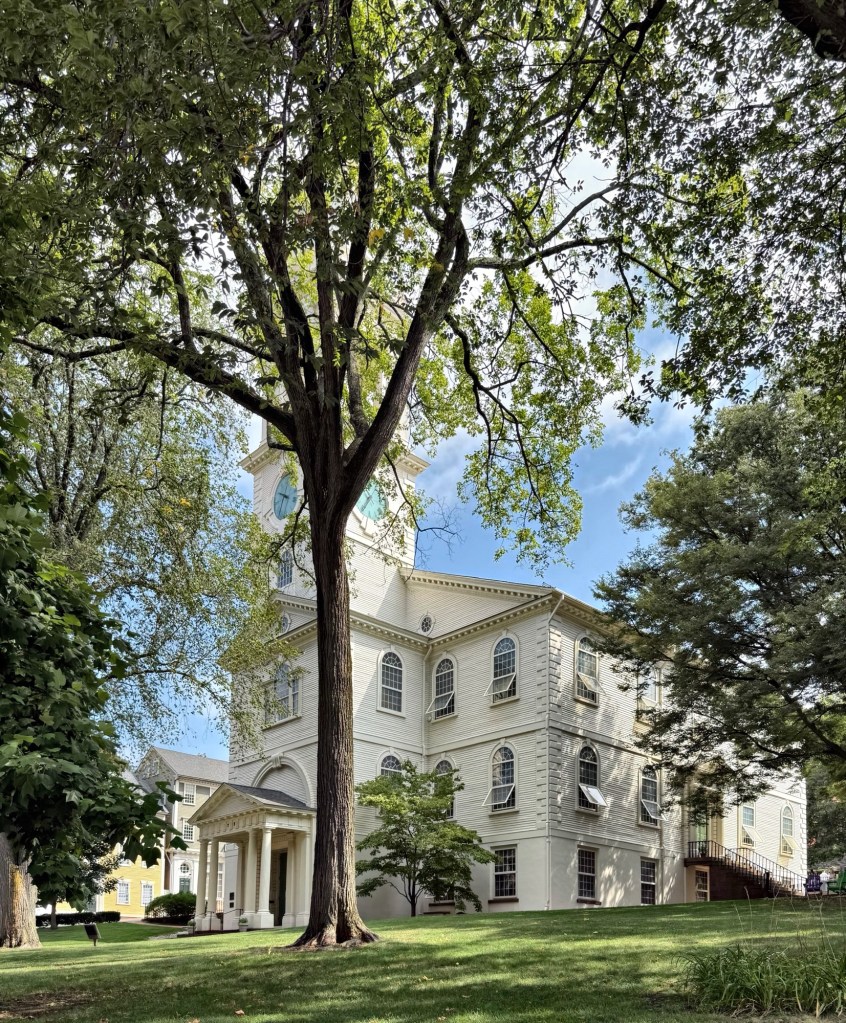
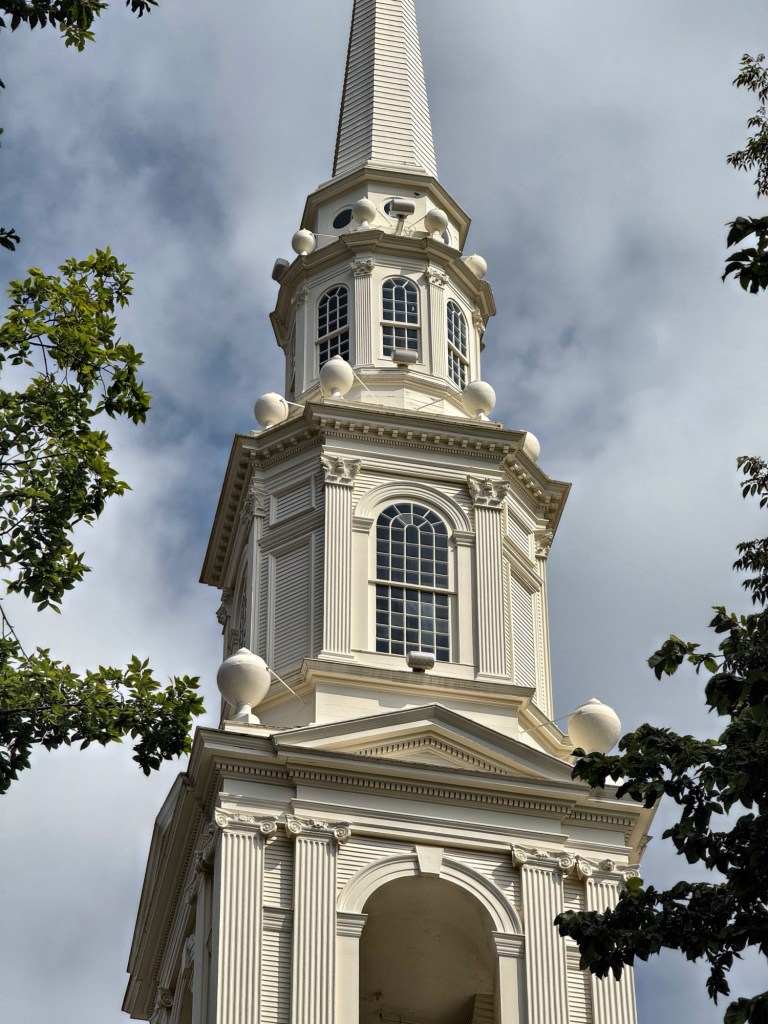
First Baptist Church, Providence // 1774

The First Baptist Church of Providence, also known as the First Baptist Church in America is the oldest Baptist church in the United States. The Church was founded in 1638 by Roger Williams, who before building this church in 1774, often met in private residences or in more plain meetinghouses to not show vanity. By the early 1770s, a new building for Providence Baptists was needed, and it was conceived in a very large (and ornate) way. Built to accommodate over 1,200 people (just under a third of the entire population of Providence at that time), this church was built “for the publick Worship of Almighty God; and also for holding Commencement”, referring to the commencement ceremonies of Rhode Island College (later Brown University), also founded under Baptist auspices. The church was designed by local amateur architect, Joseph Brown, who was likely inspired by Sir Christopher Wren’s London churches in James Gibbs’s Book of Architecture (1728). The construction was greatly aided by the fact that the British had closed the port of Boston as punishment for the Boston Tea Party. Many shipwrights and carpenters were thrown out of work and came to Providence to build the meetinghouse there. The structure was dedicated in May 1775, and the 185-foot steeple was added shortly thereafter. This was the first Baptist meetinghouse in New England to have a steeple, and it has survived dozens of hurricanes and hundreds of years of change since. The church is a National Historic Landmark and remains as one of the most significant buildings in New England.

Joseph Brown House // 1774

Constructed in 1774 by architect Joseph Brown (1733-1785) of the Brown family of Rhode Island as his personal residence, the John Brown House of Providence, stands as one of the oldest (if not the oldest) house built by an American architect for his own use. Joseph Brown, while a member of the Brown Family, was not as much in the shipping business as others in his family, instead turning his attention to scientific matters, becoming an expert in astronomy, electrification, and architecture. He was an architect in the Thomas Jefferson-gentleman mode, owning English architectural books from which he selected motifs for inclusion in his designs. It is believed that the eccentric curved ogee gable that caps the façade was adapted from the roof design of a garden house published in William Salman’s Palladio Londinensis, owned by Joseph Brown’s builder, Martin Seamans. The same ogee gable was later replicated in the Colonial Revival period in Providence. The residence’s entrance was originally raised above ground and accessed via symmetrical flights of stairs; in the late 18th century, the entrance was moved to street level in the brownstone basement level. Over a decade after Joseph’s death in 1785, the structure was acquired by the Providence Bank, an enterprise founded by Brown’s brothers John and Moses, and used as an office. The bank occupied the structure until 1929, and the Joseph Brown House was subsequently owned by the Counting House Corporation, and still appears to be owned by descendants of the Brown Family.

Providence Market Hall // 1773

Located in Market Square between Downtown and College Hill in Providence, Rhode Island, the old Colonial Market House stands as one of the city’s oldest and most architecturally significant buildings. Constructed between 1773-1775, this Georgian-style structure originally served as a public market and meeting space. The building was originally two stories in height with an open arcade on the first story, it was used by vendors below and town officials above. The building was expanded in 1797 with a third floor, which housed the first Masonic Lodge in Rhode Island. The Market Hall was designed by local businessman, astronomer, and architect, Joseph Brown, who was also a brother of the founders and namesake of Brown University. Over the centuries, the Market House has played many civic roles. During the Revolutionary War, it was used for military purposes, and later became a hub of commercial and political activity in the growing city. It housed Providence’s first post office, and housed the Providence City Council in the decades before the completion of City Hall. In 1948, Mayor Dennis J. Roberts signed a deed to give the building to the Rhode Island School of Design, with the provision that the exterior of the building be maintained, an early preservation win! Architect John Hutchins Cady was hired to remodel the interior with classrooms and studios, and the Market House remains as a significant piece of the RISD campus. Its enduring presence on Market Square connects modern Providence to its colonial roots, embodying a rich legacy of adaptive reuse and historic preservation.

Shillaber House // c.1768

The Shillaber House on Washington Street in Portsmouth, is one of the most photogenic residences in the charming port city. The Georgian-style residence was likely built in the late-1760s, after Joseph Shillaber (1725-1791), a potter, purchased land here in 1766. The residence is of a typical form for 1760s Portsmouth, with a gambrel roof with pedimented dormers and a slightly off-center entry with Georgian style pilasters and pediment. In the later half of the 19th century, the house was “Victorianized” with a bracketed door hood and bay windows at the facade, but the house would be restored by later owners to a version close to its original conditions. The exposed clapboard siding adds to the home’s unique charm.

Drew-Holmes House // c.1760

This charming Colonial house is located at 51 Landing Road, overlooking the banks of the Jones River in Kingston, Massachusetts. The house is thought to date to 1760, and by 1800, was likely owned by Stephen Drew a prominent local shipbuilder from a family of shipbuilders who operated a shipyard near the property. In 1810, the property was owned by Joseph Holmes (1772-1863), who also would build a wharf and dock on the riverfront of the property. The property remained in the Holmes Family when it was inherited by Edward Holmes, who worked in shipbuilding until the decay of the industry. The house is a great example of a 18th century residence with a 4×2 bay two-story form, clad with wood clapboards
and shingles with a large brick chimney at the roof. In 2018, Jones River Landing, a non-profit, purchased the house and ‘seek to provide seasonal lodging and accommodations for visiting students, interns, scientists and advocates who are studying and working in environmental programs in our region’. While there were plans were to restore the house, the landscaping and peeling siding appear to show some deferred maintenance.

Kingston Almshouse // c.1772

Built on the banks of the Jones River in Kingston, Massachusetts, this large residence is said to date to 1772 and was the home to a prominent ship-building family as well as to hundreds of destitute residents of the community who lived and worked here as the town’s poor house. Land (and possibly an earlier house) was acquired in 1772 by Zenas Drew (1735-1822), the son of Cornelius Drew, a wealthy shipbuilder who employed his many sons to work in the same industry, and the existing house was constructed for his family. From the house, numerous shipyards would be seen with large brigs travelling down the Jones River into Plymouth Bay and the Atlantic. After Zenas Drew’s death in 1822, the Town of Kingston acquired the property for use as the town’s almshouse or poorhouse, and likely expanded the property to its current Federal style configuration. Throughout the 19th and early 20th centuries, almshouses were a reality for society’s most vulnerable people, where these locally run institutions provided living and working conditions in a time before Social Security, Medicaid and Section 8 housing became a reality. These facilities were designed to punish people for their poverty and, hypothetically, make being poor so horrible that people would continue to work at all costs. Being poor began to carry an intense social stigma, and increasingly, poorhouses were placed outside of public view, as was the case here in Kingston outside of the town center at the banks of the river. By the 1920s and 1930s, these institutions began to close, with Kingston’s closing in 1923. The property was sold to a private owner, and has remained as a single-family residence ever since.