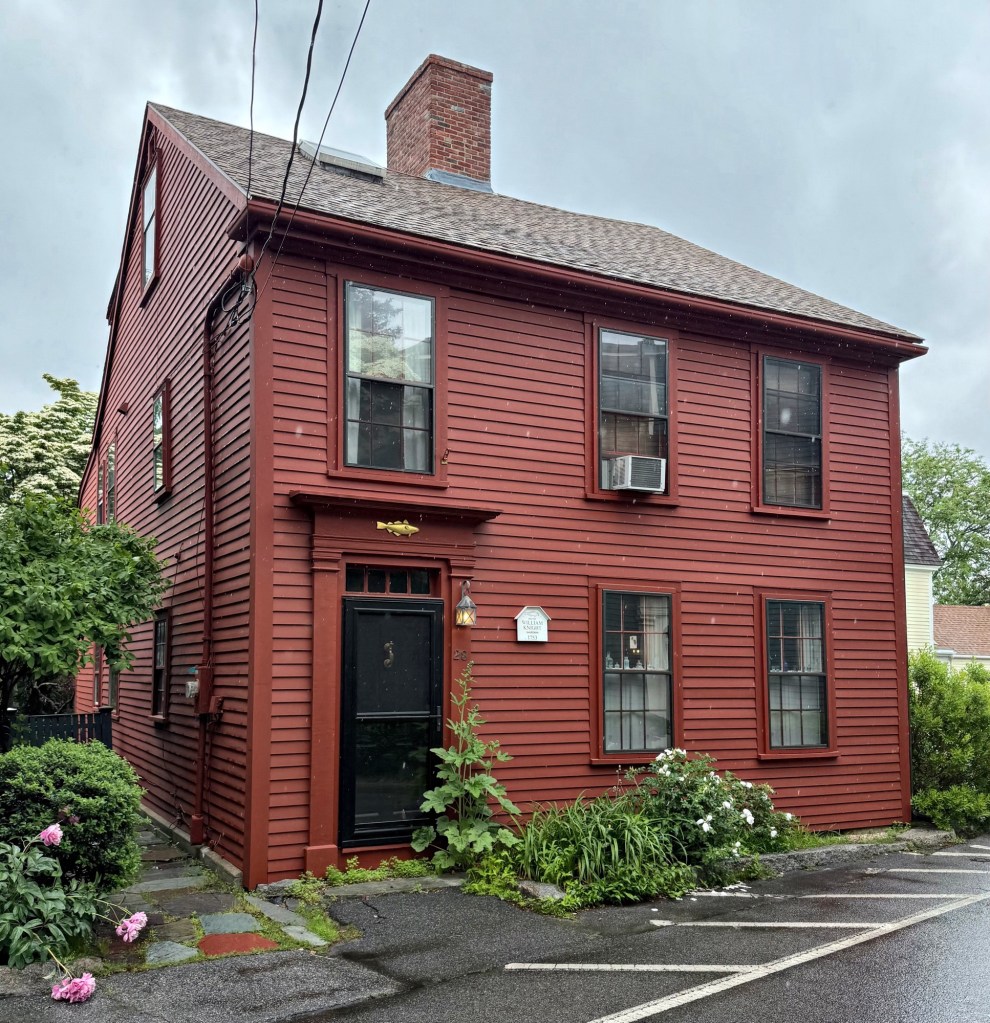
The Knight-Tutt House on Franklin Street in downtown Marblehead, Massachusetts, is a great example of a pre-Revolutionary Georgian home built for the working class. The house, like its neighbor, has a three-bay, side-hall facade with a large, central chimney. The residence was built around 1750 for William Knight (1722-1799), who worked as a shoreman, loading and unloading the many ships that docked in Marblehead harbor. By 1850, the house was jointly owned by an F. Bateman and William Russell Tutt, a shoemaker. The residence remains one of a large number of well-preserved Colonial homes in the town of Marblehead, a testament to preservation planning and its effect on streetscapes and vibrant communities.
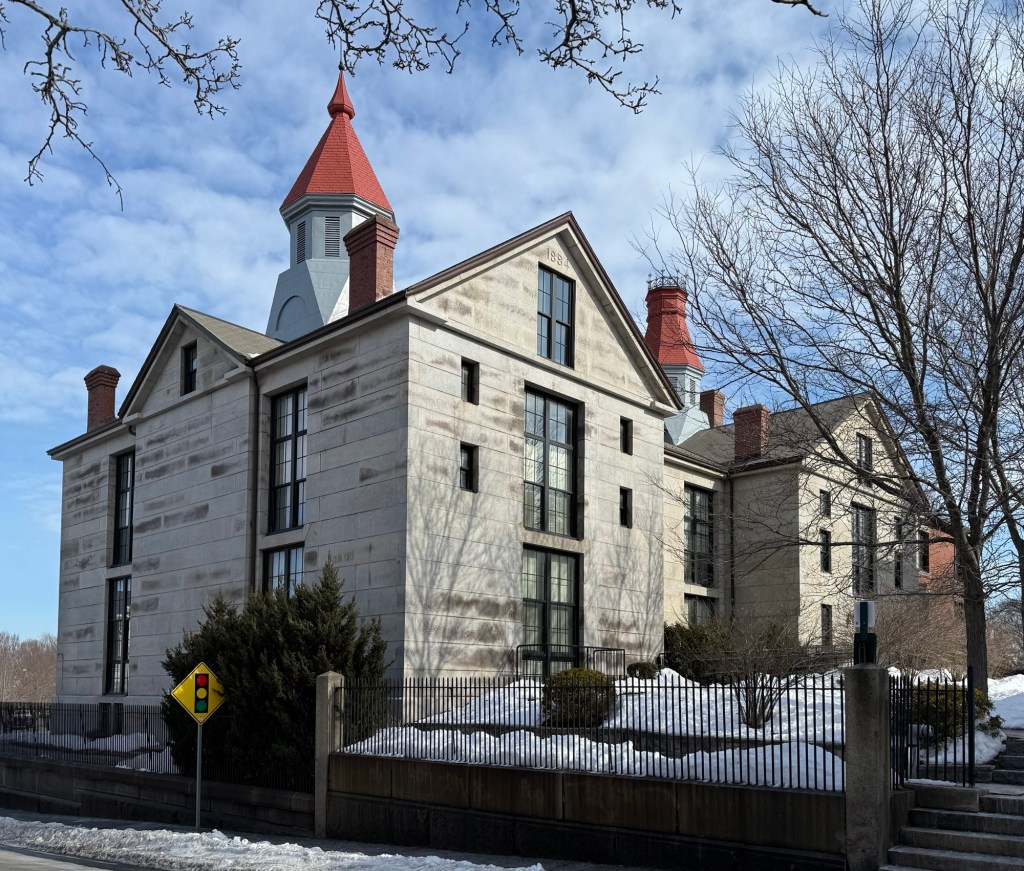
The former Essex County Jail is a large and significant building in Salem, Massachusetts, that has seen a recent rebirth thanks to the intersection of historic preservation and the demand for new housing in many New England communities. Constructed of large, Rockport granite blocks, the building was constructed in two phases—the section to the east was constructed in 1811-13 while the parallel west wing dates to 1884, with each of the construction dates inscribed at the top of the pediments on the south elevation. Completing the complex is the 1813 Jailer’s Residence which sits at the edge of the now enclosed courtyard. Those who were committed here were largely sentenced to short terms, many for the offense of drunkenness or petty theft. Inside, prisoners did all the labor, such as cooking, baking, firing the boilers, etc., with the female inmates making clothing for all inmates. The jail was in operation until 1991, and at that time was considered the oldest active penitentiary in the United States. Years prior, in 1984, several detainees had successfully sued the county for inadequate living conditions, leading to the closure of the building. A preservation restriction was established for the building and in 2009, the property was conveyed to a developer who converted the complex into 23 apartments, with 19 in the old jail, three in the old jail keeper’s residence, and one in a converted carriage house. The great preservation/adaptive reuse firm of Finegold Alexander Architects furnished the plans for the successful renovation that provided a new life for a once crumbling eyesore.
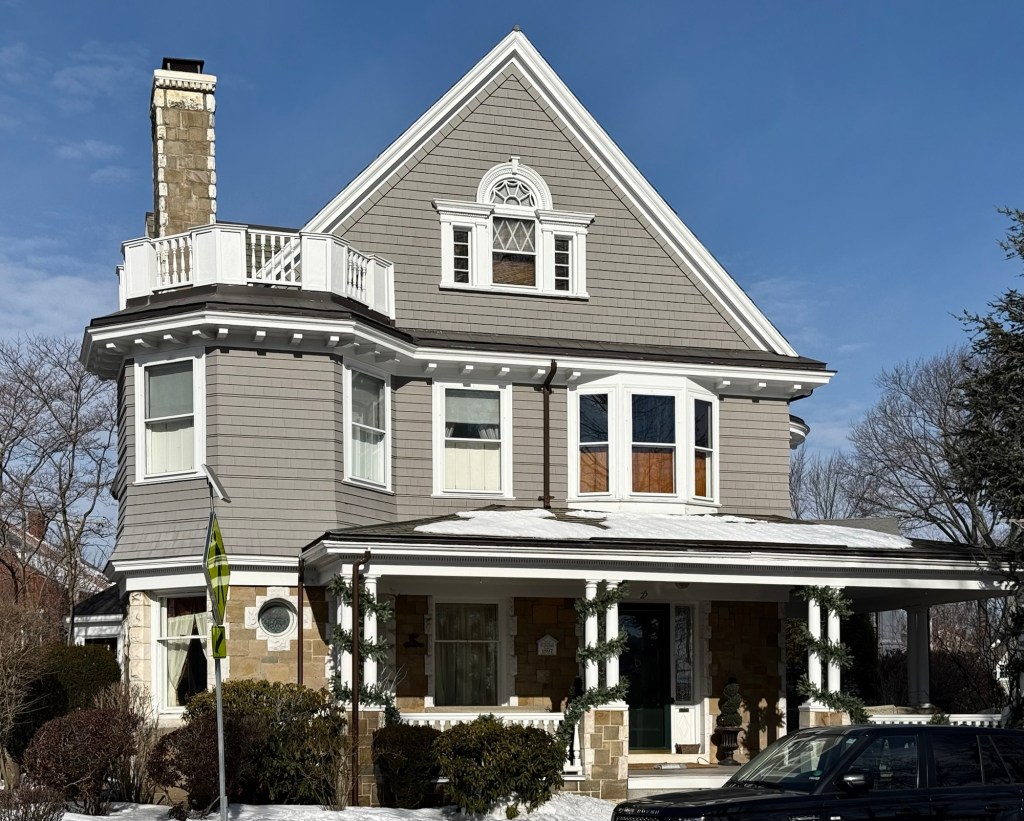
Bounded by three streets and overlooking the town Common, this stately house in Salem, Massachusetts, showcases a blending of Queen Anne and Colonial revival styles. Built in 1897 from plans by Boston architect, Alfred Fernald, the house was constructed by and for its first owner, Joseph Parsons, a Civil War veteran and house builder. The Parsons family continued to live in the house until Joseph’s death in 1915, after which his widow, Minnie, sold the property and moved to Florida. Dr. Ignatius Zielinski purchased the property in the 1920s and divided the house into a physician’s office and several residential units. Tragically, Dr. Zielinski died while serving his country during WWII, and the family would retain the property until 1987. The house is unique for its materiality with the first floor consisting of ashlar, rough-faced stonework with a wood-shingled second story, stained glass windows and a wrap-around porch.
This lovely three-story frame house on Winter Street in Salem was built in the 1780s for mason, Thomas Hovey. The structure’s front-end, five-by-one-bay portion with stone foundation was built first, in the Federal style, likely with traditional finishes seen in the early Federal period. The building’s rectangular shape, hipped roof, molded corner boards, and foreshortened third-story windows are indicative of its Federal-era origins. By around 1870, the Italianate decorative features, including a hooded double-door entrance, two-over-two windows, a second-story bay window, a bracketed cornice, and bracketed window lintels, were added to the exterior in an effort to modernize the home by later owners. Like many other houses in Salem, this building was extensively documented by Historic Salem Inc. who compiled a detailed history of this and hundreds of other homes nearby.
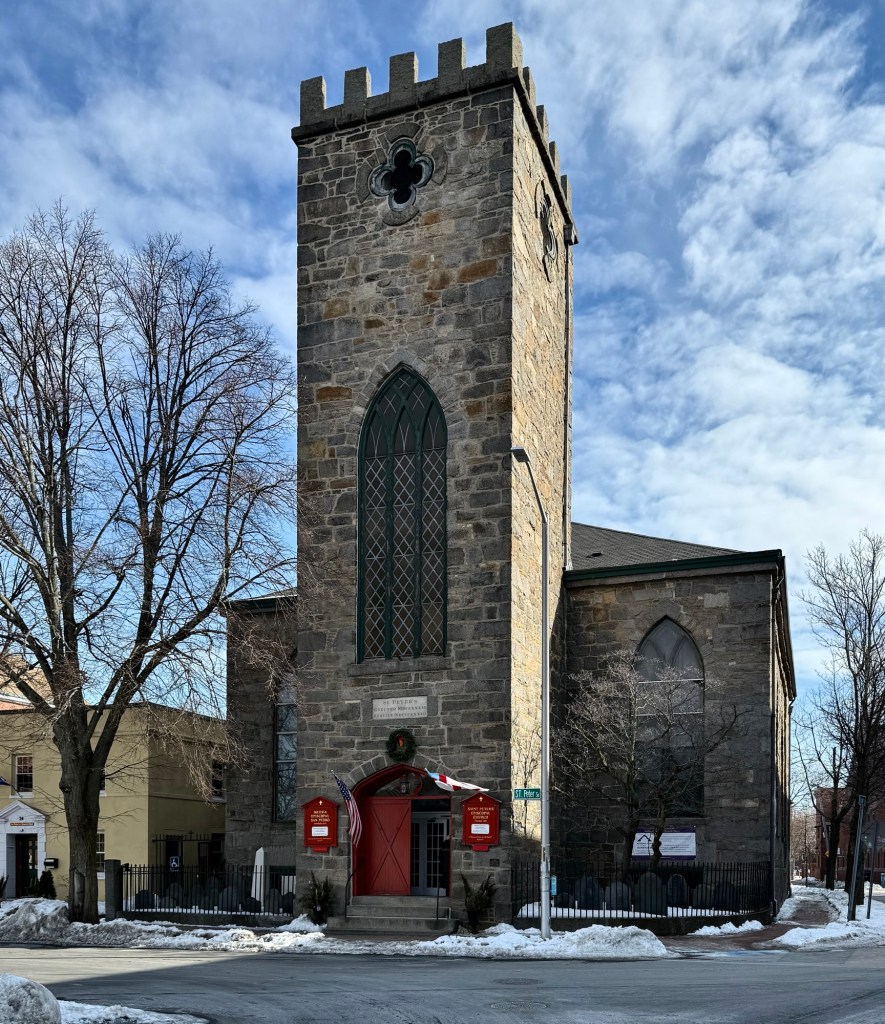
The St. Peter’s Episcopal Church of Salem, is a landmark example of a granite, Gothic Revival church of the 19th century. The present church, which is constructed of Cape Ann granite, was the second church on the site built for local Episcopalians, replacing a wood-frame building constructed there 100 years prior. Designed by architect Isaiah Rogers, the Gothic church features a prominent entry tower with a quatrefoil window in each elevation, large lancet-arched windows in the tower and lining the sanctuary, and a crenelated parapet. When completed, St. Peter’s had Salem’s first church bell, an 1740 English bell that supposedly still graces the tower today and is said to be the oldest church bell in the United States! In 1871, the rear chapel was added to the building, from plans by George E. Harney. The chapel was built directly over the old parish cemetery, requiring some of the tombstones to be placed inside the chapel walls, while others were moved to the front of the church, creating a really unique “garden cemetery” in front of the church.
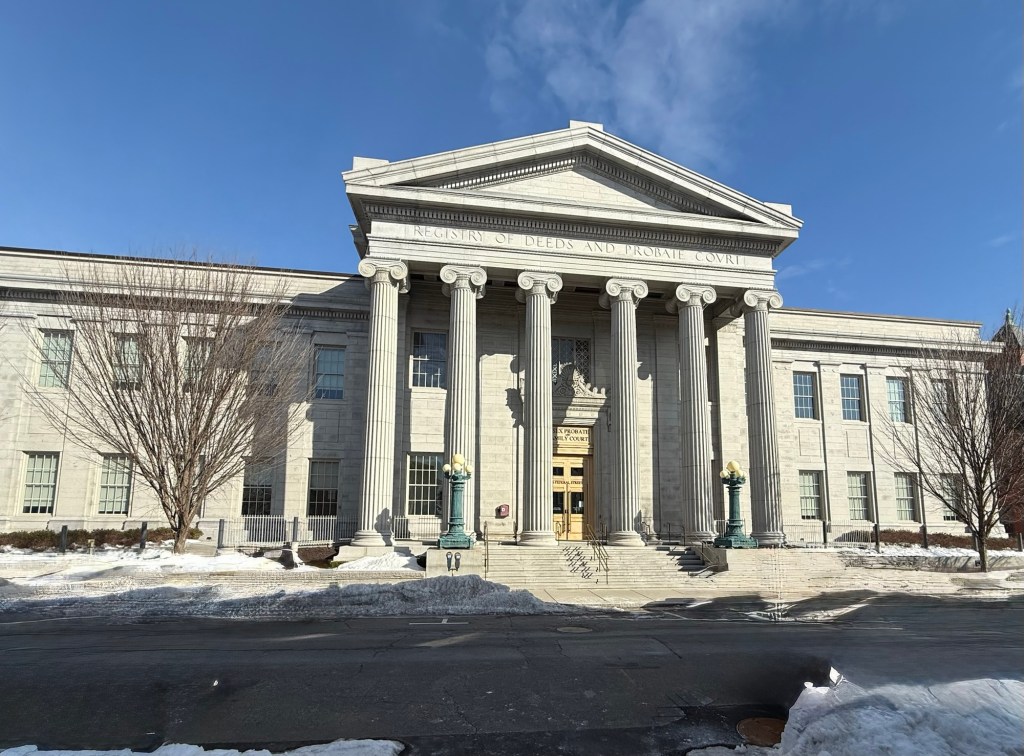
The Essex County Registry of Deeds and Probate Courthouse on Federal Street in Salem, Massachusetts, was built in 1909 from plans by Boston architect, Clarence Blackall. The Neo-Classical courthouse adds to the rich tapestry of Civic buildings there, showcasing the ever-evolving tastes in architecture as the buildings become more contemporary as you move westward down the street. The two-story granite and cast-stone faced brick masonry building is cross-shaped in plan, consisting of a three-bay wide gable-end entrance with Ionic porch of six fluted columns supporting a dentilled entablature and pediment. The central bay within the entry porch contains a large double-door entrance with elaborate architrave and a scrolling pediment incorporating Classical motifs and a Greek god bust. The building underwent a massive restoration in 2017, and was renamed the Thaddeus Buczko Building after retired First Justice Thaddeus M. Buczko.
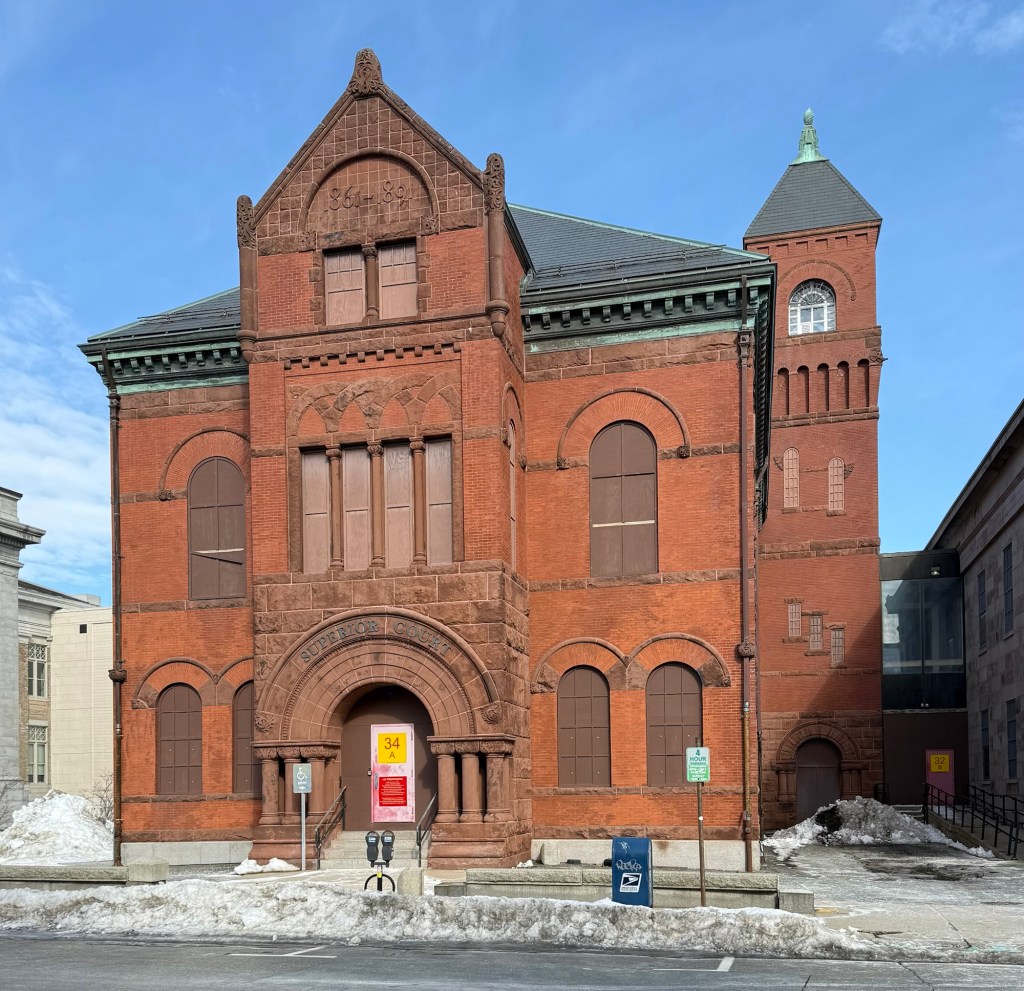
Located to the west of the Old Granite Courthouse on Federal Street in Salem, the Old Essex County Superior Courthouse is a visual depiction of the emergence of the Victorian styles from the more Classical Greek mode. Originally built in 1861 from plans by Salem architect, Enoch Fuller, the building was distinctly Italianate in style and built of brick until a major renovation in 1889 gave the building its present Richardsonian Romanesque appearance. The building was enlarged and renovated by architects Holman K. Wheeler and W. Wheelwright Northend which includes: changes to the roof line, creation of dormers, alterations to the window surrounds to create Romanesque arches and more. A three-story projecting pavilion, whose first floor is finished with rusticated brownstone, contains a recessed entry with a large semicircular arch supported on three columns with carved capitals at each end. The central pavilion resolves into a gable with corner pilasters with carved finials centering a blind arch containing the full date span of the complex, “1861-1891” in a field of square rusticated brownstone blocks. The courthouse remained in use until the J Michael Ruane Judicial Center at the end of the block was completed in 2012. The Old Granite Courthouse and adjacent Old Superior Courthouse were both vacated and have been essentially mothballed ever-since under the ownership of the Division of Capital Asset Management and Maintenance as surplus. The fate of the two buildings remains undetermined.
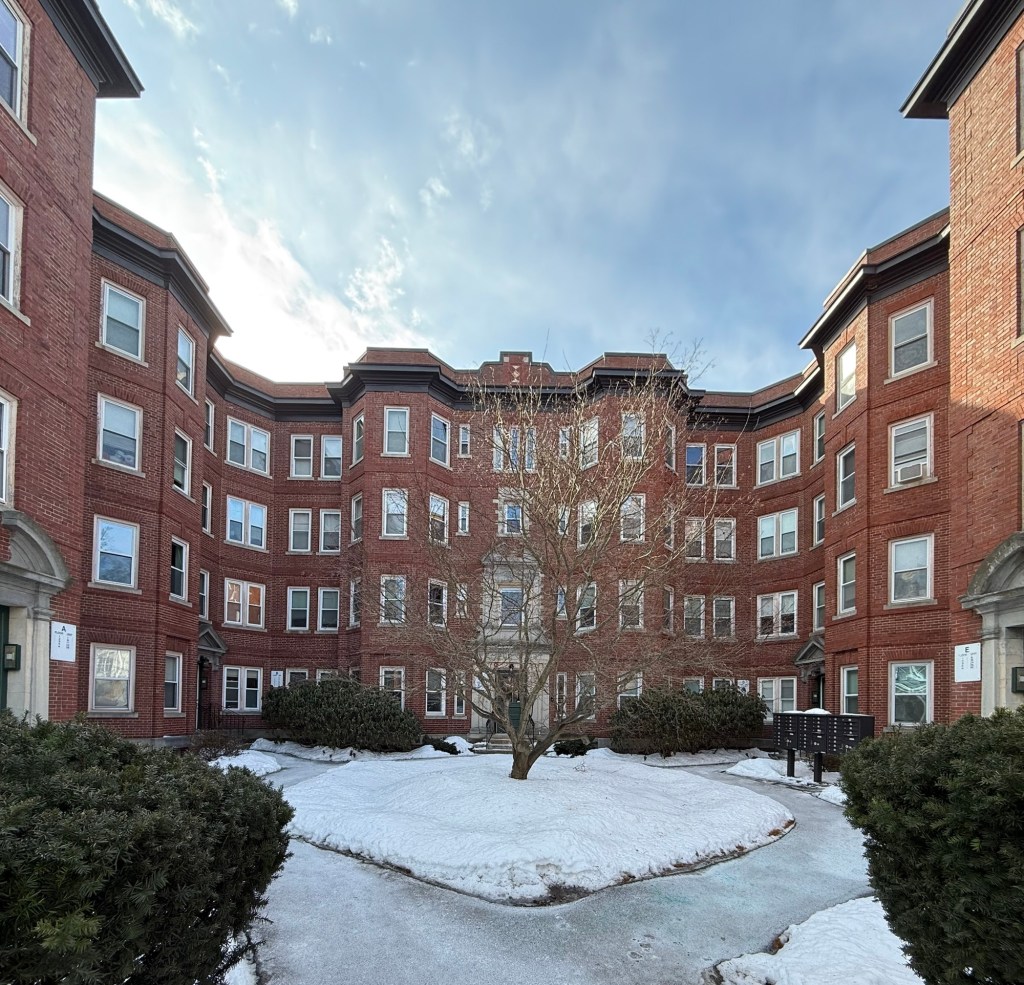
Constructed in 1912, Temple Court at 15 Lynde Street was erected on the site of two earlier buildings during a period of great population growth in Salem. The parcels here were acquired by Aroline C. Gove (1857-1939), a prominent local property-owner and developer between 1908 and 1911. Ms. Gove was a prominent Salem citizen and daughter of notable inventor and businesswoman Lydia Pinkham. With a business-oriented mindset like her mother, Aroline hired architect Harry Prescott Graves of Lowell to furnish plans for an apartment building on this site. Completed in 1912, the apartment building, known as Temple Court, included 36 units with two-, three-, and four-room suites with a live-in janitor. The building is unique for Salem as a courtyard style building, more common in Boston and Brookline. The building’s large mass is broken up by its setback with the U-shaped form and central landscaped courtyard, series of projecting octagonal bays, and multiple entrances. Temple Court was converted to condominiums in the 1980s.
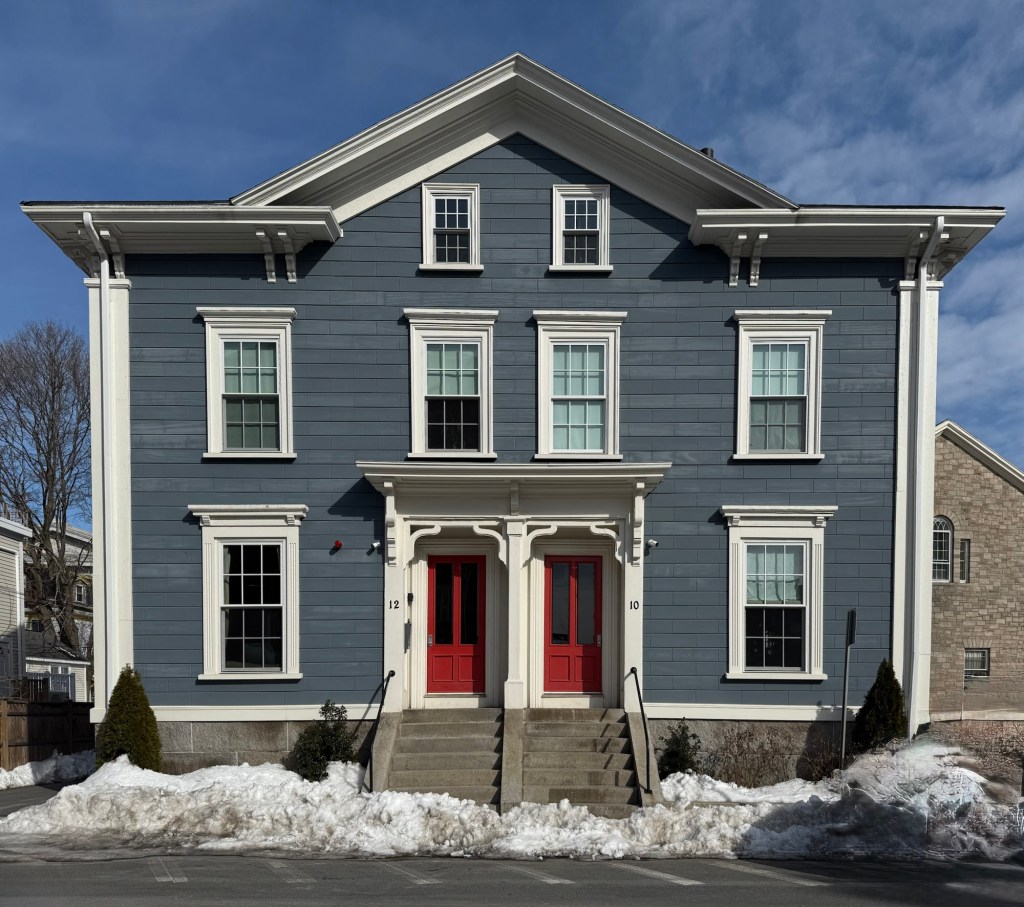
The William Hunt Double House, located at 10-12 Lynde Street in Salem, is a 2 ½ story wood-frame Italianate building that showcases the emerging presence of the Victorian style on residential buildings in the mid-19th century, even in cities with strong support for Colonial and Federal period styles. The two-family house was built by William Hunt, a prominent Salem merchant, as a rental property with occupants of the building in 1859 including: John W. Lefavour, a cashier, and Benjamin F. Faber, a merchant. The property remained in the Hunt Family for three generations, and was converted to a boarding house in the 1930s. In November 2018, a fire gutted much of the building, displacing the residents, and concerned neighbors as to the future of this great property. Luckily for us, the owners hired Seger Architects, Epsilon Associates and Groom Construction to fully restore the building to its former glory. The resulting project won a Salem Preservation Award and received Federal and State Tax Credits to offset restoration costs. What a great success story!
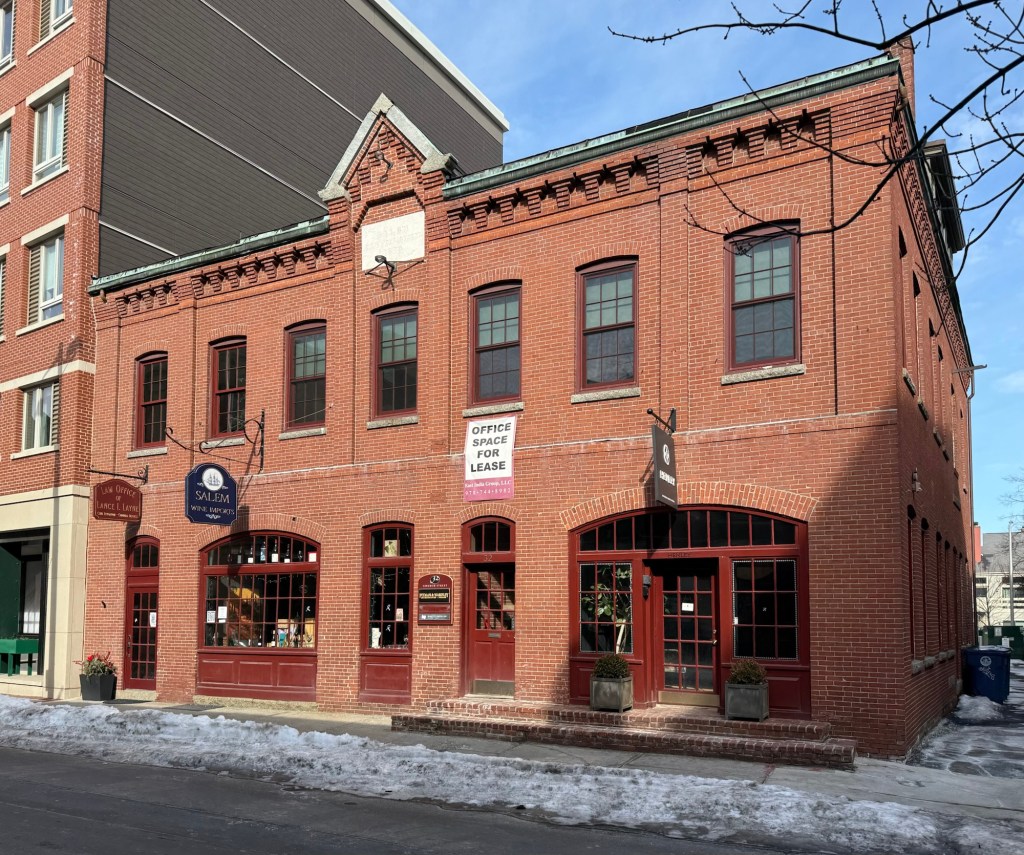
Salem, Massachusetts, was first settled by Europeans in 1626, and it would take 170 years until in 1796, an organization of citizens was established for the purpose of supplying the inhabitants generally of Salem and Danvers with pure spring water. The Salem and Danvers Aqueduct Company was incorporated in 1797 “for the purpose of conveying fresh water by subterraneous pipes into the towns of Salem & Danvers.” As Salem grew, the need for a more central water district and distribution network became a necessity for the health and prosperity of the city. A 1864 law allowed Salem to construct its own water works, and it formed a Board of Water Commissioners who designed and constructed the system. From this, funding was acquired and paid for the laying of tens of thousands of feet of subterranean water distribution pipes connecting the reservoir to buildings and hydrants in Salem. Offices of the Waterworks were scattered and obsolete until 1877, when funds for the construction of this structure at 32-34 Church Street were set aside as the new Water Department Offices. Completed by 1879, the building is a great example of a Romanesque/Italianate style masonry structure with corbelled cornice and arched openings. According to the city directories, this building continued to operate as the Salem Water Works into the late 1930s. By 1945, it was the headquarters of the United States War Price & Rationing Board. In 1964, it held a number of city offices including: Civil Defense headquarters, Fire Department headquarters, Licensing Board, Planning Board, and the City Veterans Service, before being sold by the City of Salem to private ownership in 1976.

 Buildings of New England