Rhode Island Hospital Trust Building // 1917

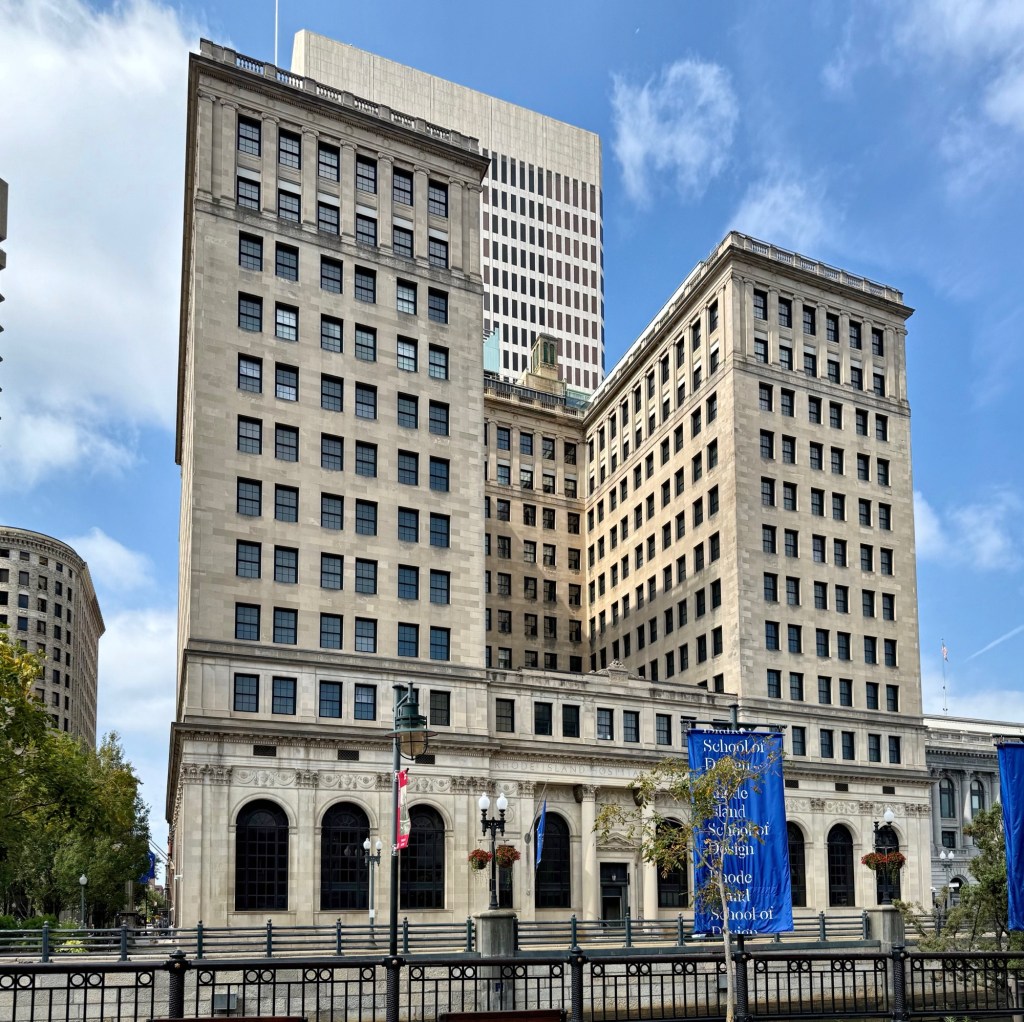
Located at the eastern edge of Downtown Providence, the Rhode Island Hospital Trust Building is significant as one of the city’s finest examples of the Beaux Arts style of architecture and as the headquarters of what was once the largest banking institution in the state of Rhode Island. The Rhode Island Hospital Trust incorporated in 1867 as the first trust company in New England. It owes its unique name to the fact that it was chartered by the board of trustees of Rhode Island Hospital, founded four years earlier, with the trust company established to help finance operations of the hospital. The original, purpose-built bank was constructed in 1891, and quickly outgrown as the institution grew exponentially into the early 20th century. In 1916, the trust hired the New York architectural firm of York & Sawyer to furnish plans for the present structure. Construction began in 1917, and after delays caused by WWI, the building finally opened in 1919. The 11-story U-shaped building was designed in an exaggerated form of Renaissance palazzo, with steel-framed construction that is faced with marble on the two lower levels and limestone elsewhere. After a series of mergers throughout the 20th century, the building was owned by FleetBoston, who donated this pristine building to the Rhode Island School of Design (RISD), which was renovated into a dormitory by RISD-alumni and architect Nader Tehrani of NADAAA Architects. It is today known as the Mandle Building.

Thurston-Gladding House // 1886

One of the finest Victorian-era houses in the College Hill/East Side area of Providence is this stately residence at 30 Stimson Avenue, known as the Thurston-Gladding House. The house was built for newlyweds, John Russell Gladding and Ellen (Thurston), on land given to the couple by Ellen’s father, attorney and judge, Benjamin Thurston. John Gladding was originally from Connecticut and the couple split their time between their Providence home and a country retreat in Thompson, Connecticut. Architects Thomas J. Gould and Frank W. Angell (Gould & Angell) furnished the plans for the home, which features a ground floor faced with textured brick and walls adorned by continuous wood shingle siding above. A rounded tower, projecting bays and dormers, and a elongated front porch break up the massing into a pleasing composition.

Goodwin House // 1886

Queen Anne style buildings are a favorite as they are all so different and interesting to look at with all the ornate details, asymmetrical forms, varied siding, and rooflines. This example on Stimson Avenue in Providence is a great example of the style. The house was built in 1886 for William P. Goodwin (1852-1921), a banker, insurance executive, and author, who never married and lived in the house with his sister, Sarah Jane Goodwin. Keeping it in the family, William hired his brother, architect, John Bray Goodwin, to design his residence, with little expense spared. Interestingly, the house is built right at the street with its front door accessed up a stair and a brick base adjacent to enclose the property from the sidewalk, creating a high garden wall with gate. There is so much to look at here, it is spectacular.

Byron Thomas Potter House // c.1896

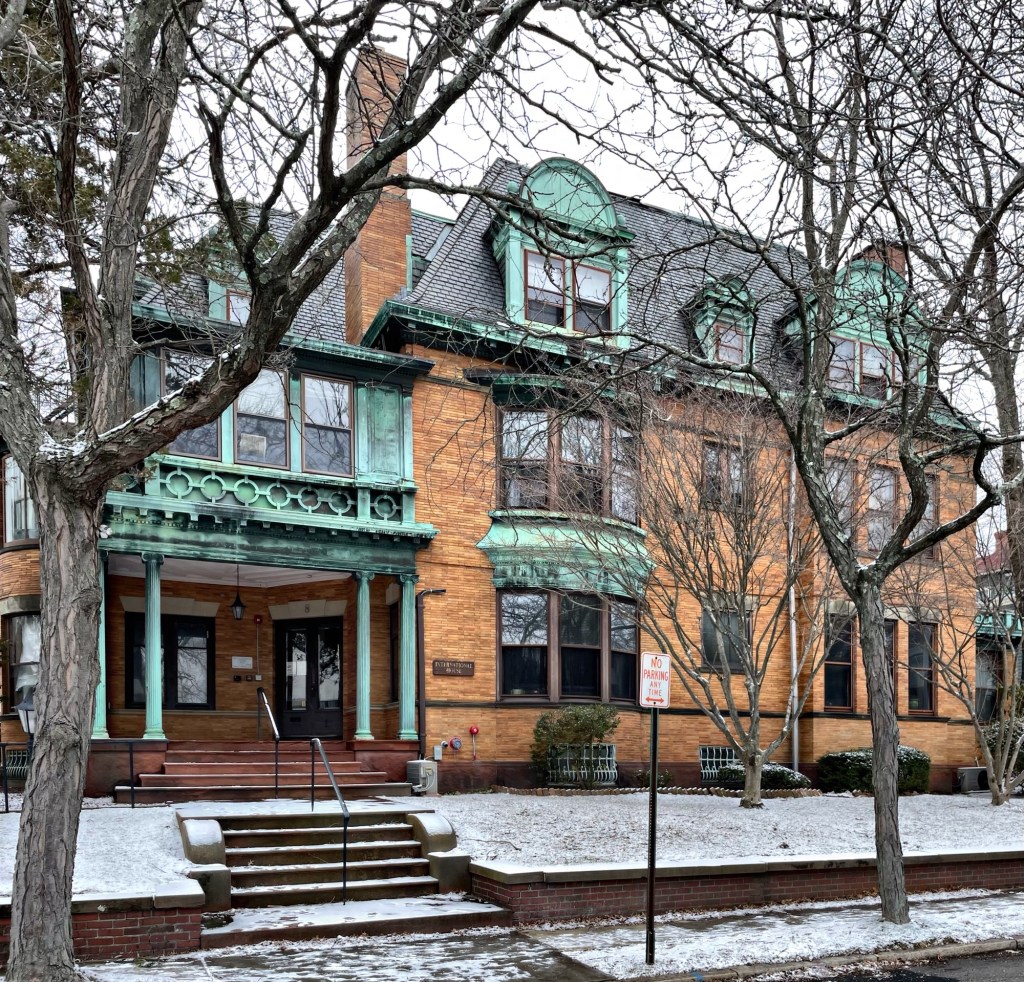
The Byron Thomas Potter House is located at 8 Stimson Avenue in Providence, Rhode Island, and is one of the city’s few examples of the Beaux Arts architectural style in a single-family residence. The Beaux Arts style uses an Italian Renaissance form and materials (Roman bricks), classical Greek and Roman decorative elements like columns and balustrades, and a steep mansard roof punctuated by large dormers, to create a grand and imposing architectural statement. The house was designed by 1896 by local architect, Edward I. Nickerson, who was known for his use of traditional forms in an unconventional manner, with emphasis on ornament and differing materials; with this house being a great example of his work in his later years. The residence was built for newlyweds Helen Sheldon Potter and Byron Thomas Potter, a real estate and insurance broker. The residence is now occupied by the International House of Rhode Island, a non-profit that provides a “home away from home” for international students, scholars, professors, researchers, and their families by providing a venue for folks of different backgrounds, ethnicities, and life experiences to celebrate our similarities and differences and envision a world in which friendship and understanding beat anonymity, isolation, and ignorance. The world needs more of this.

Congdon Street Baptist Church // 1875

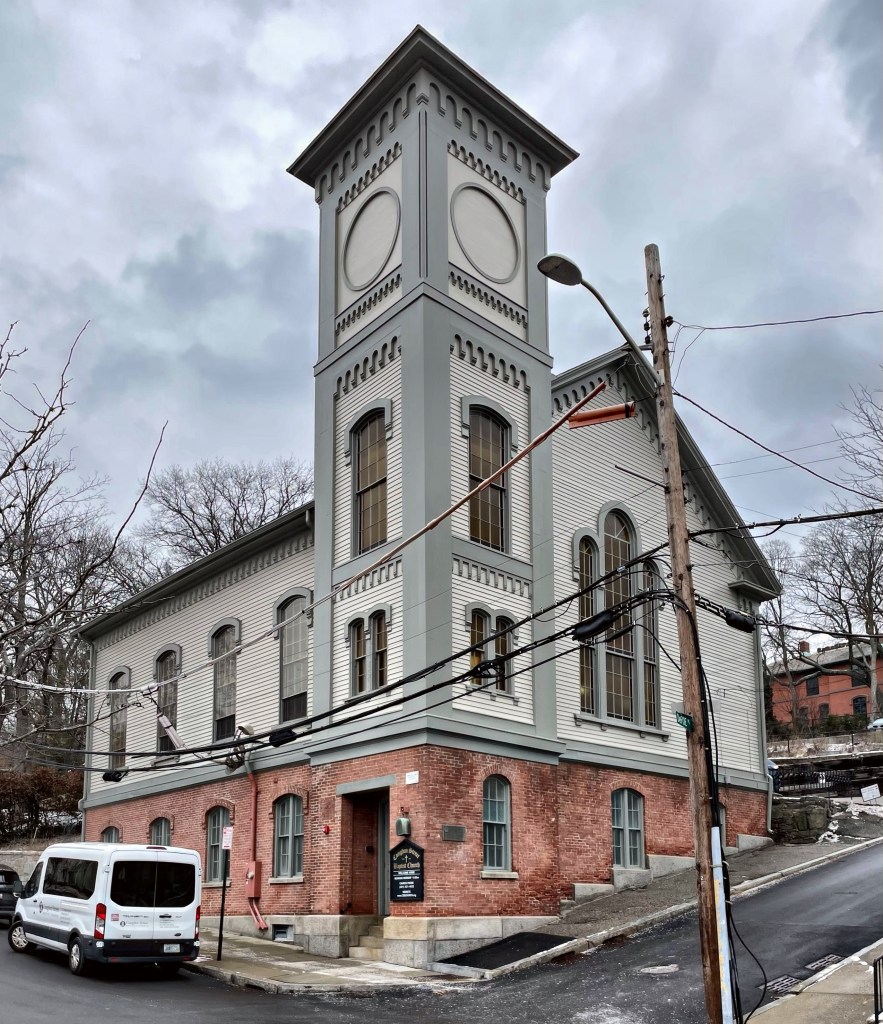
The Congdon Street Baptist Church on College Hill is extremely significant as part of the rich history of Providence. Its origins began in 1819, when Moses Brown, an abolitionist, industrialist and member of the Brown Family (who profited on the institution of slavery) gave land to “the people of color” of Providence for a schoolhouse and meeting house. The original building stood slightly north of the present structure and it was built in 1821. The structure provided the first schoolhouse for Black children in Providence. In 1869 the building was torn down, without the approval or knowledge of the congregation by white neighbors because “its proximity displeased them”… Eventually the congregation arranged an exchange of lots with one of the church’s neighbors and architects Hartshorn & Wilcox were commissioned to design the new church building. Hartshorn was the successor of Thomas A. Tefft and this church echoes many of his designs in the Italianate style. The new building was completed in 1875 at the cost of $16,000. It was renamed the Congdon Street Baptist Church. The church has since 1875 served as an important landmark and gathering place for many Providence’s Black residents past and present.

Welcome Congdon House // c.1820

In 1820, Joseph Dorr, a trader, purchased this house lot in Providence’s East Side overlooking present-day Downtown. He had this Federal style house built with a symmetrical five-bay facade with fanlight transom over the door. He occupied the house until 1827 when he sold the property to a Charles Hadwin. In 1832, the property was acquired and soon after purchased by Welcome Congdon (1794-1874) who lived there until his death. The house was more recently added onto with a Modern addition on the side, to provide additional, private space for the owners who live directly next to a public park.

George Corliss – Charles Brackett House // 1878

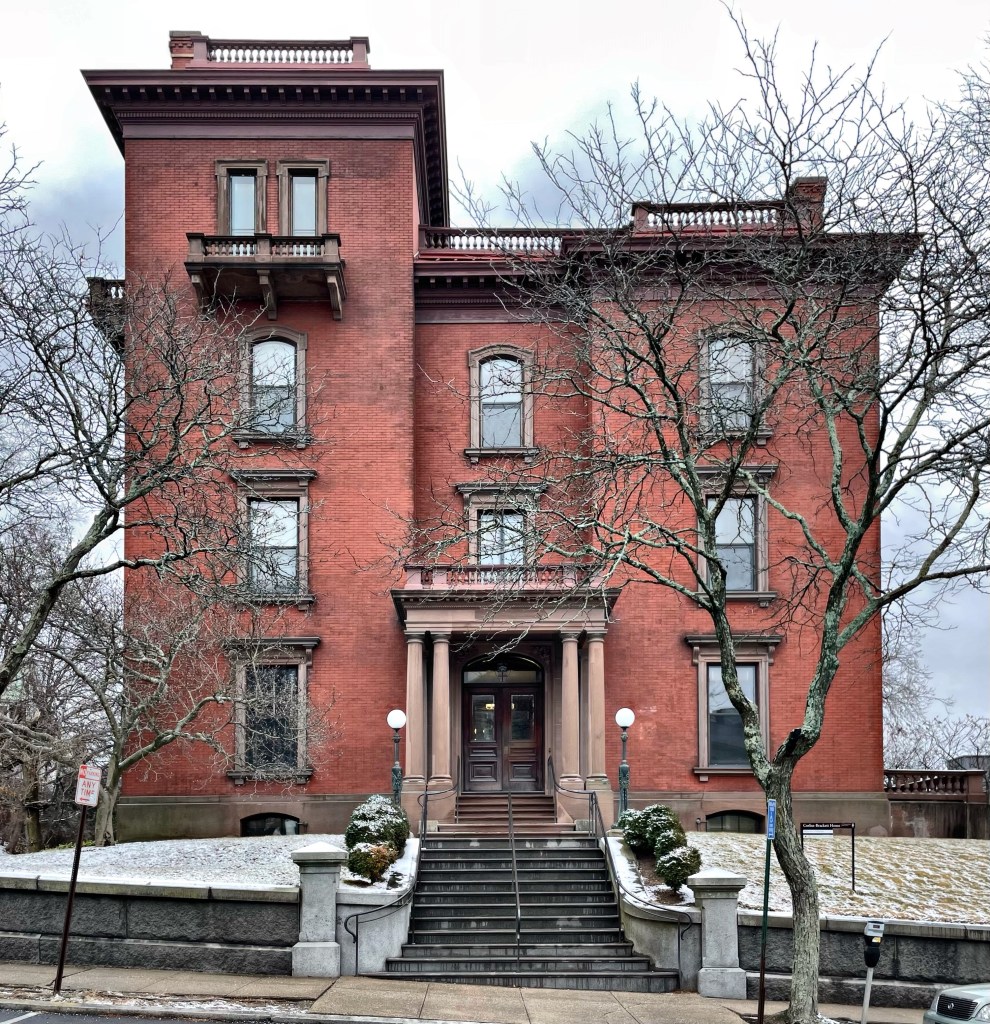
This mansion, one of the finest in Providence, was built in the late 1870s by George H. Corliss for his second wife. Corliss (1817-1888) was the inventor of the most widely used industrial steam engine of the nineteenth century. Corliss’ first wife Phebe died in 1859. Seeking companionship, George remarried in 1866 to Emily Shaw who was eighteen years younger than he. Ms. Shaw suffered from poor health and she with the assistance of her doctor, convinced Mr. Corliss that she escape the cold winters of Rhode Island for Bermuda. It does not appear that they relocated to Bermuda, but Corliss stated, “I will build Bermuda for Mrs. Corliss.” He did, and this is it. Corliss used his engineering skills to build a state-of-the-art, climate-controlled building, cool in the summer, warm in the winter. The Italianate Villa is one of the largest in town but employed a style that was dated upon completion. In 1929, Corliss’s great-nephew, screen-writer and movie producer for Paramount Studios Charles Brackett inherited the house. He in turn eventually transferred the house over to Brown in 1955, who have maintained the old mansion to this day!

Samuel B. Wheaton House // 1850

Another Italianate mansion on Angell Street in Providence is the Samuel B. Wheaton House which is presently occupied by Brown University’s English Department. Samuel Burr Wheaton (1807-1863) was a merchant who also served as president of the Phenix Bank. The building is capped by a shallow hip roof which is not visible from the street and wide, overhanging eaves supported by brackets. The house is a Villa in plan as it features irregular massing and not a symmetrical form, just sans tower. The Wheaton House was acquired by Brown University who has since added onto the rear of the house for the English Department offices and classroom spaces. LLB Architects is credited with the contextually designed additions which utilizes lead-coated-copper clad connectors that are recessed between sensitively-scaled brick pavilions that preserve the integrity of the original house by letting it stand proud of the later additions.

Watson-Knight Mansion // 1854

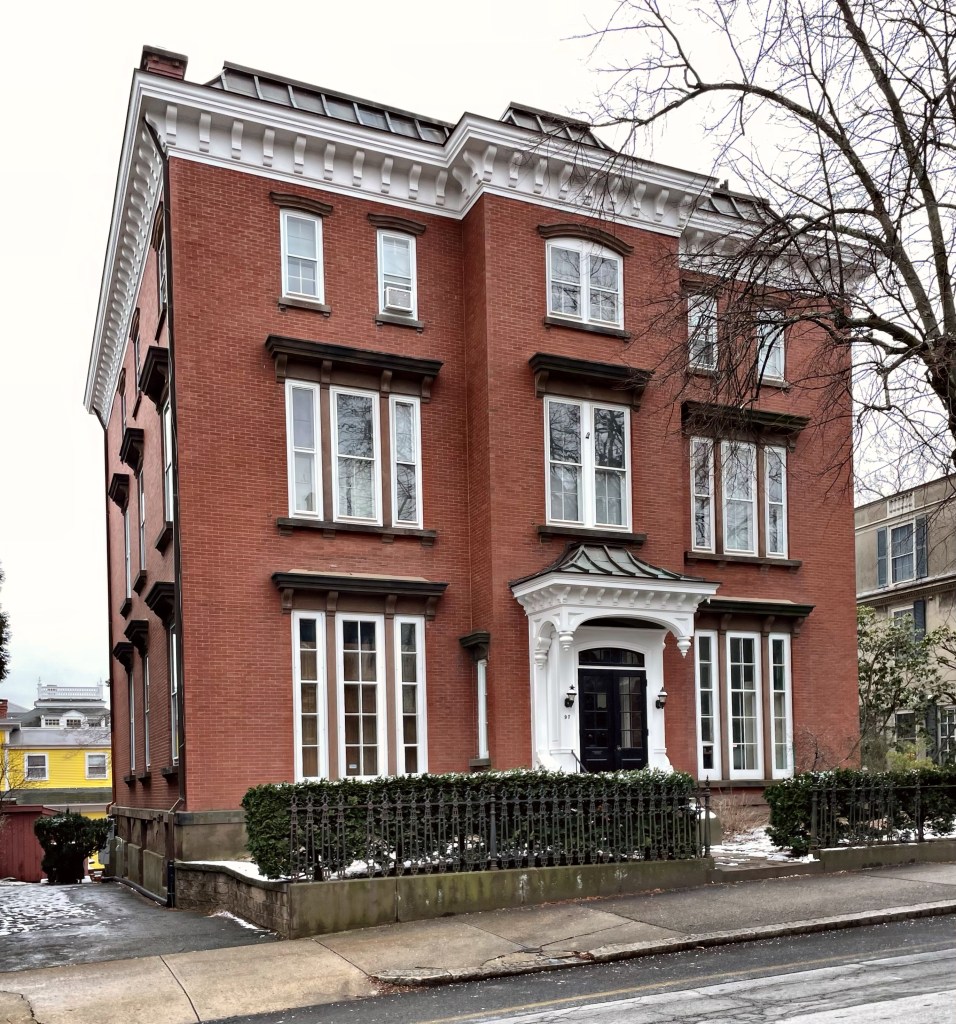
No town does Italianate architecture quite like Providence! Case in point, the Watson-Knight Mansion, a relatively overlooked example of the style found on Angell Street in College Hill. In 1854, a house lot here was purchased by an elderly Matthew Watson (1786-1857), who possibly lived in half of the house for a few years until his death. Directories also list his son Robert as living in the home in 1854. The three-story brick mansion has a boxy form with symmetrical facade. Brownstone hoods and sills are located at the windows and add depth to the otherwise blank facade. A projecting wooden door hood with hanging pendants covers the large entry. The home remained in the Watson Family until it came under the possession of Robert Brayton Knight (1826-1912) a businessman and mill owner who became the largest individual owner of cotton mills in the world, with upwards of twenty distinct establishments under his personal control. He co-founded what became the Fruit-of-the-Loom brand with his brother in the 1850s. The building has since been divided into apartment/condominiums.

William Holroyd House // 1798

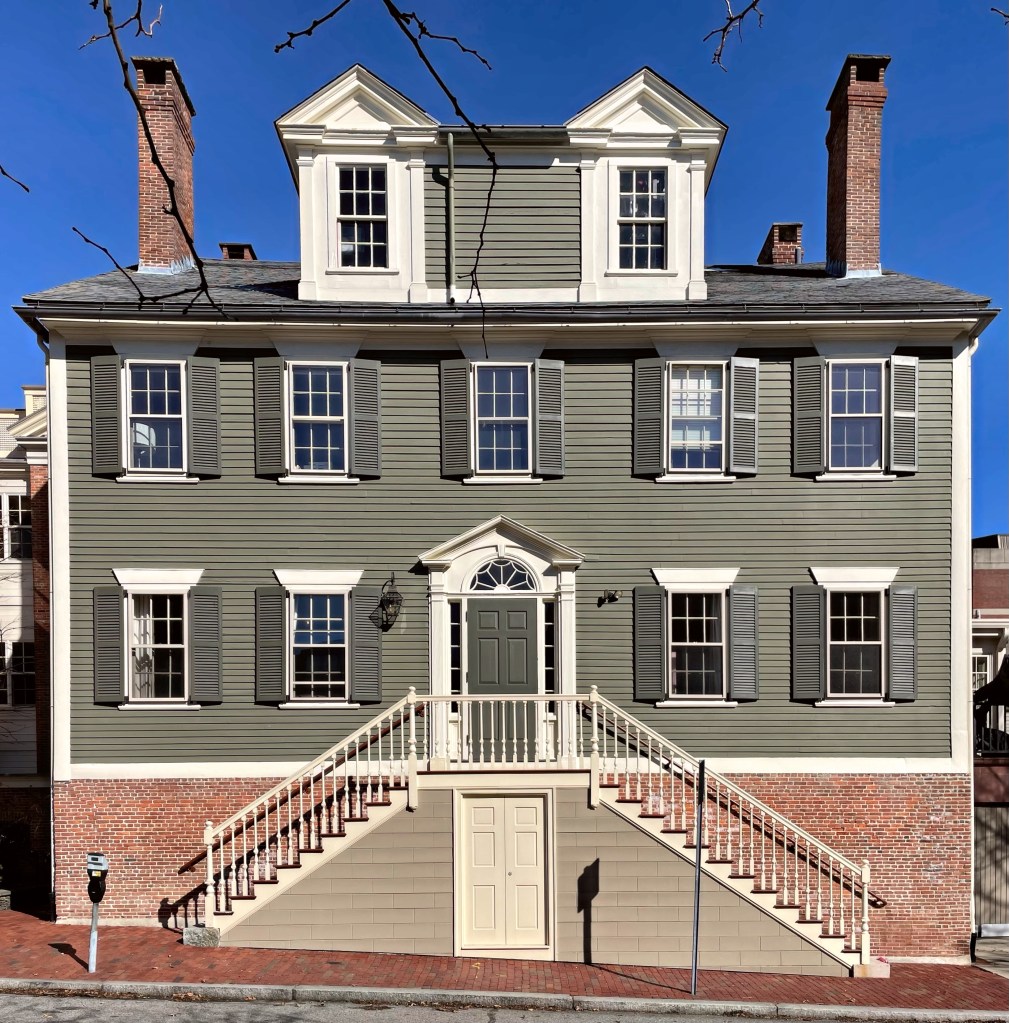
When visiting Downtown Providence, I couldn’t help myself but to cross the river into College Hill, a neighborhood of such architectural diversity I could run this entire page just featuring that area. This beautiful Federal style home was built onto the downward slope of the hill in 1798 for William Holroyd, a merchant and active Baptist in town. The home sits atop a raised basement with brick end walls and clapboard siding on the front and rear. The property exhibits a symmetrical facade, splayed lintels above the windows, and a perfect center entry with fluted pilasters and pediment containing a fanlight. The building today appears to be a part of the Brown-RISD Hillel.