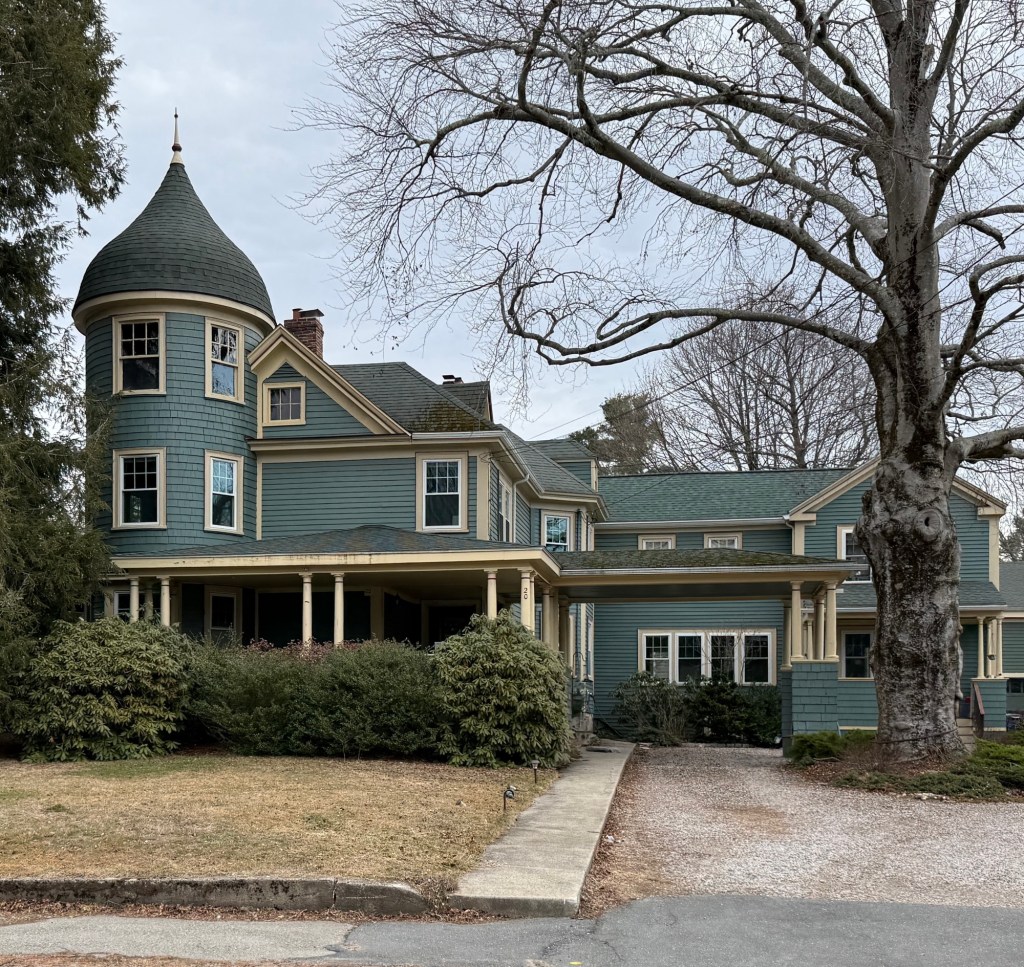
Charles H. Rutan House // 1889

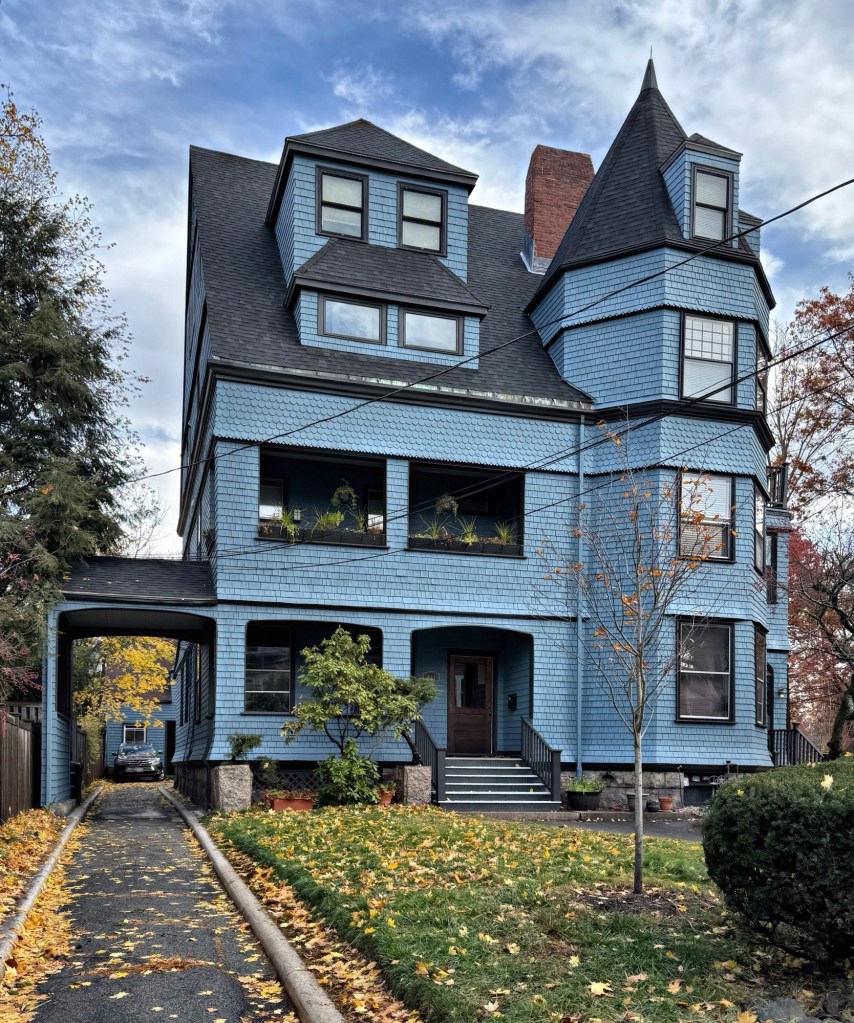
In 1889, prestigious architect Charles H. Rutan, purchased a house lot from the heirs of Elijah Emerson on the family estate and oversaw construction of his own residence in Brookline Village. Charles Hercules Rutan (1851-1914) was born in New Jersey and moved to Brookline in 1874, where he worked in the office of famed American architect, Henry Hobson Richardson. After Richardson’s death in April 1886, at the height of his career, Rutan and two other senior employees, George Foster Shepley and Charles Allerton Coolidge, took charge of the studio and its uncompleted work. Soon after, the three formed a formal partnership, Shepley, Rutan & Coolidge, to succeed to Richardson’s practice, and in 1887 moved the office to Boston. From his new position as head of a prominent firm, Rutan designed this handsome Queen Anne/Shingle style mansion for his family, where he lived until he suffered from two debilitating strokes in 1912, when he and his wife moved to an apartment on a nearby street. Besides the blue color, the house retains so much of its original architectural integrity and is one of the most significant residences in the Brookline Village neighborhood.

Dr. Tappan Eustis Francis House // 1879

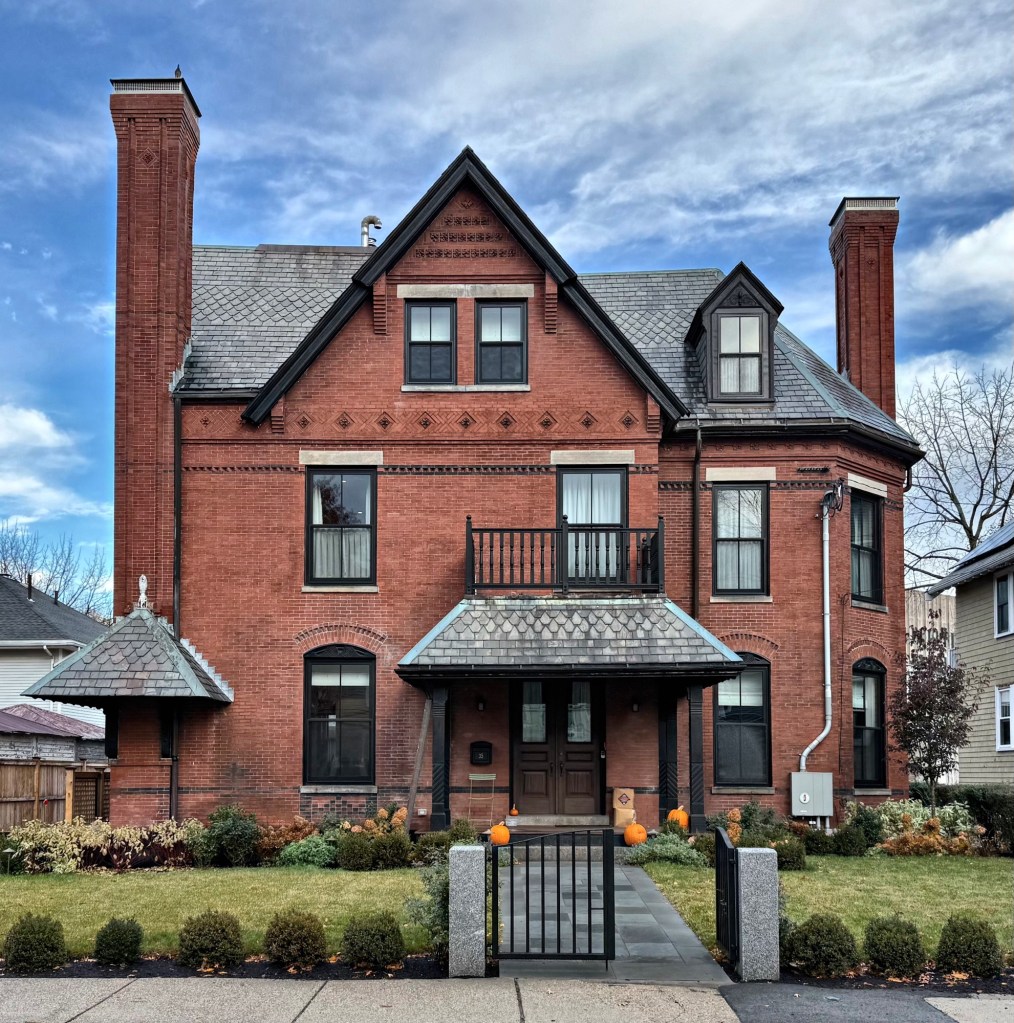
Located on Davis Avenue, a narrow residential street in Brookline Village, the Dr. Tappan Eustis Francis House is an unusual work by an architect that differs from the style they became best-known and sought after. Dr. Tappan Eustis Francis (1823-1909) graduated from Harvard College in 1844 and Harvard Medical School in 1847 and moved to Brookline where he practiced medicine for over 50 years. For his Brookline residence, Dr. Francis hired William Ralph Emerson, who has become best-known for his Shingle style designs and summer cottages that lined the New England coastline and in Boston suburbs, to furnish plans for his suburban residence. For Dr. Francis’ home, Emerson envisioned a brick house in the English Queen Anne style. The tall chimneys with panel brick designs, corbeled brick brackets and terra-cotta decorations in the gable peaks, and the massive slate-roofed entry porch are all stunning features on the house; but the most intriguing has to be the bracketed hood on the corner of the house which originally sheltered a wooden bench, as depicted in an 1879 drawing.

James H. Small House // c.1898

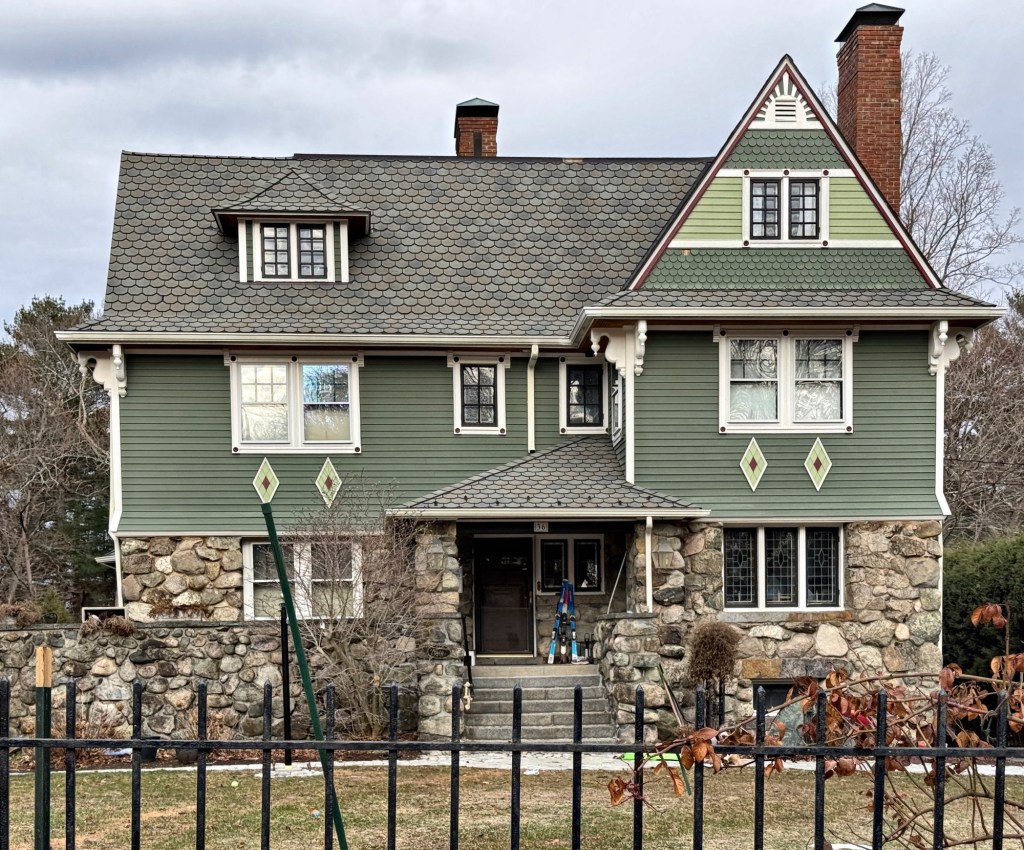
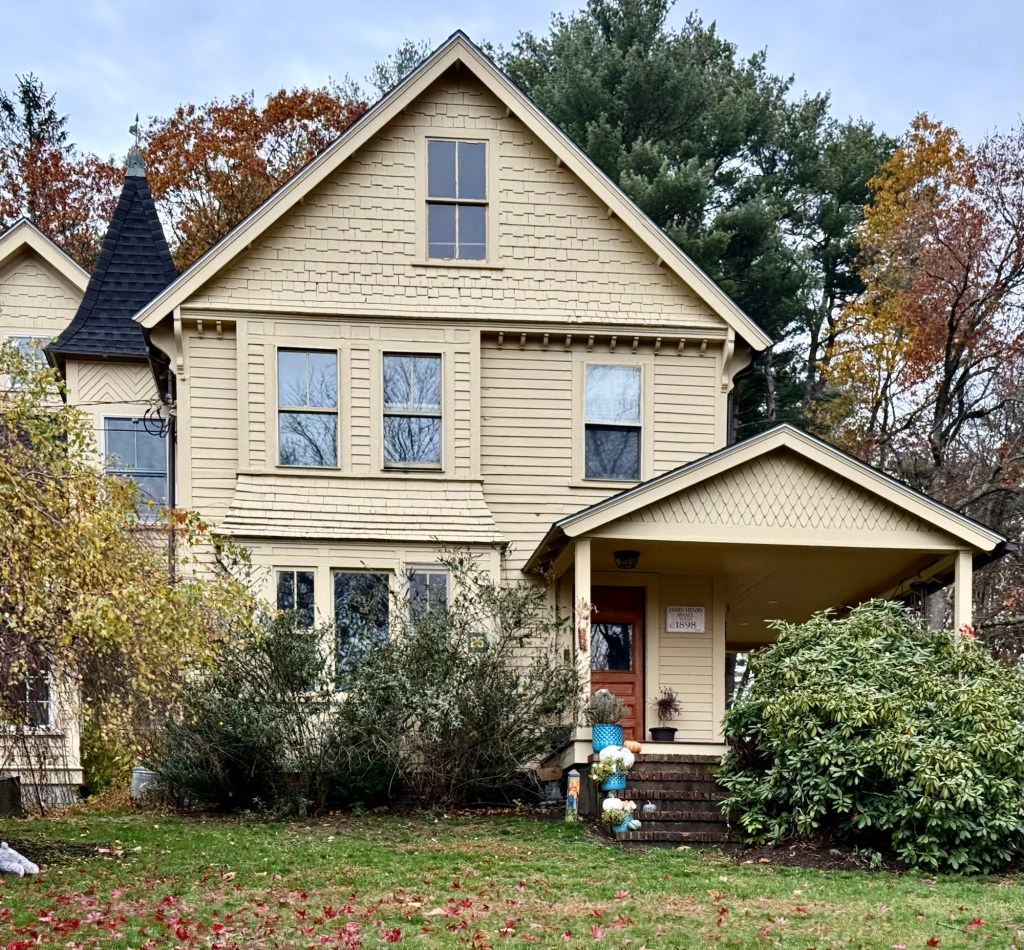
After the completion of the Wayland Railroad Depot in 1881, suburban development in Wayland Center increased, where the village saw dozens of large homes built in the late 19th and early 20th century. On Bow Road, the James H. Small House was built around 1898 by and for its namesake, who worked as a carpenter and builder in town. James Henry Small (1847-1913), while not a trained architect, built this home as a late example of the Queen Anne style, as the Colonial Revival style began to proliferate in the village, showing a changing of architectural taste. The James Small House consists of a main gable-front block with a side wing that includes a square tower. The use of clapboards, differing shingles, and diagonal sticks provide variety and texture to the house and serves as a unique contribution to the village which is largely dominated by rigid symmetry and vernacular of Colonial-era homes.

William Pollard House // 1899

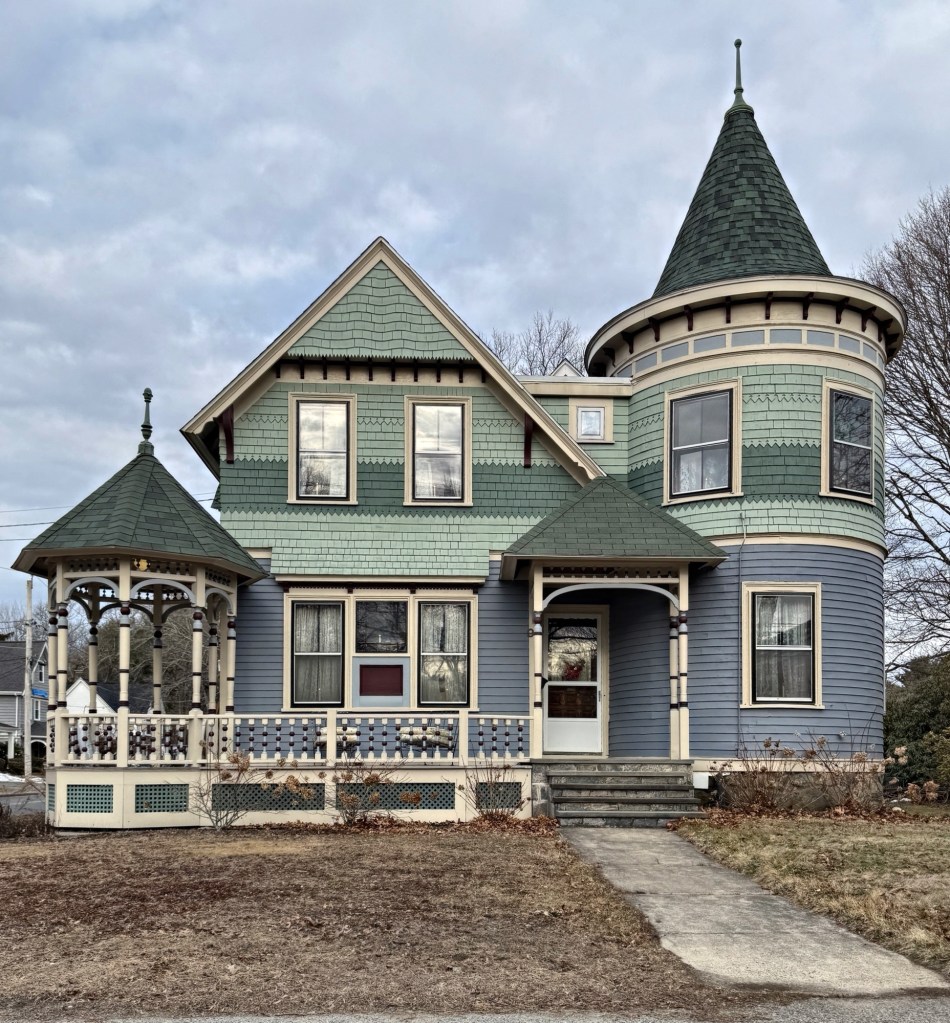
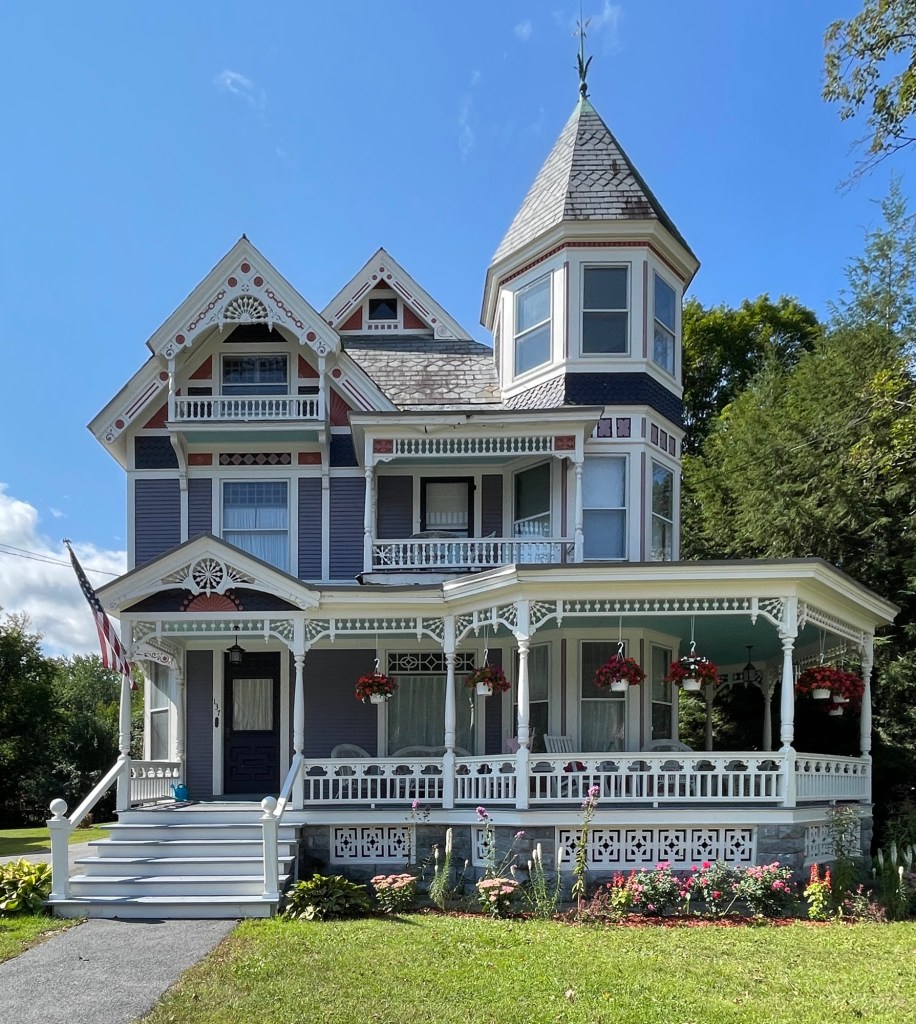
This high-style and ornamental house in Chester, Vermont, ranks among the state’s best examples of the Queen Anne style. The residence was constructed in 1899 for William Pollard (1854-1941), a local businessman who owned a shirtwaist manufactory in town with his brother, who lived next door. The painted-lady Victorian house features an asymmetrical plan highlighted by a three-story octagonal corner tower that is surrounded by a wrap-around porch with a delicate spindled frieze. The use of accent colors in the paint scheme further highlight the millwork details on the residence, which have all been preserved for well over a century. 

Edward Stanwood House // 1880

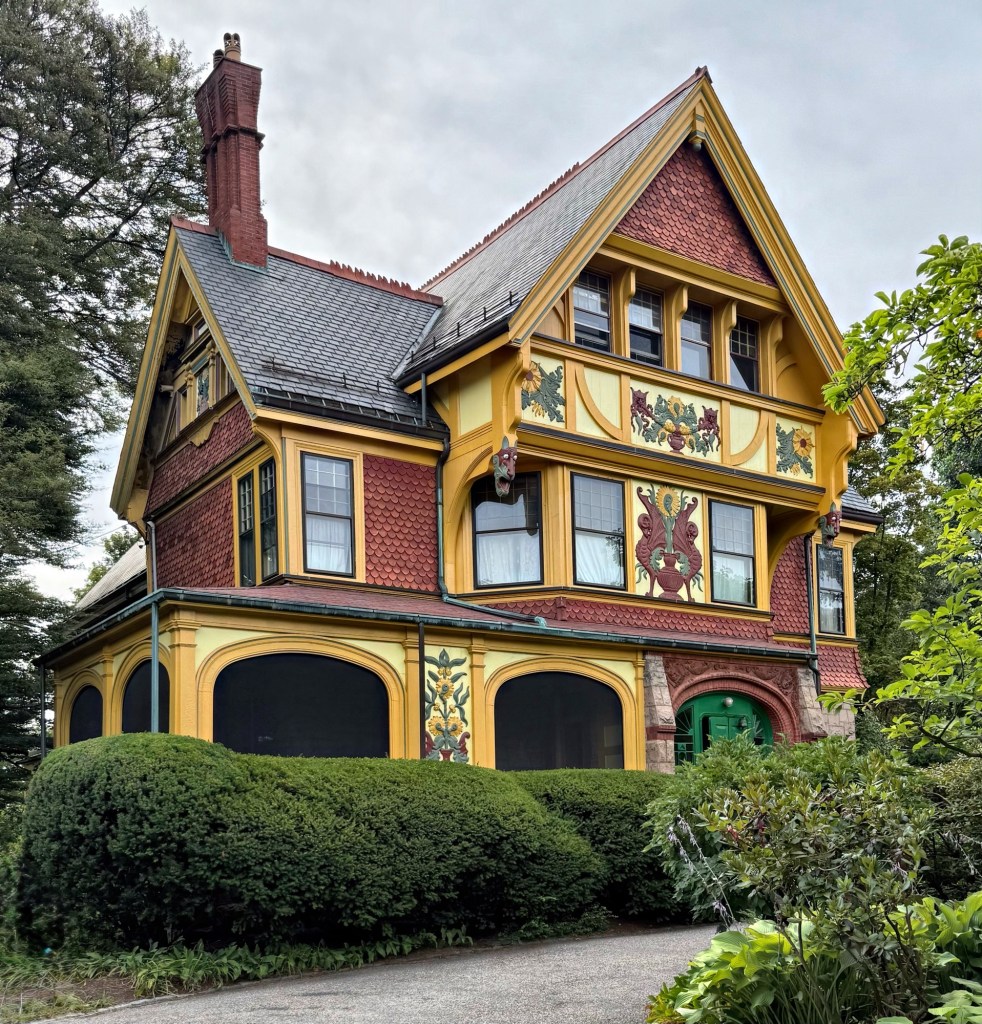
The Edward Stanwood House at 76 High Street in Brookline, Massachusetts, is one of the finest and exuberant examples of the English Victorian Queen Anne style, notable for its varied wall textures and materials, unique form, and applied ornament. The house was built in 1879-1880 for Edward Stanwood, who was for many years the editor of the Boston Daily Advertiser, and a children’s magazine, The Youth’s Companion. The ornate residence was designed by Clarence Sumner Luce, with interiors by Thomas Dewing. The Stanwood House features a well-preserved exterior and period-appropriate paint scheme, highlighting the bas-relief sunflower ornament and gargoyles. Of particular note is the use of hung tile siding, overlaid to give the appearance of fish scales and the roof cresting.

Moorfield Storey House // 1875

The house at 44 Edgehill Road in Brookline, is a brick Queen Anne style residence built for Moorfield Storey (1845-1929) by architect and neighbor, Robert Swain Peabody, who was Moorfield’s friend and college roommate. Both Peabody and Storey would later move in the early 20th century to the Fenway in neighboring houses, also designed by Robert S. Peabody. Moorfield Storey was a president of the American Bar Association and the president, for most of its existence, of the Anti-Imperialist League, an organization founded to oppose the annexation of the Philippines as a colony and to support free trade and the gold standard. Storey consistently and aggressively championed civil rights, not only for African Americans, but also for Native Americans and immigrants. He opposed immigration restrictions, and supported racial equality and self-determination. He would become the first president of the National Association for the Advancement of Colored People (NAACP), from its founding in 1909 until his death in 1929. The Storey House in Brookline is a well-preserved and early example of the Queen Anne style, that would dominate architectural tastes for the following decades.

Low-Rock House // 1888

This handsome shingled Queen Anne style home on Allerton Street in Brookline, Massachusetts, is part of the reason why the “Pill Hill” neighborhood gets its name. The residence was built in 1888 for Mr. Sumner Flagg, likely as an investment property as the neighborhood developed into one of the finest in the Boston area. An early resident here was Judith Motley Low (1841-1933), founder of the Lowthorpe School of Landscape Architecture, which was the first school intended solely to prepare women as landscape professionals in a field dominated by men. In 1945, the Lowthorpe School merged into the Rhode Island School of Design and became the basis of RISD’s Landscape Architecture Department. Another prominent resident of the house in the 20th century was Dr. John Rock (1890-1984), a physician and scientist who worked nearby at the Massachusetts Hospital for Women. As a Catholic doctor, John Rock is best-known for two groundbreaking medical discoveries in women’s health: the birth control pill and in-vitro fertilization. Dr. John Rock and his lab technician, Miriam Menkin, were the first researchers to fertilize a human egg outside of a human body in February of 1944, this research was compounded and later led to in-vitro fertilization as we know it today. Additionally, while running his clinic, Dr. Rock encountered a number of women bearing unwanted children that they could neither afford financially nor handle physically. Rock observed numerous women who, after giving birth to multiple children, had prolapsed uteri, malfunctioning kidneys, and were prematurely aging. In 1952, Rock was recruited to investigate the clinical use of progesterone to prevent ovulation. Enovid, the brand name of the first pill, was approved by the U.S. Food and Drug Administration (FDA) and put on the market in 1957 as a menstrual regulator. In 1960, Enovid gained approval from the FDA for contraceptive use.

Kingston Waterworks Pumphouse // 1888

The Queen Anne style pumphouse of the Kingston Waterworks in Kingston, Massachusetts, is a unique brick building capped with a hipped roof and wood shingle tower over the arched entrance, surmounted by a bell-cast metal roof. The structure was built in 1888 from plans by Quincy Adams Faunce, a mason, who likely worked with an architect to design the building. Before the building was completed, residents had to pump and transport their own water. This was until the first private Kingston Aqueduct Company formed, when householders of means bought stock in the company. The Aqueduct Company used a natural spring near a local pond. Before the waterworks, water was piped through the village through hollowed logs with their joints covered with iron bands. The building remains a well-preserved and significant structure that allowed Kingston to grow from a sleepy agricultural town to a vibrant community.

Lynch House // 1889

One of the most unique and enchanting houses in the Ashmont Hill neighborhood of Dorchester is the Lynch House (aka the Sunflower House) at 102 Ocean Street, a landmark example of the Queen Anne architectural style. This residence was designed in 1889 by architect Samuel J. Brown, who worked in the firm of Cummings and Sears before opening his own office in Boston, where he specialized in residential designs. The first owners were Edward C. Lynch, a stair builder, and his wife, Petronella P. Lynch, who was born in Sweden and emigrated to the United States. Architecturally, the Lynch House features a prominent gambrel roof that swells out over the second-floor inset windows, clapboard and shingle siding, sawtooth shingled details over the windows, and the sunflower motif in a panel at the third floor.

George and Emma James House // 1894

Built in 1894 for George and Emma James, the house at 47 Ocean Street in the Ashmont area of Dorchester, stands as one of the finest high-style examples of a Queen Anne single-family residence in Boston. George James was born in Vermont and worked as a farmer before moving to Boston, where he found work as a shoe manufacturer, opening offices and manufacturing facilities in the Leather District. The house was clearly designed by a skilled architect, and historians note that the residence was the design of architect S. Edwin Tobey, a skilled proponent of the Queen Anne style, seen here with its incredible detailing and unique form. The high-relief carvings in the gable and panels stand out, along with the recessed porch, and historic stable at the rear.