Old Essex County Superior Courthouse // 1861

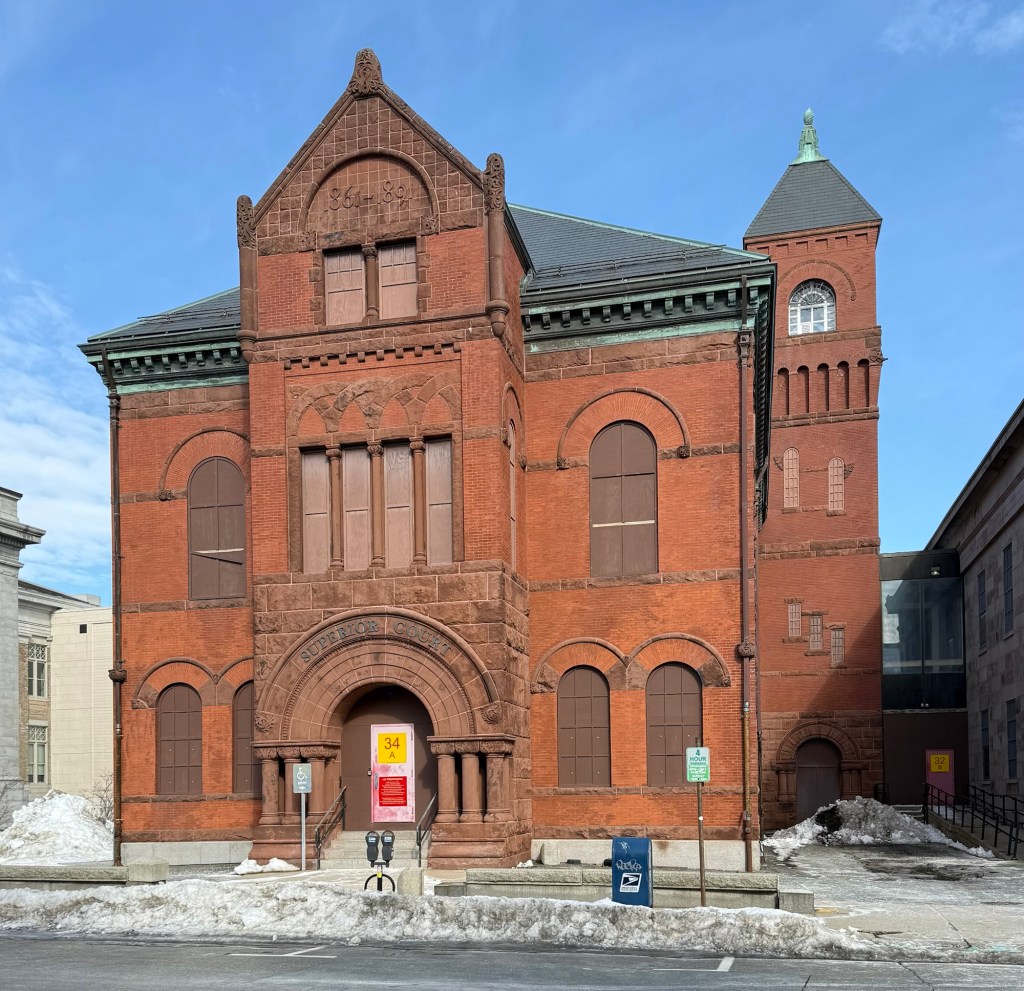
Located to the west of the Old Granite Courthouse on Federal Street in Salem, the Old Essex County Superior Courthouse is a visual depiction of the emergence of the Victorian styles from the more Classical Greek mode. Originally built in 1861 from plans by Salem architect, Enoch Fuller, the building was distinctly Italianate in style and built of brick until a major renovation in 1889 gave the building its present Richardsonian Romanesque appearance. The building was enlarged and renovated by architects Holman K. Wheeler and W. Wheelwright Northend which includes: changes to the roof line, creation of dormers, alterations to the window surrounds to create Romanesque arches and more. A three-story projecting pavilion, whose first floor is finished with rusticated brownstone, contains a recessed entry with a large semicircular arch supported on three columns with carved capitals at each end. The central pavilion resolves into a gable with corner pilasters with carved finials centering a blind arch containing the full date span of the complex, “1861-1891” in a field of square rusticated brownstone blocks. The courthouse remained in use until the J Michael Ruane Judicial Center at the end of the block was completed in 2012. The Old Granite Courthouse and adjacent Old Superior Courthouse were both vacated and have been essentially mothballed ever-since under the ownership of the Division of Capital Asset Management and Maintenance as surplus. The fate of the two buildings remains undetermined.
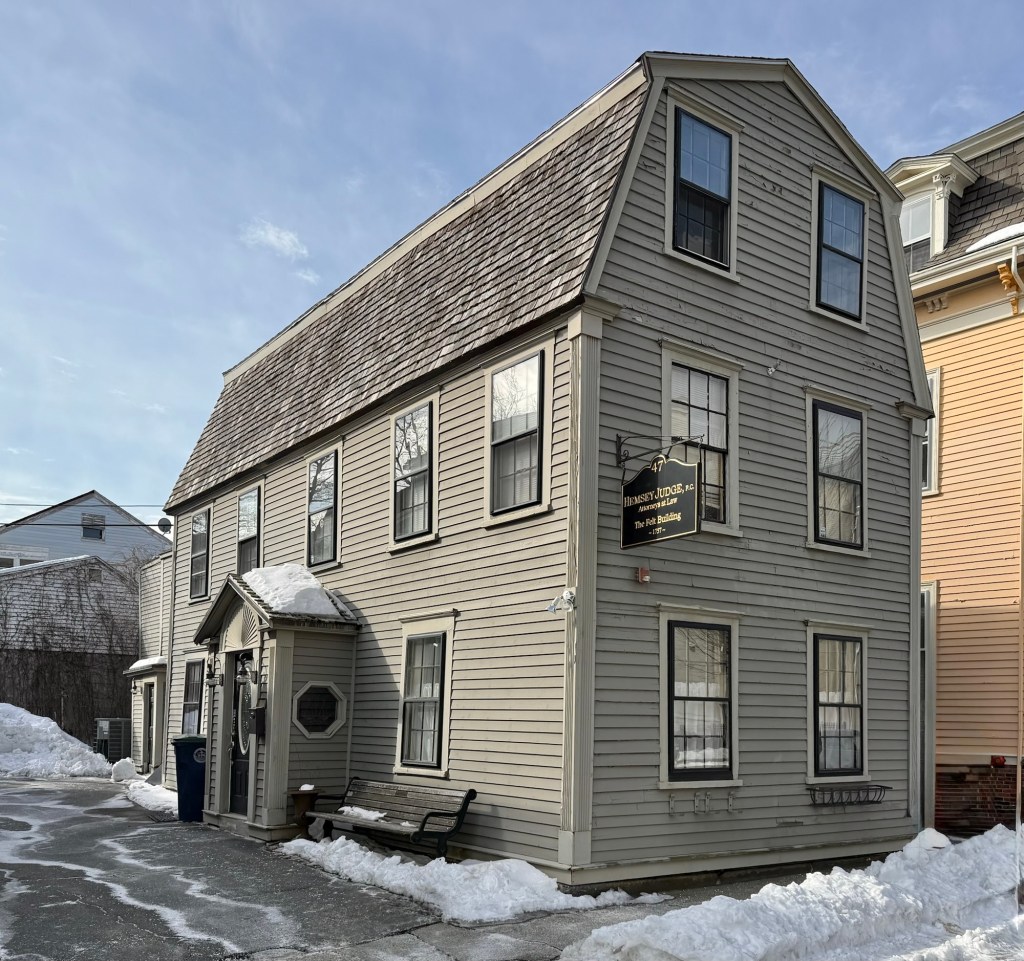
Captain John Felt House // 1757

The Captain John Felt House on Federal Street in Salem, Massachusetts, is a surviving Georgian residence with ties to the American Revolution. In May 1757, John Felt purchased a lot on present-day Federal Street from Benjamin Lynde for 52 pounds, and began building his family home here. John Felt, a Salem native, worked as a “shoreman,” but was primarily an owner of vessels involved in the coasting trade, also owning a large warehouse to store the goods from the West Indies brought in by his ships. Felt’s title of “Captain” came from his involvement in the Essex county militia. Captain Felt was a key figure in Leslie’s Retreat, also called the Salem Gunpowder Raid, which took place on February 26, 1775, in Salem. British Colonel Alexander Leslie led a raid to seize suspected cannons from a makeshift Colonial armory in Salem. Instead of finding artillery, Leslie encountered an inflamed citizenry and militia members ready to stop his search. These colonists flooded Salem’s streets, preventing Leslie’s passage and forcing him to negotiate. Ultimately, the Salemites convinced the British Regulars to stand down and return to Boston. No shots were fired, and no one was seriously injured—but tensions were high and a skirmish was evident until Captain Felt stated, “If you do fire, you will all be dead men.” Had a soldier or a colonist gone rogue and fired their weapon, the American Revolution might have begun in Salem, and not Concord just weeks later. After the Revolution, Captain Felt sold his house and moved to present-day Danvers. After centuries of successive ownership by merchants, today, the Felt House is used (at least in part) as professional law offices.

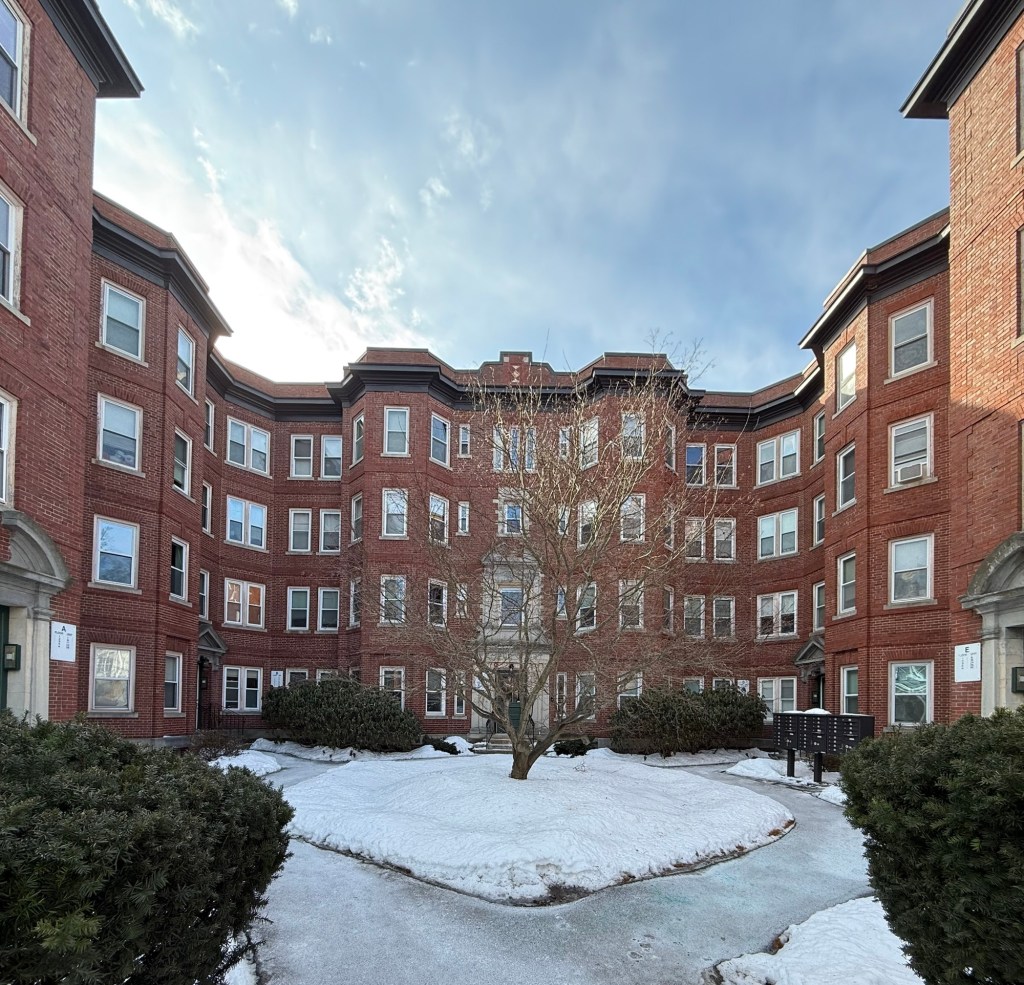
Temple Court Apartments // 1912

Constructed in 1912, Temple Court at 15 Lynde Street was erected on the site of two earlier buildings during a period of great population growth in Salem. The parcels here were acquired by Aroline C. Gove (1857-1939), a prominent local property-owner and developer between 1908 and 1911. Ms. Gove was a prominent Salem citizen and daughter of notable inventor and businesswoman Lydia Pinkham. With a business-oriented mindset like her mother, Aroline hired architect Harry Prescott Graves of Lowell to furnish plans for an apartment building on this site. Completed in 1912, the apartment building, known as Temple Court, included 36 units with two-, three-, and four-room suites with a live-in janitor. The building is unique for Salem as a courtyard style building, more common in Boston and Brookline. The building’s large mass is broken up by its setback with the U-shaped form and central landscaped courtyard, series of projecting octagonal bays, and multiple entrances. Temple Court was converted to condominiums in the 1980s.

William Hunt Double-House // c.1858

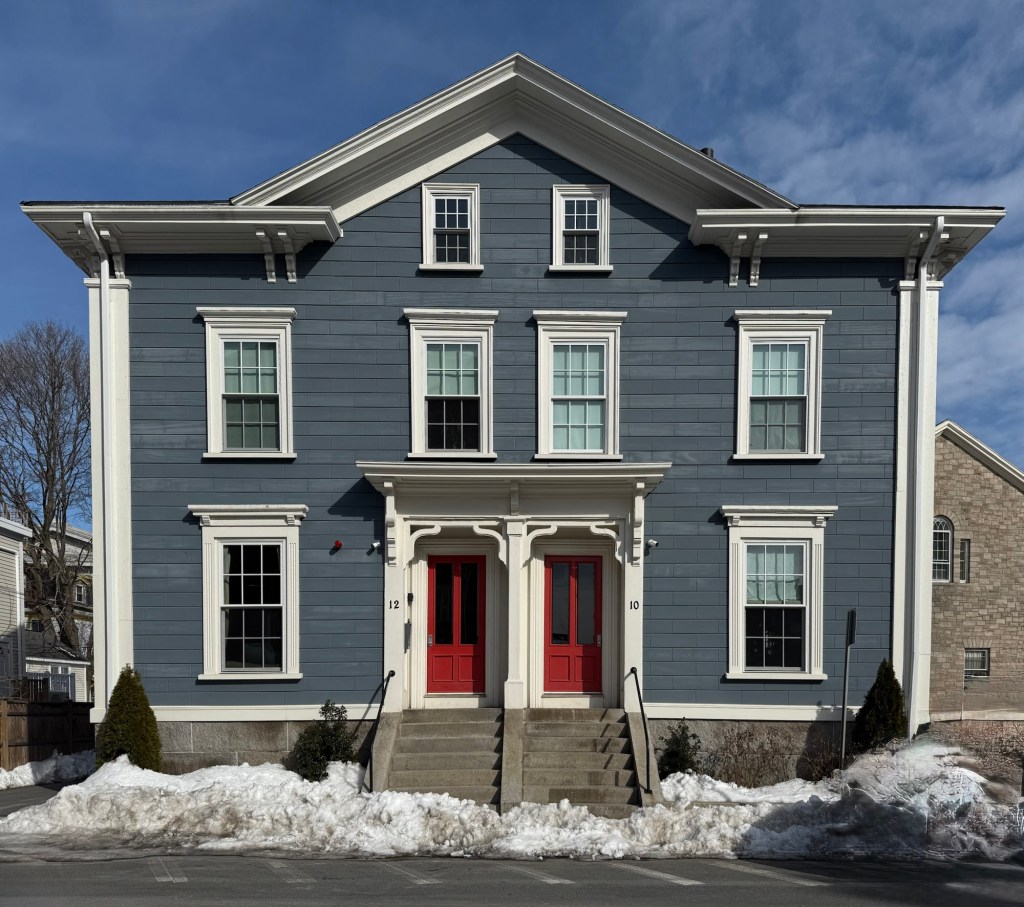
The William Hunt Double House, located at 10-12 Lynde Street in Salem, is a 2 ½ story wood-frame Italianate building that showcases the emerging presence of the Victorian style on residential buildings in the mid-19th century, even in cities with strong support for Colonial and Federal period styles. The two-family house was built by William Hunt, a prominent Salem merchant, as a rental property with occupants of the building in 1859 including: John W. Lefavour, a cashier, and Benjamin F. Faber, a merchant. The property remained in the Hunt Family for three generations, and was converted to a boarding house in the 1930s. In November 2018, a fire gutted much of the building, displacing the residents, and concerned neighbors as to the future of this great property. Luckily for us, the owners hired  Seger Architects, Epsilon Associates and Groom Construction to fully restore the building to its former glory. The resulting project won a Salem Preservation Award and received Federal and State Tax Credits to offset restoration costs. What a great success story!

Salem Water Company Offices // 1879

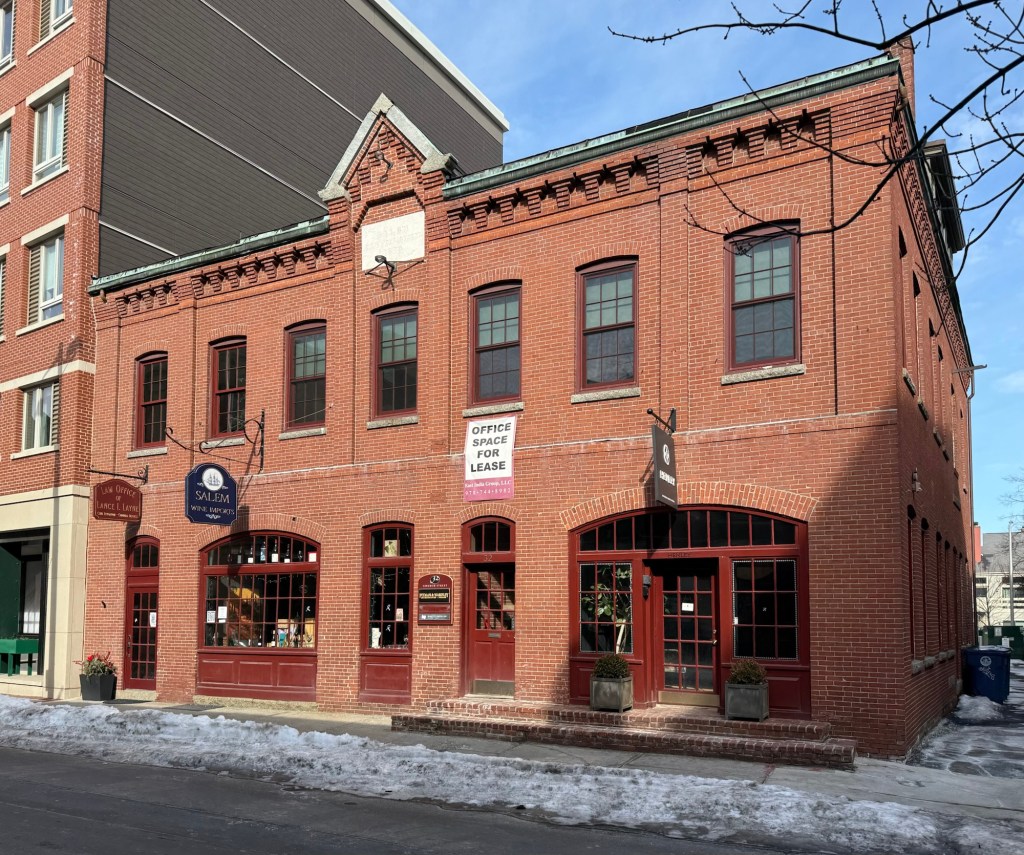
Salem, Massachusetts, was first settled by Europeans in 1626, and it would take 170 years until in 1796, an organization of citizens was established for the purpose of supplying the inhabitants generally of Salem and Danvers with pure spring water. The Salem and Danvers Aqueduct Company was incorporated in 1797  “for the purpose of conveying fresh water by subterraneous pipes into the towns of Salem & Danvers.” As Salem grew, the need for a more central water district and distribution network became a necessity for the health and prosperity of the city. A 1864 law allowed Salem to construct its own water works, and it formed a Board of Water Commissioners who designed and constructed the system. From this, funding was acquired and paid for the laying of tens of thousands of feet of subterranean water distribution pipes connecting the reservoir to buildings and hydrants in Salem. Offices of the Waterworks were scattered and obsolete until 1877, when funds for the construction of this structure at 32-34 Church Street were set aside as the new Water Department Offices. Completed by 1879, the building is a great example of a Romanesque/Italianate style masonry structure with corbelled cornice and arched openings. According to the city directories, this building continued to operate as the Salem Water Works into the late 1930s. By 1945, it was the headquarters of the United States War Price & Rationing Board. In 1964, it held a number of city offices including: Civil Defense headquarters, Fire Department headquarters, Licensing Board, Planning Board, and the City Veterans Service, before being sold by the City of Salem to private ownership in 1976.

James Roope House // 1916

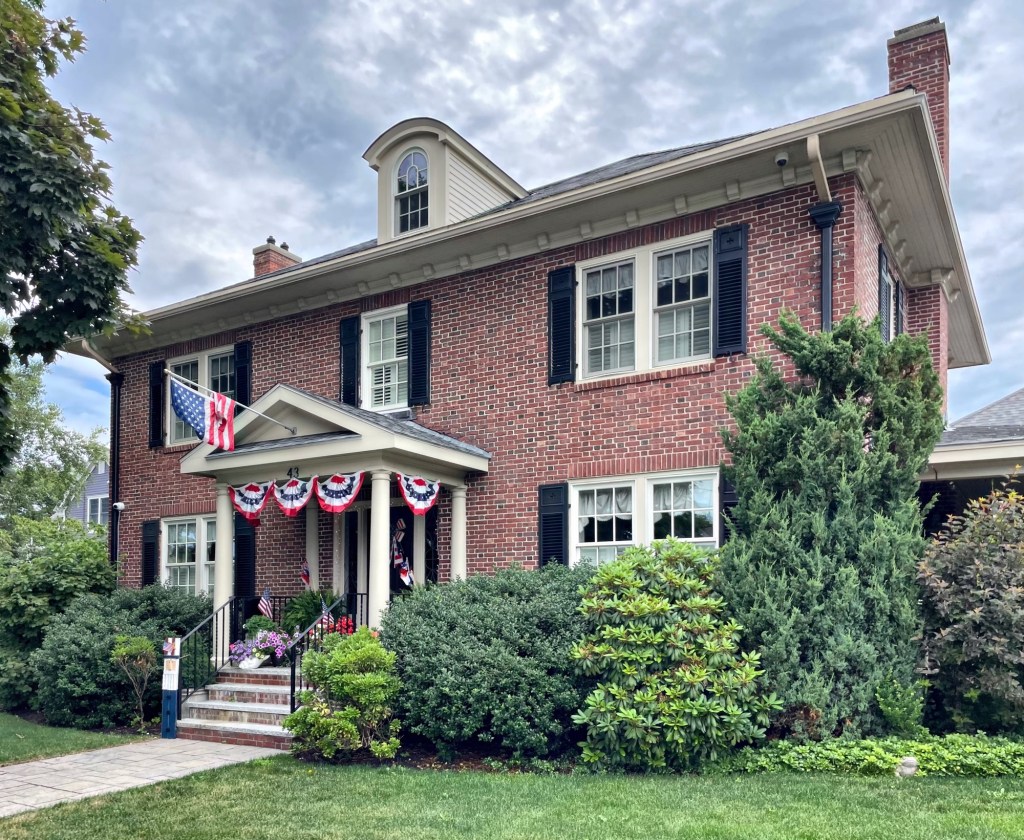
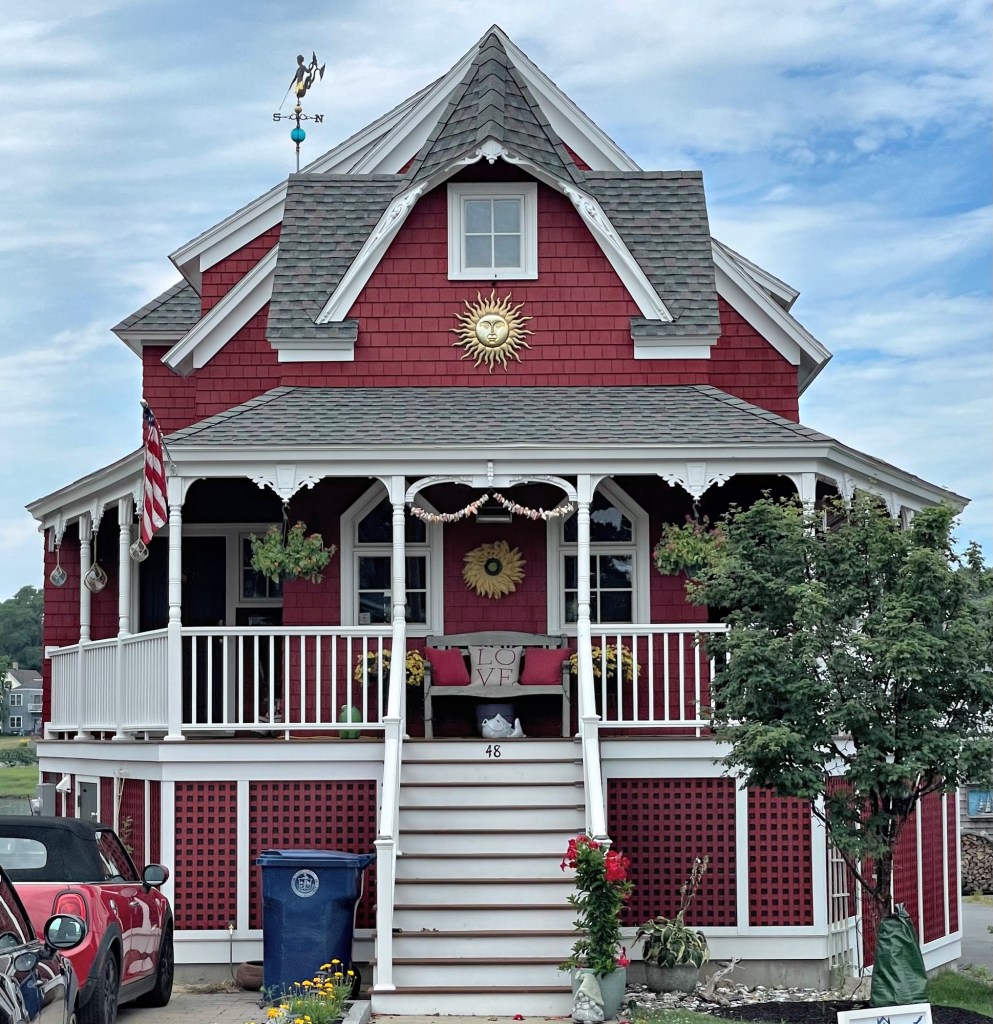
The only historic brick residence located in the charming Salem Willows neighborhood of Salem, Massachusetts is this stately Colonial Revival house at the corner of Bay View and Juniper avenues. The brick dwelling was constructed in 1916 for James Roope, President and Treasurer of the Salem Lumber Company. Designed by Boston architect, Gordon Robb, it is two stories high, with a shallow hipped roof. The central entry has leaded sidelights and a pedimented porch with trellises at the sides.

Streeter Cottage // 1882

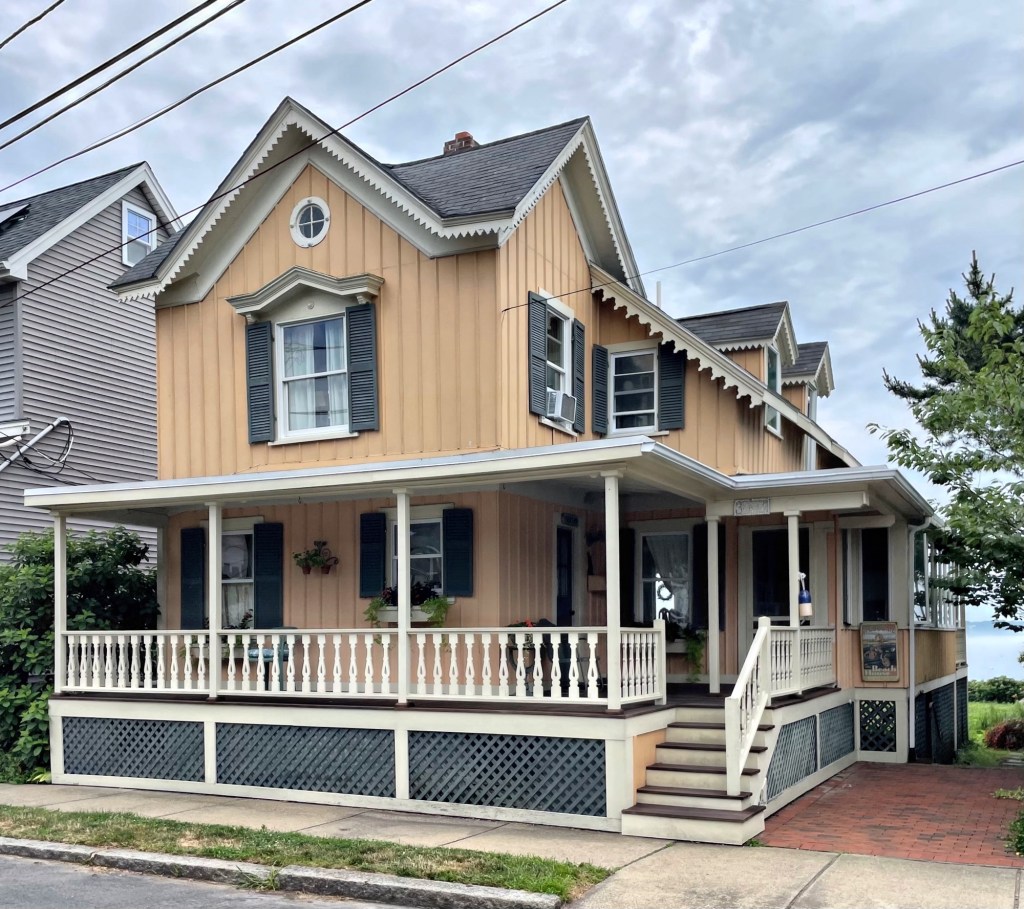
In 1881, Gilbert Streeter and his wife Rebecca purchased a small house lot in the Salem Willows for a summer cottage for them to retreat across town to during the warmer months. Gilbert Streeter was an amateur historian, businessman, publisher of the Salem Observer and was able to afford a second residence in his hometown. The Streeter cottage was built by 1882 and stands out not only for its excellent state of preservation, but for its unique architecture. The cross-gabled form cottage is covered in board-and-batten siding with bargeboards lining the eaves.

William Bates Summer Cottage // 1885

While Salem is best-known for its First Period and Federal style buildings, the Salem Willows neighborhood features some of the finest Victorian summer cottages in the Boston area. This cottage was built in 1885 by William Marston Bates (1820-1912), a Salem-based dentist, as his summer retreat when not in the office. The Stick style cottage has a steep gable roof with jerkinhead clip at the facade and a wrap-around porch with decorative jigsawn bracketed details. The house is a well-preserved example of the style, examples of which are becoming less-and-less frequent in recent years.

Salem Willows Park // 1859

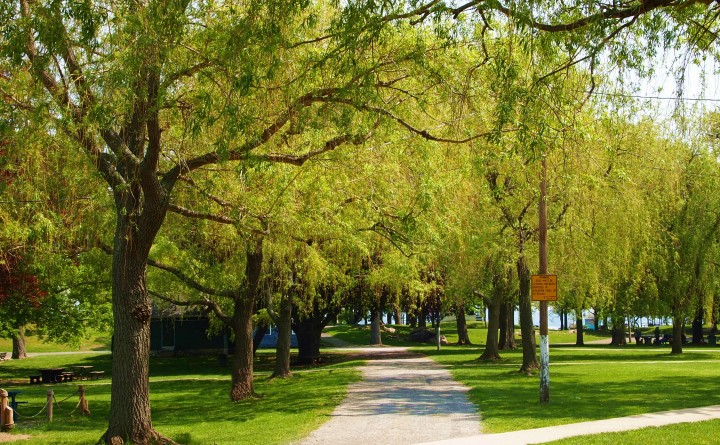
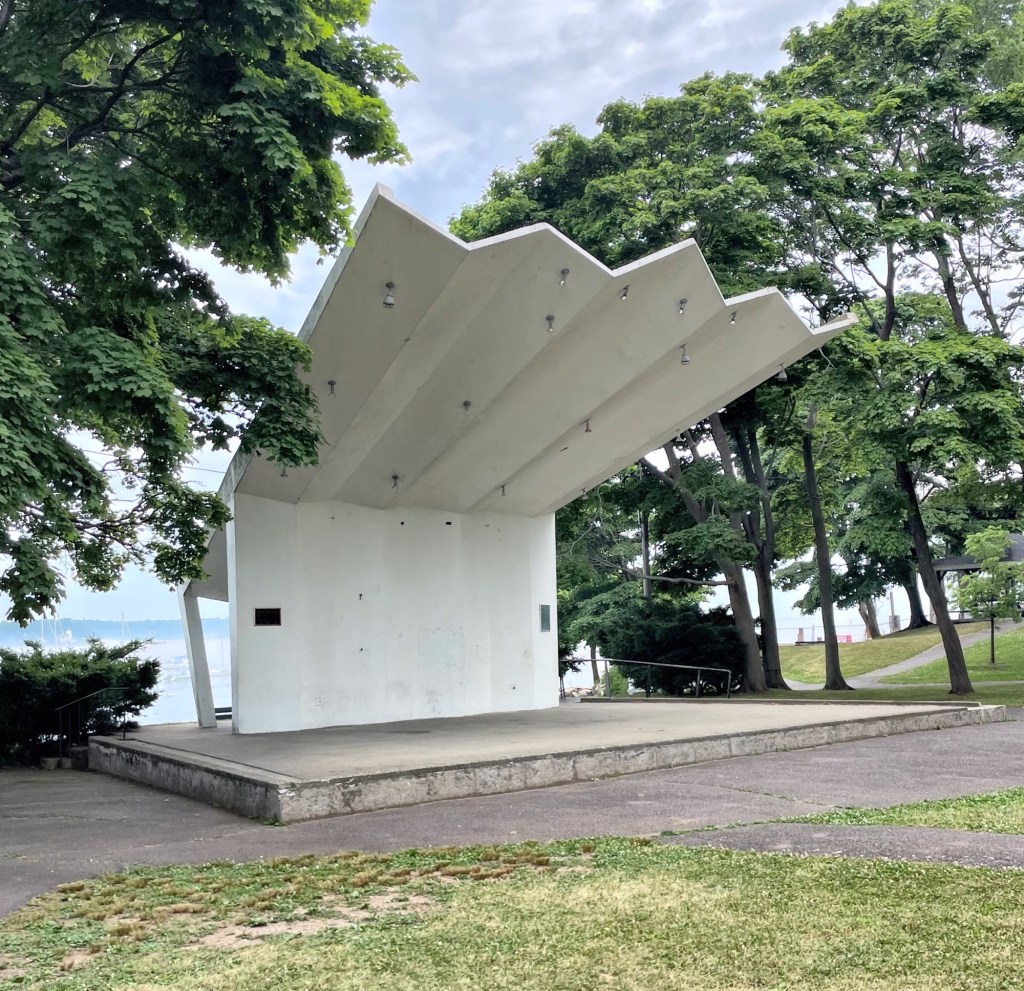
The Salem Willows neighborhood of Salem, Massachusetts sits at the extreme tip of Salem Neck, which juts out into the Atlantic Ocean. The area here was sparsely used until the 19th century, when a smallpox hospital was built here in 1800, mainly used for sailors to recover and be treated. Soon after, a man by the name of Hezekiah Williams planted rows of Willow trees for the enjoyment of patients, which would give the area (and later park) its name. The hospital burned in 1846. Part of the land on the Neck became a park, and a former farm known as the Derby Farm, was purchased and redeveloped with new streets and house lots laid out for summer cottages in the early 1870s. The neighborhood became known as Juniper Point. The Salem Willows Park was enhanced in the late 19th and early 20th centuries with bathing facilities, pavilions, and amusement and commercial buildings. The park is today well-maintained by the City of Salem and is an important protected site that documents the city’s history of the 19th and 20th centuries. I was also pleased to find the 1965 Memorial Shell Band Stand with accordion metal roof designed by the architectural firm of Robert Charles, Associates.

Ropes Mansion // c.1727

The Ropes Mansion in Salem was constructed in 1727 for merchant Samuel Barnard, a native of Deerfield who moved to Salem and made a fortune in trade. Samuel died in 1762, and the property was willed to his nephew and brother. The property was sold in 1768 to Judge Nathaniel Ropes II. Ropes’s short tenure as an associate justice on the Superior Court of Judicature, the highest court in the colony, was marked by a significant controversy over how judges were paid. Because these royal judges were effectively at the mercy of the colonists, the British proposed paying them directly, through the already-unpopular colonial taxes. This action further outraged Massachusetts patriots, who feared that the judges would become partial to the Crown over colonial interests. Due to this significant backlash from colonists and Patriots, there was significant pressure on these judges to not accept their royal salaries, including Judge Ropes, who promised that he would not accept the royal salary. Although he had refused his royal salary, he nonetheless held Loyalist views, and his position as a high-ranking judge made him a symbol of British power in the colony. According to tradition, in March 1774 an angry mob attacked the house, throwing mud, sticks, and rocks at the windows and calling for Ropes to renounce his allegiance to the Crown. However, at the time Nathaniel was in his bed, gravely ill with smallpox, and he died the following day, with the stress from the mob supposedly being a contributing factor in his death at just 47 years old. With the death of the last two unmarried Ropes sisters, Mary and Eliza, the house and grounds were bequeathed to the Essex Institute (now the PEM) by 1907 for the purpose of establishing a school of botany, as a perpetual memorial to the Ropes family. The stunning public gardens there were laid out in 1912 John Robinson.