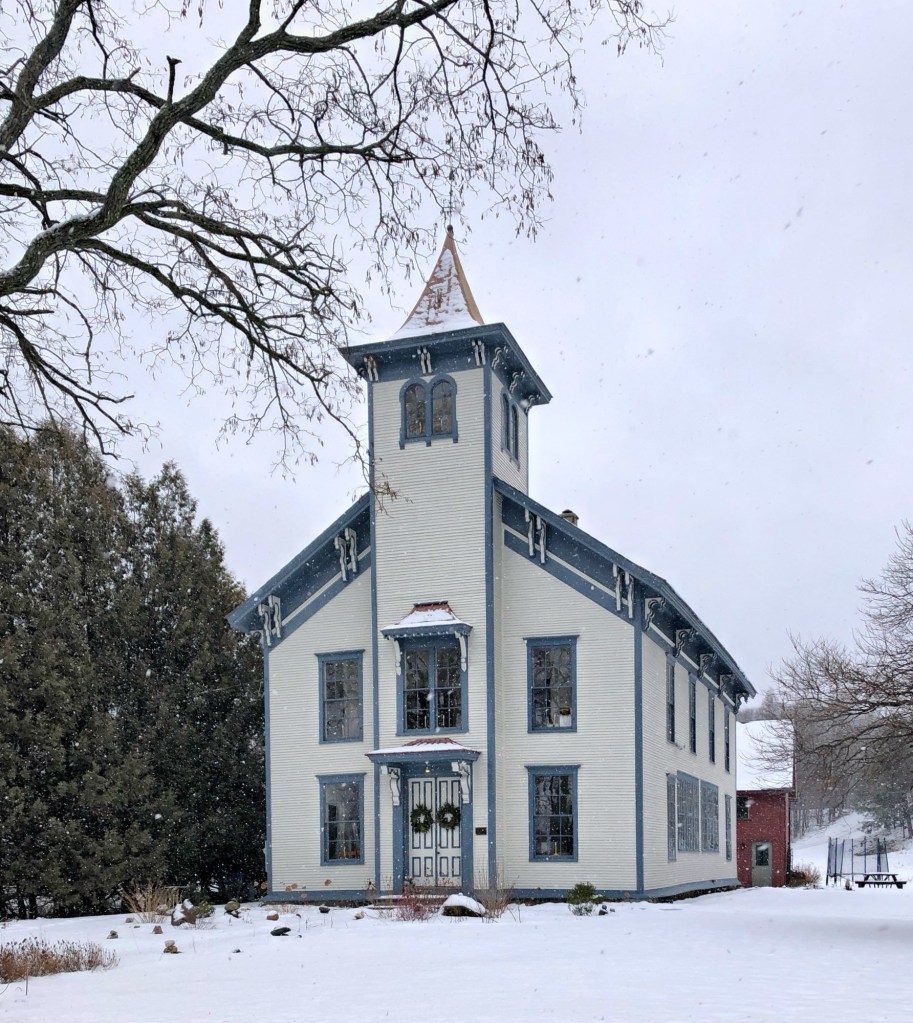
Jonesville Academy is a historic schoolhouse located in the village of Jonesville, in the town of Richmond, Vermont. The large, wooden schoolhouse was constructed around 1868 in the Italianate style with center entry tower, bracketed cornice, window and door hoods, and round arched windows, all hallmarks of the style. The building was constructed at the height of the area’s success as an industrial village, and operated as a high school and later as an elementary school until 1955, when schools in Richmond were consolidated. After the school closed, the building operated as a grange hall for a number of years until it reverted back to private ownership, and is today a single-family residence.
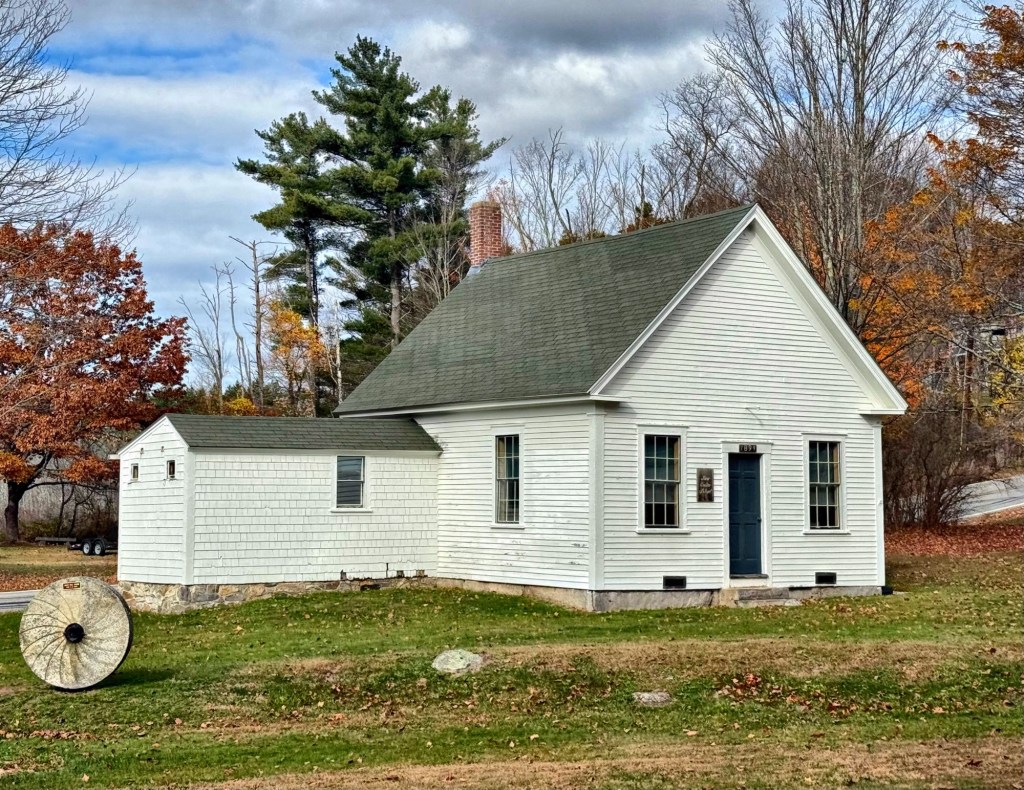
One of the many one-room schoolhouses of rural New England, this late-19th century example can be found in the town center of Bow, New Hampshire. The vernacular schoolhouse served hundreds of pupils in the northern part of town, from its construction in 1894 until 1924 when it was moved to its present location near the old Town Hall, where it was in use until 1945. In 1948, the School District sold the school to the nearby Baptist Church for Sunday school classes. The Town bought the building from the Church in 1968 and restored it as an historic site. Today, the rebuilt Snow Roller used in the early 1900s to pack snow down for passage of horse-drawn sleighs and wagons, and a mill stone, sit nearby the old schoolhouse as sort of an open-air museum.
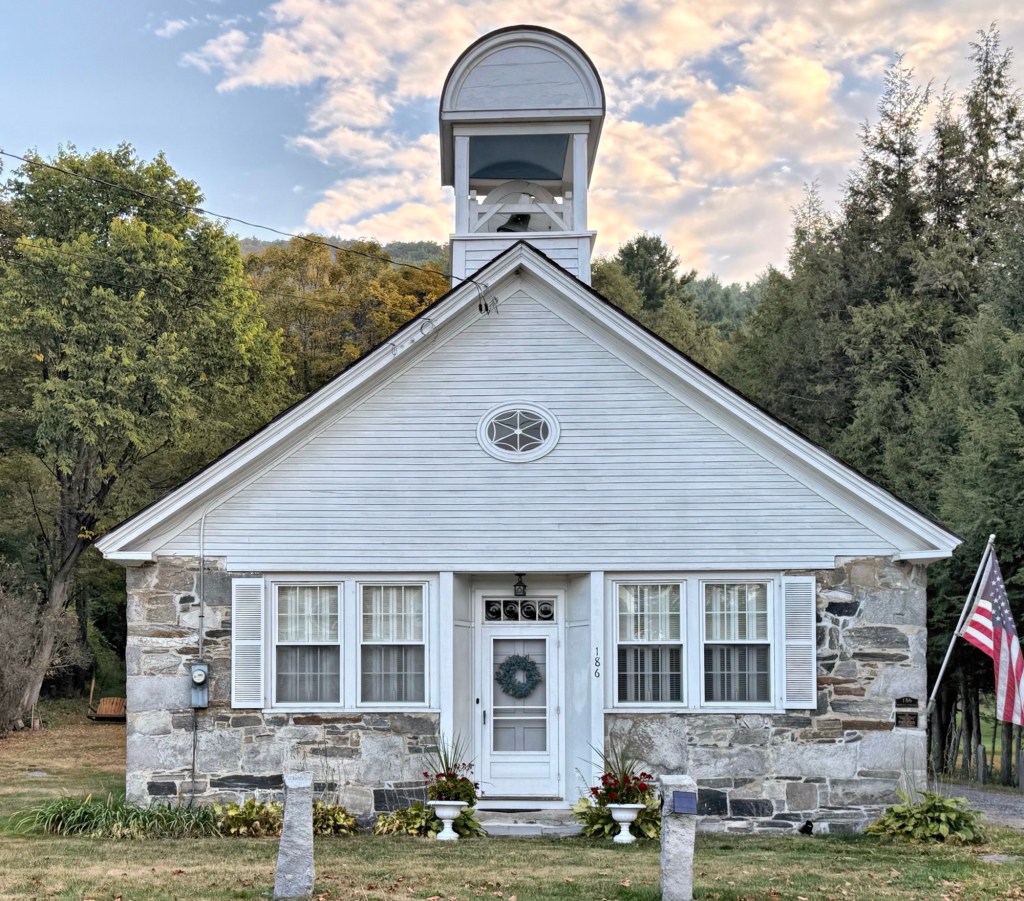
Across the street from the Gideon Lee House in the Stone Village of Chester, Vermont, this historic schoolhouse is one of the oldest in the state and one of the few extant schoolhouses built in stone in New England. The Stone Village Schoolhouse is a rare example of a snecked ashlar building, where the construction method is said to have been brought to the area by masons from Scotland and Ireland which is known there as ‘Celtic Bond’. Oral tradition state that Scottish masons from Canada introduced the technique to local masons while erecting a mill in nearby Cavendish in 1832. Local Chester resident, Dr. Ptolemy Edson became such a fan of the building that in 1834, he had his home, the first stone building in Chester, built in this method. He then would influence the rest of the North Village of Chester, where many of his neighbors, as well as the church and schoolhouse, built their structures in snecked ashlar. Completed in 1835, the schoolhouse is a single-story rectangular plan building with the end gables forming a high pitched roof with a bell cupola over the facade’s gable. The snecked ashlar siding appears only on the first floor with traditional wood clapboard siding in the gable above. Built as School No. 3 for Chester, the building converted to residential use in the 20th century, but still maintains its important materiality and the iconic school bell, allowing passersby to understand its original purpose.
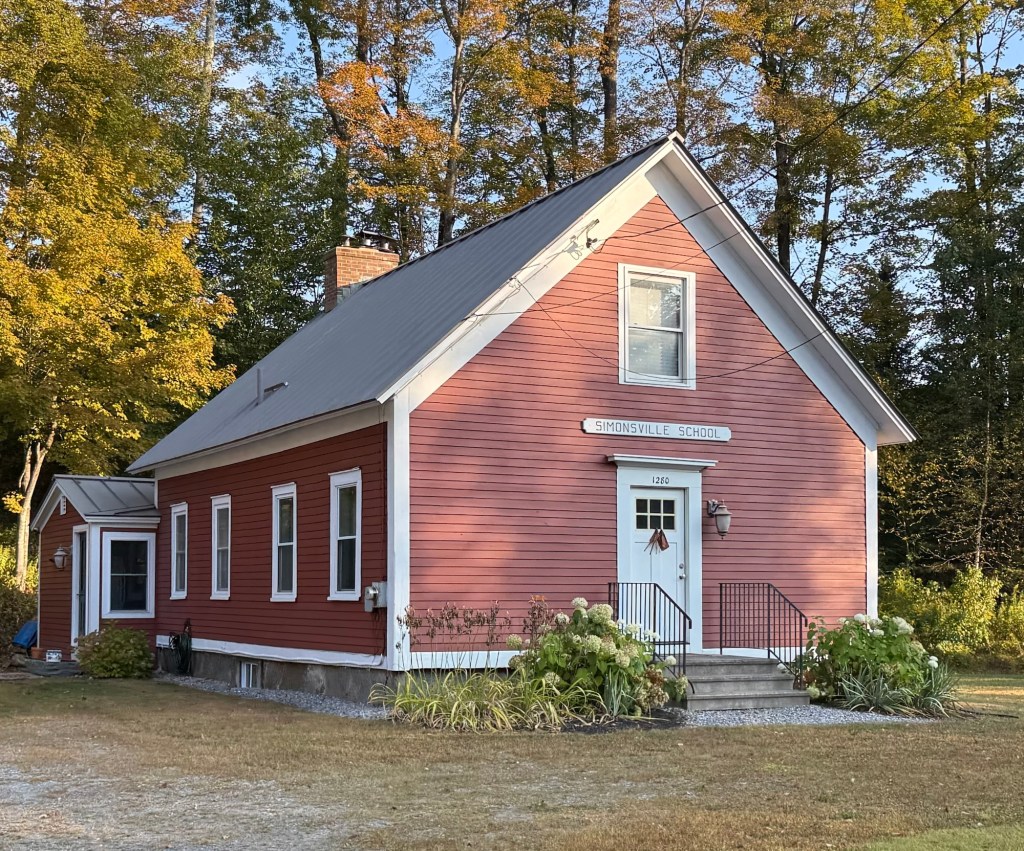
One-room schoolhouses like this example in the Simonsville area of Andover, Vermont, have been commonplace throughout rural portions of New England where children of most ages would share the classroom and be taught everything from basic spelling to math. The Simonsville schoolhouse was built in 1856 and is a typical example of a vernacular one-room schoolhouse in rural New England, with no frills or ornament, just a house of learning. The Simonsville Schoolhouse was converted to a residence sometime in the latter half of the 20th century and has been renovated, keeping the basic form and interior floorboards from the 1850s. The school-turned-home is currently (2025) listed for sale.
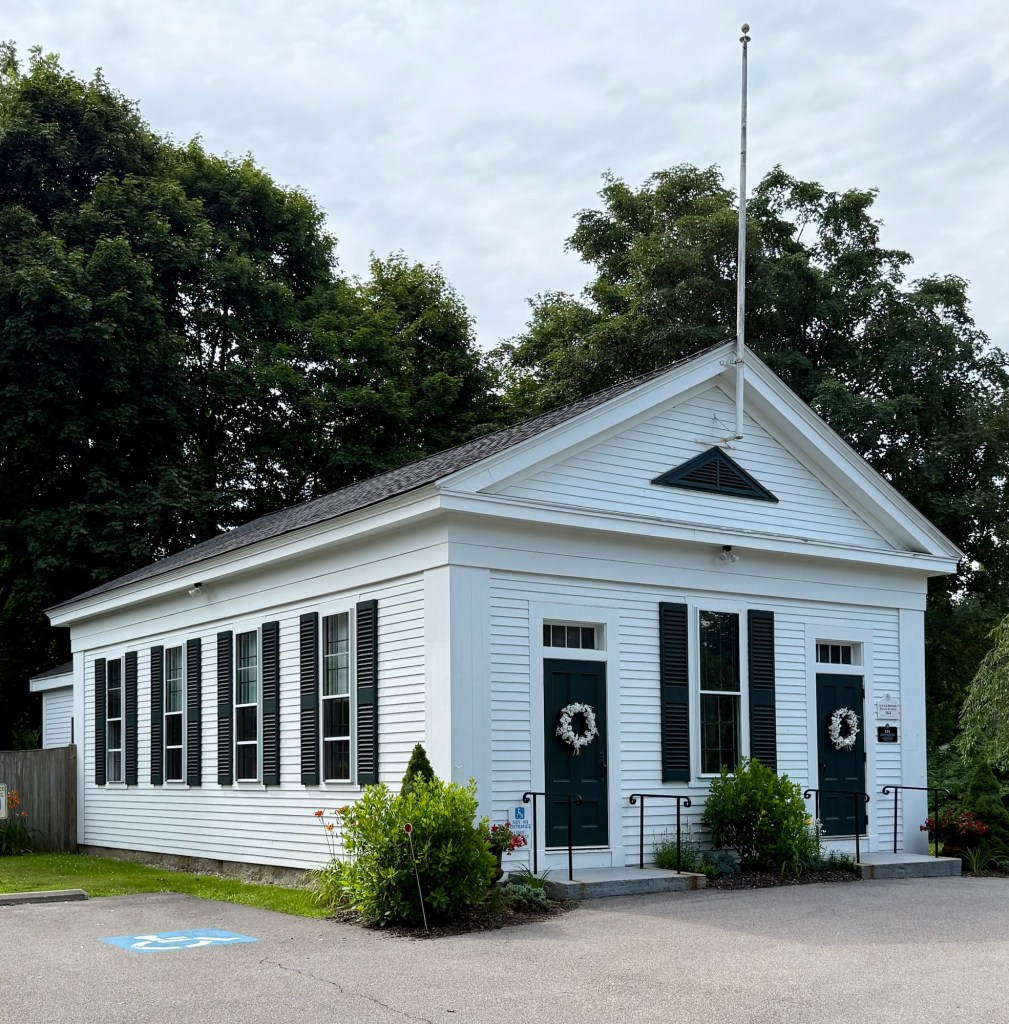
This one-story, well-proportioned schoolhouse is located in the town center of Kingston, Massachusetts. The Faunce Schoolhouse showcases all the hallmarks of the Greek Revival style, including the siting of the building with its narrow end facing the street to showcase the gable roof, corner pilasters, and the entablature completing the gable as a pediment. The school was built in 1844, shortly after the nearby Town House was completed, as a center primary school. Up until the early 1900s, one or two teachers taught first through fourth grades at the two-room school. By 1908, overcrowding at the school led to a town meeting that led to the construction of a new school to provide more space conducive to learning. The Center Primary School remained open, and in 1924, the school was renamed in honor of Walter H. Faunce, a former teacher, superintendent of schools, and town selectman. The building was abandoned as a school in 1926 and stood empty until 1934 when it was sold by the town to the Kingston Grange No. 323 for $400. The Grange occupied the building until 1959 when it sold the building back to the town for $4,000. The building was restored in the 1970s and remains a source of pride for the community to this day offering free meeting and event spaces for local non-profits.
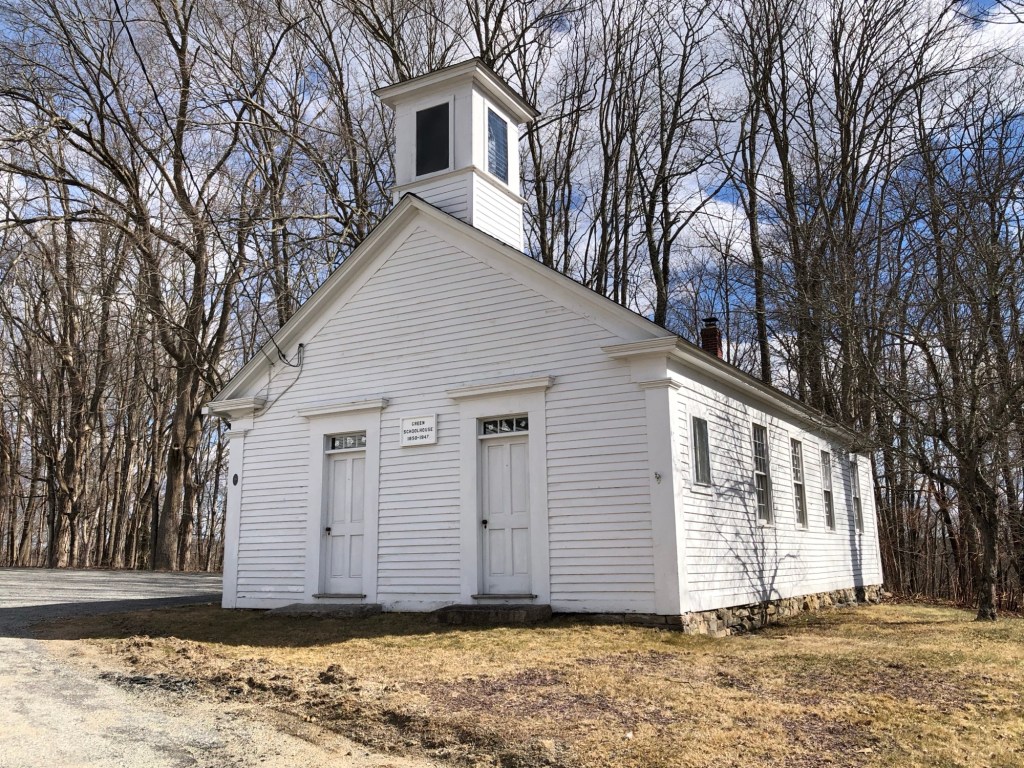
The Center District Schoolhouse of Canterbury, Connecticut, sits behind the village church and is the town’s best-preserved example of a district schoolhouse. Built c.1860, the vernacular, Greek Revival one-room schoolhouse served the central village through the 19th and into the 20th centuries with its twin entry, double-hung windows to allow light and air into the classroom, and a belfry with bell to notify pupils when class was about to start. Like many similar one-room schools in rural New England, pupils attended class with neighbors and siblings in the small, intimate classroom of varied ages.
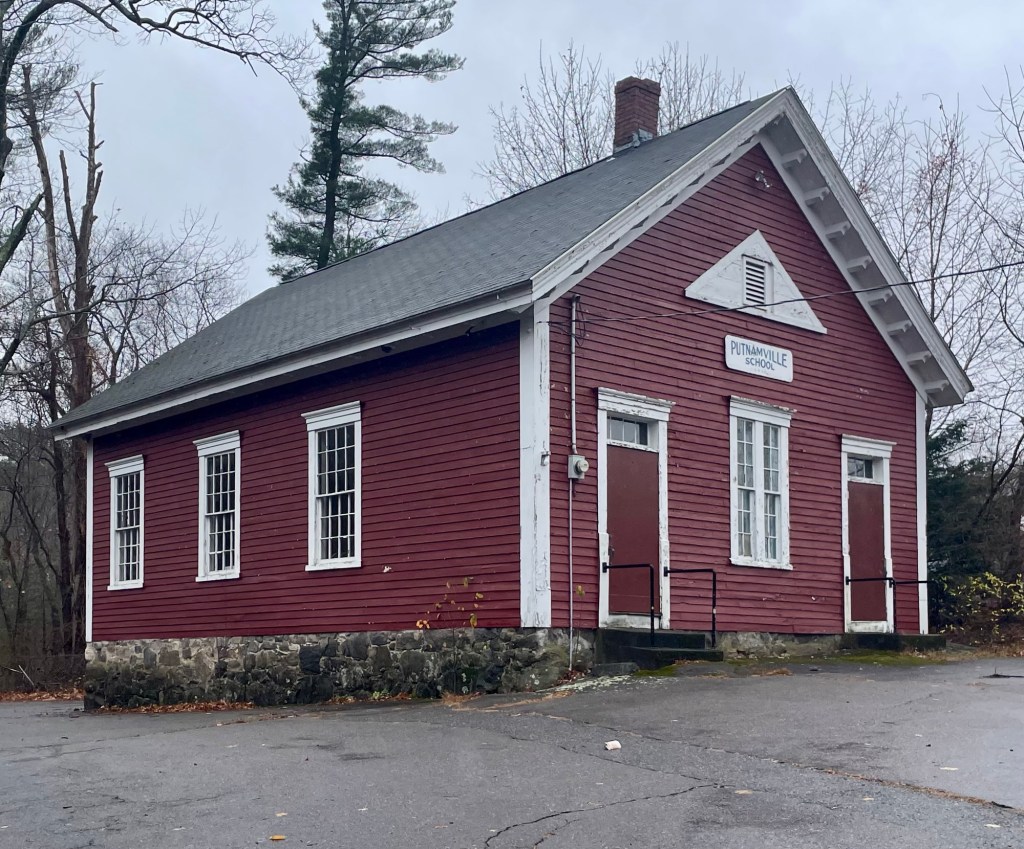
Diminutive in scale, the one-room Putnamville Schoolhouse at 224 Locust Street in Danvers, Massachusetts, showcases a stark difference in scale and design to the later Wadsworth and Tapleyville schools in town. Built in 1852, the transitional Greek Revival and Italianate style schoolhouse served the more rural district number 3 in town. The first class of 42 pupils was taught by Miss Sophia C . Appleton who ranged from 5 to 15 years of age. Due to a consolidation of schools in town, the building finally closed in 1974. In 1976, the Danvers Art Association leased the building for years. It is unclear to me at this time what the school is used for. Does anyone know more?
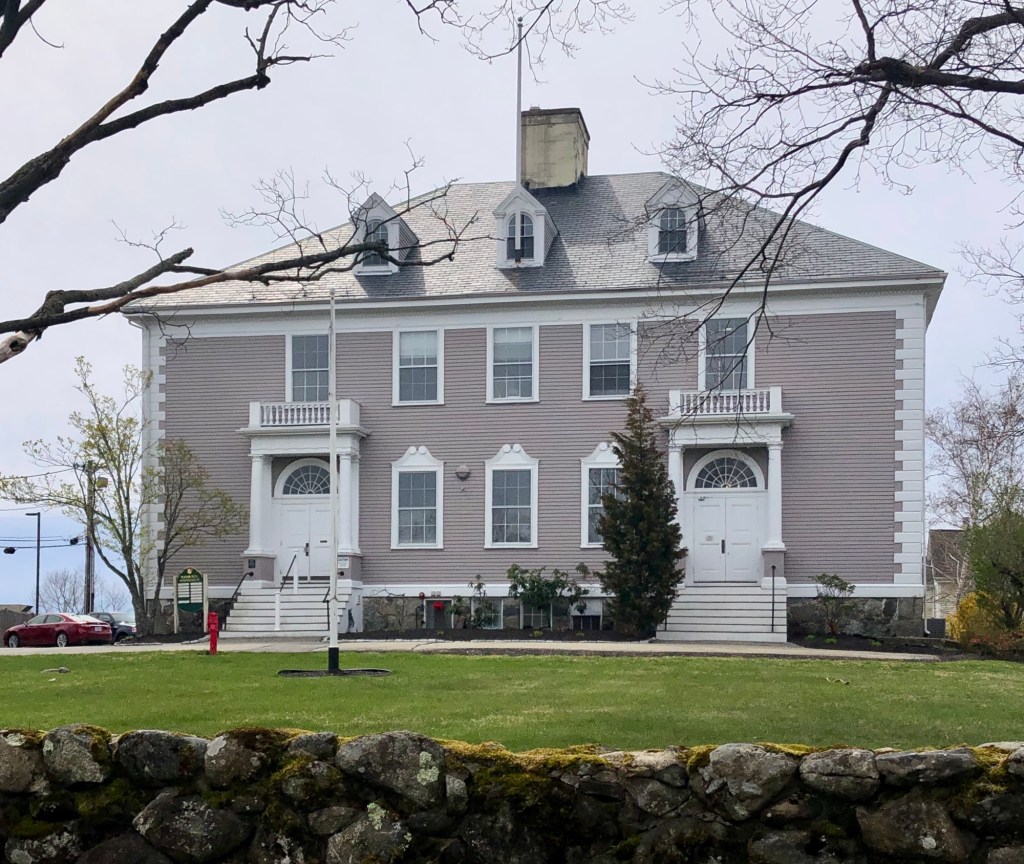
The former Wadsworth School of Danvers, Massachusetts, was built in 1897 as a district schoolhouse for the growing town and is one of the finest examples of a school building designed in the Colonial Revival style in the state. The large building held four classrooms (two on each floor) for over 200 pupils with stairhalls at either entrance and was designed by local architect, William H. Pearce. The school was in use until the 1970s when the town consolidated many of the schools, selling this building as excess. The property was converted to offices and given a preservation restriction by the town, protecting it as a local landmark for generations to come!
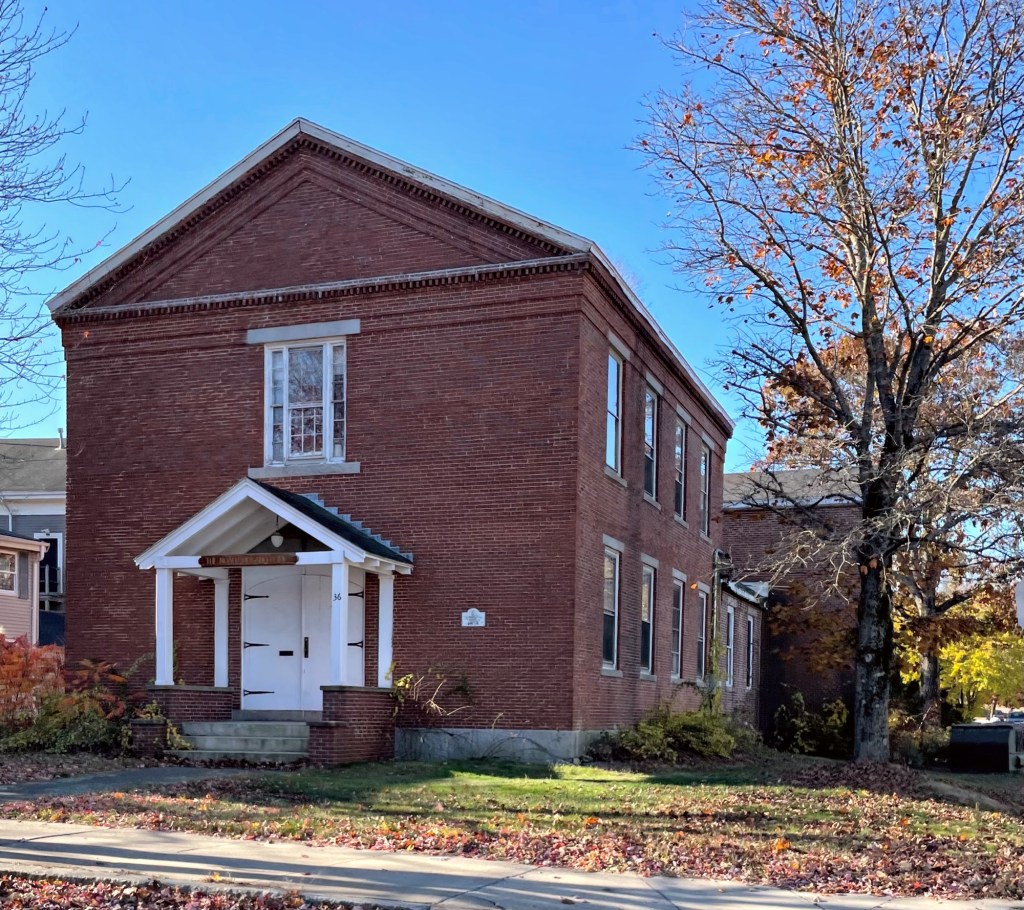
Constructed in 1854 for intermediate and high school classes at a time when one-room schoolhouses were still the rule in Georgetown, this well-preserved brick building is a reminder as to how far education and schooling has come. As nearby one-room schools consolidated and after the new Central School Building (now Georgetown Town Hall) was built in 1905, this Greek Revival school building was converted to town offices. The town was still fairly small, so the offices only occupied the ground floor, and the town rented the upper floor to the All Saints Episcopal Church, who purchased the building in 1917 and occupied it for nearly 50 years. They likely added the Craftsman style entry porch. The church was deconsecrated in 1966, and the building sold in 1970 to the Noack Organ Manufacturing Company, who added an assembly room at the rear.
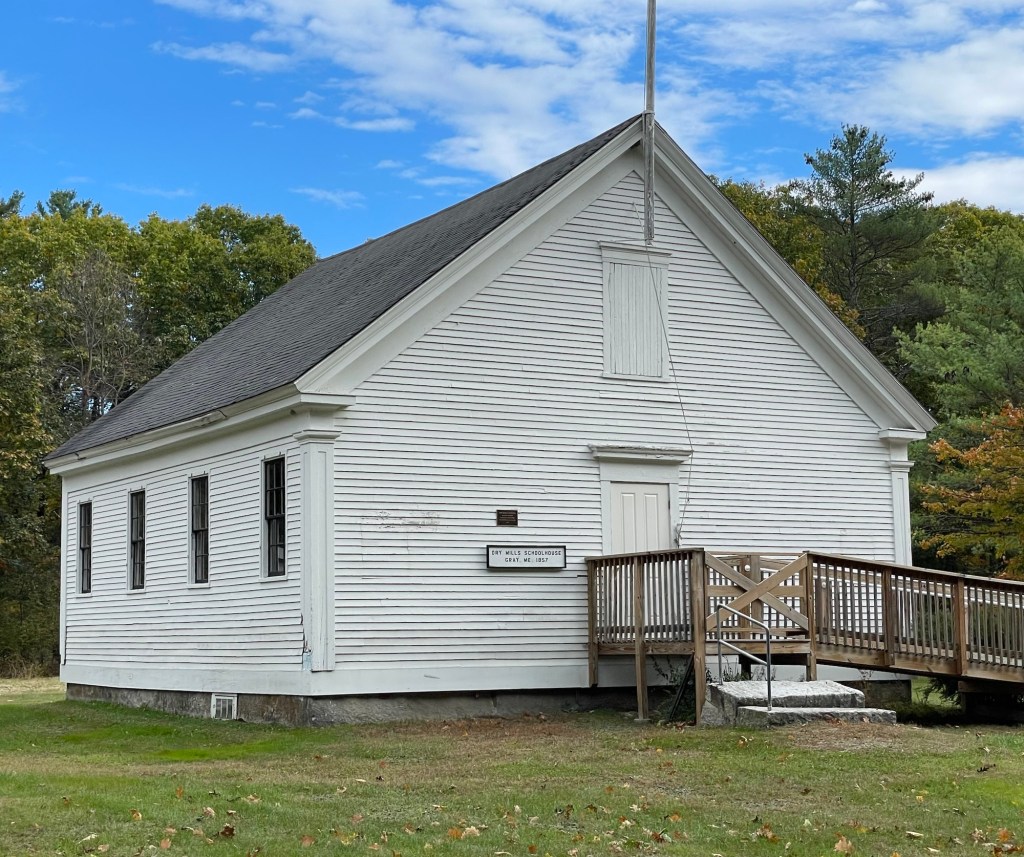
Before the use of automobiles for everyday use, the winding roads in towns all over New England were once lined by charming one-room schoolhouses, to educate children without forcing them to travel too long of distances (like many of our parents and grandparents who had to walk to school uphill both ways!) The Dry Mills School was built by 1858 and is the last one-room schoolhouse of twelve that were built in Gray, Maine. All of the others have been sold by the town, converted into houses, and/or torn down. The school was in operation from before the Civil War until it closed its doors to public education in 1958. In the early 1990’s, at a cost of $12,000, the building and the original granite slab foundation were moved to their current location on the Maine Wildlife Park Road and has been restored to its original appearance thanks to local residents who advocated for the preservation of the building. The interior retains an original chalkboard, period wood stove and furnishings. Today, it is a living museum, attesting to the educational environment in the mid 1800’s and was listed in the National Register of Historic Places.
 Buildings of New England