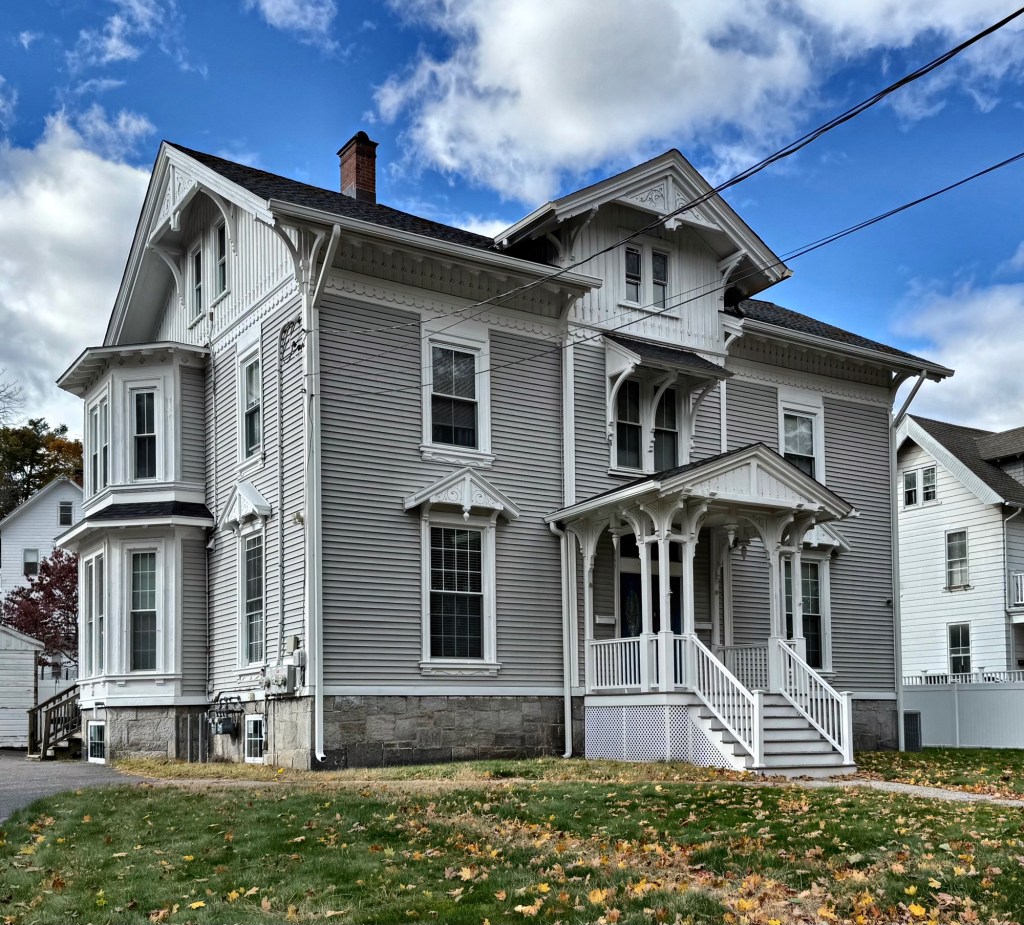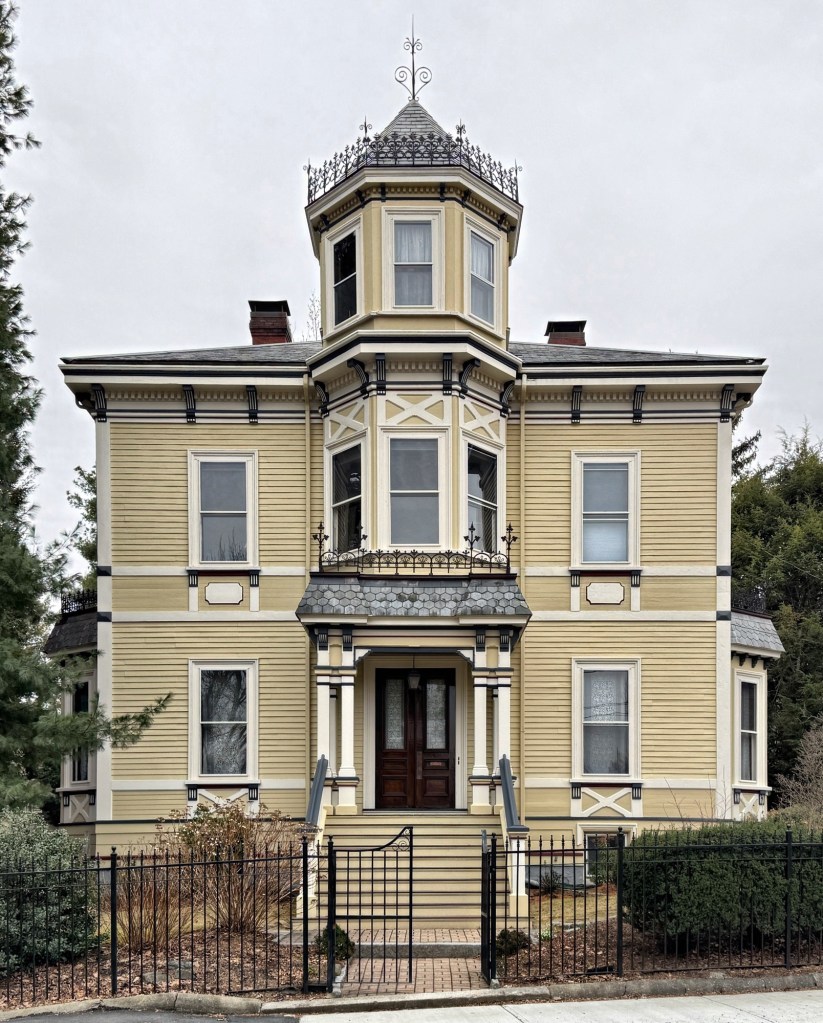
Dr. Albert Phillips House // c.1875

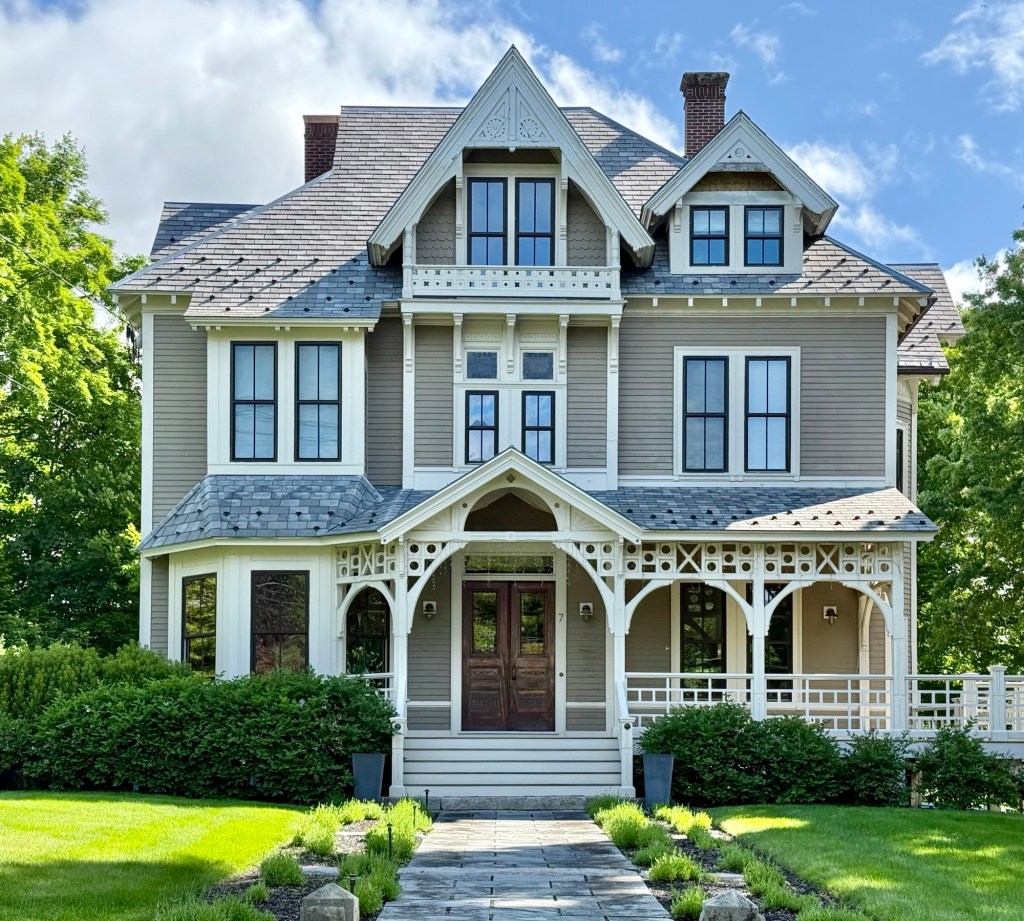
Dr. Albert W. Phillips (1838-1929) was born in Marcellus, New York, the son of immigrant parents from England. He studied medicine in the Midwest and later opened a medical practice in Rockport, Illinois, but in response to President Lincoln’s first call for volunteers, he returned to New York and enlisted as a private in the Union cause. He served as assistant surgeon with the 149th N. Y. Volunteers, where he saw action in many battles, including at Gettysburg. After the war, Dr. Phillips moved to the rapidly developing industrial city of Derby, Connecticut, where he opened a family practice. By the 1870s, he built this Stick style residence on Caroline Street. While working as a doctor of great esteem, Dr. Phillips was elected as the fifth mayor of Derby in 1901 and in 1903, was elected as a state senator.His home on Caroline Street in Derby maintains its unique entry porch and trusswork in the gables.

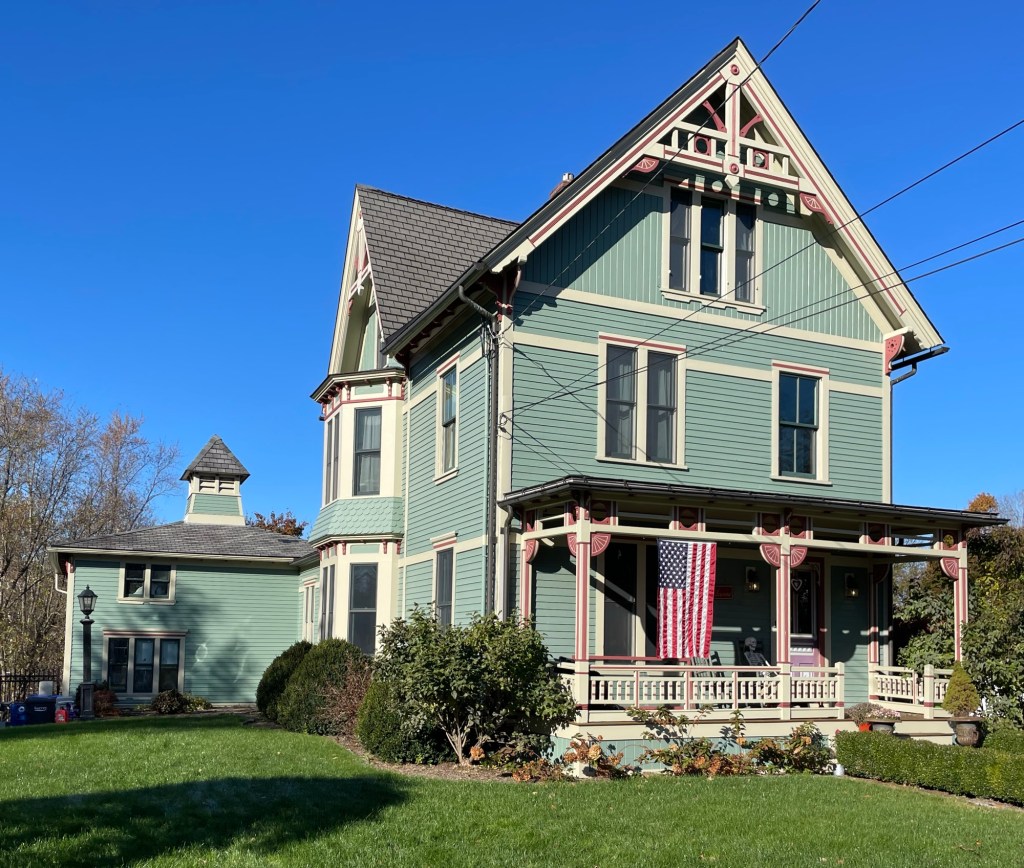
Solon Wilder House // 1883

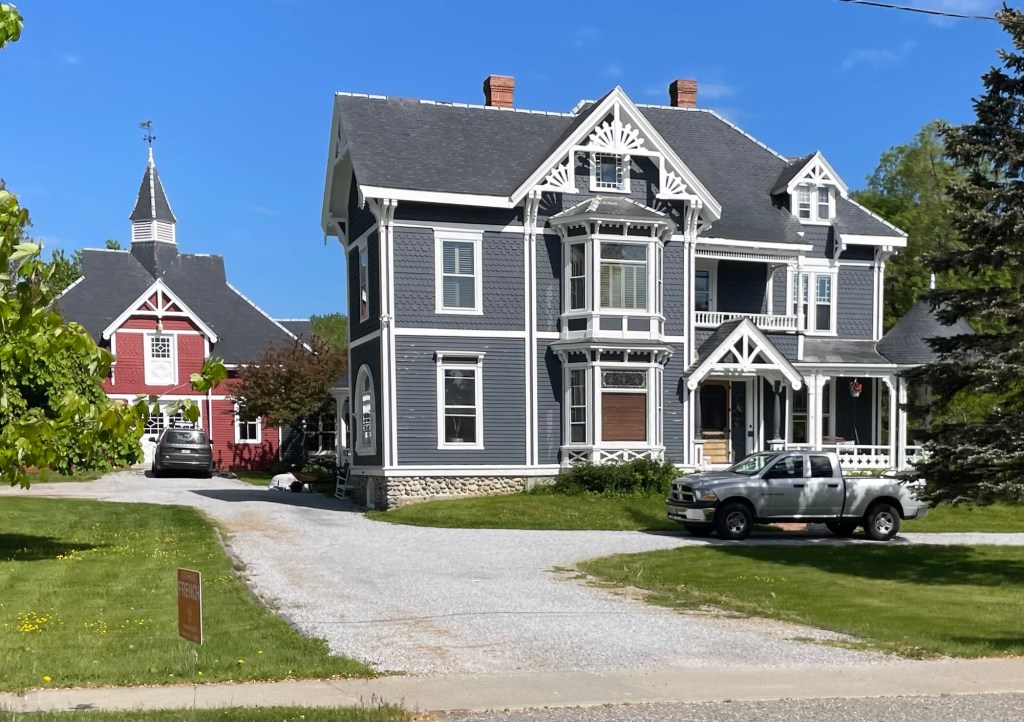
On Main Street in the central village of Lancaster, Massachusetts, the Solon Wilder House stands as one of the town’s finest Victorian-era residences. The house dates to 1883 and was built for Solon Wilder (1828-1889) and his wife, Olive. Mr. Wilder ran a store and served as town treasurer, doing well enough financially to build this handsome, and modern house and rear stable for the time. The Stick style house features a porch with cut woodwork, decorative trusses in gables, and wooden wall cladding interrupted by “stickwork” patterns raised from the wall surface that is meant to symbolize the structural skeleton of the home.

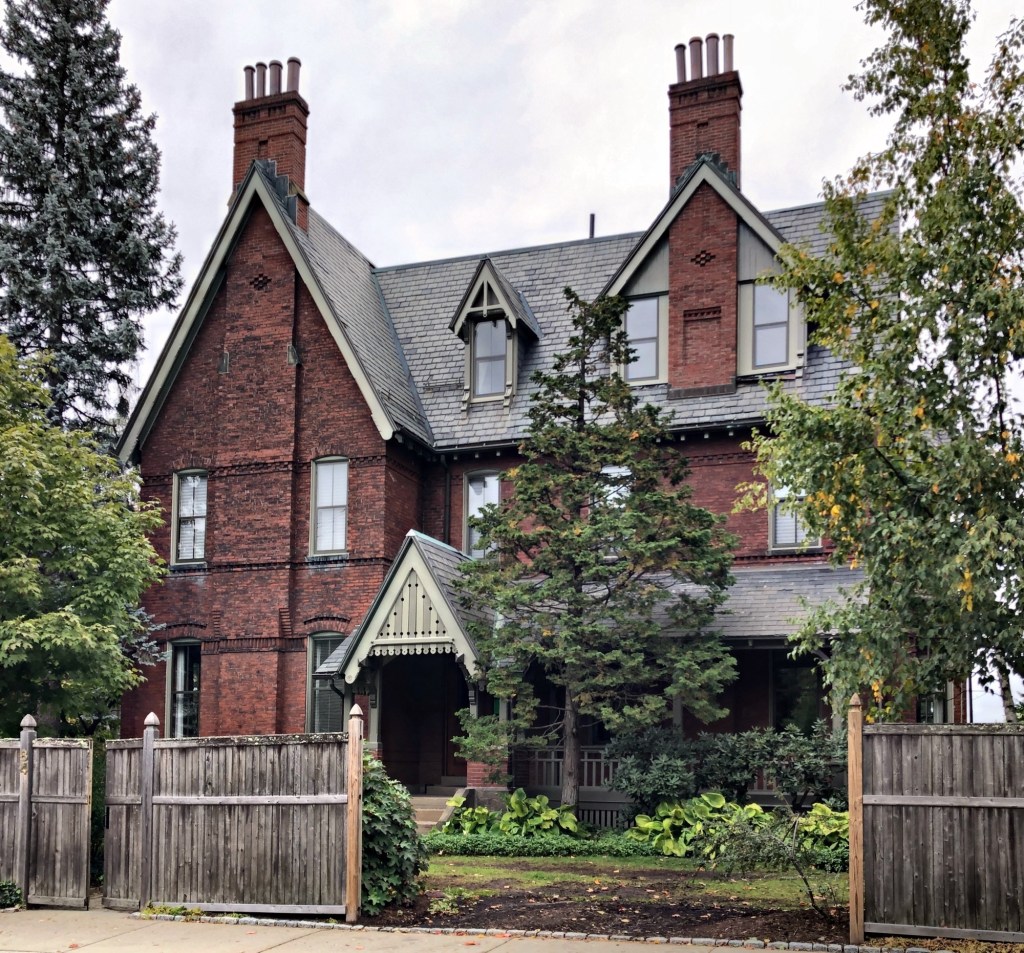
John D. Runkle House // 1875

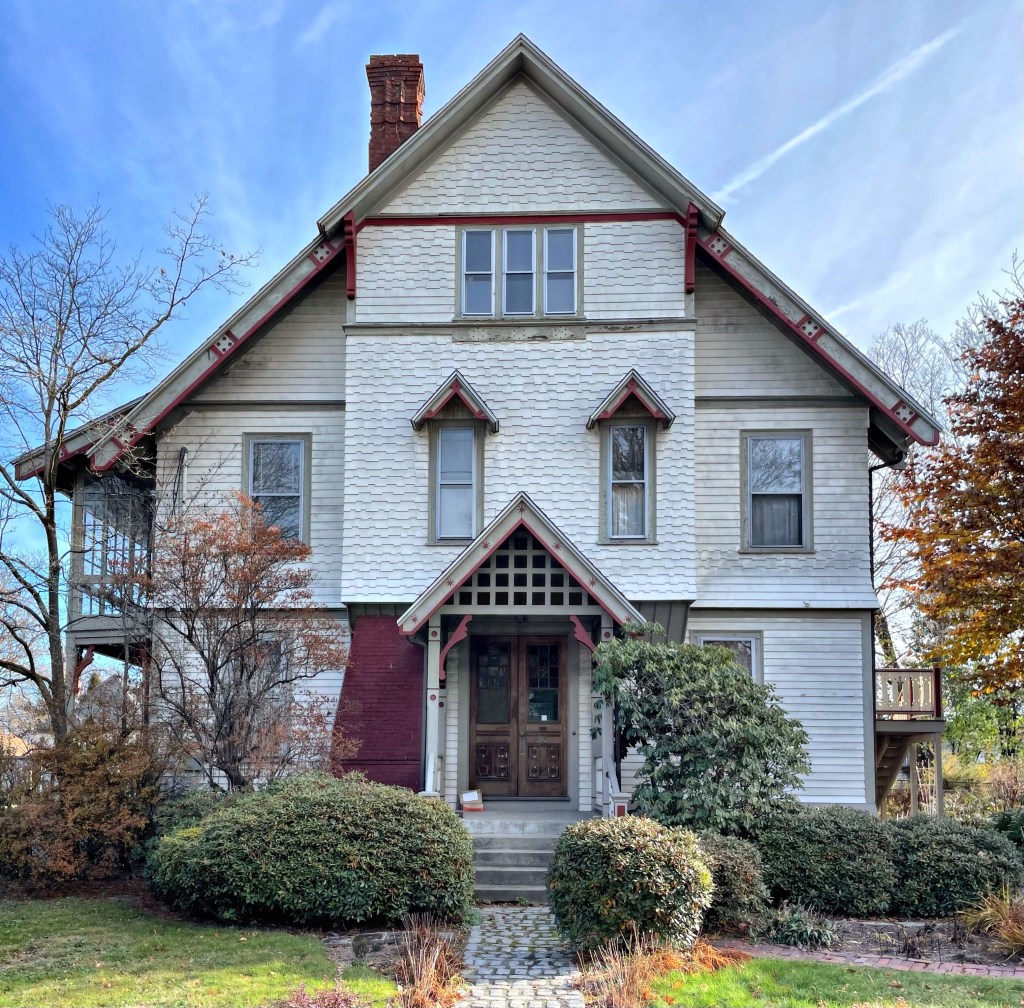
The John Runkle House on High Street, is one of the most interesting houses in Brookline. Built in 1875 for educator John Daniel Runkle (1822-1902), the brick residence excellently blends early Queen Anne form and flourish with Victorian Gothic design elements all with Stick style entry porches and dormers. John D. Runkle was a noted mathematician who later became the second President of the Massachusetts Institute of Technology from 1868 until 1878. This occurred before MIT moved over the Charles to Cambridge, so President Runkle would not have traveled far to the Institute when located in the Back Bay. The Runkle House was designed by the architectural firm of Weston & Rand with an irregular plan of elaborate belt courses in the brickwork that is set against the extremely steep slate roof with tall prominent chimneys and corner turret. Sadly, the residence is largely obscured by a tall wooden fence, but I caught it on a good day that a panel was down.

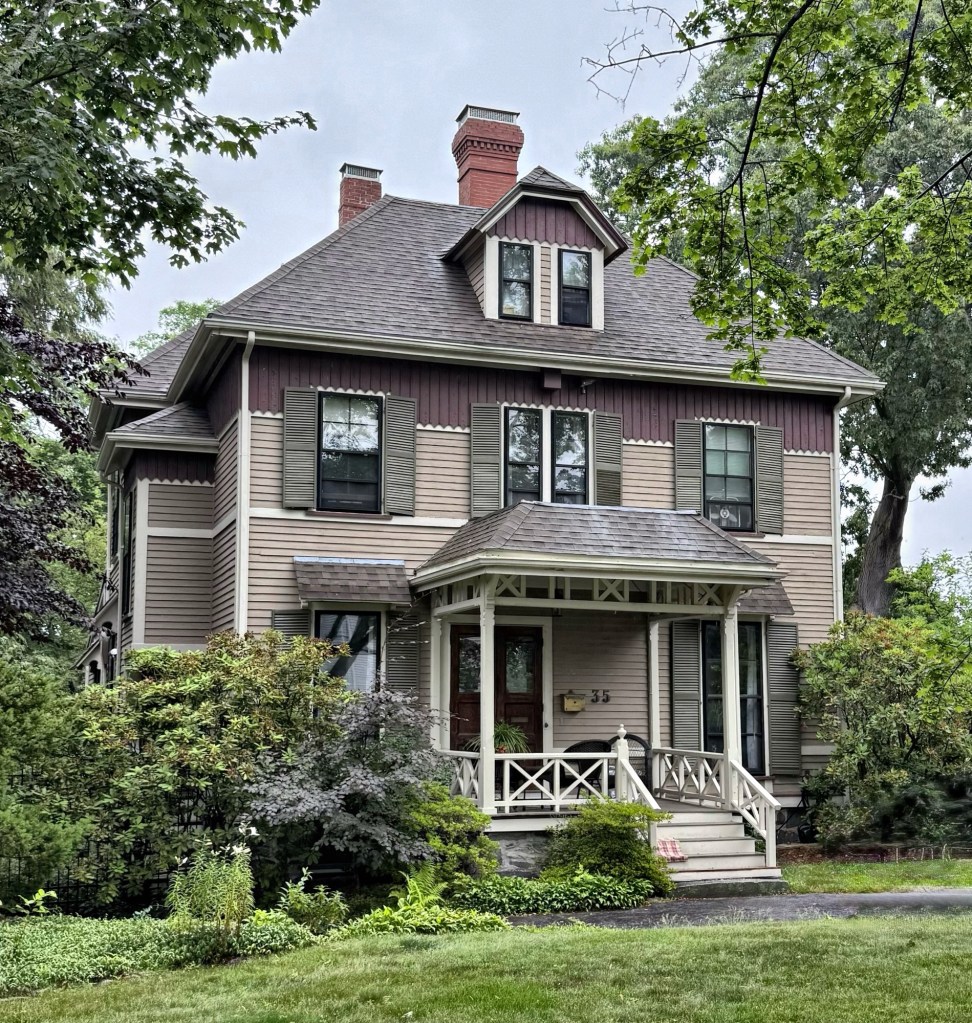
Mumford House // 1877

Set back behind a manicured lawn on the charming Alban Street in the Ashmont Hill neighborhood of Dorchester, this Victorian era residence was both a family home as well as a finishing school for young ladies. The house at 35 Alban Street was completed in 1877 for the Reverend Thomas James Mumford, pastor of the Third Church of Dorchester and anti-slavery advocate, who died the year his home was completed. His widow, Elizabeth Goodrich Warren Mumford (1834-1897) would inherit the home from her husband and for supplemental income to maintain the home, she opened the Mrs. Mumford’s Finishing School for Young Ladies, a school to educate and teach young girls manners and religion. Elizabeth Mumford would also publish books on how to conduct classes for Sunday School, Kindergarten, and the home. The Mumford House is a great example of a Stick style residence with less exuberance than some other examples. The picket frieze, applied stickwork on the siding, and more ornate porch are all typical of the style. 

Forbush-Brigham House // c.1875

This stately and well-preserved Stick style residence is located on High Street in Westborough, Massachusetts. The house was built around 1875 for Mr. William Henry Forbush and his wife, Alice. William was a sleigh manufacturer in town and served in the Civil War, mustering out years after injuring his left hand during the Second Battle of Bull Run. Forbush died in 1881 at the age of 37, and Alice married to Dexter Brigham, a carpenter who also fought in the Civil War. It was possibly Mr. Brigham who added the intricate woodwork on the home.

Mudge Family Cottage // 1852

Edwin Mudge (1818-1890) was a major shoe manufacturer and a representative to the Massachusetts General Court. In 1844, he married Lydia Nichols Bryant, and in 1852, the couple hired Edwin’s brother, a carpenter, to build this house at 108 Centre Street in Danvers, Massachusetts. A son, Francis was born October 4, 1846, and his sister Lydianna was born March 20, 1853. Tragically, both brother and sister died in 1855 of what was described as “brain fever” or “dropsy in the head.” Frank, one month shy of 10 years of age, passed away on September 8, 1855, followed by little two-year-old Lydianna exactly one month later. They are buried together in the local cemetery and a portrait of them is in the Danvers Historical Society collections. Edwin and Lydia would have one other child, Sarah Mudge (1857-1938), who grew up to be a prominent citizen and one of the founders of the Danvers Historical Society. The formerly simple Greek Revival style cottage was “Victorianized” in the Stick/Eastlake style with the addition of delicate bargeboards, a hood over the new double-door entry with iron balustrade, and side dormers.

Captain Ephraim Harkness House // c.1875

Captain Ephraim H. Harkness was a young sea captain and Civil War veteran who built this large Stick style residence and detached stable in Rockport, Maine by 1875. Sadly, Captain Harkness would die just a few years after completing the home as he died from Yellow Fever while out at sea. The house has remained in an excellent state of preservation 150 years later, even including the stickwork and brackets, which are some of the applied ornament that is removed first in renovations on so many coastal homes.

Leatherbee House // c.1870

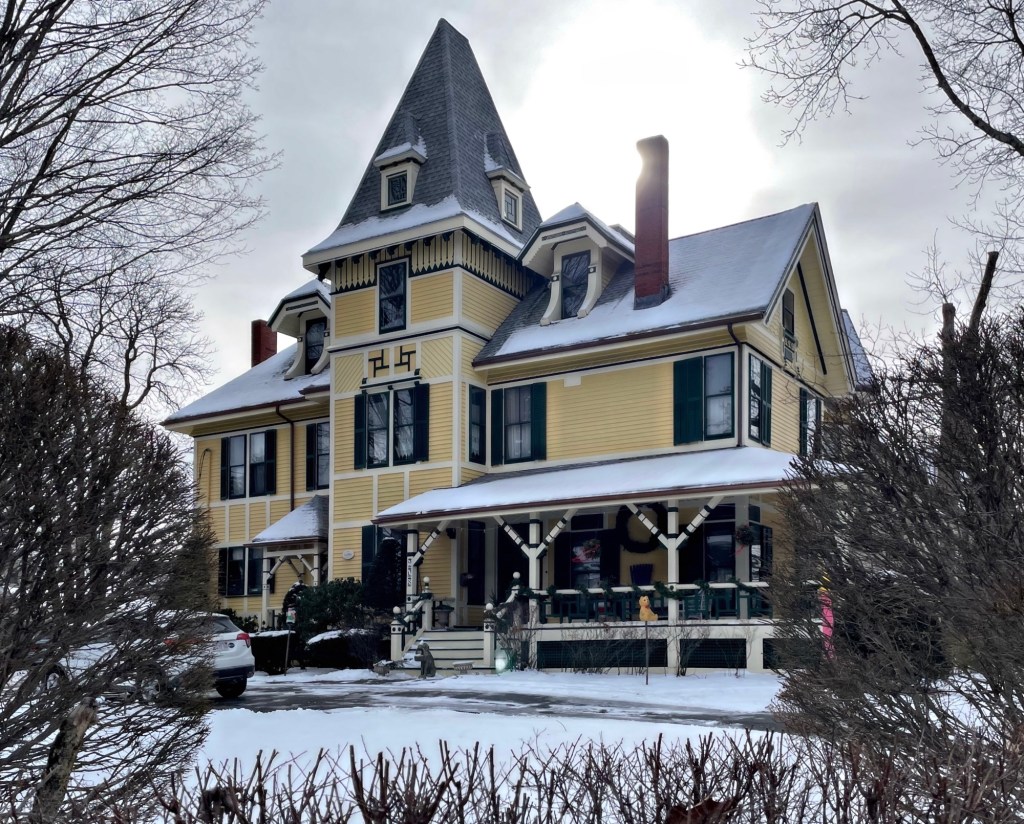
Andrew F. Leatherbee (1842-1920), a wealthy lumber dealer in Boston, built this large Stick style victorian house in Newton Center around 1870, likely using his own lumber products! The large frame house is prominently sited on a corner lot on Beacon Street, a short walk to Crystal Lake, a natural pond in the center of town. I could not find information as to who the architect was, but it was likely a notable local firm. As Andrew got older, he downsized and relocated to a smaller apartment in Cambridge. Upon his death in 1920, the property was sold by his heirs to Mae Van Dusen. The house is a high-style example of the Stick style of architecture, with large half-timbers, heavy porch bracing, and a central tower with pyramidal roof. Swoon!!!

Wales House // 1883

Built in 1883 for a member of the Thomas Wales family, this house in Clam Point, Dorchester, possesses a compact essentially rectangular clapboard and wood shingle-clad form. The architect, John A. Fox, designed the main façade elegantly with an open Stick style porch projecting from the center of the first floor which is enclosed by a steeply-pitched roof. The pitch of the porch roof is echoed in the small and shallow gable-like lintels which are really unique to the area. The treatment makes the facade read somewhat like a face.

Hersey-Noyes Double House // 1879

Nothing beats a good Victorian-era house! This example in the Clam Point neighborhood of Dorchester does not disappoint. The Stick-style double-house was built for miss Mary E. Noyes and Ms. Hersey replacing an older house on the lot. The women hired architect John A. Fox to design the house which possesses one of the most complex forms and roof configurations in the neighborhood. Clad with clapboards at the first and second stories, its six intersecting gables are sheathed with scalloped shingles. At the main entrance on the façade is an open porch with square posts and railings with turned balusters. The side façade is even more complex with two side gables and a two-tier porch enlivened by Chinese Chippendale and spool work railings. The Herseys, along with Mary E. Noyes, co-owned the house until 1884; thereafter it was owned by Mary E. Noyes until around World War I. The stick style home really pops with that blue color, what do you think?