Graham Apartments // 1904

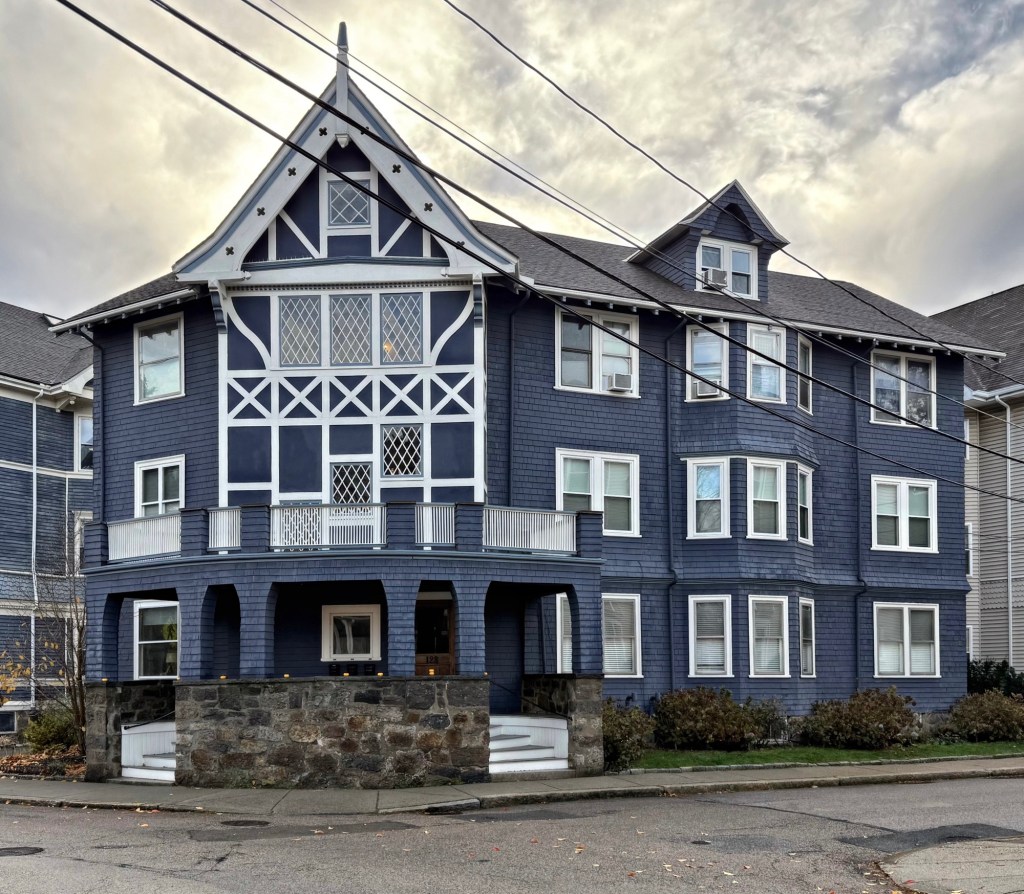
This handsome, and unique example of a three-decker in the English Revival style is located on a corner lot at 128 Davis Avenue in the Emerson/Brookline Village neighborhood of Brookline, Massachusetts. Built in 1904 from plans by architect and genealogist, J. Gardner Bartlett, whose work focused on colonial New England and the English origins of colonial families. Trained as an architect at MIT, he gave up architecture for genealogy, but still occasionally designed buildings in the Boston area. The building here was developed for Richard Graham, an Irish immigrant, who along with his wife, operated a laundry business in the village. The use of a shingle and stone entrance porch and entrance bay with stucco half-timbering and diamond-pane casement windows stand out architecturally as one of the few examples of a three-decker built in this style in New England.

Hotel Mellen // 1894

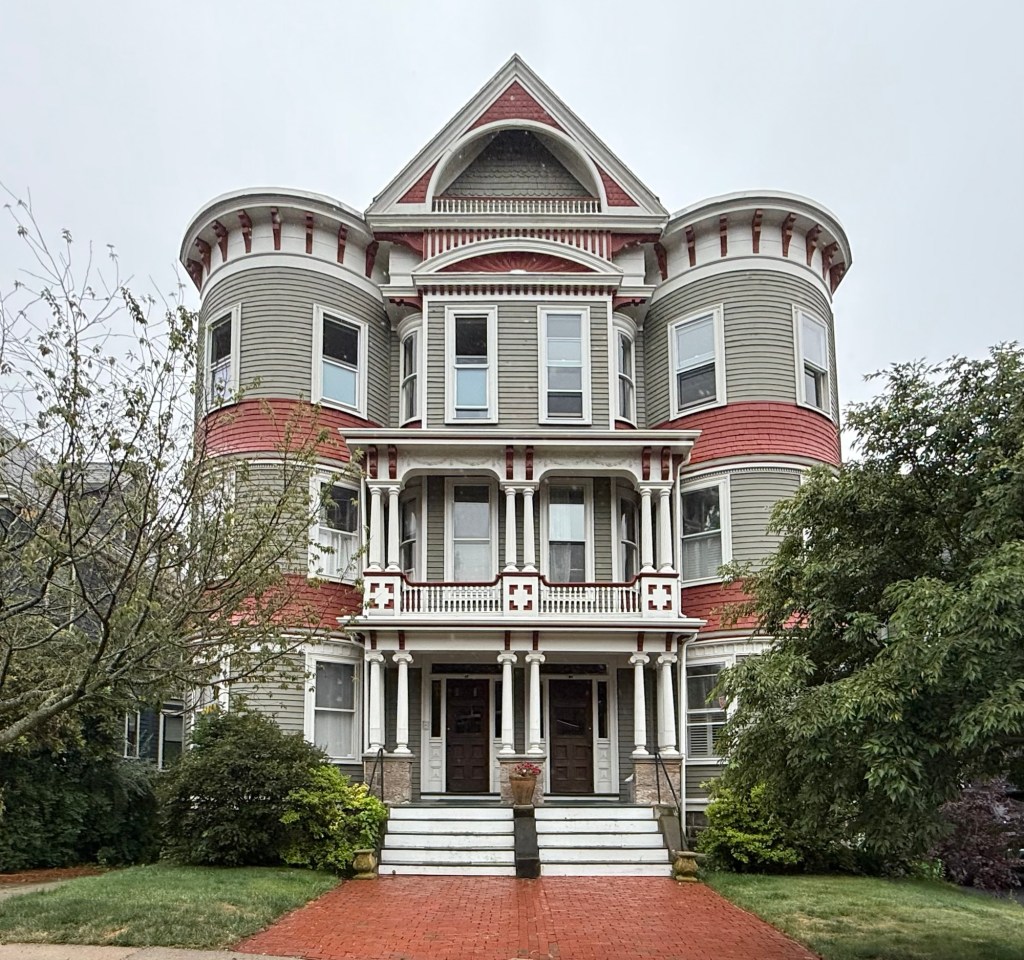
While Ashmont Hill in Dorchester is known for large, single-family Victorian houses, there are a number of grand apartment houses and three-deckers dispersed throughout the area, showing the evolution of housing in desirable neighborhoods in the late 19th and early 20th centuries. This is the Hotel Mellen, located at 18-20 Mellen Street, a multi-family building that architecturally blends in with its surroundings, not like many uninspiring boxes being built all over the region today. The property was developed by Louis Pfingst, a German streetcar designer and mechanic who was also active in the local Dorchester Gentlemen’s Driving Club. The building was designed by local architect Alexander B. Pinkham, who specialized in multi-family housing designs around Boston. The rounded bays, recessed porch in the gable, varied siding, and applied ornament, make the building stand out, while fitting well within its context of surrounding homes.

Hollander Apartment Buildings // 1892

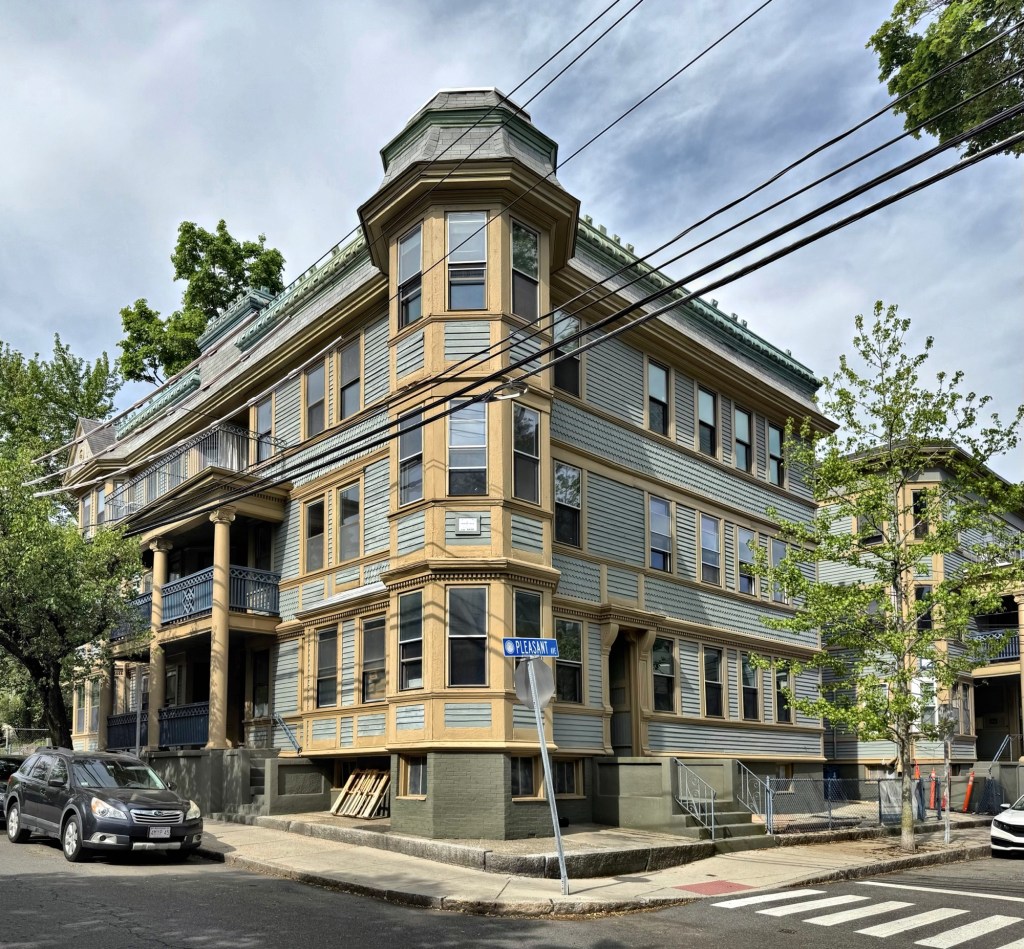
These two stunning apartment buildings were constructed in the early 1890s in the Prospect Hill neighborhood of Somerville. Known as the Hollander Blocks after their original owner, Theodore Clarence Hollander, the two apartment buildings are some of the finest in the Boston suburbs. Both detached buildings follow a traditional three-decker block massing and form, but are decorated with varied siding, two-story columned porticos, and elaborate cornice. 

Piotti Three-Decker // 1911

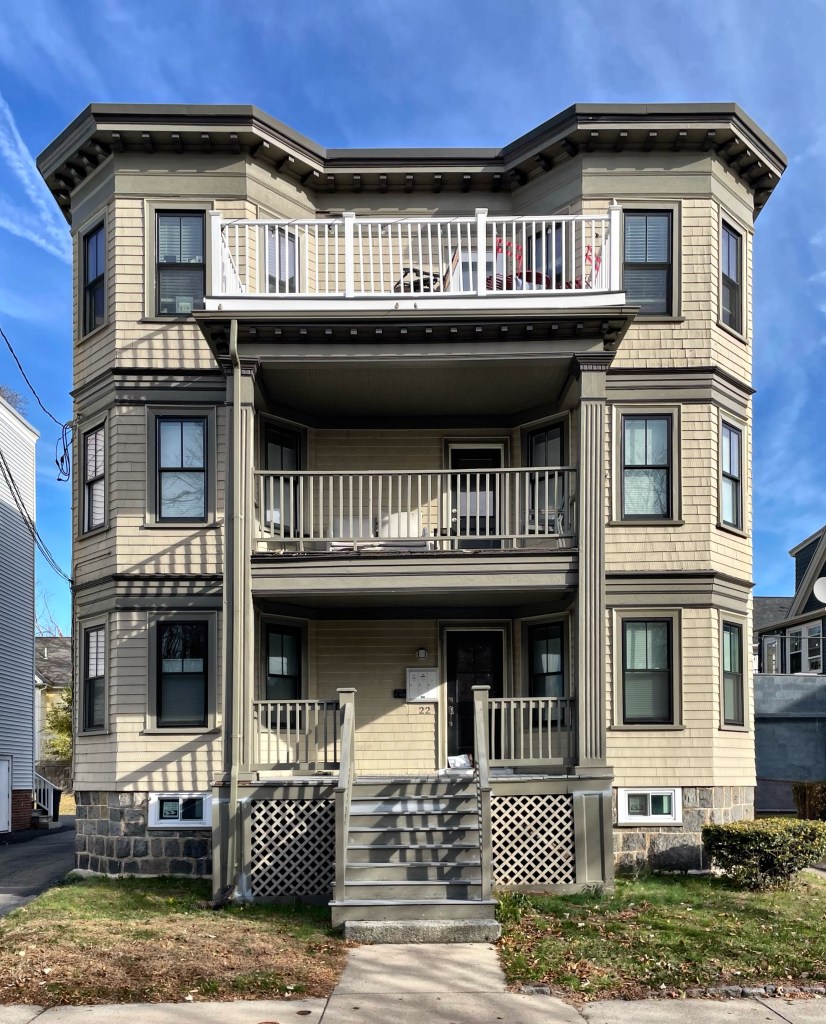
One of the features that sets the Clam Point neighborhood apart from other Dorchester neighborhoods is that the majority of its houses are still surrounded by ample yards. In most Dorchester neighborhoods, the electric streetcar triggered explosive growth in the form of three-deckers, which have arguably become the symbol of the neighborhood’s housing. Three-deckers (also called triple-deckers) are housing types that surged in popularity in the late 19th and early 20th centuries as they provided housing where each floor usually consists of a single apartment. Frequently, extended families lived in two, or all three floors, providing access and generational wealth to immigrant families who otherwise may not be able to afford land and building a single-family home. This example was built in 1911 by Italian-born contractor Ambrogio Piotti, who lived in a large mansion on Melville Avenue nearby. The three flats were rented out to families and the three-decker is clad in wood shingles, has polygonal bays with three-leveled porches with monumental Classical Revival columns.

Sullivan Three-Deckers // 1895

The three-decker is a commonly found housing type in New England’s urban industrial cities. These buildings are typically of light-framed, wood construction, where each floor usually consists of a single apartment, and frequently, originally, extended families lived in two, or all three floors. These were affordable housing, largely built by and for first- or second-generation immigrant families who could build a home and rent the other two units to family or friends to offset the steep cost of a mortgage. These three buildings were constructed around 1895 by David Sullivan, a cabinet-maker in North Adams, Massachusetts. They are all Queen Anne in style with applied stickwork, gabled roofs, and multi-story porches. Housing like this is what keeps so many New England towns and cities (relatively) affordable with increased density without sacrificing character or charm.

Mumford-Brown House // 1847

Incredible triple-decker vibes with this beauty on Providence’s College Hill neighborhood. In 1847, this home was built as a single-family, Greek Revival style home for Henry G. Mumford, who worked as a City Marshal for the City of Providence at City Hall. The house was likely originally a one-story or two-story Greek Revival cottage which was upgraded in a BIG way after Mumford’s death! His heirs sold the family house in 1859 it was owned by John A. Brown and his wife, Ellen. It was likely Ellen who had the property converted to a triple-decker with three units in the home. It was modernized with Italianate detailing, including the elaborate window hoods, front portico and side porch, round arched windows, and extra floor for additional rental unit. The property was later owned by Governor and member of the Taft Political family Royal C. Taft as an income-producing property.

J. B. Mulvey Triple Decker // 1904

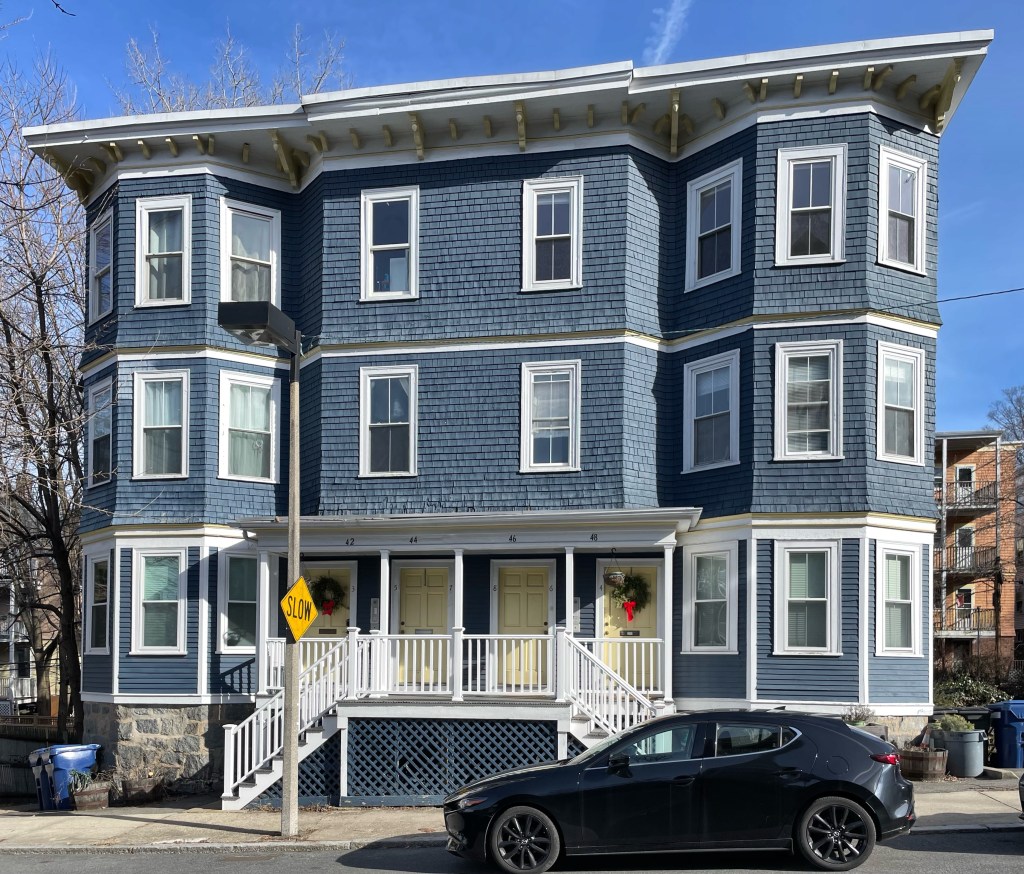
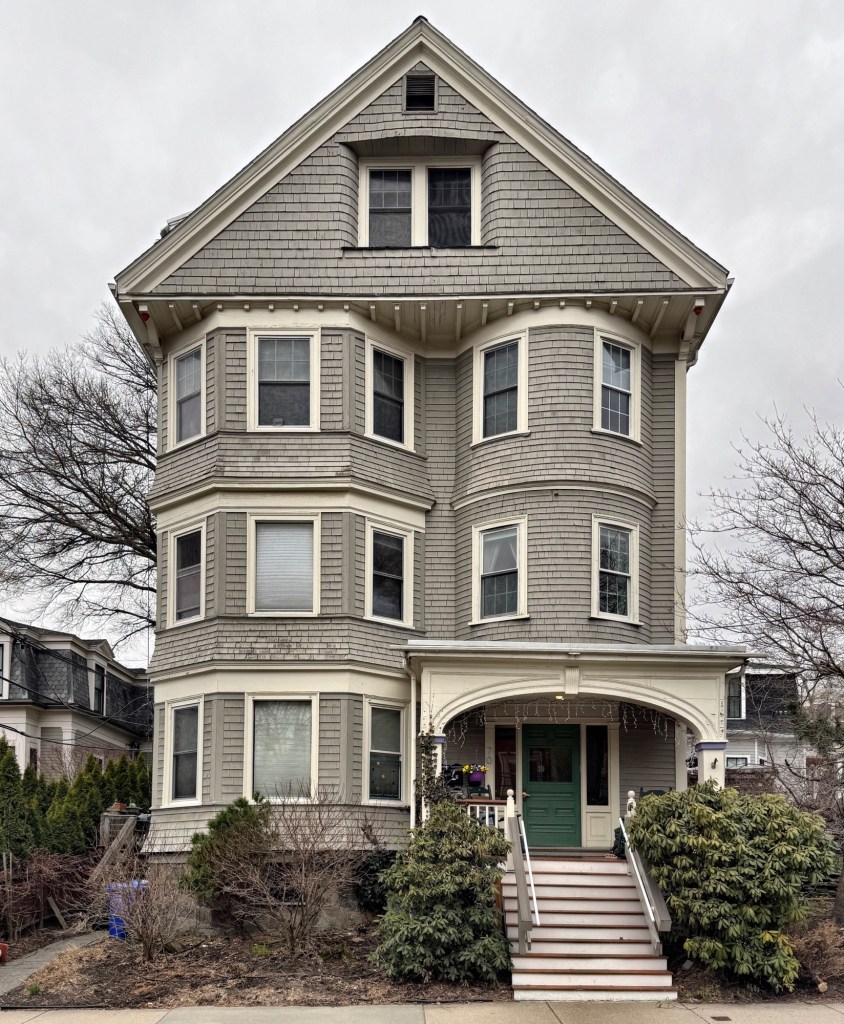
Across the street from the Lannin Triple Deckers (last post) this large triple decker (and the others in the row) was built in 1904 for developer John B. Mulvey. Mr. Mulvey was born in Ireland and migrated to Boston at the age of 16. He climbed his way up the ladder and worked as a builder and developer, largely in Boston-area suburbs and neighborhoods. At the turn of the century, these triple deckers (also known as three deckers) proliferated throughout the Boston suburbs around train stations providing affordable flats to residents. Many were built and rented out by developers, but eventually, owners would live in one unit and rent the other flats for additional income, providing upward mobility and equity, largely benefiting immigrant communities. This high-style example is very well maintained and is a more uncommon double-three decker.

Joseph J. Lannin Triple Deckers // c.1910

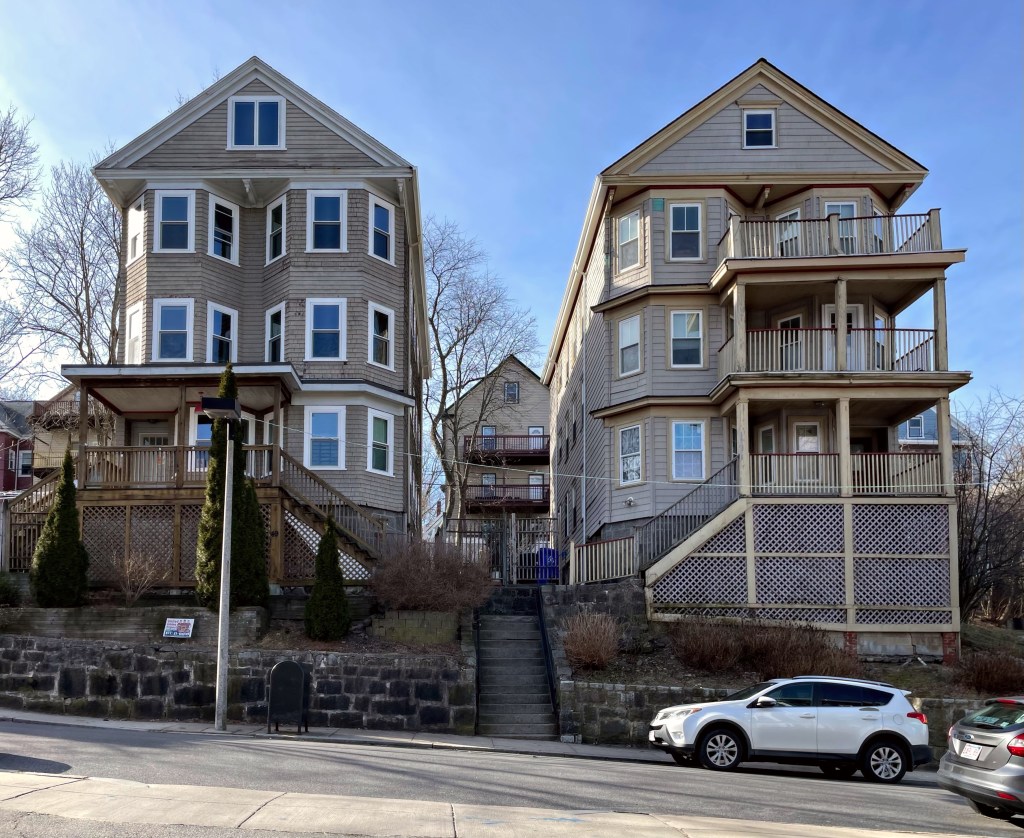
In 1892, Thomas Minton who lived nearby Forest Hills Cemetery in the Jamaica Plain neighborhood of Boston, was hired by landowners Brown and Weld to subdivide their land for house lots near the Forest Hills station. Three residential streets were laid out, terminating at the edge of Forest Hills Cemetery for residential lots. Much of the parcels were developed within ten years of the platting of the site, with some vacant lots of more difficult land to develop. Some parcels included massive outcroppings of stone which made building difficult and thus, more expensive to develop. Savvy developer Joseph John Lannin (1866-1928) purchased these lots from Edwin Weld and hired a local architect to design matching triple-deckers on the ledge. Lannin was orphaned at the age of 14, and migrated from Quebec to Boston, where he found work as a hotel bellboy. He soon learned about real estate and the commodities market by listening to conversations of the wealthy patrons at his hotel and solicited advice from those who were willing to share their insights with him. He began investing in real estate and made a small fortune in Boston and New York City. In 1913, Lannin and a group of investors purchased 50% of the Boston Red Sox baseball team and a year later, he became the sole owner of the Red Sox. In 1914, he purchased the rights to bring Babe Ruth to Boston. The team went on to win the World Series in 1915 and 1916.