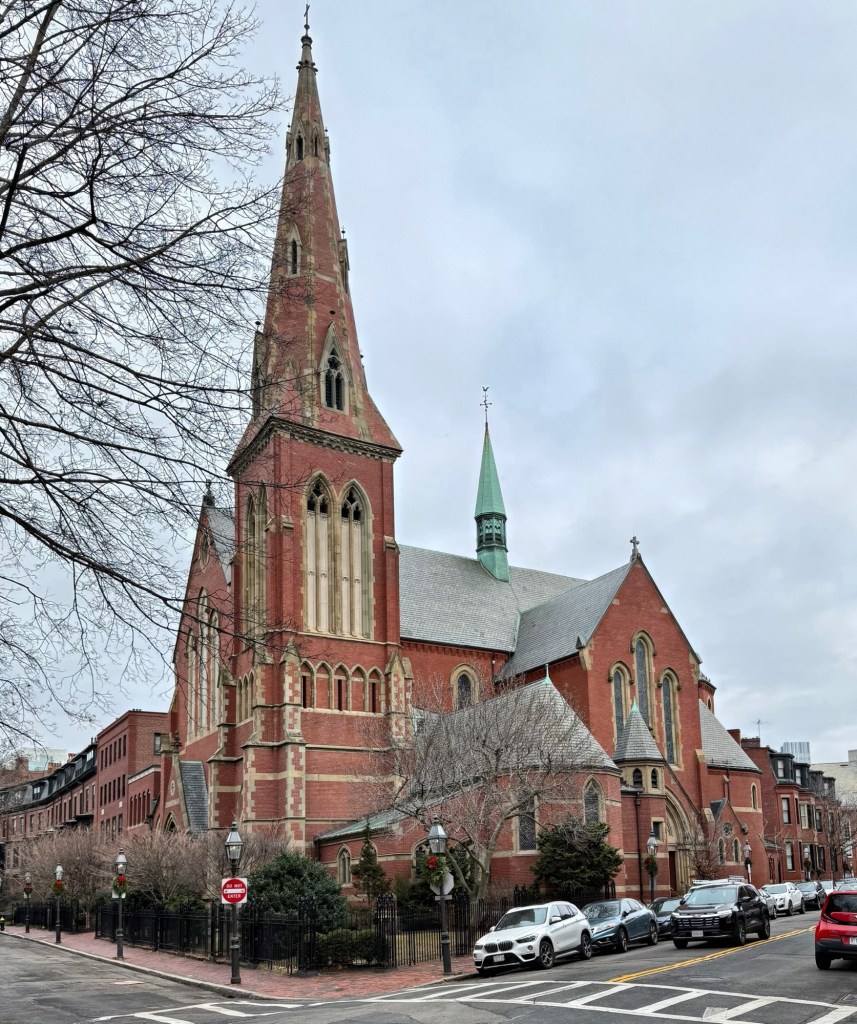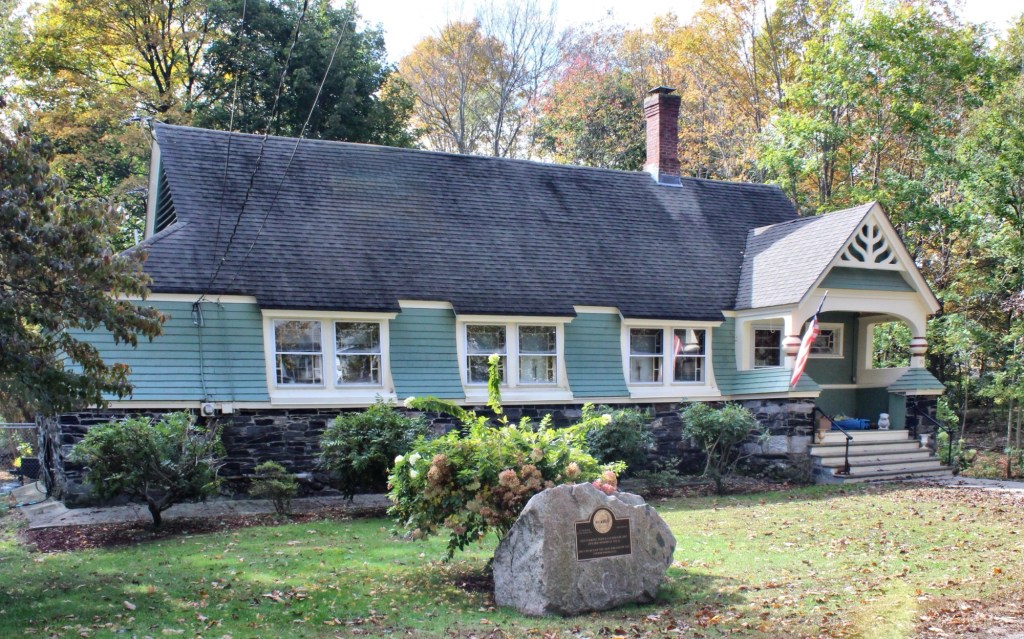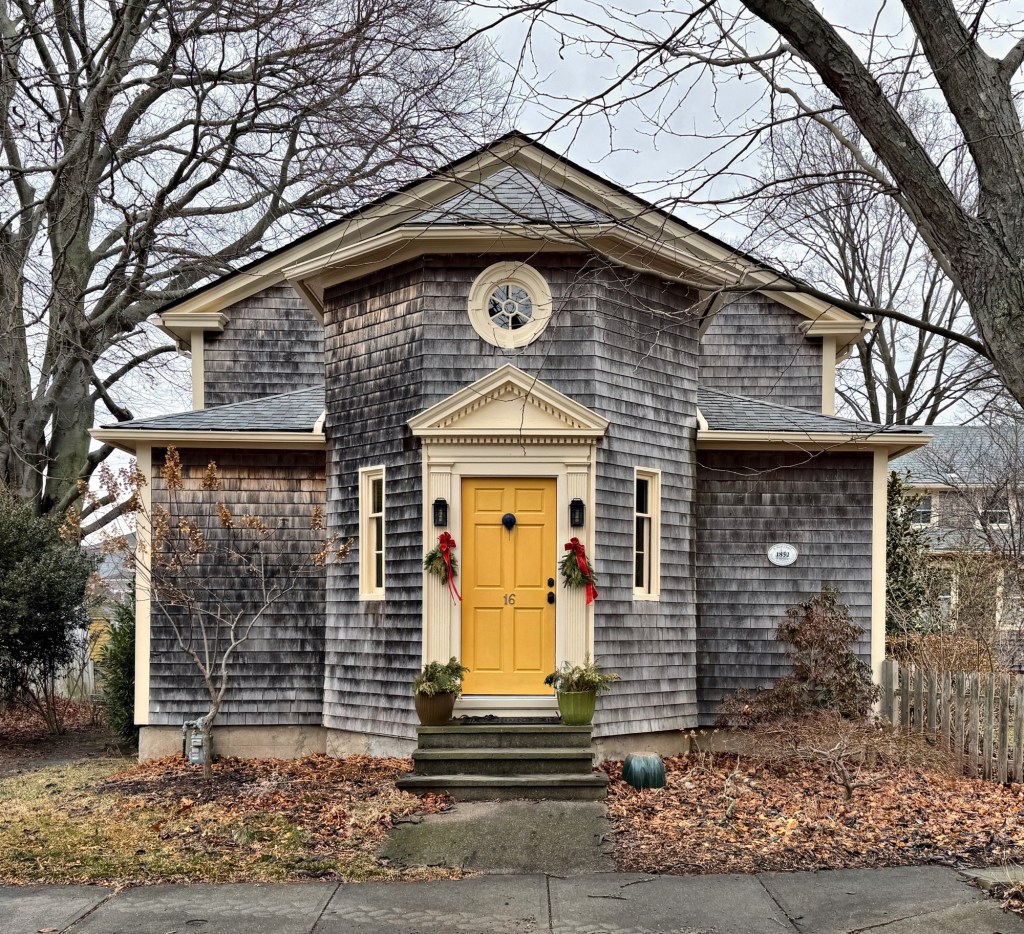
Swedenborgian Church of Lancaster // 1881

Built in 1881, the Swedenborgian Church of the New Jerusalem in Lancaster, Massachusetts, is a handsome Victorian-era chapel that has been well-preserved for nearly 150 years. The Queen Anne/Shingle style church was designed by architect Francis Ward Chandler of the firm, Cabot & Chandler, for the local Swedenborgians in Lancaster, some of which likely spent summers in Lancaster from Boston. The membership of the church dwindled in the early 20th century, and the congregation sold the church to a local women’s social group, the Current Topics Club in 1923. The women’s club met in the old church and maintained the building for nearly a century until the building sold to private owners in about 2007, who converted it to a residence, preserving the unique architecture we still see today.

Salem Christian Science Church – Witch Dungeon Museum // 1897

This Shingle-style church building on Lynde Street in Salem, Massachusetts, was built in 1897 as a satellite chapel for the First Congregational Society in Salem. The chapel was constructed from designs by the Boston-based architect Edward B. Stratton. From 1908 to 1979, the building was owned by the Christian Science Church and was eventually sold to private ownership in 1979, where it has since been home to the Witch Dungeon Museum. The building has retained much of its original design, including the large Gothic sanctuary window, tower, and decorative trusses at the gable. Sadly, the original shingles have been replaced by later siding.  

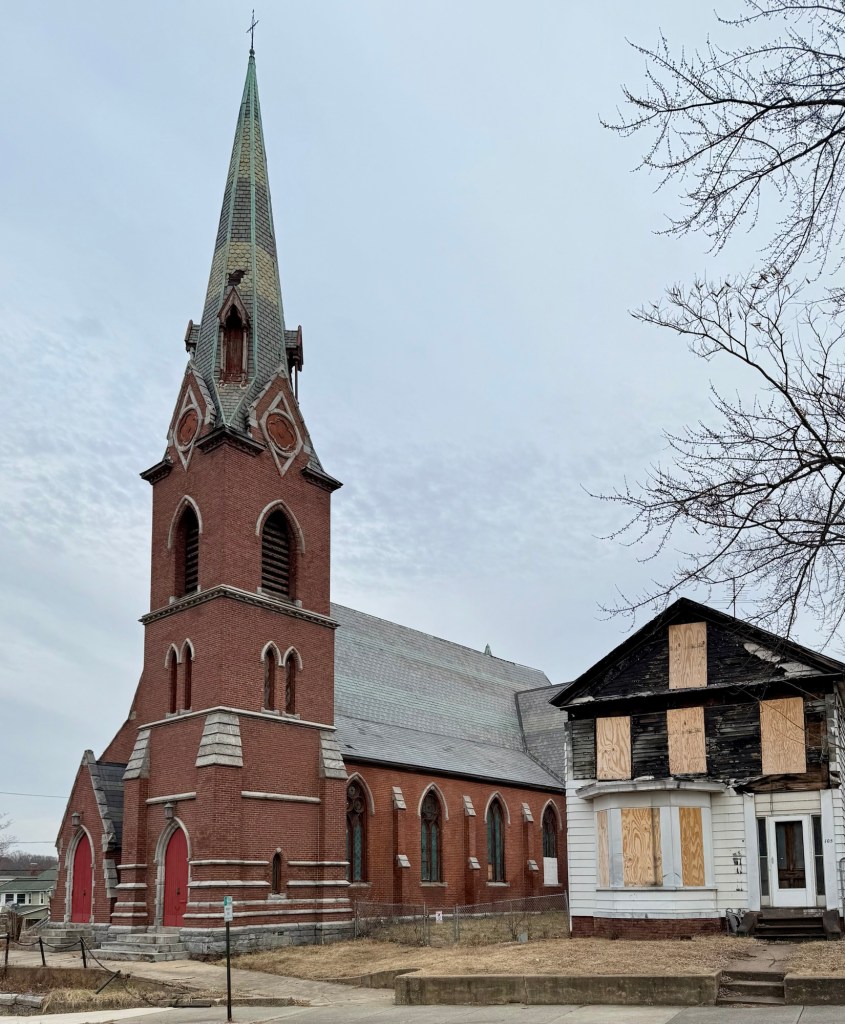
Third Congregational Church of Chicopee // 1868

The Third Congregational Church of Chicopee was built on a prominent lot on Springfield Street in 1868, replacing the congregation’s first church there, which was outgrown. The present building was designed by Charles Edward Parker, a Boston-based architect, who was an expert in Gothic architecture. He would design the Chicopee City Hall just years later. The building is constructed of brick and atop a granite base and features lancet (pointed arch) doors and windows, a corner steeple, and steep gable end with large rose stained glass window. The interior is preserved as well. Due to shifting demographics in Chicopee in the early 20th century, the church merged in 1925 with the Central Methodist Episcopal Church, forming the Federated Church of Chicopee. The congregation eventually closed and the church has sat vacant in recent years, and was briefly listed for sale in 2024, 9,339 square feet for just $200,000.

United Church of Norwood // 1886

Located across from the church-like Norwood Town Hall, the United Church of Norwood is a landmark example of the Victorian Gothic architecture style and an important historical landmark for the town. The cornerstone of this present church was laid in 1885 and was completed and consecrated by December of 1886. Boston architect J. Williams Beal, got his start at the firm of McKim, Mead & White, designed the church here for the local Universalists, who lost their previous church to fire in 1884. In 1934, the town’s Universalist and Methodist congregations merged and they joined together in this, as a Union Church. Built of Milford granite and pressed brick, the United Church of Norwood features a side chapel and clock in its steeple which are unique and add charm to the historic church.

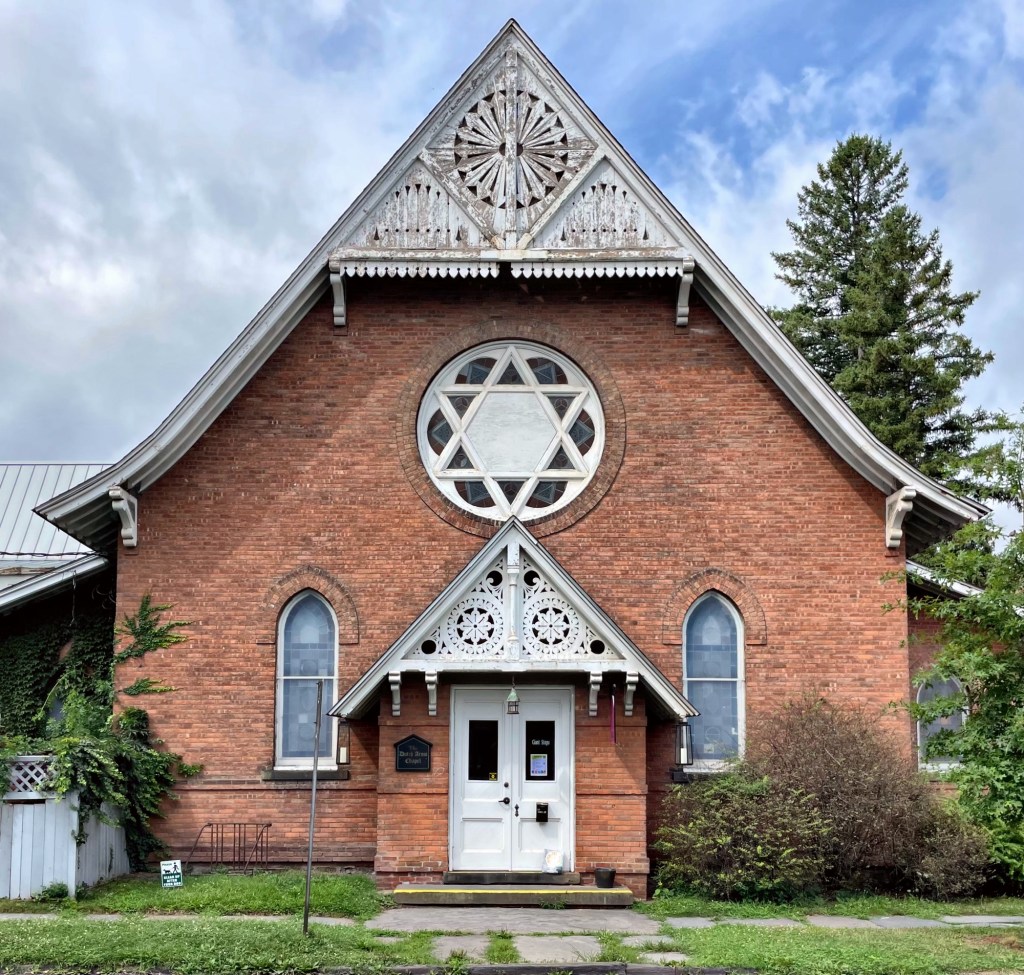
Dutch Arms Chapel // 1875

Tucked away on a side street in Saugerties, New York, this Victorian Gothic chapel has recently been given a new life for the arts. The chapel was constructed in 1875 as part of the Reformed Church of Saugerties (1852), designed by famed architect James Renwick, Jr., the architect of St. Patrick’s Cathedral in Manhattan and the Smithsonian in D.C. The architect of the chapel is not clear, but it retains similar detailing and materials to the main church. The structure was used for smaller religious meetings and a sunday school for decades until it eventually closed. The chapel was recently acquired by Isabel Soffer and Danny Melnick, co-founders of Hudson Valley Live, and has been restored and transformed into The Local: a year-round, multi-arts venue, breathing new life to the building and culture to the artistic town.

Riverside Methodist Church, Porter // 1883

The focal point of the riverside village of Kezar Falls in Porter, Maine, is this large frame church building with prominent siting and grand proportions. This is the Riverside Methodist Church, built in 1883 in the Stick/Eastlake style by Portland architect Charles H. Kimball. The first Methodist services held in the town of Porter were in 1833, when a church was formed in the small town. Soon after 1839, a gable-roofed meetinghouse with tall lancet windows was erected near where the present church stands. The original church still stands, but in a much-altered form and was used as a local fire station. The church remains owned by local Methodists and is well-preserved.

Yale University – Battell Chapel // 1874

As the Old Campus of Yale was being enclosed at its north and east by Farnam and Durfee halls, architect Russell Sturgis was again tasked to design a new building, but for a corner site; though this time, he would design a college chapel. Built between 1874–76, it was funded primarily with gifts from Joseph Battell. Succeeding two previous chapel buildings on Yale’s Old Campus, it provided space for daily chapel services, which were mandatory for Yale students until 1926, which were all-male and mostly Protestant. The large stone chapel is constructed of New Jersey brownstone with decorative elements in sandstone. The design of the Victorian Gothic chapel is great, but how it sits with the entrance unceremoniously dumping out to the end wall of Durfee Hall leaves much to be desired.

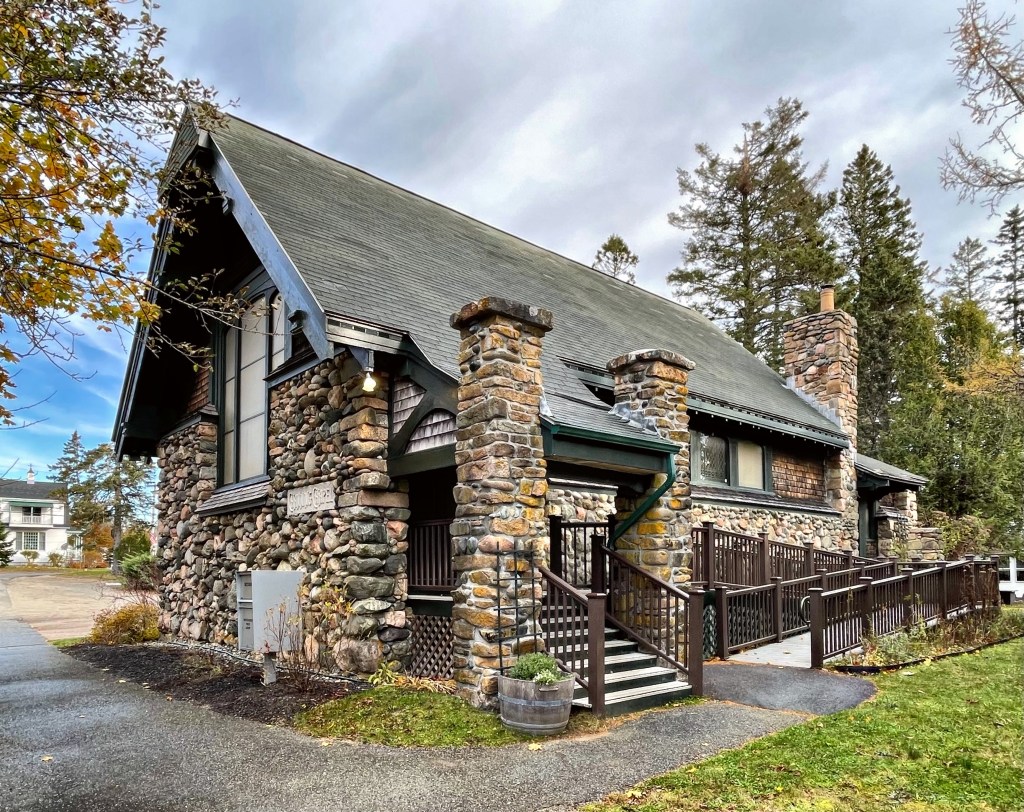
Channing Chapel – Winter Harbor Public Library // 1888

At a time before women could vote or be admitted to the American Medical Association, Almena Guptill (1842-1914) left her small home on Harbor Road to graduate from Boston University of Medicine in 1876 and become a respected Boston physician. She married David Flint (1816-1903), a successful lumber dealer and philanthropist. Almena met David when treating his late wife in Boston. The two, both widowers, married in 1891. Being a staunch follower of William Ellery Channing and believing that there was sufficient interest in Unitarianism here, Flint felt that there was need for a meeting place in his summer town of Winter Harbor. He had this chapel built adjacent to his summer house in the winter of 1887-1888, having field stones brought to the site of the future chapel by people of the village sliding them over ice in the winter. I could not locate the name of the architect of the building. The chapel was deeded to the American Unitarian Association and was later gifted by the association to the Town of Winter Harbor in 1958, the town would sell the property that year. In 1993, a preservation group purchased the chapel and sold it in 1999 back to the town. It now houses the Winter Harbor Public Library. Talk about full-circle!