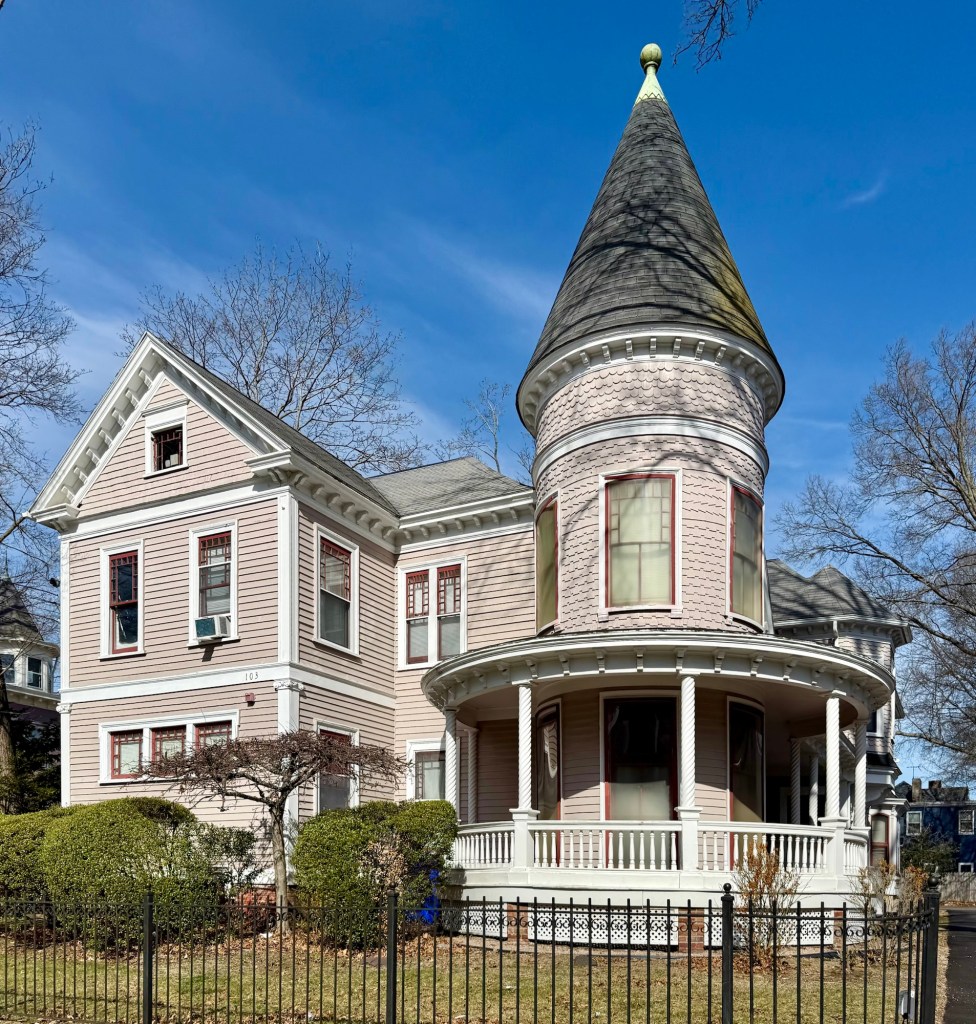
One of the finest homes in Central Falls, Rhode Island, is this eclectic Victorian residence on Clay Street. The home was seemingly built around 1870 and modified by the end of the 19th century by later owner, George Mumford Thornton (1850-1916). Mr. Thornton was an industrialist who was elected as one of the first aldermen when Central Falls incorporated in 1895. The well-preserved house features varied siding, a rounded corner tower with spiral-columned porch and conical roof, and original multi-light sash windows. What a spectacular home.
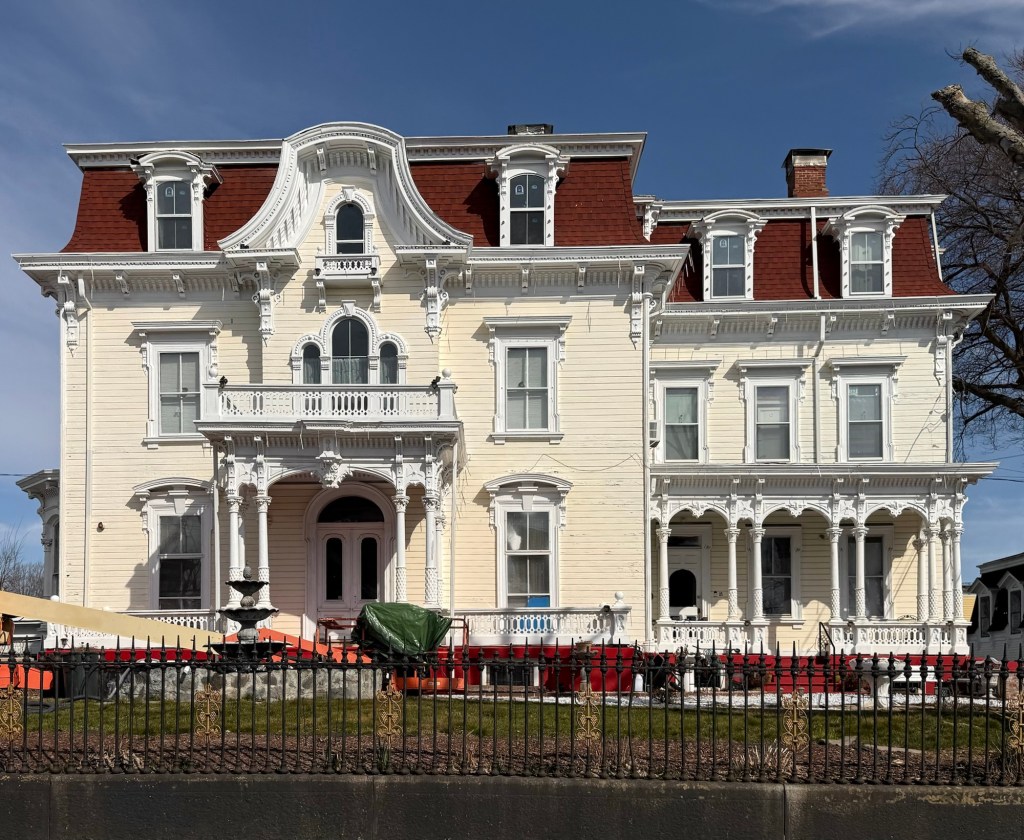
Built for Benjamin Franklin Greene, a second-generation mill owner of the Greene and Daniels Thread Company in Central Falls, Rhode Island, this large, Second Empire style house is one of the finest of its style in the entire state. The house is one of only a few high-style residences left from the mid-nineteenth century in Central Falls, when industrialization’s full expansion provided manufacturers such as Greene with fortunes to be expended on their houses. Designed by Providence architect Clifton A. Hall, the ornamentation of the Greene House is extraordinary for its elaboration, relieving the severity of the simple, block-like shape of the house. The central door is set under a flat-roofed porch which is supported by trios of Corinthian columns. Above the porch a trio of round-head windows is set under a “sunbonnet” gabled dormer which caps the central pavilion, is supported by brackets, and encloses a round-head window with a small balcony. What a spectacular home!
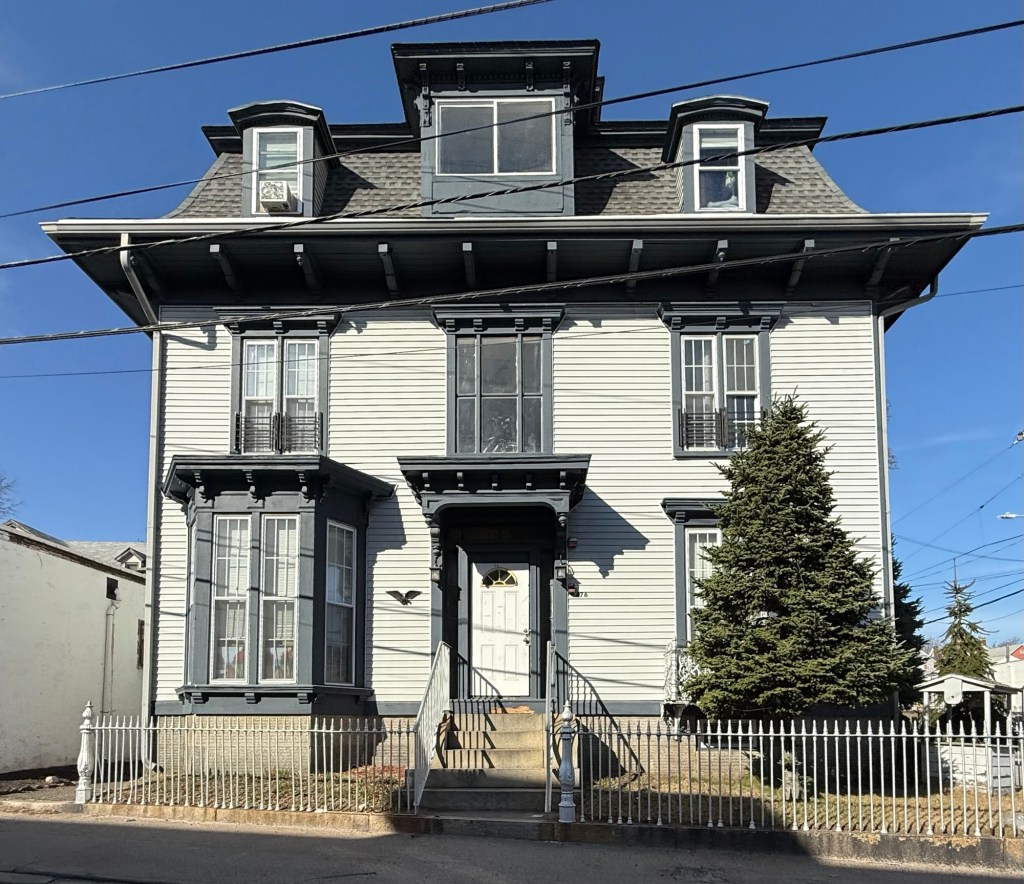
The David G. Fales House of Central Falls, Rhode Island, is an excellent example of the Second Empire architecture style in a high-end residence. The home was built around 1858 and belonged to David Gilmore Fales (1806-1875), one of the partners of the nearby Fales and Jenks machine works. Mr. Fales either built or purchased the home which was then a flat-roofed Italianate style home, and hired architect Clifton A. Hall, to modernize the residence, adding trim and the mansard roof. Its broad eaves are supported by brackets with pendants; segmental-head dormers are set in the mansard and a square belvedere with round-head windows tops the roof. A major fire gutted much of the house in the 1960s, and its future was uncertain. It was preserved and is now a multi-family apartment building.
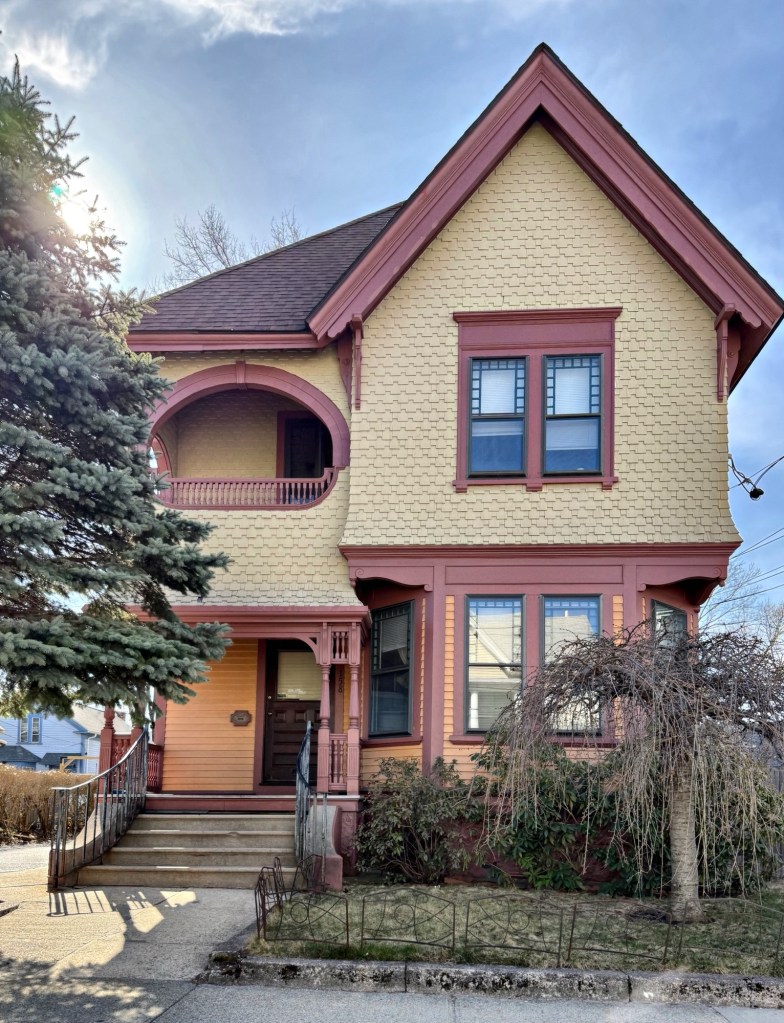
Central Falls, Rhode Island, is not necessarily known for its residential architecture, but like any good industrial city, there are some excellent examples of Victorian houses from the mid-late 19th century to be discovered! This is the Edward L. Johnson House on Cross Street in Central Falls. The house was built around 1886 for Mr. Johnson, a manufacturer, who resided here for some years with his wife, who founded the Pawtucket Women’s Club in 1899 and was an active member of the Daughters of the American Revolution. The house is an excellent example of the Queen Anne architecture style, from the various siding types including clapboard and patterned shingling; its steep cross-gable roof; and its variety of windows, including a shallow bay on the first floor and oval and half-round windows in the 2nd-floor porch.
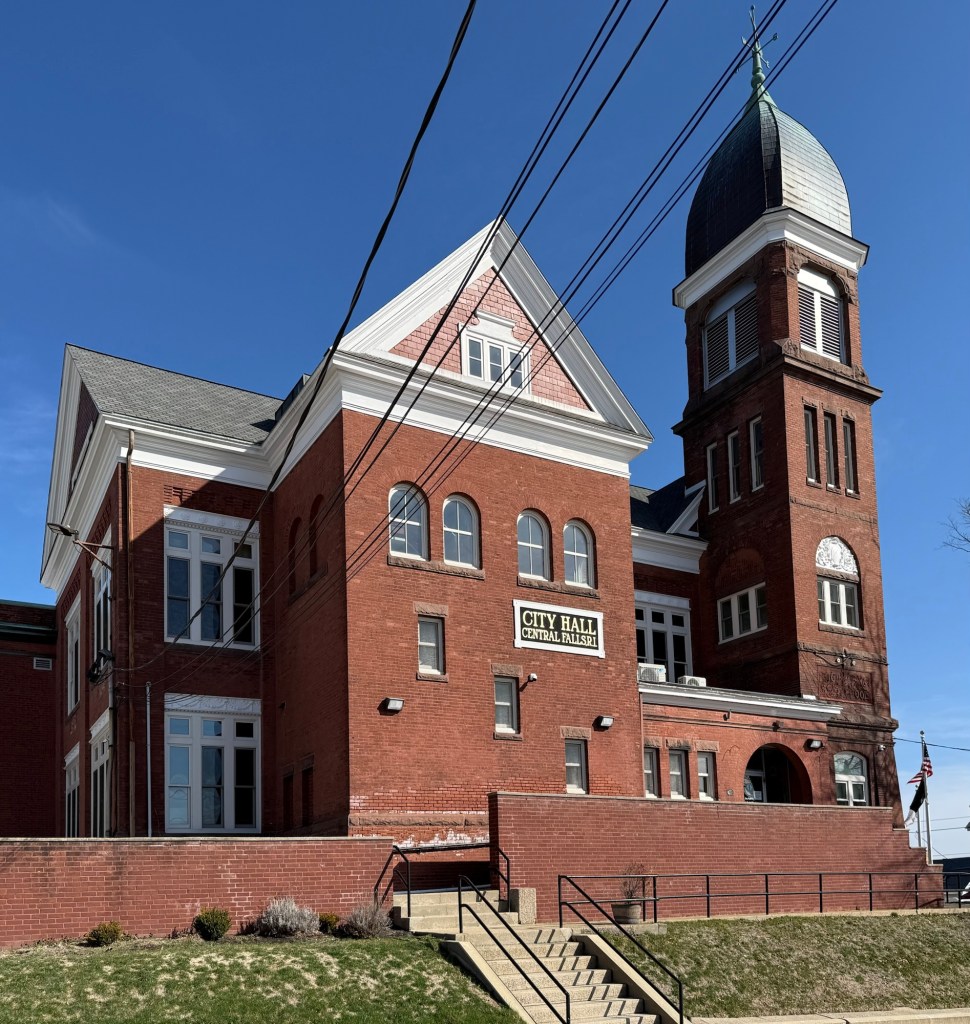
Welcome to Central Falls, an industrial city in Providence County, Rhode Island. With an area of only 1.29 square miles it is the smallest and most densely populated city in the smallest state, and the 23rd most densely populated incorporated place in the United States. Originally, Central Falls was one of the many villages within the town of Smithfield, but in 1871, the town split into three smaller towns: Smithfield, North Smithfield and Lincoln. Central Falls village then became part of the town of Lincoln until Central Falls’ industrial character and differing needs had it split off to form the small city of Central Falls in 1895. Before it was its own city, Lincoln officials had this building constructed in 1888-9 on Broad Street, the commercial and civic center of the city. This red brick, Queen Anne building with its four-stage tower was built as Lincoln High School, the first school in the town built exclusively for secondary education. Designed by William R. Walker & Son, architects, the building features shingles in the gable, asymmetrical plan, and carved terracotta panels. The building continued as Central Falls High School until 1927, when the city offices were moved there, and it has remained as the City Hall ever-since.
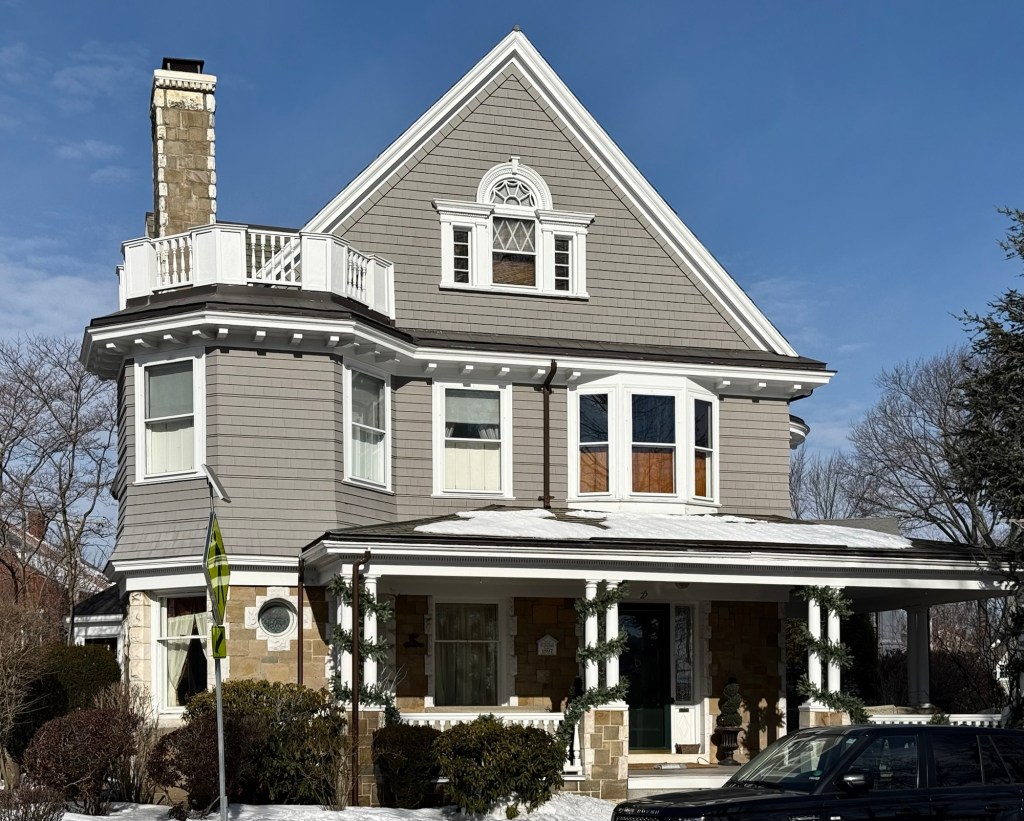
Bounded by three streets and overlooking the town Common, this stately house in Salem, Massachusetts, showcases a blending of Queen Anne and Colonial revival styles. Built in 1897 from plans by Boston architect, Alfred Fernald, the house was constructed by and for its first owner, Joseph Parsons, a Civil War veteran and house builder. The Parsons family continued to live in the house until Joseph’s death in 1915, after which his widow, Minnie, sold the property and moved to Florida. Dr. Ignatius Zielinski purchased the property in the 1920s and divided the house into a physician’s office and several residential units. Tragically, Dr. Zielinski died while serving his country during WWII, and the family would retain the property until 1987. The house is unique for its materiality with the first floor consisting of ashlar, rough-faced stonework with a wood-shingled second story, stained glass windows and a wrap-around porch.
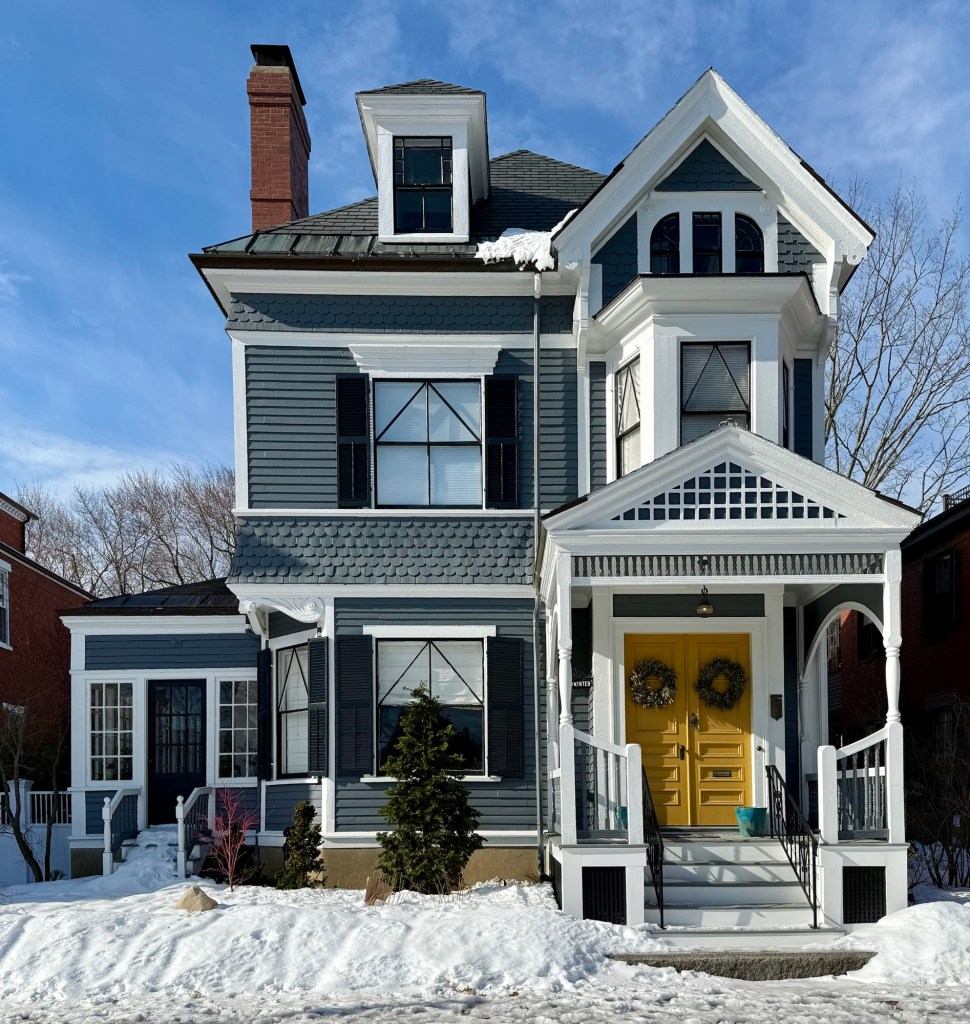
Built in 1887 for Charles Odell and his wife, Alice, this Queen Anne house on Winter Street in Salem, Massachusetts, stands out as a high-style example of Victorian architecture on the street notable for early-mid 19th century architecture. The house lot was purchased by the Jewett Family who lived in the brick house next door and long used the lot as a garden. Charles and Alice Odell married in 1888, so this Victorian home was built for the newlywed couple to raise their family. Charles A. Odell (1863-1931) worked at his father’s insurance and real estate business, later assuming ownership of business upon death of his father and was a district agent for New England Mutual Life Insurance Company. Sheathed in a combination of wood clapboards and shingles in a variety of patterns, the house has a steeply hipped, slate roof punctuated by cross gables and hipped dormers. The predominant window sash style consists of a distinctive sash in which the upper displays a triangle with central muntin over a conventional two-light lower sash. The property has been lovingly preserved for well over a century and is a landmark example of a Queen Anne style house in Salem.
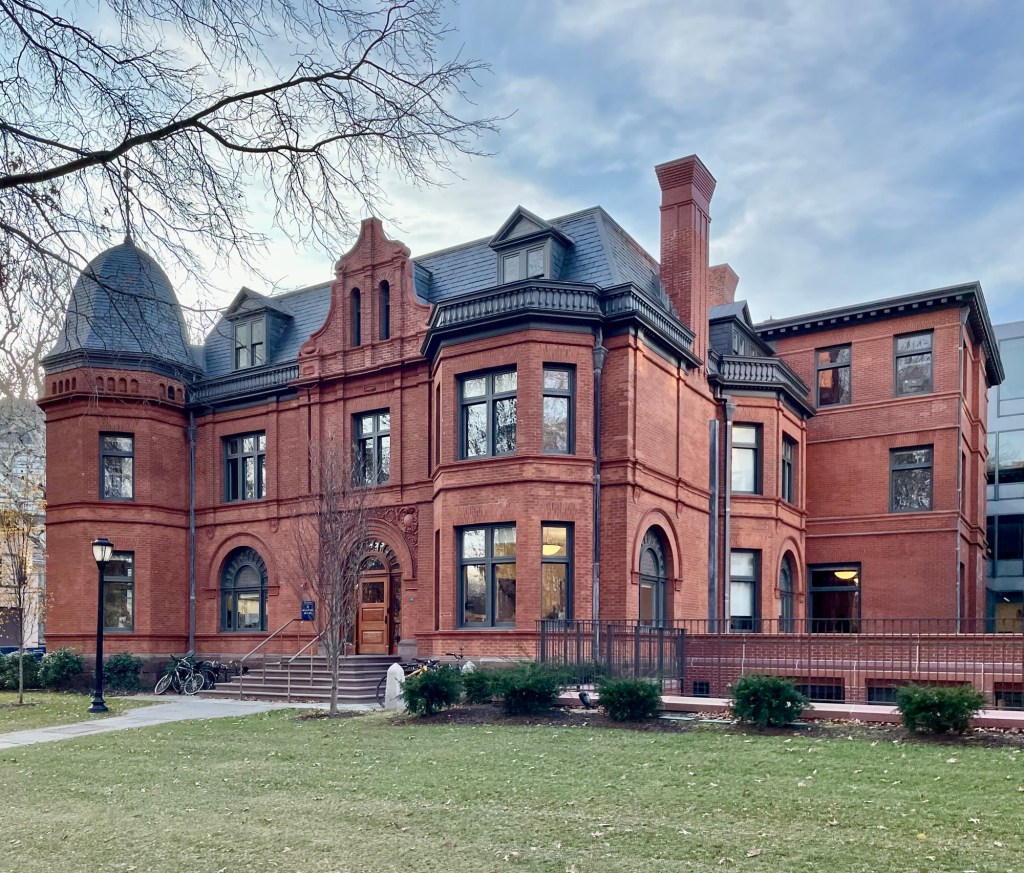
Charles Henry Farnam (1846-1909) was a lawyer, genealogist, and the son of Henry Farnam, a wealthy railroad industrialist in New Haven, Connecticut. Following his father’s death in 1883, Charles, who may have inherited a small fortune in the will, purchased a house lot on the finest residential street in New Haven, Hillhouse Avenue. The existing house on the lot, the Benjamin Silliman House, was relocated to front Trumbull Street (and recently relocated again to 85 Trumbull Street), clearing the site for his new mansion. He hired esteemed architect J. Cleaveland Cady, who designed a large, Queen Anne/Romanesque masonry home unlike anything else on the Avenue. The house features an asymmetrical plan, corner tower, a Flemish style gable, fancy brickwork and terracotta detailing, and a slate mansard roof. Charles H. Farnam would sell the property to Henry S. Parmelee, a noted businessman and piano manufacturer, who also is credited with inventing the first automated sprinkler head and as a result, owning the first building in the United States to be equipped with a fire suppression system, his piano factory. Parmelee hired local architect Leoni Robinson, to design a rear addition for the house. Parmelee died in 1902, and the property was maintained by his widow and daughter, until it was acquired by Yale University in 1920. Today, the Farnam Mansion is occupied by the Economics Department.
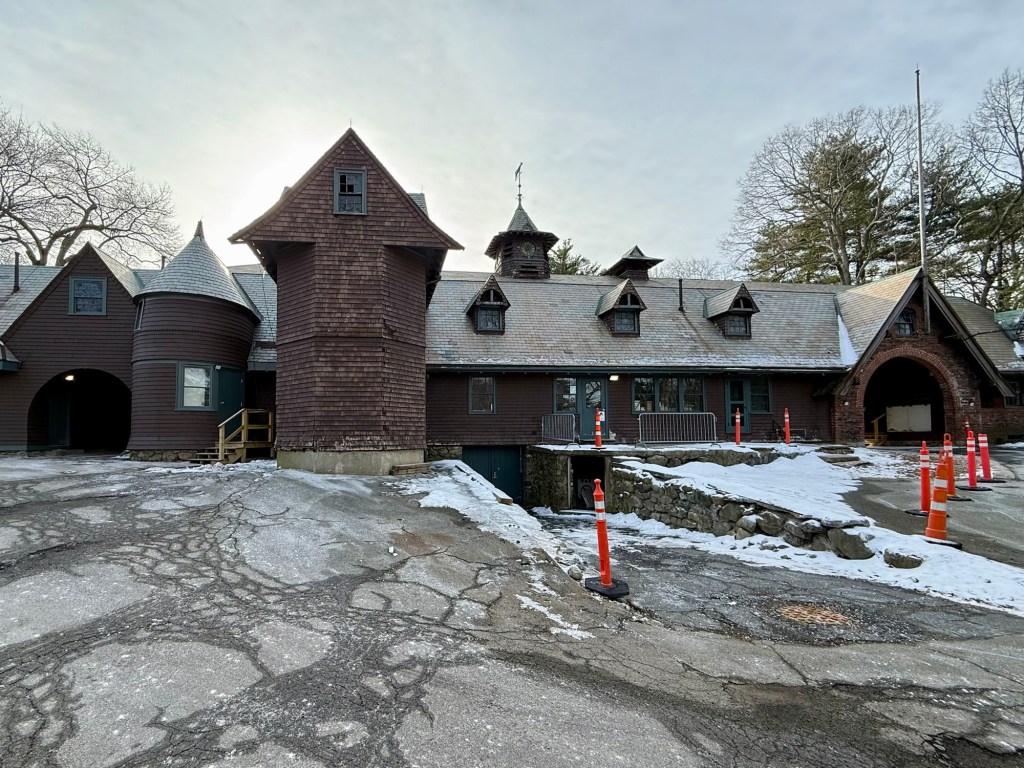
Like the Roughwood Mansion and carriage house, this building was designed and built in Brookline, Massachusetts, in the early 1890s as part of the “Roughwood” estate. Despite its high-style and ornate detailing, the building was actually constructed as a cow barn. Built in two phases for its two owners, William Cox and Ernest Dane, the large barn structure blends Victorian design into a use more reserved for vernacular detailing. The building was designed by Andrews, Jacques and Rantoul, and like the mansion and carriage house, blends Queen Anne and Shingle styles under one roof. Ever-since the estate became a college in the 1960s, the building has been used as a maintenance building. It appears that since it has been owned by Boston College as part of it’s Messina Campus, it is undergoing a thoughtful restoration!
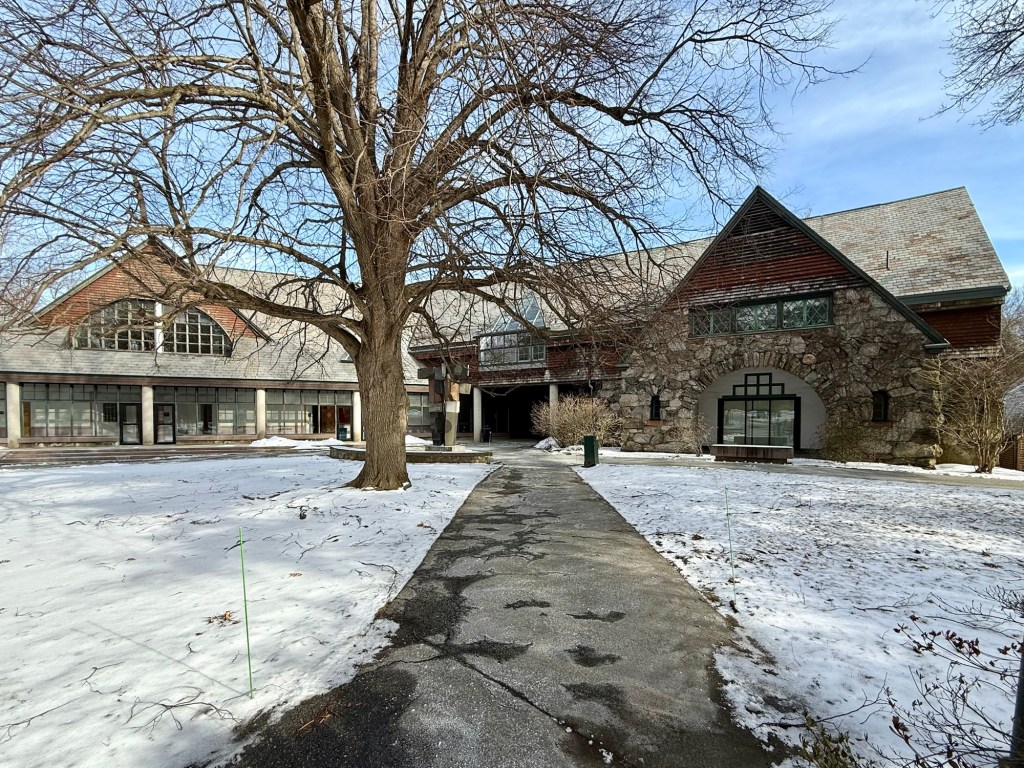
Built on the expansive grounds of “Roughwood”, a country estate in Brookline, Massachusetts, this former carriage house has seen many iterations in its lifetime. Like the mansion house, the carriage house is a blending of Queen Anne/Shingle styles with fieldstone and shingle construction, designed by the architectural firm of Andrews, Jacques & Rantoul. When the Roughwood Estate was purchased and converted to Pine Manor College, the carriage house was adaptively reused and added onto as the Annenberg Library with a large imaginatively designed wing by Shepley, Bulfinch, Richardson and Abbott completed in 1986. The building remains as a library as part of the newly established Messina College, a campus of Boston College, which opened in July 2024 for over 100 first-generation college students. Gotta love adaptive reuse!
 Buildings of New England