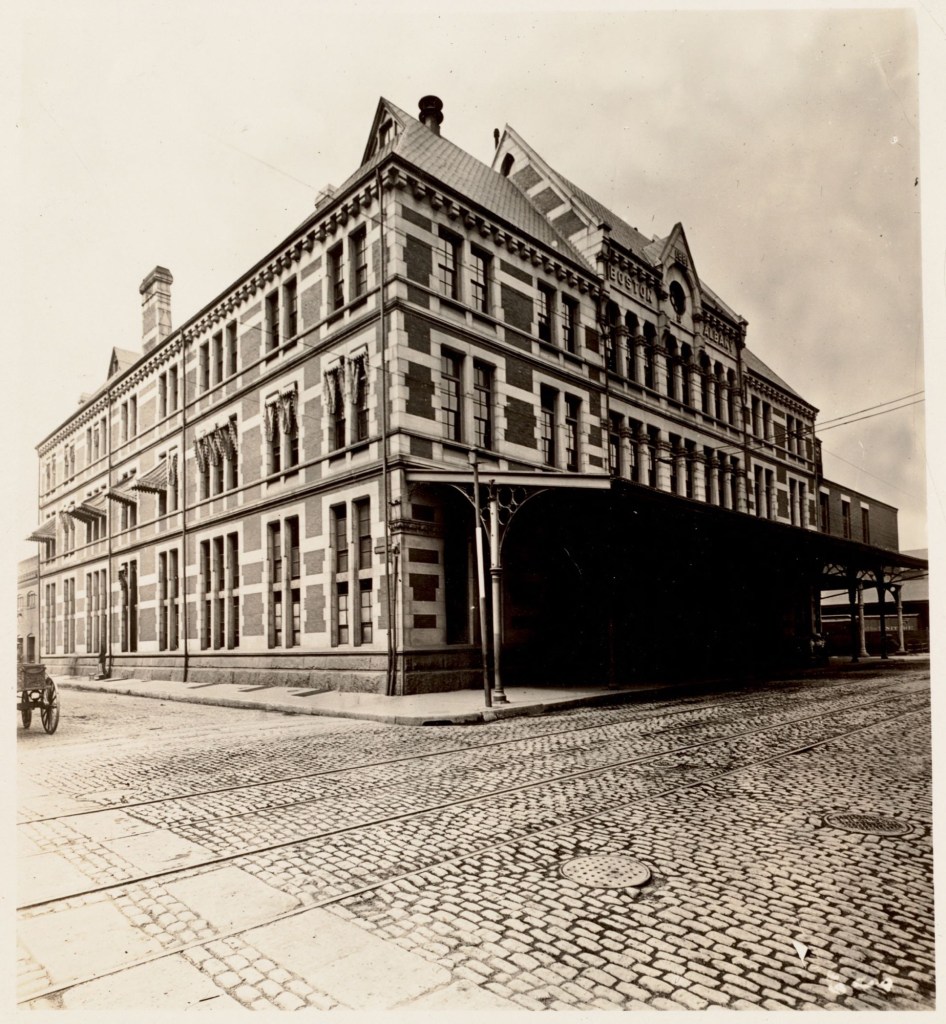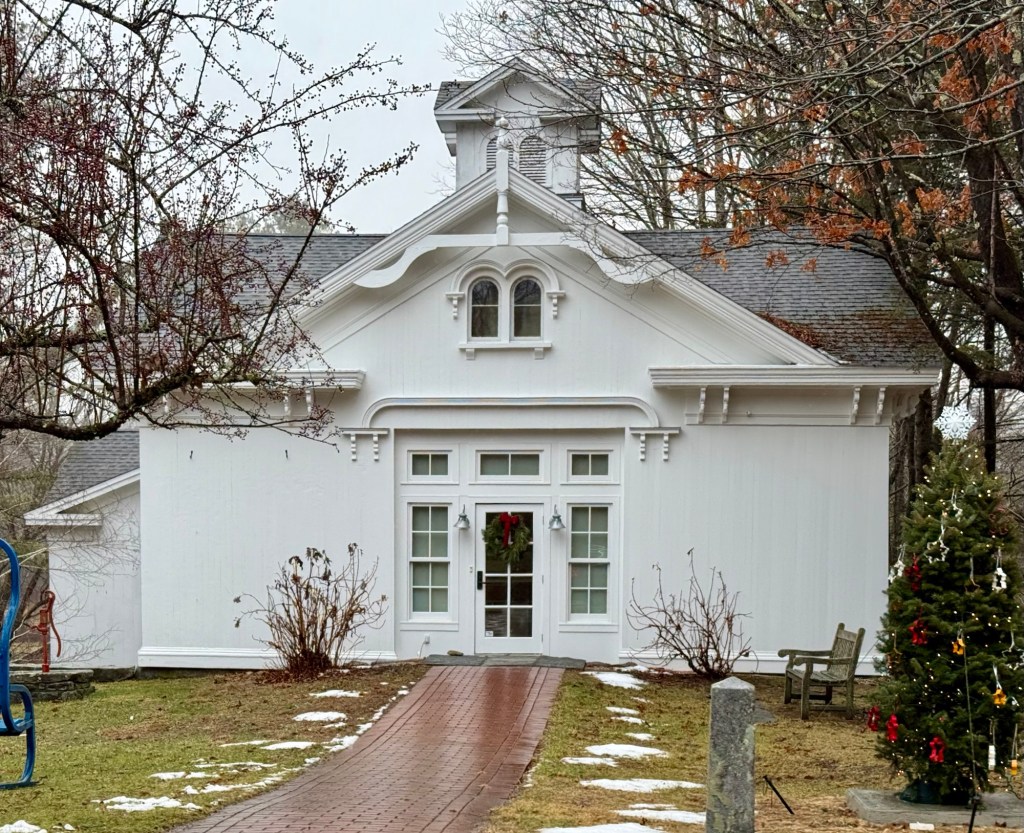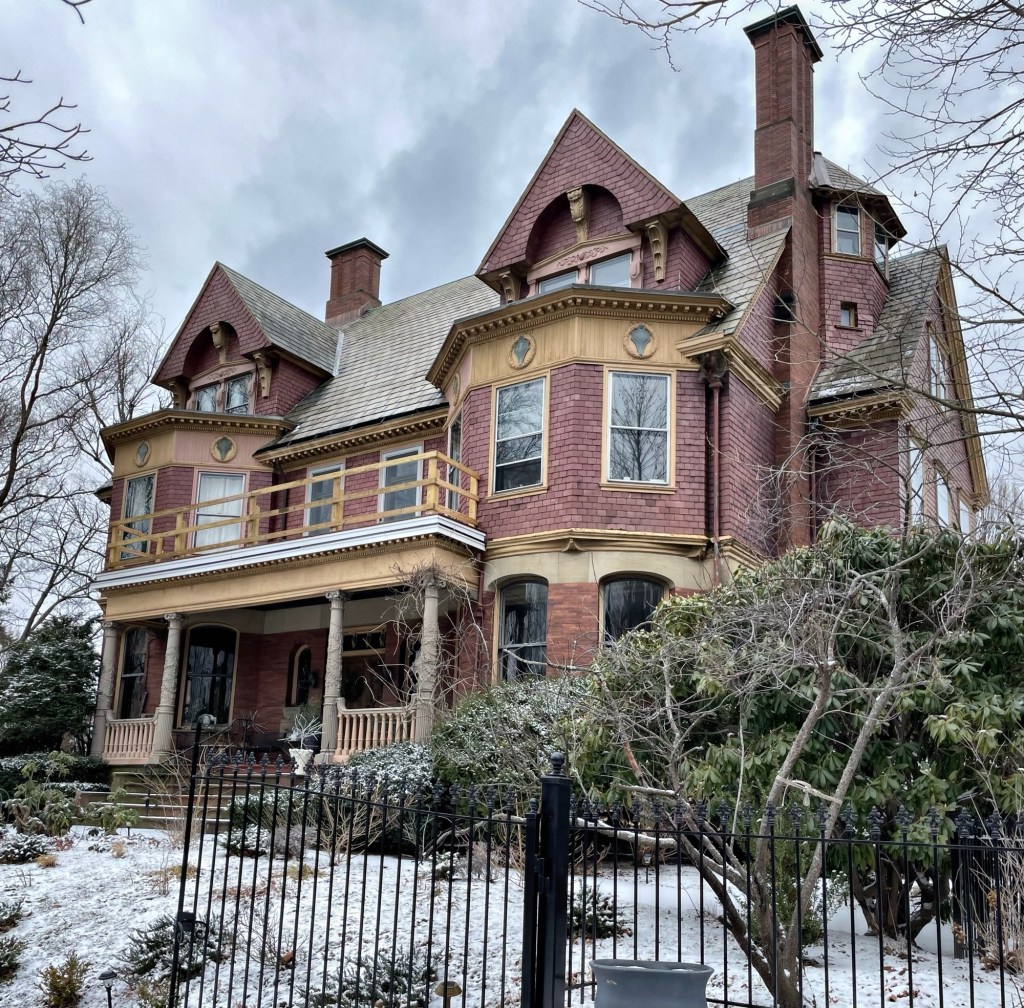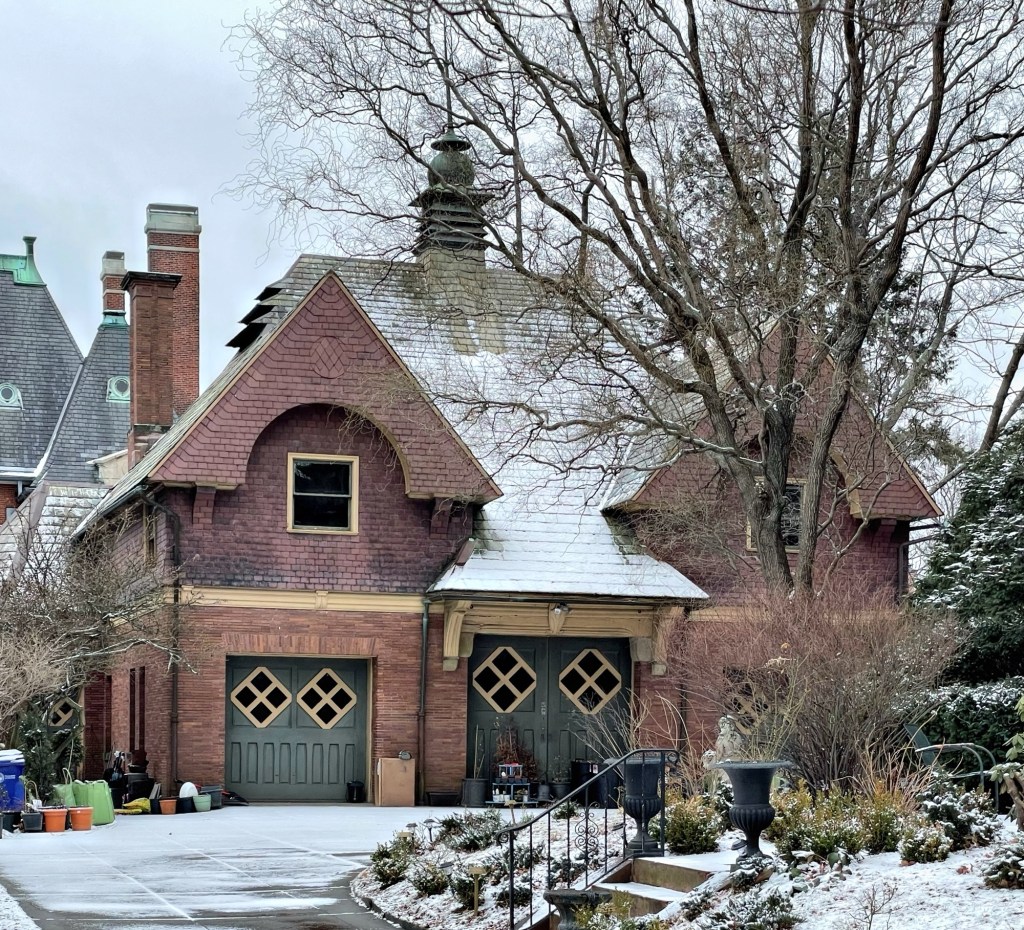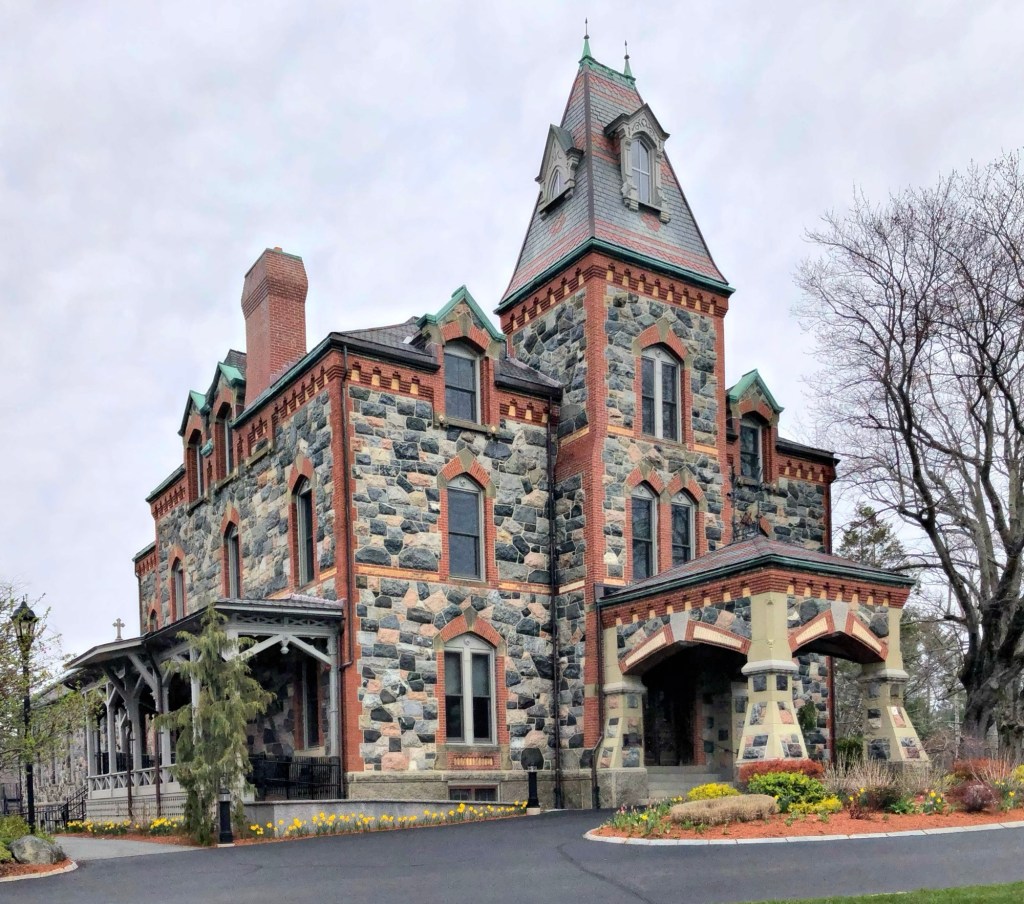
Old New Gloucester Public Library – New Gloucester Meetinghouse // 1895

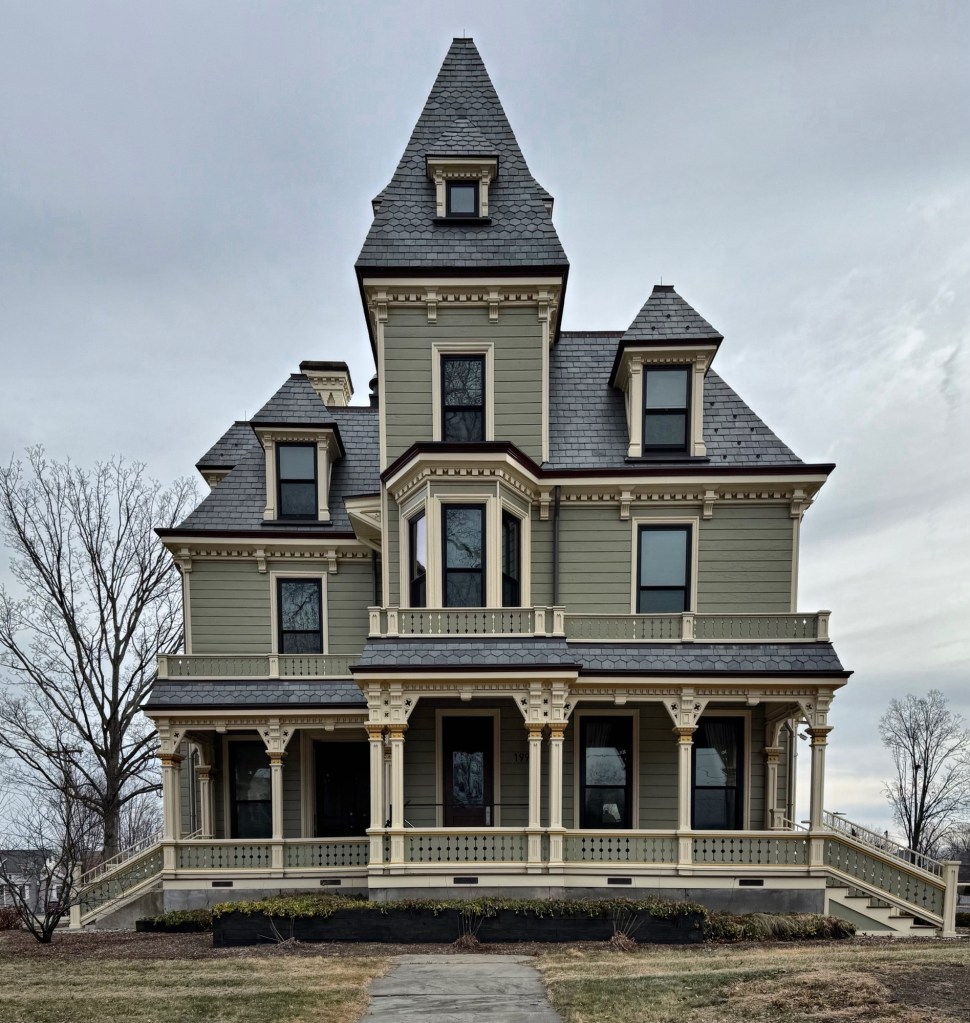
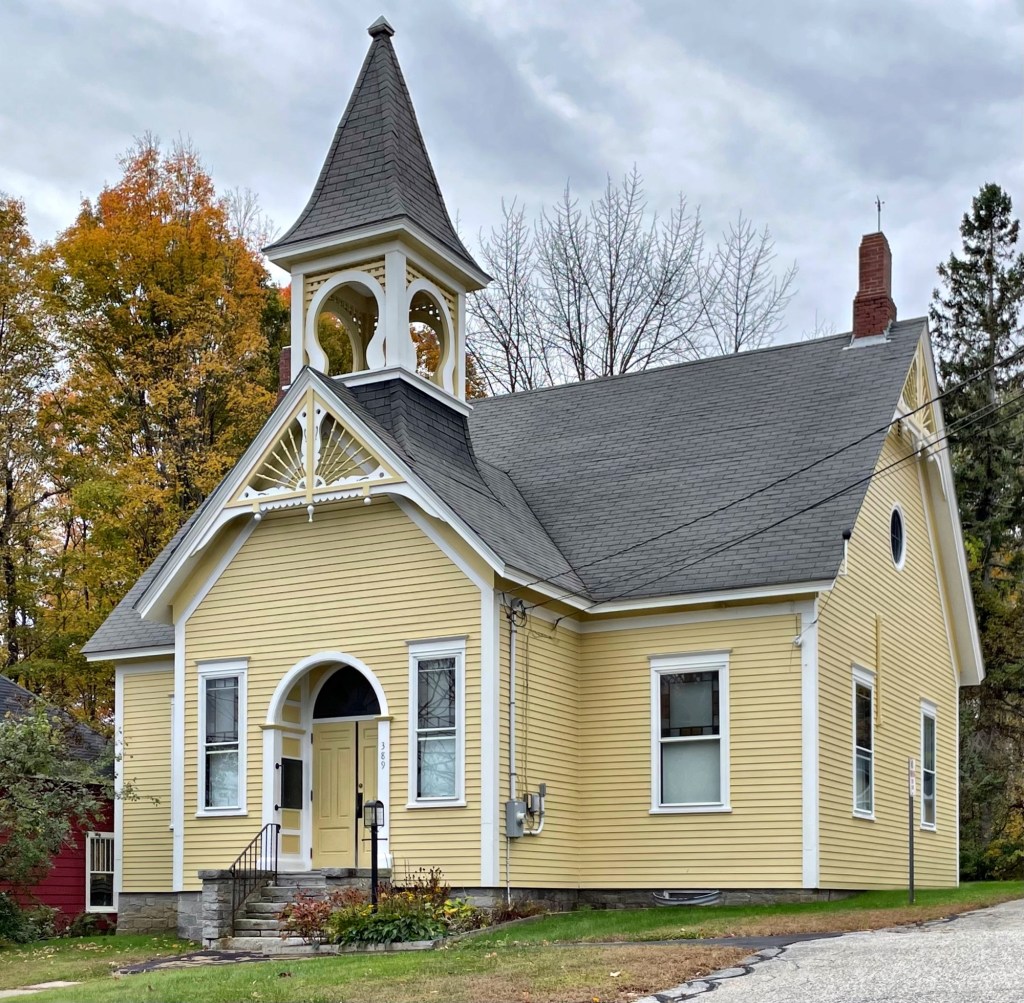
The original New Gloucester Public Library is located in the central village of New Gloucester, Maine, and is one of the finest architectural buildings in the town. The library was established in 1888 when voters passed a resolution to establish a public town library as before this, a private, social library existed here. A committee was chosen to purchase books and make decisions for expenditures and staff. The library was originally located in the town hall building, and was supported by an annual poll tax of 50 cents. The first librarian was Helen A. Moseley, with a salary of $50 a year, she remained the town’s librarian until 1920. By 1895, the library had grown to more than 2,100 volumes and it was decided a new, purpose-built library was needed. That next year, a lot was purchased and this Victorian style building was constructed adjacent to the Town Hall. The wood-frame building has a decorative central section with recessed, arched entry and gable with decorative Stick style ornament. Additionally, a tower protrudes from the roof, giving the building additional whimsy. The library was eventually outgrown and relocated in the former High School, two buildings down the street. The old library has ever-since been the town’s meetinghouse.

New Ipswich Public Library // 1895

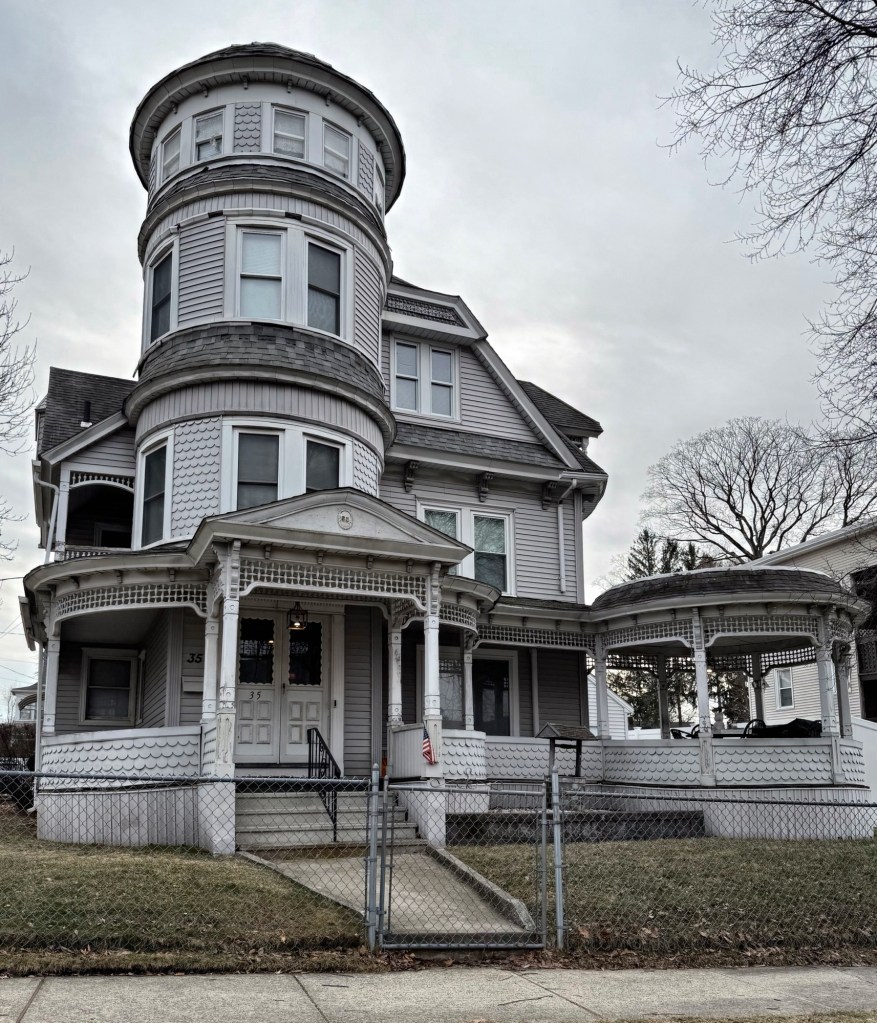
The New Ipswich Public Library is a one-story Shingle style building on Main Street in the charming village of New Ipswich, New Hampshire. The library building was likely designed by Ernest M. A. Machado, one of the best, and relatively unknown architects of the late 19th and early 20th century in Salem. The entrance which faces the side, is flanked by two diamond-pane windows, which can also be found on the primary facade. A special ten-light vertical window is recessed within a shingled depression in the gable, which adds some complexity to the design.

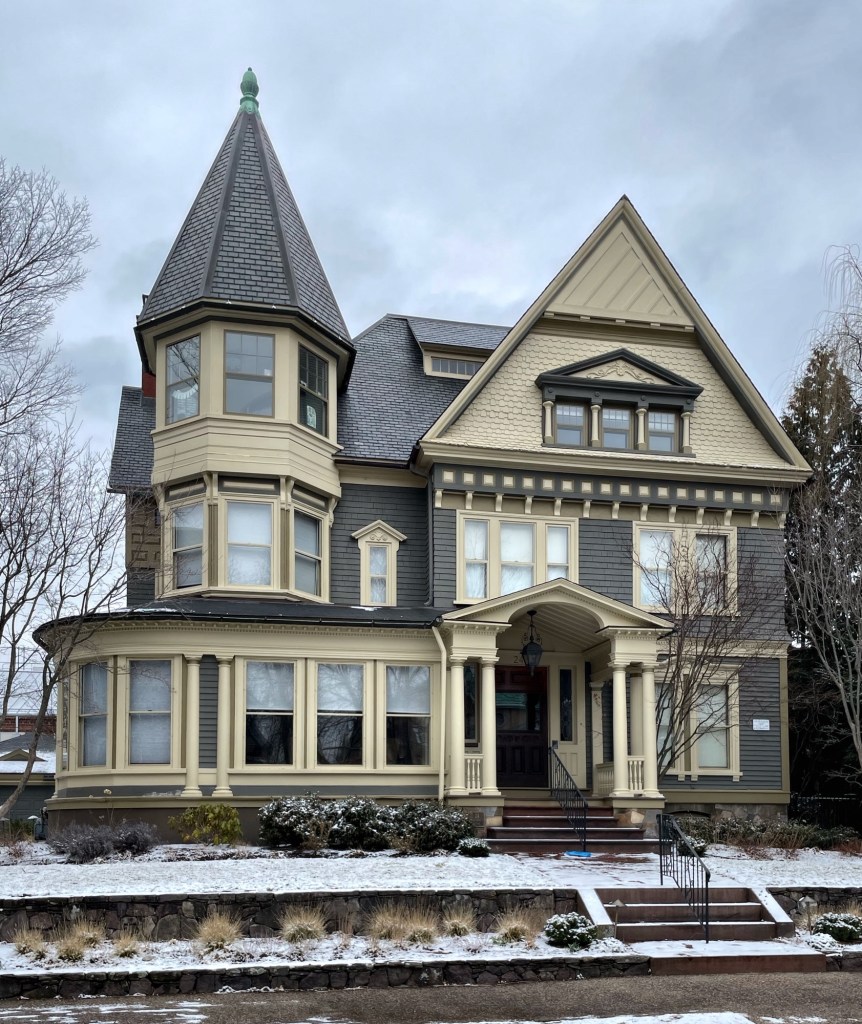
William Dexter House // 1899

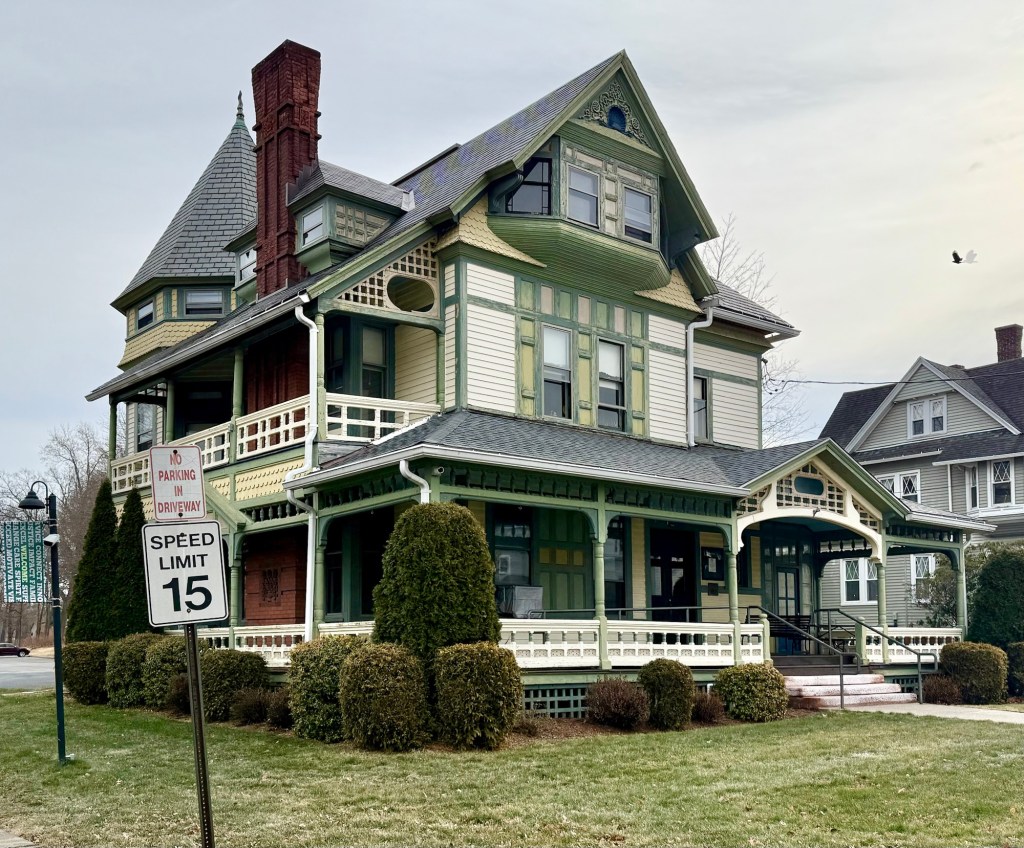
One of the best examples of the eclectic architecture designed at the of the 19th century in Norwood, Massachusetts, can be found on Beacon Street in the William Dexter House. Built in 1899 for William W. Dexter (1827-1911), who in 1852, married Harriet Blake, later settling in Massachusetts. Tragedy struck the family in 1871, when on the same day, his wife and daughter died; two days later, his sister-in-law, and six days after that, his other daughter Carrie died, all of bacterial infections. All that remained of the family was William and his only surviving daughter, Nellie. William remarried and built a blended family until his death in 1911. This house was built by Dexter, who worked as a contractor and painter, and George F. Bagley, a local builder. The complex form, rooflines, varied siding types, corner tower, and intact historic windows all add to its beauty. If only it had a historically appropriate color scheme to compliment it!

United Church of Norwood // 1886

Located across from the church-like Norwood Town Hall, the United Church of Norwood is a landmark example of the Victorian Gothic architecture style and an important historical landmark for the town. The cornerstone of this present church was laid in 1885 and was completed and consecrated by December of 1886. Boston architect J. Williams Beal, got his start at the firm of McKim, Mead & White, designed the church here for the local Universalists, who lost their previous church to fire in 1884. In 1934, the town’s Universalist and Methodist congregations merged and they joined together in this, as a Union Church. Built of Milford granite and pressed brick, the United Church of Norwood features a side chapel and clock in its steeple which are unique and add charm to the historic church.

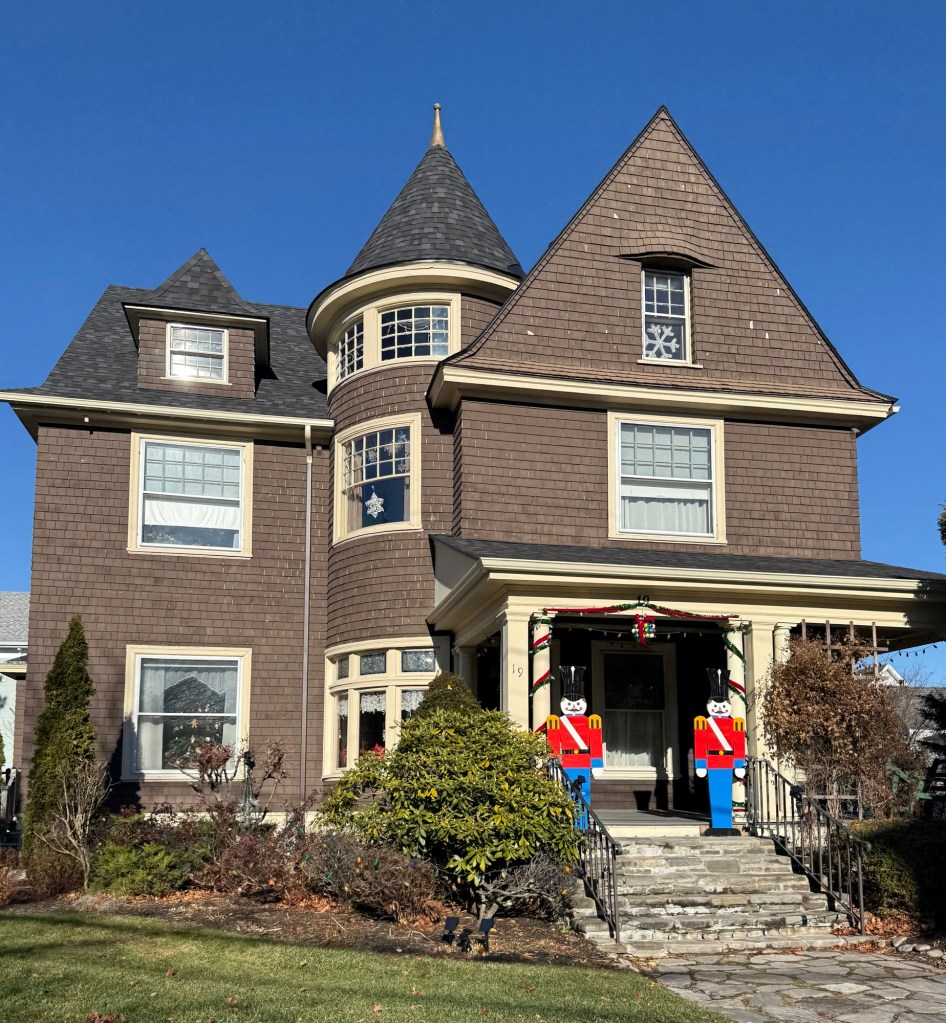
Oliver J. Barr House // 1908

Built in 1908 as a late example of the Queen Anne and Shingle styles, the Oliver J. Barr House is one of the finest Victorian buildings in Norwood, Massachusetts. The residence was built for Oliver J. Barr (1863-1935), who served as the General Manager of the Norwood Press in town, following his company from Boston to Norwood. The house was designed by Eugene Clark a Boston-area architect who specialized in suburban houses in the late 19th and early 20th centuries. The dwelling is noteworthy for its distinctive form, intact and rough textured wood shingle siding, and complex roof configuration. Particularly noteworthy is the verandah which encircles its northeast corner and rounded conically capped tower.

Whitaker Block // c.1870

One of the finest commercial buildings in downtown Saugerties, New York, is the Whitaker Block, a landmark Second Empire style structure from the years following the American Civil War. The structure dates to around 1870 and was first owned by an E. Whitaker and was mixed use with retail at the street and offices above. Additionally, the building was home to the local chapter of the Independent Order of Odd Fellows (IOOF) a fraternal social organization. The three-story with mansard roof building stands out for its architectural details and integrity which largely remain intact to this day.

Dutch Arms Chapel // 1875

Tucked away on a side street in Saugerties, New York, this Victorian Gothic chapel has recently been given a new life for the arts. The chapel was constructed in 1875 as part of the Reformed Church of Saugerties (1852), designed by famed architect James Renwick, Jr., the architect of St. Patrick’s Cathedral in Manhattan and the Smithsonian in D.C. The architect of the chapel is not clear, but it retains similar detailing and materials to the main church. The structure was used for smaller religious meetings and a sunday school for decades until it eventually closed. The chapel was recently acquired by Isabel Soffer and Danny Melnick, co-founders of Hudson Valley Live, and has been restored and transformed into The Local: a year-round, multi-arts venue, breathing new life to the building and culture to the artistic town.

Joseph P. Allen Cottage // 1877

One of the most picturesque and charming summer cottages (now year-round residences) in the Salem Willows neighborhood in Salem, Massachusetts is this Victorian on Bay View Avenue. The cottage was built around 1877 for Joseph Pray Allen (1822-1897) who was a police officer who likely climbed the ranks in the force to afford a second home in the city. The 1 1/2-story cottage has decorative bargeboards at the eaves and stick bracket at the gable. Perfection!

Henry S. Chase House // c.1882

One of the many “hidden” gems of old houses in Brookline is this charmer on Francis Street, just west of the Longwood district. The residence was built by 1882, by Henry Savage Chase (1825-1885) who lived in a larger stone mansion across St. Paul Street (no longer extant). This house was rented out by Chase, possibly to friends and remained in the family for decades. This early Queen Anne style dwelling (and likely the main house) was designed by architect Edgar Allen Poe Newcomb, a relatively unknown architect of the period. The house has an irregular plan with varied siding and materials, with applied ornament that has survived intact for nearly 150 years.

William Potter Rental House // 1889

William W. Potter, a shoe manufacturer and businessman, and his wife, Isabella Abbe Strickland Potter, lived in the Longwood section of Brookline and became active in the surround areas development in the last decades of the 19th century. William bought land off Kent Street and began to lay out house lots, becoming a developer overseeing construction of stately Queen Anne Victorian rental properties marketed to upper-middle-class residents. For this house on Francis Street, he commissioned architects George Rand and Bertram Taylor, who were known for producing stylish residential designs for the middle class in the Boston area. The massive property was a duplex, providing units to two lucky families! The building has just about every hallmark feature of the Queen Anne style including: the conical roof on a rounded corner bay, a complex roofline, asymmetrical plan, varied siding/materials, and applied ornamentation. In the 1920s, the house was owned by Simmons College, and used as a boarding house. Luckily, the property was restored and now is one of the finest residences in the neighborhood.

Highgate Manor // c.1870

Henry Baxter (1821-1897), a doctor and owner of a local mill and multiple area farms, built one of the most remarkable Second Empire style houses in New England, and it can be found in the small town of Highgate, Vermont! Dr. Baxter was said to have acquired an earlier Federal period house on the site in the 1860s and began planning a high-style Mansard estate here for his family. The earlier Federal house was incorporated as a rear ell and the new Second Empire mansion was built in front. Architecturally, the house stands out for its bellcast mansard slate roof topped by a square belvedere with arched windows and heavy scrolled brackets. His patented medicine, Dr. Baxter’s Mandrake Bitters, was sold throughout Vermont in the late 19th century and afforded him the wealth to erect this stately home. There are many unsubstantiated claims of Dr. Baxter “performing experiments on his children” for the sake of people to state that the house is haunted, but this appears to be lore in poor taste. It is said that the house was also a stop on the Underground Railroad, but that appears unproven as well. After Dr. Baxter’s death in 1897, the property became a lodge and restaurant. A basement bar was built and during prohibition, was said to have hosted the likes of Al Capone. Today, Highgate Manor, with its larger-than-life lore, remains one of New England’s most important and high-style Second Empire houses in one of the most unlikely places. It goes to show that it is worth exploring all of New England!

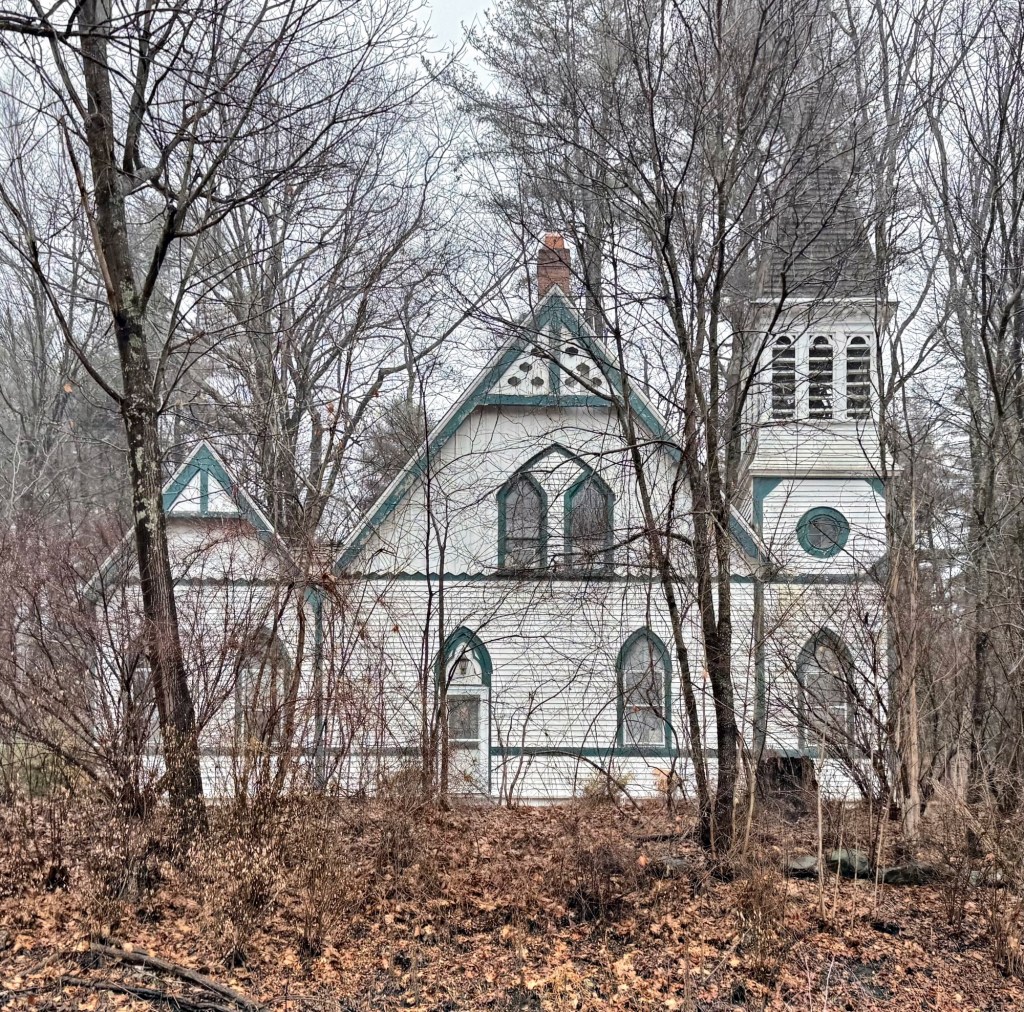
Highgate Springs Union Church // 1877

Rural parts of Vermont always surprises me with amazing old buildings. This white wood-frame church is known as the Highgate Springs Union Church, an 1877 edifice which effortlessly blends Victorian Gothic and Stick style details. The building became the village’s union church, providing a worship space for members of all denominations who on their own, could not afford the cost of building and maintaining a building. The small congregations eventually moved out and the church appears to now be largely unused beyond small events or weddings/funerals. I am glad to see it is kept up well at least!

Bay Crest Cottage // c.1850

Located across from the Winthrop-Eckley Double House on Corne Street, this gorgeous Italianate style summer cottage is a perfect blending of stature and whimsy. The house was built around 1850 and owned by Charles B. Peckham. Built in the Italianate style, the symmetrical house stands three-stories with covered side entrances divided by a projecting two-story bay. The house exhibits broad, overhanging eaves and paired and ganged round arched windows. The property was known as “Bay Crest” and remains one of the unsung landmarks of the 1850s in Newport.

“Park Gate” Cottage // 1879

“Park Gate” Cottage sits on Bellevue Avenue near Touro Park in Newport, Rhode Island and is one of many summer “cottages” for wealthy summer residents. The home replaced the Atlantic House, a large summer hotel formerly on the site. The wood-frame dwelling was designed by Newport architect George Champlin Mason for Seth Bunker Stitt of Philadelphia and constructed in 1879. Mason’s design for “Park Gate” includes many features typical of the Queen Anne style including the asymmetrical facades, wrap-around front porch, tower, and even the small details like dentils, spindle work and balustrades. The house was later purchased by Newport Lodge #104 of the Benevolent and Protective Order of the Elks in 1920, who own the building to this day.

Johnston-Sullivan House // c.1894

One of the more exuberant and ornate homes in Roxbury’s Washington Park neighborhood is this charmer on Howland Street. The eclectic house was built in around 1894 for Ellen S. Johnston from plans by local architect Timothy Edward Sheehan and stands out for its preserved exterior in a neighborhood where many homes are covered in later siding, obscuring the ornate details underneath. Details include: swag and garland applied ornament, two bays at the facade (one polygonal and one rounded), a Colonial Revival style porch, and central rounded dormer. Wow!