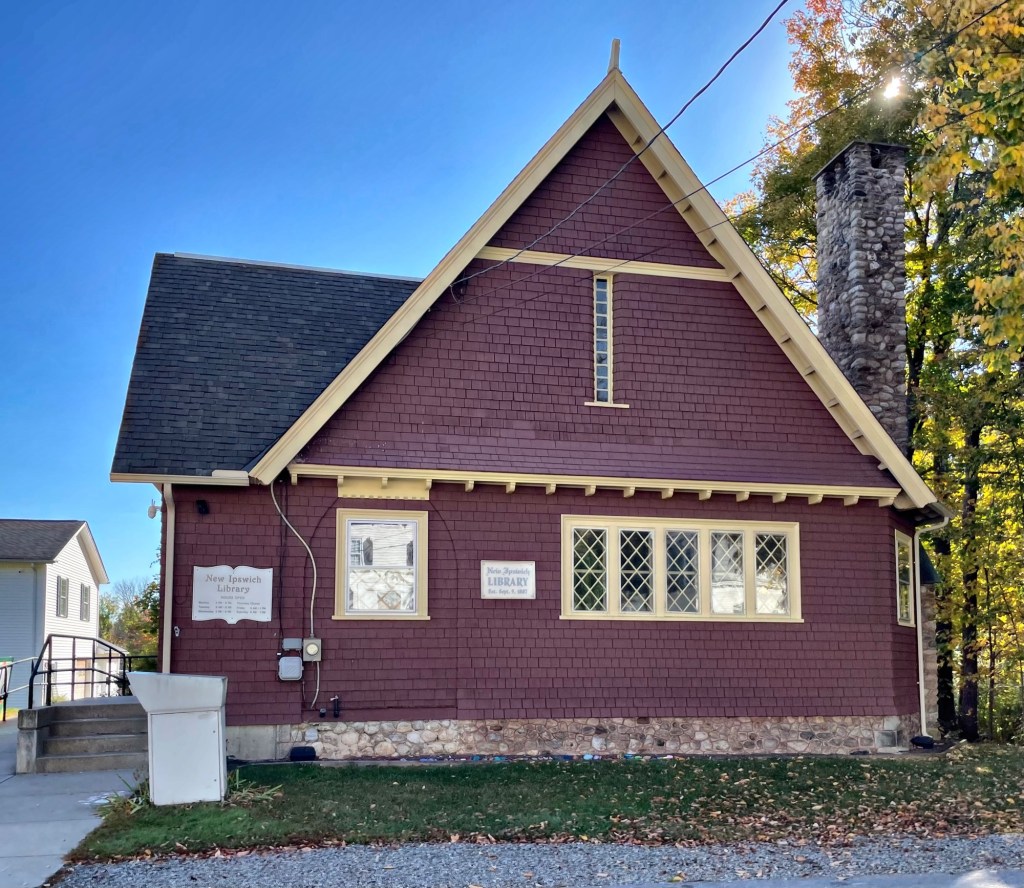
Roughwood Estate Carriage House // 1891

Built on the expansive grounds of “Roughwood”, a country estate in Brookline, Massachusetts, this former carriage house has seen many iterations in its lifetime. Like the mansion house, the carriage house is a blending of Queen Anne/Shingle styles with fieldstone and shingle construction, designed by the architectural firm of Andrews, Jacques & Rantoul. When the Roughwood Estate was purchased and converted to Pine Manor College, the carriage house was adaptively reused and added onto as the Annenberg Library with a large imaginatively designed wing by Shepley, Bulfinch, Richardson and Abbott completed in 1986. The building remains as a library as part of the newly established Messina College, a campus of Boston College, which opened in July 2024 for over 100 first-generation college students. Gotta love adaptive reuse!

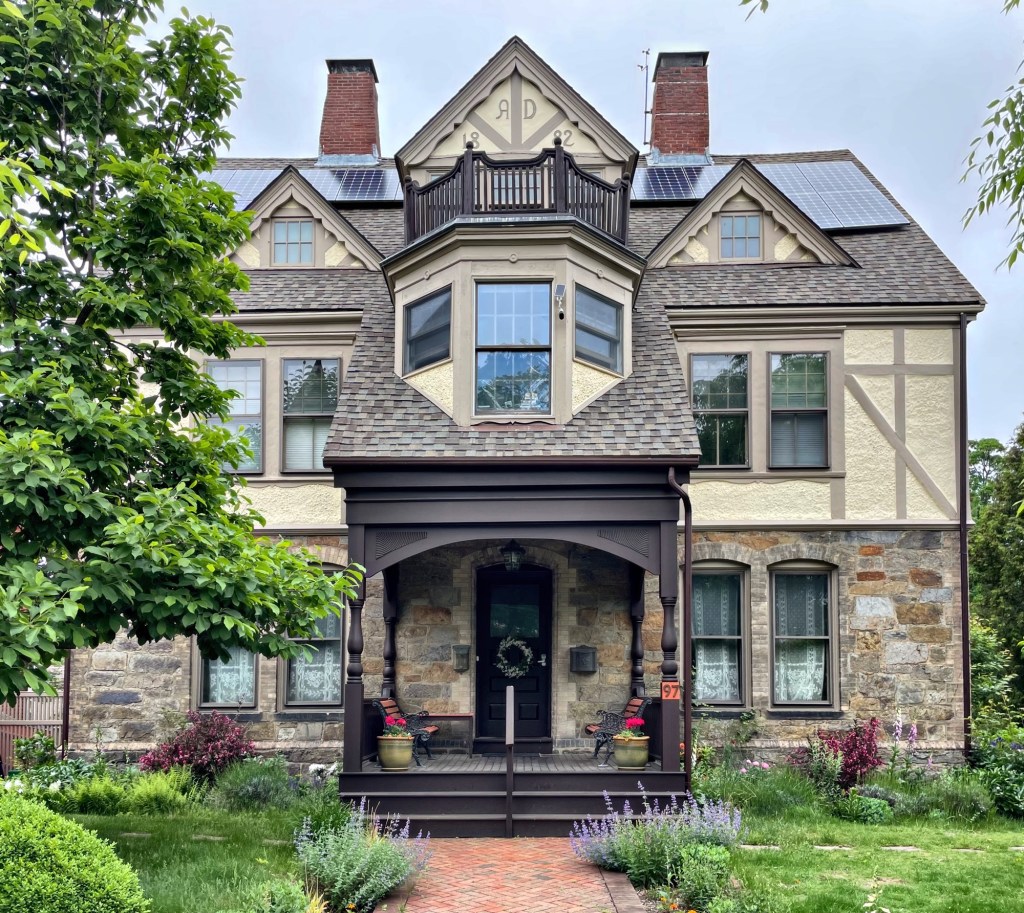
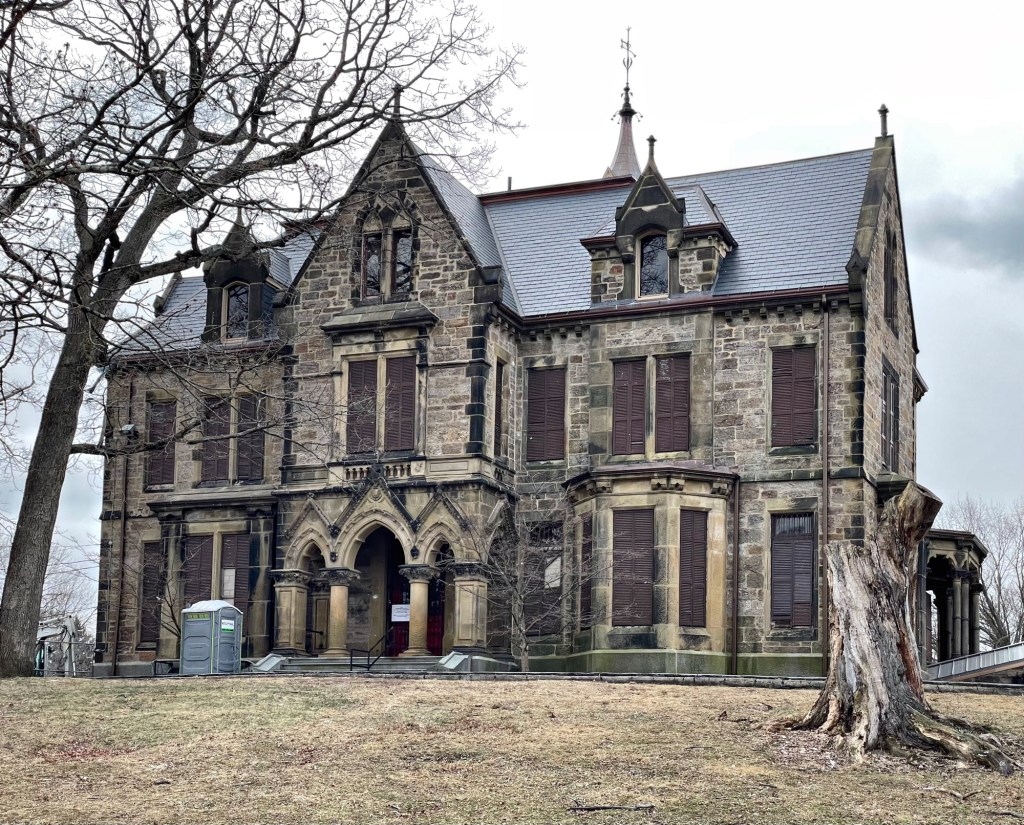
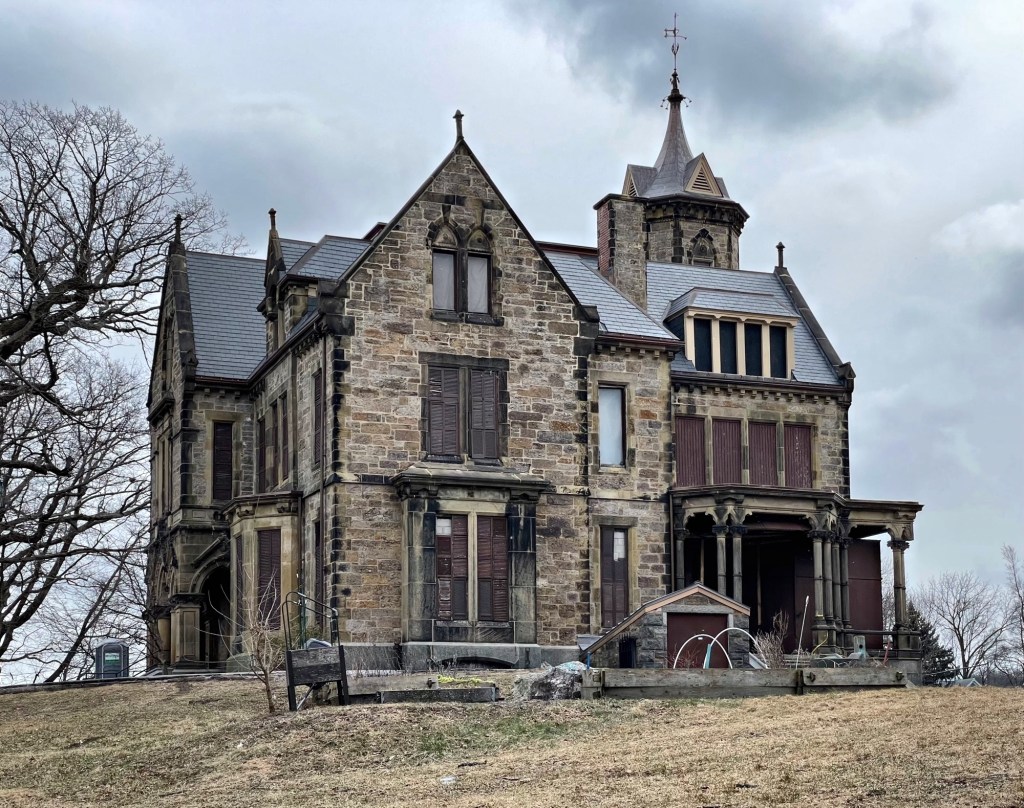
Roughwood // 1891

Roughwood is a historic estate house on Heath Street in Brookline, Massachusetts. The main residence and the various outbuildings on the grounds were designed by the Boston architectural firm of Andrews, Jaques and Rantoul, and built in 1891 as the summer estate of William Cox, a wholesale dealer in the footwear industry. Mr. Cox died in 1902 and the property was sold to Ernest Dane, the year before he married Helen Pratt, the daughter of Charles Pratt, a wealthy New York businessman and philanthropist. Mr. Dane was a banker who served as President of the Brookline Trust Company. The Dane’s owned the property for decades until the property was eventually purchased by Pine Manor Junior College in 1961. The estate house remained a centerpiece of the campus. In the early 21st century, Pine Manor College saw financial distress, and was saved by Boston College, who acquired the campus and its existing students as Messina College, which opened in July 2024 for over 100 first-generation college students. Architecturally, Roughwood is a high-style example of the Queen Anne/Shingle style of architecture. The mansion is built with a puddingstone and brownstone first floor and a second floor of varied patterns of wood shingles, all capped by a slate roof. The facade is dominated by towers and dormers and the great rustic entrance portico with dragon’s head brackets. To its side, a 1909 Tudor Revival addition served as a music room for the Dane’s family and while stylistically unique, is designed with impeccable proportions.

Ancient Landmark Building // 1887

Tucked away on Boylston Place, a dead-end pedestrian way off the bustling Boylston Street in Boston, you will find a collection of 19th century buildings that have miraculously survived over a century of growth, urban renewal, and rebirth. This is the Ancient Landmark Building, constructed in 1887 as a IOOF Lodge. The Independent Order of Odd Fellows (IOOF) is a non-political, non-sectarian international fraternal order established in the United States 1819. The four-story Ancient Landmark Building blends Queen Anne and Romanesque Revival styles effectively with its two arched openings, arched windows in the top floor and two-story metal projecting bays. In the 1970s, the building was listed as “substandard” by the infamous Boston Redevelopment Authority, and luckily did not get demolished as part of its Urban Renewal push. The property was eventually acquired by Emerson College, a great steward for historic buildings and cultural institutions, who restored the building and built a new dormitory above and alongside the Ancient Landmark Building. The project preserves the important streetscape of Boylston Place, while providing needed dormitories for the school.

Emerson Gaylord Mansion // c.1871

Emerson Gaylord (1817-1899) was a businessman and politician from Chicopee, Massachusetts, who operated the Gaylord Manufacturing Company and later, the Ames Sword Company, furnishing military swords and other goods for the Union during the Civil War. His business did extremely well and he became one of the wealthiest men in the industrial city. In 1856, Gaylord purchased the property at the corner of Springfield Street and Fairview Avenue and resided in a home here until years following the war, when he demolished the original structures on the site in 1870 to build a new home currently known as the Gaylord Mansion, worthy of his stature and notoriety in Chicopee. In 1962, Elms College purchased the Gaylord Mansion for $50,000. In 1997, an Elms College Cornerstone Campaign raised $100,000 to refurbish the exterior of this historical treasure. In February 2020, the Gaylord mansion underwent another renovation by the college to transform the interior into a classroom-meeting space with dorm residences on the top floors dubbing it “Living-Learning, Community and Cultural Center”.

Blaisdell-Carter House // 1890

The Blaisdell-Carter House is a great example of a Queen Anne style home in Chicopee, Massachusetts. The house was built in 1890 for Harriet P. Blaisdell following the death of her husband, Samuel Blaisdell, a cotton broker, in 1888. Mrs. Blaisdell hired David B. Griggs, a builder in Chicopee under the firm D. B. Griggs & Sons, to design and build the residence, which sat across the street from Griggs’ own home. Harriet would pass away just three years after her home was built, and the property would eventually be sold to Nathan P. Ames Carter (1864-1959). The residence sits on a large lot and exhibits varied siding, asymmetrical plan with porches, additions, and steep gable roofs, and the use of irregular windows of varied sizing and locations. While the second floor porch has been enclosed, the house retains much of its original fabric and has not been covered by vinyl or aluminum siding, a rarity in Chicopee.

Griggs House // 1891

This fancy Queen Anne Victorian residence can be found in Chicopee Falls, Massachusetts, and is one of the most unique houses in the industrial city. This property was built and occupied by David B. Griggs, a builder in Chicopee under the firm D. B. Griggs & Sons. The firm was very busy in the late 19th and early 20th centuries, as Chicopee saw rapid industrial prosperity followed by a population boom, growing in population from over 9,000 residents in 1870 to 36,000 in 1920. Builders like David Griggs were able to grow to upper-middle class and buy property on desirable house lots and build large homes for their family, as was the case here. David Griggs died in 1896, five years after his home was built, and the property was inherited by his son, Millard Griggs. While the residence is covered in vinyl siding (original siding and trim is likely underneath the present siding), the house retains much of its original fabric including the brackets, delicate open friezes at the porches, and four-story tower.

Justin and Sarah Spaulding House // 1886

Justin Spaulding and his wife, Sarah (Cooley) Spaulding erected this house on Springfield Street in Chicopee, Massachusetts, in 1886, and would later be known for their philanthropic gifts to their home city. Justin Spaulding (1838-1906) was a wealthy grocer who amassed a small fortune operating stores in the industrial Lower Pioneer Valley. The Spaulding House is one of the finest Queen Anne style buildings in Chicopee, and is notable for its asymmetrical form, tower, ornate gable detailing, porches with original balustrade, and the chimney with inlaid terracotta tiles. Justin Spaulding died in 1906, and Sarah C. Spaulding (1840-1907) would pass away a year later. They had no children. In her will, Sarah bequeathed funds for the first purpose-built library in Chicopee and money for a memorial chapel in a local cemetery. The Spaulding House was acquired by the Academy of Our Lady of the Elms (now Elms College), moved to its present location in 1920, and was converted to the Office of Admissions for the College. Besides the need for a new coat of paint, the house is lovingly preserved!

Boston & Albany Depot // 1881-1958

Courtesy of Digital Commonwealth

When the Erie Canal opened in 1825, New York City’s advantageous water connection through the Hudson River threatened Boston’s dominance as a historic trade center. Since the topography of the Berkshires in Western Massachusetts made construction of a canal infeasible, Boston turned to the emerging railroad technology for a share of the freight to and from the Midwestern United States. The Boston and Worcester Railroad was chartered in 1831 and construction began the next year. Stations and rail lines were built westward of Boston and would eventually reach the Berkshires and the Hudson Valley with three existing lines merging in 1867 as the Boston and Albany Railroad, becoming the longest and most expensive point-to-point railroad yet constructed in the United States. The B&A undertook a significant program of improvement and beautification in the 1880s and 1890s, when the railroad hired architect Alexander Rice Esty to design this building, the Boston passenger station which was completed in 1881, the year of Esty’s death. That same year, the B&A hired architect Henry Hobson Richardson to design a series of passenger stations, connecting suburban villages west of Boston to the city. This station was located on Kneeland Street and serviced passenger service from Boston until the new South Station, a consolidated train station of various lines, was completed in 1899. This station later became a freight and storage warehouse for the railroad until the 1950s when the building was razed for the Central Artery, signaling the death of train travel as we knew it for decades to come. The site of the former station has remained undeveloped since then.

John T. Andrew Carriage House – Cornwall Historical Society Building // c.1865

This ornate carriage house on Pine Street in Cornwall, Connecticut was built by John T. Andrew around 1865 adjacent to his late 18th century home in the village. Andrews was born in Bethany, Connecticut in 1811, graduated from Yale College in 1839, becoming a minister and later a teacher. For health reasons he left both professions and turned to farming and stonework. After Andrews’s death the property was purchased in 1890 by Charles Marsh, a local undertaker, and his wife Inez. In 1954 the barn was converted to a home by their daughter, the town librarian Emily Elizabeth Marsh, a charter member of the Cornwall Historical Society. In 1966, the Society raised funds to buy the building from her estate, but could do little to adapt it for their specific exhibit and storage needs. The Society restored the exterior to its original appearance, down to the brackets, round arched windows and cupola.

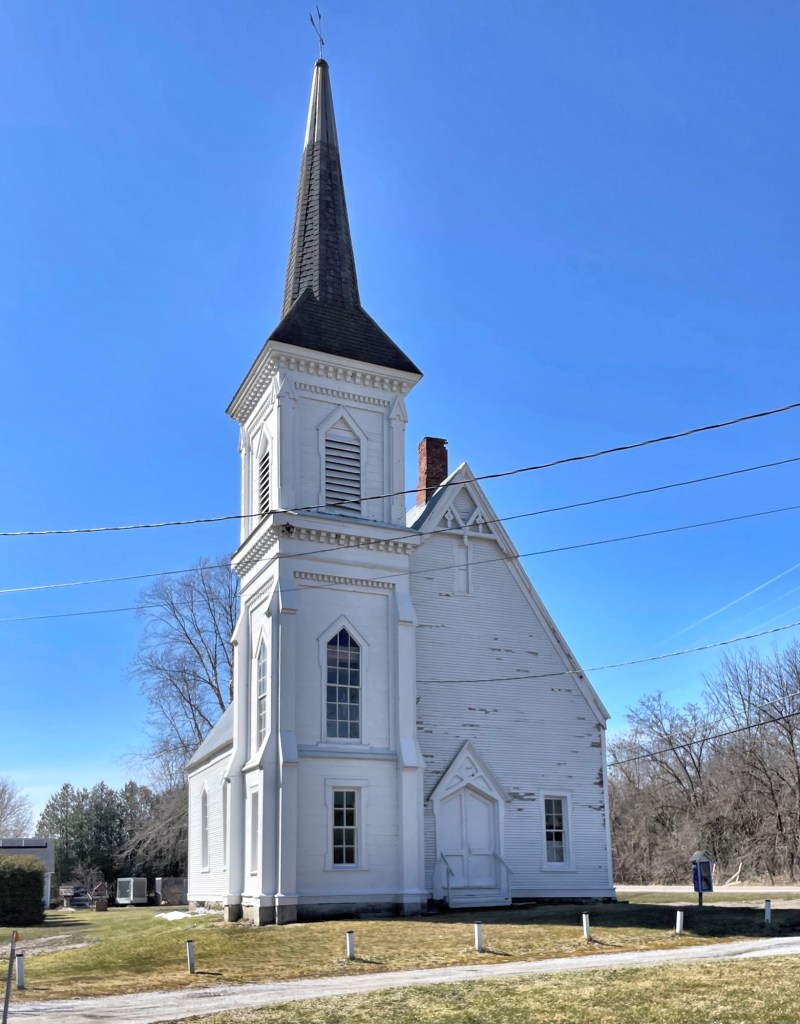
West Cornwall Congregational Church // 1877

One of the few Gothic style buildings in the enchanting town of Cornwall, Connecticut is this large church-turned-residence in West Cornwall village. As West Cornwall developed in the second half of the 19th century into the largest district in town, residents here began to discuss the idea of building their own Congregational church, rather than travel to the central village church to attend services. In the 1870s, West Cornwall congregationalists raised over $4,000 to acquire a building lot and erect this fine church. Dedicated in January 1878, the wood-frame church is a rare example of the Victorian Gothic/Stick styles with clapboard siding, lancet (pointed arched) windows, a corner tower with belfry, vertical sheathing in the gables, and ornamental applied stickwork. The church closed in the 20th century and was converted to a private residence, and is presently for sale!