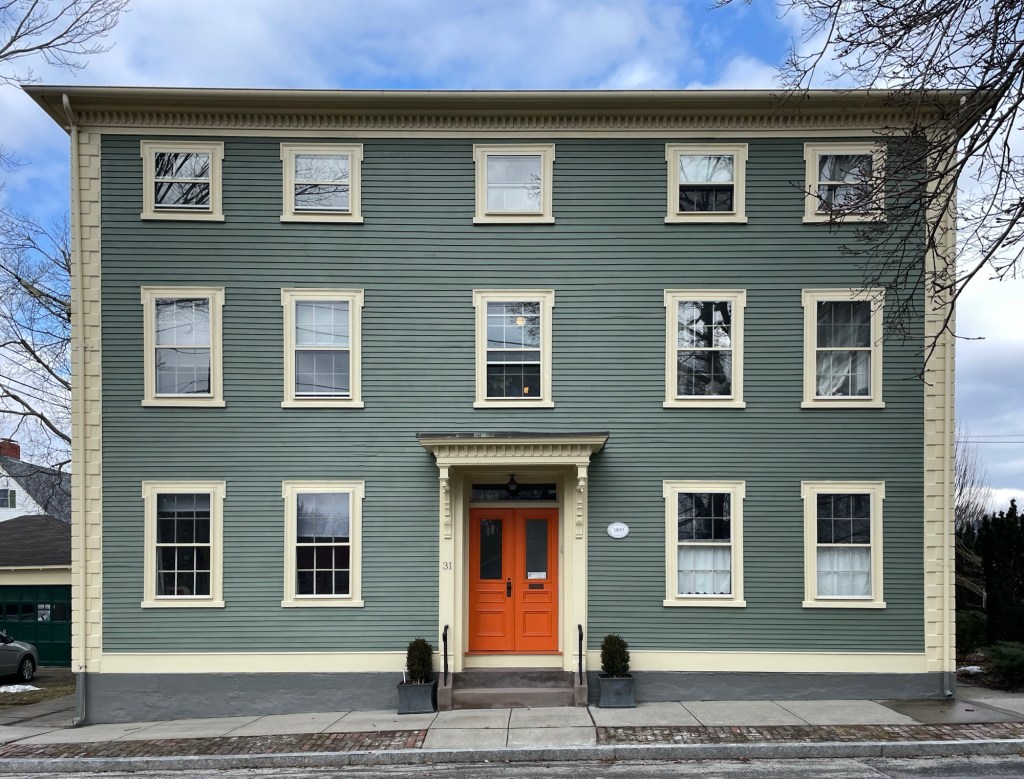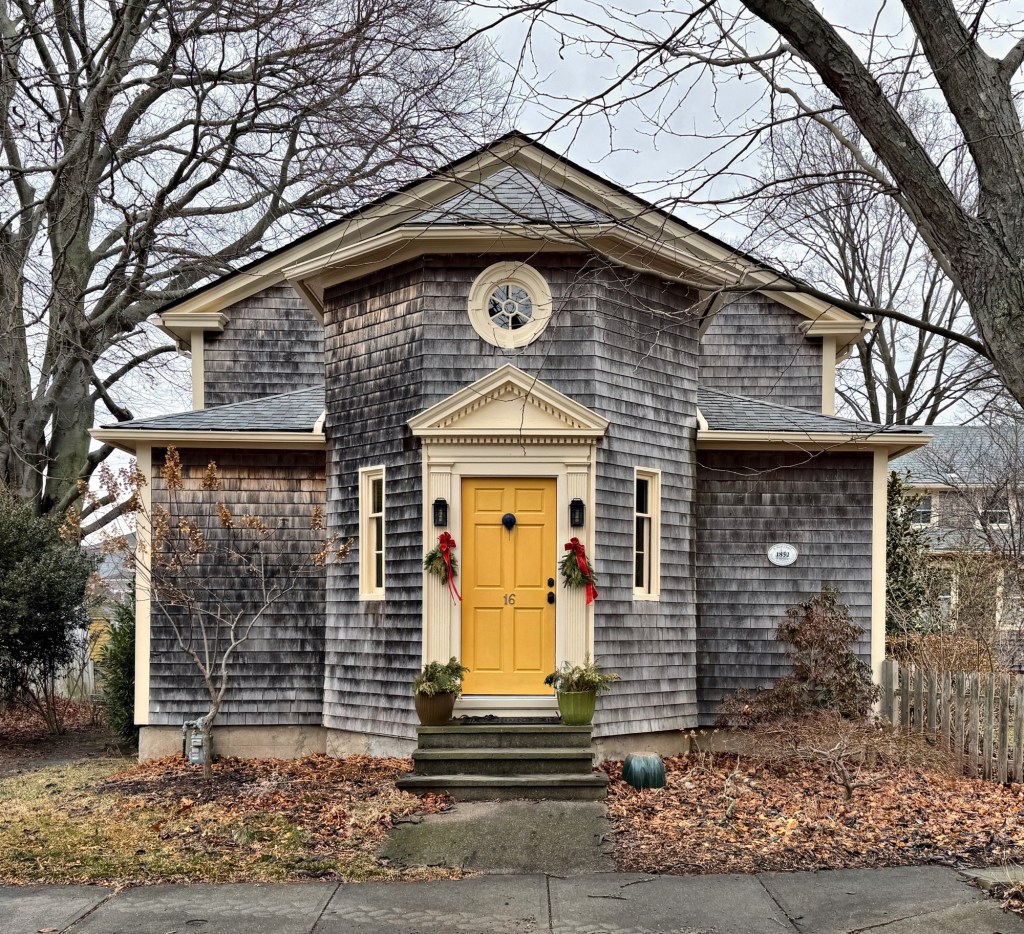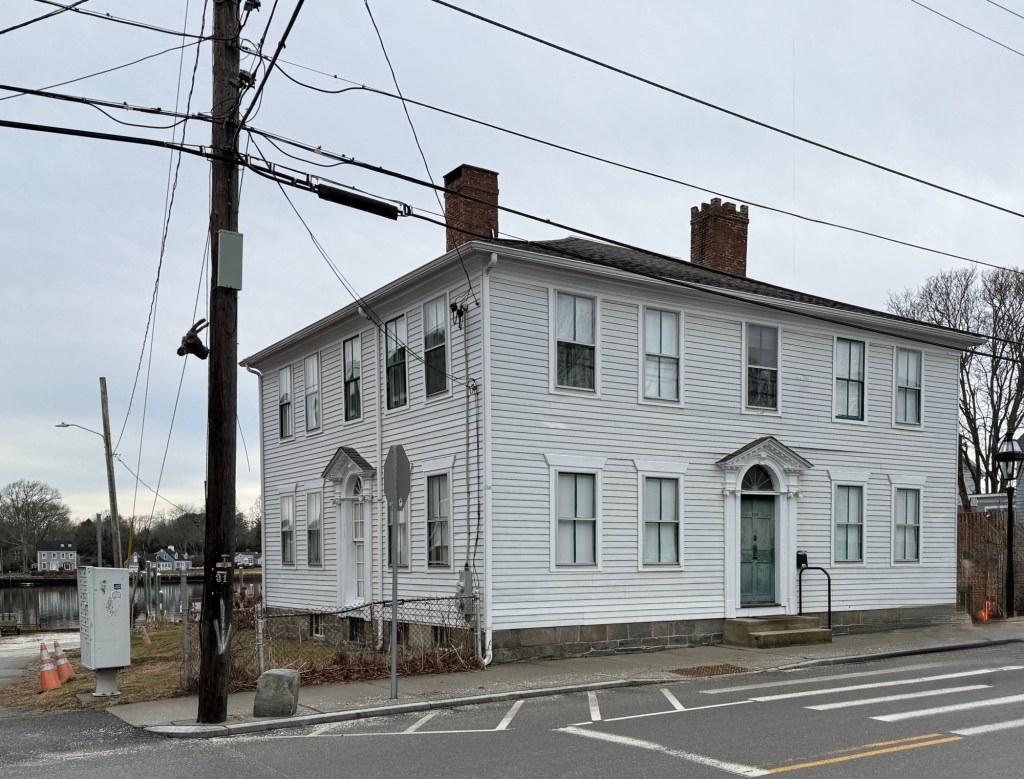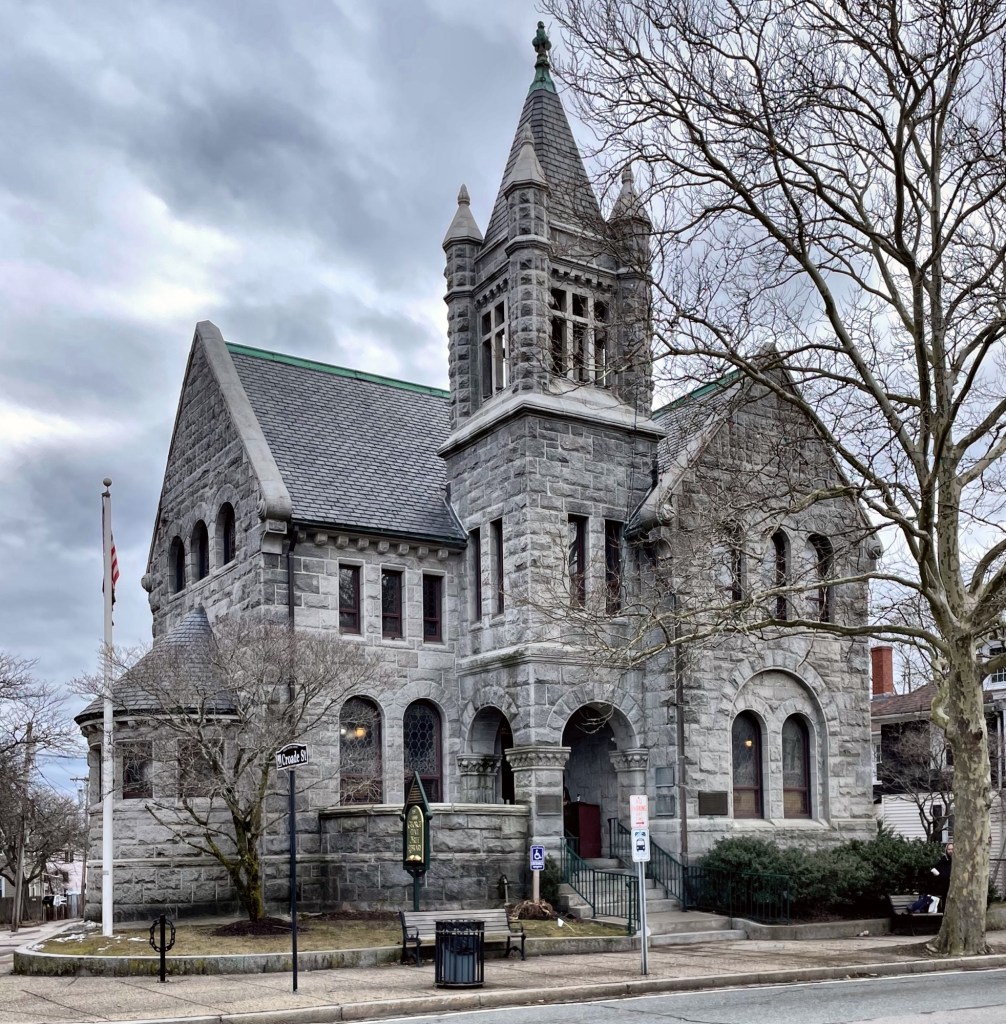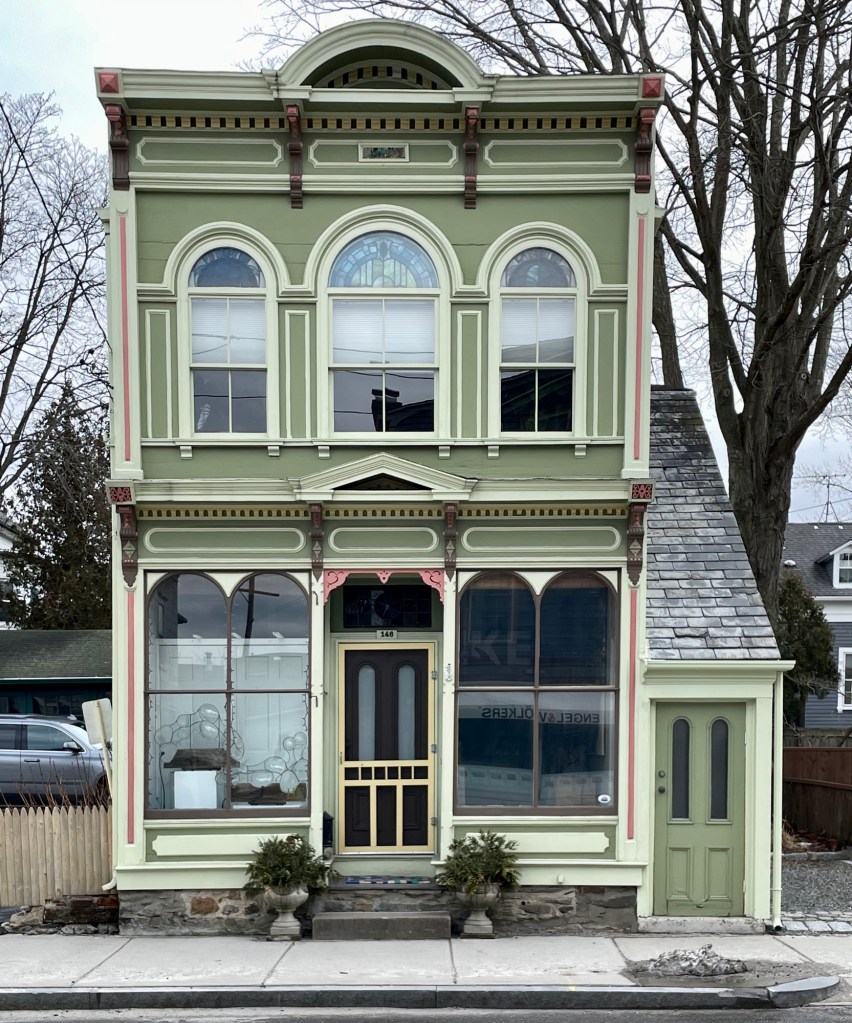
Wheaton-Clapper House and Shop // c.1760

Built before the Revolutionary War, this early example of mixed-use building is what we need more of in our cities and towns in New England. This charmer is located on Water Street in Warren, Rhode Island, and dates to around 1760. The house was occupied by D. B. Wheaton and later by a James Capper, through the 19th century. James’ wife Ann, worked as a dressmaker and the couple sold goods out of their property. As Water Street continued to proliferate with small businesses, a brick store was inserted into half of the ground floor with plate glass storefronts. This evolution of a Colonial-era residence happened all over New England, and it is great to see that the building is still occupied by a small business today!

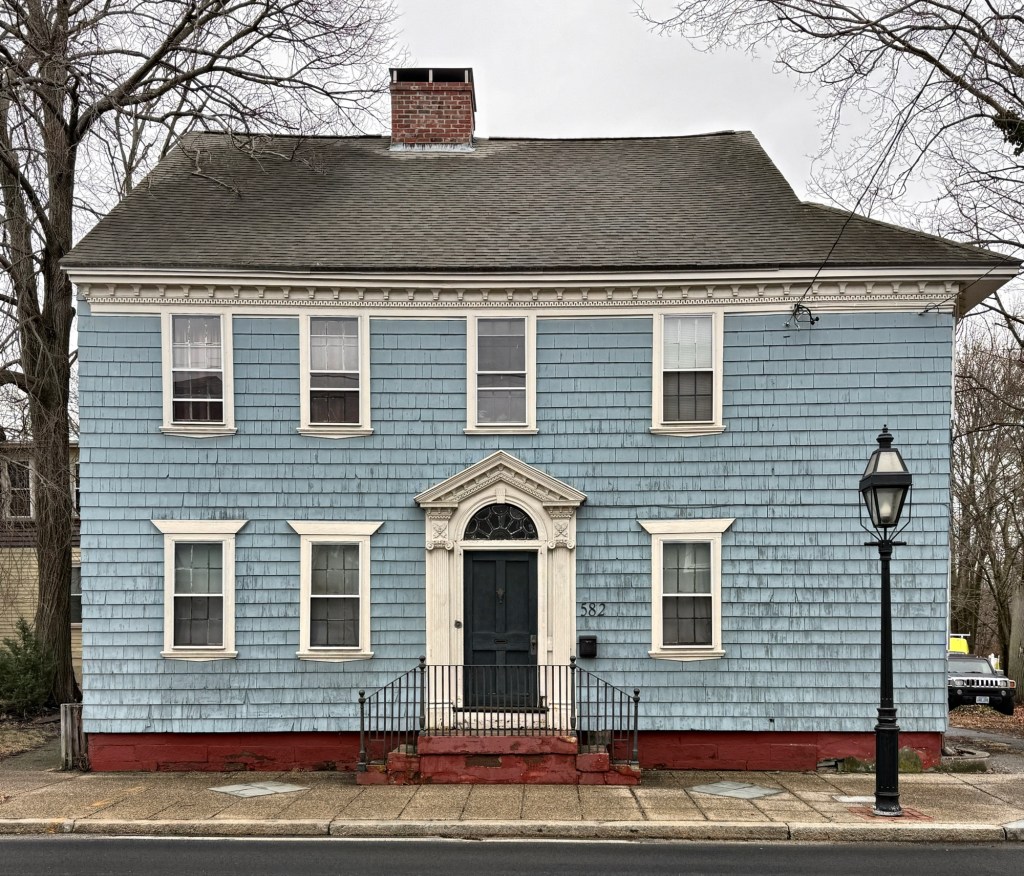
Hill-Collins House // c.1761

Located at the corner of Water and Baker streets in Warren, Rhode Island, this Georgian Colonial-era home oozes charm! The house was built around 1761 for, and likely by shipwright William Hill. Mariner Caleb Collins, who had a wharf near the foot of Washington Street to the south, bought the house in 1806, and sea captain Haile Collins lived here in the mid-19th century. The house was restored in the early 2000s by architect and preservationist Lombard Pozzi, who is credited with restoring and preserving many iconic buildings in this area.

Warren Baptist Church // 1844

Photo by Kenneth Zirkel

Stone churches are some of the most entrancing and imposing buildings, so I always have to feature them when I see them! This is the Warren Baptist Church on Main Street in Warren, Rhode Island. Built in 1844 from plans by famed architect Russell Warren, the Gothic style edifice features randomly laid rubblestone which adds to the intrigue. This is the third church building on this site. The first (1764) was burned by the British in 1778; its replacement in 1784 was demolished for the present building in 1843. Interestingly, this is the site that the predecessor college for Brown University began! The Baptist school, an institution parallel to those of the Congregationalists at Harvard and Yale and the Presbyterians at Princeton, was first known as Rhode Island College. In 1770, the school moved to Providence, the home of Baptism in this country and where Baptists promised more financial support than those in Newport , and changed its name to Brown University in 1804. This Baptist congregation is still very active in town and they maintain the building and its stunning stained glass windows very well!

Warren Industrial Trust Building // 1906

This monumental Georgian Revival bank building sits on Main Street in Warren, Rhode Island, and is one of the finest buildings of the style in the entire state. The Warren Industrial Trust in 1906 hired Edmund R. Willson of the Providence architectural firm of Stone, Carpenter & Willson to design the bank for the town after it had absorbed the town’s multiple banks, under one roof. Four Corinthian columns support a robust pediment over the entrance with the red brick elevations enlivened with arched windows, oversized keystones, and pilasters with contrasting capitals and bases. The building shows that Colonial Revival architecture, while often seen as a refined, classical style, can be festive and ornate.

Carr Homestead // 1790

By about 1790, Caleb Carr (1768-1853) built or renovated this stately Federal style mansion on Water Street in Warren, Rhode Island. He operated a tavern from the house, and had an elegant fanlighted door put on each facade—one for household use, the other for tavern customers. The property was inherited by his son, Captain Caleb Carr Jr., who continued as a tavern owner, but was also an important shipbuilder and operator of the ferry to Barrington, which docked at the end of the street. The Carr Homestead is today covered with later siding and has Victorian-era two-over-two windows but I would bet all the original siding is still under there and the house would shine with some repairs. I hope to see it happen!

Governor Lyndon House // 1751

One of the more significant old homes in Warren, Rhode Island is this gambrel-roofed Georgian residence. Built in 1751, the home was occupied by Josias Lyndon (1704-1778) his wife and enslaved Africans he purchased in Rhode Island. He had no children. Lyndon worked as Clerk of the Assembly for the colony and in 1768, he was appointed Rhode Island’s last Colonial Governor, serving until 1769. He declined re-election and served as chief clerk for the General Assembly of the Superior Court of the County of Newport, until his death from smallpox in 1778. Josias enslaved Caesar Lyndon in this house. Caesar was a highly literate African man enslaved by Josiah Lyndon who carried out Lyndon’s business, acting as both a purchasing agent and a secretary. Josias allowed Caesar to marry, and he did marry to a Sarah Searing. It is unclear what happened to Caesar, Sarah and their children, but the Lyndon House lives on as a visual reminder of the complexities and harsh reality of slavery in New England, many often overlook.

Cole-Richmond House // c.1740

This large house in Warren, Rhode Island (according to its house marker) was built around 1740, but it must have been relocated to this site or been built later as the street it is located on was initially laid out in 1790. The large, two-story house exhibits a large central chimney and five-bay facade and has recently been restored. It looks great! According to sources, the property was owned by members of the Cole Family, a prominent local family who engaged in the sale and transportation of African slaves in the 18th century. The house was eventually owned by Charles Richmond in the mid-19th century.

Hazard-Gempp House // c.1800

Opposite the Liberty Street School in Warren, Rhode Island, you will find this beautiful painted brick Federal period home. The residence was built around 1800 and owned later by George Hazard, of the prominent Hazard Family of Rhode Island. The Federal style house exhibits a three-bay facade with slightly projecting central pavilion with a semi-circular fanlight transom above. By 1915, the house was owned by Louise and Gottlieb Gempp, a German-born couple who settled in Warren and ran the German-American club in town.

St. Mark’s Chapel // c.1855

This charming old chapel was built in the 1850s in Warren, Rhode Island, to accompany the larger St. Mark’s Church. The building was relocated from the lot of the main church across the street to its current location and converted to a parish house. In the 1890s, the building was covered in wooden shingle siding and an addition was added to the rear, giving the building its current appearance. Today, the former chapel is used as a residence, and is very well maintained by the owners.

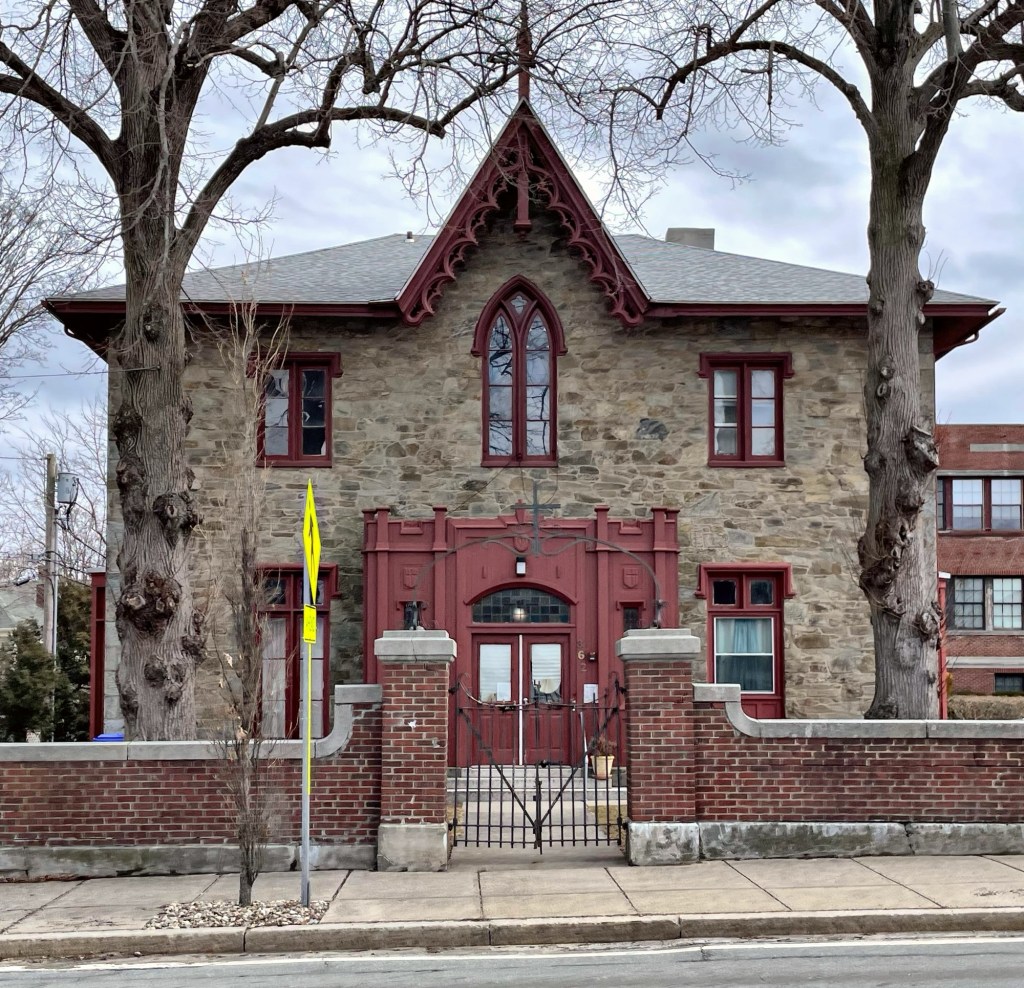
Liberty Street School // 1847

The Liberty Street School building in Warren, Rhode Island, was built in 1847 and beyond its clear architectural significance, it is significant as the third high school building constructed in the state, and is the oldest survivor of its type. Architect Thomas Alexander Tefft, one of the nation’s first professionally trained architects, designed the school when he was just 21 years old! The young architect would later take an excursion around Europe in the mid 1850s, but would fall ill with a fever in Florence, Italy and he died there in 1859. He was just 33 years old when he died. The Liberty Street school building was eventually closed and has sat largely vacant for years. A recent proposal to restore the building and add onto the rear for condominium units has been a site of contention for the town in recent years.