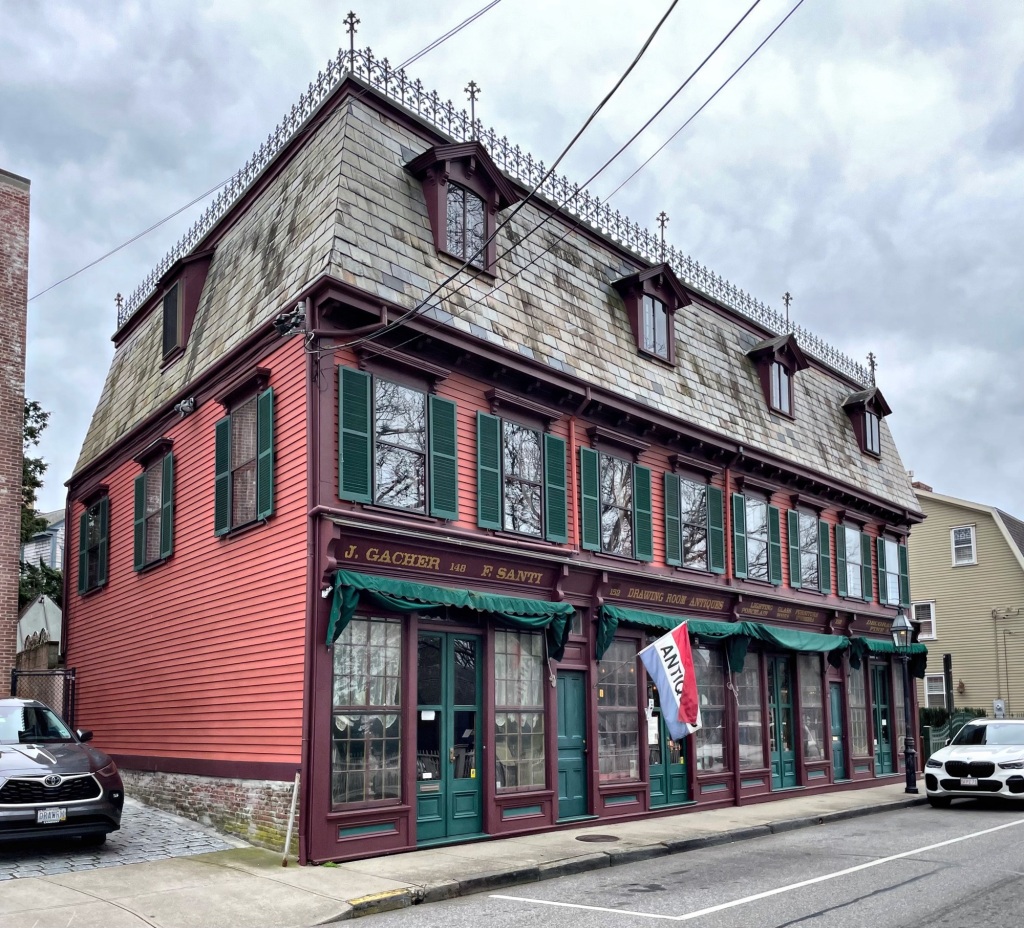
One of the finest commercial blocks in Newport is this building, the Theodore Helme Block, located on Spring Street, just behind Trinity Church. The block was built for Helme by 1875 and was possibly an early design by Dudley Newton, a local architect. The Second Empire style block has a slate roof with rare intact iron cresting and small dormers. The building was restored by Federico Santi & John Gacher, who operate The Drawing Room Antiques here.
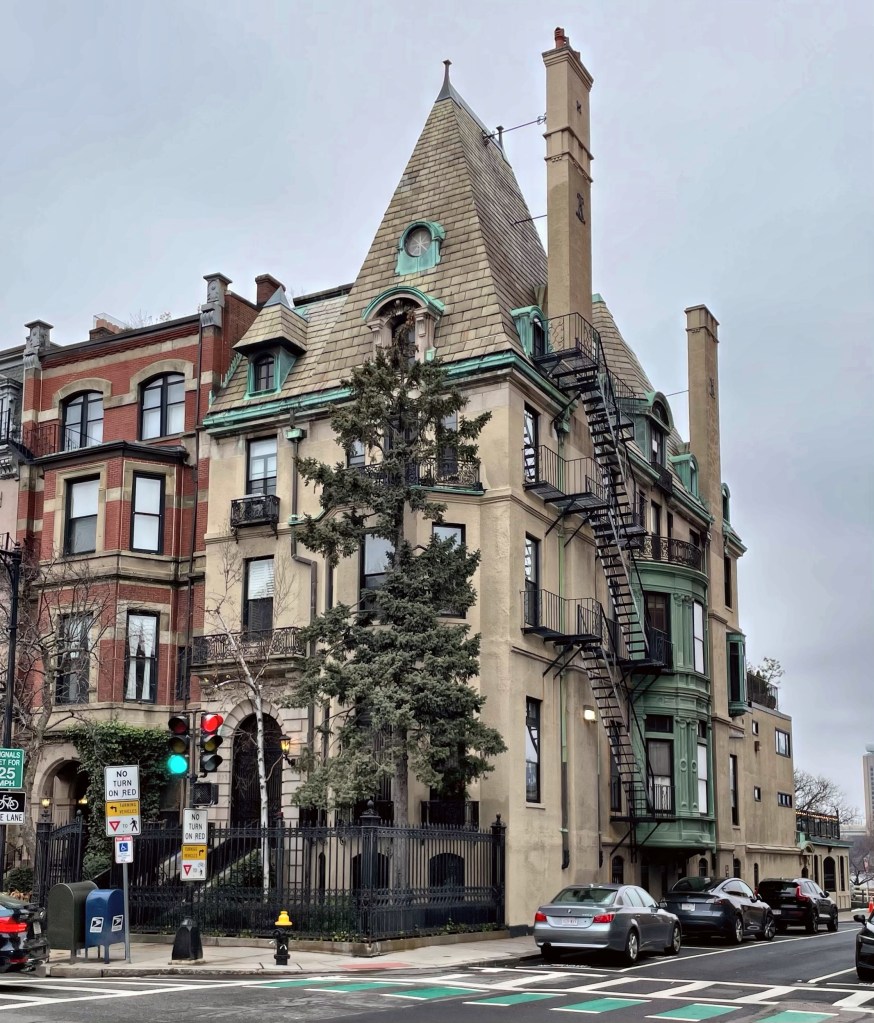
Merry Christmas to those who celebrate! As there is no snow on the ground in Boston, I wanted to share a house with a prominent pine tree, which resembles an oversized urban Christmas tree on Beacon Street. This house at the corner of Beacon and Fairfield streets was built in 1871 by architect and builder Frederick B. Pope on speculation. It did not sell as quickly as he would have hoped, and it took two years for it to finally sell at public auction in 1873. The relatively modest brick Second Empire style house was bought and sold numerous times until March 1905, when the residence was purchased by Clarence Walker Barron, a prominent publisher and journalist. In 1903, he purchased Dow Jones & Company and from 1912 until his death in 1928, he was its president. During this period, he was also de facto manager of The Wall Street Journal, he expanded its daily circulation, modernized its printing press operations, and deepened its reporting capabilities. In 1921, he founded Barron’s National Financial Weekly, later renamed Barron’s Magazine. Barron pushed for the intense scrutiny of corporate financial records, and for this reason is considered by many to be the founder of modern financial journalism. In 1920, he investigated Charles Ponzi, inventor of the “Ponzi scheme”. His aggressive questioning and common-sense analysis helped lead to Ponzi’s arrest and conviction. For his Boston townhouse, Barron hired the firm of Cram, Goodhue & Ferguson to completely renovate the dwelling with an extra floor, limestone facades, and more bold roof design.
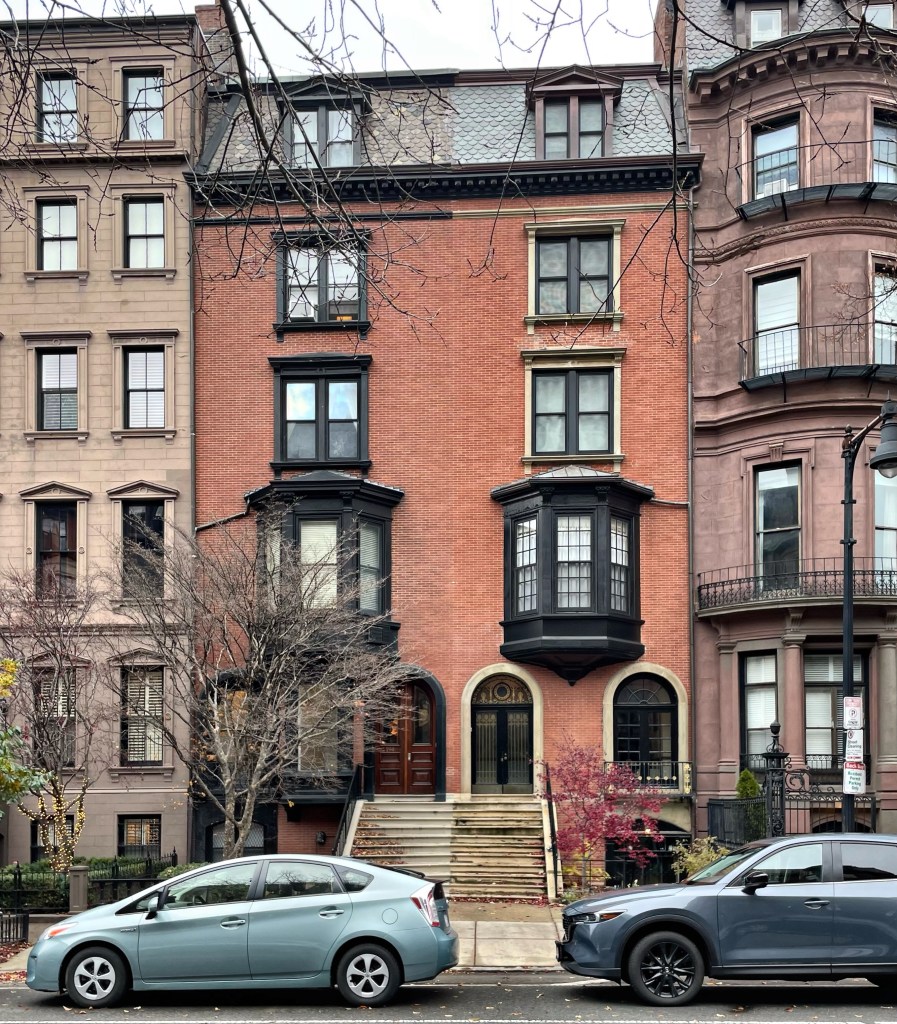
Two is always better than one, especially when it comes to historic townhouses! These two residences on Beacon Street in the Back Bay neighborhood were built in 1862 for two esteemed Boston families, the Storrows and the Meyers. 192 Beacon Street (right) was built as the home of Charles Storer Storrow and his wife, Lydia (Cabot Jackson) Storrow. Charles S. Storrow was an engineer by training and made his fortune as the chief engineer at the Essex Company, a company organized to harness the water power of the Merrimack River downstream from Lowell, Massachusetts in present-day. There, Storrow designed and built the Great Stone Dam across the Merrimack river, canals to distribute the water, several large textile mills, and a city, Lawrence, to house the mill workers. He came up with the idea to make roads that go to the mills in Lawrence, allowing him to become the first mayor of Lawrence in 1853. He retired and lived out his final years at this home in Boston. James J. Storrow, after whom Boston’s Storrow Drive is named, was Charles Storrow’s grandson. 194 Beacon Street (left) was built as the home of George Augustus Meyer and his wife, Grace Helen (Parker) Meyer. George Meyer was a prosperous German-American East India merchant and lived in this home until his death in 1889.
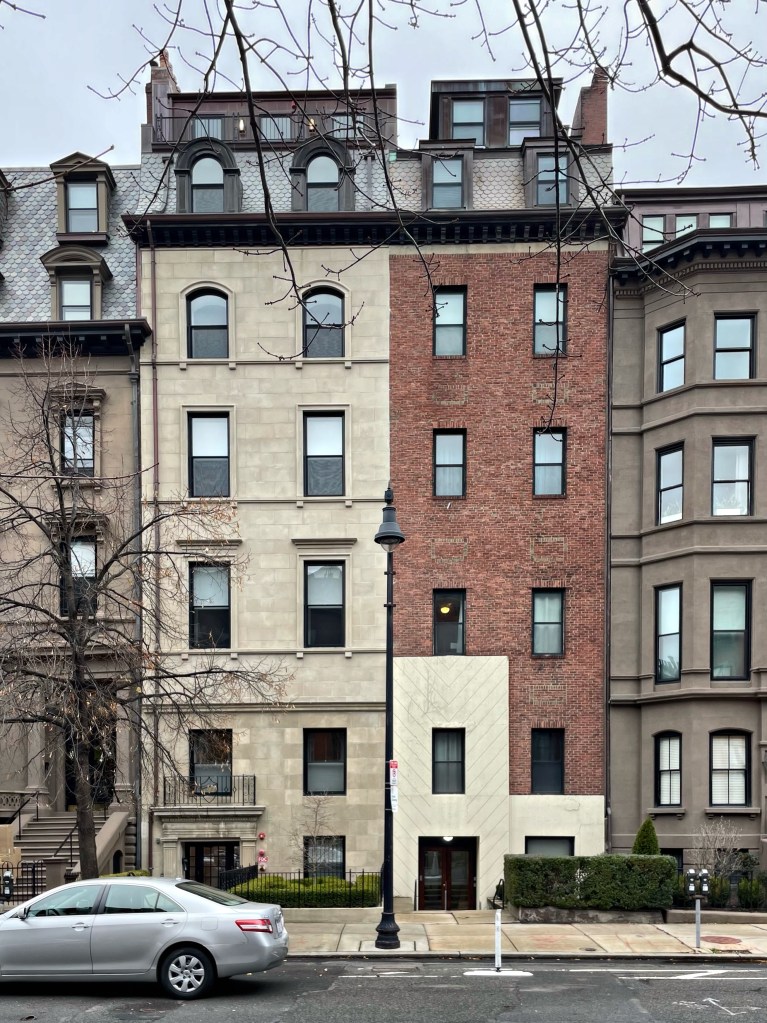
This is why preservation matters! These two townhouses on Beacon Street in the Back Bay of Boston were constructed in 1859-60 for Gardner Brewer (on the right) and George W. Wales (left). Brewer, an extremely wealthy merchant built the house on the right for his son-in-law and daughter, William and Ellen (Brewer) Amory, as a wedding gift following their February 1860 marriage. The symmetrical pair of houses were both originally clad with a brownstone facade with Second Empire style trim details and a continuous mansard roof. Both houses were renovated by the early 20th century with Colonial influence, as Victorian styles started to wane popularity amongst wealthy circles. The former Amory house (right) was purchased by Della Saul and was operating as a boarding house by the 1930s. It was converted to an apartment building (like condos) and the building was renovated with a new facade in 1935 by brothers and architects George Nelson Jacobs and William Nelson Jacobs with a more modern/Art Deco appearance. The house on the left remained with its more Colonial facade until a 2018 renovation by architect Guy Grassi giving it a cast stone facade, restoring the three-condo house closer to its original appearance.
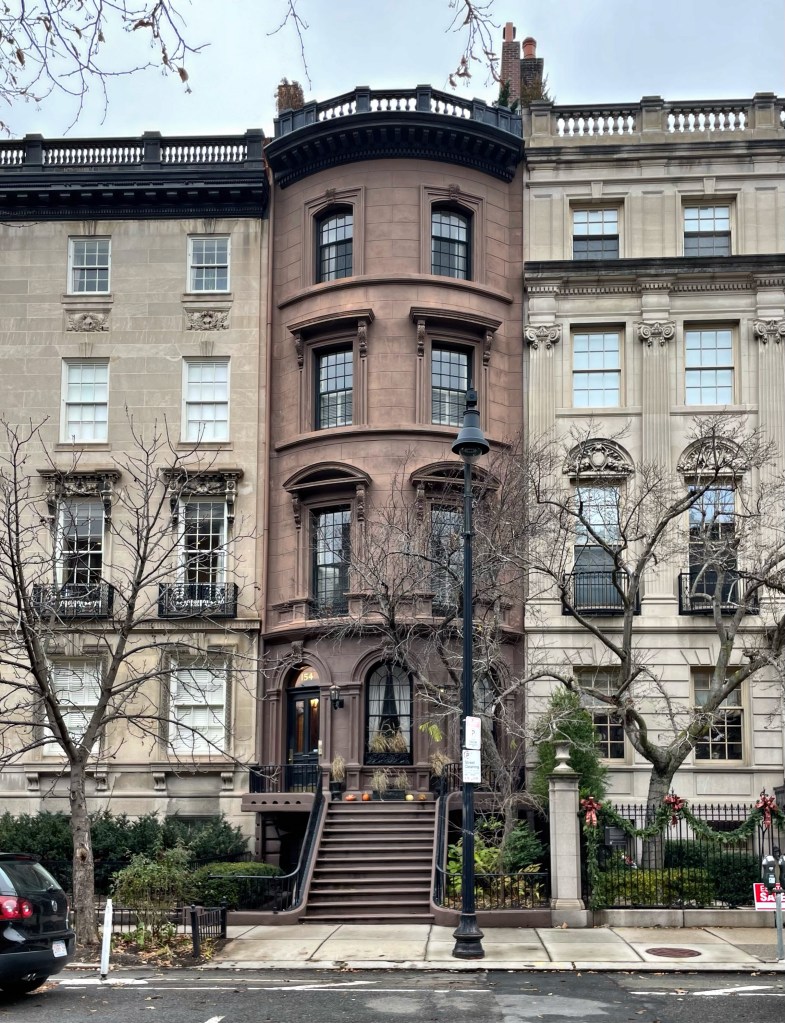
One of the most ingeniously symmetrical and academic facades on Beacon Street in the Back Bay neighborhood of Boston can be found at the Peleg Chandler House. Built in 1860 for Peleg Whitman Chandler (1816-1889), the two-bay bow-front townhouse appears to have been designed by architect Charles Kirk Kirby, a relatively unknown architect of Boston in this time period. The brownstone home originally had a mansard roof, but it was removed and replaced with a flat roof with parapet during the Great Depression, possibly to reduce the property taxes. Peleg Chandler was an attorney and publisher of the Law Reporter, which he established in 1838. He served as a member of the Massachusetts House of Representatives from 1845 to 1847 and as Boston City Solicitor from 1846 to 1853. He was an early advocate of the Public Garden and led efforts in 1859 to prevent the construction of houses on the eastern side of Arlington Street. The house has been divided up inside and now five fortunate families get to call this stunning building home!
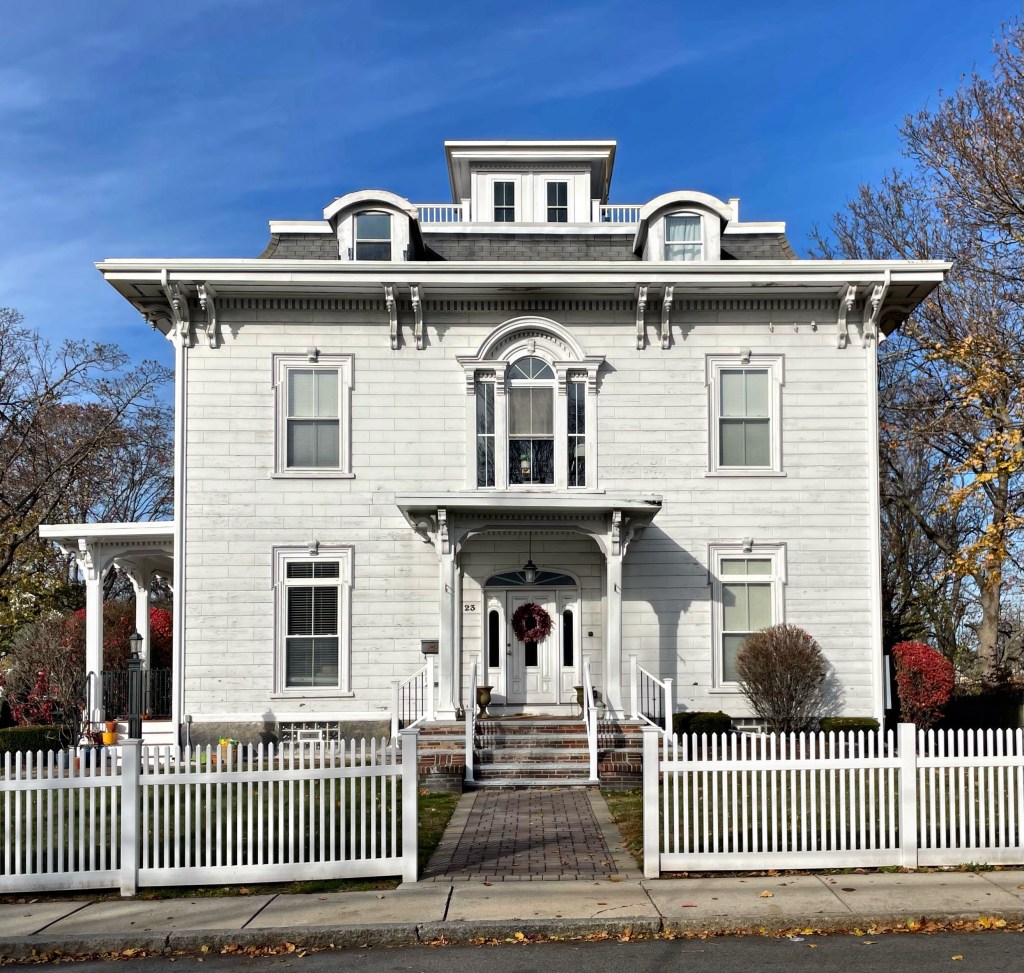
Originally built for Charles E. Jenkins, a partner in Bailey & Jenkins, suppliers of doors and blinds, this house in Dorchester’s Clam Point neighborhood stands out as one of the earliest and high-style mansions in the area. It appears to have been designed by local architect Luther Briggs, Jr. Shortly after its completion, the property was purchased by Theron and Rebecca Shaw. Theron was a partner at Lindsley, Shaw & Co., boot dealers in Downtown Boston. He died in 1870 and the house was sold to Dr. Luther Dimmick Shepard, a dentist. While the house (like many in Boston) is covered in later siding and has a plain white color scheme, the building retains its architectural integrity and would really shine when restored! What color would you love to see this Italianate/Second Empire style mansion be painted?
One of my favorites in Dorchester is this Second Empire manse, built c.1870 for cotton broker Freeman S. Packer. The house at 14 Everett Street in the Clam Point/Harrison Square neighborhood is a handsome, formal example of a Luther Briggs-designed Italianate Mansard residence. Although today sheathed in vinyl siding, much of the original siding and trim detail are likely still under there, preserved. Set back from the street facing an ample hedge-enclosed front yard, the three bay main façade exhibits a center pavilion and full-length front porch which undoubtedly appealed to summer guests who vacationed here when this house was known at the Russell House, an apartment hotel during the 1890s and early 1900s.
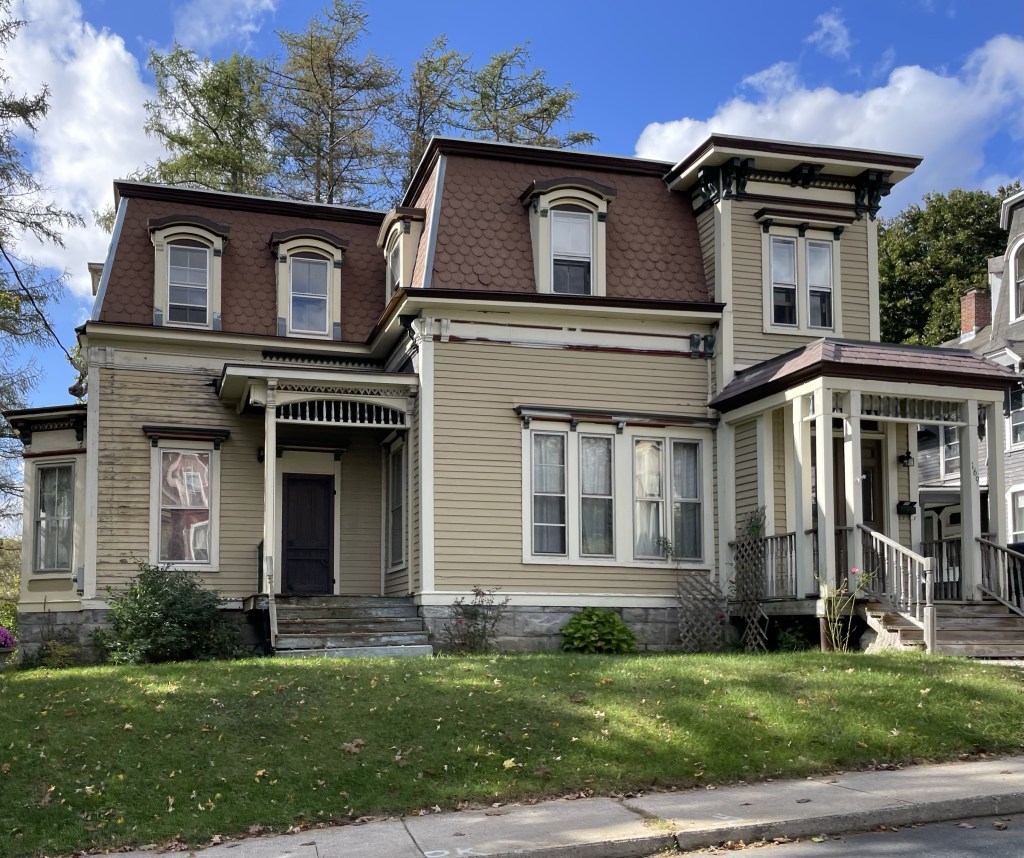
This elegant estate which stands on the corner of E. Quincy and Pleasant streets in North Adams, Massachusetts was originally built for Samuel Vadner in 1874, by architect Frank Davis the architect. Samuel Vadner established his carriage repository in town in 1870, which saw immediate success. His company manufactured carriages, sleighs, wagons, harnesses, and more, during a period of wealth for the industrial city. The high-style Second Empire style house features a bellcast style mansard roof with broad overhanging eaves, a small entry portico, and a three-tier entry tower that is capped by a convex mansard roof.
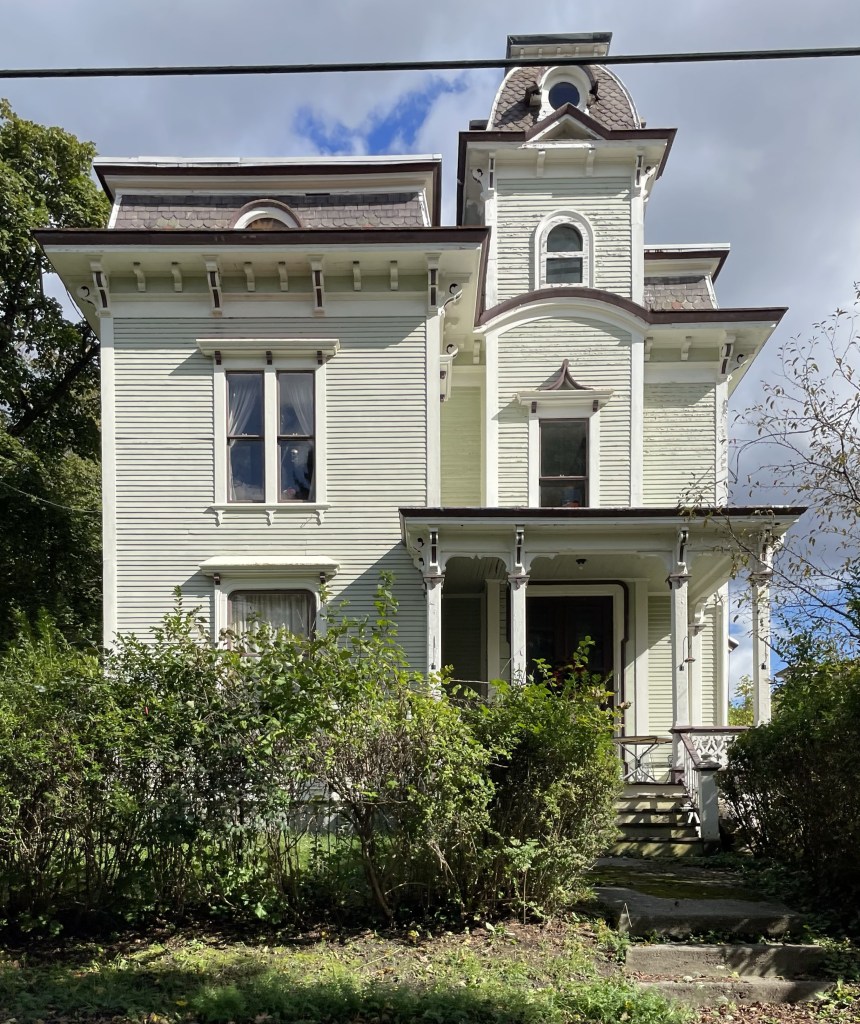
Located on the appropriately named Pleasant Street in North Adams, Massachusetts, this charming Second Empire style house is one of the finest in town. The house was built sometime between 1869-1875 for an R.J. Walden, who was listed in directories as a Deputy Sheriff for Berkshire County, an auctioneer, and real estate agent. Interestingly, the mansard roof is broken by a truncated corner tower with a flat roof. This is a unique one!
Old buildings always have so many stories to tell, and many of those stories are much more than what you can see at first glimpse. This commercial block on the main corner in Southport Village, Fairfield, Connecticut was originally built as a two-story Georgian house with gambrel roof. You heard that right! This corner was the site of a c.1787 Georgian house built for Miah Perry (1766-1814). By the 1860s, the building was owned by Nehemiah Jennings, who took advantage of the prominent site and lack of commercial buildings elsewhere and lifted the old Miah Perry House up, adding a ground commercial floor, extended the building to fill the site, and changed the roof to be a more fashionable Mansard style. Today, the building looks indistinguishable from the late 18th century beginnings, but according to researchers, some of the old beams are still in there!
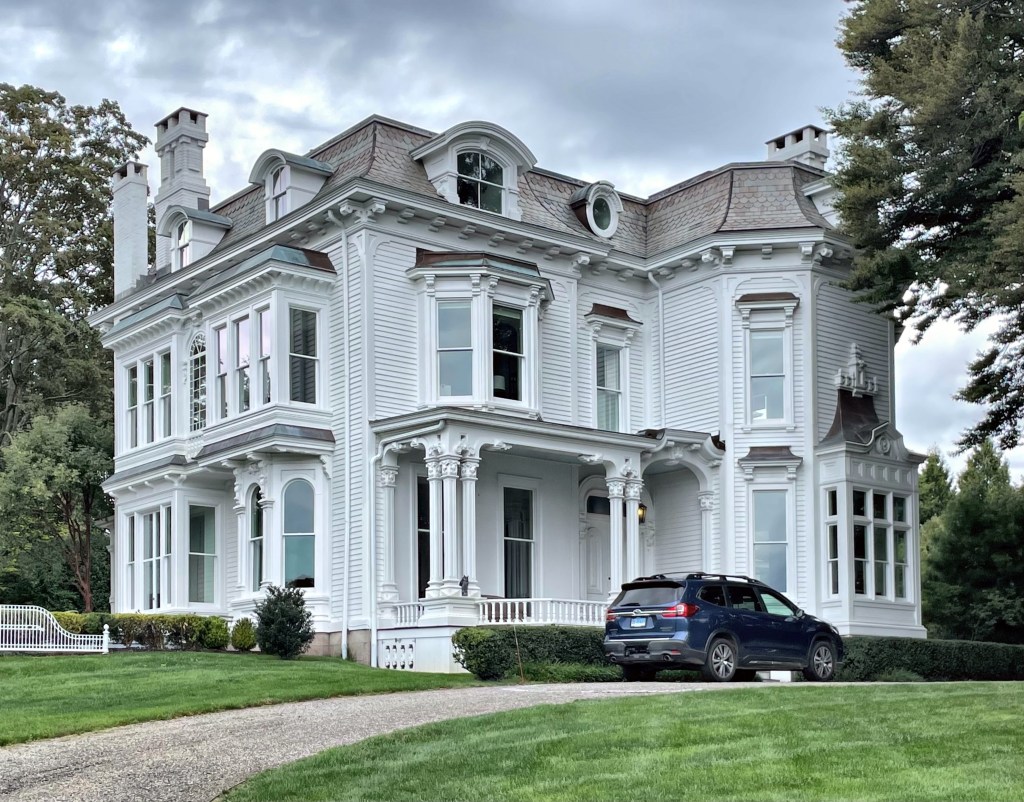
The Southport Chronicle reported on March 1, 1871 that “W. W. Wakeman, is about to erect, on the Hill, a very handsome residence”. The house would be built on Harbor Road in Southport, and was for his sister-in-law, a widow, Sarah Ann Fowler Wakeman and her two daughters, Mary and Frances. The Bridgeport-based architectural firm of Lambert & Bunnell (made up of Henry A. Lambert and Rufus W. Bunnell) teamed up to furnish the plans for this stately Second Empire style mansion. Sarah died in 1872, and the house was occupied by her daughters until 1913.
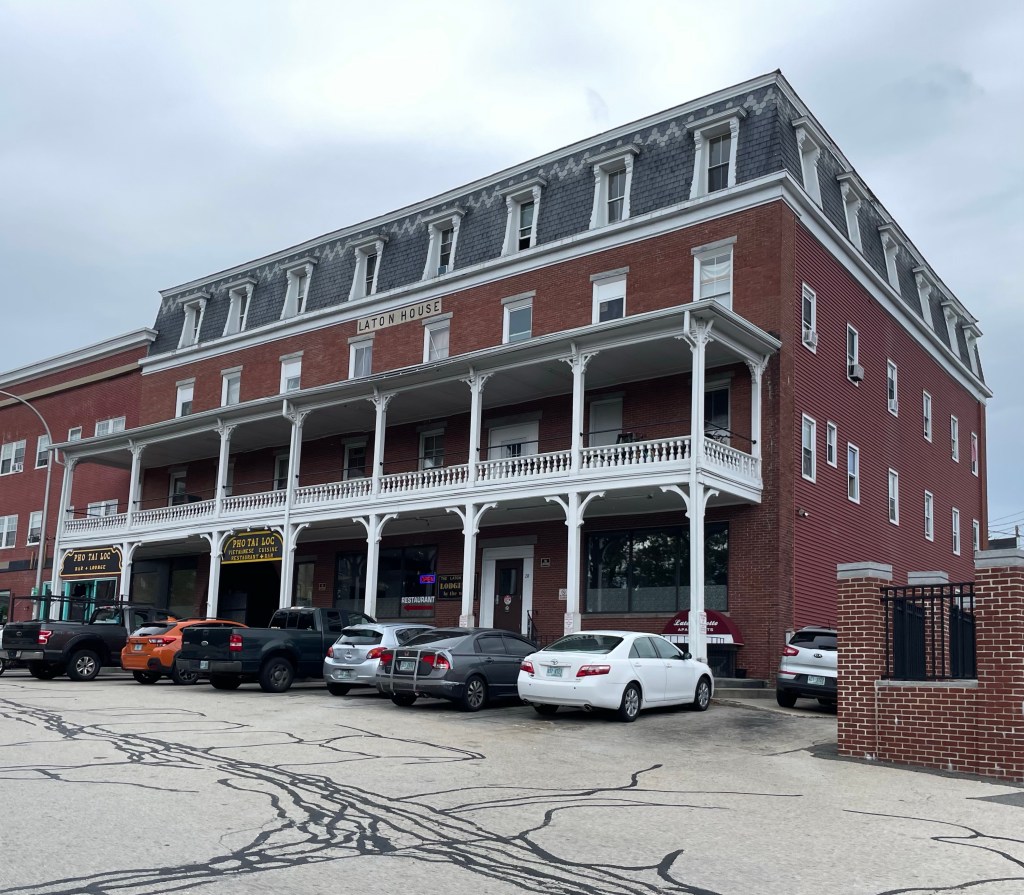
A late example of Second Empire style architecture, the Laton House in Nashua, New Hampshire, is a 3 ½ -story brick hotel building with a slate-covered mansard roof pierced by regularly spaced dormers. The facade is dominated by a two-story porch with decorative railings and brackets. The hotel was developed between 1878-1881 when Railroad Squareserved as the central square in town. The hotel thrived, allowing visitors cheap rooms while doing business in the manufacturing hub of Nashua. Eventually, the hotel closed and was converted to housing. Today, it houses commercial space on the ground floor with low-income housing above.
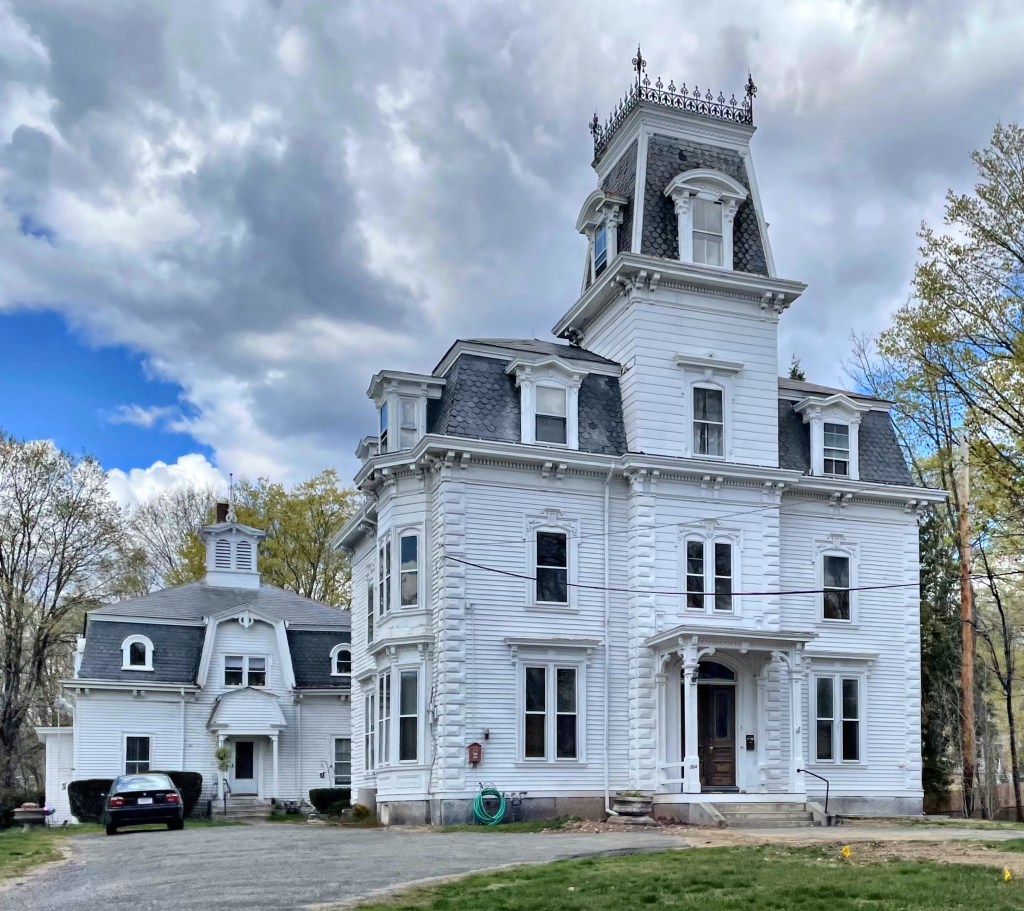
Acton, Massachusetts is one of the more underrated Massachusetts towns for great old buildings, many of which are well-preserved and taken care of by their owners. The Oliver Mead Mansion in West Acton Village is among the largest in this part of town and is a stellar example of the Second Empire style. The house and adjacent carriage house was built around 1870 for Oliver Mead (1823-1912), who co-owned the A. O. W. Mead Company with his two brothers, a successful produce marketing company where they sold poultry, eggs, cheese, fruit, and other goods from farms in Acton and Boxborough to their shop on Market Street in Downtown Boston. The company did well, and Oliver and his brother Adelbert built matching mansions in West Acton after the Civil War and business picked up. The house exhibits a central projecting tower bordered by quoins and topped by a mansard roof with iron cresting on top. The original carriage house remains in a great state of preservation as well. The Adelbert House and Carriage house nextdoor were demolished in the 1950s for the fire station on the site.
When your town grows organically without zoning, fire prevention becomes even more important to the preservation and protection of the town. Before paid firemen worked for the town, volunteers would either be stationed or rush to the aid of those in trouble via these neighborhood stations. The Franklin Street Firehouse in Marblehead, Massachusetts, was constructed in 1886 by local contractors Ramsdell Brothers replacing the former on the same site with plans drawn by Nathan P. Sanborn. The station was built to house a horse-drawn handtub and the horses were stabled nearby. The wood-frame structure blends Second Empire and Stick style detailing elegantly and is one of my favorite old buildings in Marblehead.