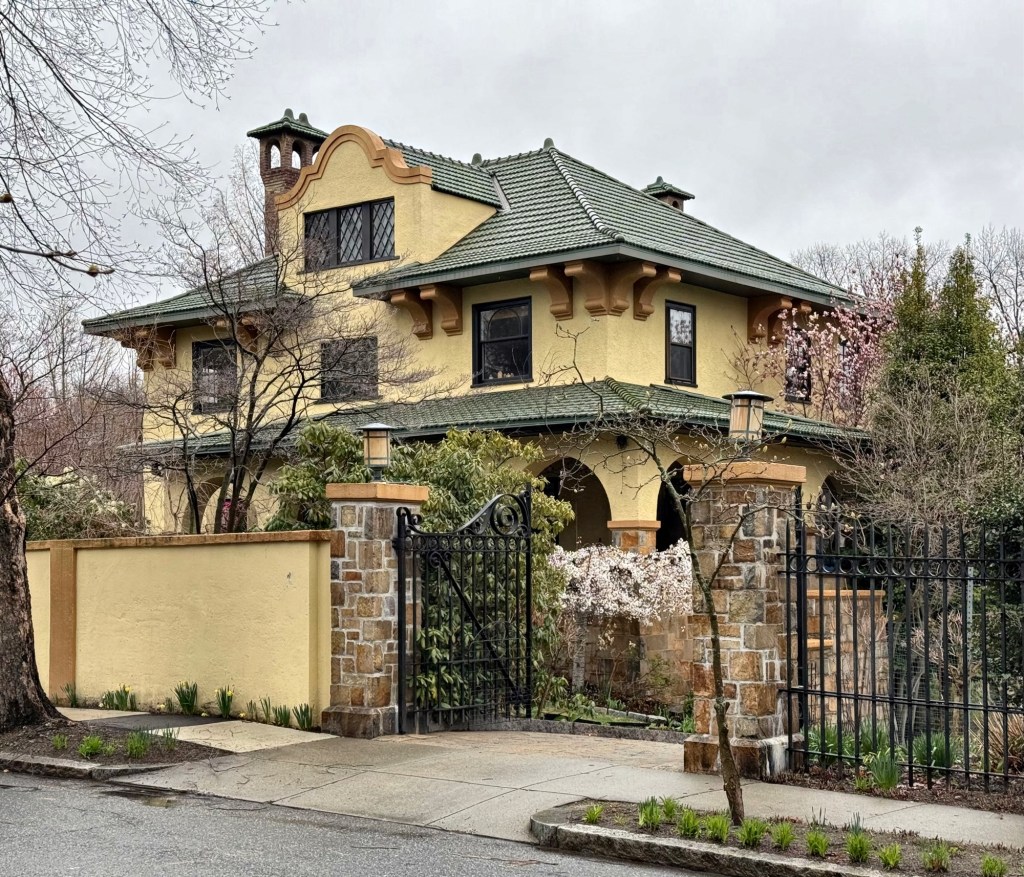
Louis C. Page House // 1906

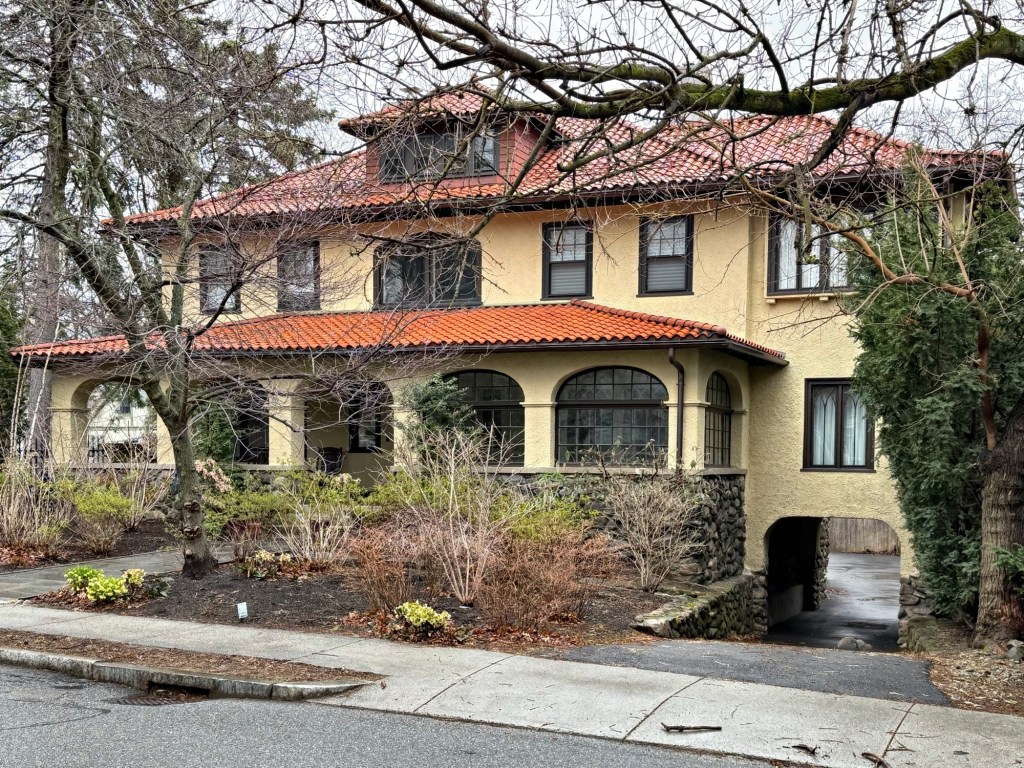
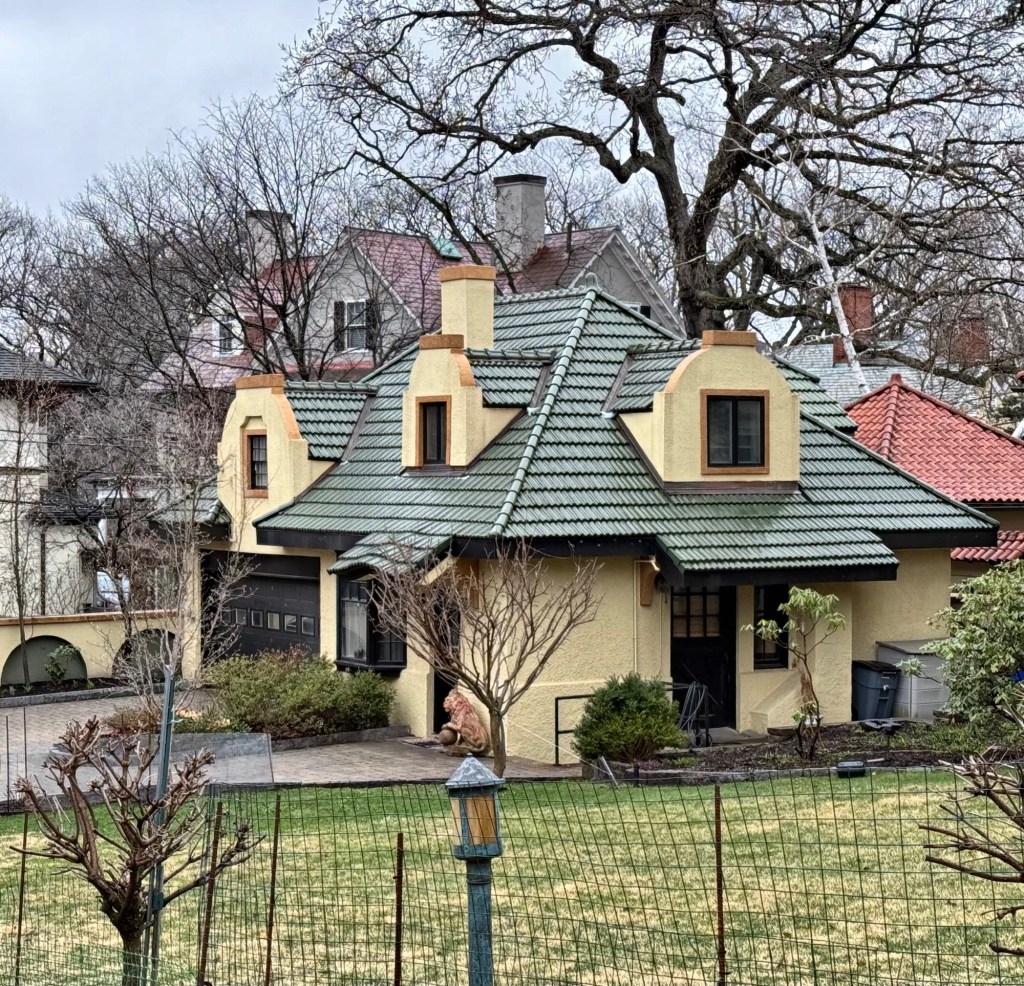
As Paul Hunt, the son of famous painter, William Morris Hunt, and the nephew of famed architect Richard Morris Hunt, built his house in Brookline, Massachusetts, he also began constructing this neighboring property which was to be sold upon completion (that is one good way to pick your neighbors!) On an oversized lot on Powell Street, Paul Hunt worked with his architect, Milton W. Stratton of Bar Harbor, to furnish plans for a similar style home to his own next door. The Mission Revival style mansion is set behind a tall, stucco and metal fence, and is constructed of wood and covered with stucco siding and capped by a lovely green tile roof. Main architectural details include the Mission-style dormer and the chimneys with round arched tops that are capped with small hipped roofs, creating a whimsical addition to the house. When finished, the property was sold to Louis Coues Page (1869-1956), a wealthy publisher with offices in Boston. Louis C. Page would hire local architect Edward B. Stratton, in 1916, to design a detached automobile garage in a style mimicking the main house. What an incredible property. 
Paul and Caroline Hunt House // 1905

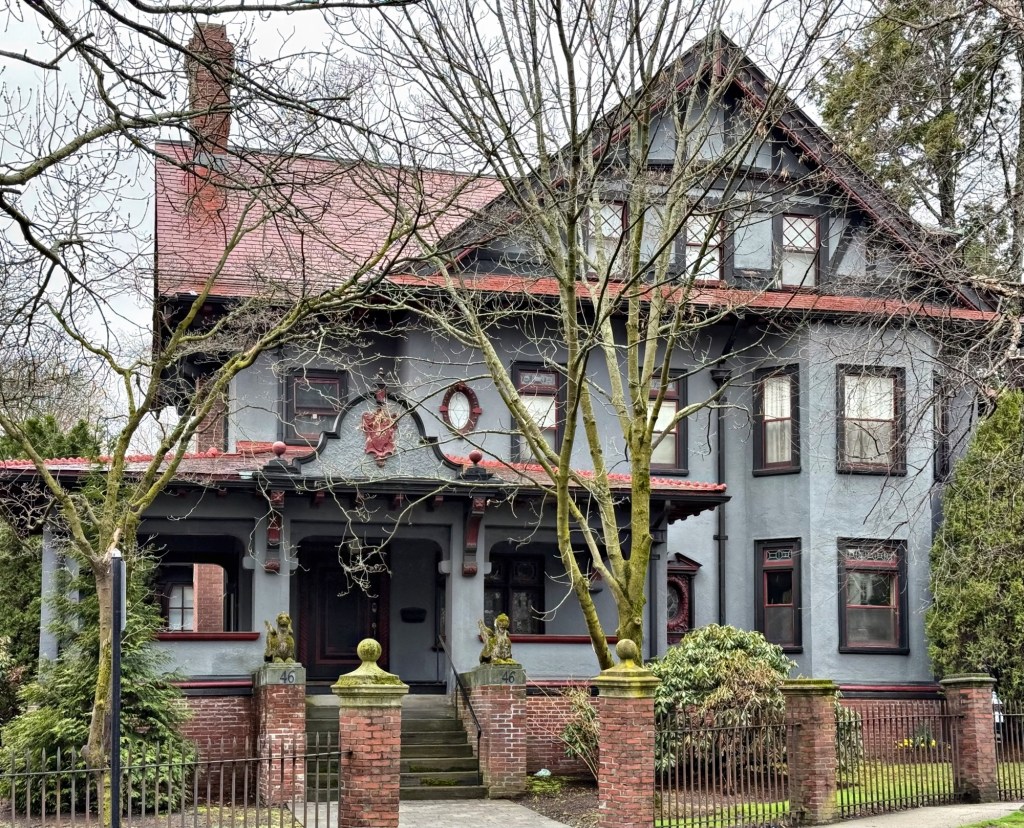
Paul Hunt, the son of famous painter, William Morris Hunt, and the nephew of famed architect Richard Morris Hunt, built this house in Brookline, Massachusetts for $15,000 for him and his wife, Caroline. Paul had been involved in real estate development in Bar Harbor, Maine, where his mother had a summer cottage, and while not an architect himself, he was very interested in design and took a keen interest in developing estates with the family funds. While developing property in the summer enclave of Bar Harbor, Maine, Paul met the Bar Harbor architect, Milton W. Stratton, and the two collaborated in the construction of houses there and two adjacent homes in Brookline. The two-story house is wood frame construction with a stucco finish on the exterior. Spanish Colonial Revival in style, the roof is hipped with terra cotta tile, as is the roof of the verandah which extends across the facade. In 1911, Paul Hunt worked with architect William Ewing Harding to add the two-story wing on the side of the house, which is built over the driveway, creating a really unique (though not as functional) design element. 

Hugh G. Brown House // 1905

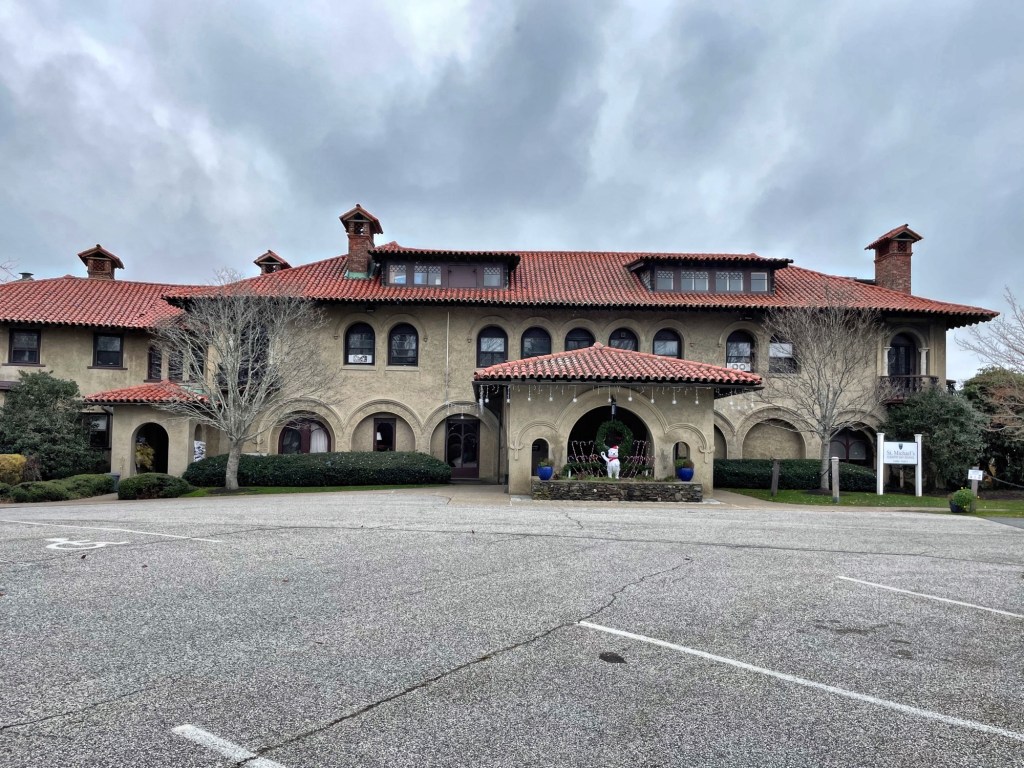
Eclectic houses of the late 19th and early 20th centuries are my favorite as they showcase how architects of the time blend features and break the strict mold of academic styles. This example is found in the Cottage Farm neighborhood of Brookline and dates to 1905. Designed by relatively unknown architect, Alfred Lyman Darrow, who studied at MIT, before opening his own practice. The house was first owned by Hugh G. Brown, who founded the Brown’s News Company and the Hotel & Railroad News Company. The house exhibits half-timbering in the gable ends and decorative corbelled chimneys that derive from the Tudor Revival; the front porch parapet appears to derive from the Spanish Mission style; along with stucco siding and unique windows typical of the Arts and Crafts movement.

Ellen and Ida Mason Villa // 1902

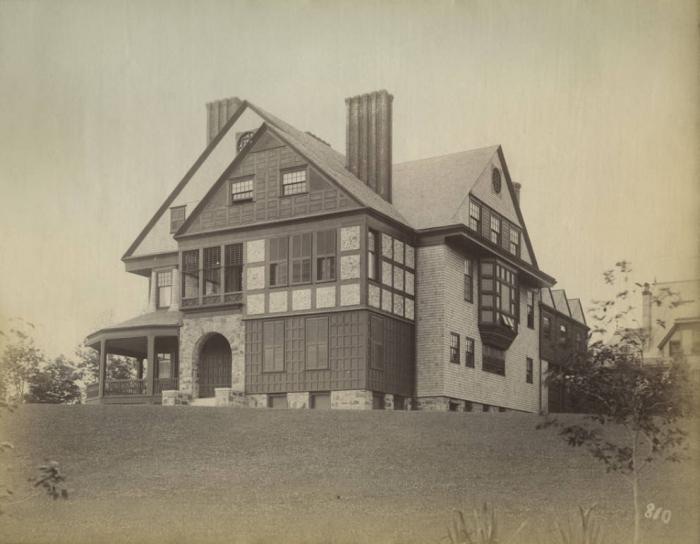
This large, low-slung and stuccoed Spanish Colonial Revival house in Newport Rhode Island, looks straight out of Southern California, thats because it is.. kind of. The Ellen Mason Villa was built in 1899-1902 from plans by Irving Gill, a southern California architect, for sisters Ellen and Ida Mason. The two unmarried sisters were daughters of Robert Means Mason a Boston millionaire, who had a summer cottage on the site that the family enjoyed for decades. The old Mason Villa was designed by H. H. Richardson, but burned to the ground in 1899, replaced by this structure. The sisters lived between Boston and here at this Newport estate until their deaths. In 1943, the property came into the ownership of the St. Michael’s Country Day School, who have both preserved the old estate house, but also added new structures to the campus. The house is unique as a rare Spanish Colonial Revival style property in New England, what a treat!

Original Means Villa

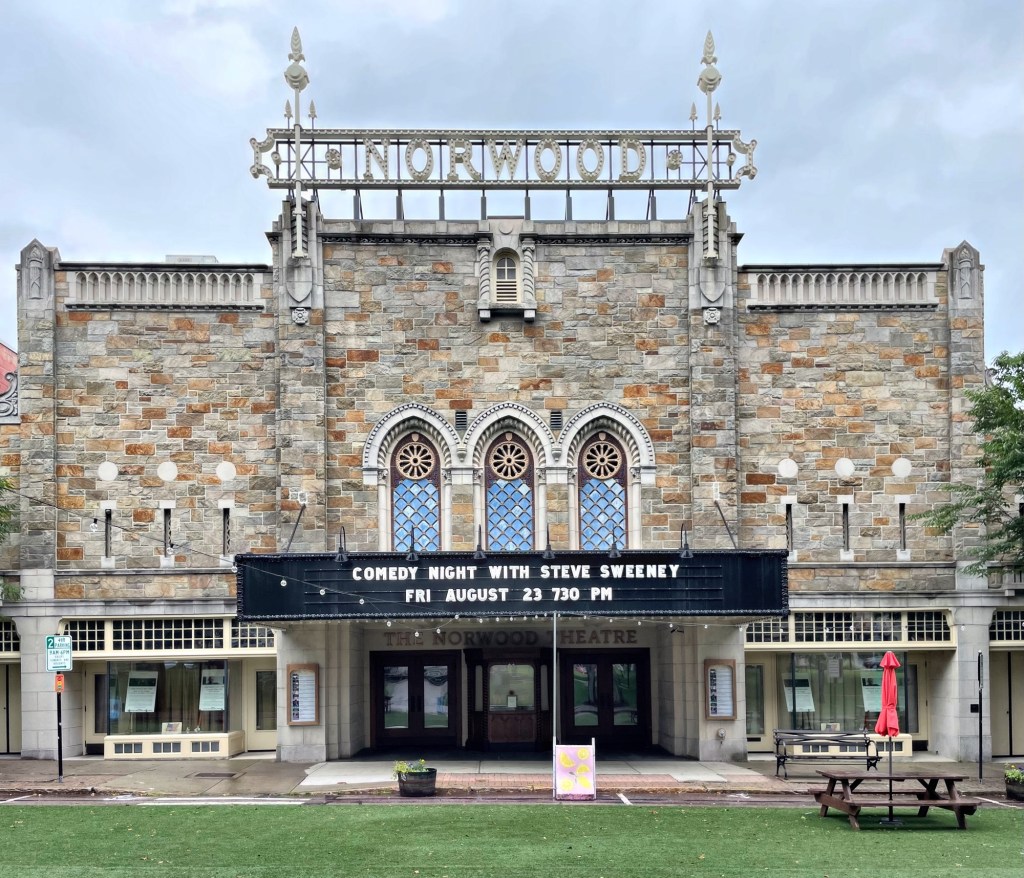
Norwood Theatre // 1927

The Norwood Theatre was built in 1927 as a high-style showpiece for the re-invigorated downtown of Norwood, Massachusetts. Built at the same time as the Norwood Town Hall building, the building was constructed at a time of great development in the town, as local entrepreneur and philanthropist, George Willet and landscape architect Arthur A. Shurcliff, created a plan to evolve Norwood from a sleepy rural town to a commercial center. Architect William G. Upham is credited with designing the theatre and he enjoyed a prolific career which encompassed the design of masonic temples, commercial blocks, theatres, homes, and of course, the Norwood Town Hall. The Norwood Theatre was designed in a high-style Spanish Renaissance Revival style and was designed for motion pictures but also included a stage for possible vaudeville and theatrical productions. By the mid-20th century, a Modern sign covered much of the original facade, and lasted until the building came under its current ownership in 2010. A careful two-year restoration brought the theatre back to its former glory.

Former St. Mary’s of the Bay Catholic Church // 1928

Catholic residents of Hull, Massachusetts surged in the early 20th century with many well-to-do Irish families settling in town as year-round or summer residents. As a result, the cramped original St. Mary’s of the Bay Catholic Church was deemed too cramped, and a site in Hull Village was selected for a new church. In 1927, ground was broken for the new stucco church, which was partially funded by the Kennedy Family, who had a summer house nearby. The first service took place in 1928 and the church was in use as a religious building until the 1990s when it was sold to a private owner. The church was converted to a single-family residence and recently sold to new owners, who preserve the significant Spanish Colonial Revival style edifice.

Talitha Cumi Home // 1912

One thing I love about Boston is that nearly every old building has such a rich history that takes so much time to compile and write up (this account keeps me busy)! Located on Forest Hills Street in Jamaica Plain, this stucco building caught my attention when driving by, so much so, that I had to stop and go back. The building was constructed in 1912 as a home for unwed mothers called Talitha Cumi Home (a phrase from the Bible meaning “Arise, young woman”). The charitable organization outgrew their space in the South End and sought greener pastures and open space in Jamaica Plain. The group had been organized in 1836 by “earnest Christian women” who longed to open a “door of hope” to “those hopeless and helpless girls who found themselves facing the sadness and shame and wrong of unwed motherhood.” The Talitha Cumi Home allowed pregnant women to reside and birth their children before their pregnancy began to show. The site originally included an administration building and a hospital with both structures connected by a covered breezeway. The home closed in the 1950s and the former home for unwed mothers has since been converted to a middle school.

The Colony Hotel // 1929

As Woodstock New York surged in popularity as a retreat for American and European artists, savvy businessmen from Manhattan could not help themselves but to envision ways to make a little extra money. Morris Newgold and his son, Gabriel of New York City who purchased the Overlook Mountain House in 1917, sought to expand their upstate lodging empire and built a secondary establishment in the village of Woodstock, the Colony Hotel. The Colony Hotel serve as a more modest establishment to the grand Overlook Mountain House atop Overlook Mountain and would be a staging area and a stopover point for guests coming up the Hudson River by boat or train. Guests would spend the night at the Colony and eat at its fine restaurant before making the arduous trip up the mountain to the Overlook Mountain House the next day. The Colony Hotel appears to have been Gabriel’s idea who prided himself on the new building being “pretentious” as it was much more substantial than the more modest, vernacular buildings around the village. Gerald Betz of nearby Kingston was the architect for the Colony Hotel. Construction began for the Colony Hotel in 1927, and it opened to guests the summer of 1929. Morris died in 1940 and Gabriel continued to manage the Colony until his son took over from 1945 until the 1960 but as event space for arts and antiques fairs. It became known as the Colony Arts Center. The Colony’s website goes on to state that the building sat empty almost entirely through the next forty years. It was recently restored by artists Alexia and Neil Howard who converted it to a music venue and beer garden, it is pretty amazing and a must-see for history buffs visiting Woodstock.

Everett Savings Bank // 1930

Located next door to the First Congregational Church of Everett, you can find one of the finest eclectic commercial buildings in the region, and it is one that is often overlooked. The Everett Savings Bank was built in 1930 from plans by architect Thomas Marriott James for the Everett Savings Bank, which was established in 1889. This building was constructed just at the beginning of the Great Depression, at a time when banks and American citizens were penny pinching. The budget was likely set before the Stock Market Crash of 1929 as the relatively high-style bank building would have been a big expense at the time. The bank blends Art Deco and Spanish Renaissance Revival styles elegantly. The structure is constructed with sandstone walls that are decorated with figured panels and semi-circular multi-pane windows are outlined by rope molding. Crowning the building is a bold arcaded frieze with Moorish inspired cornice. Swoon!

Lawrence Luellen House // c.1908

Some really interesting history and architecture with this one! Located in Waban Village in Newton, Mass., this gorgeous Mission Revival style house is one of a few in the style in the Boston area. The Mission Revival style was popularized on the West Coast in California in the late 19th century. Rather than continuing to adopt imported East Coast architectural styles, these California architects recognized the value of their own historic surroundings, where the Spanish Colonial mission heritage of California and the Southwest, the beautiful mission chapels, with stucco walls, red tile roofs, and bell towers led to the new revival. The style never took off in New England, which followed its own Georgian and Federal Revival styles, emulating historic Colonial-era homes here. This Newton home was built around 1908 for Lawrence W. Luellen, an attorney and inventor, who made a big invention, disposable paper cups! It is true. Lawrence Luellen wanted to do away with the ubiquitous “tin dippers” he saw in public buildings and railway stations after realizing all that sharing might be transferring disease. In 1907, he took out a patent and create a new, clean and individual drinking cup. After his invention went global, he sold his Newton home and moved to New Jersey, inventing…cup dispensers!