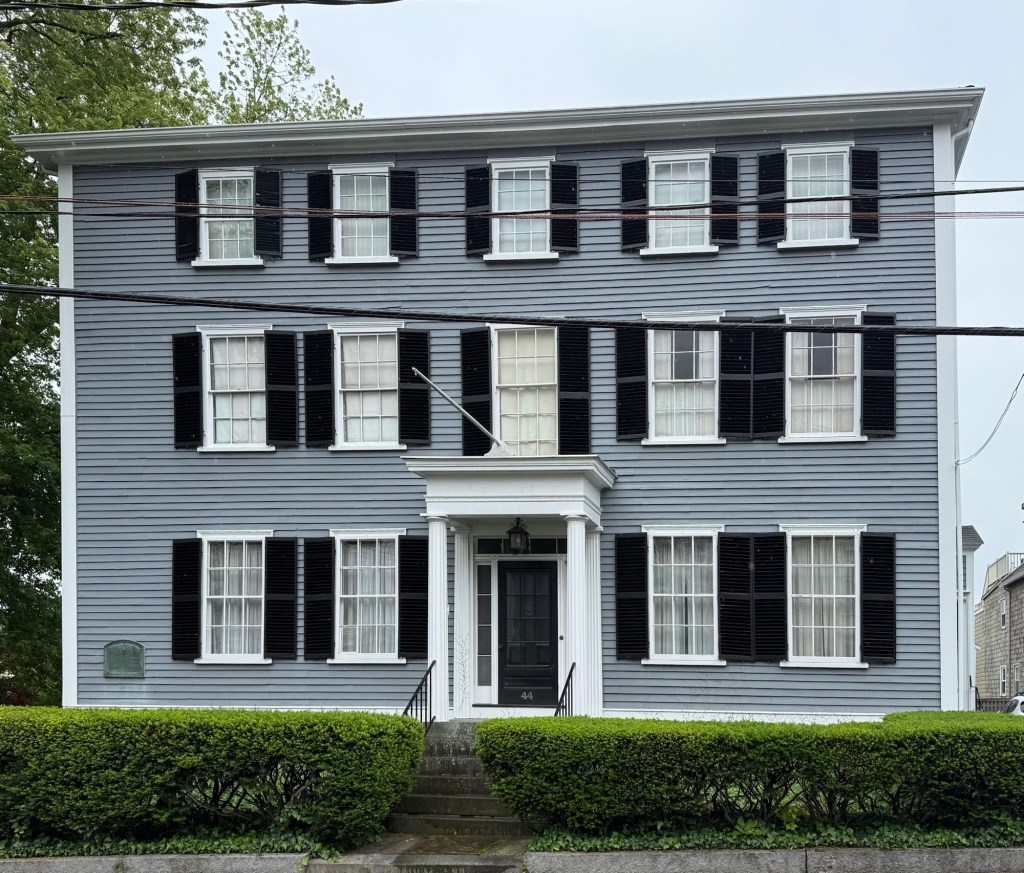
Elbridge Gerry House // c.1734

The Elbridge Gerry House is a historic house on Washington Street in Marblehead, Massachusetts that was built by local merchant, Thomas Gerry around the time of his marriage to Elizabeth Greenleaf. Architectural evidence suggests that the house was a two-story L-shaped Georgian frame structure, that in about 1820, was raised to its present three-story form in the Federal style. It was in this house that Founding Father, Elbridge Gerry (1744-1814) was born, and spent many formative years in. Gerry was a wealthy merchant, politician, and diplomat who served as the fifth vice president of the United States  under President James Madison from 1813 until his death in 1814, and is arguably best-known for Gerrymandering. The term, originally written as “Gerry-mander,” first was used on March 26, 1812, in the Boston Gazette — a reaction to the redrawing of Massachusetts state senate election districts under then-Gov. Elbridge Gerry. One of the remapped, contorted districts in Essex County (where Marblehead is located) was said to resemble the shape of a mythological salamander, hence the name “Gerry-mander”. The newly drawn state senate district in Essex County was lampooned in cartoons as a strange winged dragon, clutching at the region. Elbridge Gerry would live mostly in Cambridge and the family home was sold by around 1820 and modernized about that time.
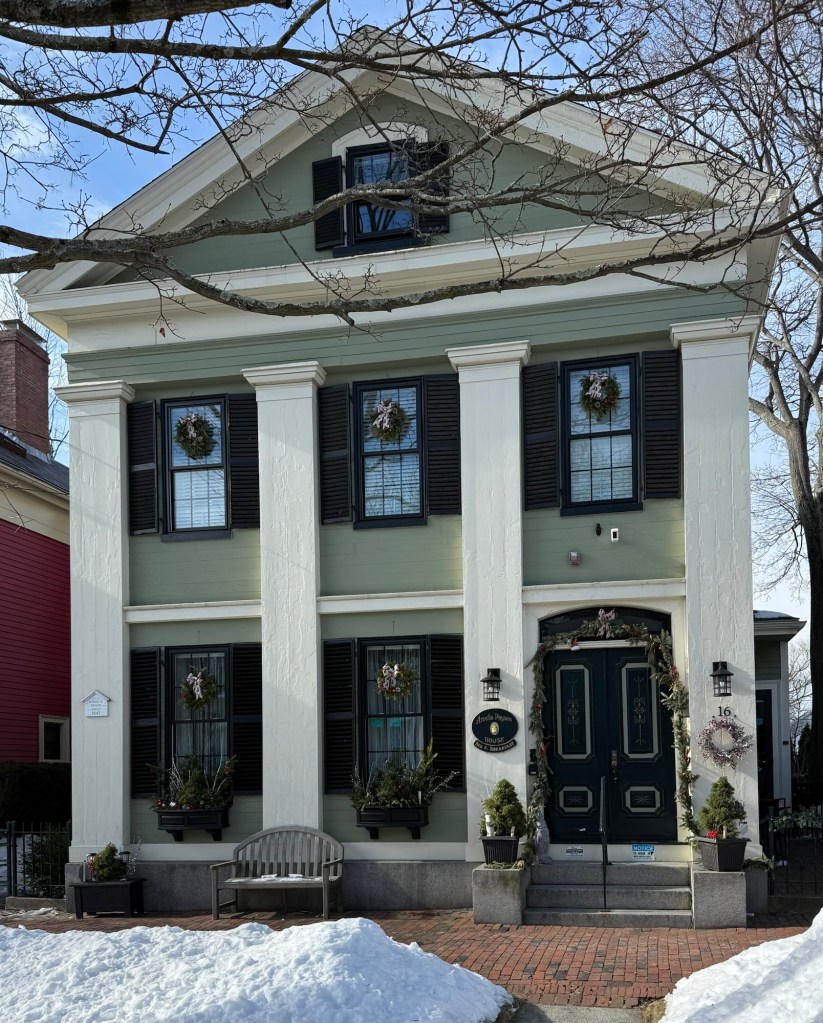
Payson-Fettyplace House // 1845

Behold, one of the finest, and well-preserved Greek Revival style homes in Salem. This is the Payson-Fettyplace House on Winter Street, built in 1845 with its gable facing the street to create a pediment, a wide entablature and cornice, and pilasters on the flushboard façade, which together make the building read more like a Greek temple than a residential home. The residence was built for Edward H. Payson, a bank officer, and his wife, Amelia, who lived in the home for only two years before moving into a larger residence across the street just two years after this house was completed. The property was sold to a Carleton Dole of Maine and again sold in 1850 to Thomas J. Fettyplace. The Fettyplace family were based out of Marblehead and many of them relocated to Mobile, Alabama, to make money in the cotton and shipping industry in the South. Thomas purchased this home in Salem for his mother who spent her final years here until 1861. After the Civil War, the Fettyplace brothers would move back north and this home remained in the family until 1912. The house is now a bed & breakfast known as the Amelia Payson House, named after the original owner.

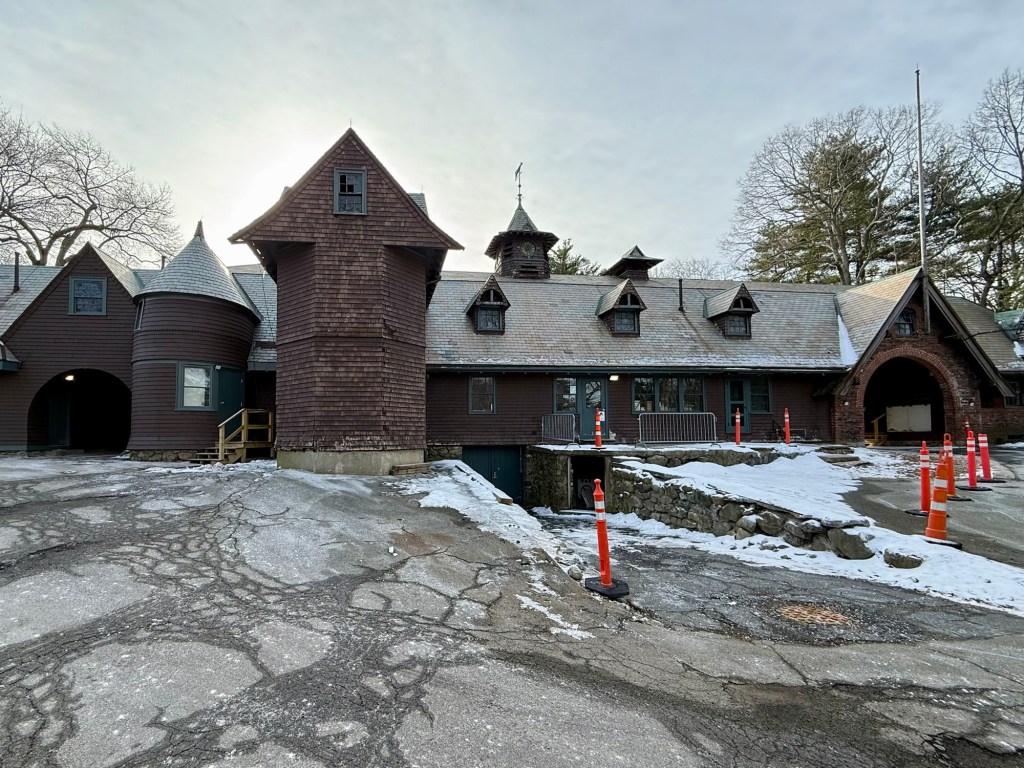
Roughwood Estate Cow Barn // 1892

Like the Roughwood Mansion and carriage house, this building was designed and built in Brookline, Massachusetts, in the early 1890s as part of the “Roughwood” estate. Despite its high-style and ornate detailing, the building was actually constructed as a cow barn. Built in two phases for its two owners, William Cox and Ernest Dane, the large barn structure blends Victorian design into a use more reserved for vernacular detailing. The building was designed by Andrews, Jacques and Rantoul, and like the mansion and carriage house, blends Queen Anne and Shingle styles under one roof. Ever-since the estate became a college in the 1960s, the building has been used as a maintenance building. It appears that since it has been owned by Boston College as part of it’s Messina Campus, it is undergoing a thoughtful restoration!

Rockland Railroad Station // 1917

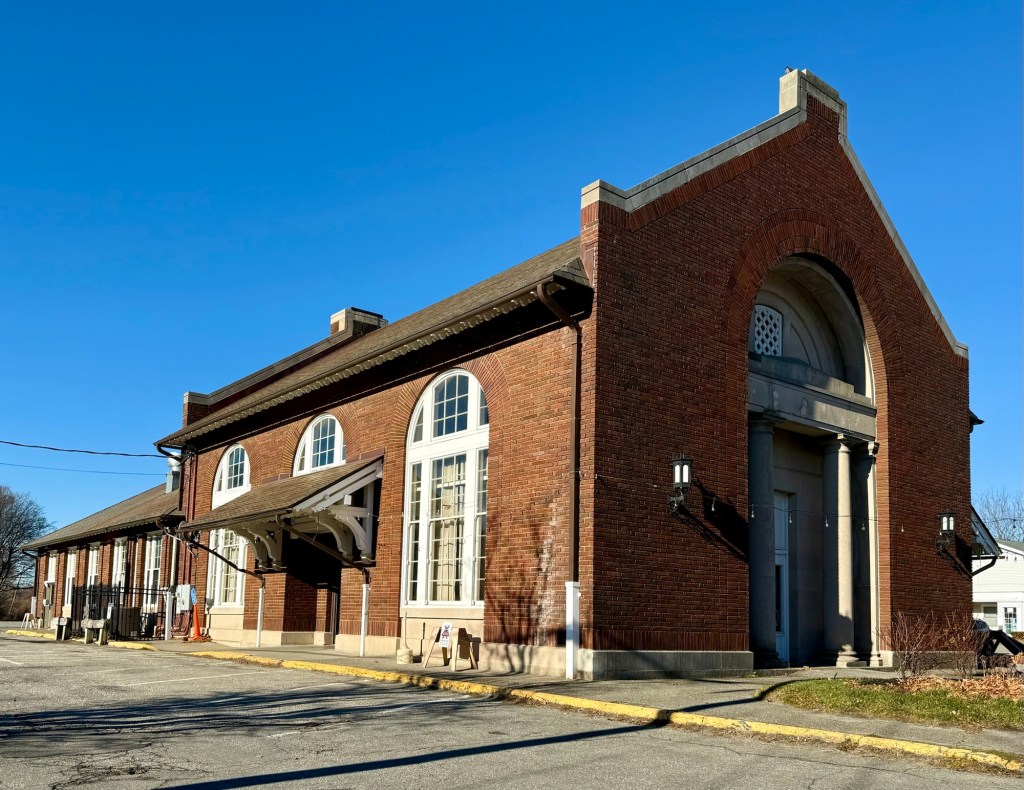
Welcome to Rockland, Maine! Originally called Catawamteak by the Abenaki, meaning “great landing place”, Rockland was first settled by European settlers in In 1769 as a camp to produce oak staves and pine lumber. In 1777, when Thomaston was incorporated, present-day Rockland became a district called Shore village. In 1848, it was set off as the town of East Thomaston and renamed Rockland in 1850. The coastal community grew quickly as a shipbuilding and lime production center, with upwards of 300 vessels to transport the mineral to various ports in the country for the building of communities all down the coast. The opening of the Knox and Lincoln Railroad in 1871 brought an influx of tourists and businesses, creating a development boom for the community. The line was leased to the Maine Central Railroad in 1891, which took over ownership in 1901. The Rockland Railroad Station, seen here, was built in 1917, just before the government took over the railroads during World War IArchitects Coolidge and Shattuck designed the station in the Romanesque Revival style with the oversized arched openings at the windows and main entrance. The rise of the automobile industry would further harm rail service and usage, and the Rockland Branch officially closed in 1959. The old Rockland branch station operated as the Rockland Town Hall for decades and is now occupied by a local restaurant, Trackside Station.

Tarbell Building // 1896

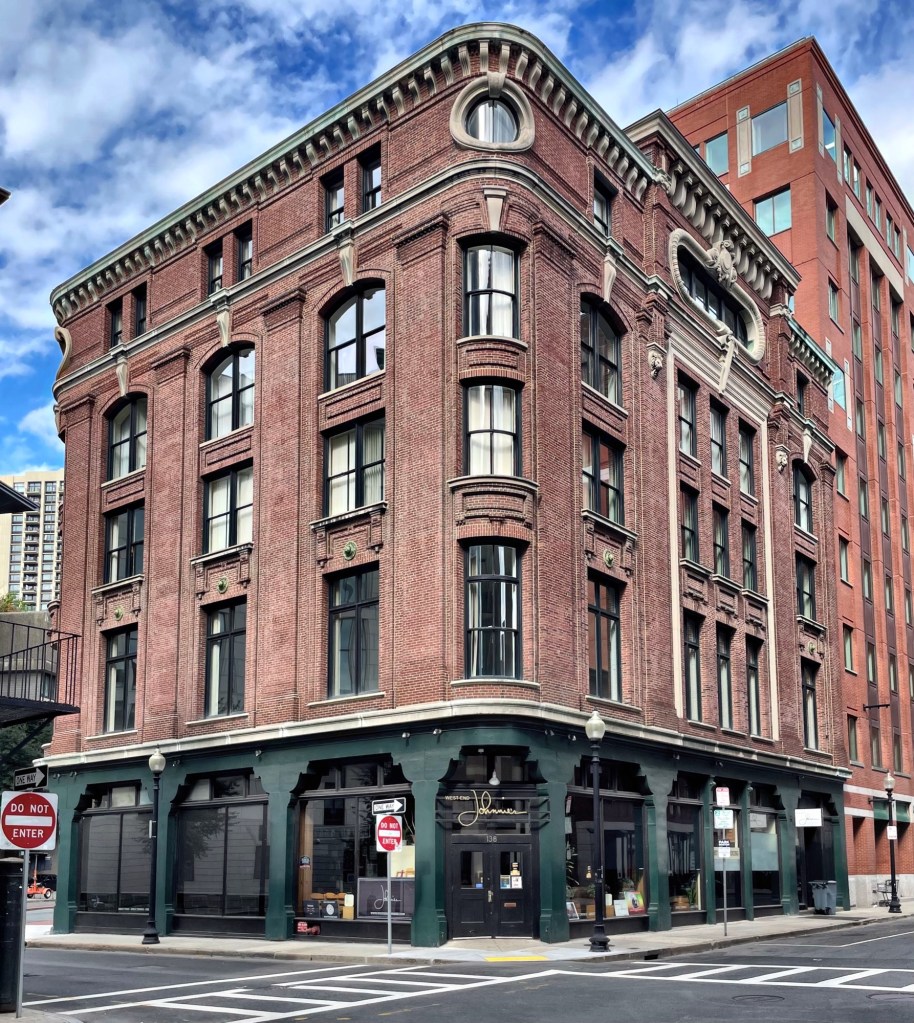
Similar to the Heywood Brothers & Wakefield Co. Building on Portland Street in the Bulfinch Triangle Historic District, the equally stunning building here was also designed by the same architect in a matching style. The building was constructed in 1896 by owner Catherine E. Tarbell , and the Boston branch of the National Casket Company moved in as tenants soon after its completion as part of its national expansion. The company would become the largest manufacturer and supplier of caskets in New England by 1906. The Tarbell building was designed by Stephen Codman in the Beaux-Arts style and is notable for its use of oxeye windows, rounded corners, and engaged pilastered facades. The company held its regional headquarters and sales offices from this building, which benefited from rail access for shipping caskets all over the region. The building is one of the finest examples of the Beaux Arts and Classical Revival styles in Boston.

Sylvia Store // 1879

This charming commercial store was built in 1879 as one of five similar commercial buildings constructed on Nantucket as investment properties by Robert McCleave (1809-1878), a retired whaling captain. Located on Orange Street, this store was long occupied as a neighborhood grocery store, before the days of supermarkets with seas of parking. Antoine Sylvia Jr. (1835-1906), an Azorian-born merchant on the island purchased the property 1879 from McCleave and operated a grocery store at this location until his death in 1906. His wife, Elizabeth C. “Lizzie” Sylvia (1850-1929), retained the property and operated a shop where she sold wallpaper. In 2015-16, the façade was restored with the installation of a salvaged façade of nearly identical detail and dimensions built at 106 Main Street in 1869 also by McCleave. This façade was salvaged for re-installation here when that building was demolished in 2001. The Sylvia Store was given a preservation easement after the restoration, preserving it for another 150+ years to come!

Dow-Starr House // c.1858

A big departure from the plain, yet classically proportioned Federal period homes in Warren, this Gothic Revival on Main Street turns heads when people pass by. A quintessential Gothic “cottage,” the facade of the Dow-Starr House in Warren has also been graced by a three-sectioned Gothic Revival porch as illustrated in Alexander Jackson Downing’s plan books from the 1840s. As completed, this house followed almost exactly Andrew Jackson Downing’s Design II as illustrated in Cottage Residences 1842 ; it differed only in its use of speckled fieldstone over coursed ashlar. The house was later acquired by and used as a convent for the St. Jean Baptiste Church in Warren, who also built a school building behind. The house has seen some alterations, but remains an important architectural landmark of the town.

Rufus Barton House // 1782

Warren, Rhode Island is an often overlooked town for tourists, making it my favorite hidden gem in the Ocean State. The town is home to a bunch of Colonial-era homes, stunning institutional buildings, and industrial sites, oh and a lot of local businesses and restaurants. This charming house was built in 1782 for Rufus Barton and his wife, Prudence Cole. Rufus Barton sold the property to Nathan Burr for $775 in 1797 and the family moved to New York. Nathan Miller Burr sold the home to William Eastabrook two years later. Captain Eastabrook/Easterbrook had just returned from an illegal* slave voyage on the “Betsey” to Africa that resulted in the enslavement of 79 Africans who were sold into slavery in Havana, and purchased this home soon after with money he earned on that voyage. The new owners have done an amazing job restoring the house and telling the full story of the ownership, a task not many want to undertake with such complex and troubling past, but it is important!

St. Denis Catholic Church // 1838

Believe it or not, this church in rural Whitefield, Maine is the second oldest Catholic Church in New England! As Irish and French Canadian families settled in this part of Maine in the early 19th century, Catholic churches were needed to provide worship space for those families. The church community of St. Denis began in 1818 when Father Dennis Patrick Ryan, an Irish immigrant serving at St. Patrick Church in Newcastle (the oldest Catholic Church in New England), moved to Whitefield to serve the influx of Irish Catholics and soon founded the church. Fr. Ryan oversaw the construction on a wood-frame structure built on this site. As more Catholic families settled here, a more permanent building was needed, and between 1833 and 1838, the main portion of the present brick church building was constructed around that original church. The tower was added in 1861, and the stained glass windows also date from later in the 19th century following the growth and prosperity of the church and its members. The St. Denis Parish House was constructed across the street in 1871 and is a lovely Romanesque style building.

Freeman House // c.1870

One of my favorites in Dorchester is this Second Empire manse, built c.1870 for cotton broker Freeman S. Packer. The house at 14 Everett Street in the Clam Point/Harrison Square neighborhood is a handsome, formal example of a Luther Briggs-designed Italianate Mansard residence. Although today sheathed in vinyl siding, much of the original siding and trim detail are likely still under there, preserved. Set back from the street facing an ample hedge-enclosed front yard, the three bay main façade exhibits a center pavilion and full-length front porch which undoubtedly appealed to summer guests who vacationed here when this house was known at the Russell House, an apartment hotel during the 1890s and early 1900s.