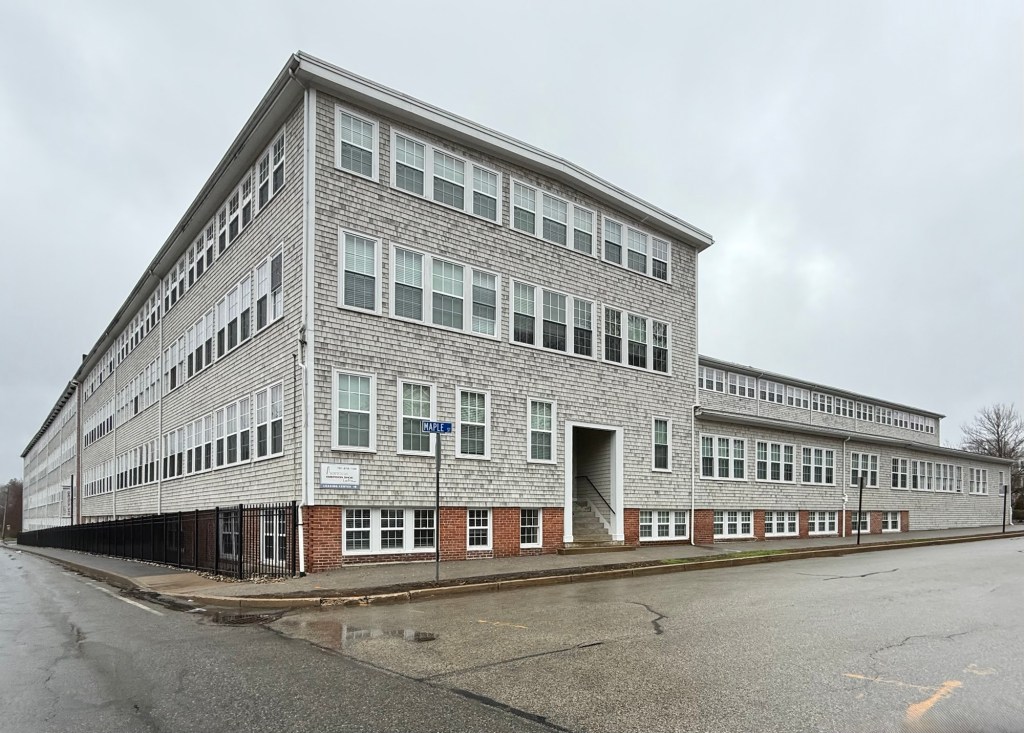
Emerson Shoe Company Factory // 1894+

Prior to its establishment as an independent town in 1874, Rockland, Massachusetts, was part of “Old” Abington. The town became best-known for its number of shoe manufacturing companies, even more significant as the town is said to have provided nearly half of the Union Army’s footwear during the Civil War. In the late 19th century, due to increased connectivity of Rockland to regional markets, business boomed, and this site on Maple Street, adjacent to the railroad, was purchased for a new factory. The first factory here was constructed in 1894 for the local Hall, Gallagher & Foulke Shoe Company, who would dissolve after just two years, selling the site to George W. Hall, one of the original trustees. In 1906, the Emerson Shoe Company, burned out of its Brockton factory caused by a disastrous fire, began operations as a tenant in the former George W. Hall factory in Rockland. With continued expansion, the Emerson Shoe Company soon became one of the largest employers in Rockland. The factory was enlarged numerous times through the 1920s. The company would eventually close, even though, by the late 1920s, Rockland and six neighboring communities were manufacturing 27% of all shoes worn in the United States. However, most likely due to the aging of the original founders and labor issues, Emerson Shoe was sold. After various other uses, including as an artist’s colony of studios, the building was restored and converted into residential loft-style housing.
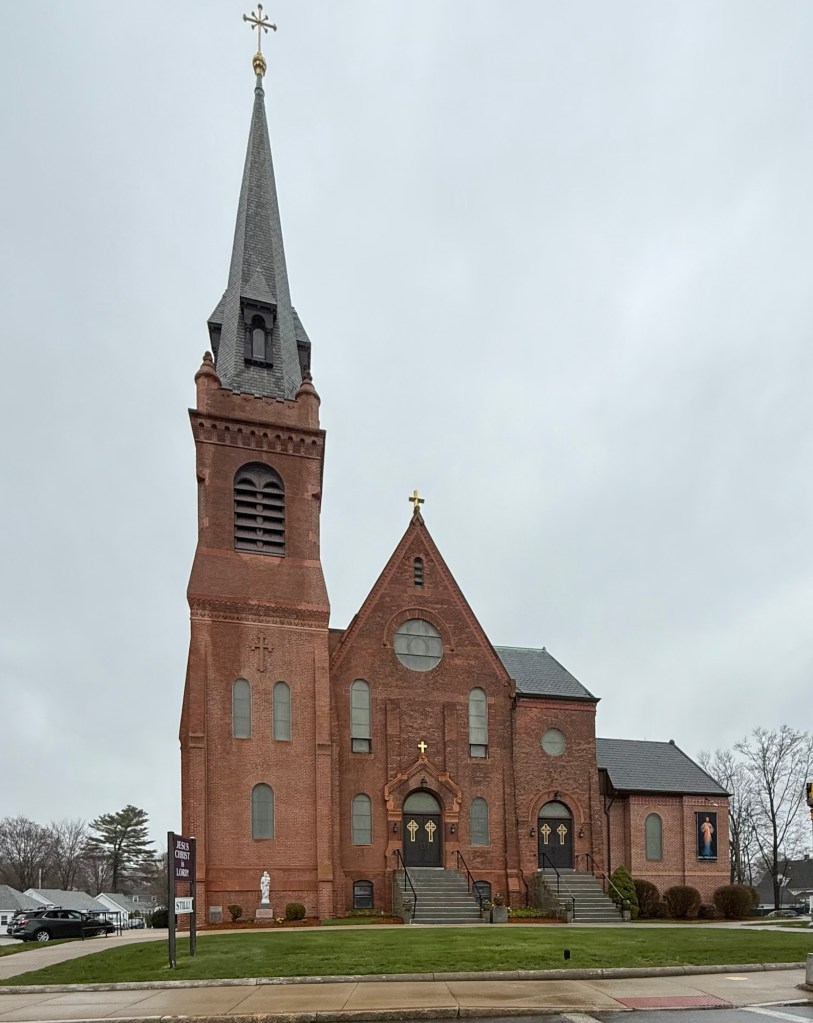
Holy Family Parish Church // 1882

In 1872, due to industrialization and increased numbers of immigrants settling in the area for work, it was decided that a new Catholic parish should be established in East Abington. Two years later, the village of East Abington incorporated as Rockland. It would be a decade later, in 1882, until the Holy Family Parish would be established, beginning planning of a true house of worship for the growing number of Catholics here. When the Holy Family Church was constructed in 1882, only a quarter of the Rockland’s approximately 4000 residents were Catholic at that time. Most of the original congregation consisted of Irish immigrants who worked in the town’s boot and shoe manufacturing industry. As the industry continued to flourish in the 1890s and 1900s, new shoe factories were built, bringing more workers to Rockland, including: Canadians, Italians, and British to the area. The town’s Catholic community grew as a result. The Victorian Gothic style Catholic church was built in 1882, with no known architect at this time. A complex of other buildings, including a school, rectory, and community center.

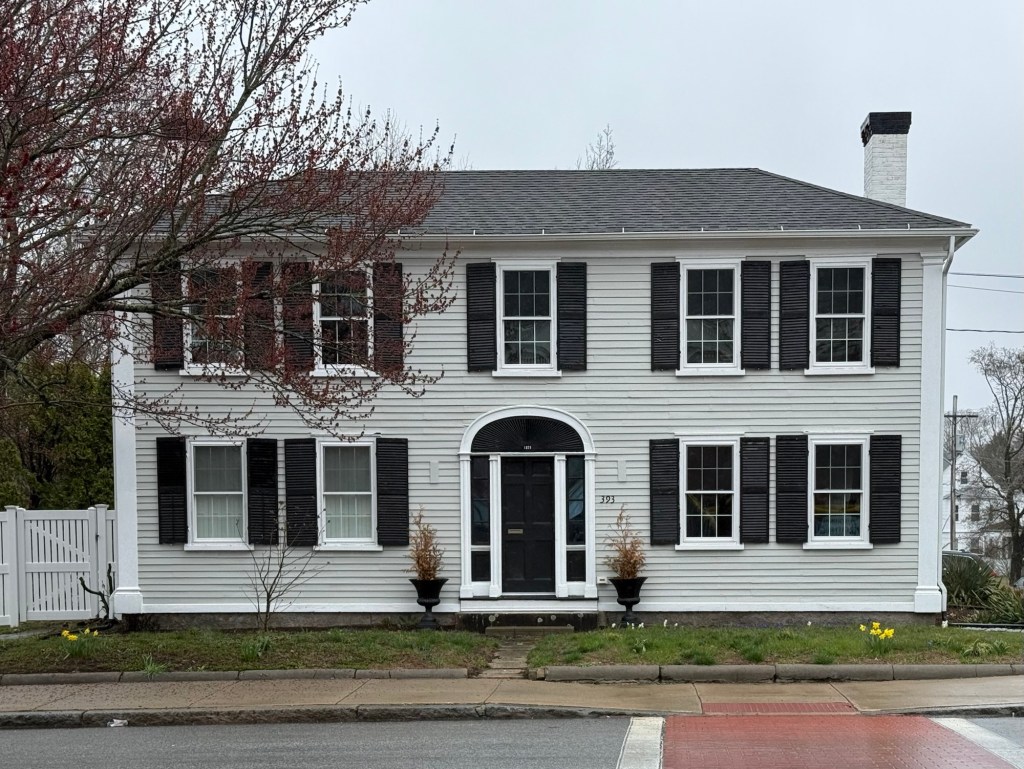
Ludo Poole House // 1829

Rockland, Massachusetts, was first populated by European settlers in 1673 as the northeastern region of the town of Abington. The town separated and incorporated as Rockland in 1874, due, in part, to issues on how the town spent its tax dollars on schools. The town name was likely selected due to the rocky soil found there, which was better-suited for mulls and industry than for farming. The Ludo Poole House, seen here, was built in 1829 at the corner of Union and Exchange streets, at an intersection which became known as ‘Poole’s Corner’. The house was built for Mr. Ludo Poole (1803-1870) and his new wife, Mary Josselyn Poole, who would raise eight children here. The property was inherited by the couple’s eldest son, Ludo Augustus Poole, who worked at a local shoe manufacturer and served in the American Civil War. The property remained in the Poole family until 1951. The property was owned in the late 20th century by John Burrows, who renovated the interior thoughtfully to blend original Federal-period elements with English Arts and Crafts style.

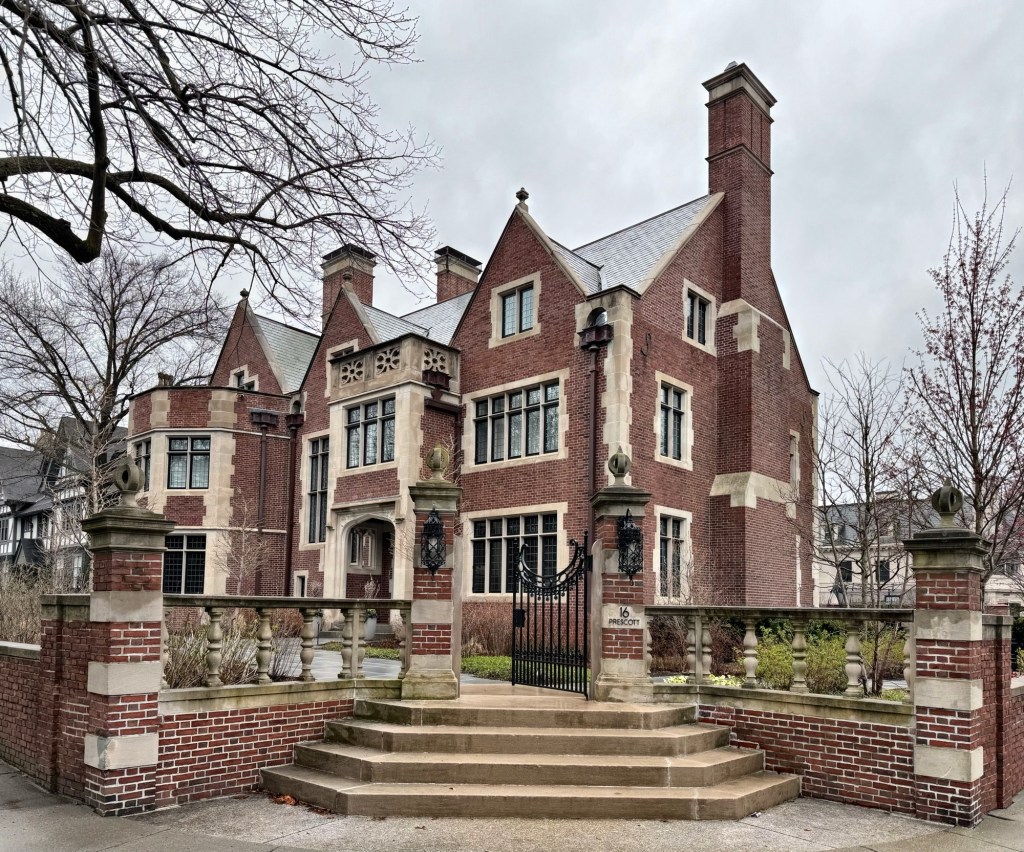
Irving-Strauss Mansion // 1906

This unique Tudor Revival style house in the Cottage Farm neighborhood of Brookline was built in 1906 for Irving J. Sturgis (1873-1924), a banker and broker originally from Michigan. Architect Joseph Everett Chandler, specialized in the Colonial Revival style and historic restorations, but was clearly adept at other styles as evidenced in this stately manor for Mr. Sturgis. After WWI, the property sold to Mr. Leon Strauss, who worked in dry goods. The Irving-Strauss mansion is constructed of brick with cast stone trim and features classic ornamentation seen in the Tudor Revival style. Steeply pitched gable roofs have stone
coping, metal windows are casement or fixed with small pained lights and are framed in cast stone trim. Framing the entranceway is a brick and stone gateway, of which, a garden wall extends around the property, with a stately garden gate surmounted by stone finials displaying the flair of the style.

Curtis House – Boston University Children’s Center // 1904

Built in 1904 as one of the finest Tudor Revival style residences in the Boston area, this residence in the Cottage Farm neighborhood of Brookline showcases all of the important elements of the iconic architectural style. The residence was built for Harry and Carrie Curtis, with Mr. Curtis being a partner with Curtis & Sederquist, bankers and brokers, with offices on Congress Street in Boston and in New York City. The couple hired architects Howard B. Prescott and William Sidebottom of the firm, Prescott & Sidebottom, to design the house. Rectangular in plan with massing enlivened by numerous cross gables and dormers, the house is decorated with exterior walls covered with wood shiplap at first story and half-timbered stucco at second story. The property was sold to Helen and Edward Mills by 1913. Mr. Mills was president and treasurer of the Edward C. Mills Leather Company. By 1931, the residence was owned by Erland F. Fish (1883-1942), a prominent lawyer and politician as well as the son of Frederick Fish, who owned the house across the street. Boston University purchased the property in 1964 as part of their institutional expansion into this neighborhood. Originally used as an alumni house, it later became the location for the Department of African American Studies. After an extensive expansion and restoration by Studio MLA (now Ashley McGraw Architects) and Kaplan Construction, the Tudor mansion is now a children’s daycare for Boston University faculty, staff, and graduate students.

Frederick P. Fish Mansion – New England Hebrew Academy // 1902

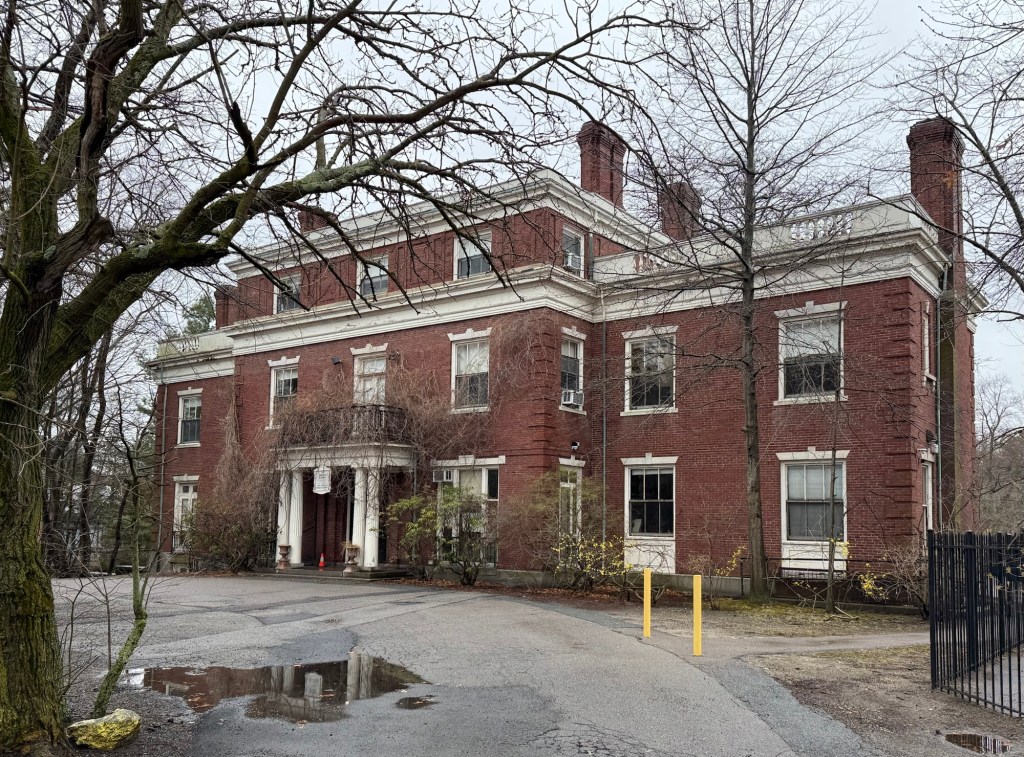
One of the finest estates in Brookline can be found here in the Cottage Farm neighborhood, just steps from Boston and the Charles River. This brick mansion was built in 1902 for Frederick Perry Fish (1855-1930), a prominent lawyer who also served as president of American Telephone & Telegraph Corporation from 1901 to 1907. One of the leading patent attorneys of his age, representing such clients as Alexander Graham BellThomas Edison, and The Wright Brothers, by the time of his death he was believed to have appeared in more patent cases at the Supreme Court than any other lawyer. For his Brookline residence, Fish purchased an 1867 brick mansard-roofed home on the lot and hired the architectural firm of Winslow & Bigelow to ether modify the earlier home or demolish it and build entirely new. The result is this stately, three-story Neo-Classical mansion. Fish would die at his home in 1930, and the property would eventually be owned by the New England Hebrew Academy as a Jewish day school. While it is an institutional use, the facade is covered with climbing vines that are bad for the masonry and an asphalt paved front yard which detracts from the beauty of this estate. It appears to be near-original though, which is great to see!

Francis B. Dana House // 1902

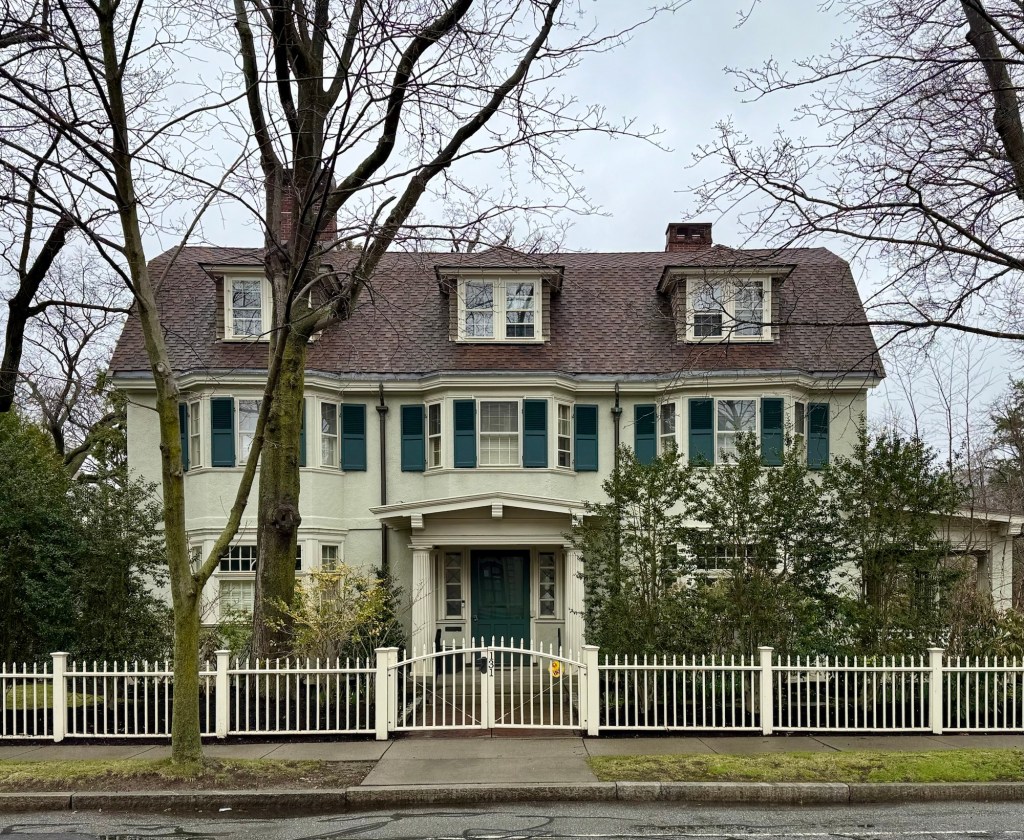
In 1902, Francis Bryden Dana (1865-1917) began construction on his home here in the Cottage Farm neighborhood of Brookline, Massachusetts. Francis was a member of the wealthy Dana Family and as a young man, attended the Boston Latin School and Harvard College. He became the president of the Dana Hardware Company of Boston. For his Brookline residence, Dana hired the exclusive architect, William Gibbons Rantoul to design the house which blends Arts and Crafts and Colonial Revival styles. The use of stucco siding, shed dormers, and portico with low sloped roof revealing exposed rafters falls squarely within the Arts and Crafts style; while the symmetrical facade, gambrel roof, and projecting octagonal bays are reminiscent of the more traditional New England Colonial Revival style.

Benjamin and Almira Pitman House // 1900

Benjamin Franklin Keolaokalani Pitman (1852-1918) was born in Hilo, Hawaii, to parents Benjamin Pitman, a Salem businessman, and Kinoʻoleoliliha, high chiefess in the Kingdom of Hawaii. After the sudden death of Kinoʻoleoliliha, Benjamin Pitman Sr. remarried and sent his children to attend schools in Boston. Benjamin F. K. Pitman would meet and marry Almira Hollander Pitman (1854-1939), a suffragist who was instrumental in working for women’s suffrage in Hawaii. The couple purchased a house lot in the exclusive Cottage Farm neighborhood of Brookline, and hired architect Edwin J. Lewis, to design a home for their family. Early atlas maps and photos show that the house was originally clapboarded on the front and rear elevations with large brick end walls containing the chimneys. The facade was given a brick veneer sometime in the 20th century. After Benjamin died in 1918, Almira had a small gambrel-roofed cottage built in the rear yard for her son to live in. The residence is one of the finest Colonial Revival style homes in the area.

Frederick Sears Cottage // 1851

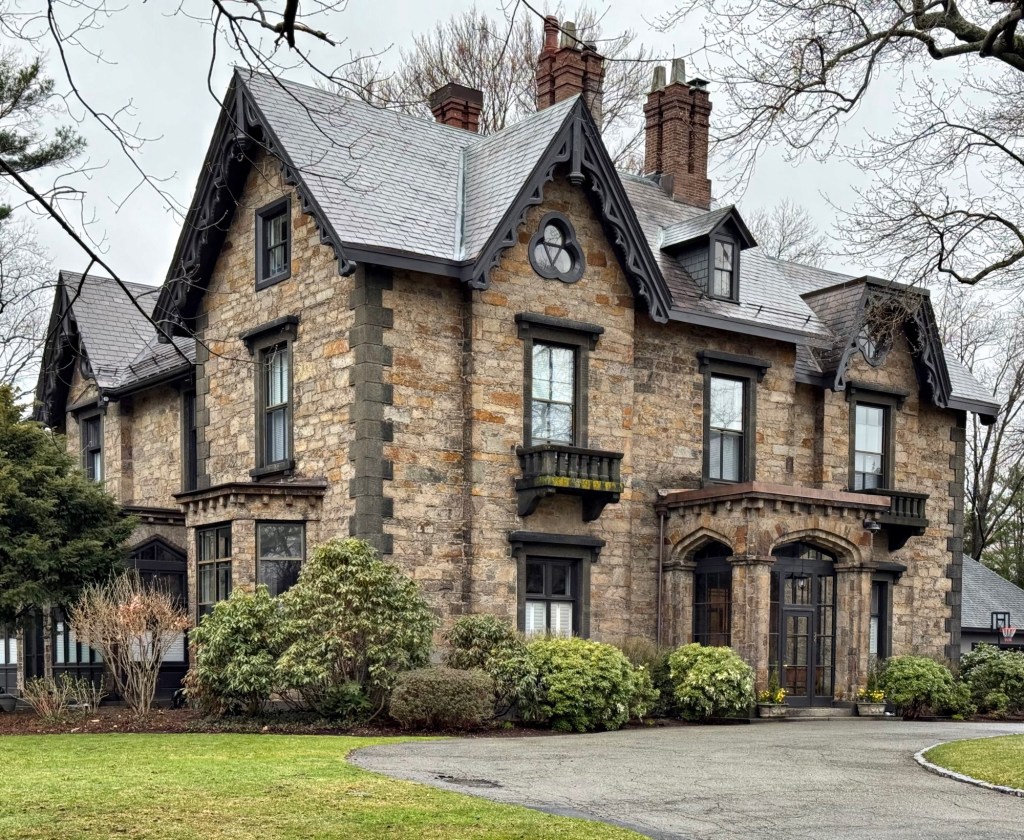
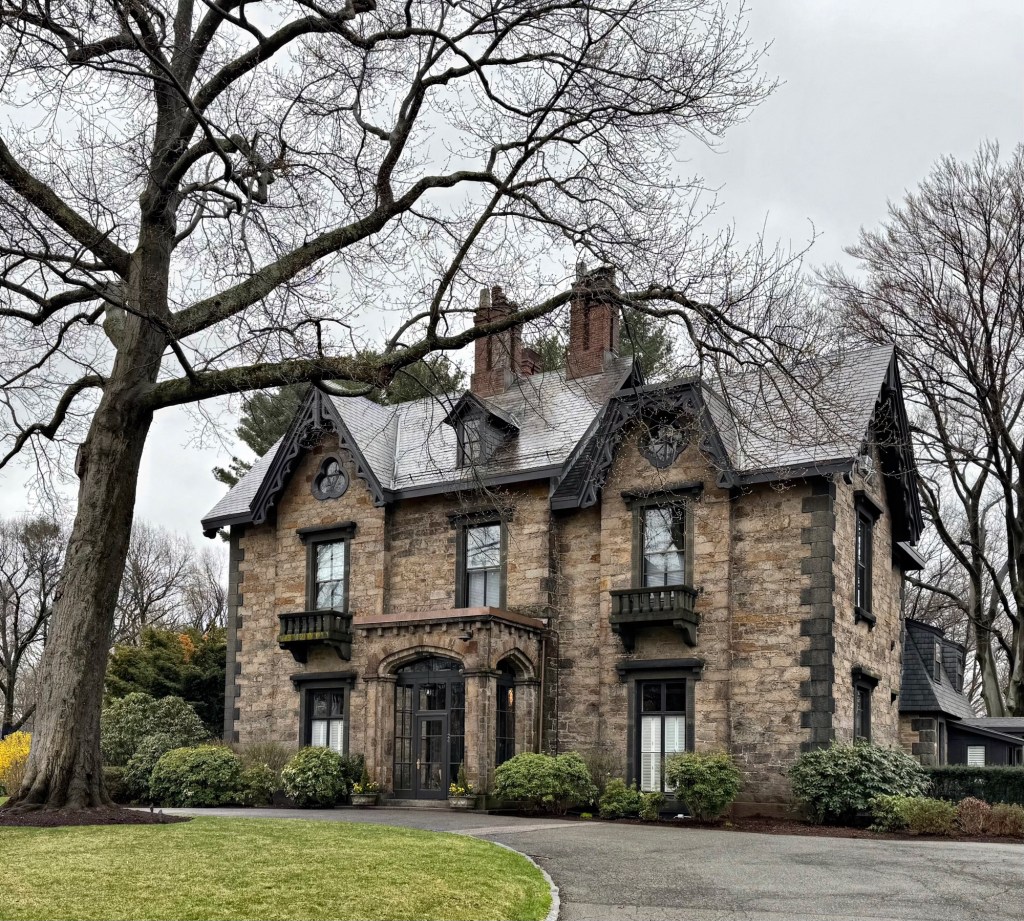
The Frederick Sears Cottage in the Cottage Farm neighborhood of Brookline, Massachusetts, is significant as one of the major surviving examples of Gothic Revival domestic architecture in the Boston area. In 1849, wealthy Bostonian, David Sears (1787-1871) laid out parks and squares in the Cottage Farm neighborhood, and built houses for himself and his children. His own house, erected in 1843, was the oldest, soon followed by houses for his four daughters, Ellen d’Hautville, Harriet Crowninshield, Anna Amory, Grace Rives, and son, Frederick. The Frederick Sears Cottage is the only surviving Sears residence in the Cottage Farm neighborhood. Frederick Sears‘ cottage was built in 1851, though he did not occupy the house long, as just three years after he and his wife married in 1852 to move into this home, Marian died. The house was inherited by Frederick Sears Jr. , and was acquired by Boston University in 1960, who began to expand into this neighborhood. They maintain the significant property very well. The Sears Cottage is an excellent example of the Gothic Revival style in stone with scalloped vergeboards, quatrefoil motifs, corner quoins, and projecting entry. The house is constructed of Roxbury Puddingstone and is said to have been designed by George Minot Dexter.

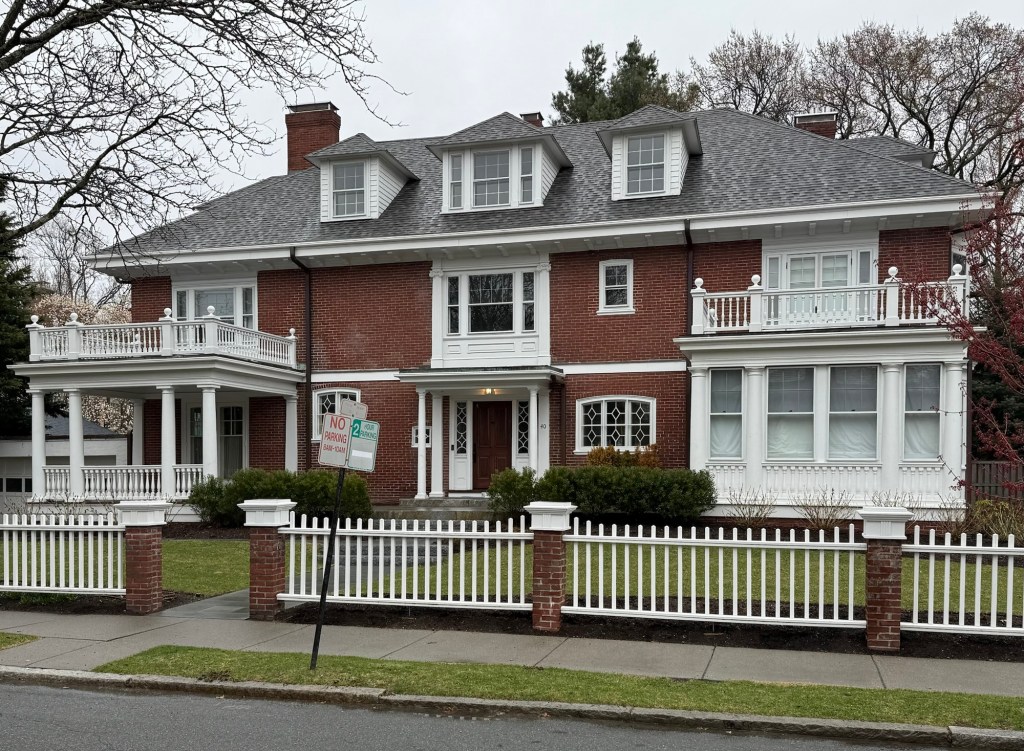
Joseph and Jane Cotton House // c.1905

As the heirs of Amos A. Lawrence began subdividing and selling off desirable house lots in the Cottage Farm neighborhood of Brookline in the 20th century, we can see a visual representation as to the ever-changing architectural tastes of wealthy residents, from Colonial Revival to Tudor Revival. This residence, the Joseph and Jane Cotton House, was built adjacent to the Amos A. Lawrence Cottage, and is an excellent example of a Colonial Revival style brick home. The property was built for Joseph Hall Cotton (1869-1919), treasurer of the American Tube Works, and his wife, Jane Eaton Cotton. The couple remained in the home for about a decade until they relocated to the Back Bay neighborhood of Boston. The architectural firm of Chapman & Frazer, esteemed suburban architects, designed the house as an elongated rectangle with projecting columned porches on the first floor, pilastered entrance and window above, and hipped roof with overhanging eaves and shed dormers, a nod to the Arts and Crafts style.