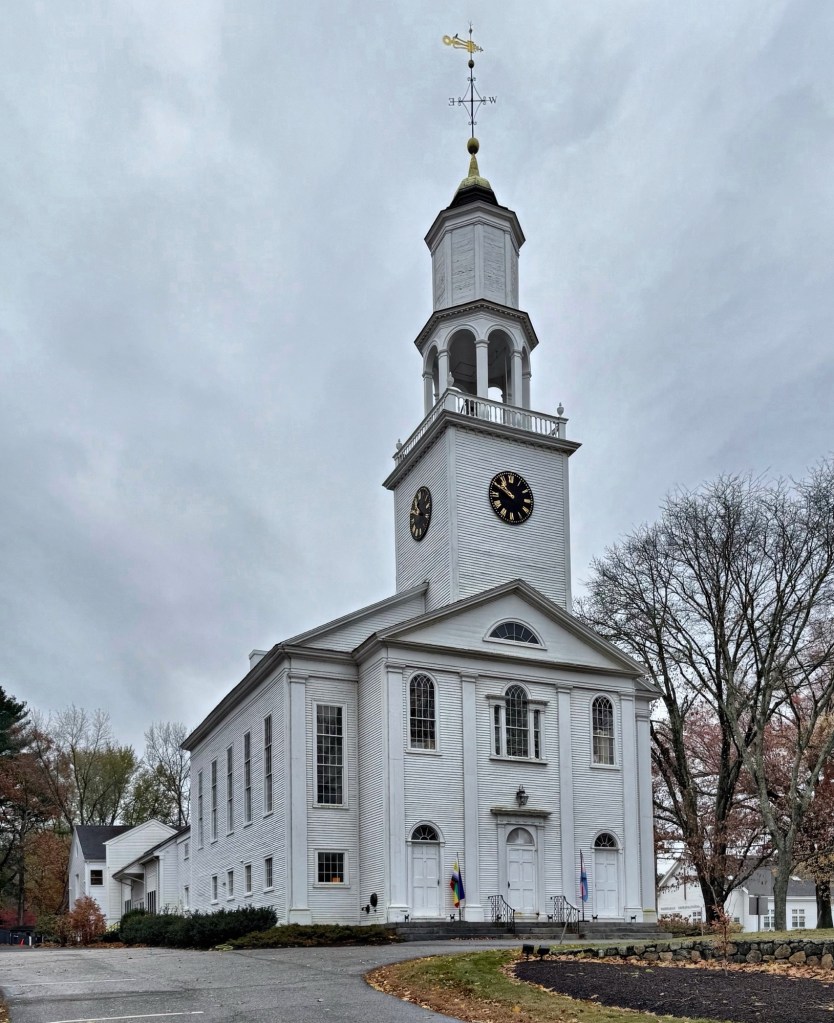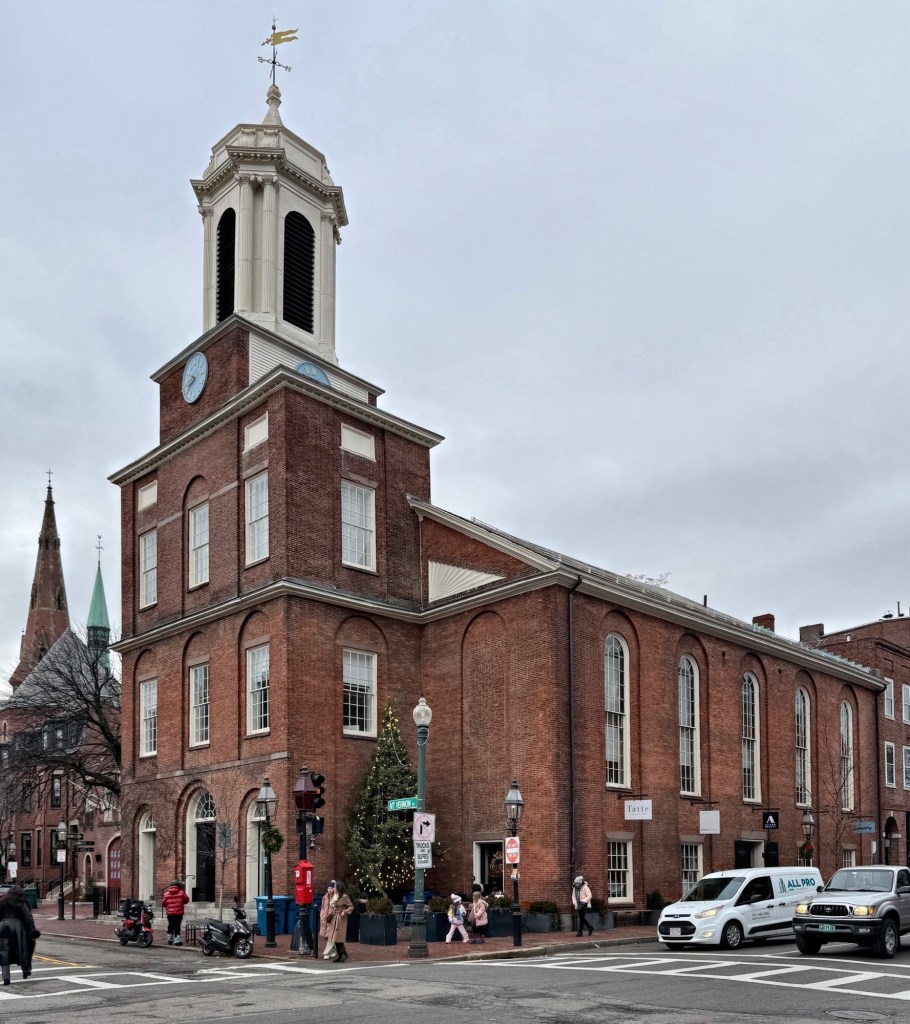
First Parish Church, Wayland // 1814

The First Parish Church of Wayland, Massachusetts, is an iconic church that displays the typical early 19th-century meetinghouse form with Federal-style elaboration. Built in 1814, the church is two-stories with a five-bay gabled-front structure with a projecting enclosed portico of three entrance bays, and a four-stage bell tower that rises above the façade. Today known as Wayland, the town was originally called East Sudbury, after it split away from the western parish in 1780. In 1835, members of town meeting voted to rename East Sudbury “Wayland” in honor of Dr. Francis Wayland, a temperance advocate, abolitionist, and then president of Brown University. The First Parish Church of Wayland was built by Andrews Palmer of Newburyport, who used an Asher Benjamin design. The bell was cast by Paul Revere and Sons and first lifted into the bell tower in 1814. The property also includes the historic, twelve-bay horse/carriage sheds where parishioners would “park” their horses and carriages while attending services.

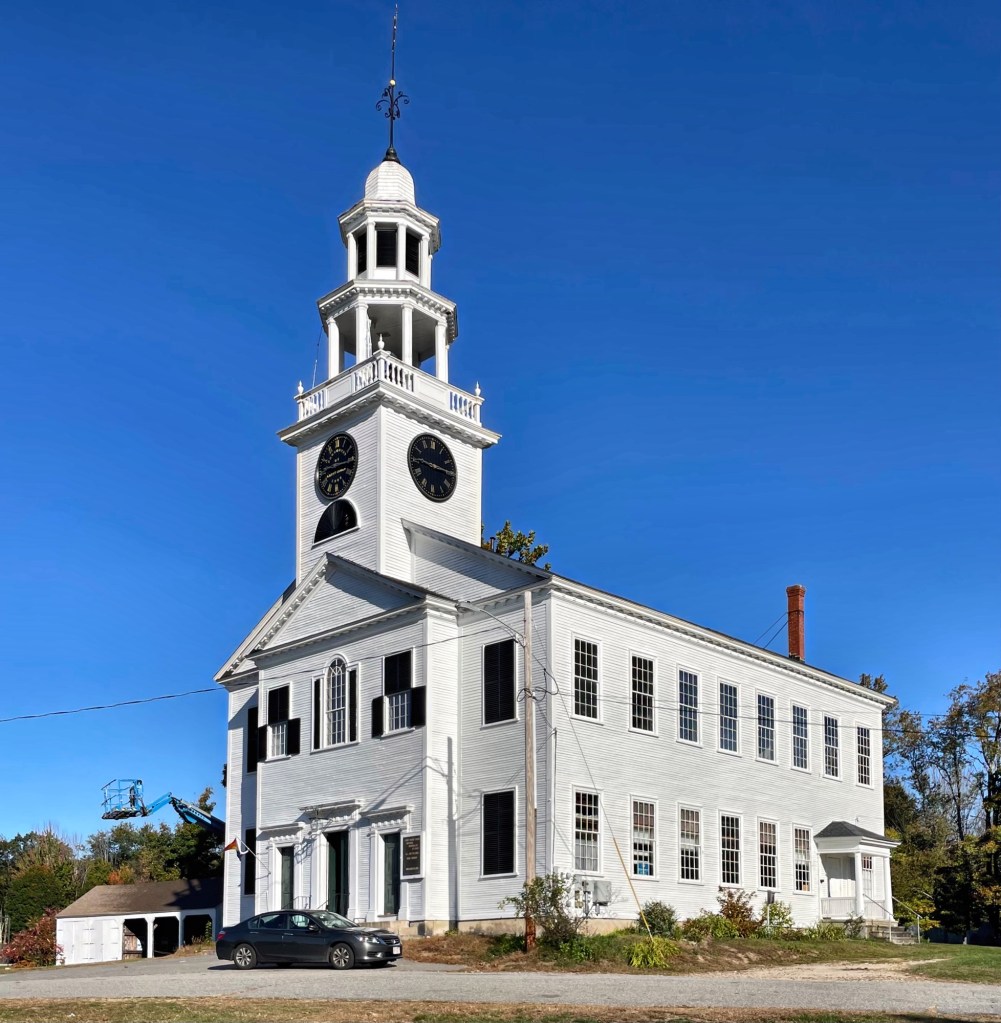
First Parish Church of Ashby // 1809

Welcome to Ashby, Massachusetts; a rural and historic town that was first settled in 1676 but due to the continued threat of native hostilities, permanent European settlement in the town did not occur until about 1750. The town incorporated in 1767 and was reputedly named for the abundance and quality of white ash trees found in the area by early settlers. Today, the town has just over 3,000 residents. At the center of the town village, the First Parish Church of Ashby stands as a significant Federal-period meetinghouse, and an integral piece of the town’s history. The present building was constructed in 1809, replacing an earlier structure from 1771. Carpenters for the building were Joseph Kendall and Darius Wellington of Ashby, who utilized plans from Asher Benjamin’s American architectural pattern book of 1797. Facing the town common, the church is a two-story gable front building with a three-stage tower including an octagonal open belfry rising from the pedimented front pavilion.

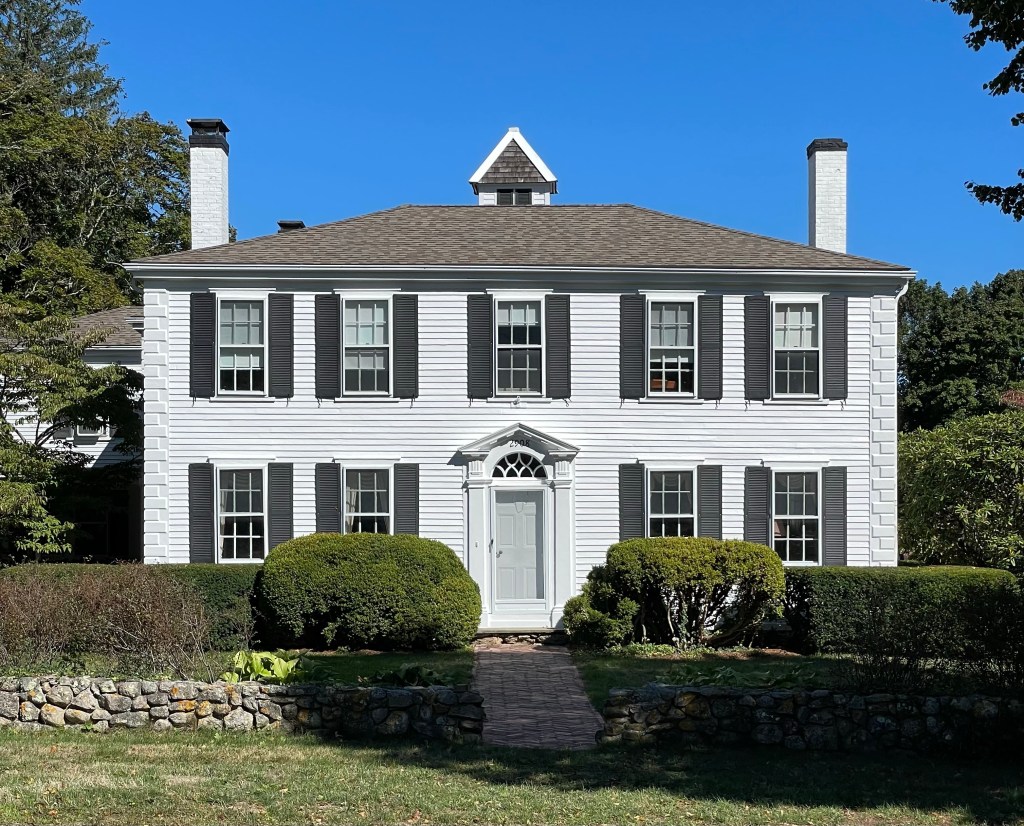
Hinckley-Crocker House // c.1827

In 1827, Isaiah Hinckley (1786-1880), a boatbuilder, purchased a pre-Revolutionary home built by Dr. Abner Hersey on Main Street in Barnstable Village. Hinckley, being a skilled tradesman, completely re-designed the house, creating the stunning Federal style manse we see today. It is likely that Hinckley used an architectural pattern book, like one of the many by Asher Benjamin, which provided plans and drawings for carpenters and other tradesmen to be able to build stunning homes and churches all over the country. In 1861, this estate passed to Captain Elijah Crocker, a sea captain who commanded the ship Akbar.

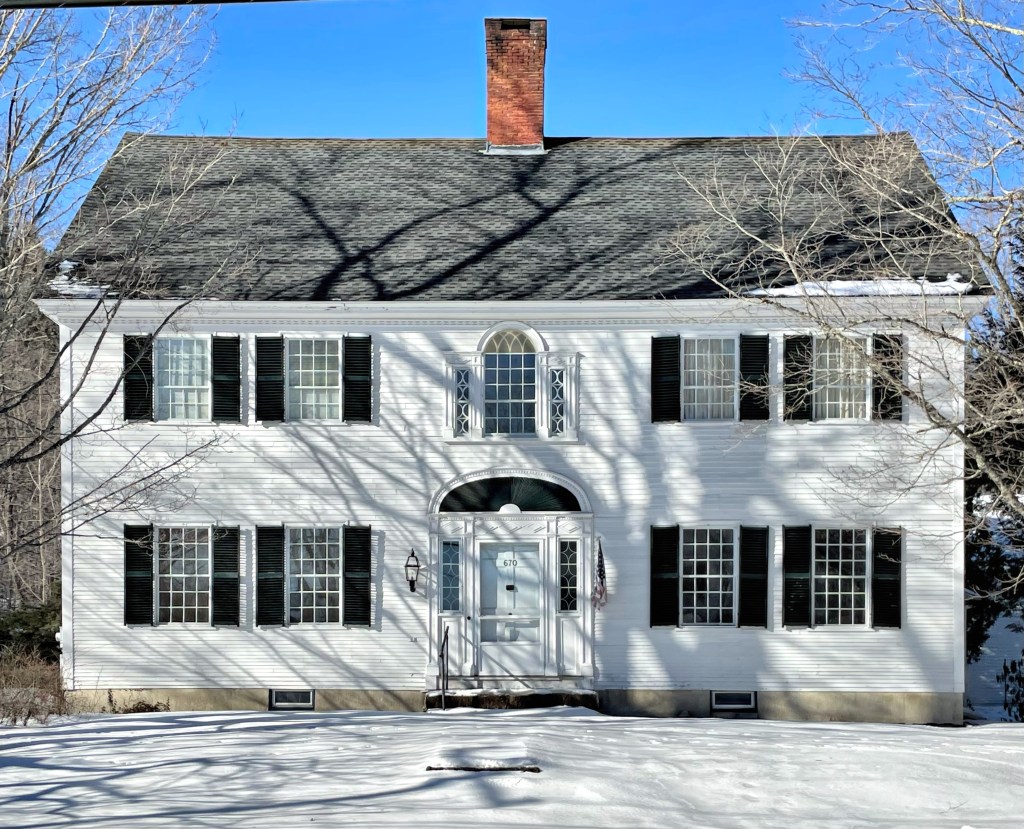
Ambrose Knight House // c.1810

The most architecturally significant example of the Federal style in Waterford, Maine, is this c.1810 home built for Ambrose Knight, who operated a store in town. The high-style Federal home features a well-proportioned fanlight over the entrance with a Palladian window above, all with geometric moulding. The home was likely built by a housewright who employed designs from Asher Benjamin’s pattern books for builders, as the high-style features and Palladian windows are uncommon in this part of Maine.

High Street House // c.1810

This house in Freetown, MA literally made me turn the car around to get a photo (it’s a sickness, they need a rehab for old house addicts). The house was built in the early 1800s and is a stellar example of the Federal style, which took over architecture in New England after the Revolutionary War until the 1830s. The style often features intricate designs and complex geometry, which previously would have been too difficult for the majority of builders or designers to accomplish. From pattern books by influential architects like Asher Benjamin, the style was built in forms and places from urban townhomes in Boston and New York, to rural, rambling farmhouses in Vermont and Maine. Publications by Asher Benjamin including The Country Builder’s Assistant and The American Builder’s Companion opened up high-quality, architectural landmark designs to the masses, and is a significant reason New England architecture is so iconic. Benjamin included drawings and diagrams which builders could copy, from column styles and dimensions to chimney and moulding details.

Asa Waters Mansion // 1829

In 1824, prosperous gunsmith Asa Waters II set out to build the stateliest residence in the country. It took two full years to amass the necessary materials for what is now known as the Asa Waters Mansion and Mr. Waters spared no expense. Asa Waters II (1769-1841) was born in Millbury in 1813 to Asa Sr. and Sarah Waters. Asa earned the art of gunsmithing from his father, and in 1808 the junior Asa and his brother Elijah opened the Waters & Co. Armory along the banks of the Blackstone River, in what is now Millbury Center. Following the untimely death of his brother in 1814, Asa Waters carried on the business solo and secured lucrative arms contracts with the United States government. His invention of a lathe to turn gun barrels into the first seamless barrels revolutionized the manufacture of guns throughout the world, and provided his company a stockpile of cash. As a result, he hired Boston-based architect Asher Benjamin, to design a country house suitable of his stature. The mansion features two prominent facades with the primary distinguished by a colonnade of fluted two-story columns with composite capitals. The mansion remained in the Waters Family until 1929, when it was sold to the Roman Catholic Diocese of Worcester, as a rectory of a local church. In 1977 the Town of Millbury acquired the Asa Waters Mansion, and with little funding to maintain the property; in 1994, the Asa Waters Mansion had fallen into quite a bit of disrepair. The town proposed to demolish the mansion for a parking lot, but a group of locals worked together as the Asa Waters Task Force and petitioned to save the house: funds were raised, tradesmen in the community donated materials and labor. Saving the architectural landmark for generations to come.

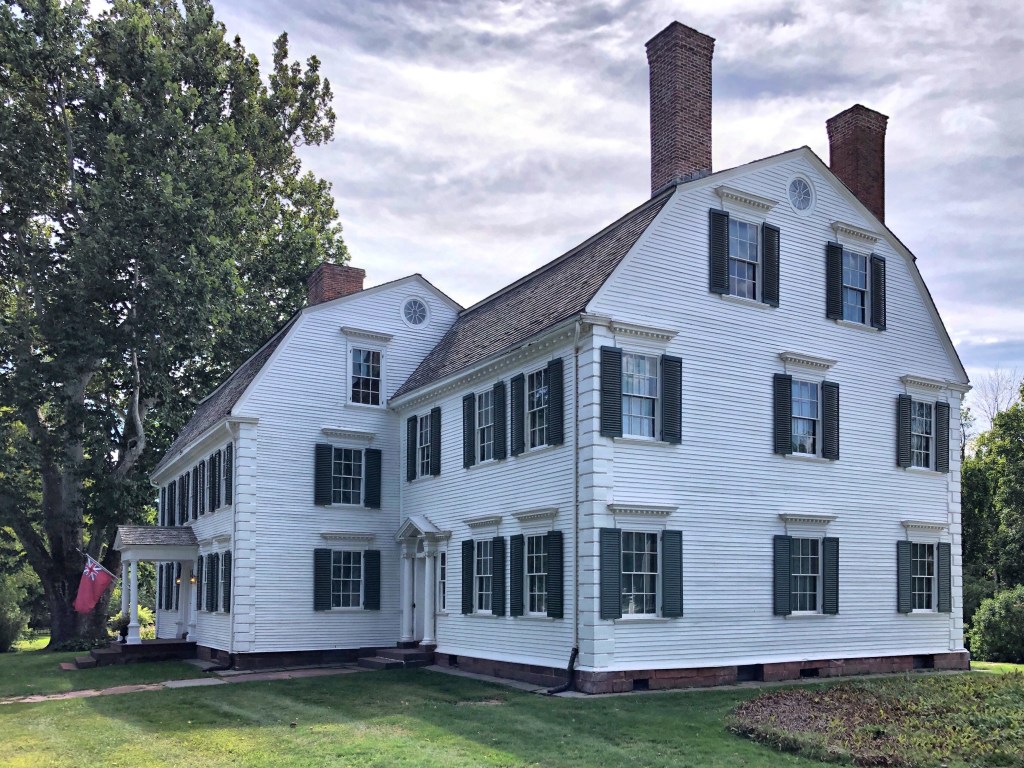
Phelps-Hatheway House // c.1762

Set back from tree-lined Main Street in Suffield, the Phelps-Hatheway House is but one of many handsome eighteenth and nineteenth century homes in the town. The house began construction sometime between 1732-1762 as a modest gable-roof Georgian home built by Abraham Burbank. In 1788, the home was purchased by Oliver Phelps. at the beginning of the Revolutionary War, Phelps joined the Continental Army and fought in the Battle of Lexington. He left service in 1777 and, relying on his experience as a merchant, became Massachusetts Superintendent of Purchases of Army Supplies, a Deputy Commissary of the Continental Army. He was introduced to Robert Morris, the great financier of Revolutionary times. He supplied troops and received commendation from George Washington for his efforts. After the war ended, he became a prominent businessman and was elected to the Massachusetts Senate in 1785 and served on the Governor’s council in 1786 (Suffield was still a part of Massachusetts at this point).

Upon returning, Phelps hired architect Asher Benjamin (when he was in his early 20s!) to redesign the home into a gambrel roof mansion and construct numerous additions to make the house a suitable home for a wealthy, sophisticated man such as himself. Phelps was a principal in the Phelps and Gorham Purchase of six million acres of land in upstate New York, making him one of the nation’s largest landowners. Phelps lived here until 1802, when he moved to Canandaigua, New York, to more closely oversee the development and sale of his holdings. Phelps or his heirs sold the house, which was purchased by Asahel Hatheway and it remained in the Hatheway family for a century. It is now owned by Connecticut Landmarks and operates as a house museum.

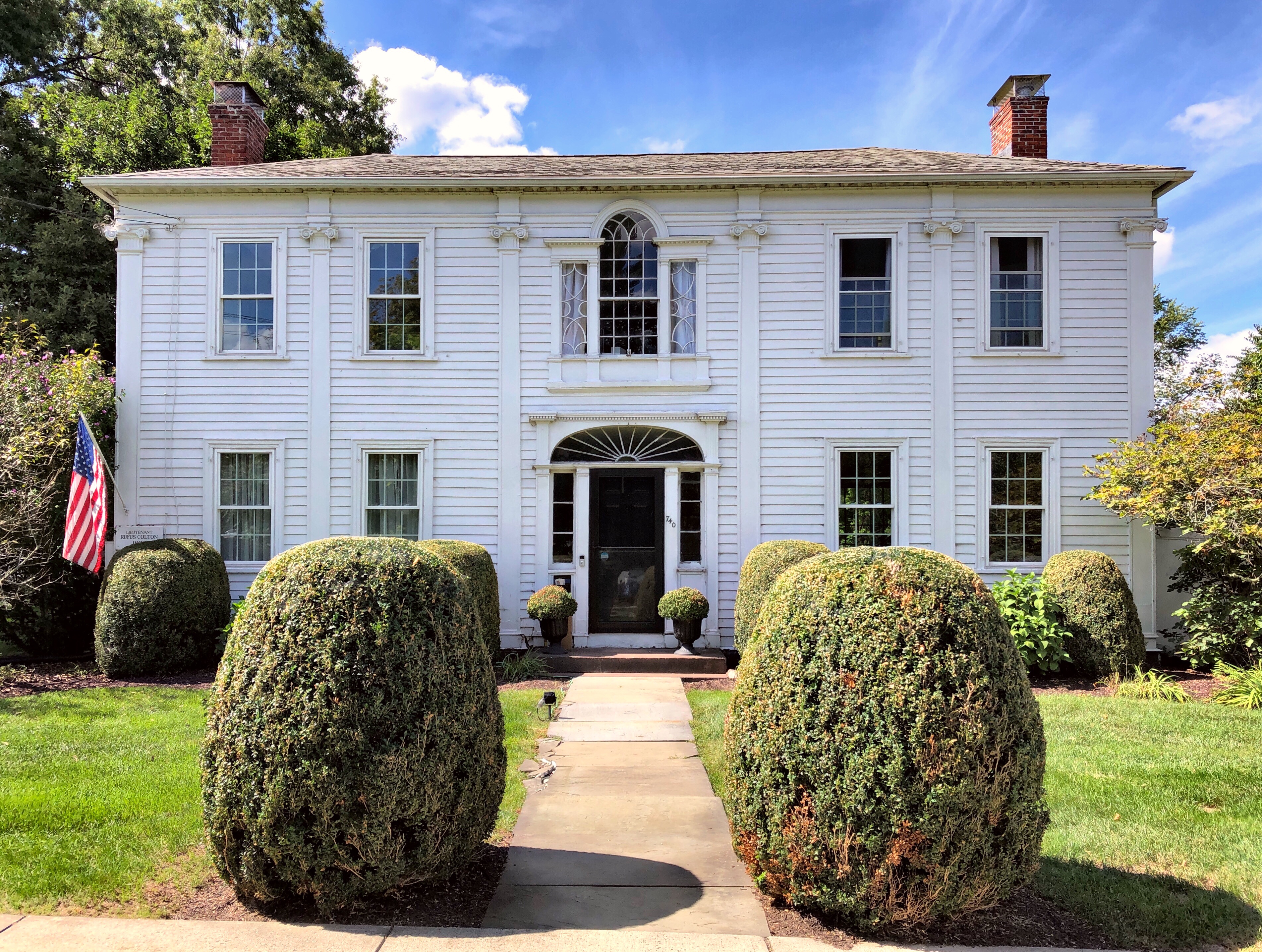
Colton House // 1806

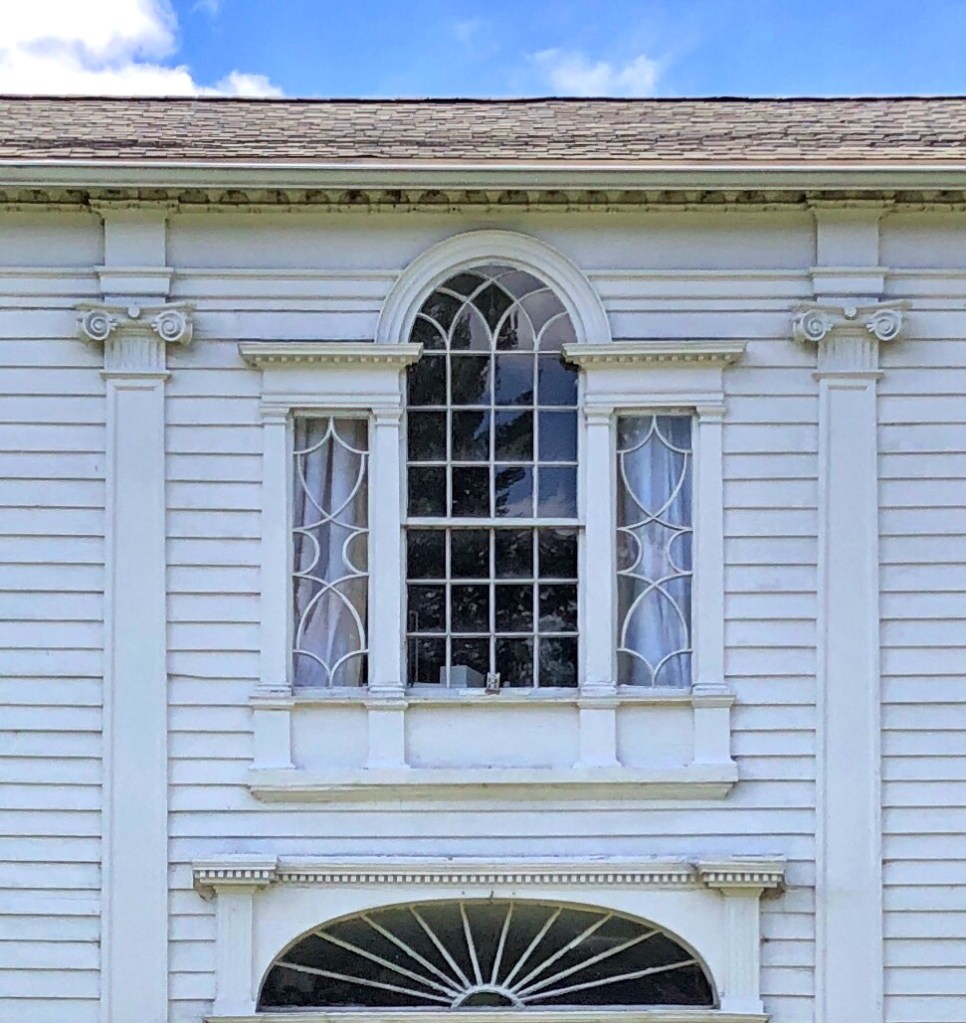
Similar to the Charles Leonard House a block away, the Colton House on Main Street in Agawam remains as a historically and architecturally significant Federal style home in Western MA. The home was built in 1806 for Rufus Colton (1776-1862), a couple years after he married his first wife. The home was likely constructed by a local builder who took inspiration from Asher Benjamin’s early plan books and Captain Leonard’s home nearby. The house was later owned by Martin Luther who operated the home as a tavern for travelers along the route from Hartford to Boston. It was later owned by Isaac Cooley and documented under the Historic American Buildings Survey. Architecturally, the house features a stunning broad entry surround which incorporates a generous elliptical fan-light with leaded glass above a paneled door. Directly over the main entry on the second floor is a Palladian window with the side panels showing the urn and leaf pattern, seen only in high-style Federal homes.

Capt. Charles Leonard House // 1805

This stunning home on Main Street in Agawam, MA, was built in 1805 as a high-style Federal home. The property was developed for Captain Charles Leonard (1764-1814) who purchased twenty-five acres of land on the eastern side of Main Street at the center of town. Leonard was a graduate of Harvard University who later turned to farming. He attained the rank of Captain while serving in the local militia, and was known by that title thereafter. It was in 1805 that Leonard constructed Agawam’s fourth tavern on the western end of his property to serve travelers as the first stop on the Hartford to Boston stage run. He likely hired a local builder who took inspiration from Asher Benjamin’s early plan books. The home was later converted to apartment units until it was purchased and restored by Minerva Davis, a wealthy citizen from town, who then created a board of trustees to operate the building as Agawam’s Community House.