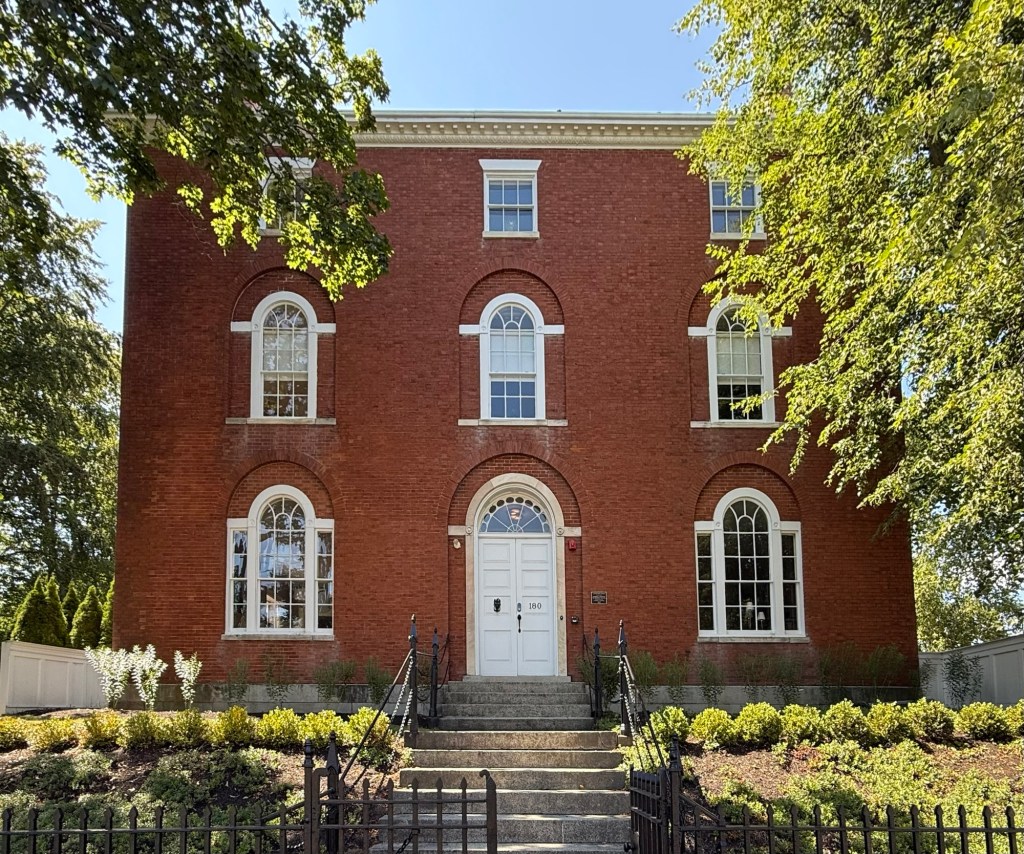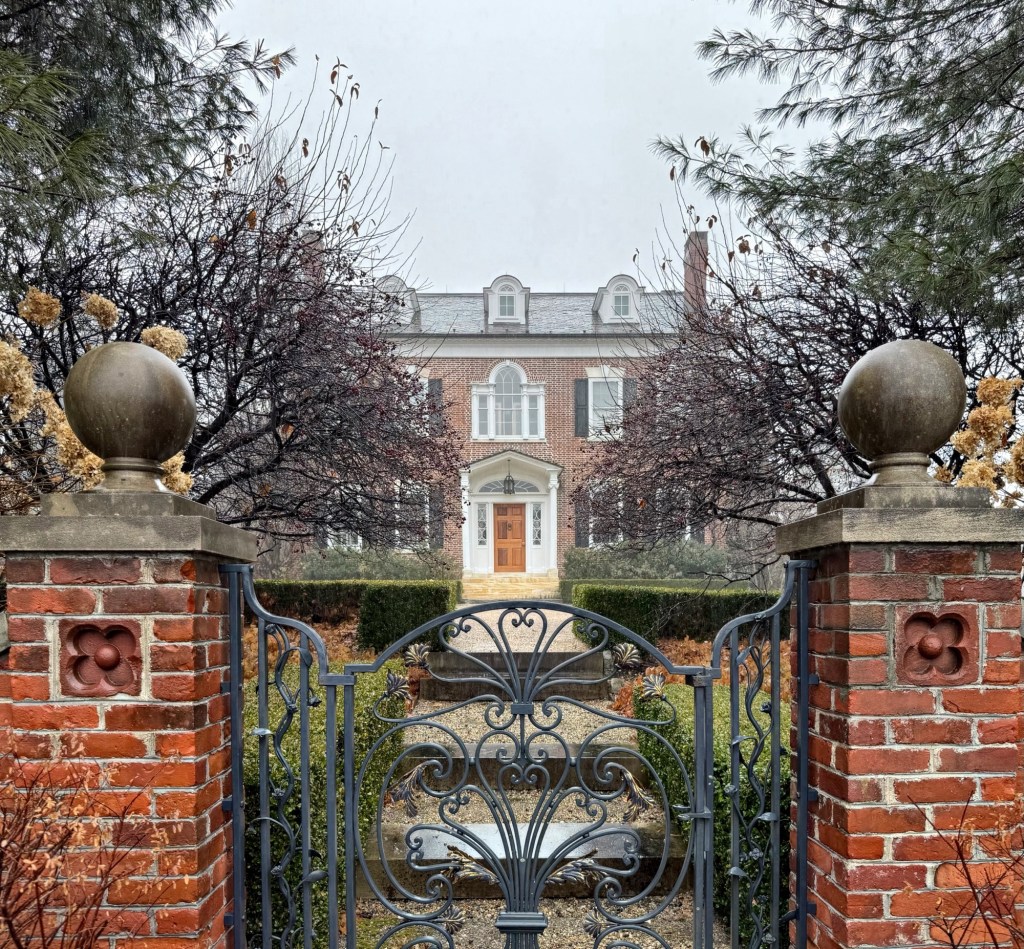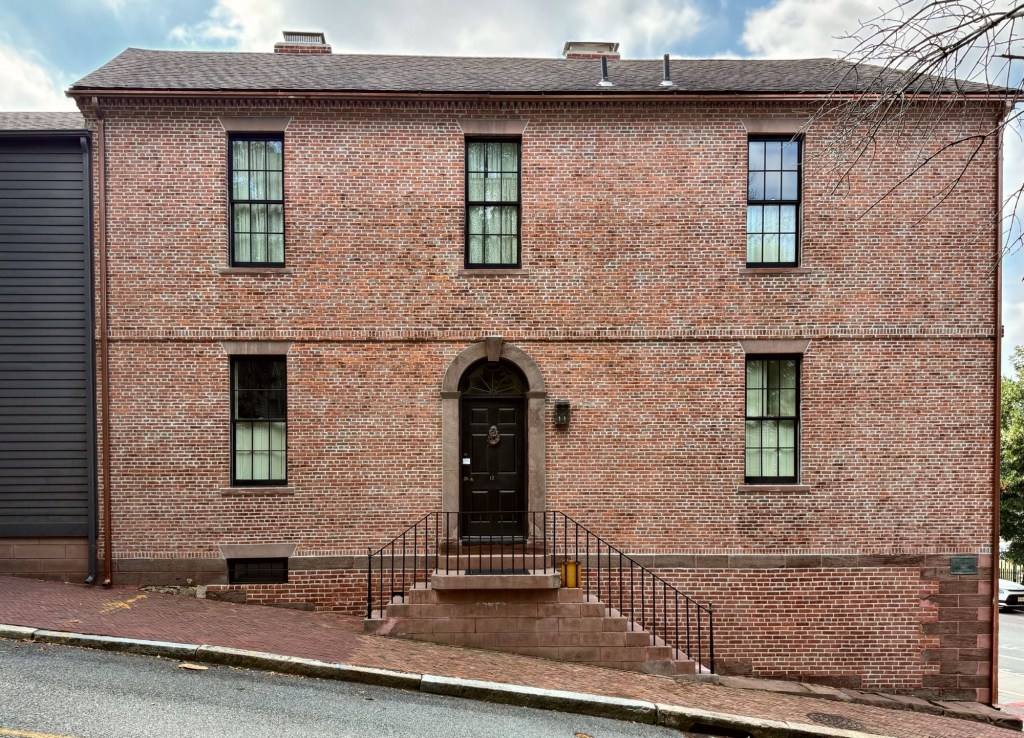
Larkin-Ladd House // c.1813

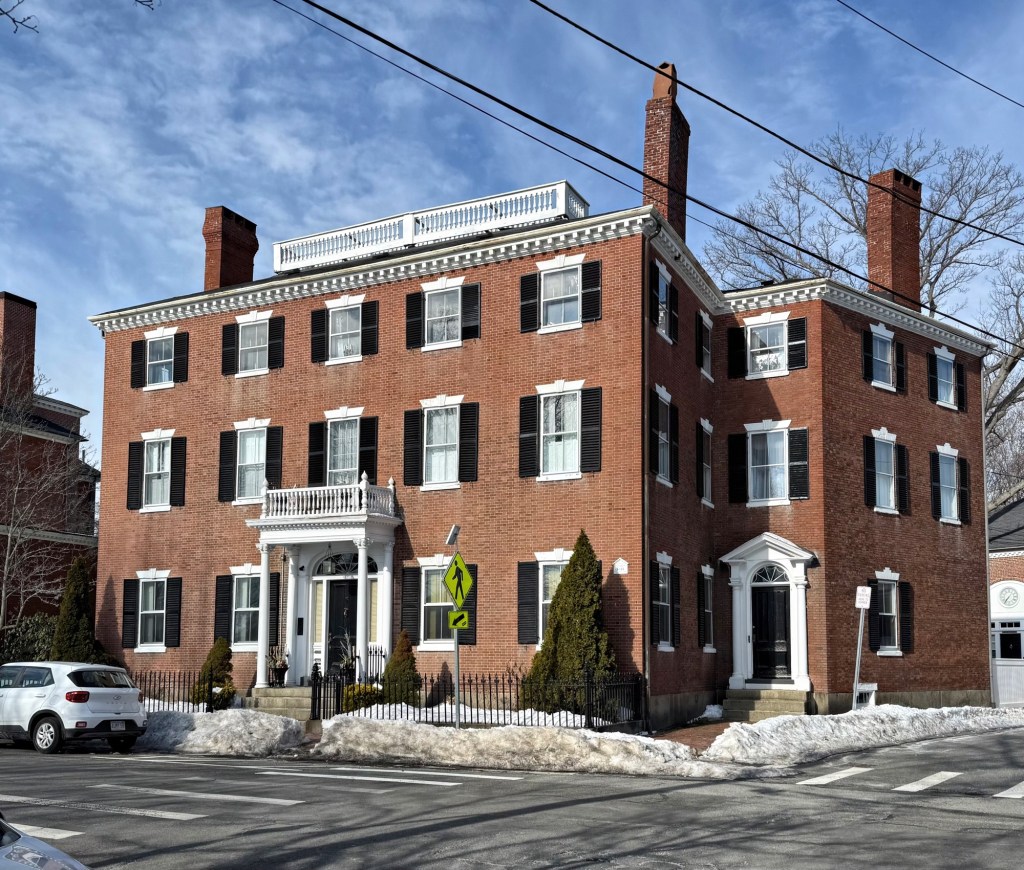
The Larkin-Ladd House at 180 Middle Street in Portsmouth, New Hampshire, is a three-story, masonry Federal-style residence with symmetrical facade, built for one of the city’s wealthiest merchants. Samuel Larkin (1773-1849) was born in Charlestown and moved to Portsmouth, marrying Ann Jaffrey Wentworth, a daughter of Col. Joshua Wentworth. During the War of 1812, Samuel Larkin made his fortune as an auctioneer, selling the contents of English ships captured by local privateers. It is believed that fourteen privateers and their crews worked out of Portsmouth Harbor and are said to have captured an estimated 419 British ships! With the profits from stolen goods from these British ships, Larkin purchased lots on Middle Street and began construction of this stately residence. He (and mostly his wife), had twenty-two children, although roughly half of them died before reaching adulthood. By the late 1820s, financial hardship fell on Larkin and he sold this property, moving into his house next door, which before this was his original residence and later rented to boarders. The Federal style mansion was later owned by Henry H. Ladd, a prosperous Portsmouth shipping merchant, who also served as President of New Hampshire Bank and Portsmouth Savings Bank. The Larkin-Ladd House is undoubtedly one of the finest Federal style residences in New England, and stands out for its entrance, flanked by Palladian windows and the slightly recessed elliptical surrounds at the first and second floor windows. Additionally, the historic stable, also from the 1810s, maintains much of its architectural integrity.

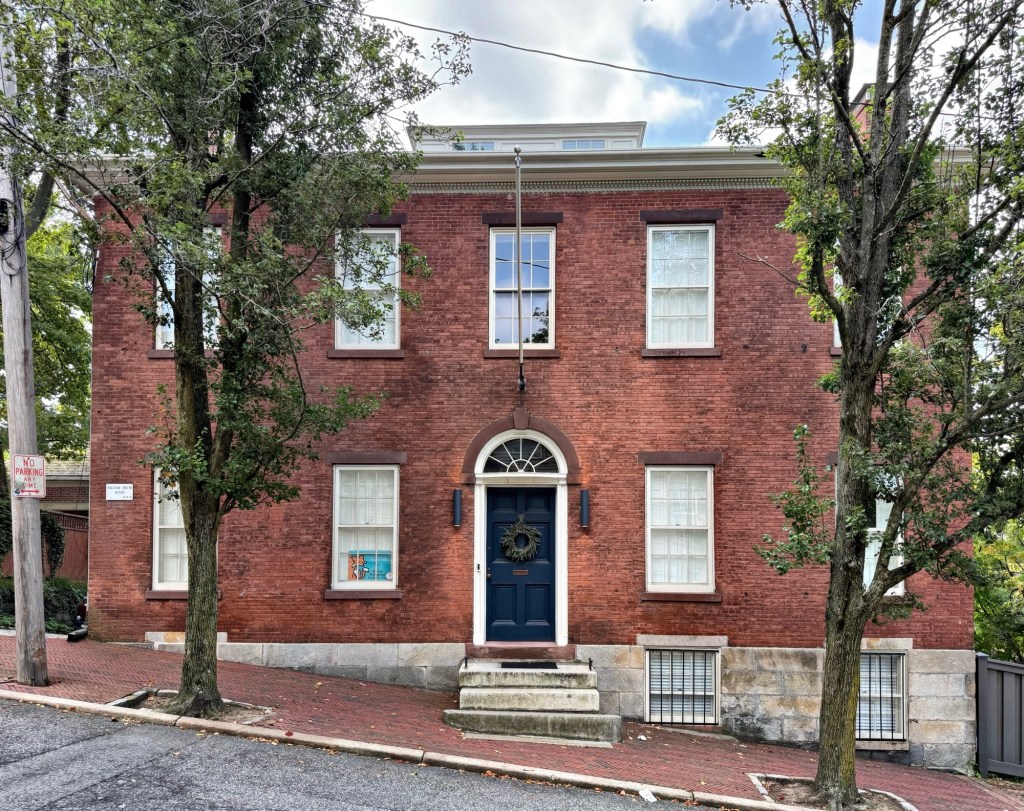
Perkins-Monroe House // 1811

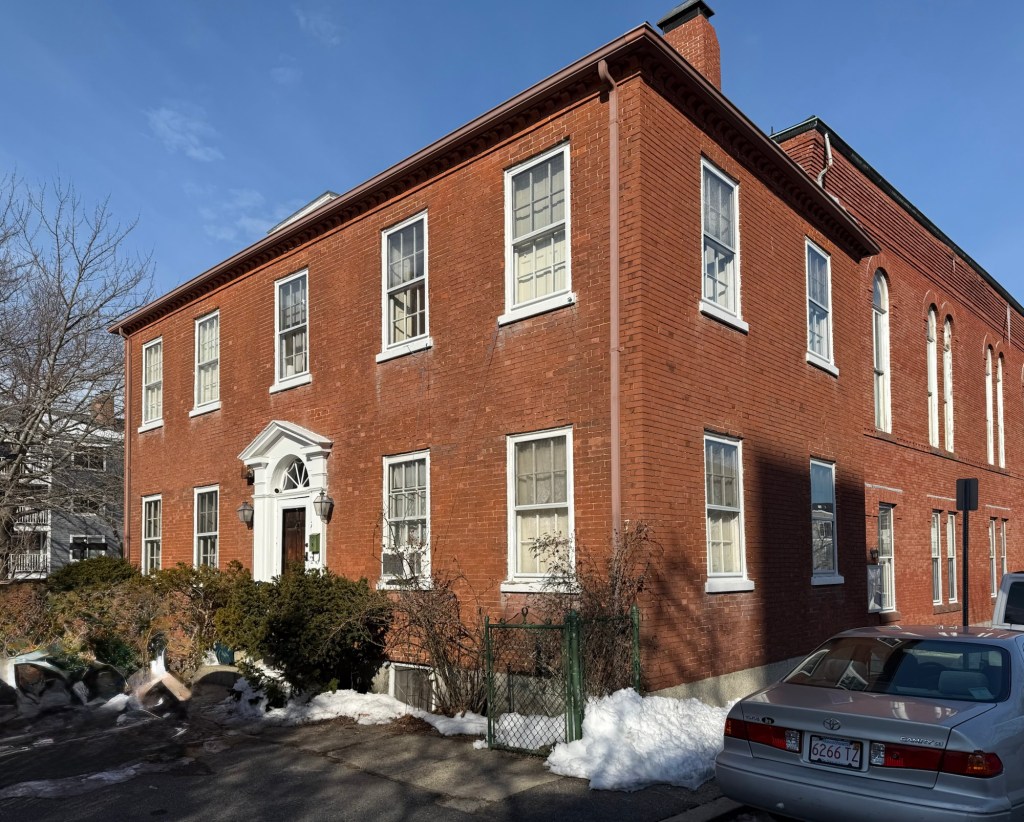
This brick, Federal style house, is located adjacent to the First Universalist Church of Salem amongst a sea of urban renewal-period housing, and is a reminder for Planners to think about the long-term implications in their work. This house was built in 1811 for Thomas Perkins, a local merchant whose brother was its first occupant. After successive ownership throughout the 19th and early 20th centuries, in 1950, Bessie E. Monroe purchased the premises and moved into the home. When the city began urban renewal planning for the area in the 1960s, the building was occupied by Bessie Monroe, who at the time was an elderly woman. The Salem Redevelopment Authority acquired the house through eminent domain and the house was targeted for demolition. The Redevelopment Authority, concerned with how relocation would affect Bessie Monroe’s health, decided to take the property but allow Mrs. Monroe to live there until her death. This decision delayed the planned demolition of the building, even though all other targeted properties were demolished. Luckily, the renewal plan changed its focus from new construction to restoration of existing buildings between the time of the taking and Bessie Monroe’s death. The building was then sold to an owner interested in restoring the structure, now the building is listed on the National Register of Historic Places and is a testament to the benefits of preservation over short-sighted planning policy. 

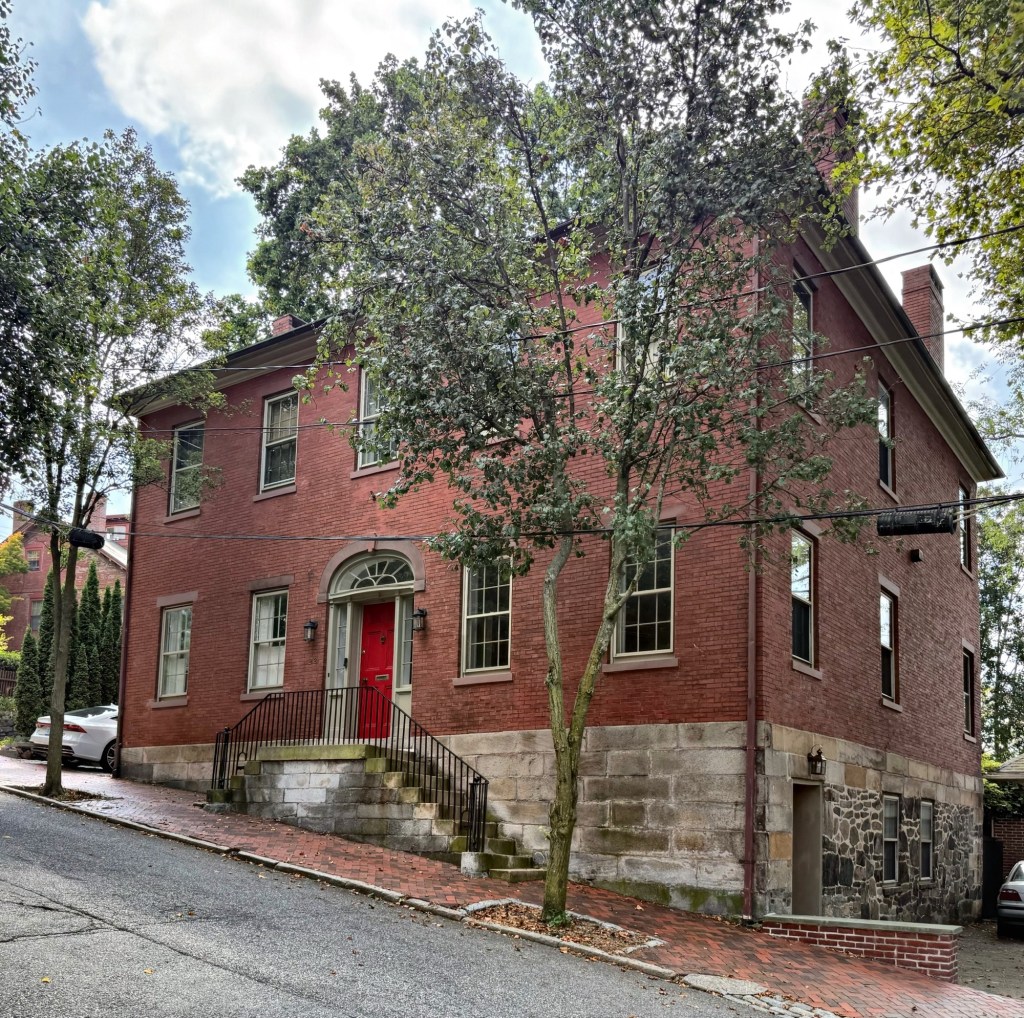
Forrester-Peabody House – Salem Home for Aged Men // 1818

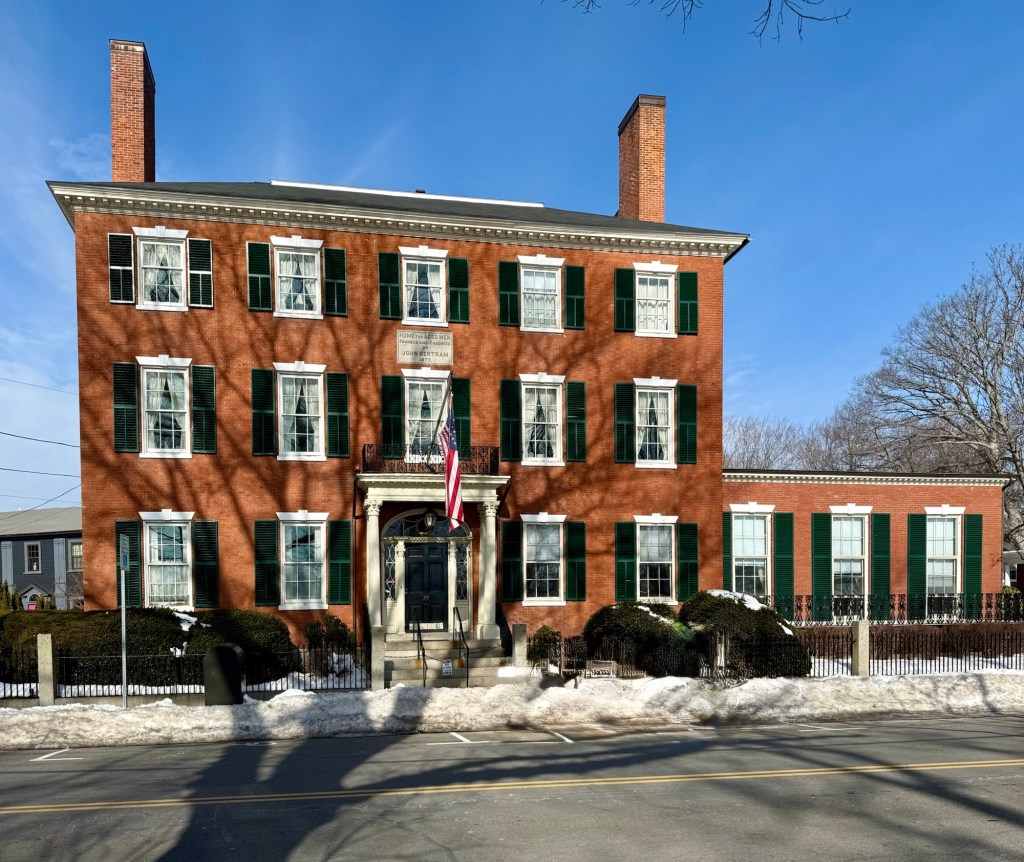
Overlooking the Salem Common, this 1818 Federal style dwelling has served as everything from a single-family home to a boarding house and ultimately an assisted living facility, showcasing that old buildings can always be repurposed into new uses. The home was built for Captain John Forrester, son of Simon Forrester, one of Salem’s most successful merchants. The Forrester House was purchased in the 1830s by George Peabody, who added the one-story ballroom wing. Peabody lived in the house until 1892 and the building later housed the Salem Club, a men’s social organization with over two-hundred well-connected members. In the 1920s, it became the Bertram Home for Aged Men, named after Captain John Bertram, who founded the organization in 1877 as a charitable residence providing housing and socialization space for aged men in Salem. The home had fallen into disrepair when it was closed in 1988, to reopen two years later as the first free-standing assisted living community for men and women in Massachusetts, today known as the Bertram House.

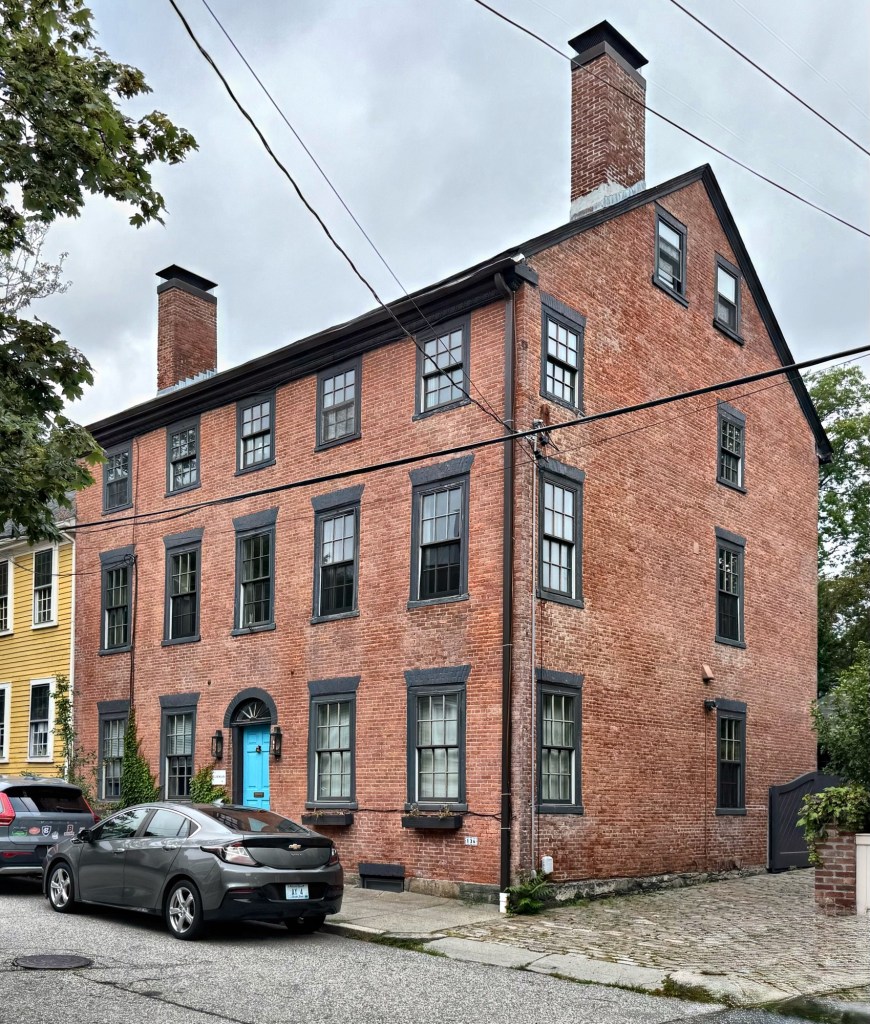
White-Lord House // 1811

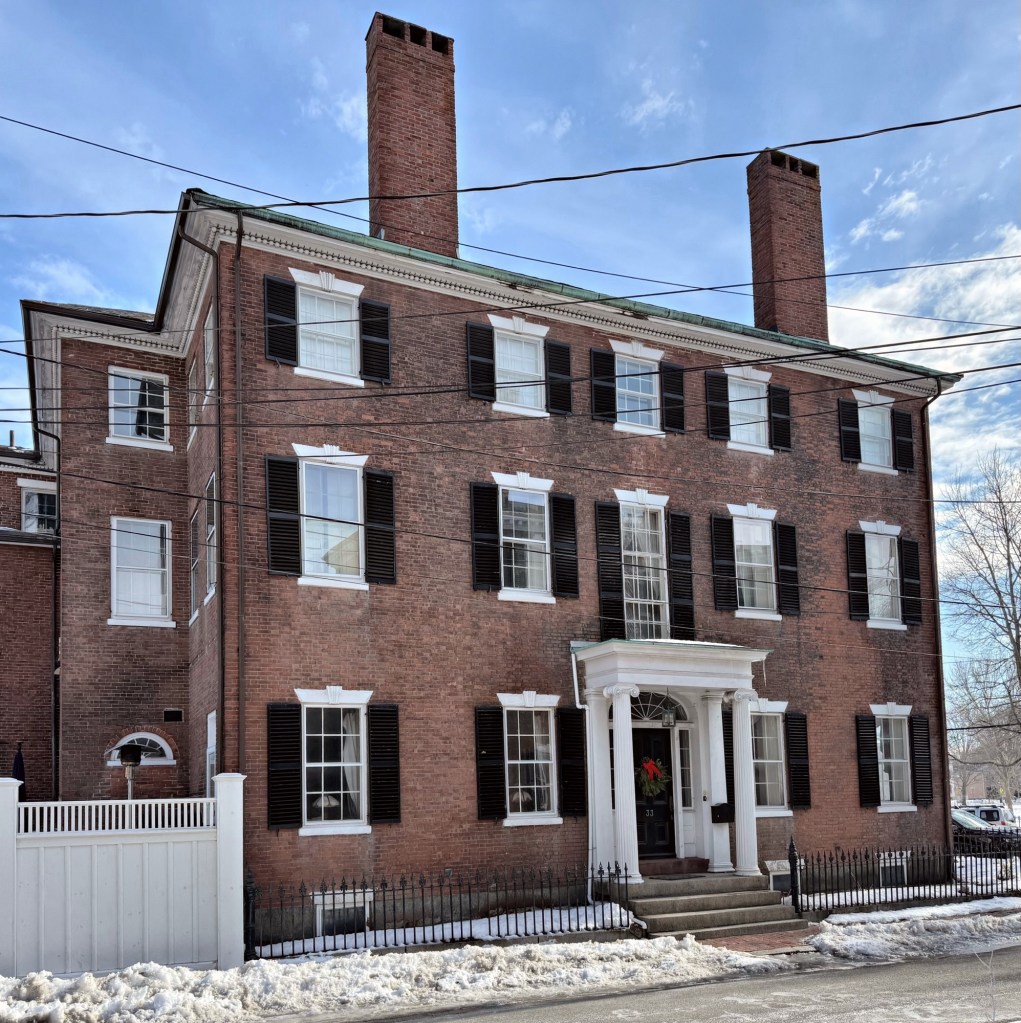
The White-Lord House at 31 North Washington Square in Salem, Massachusetts, is one of a row of stately brick, Federal style mansions built for wealthy 19th century merchants overlooking the bucolic Salem Common. This house was built in 1811 for merchant Stephen White by master mason Joshua Upham (1784-1858), adjacent to his brother’s mansion across the street. It was later the home of merchant John W. Rogers from 1831 to 1844 and merchant Thomas P. Pingree from 1844 to 1858 before it was acquired by Nathaniel Lord in 1858 and members of the family continued to occupy the house for the next ninety years. George R. Lord (1817-1891) was a lawyer and assistant Clerk of the Courts. The exterior of the White-Lord House has changed little beyond the switch to the two-over-two sash windows sometime in the latter half of the 19th century.

White-Silsbee House // 1811

The White-Silsbee House is a stately, Federal period, brick mansion built in Salem, Massachusetts for wealthy merchant, Joseph White. Constructed in 1811 for Joseph White, Jr., the house uniquely faces Oliver Street and not the Salem Common, like that of his brother’s home nextdoor. Joseph White (1780-1816) was bred to the sea, and grew up at the time of Salem’s commercial expansion into the markets of India, China, and Sumatra in the far reaches of the Indian Ocean. Captain White evidently had command of an East India vessel on at least one voyage. After Joseph White’s untimely death in 1816, at the age of 36, his widow Eliza continued to live here until 1831 when the property was sold to William Silsbee (1779-1833), a merchant, and his wife, Mary. The three-story, hipped-roof, dwelling featuring a fan light transom and Ionic portico. Most of the windows contain 6/6 sash with exterior storm windows, capped by splayed stone lintels with molded and beaded keystones. A full-length window is centered above the entrance porch; the third story windows are shortened.

Birdsey Hall // c.1804

Built circa 1804 in the form of an English country estate house, Birdsey Hall stands as the finest property in the town of Goshen, Connecticut. The residence was built for Birdsey Norton (1763-1812), a wealthy cheese merchant who was said to have been inspired to build a country estate after travelling the American south on business. The high-style Federal/Adamesque mansion features expansive grounds bounded by brick walls and Victorian gardens. The property was later owned by Fred Favorite and Robert Devoe, friends of Liberace, who operated an antique store. Birdsey Hall remains one of the finest Federal estates in Connecticut.

Fowler House // 1809

Photo courtesy of Wikimedia commons.

The Fowler House is located in the Danversport section of Danvers, Massachusetts, and is one of the town’s few brick Federal period homes. The residence was built in 1809 by builders Levi Preston and Stephen Whipple for Samuel Fowler Jr., an early Danvers industrialist and landowner in this part of town. The property was passed down through generations of the Fowler family and ultimately acquired by the Society for the Preservation of New England Antiquities (SPNEA, now known as Historic New England) as their second property acquisition in 1912. Uniquely, Historic New England granted life occupancy of the house to the two unwed Fowler sisters, who had resided here, even as it was converted into a museum. When bought by SPNEA, some members were concerned that the Fowler house was not grand or architecturally interesting enough to warrant its acquisition, Samuel Appleton, the founder, stated, “As might be expected, the Fowler home reflects the simple tastes of its owner. As seen from the square the house is as severely simple as it could be. It depends for its effect on its very simplicity and admirable proportions. The principal features of the house may be said to be simplicity, good taste, solid construction, splendid preservation, and homogeneity.” The property was eventually sold by Historic New England to a private owner, but a preservation easement by the Society ensures its preservation for the future. The Fowler House was recently listed for sale, and the property retains many historical features, including original ca. 1810 wallpaper in the main two-story entry hall and a large hearth in the main kitchen, its original floors, plaster, woodwork and other features.

Jacob Randall House // c.1796

The Jacob Randall House on Lawrence Road in Pownal, Maine was built about 1796 and is a fine example of Federal period architecture executed in brick in the town. Built for Jacob Randall (1771-1829) a native of Weymouth, Massachusetts, who purchased over 100 acres of land in town, and had this house built sometime after. His property spanned the nearby Chandler River, upon which he established a sawmill and gristmill. When Pownal was incorporated in 1808, Randall was one of its first town selectmen, a seat he held nearly continuously until his death in 1836. The house is five bays wide, with its entrance in the central bay, recessed with a fanlight.

Morrill House // c.1830

This stunning brick Federal style home sits in the center of Gray Village in Maine. The house dates to the early 19th century and was long-owned by members of the Morrill Family, seemingly first by William C. Morrill and remaining in the family for generations. The residence is a high-style example of the Federal style with recessed elliptical entrance with fanlight transom and sidelights with a Victorian-era front door. The house was likely built by a local mason or housewright who employed the designs of a Federal style plan book for the architectural detailing at the entry.

Asa Kendall House // c.1790

The Asa Kendall House is a significant Federal period house from the late 18th century on Richardson Road in Ashby, Massachusetts. The house here is actually believed to be the second built on this location, the first being the John Fitch House and Garrison. John Fitch was one of the earliest settlers in present-day Ashby, which in the mid-1700s, was sparsely developed and threats of attack by Native peoples limited development for decades. Due to raising tensions in the years leading up to the French and Indian War, Fitch petitioned the government for a garrison manned by three soldiers, which was approved. In 1745, the garrison was attacked and Fitch with his family, were kidnapped by Native Americans, held hostage for six months and brought up to Canada. The homestead and garrison were burned. He and his family were ransomed and would later return settling elsewhere in town. The former location of the garrison was purchased by Asa Kendall and this house was built around 1790 for him. The brick house with sloping wings was extensively documented as part of the Historic American Building Survey in 1936 and has been preserved by later owners ever-since!