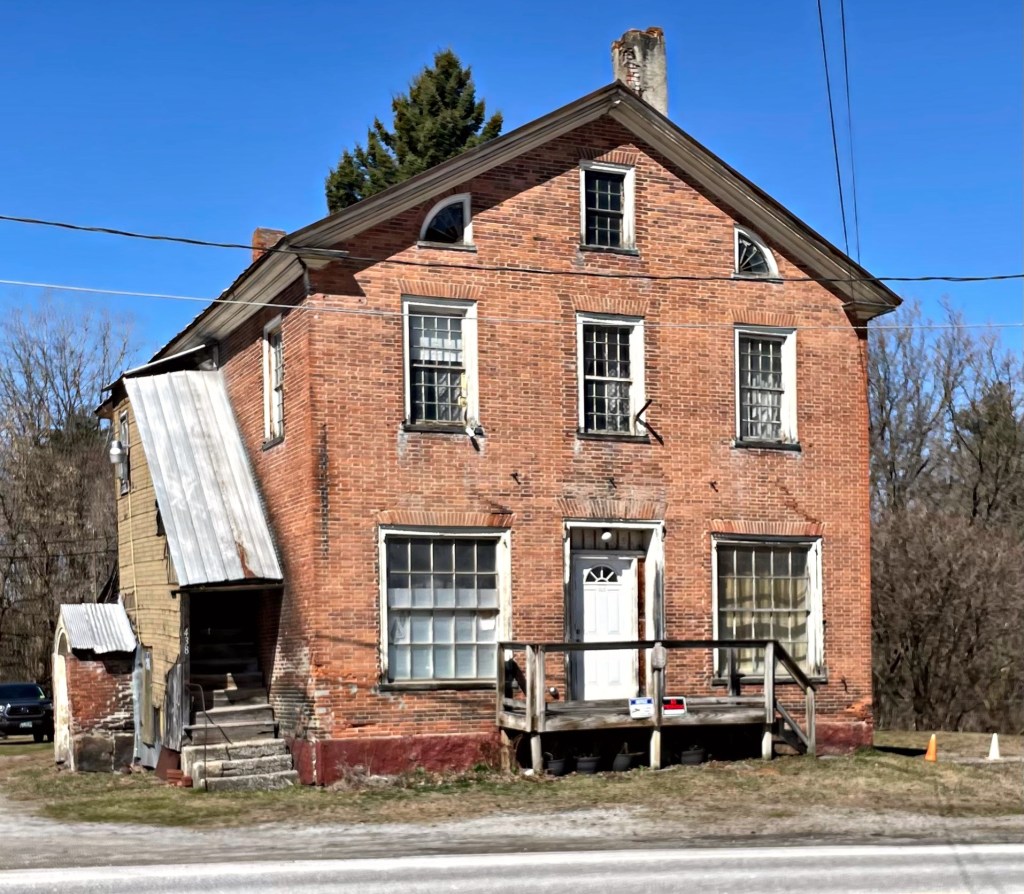
Cornè House // 1822

What does this house and the tomato have in common? Keep reading to find out!

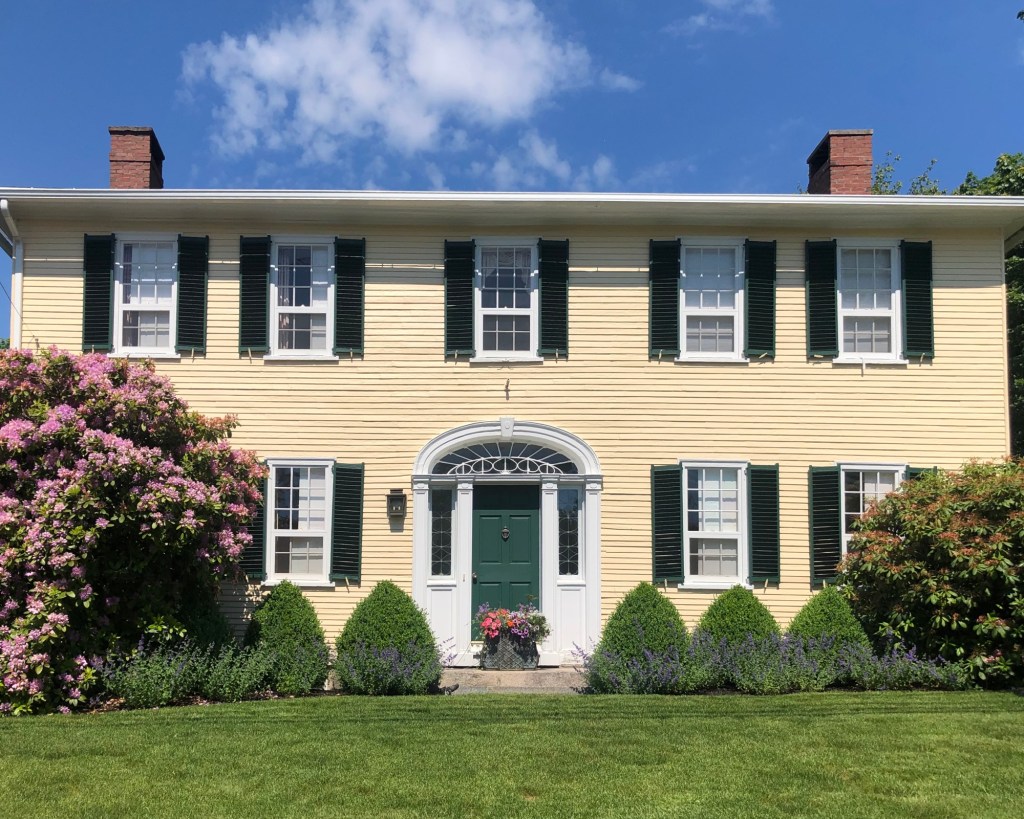
Michele Felice Cornè (1752-1845) grew up in Naples Italy and became disillusioned with the Napoleonic Wars. After the French occupation of Naples in 1799, he fled and was brought to the United States on the ship Mount Vernon, commanded by Elias Hasket Derby Jr., and settled in Salem, Massachusetts. Cornè moved to Boston in 1807 and lived and worked there until 1822 when he moved to Newport, Rhode Island, purchasing a property containing a barn. Cornè either had the barn renovated into this 1822 house or built the Federal period house from its timbers. Here, Cornè would paint many maritime scenes as murals in homes and businesses. However, his true contribution to his adopted country was convincing his neighbors to eat the tomato. While in Newport, it is reputed that Cornè introduced the tomato into the American diet. In early 19th century New England tomatoes were thought to be deadly poison. Cornè was accustomed to eating tomatoes in his native land and would regularly eat them without ill effect and, thus, allayed the fears of the residents of his adopted country. Today, the popularity of the tomato in American cuisine can be credited (in part) to Cornè and his love for the tomato.

Pacific National Bank // 1818

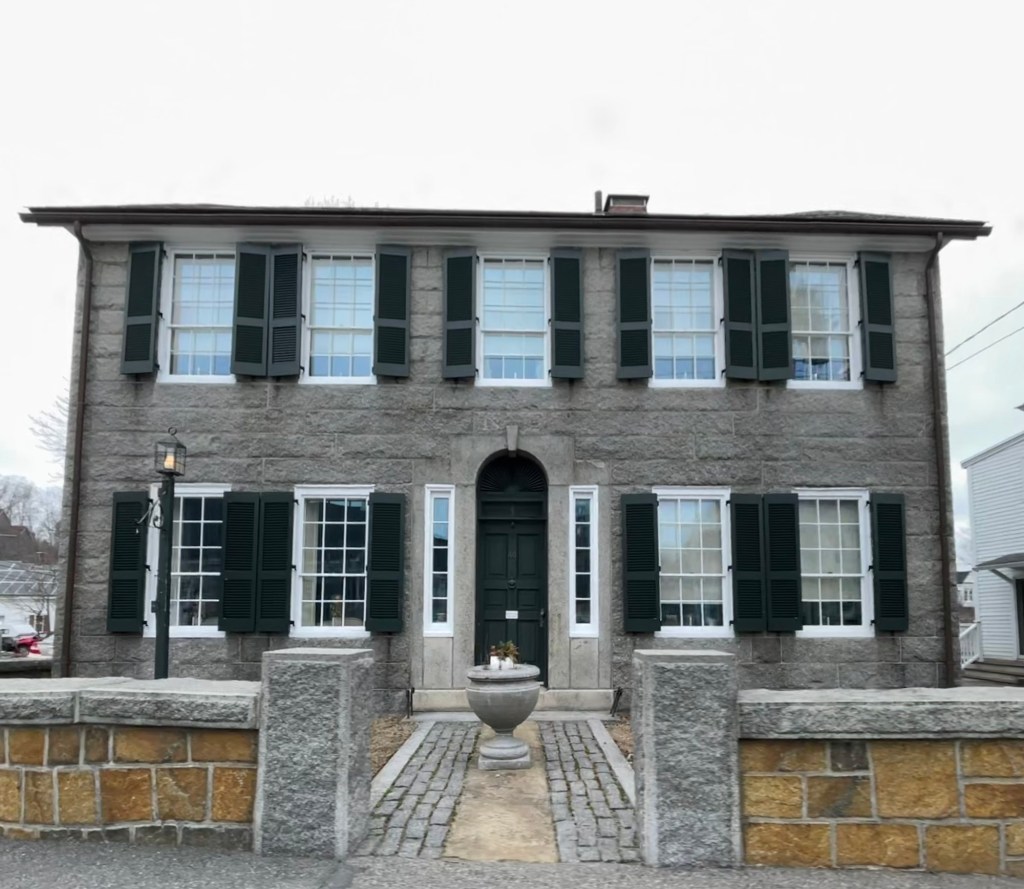
Whaling captains and crew upon returning to the island of Nantucket, would be flush with cash and goods and needed a safe and secure institution to hold their earnings. By the late 18th century, the depletion of the whale population in the Atlantic required whaling vessels to travel further and further in search of oil to fill the barrels in their holds. Ships began sailing to the Pacific and due to the distance, would be out at sea for years rather than months. Money from the Pacific voyages flowed back to the island, which soon required real banking facilities, and the Pacific Bank was established in 1804 and immediately prospered. The bank erected this stately brick building at the end of Main Street Square. Details such as the blind arches filled with sandstone panels that surround the building’s windows, the semi-circular Ionic entry portico and the high brown sandstone stoop with wrought-iron railings are unique on Nantucket and among the finest examples of their type in the region. Also interesting about the building is the fact that it contained living quarters for the cashier whose presence was intended to provide security. The building is now (of course) home to a Bank of America.

West-Hathaway House // c.1800

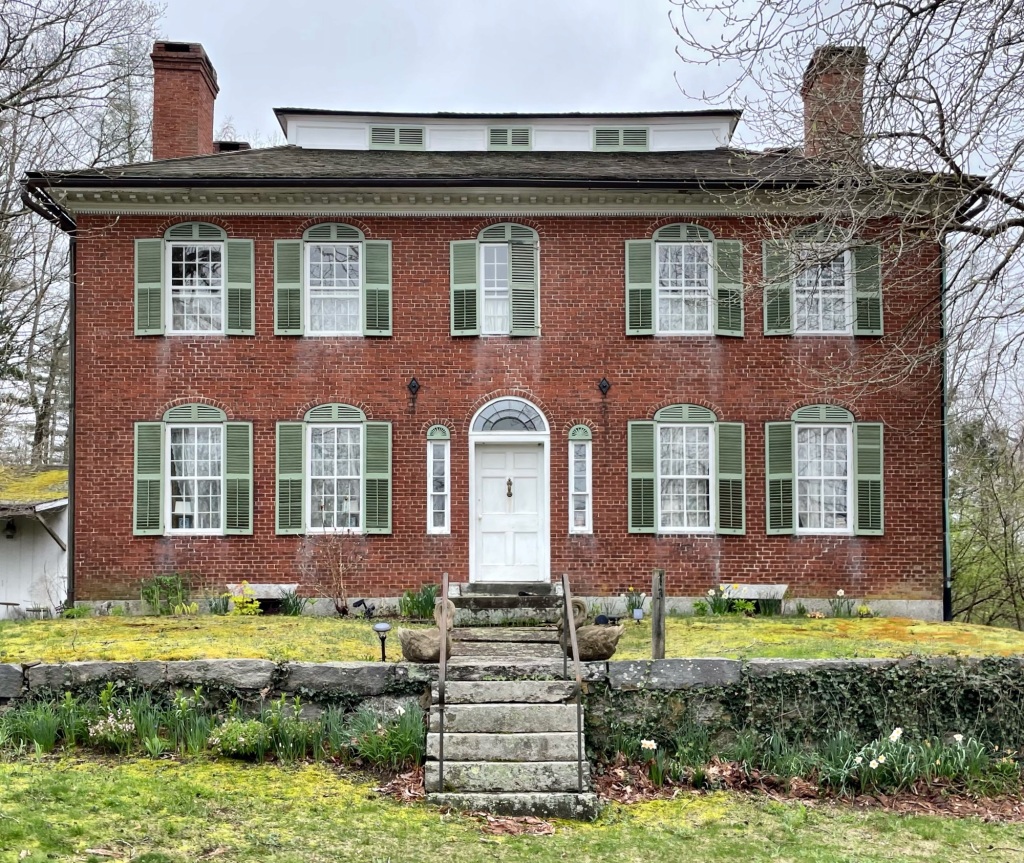
Located on Mill Street, overlooking Queen Anne Square, the West-Hathaway House is one of the most charming Federal period houses in Newport, but it didn’t always call this city “home”! Believe it or not, this five-bay Federal style house was originally built in Tiverton, Rhode Island around 1800 and relocated to Newport about fifty years ago. The house was built by Samuel West (1774-1838), of a line of physicians, and later sold to Samuel Hathaway. The house was located on large farmland presently occupied by the Pardon Gray Preserve in Tiverton but was later donated to the Newport Preservation Foundation in 1977 by the owners who likely hoped to redevelop the area where this house sat. The West-Hathaway House was dismantled, moved, and reassembled on this site that same year!

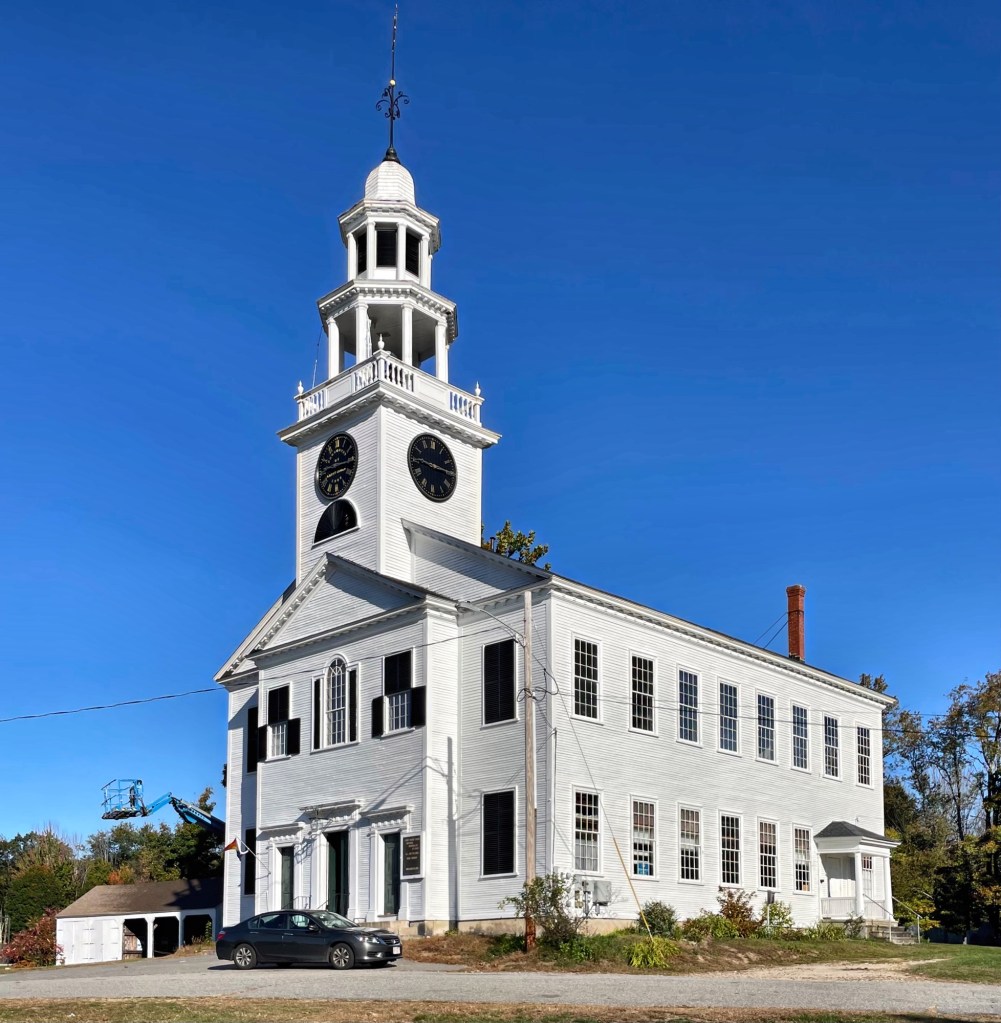
South Britain Congregational Church // 1825

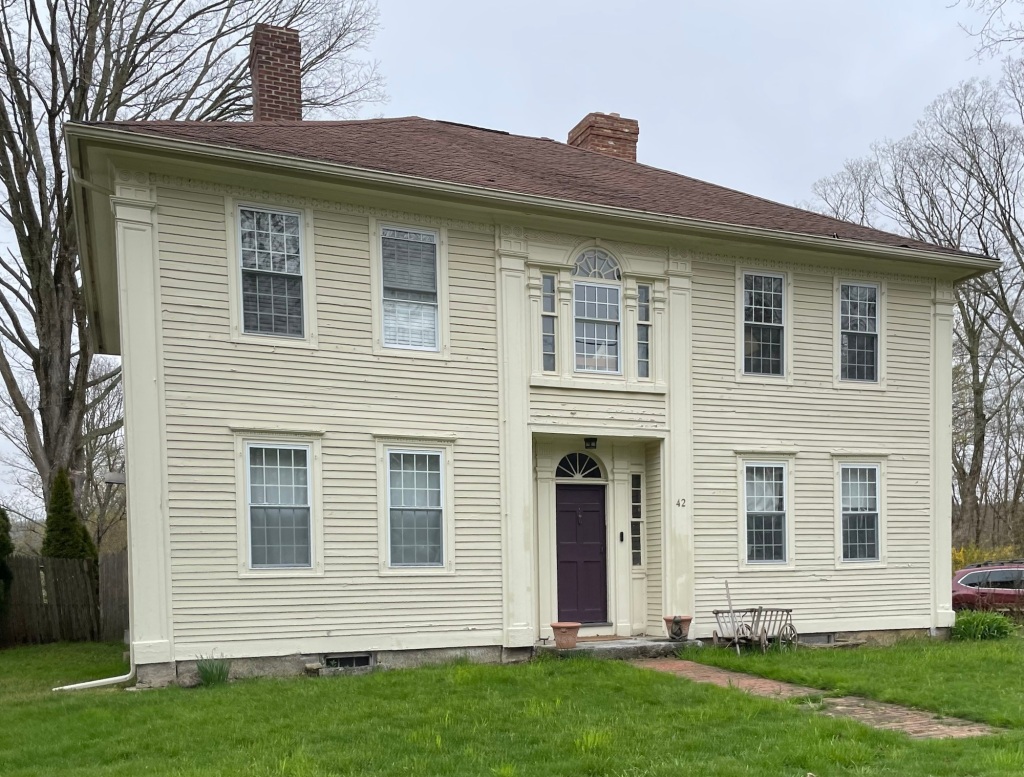
The South Britain Congregational Church in Southbury, Connecticut was built in 1825 and was originally known as the Meeting House of the South Britain Ecclesiastical Society. The congregation dates back to 1766 and its first pastor, Jehu Minor, a Yale educated minister from Woodbury, was chosen in 1768. Members met at the Moses Downs House before its first meetinghouse was built in 1770. When the pre-Revolution church building was deemed inadequate, funds were raised to erect a new house of worship. In 1825, boards and other usable parts from the old building were used to construct the present Federal style church that stands in the middle of the village today. History states that pulleys were attached to an ox cart to hoist the bell up the steeple which is by far the tallest structure in the neighborhood. It is an exceptional example of the Federal style, with beautifully balanced proportions, a front pavilion, fine detailing and an elegant three-story steeple. The church made more history when in on September 25, 1937, 178 acres of land in Southbury, Connecticut was purchased for the German-American Bund, intent on building a Nazi camp. Similar camps were popping up around the nation, in an effort to promote an anti-semitic and pro-Nazi agenda. Led by Reverend Lindsay, the pastor of the church, the townspeople quickly established a zoning commission whose first ordinance forbade land usage in the town for “military training or drilling with or without arms except by the legally constituted armed forces of the United States of America.” Stunting the proliferation of nazism in Connecticut before WWII. This is why Southbury is sometimes known as “The town that said no to the Nazis”.

Oatman Hotel // 1806

It always amazes me that even getting lost driving the winding roads in obscure places, can reveal some of the most magical old buildings and history to uncover. This stunning Federal style mansion was built in 1806 and is located on the busy Southford Road in Southbury, Connecticut. The road was a span along a turnpike was the great thoroughfare between New Haven and Litchfield, Connecticut. Present-day Southbury was about halfway between the two, so lodging was always busy here. Knowing this, brother’s in-law, John Thompson and Benjamin Hurd had this turnpike hotel built to capitalize on the flow of weary travelers. Charles R. Oatman (1827-1904), who married Orinda T. Hurd, the daughter of Benjamin Hurd, acquired the property in 1870 and operated the hotel under his name as the Oatman Hotel. After successive owners, the name remained. It was sold in the 20th century and was converted back to single-family use, and maintains much of its original fabric, including a barn at the rear of the property. It could definitely use a new coat of paint!

Henry Sturges House // 1834

In the mid-1830s, Henry Sturges, the eldest (and only) son of Jeremiah Sturges, built what just may be my favorite house in all of Southport, Connecticut, this transitional Federal/Greek Revival style manse on Harbor Road. It may have been owned by Jeremiah and updated later by Henry. The house features a symmetrical, five-bay facade with central entry. A gabled pediment extends the roof and includes a leaded-glass oval window and the absolutely stunning full-length front porch and second floor balcony is supported by slender Ionic columns.

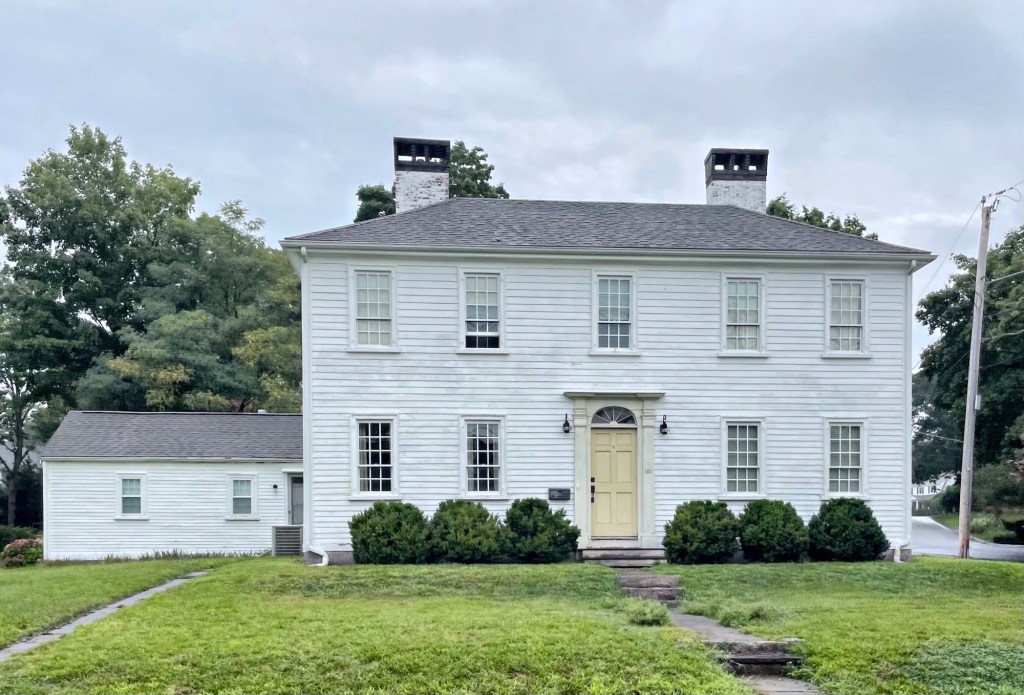
Samuel Jones House // 1806

This home in Acton Center was built in 1806 by Samuel Jones, shortly after he and other esteemed residents laid out house lots just south of the Town Green. Samuel Jones worked as an attorney and he lived here with his family and widowed mother, who operated a dame school, where she taught local children out of the house. The Federal style farmhouse sits upon a brick and stone foundation and is five-bays at the facade. The entry features a panel front door with sidelights flanking it. The entry is surrounded by a traditional Federal style frame with pilasters and entablature. There is something so beautiful about the simplicity and proportions of old Federal style houses.

Clough-Hinckley House // 1832

This charming Federal style cape in Blue Hill Maine was built in 1832 by Moses P. Clough, a sea captain seemingly as a wedding gift to his new bride of that year, Sally Prince. He resided in the home off-and-on between excursions and trips at sea until his untimely death at sea in 1836 of bilious fever, possibly caused by malaria. After his death, his widow Sally, remarried and moved to Cherryfield, Maine. The old family home was sold to Bushrod W. Hinckley, an attorney who was involved in the town affairs. Today, the old Clough-Hinckley home is known as Arborvine, a great restaurant known for using local, farm-to-table ingredients. The home is excellently preserved by the owners, down to the leaded glass fanlight and sidelights at the entrance. Swoon!

George Stevens House // 1814

George Stevens (1775-1852) was born in Andover, Massachusetts and settled in Blue Hill, Maine. He became a ship owner and merchant, making a name (and wealth) for himself in town and he showed an interest in education for the growing village. He erected this home in 1814 for his family, which seemingly employed Asher Benjamin’s house plans in the Federal style, popular builder’s guidebooks at the time. With his eyes towards education, George Stevens sat on the board of trustees for the Blue Hill Academy which flourished under the guardianship of the local Congregational Church and trustee president Rev. Jonathan Fisher. He chafed under Congregationalist dominance and wished for a non-denominational local academy. In 1832, he offered to give a thousand dollars and a piece of land to the Blue Hill Academy. His offer included this provision, “The institution shall be put on a liberal scale that all denominations shall have equal rights and privileges.” The Academy trustees said, “no.” As a result, George Stevens provided in his will that after his death and that of his wife this homestead, 150-acres of land, and a large portion of his personal property should be used to establish an academy, an “alternative” academy. In 1891 the Maine State Legislature incorporated George Stevens Academy, leading the “Old Academy” to cooperate with the
new institution, merging their boards and finally becoming a non-denominational academy. The school continues as a highly respected academic institution and retains the name of its founder, George Stevens.

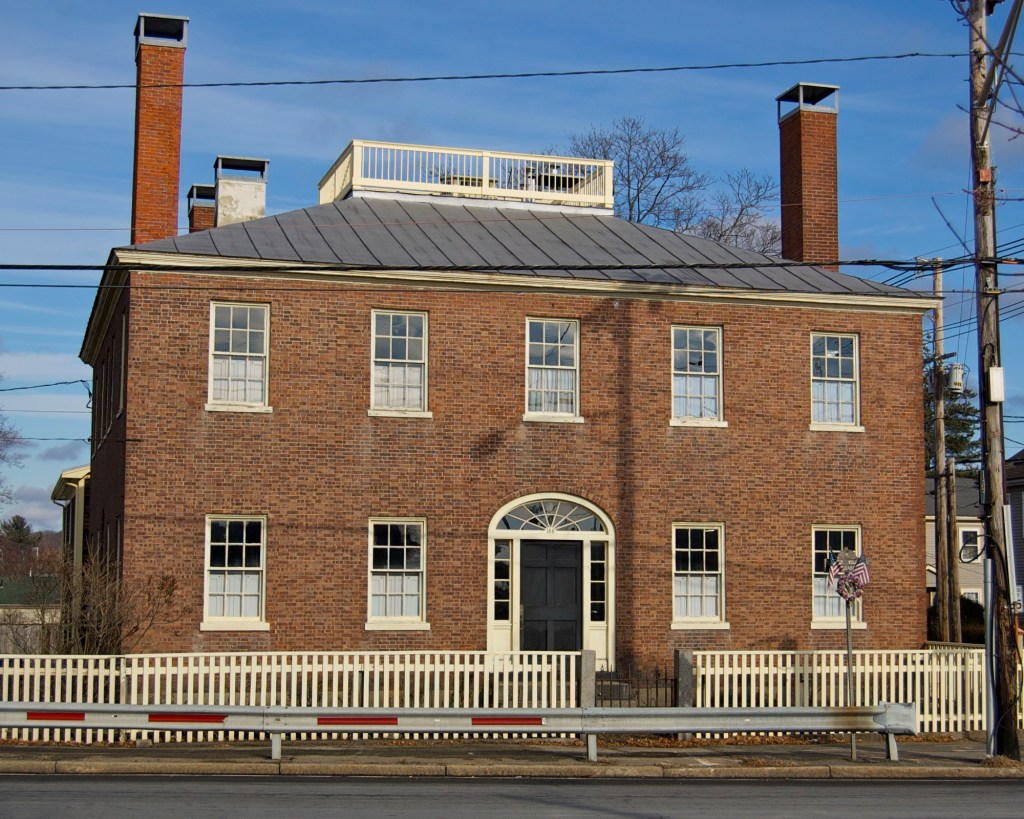
Abraham Wendell House // c.1815

The Abraham Wendell House on Pleasant Street in Portsmouth, New Hampshire, is a three-story, five-bay, masonry Federal-style residence with symmetrical facade. The building has a slate hip roof with overhanging eaves, a dentilled cornice, and tall brick chimneys. The facade has a wood-paneled entrance door with elliptical entablature, Corinthian pilasters, and a fanlight above. The home was built around 1815 for Abraham Wendell (1785-1865) a ship’s chandler and hardware merchant. Along with his brothers, Jacob and Isaac, established cotton mills in Dover. Although they lost money on the early mill attempts, they became wealthy importer of foreign goods into the ports of Portsmouth. The house remains a highly significant example of early 19th century residential architecture built for wealthy merchants.

Samuel’s Stairs // 1810

Houses with unique names are always the most fun to research and post! This stately Federal style mansion in Kennebunkport was built in 1810 for Samuel Lewis (1777-1857), a cabinetmaker and carpenter in town. Lewis also worked as an undertaker and made glass-top coffins from 1801, until his death. It is estimated that Mr. Lewis made 2,500 coffins during his career – including his own. Samuel was a quirky character and built his home as a large addition to a 1762 home, which possibly remains today as an ell. The 1810 house with original transom and sidelights at the entrance was two stories as built which contained a spiral staircase that ended on the second floor at a skylight. Thus, the house became known locally as “Samuel’s Stairs.” A later owner added the third floor, but maintained the Federal proportions. SWOON!

Benjamin Coes House – “Tory Chimneys” // c.1785

One of the hidden architectural gems of Kennebunkport is this Revolutionary-era house with some serious proportions. The house was built around 1785 by Benjamin Coes, a sailmaker from Marblehead, who settled in the burgeoning Kennebunkport in search of new work and opportunities. He married Sarah Durrell and the couple erected the seventh house in town, which is part of this property. For his work, Mr. Coes used the first two floors as his residence and the third floor was used as a sail loft, with an exterior staircase. A young boy, Joseph Brooks, would work in the loft and he would go on to marry Benjamin’s daughter, Sarah. The couple inherited the family house and retired here. The property was sold out of the Coes-Brooks Family when Maine State Historian, Henry Sweetser Burrage and his wife Ernestine purchased this house in 1917, which would be used as a guest house. The couple and lived in the house across the street. Ernestine Burrage, who was Chairperson of the Kennebunkport Chapter of the Red Cross, allowed the ladies of her chapter to gather there three times a week to roll bandages for the soldiers injured in battles overseas. It became the headquarters for the Kennebunkport Red Cross. It was likely Ernestine who had the chimneys painted white, which resembled the old Tory Chimneys in Revolutionary-era New England; where, when painted white, they served as a quiet signal which indicated that a home’s residents were loyal subjects of the British Crown.

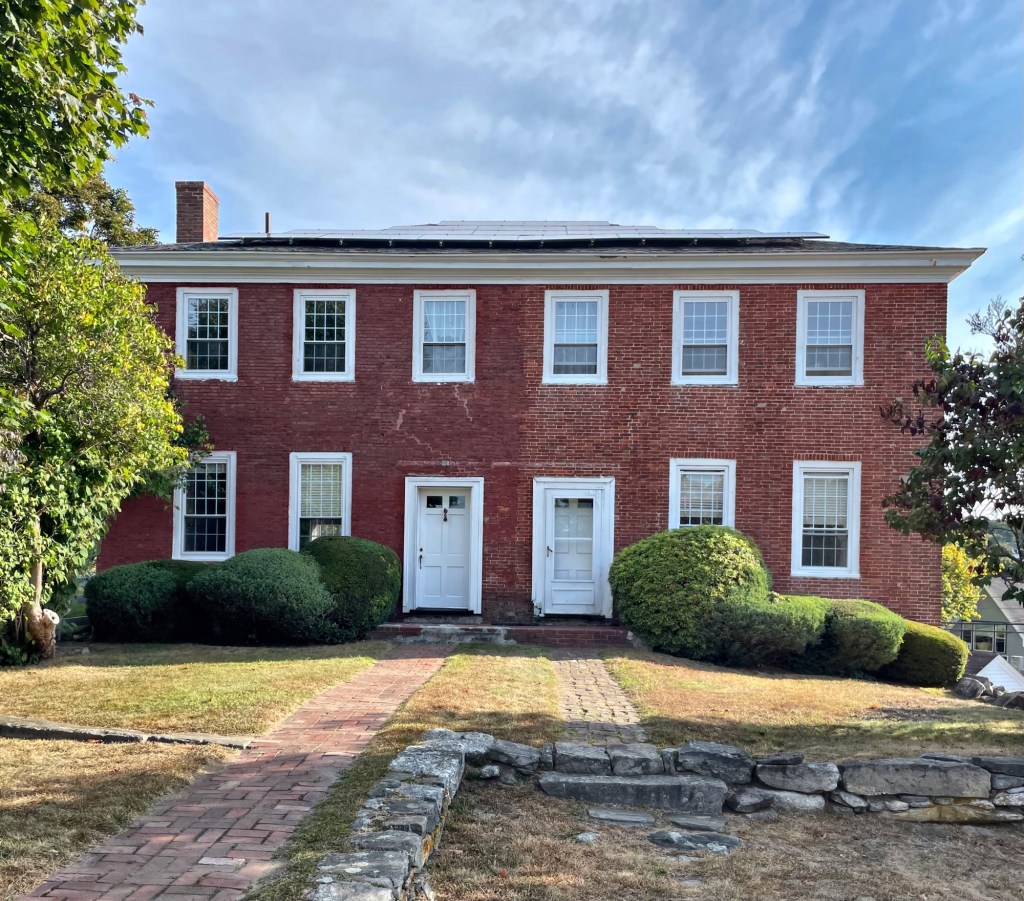
John Bourne House // c.1800

John Bourne (1759-1837) was born in Wells, Maine as the son of Benjamin Bourne. When the American Revolution hit a peak, when he was only sixteen years of age, John enlisted in the service of the country, and marched in company of Capt. Thomas Sawyer, to Lake Champlain. After the war, he learned the trade of shipbuilding and established himself in Kennebunkport, at the height of the village’s manufacturing. John Bourne built ships for a wealthy ship-owner and became successful himself. Bourne was married three times. His first wife, Abigail Hubbard (m.1783) died at just 24 years old after giving him three children. He remarried Sally Kimball a year later, who died in her twenties at just 28, she birthed one son for him in that time. His third wife, Elizabeth, would outlive John, and they had five children together. After his marriage with Elizabeth, John likely had this home built, possibly from his own hands. The Federal style home stands out for the unique entry with blind fan and modified Palladian window framed by engaged pilasters.

H. P. Lovecraft House // c.1823

In 1823, Samuel B. Mumford (1791-1849) purchased a lot on College Street in Providence and erected this modest Federal style home. The house’s marker reads “Samuel Mumford House”, but the most famous resident was actually Howard Phillips Lovecraft aka. H.P. Lovecraft (1890-1937). Lovecraft was born in Providence, Rhode Island, and lived almost his entire life there besides a few years in New York. He resided in a few places in the city but eventually settled in this home which he rented a room in his final years. Sadly, Lovecraft died at just 46 years old from intestinal cancer, and was largely unrecognized during his short, impoverished life. Since his death, he’s grown in literary stature to become one of the great fantasy classic horror authors of all time. While Lovecraft only lived in this home from 1933-1937, it was the location where he wrote his most mature and final pieces. I bet he would never imagine how popular he would become (even with an HBO series based on his worlds). The house was moved in 1959 (due to Brown University’s ever-growing and expanding campus) and now sits not too far from Prospect Terrace a small square that Lovecraft visited frequently during his time in Providence.

Welcome Congdon House // c.1820

In 1820, Joseph Dorr, a trader, purchased this house lot in Providence’s East Side overlooking present-day Downtown. He had this Federal style house built with a symmetrical five-bay facade with fanlight transom over the door. He occupied the house until 1827 when he sold the property to a Charles Hadwin. In 1832, the property was acquired and soon after purchased by Welcome Congdon (1794-1874) who lived there until his death. The house was more recently added onto with a Modern addition on the side, to provide additional, private space for the owners who live directly next to a public park.