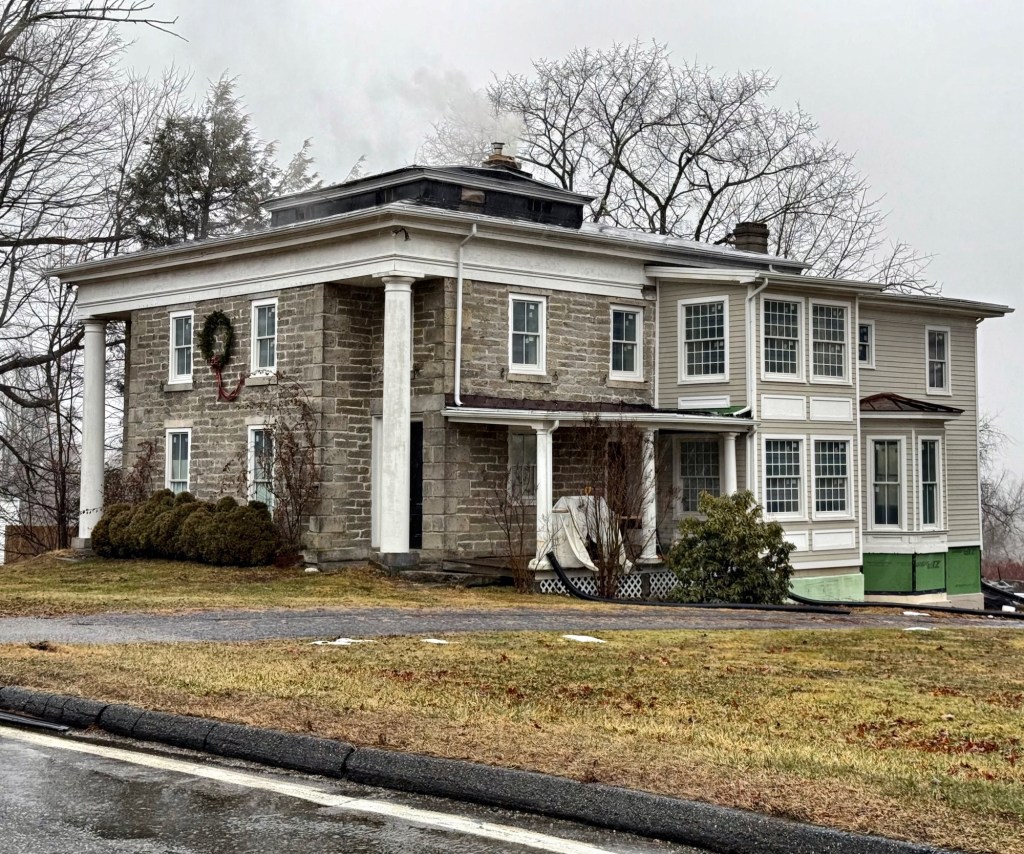
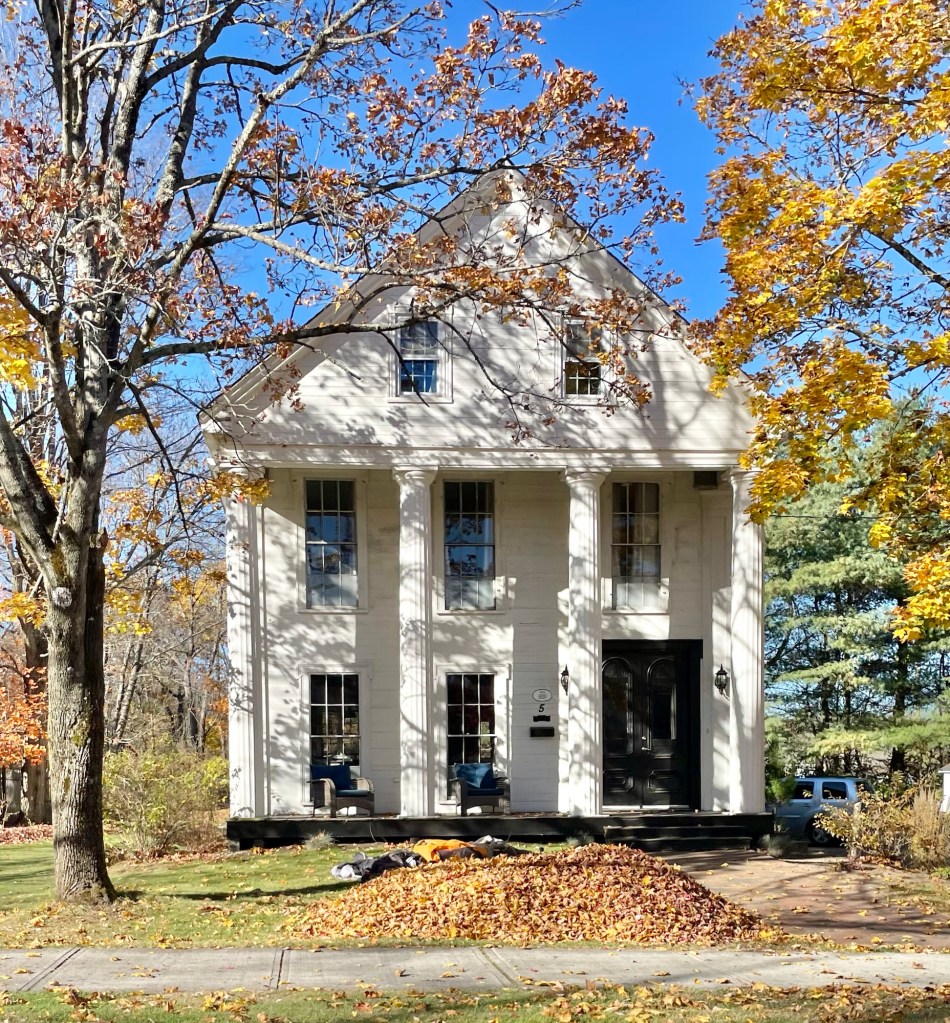
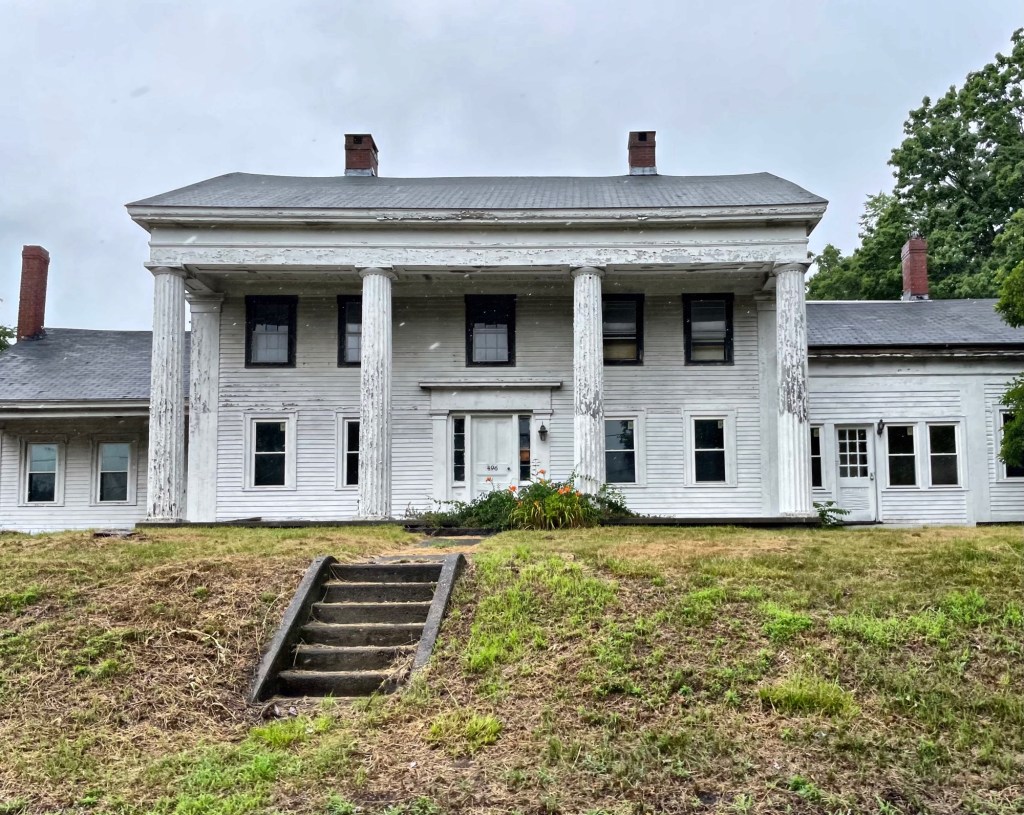
Darius Knight House // c.1830

Another of the stunning early 19th century homes in the charming town of Chaplin, Connecticut is this transitional Federal/Greek Revival home built around 1830. The house appears to have been built for Darius Knight (1792-1882), a Deacon at the nearby Congregational Church. Of an interesting note, the Knight House is located across the street from the E. W. Day House, thus the intersection was colloquially known as the Knight and Day Corner. The house’s gable-end form with gable reading like a pediment supported by corner pilasters are all clearly Greek Revival style, but the fan lights in said gable and as a transom window are holdouts of the tried-and-true Federal style which dominated up until that point. What a great house!

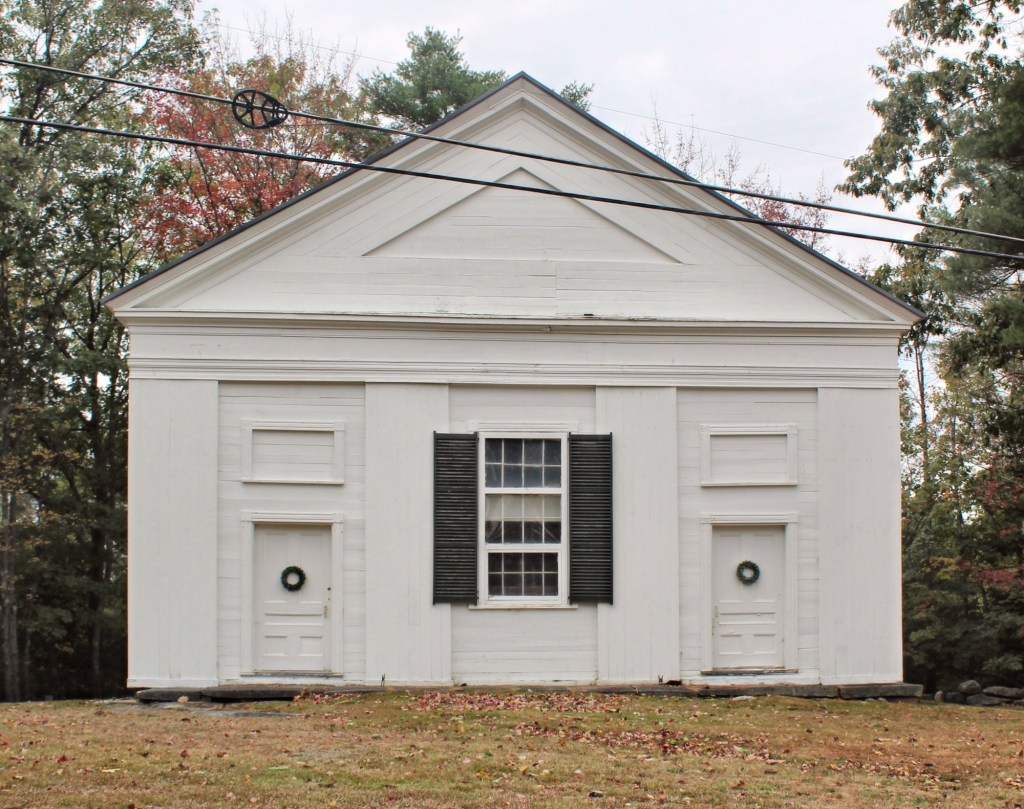
Ivy Glenn Memorial Hall // 1847

Methodists established a small congregation in Eastford, Connecticut by 1826, and by 1831, a new meeting house was built in the center of the village. The meeting house was used jointly by Methodists and Universalists, each having the right to occupy it half the time. By 1847, Methodists here were able to erect their own church, this building, in the Greek Revival style. Originally, the building had two doors on either side of a center window in the façade. There was a steeple and, rare in those days, a pipe organ in the sanctuary.  In 1916, the church joined with the nearby Congregational church, requiring them to sell the building ten years later. The town of Eastford bought the structure for $200 in 1926 for use as a town hall. In 1934, the Civil Works Administration provided funds to renovate the building with the town library being installed in a portion of the basement along with town offices and a vault. Town meetings were held in the former sanctuary space upstairs. When the space was outgrown for town offices, a new building was constructed elsewhere and this building transitioned to solely library use. The renovation project was paid for by money bequeathed by Wilmer Glenn, a New York stockbroker who spent summers town. He donated funds in memory of his late wife, Ivy.  The present-day name of the building came to be the Ivy Glenn Memorial and the library moved into its new spacious home in 1972.

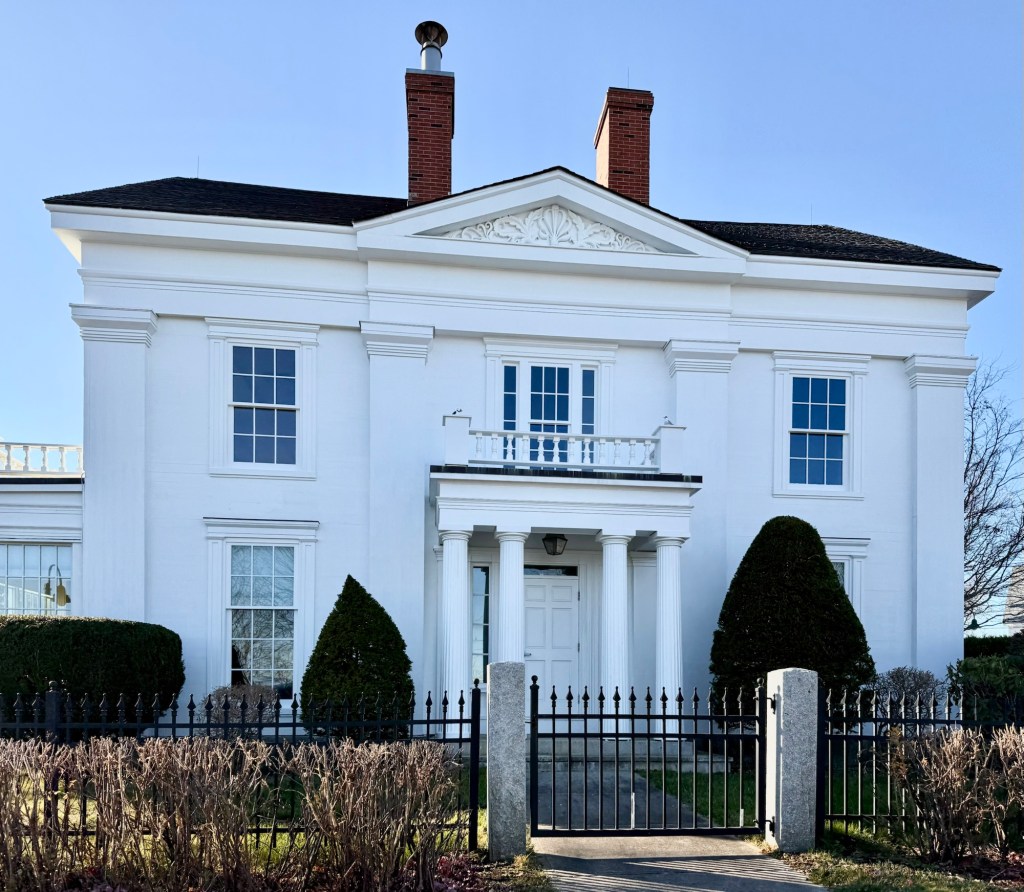
Castoff-Swinburne House // c.1840

This stunning house located in Newport, Rhode Island, was constructed in the Greek Revival style circa 1840 for Henry Castoff (1803‐1879). His house was one of several dwellings built in the Greek Revival style at that time in the area surrounding Touro Park. Henry was a merchant who dealt in goods from the Indies. In 1868, Henry sold this house at 115 Pelham Street to Robert P. Berry, a local dentist and inventor. Dr. Berry’s heirs sold the property in 1890 to William J. Swinburne (1822‐1897) a former soldier, coal merchant, and Mayor of Newport (1855‐1856). After Swinburne’s death in 1897, the home passed by will to his daughter Elizabeth, who never married. Elizabeth resided in the house until her death in 1918. Under the terms of her will, the home was deeded to the Newport Civic League, who established the Swinburne School there, a school for women for the study of household arts and domestic sciences. The school opened in the 1920s. The Swinburne School operated until 2002, when it was dissolved by the Newport Civic League. The contents of the building were sold at public auction and the school records were deeded to the Newport Historical Society. The building itself was purchased by a Brian O’Neill, who restored it to a single‐family dwelling.

Littlefield-Van Zandt House // 1836

In the late 1830s, Captain Augustus Littlefield (1803-1878) purchased a house lot on Pelham Street in Newport, Rhode Island and commissioned housewright John Ladd to design and build his new residence. Littlefield reportedly asked his Ladd to design an “authentic copy of an Italian Villa” he had seen during a trip in southern Italy. The result is a more traditional Greek Revival, temple-front house with a portico supported by four monumental columns with capitals that combine Corinthian and Egyptian lotus motifs. The minimal Italian Villa detail can be seen in the bracketed cornice and in the pediment. Built around 1836, the house remained in Littlefield’s possession until his death in 1878. The property was purchased by Charles C. Van Zandt, attorney and later the 34th Governor of Rhode Island. Gov. Van Zandt died in 1894 and was interred at Island Cemetery in Newport. The Littlefield-Van Zandt House remains a significant early, high-style Greek Revival house in the state and one with a great state of preservation.

Robinson Homestead // c.1835

Located in the Head of Tide village of Alna Maine, this large Greek Revival was once the home of prolific poet, Edwin Arlington Robinson. The home was built around 1835, likely by Edwin’s grandfather, Edward Robinson. The home was inherited by Edward’s second-born son, Edward Jr. Edward Jr. and his wife, Mary Elizabeth Palmer had two sons before their third pregnancy. Their third child was Edwin, but his parents did not name him until he was six months old, as it was said that they wished for a daughter. On a vacation, other vacationers decided that their six-month-old son should have a name, and selected the name “Edwin” from a hat containing a random set of boy’s names. The man who drew the name was from Arlington, Massachusetts, so “Arlington” was used for his middle name. Edwin described his childhood as “stark and unhappy” and his young adult years were plagued with tragedy with the death of a brother from a drug overdose and with his older brother marrying the woman that he was in love with. He would defy the odds and was accepted to Harvard. He became engaged in writing, specifically poetry, with his early struggles leading many of his poems to have a dark pessimism and his stories to deal with “an American dream gone awry.” He would go on to be awarded the Pulitzer Prize in Poetry three times in the 1920s. While he would likely not want to ever see this house again, it is significant both architecturally and as the home in his formative years in Alna.

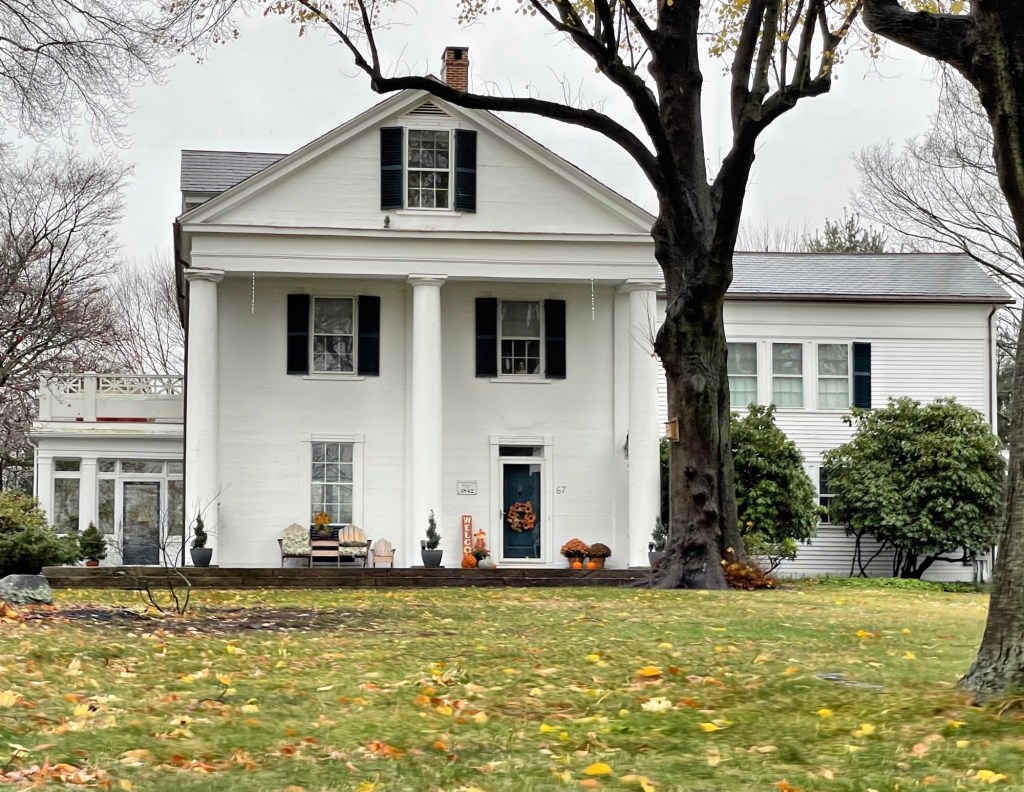
Benjamin Downs House // c.1830

Located a stone’s throw from the Judson Manville House (last post) another uncommon brick Greek Revival style house in South Britain, Connecticut, this house stands out for its outstanding proportions and well-preserved exterior. This residence was built around 1830 for Benjamin Downs on the site of his family’s old property. The simple lines, portico at the entry supported by Ionic columns, and the window in the gable are all typical of the period.

Mitchell Mansion // 1828

Built in 1828 and used for years as a “house of public entertainment” for Mitchell Simeon Mitchell, this stunning home in Southbury, Connecticut has historically been known as the Mitchell Mansion. The Mansion House displays sophisticated Greek Revival features, including its temple shape, the restrained Grecian doorway, an inset Ionic-columned portico and a cornice with continuous modillions. The quality of the exterior is matched by its interior detailing, with a semicircular staircase and, at one time, a large ballroom. Records found in the house indicate that one of the carpenters was James English, later to become Governor of Connecticut. During the middle of the 19th century the property was owned by noted New York furniture maker Duncan Phyfe.

United Church of Christ Southbury // 1844

Originally, the parishioners living in present-day Southbury would travel to Woodbury Center to attend church services. This changed after the Southbury parish was incorporated in 1731, voting to erect a church a year later. Founded in 1732, the Southbury Congregational Church was dwelled in several sites until the third church was built on the present site in 1844. This Greek Revival style church features Doric pilasters and Ionic columns at the recessed portico with a large pediment above with ornate scroll carvings around the clock. The church remains well-preserved and a visual landmark on the Main street.

Reuben Curtiss House // c.1840

The Reuben Curtiss House is a classic example of a Greek Revival farmhouse from the mid-19th century, located in Southbury, Connecticut. Local history states that a house built here by Israel Curtiss (1716-1795) who farmed the land with his large family. In 1798, Israel’s large estate was distributed among three of his sons, Joseph, Benjamin, and Reuben. This was complicated by the fact that in the same year, both Joseph and Benjamin died, leaving the entire estate to Reuben. From about 1840 and possibly until he sold the property in 1866, Reuben B. Curtiss ran an academy here, known as “Buck Hill Seminary for Boys.” It was a large operation, as suggested by the size of the addition and confirmed by the 1850 federal census. At that time there were 23 students in residence, ranging in age from 8 to 12, along with four adult supervisors. It was likely that the former farmhouse was expanded and the present 1840s Greek Revival block was added which now is the main facade.

Henry Perry House // 1832

The Henry Perry house was erected in 1832, and is one of the two Greek Revival style structures in Southport which was designed with a five-columned front portico. The other, the Francis D. Perry House, was his brother’s and was built that same year. The house is a temple-front with a fan-light in the pediment and large sidelights and transom at the entry.