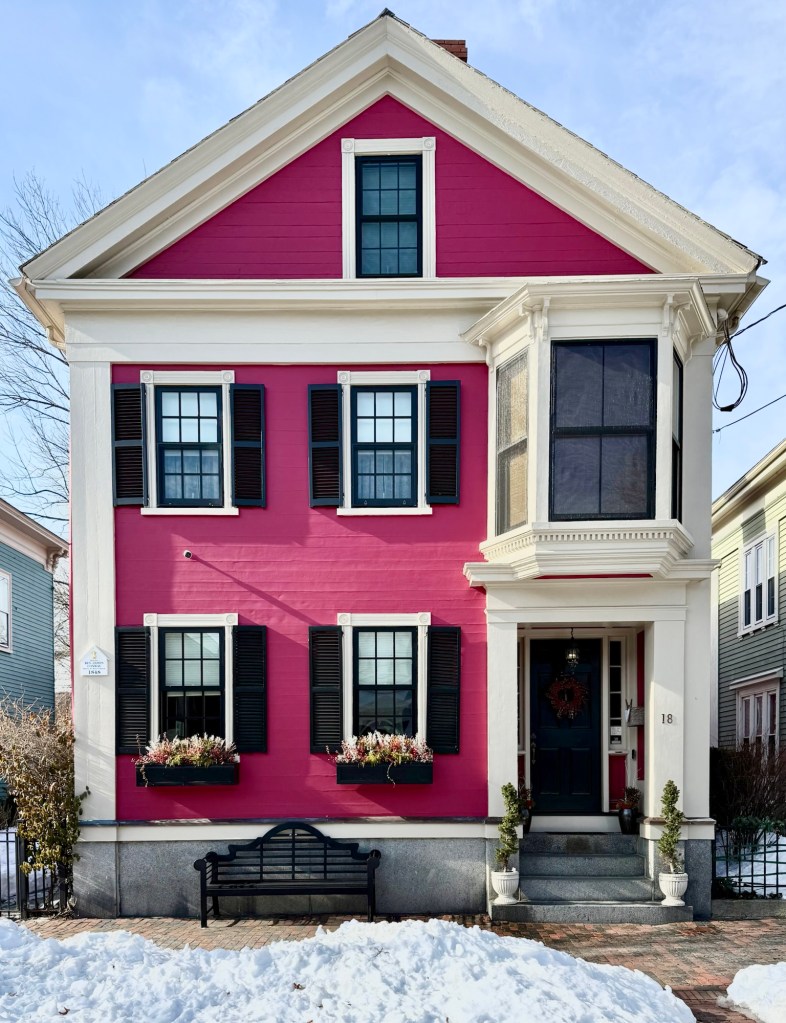
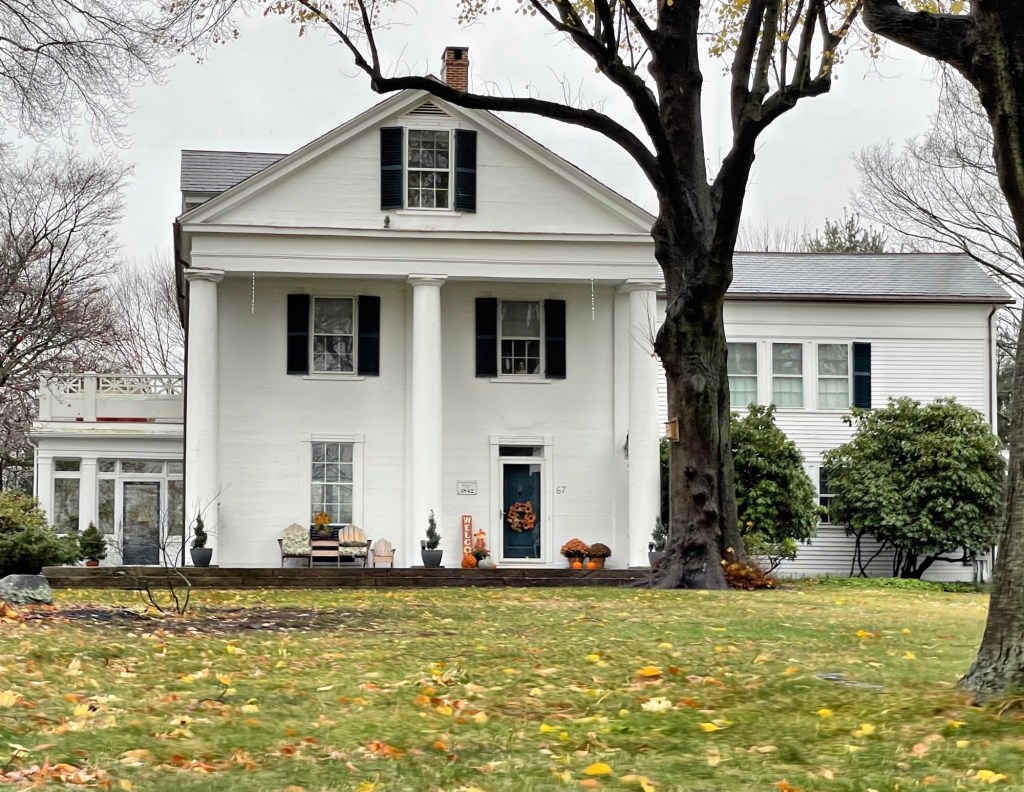
Built in 1848 for Rev. James Conway of Salem, this stunning Greek Revival home on Winter Street blends architectural integrity with a bold pop of color! James Conway was born in Ballinamore, Ireland and moved to the United States and was ordained as a Catholic priest. He was a missionary with the Penobscot Tribe in Maine, before preaching in Lowell and later in Salem, Massachusetts. When he moved to Salem, he had this house on Winter Street built with flush board siding, paneled side-hall entry, and moulded window surrounds with corner blocks. Conway would later sell the property to Edward Trumbull, a Salem merchant and later to Ebenezer Putnam. It was likely Putnam who added the oversized second-story bay window on the facade of the house.
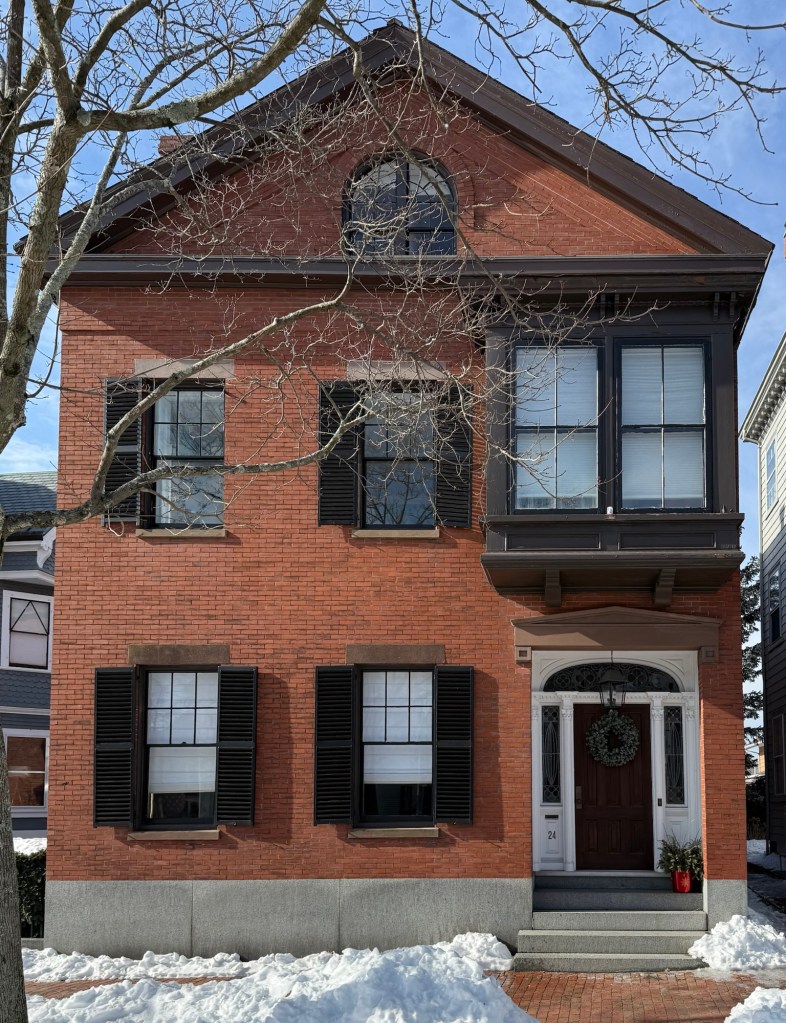
This lovely brick house on Winter Street in Salem was constructed for Capt. John Bertram in 1842-3. John Bertram (1795-1882) as a boy had his first job as a cabin boy and would work his way up to become a commander, ship owner and investor. He was extensively involved in shipping around the world including to Zanzibar, South America, and California and later he invested in railroads and real estate. He retired from actively commanding boats at age thirty-six with a vast fortune which he would become a philanthropist, giving much of it to charitable causes and his home city of Salem. Captain Bertram continued to own this property until 1855, when he moved to his new house on Essex Street, which he later gifted to the City of Salem as its public library. By the time of his death in 1882, he donated funds to the Salem Hospital, Old Men’s Home, Home for Aged Women, and various colleges and scholarships. Bertram sold this Winter Street house to John Jewett in 1855 for $10,000. Jewett began his career as a cabinet maker in Beverly in 1817 and subsequently became a dealer in mahogany, fancy woods, furniture and grain. Jewett died in 1874 and the property was sold by his heirs to Henry Appleton Hale in 1890. Engaged in the hardware business, Hale also served as president of the Salem Gas Light Company and as a vice president of the Salem Five Cents Savings Bank. Mr. Hale also served the country during the Civil War, and was shot in the face at Antietam on September 17, 1862. The bullet knocked out his front teeth and sliced off a piece of his tongue. Despite the severity of his wound, he recovered and returned to the regiment months later, and mustered out in 1865 following another injury. Henry A. Hale died in 1927. The property is significant not only for its owners, but also for its architectural quality and integrity. The transitional Federal-Greek Revival house features a recessed entry with original leaded sidelight and transom windows, brownstone trimmings, and alterations (likely by Hale) from the second half of the 19th century, including the projecting bay and arched window in the gable.
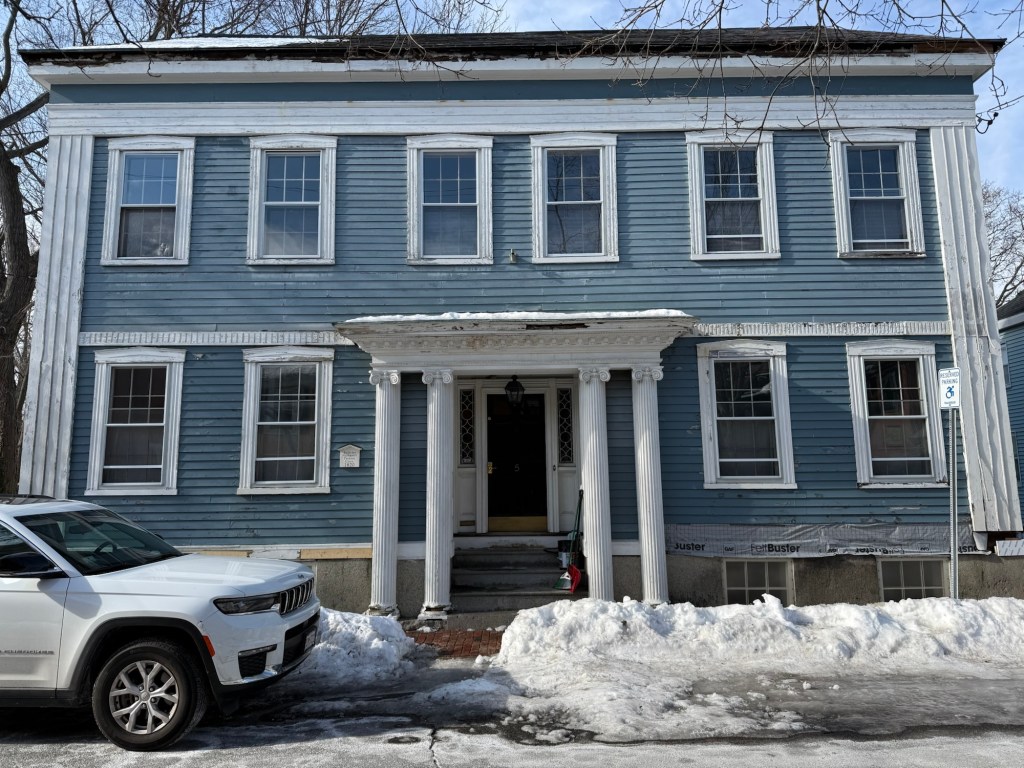
Nathaniel B. Perkins (1813-1885) was born in Salem the son of Captain Joseph Perkins (born 1785) and Elizabeth Hunt. Perkins was a wealthy ship owner in Salem and served on the Salem School Committee and was Treasurer of the Essex Marine Railway. He married Susan Breed in 1836 and built this house on Oliver Street in Salem soon-after. The high-style Greek Revival house is notable for its prominent recessed center entry with engaged, fluted Ionic columns and a modillioned entablature. Perkins likely had one of his ship carpenters work on the carvings as they are so unique.
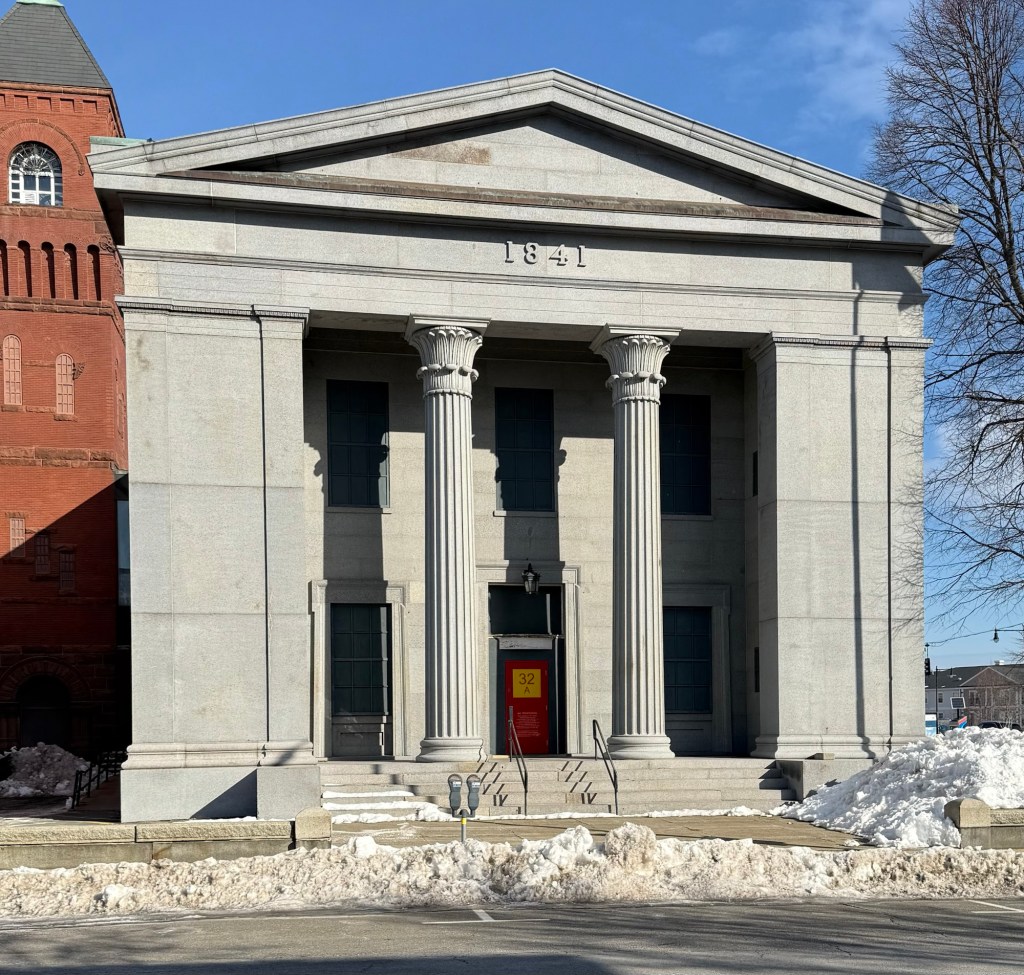
Aligned in a row on the north side of Federal Street in Salem, the Essex County Court complex is a tour de force of the evolving architectural tastes of three centuries. At the eastern edge of the complex, the Old Granite Courthouse stands as the oldest of the group. The two-story temple-form building is of rectangular plan with gabled roof oriented towards the street. The facade features a recessed porch with paired columns surmounted by Greek Corinthian capitals which are set between broad, squared Doric corner pilasters. The granite building was designed by architect, Richard Bond (1797-1861) of Boston, and the structure is often referred to as one of the finest Greek Revival-style Civic buildings in New England. The courthouse remained in use until the J Michael Ruane Judicial Center at the end of the block was completed in 2012. The Old Granite Courthouse and adjacent Old Superior Courthouse were both vacated and have been essentially mothballed ever-since under the ownership of the Division of Capital Asset Management and Maintenance as surplus. The fate of the two buildings remains undetermined.
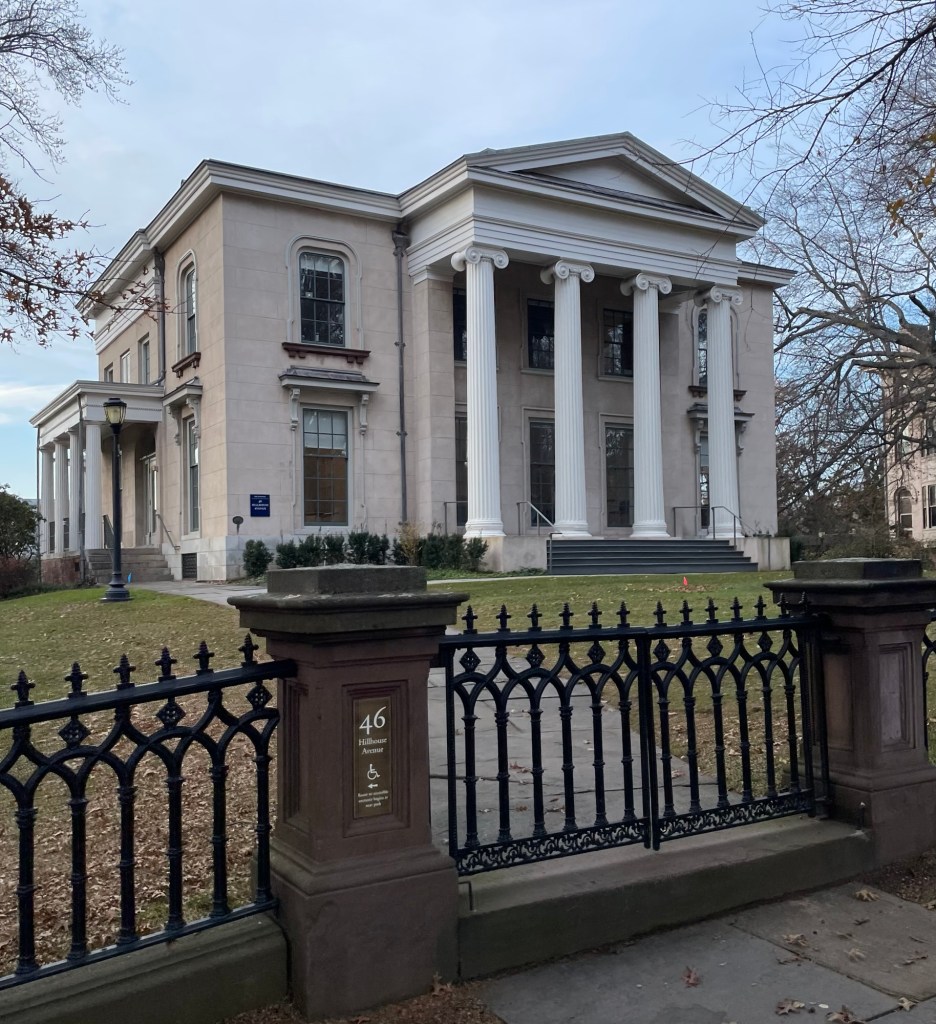
One of the finest houses in New Haven is this stately residence, the Aaron Skinner Mansion on Hillhouse Avenue. The mansion was built in 1832 for Aaron Nichols Skinner (1800-1858) from plans by architect Alexander Jackson Davis. Skinner was a Mayor of New Haven (1850-1854), and for a short time, ran a boy’s boarding school out of this house. Skinner was also a CT State Representative, serving two terms. The house was originally built as a three-bay, two-story house with one-story side wings and a rear ell. After his death, the house was purchased by Judge William W. Boardman, who in 1859, modernized the property hiring architect, Henry Austin, who filled in the side wings and added Italianate window mouldings. The monumental portico supported by fluted, Ionic columns, creates such a stately presence for the early house on the street. In the early 20th century, the mansion was owned by Rutherford Trowbridge, who renovated the house for his own use. The house remained in the Trowbridge family until the death of his last daughter, Miss C. Rachel Trowbridge, when the estate became the property of Yale University.
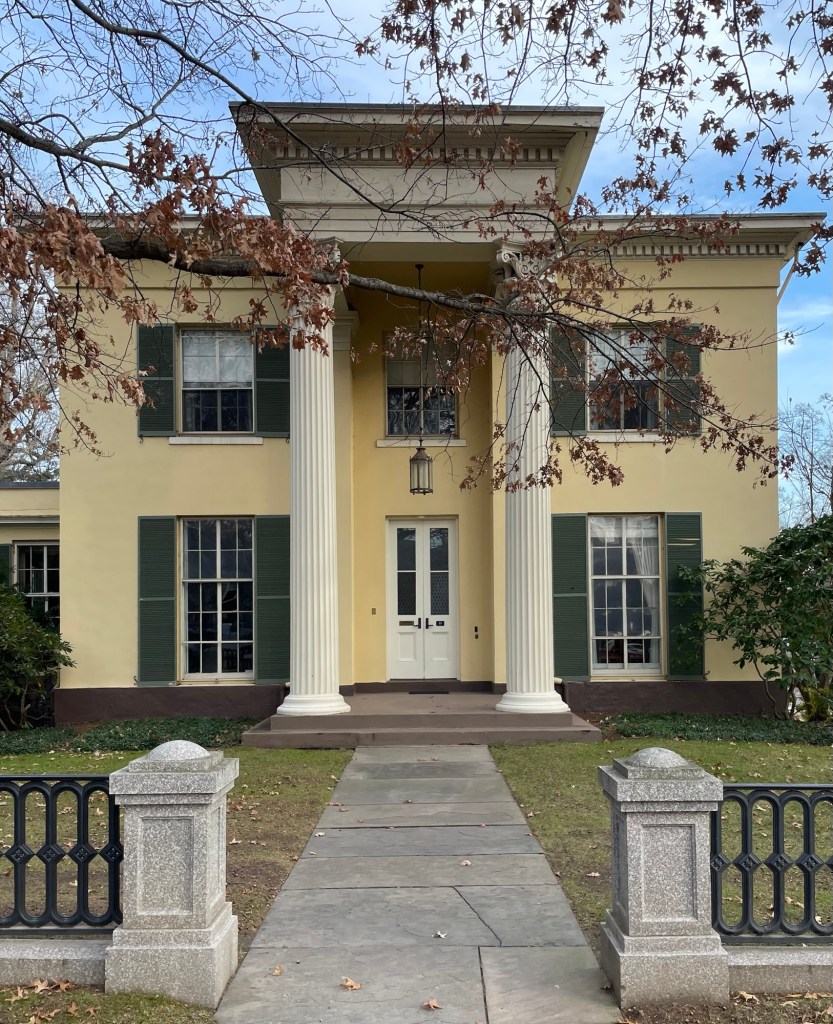
One of the earliest houses built on Hillhouse Avenue in New Haven, Connecticut, is this stately Greek Revival mansion with monumental portico. The house was built in 1836 for Mary Pritchard from plans by great American architect, Alexander Jackson Davis. The mansion is two stories and is constructed of brick and stucco with a distinct two-story portico supported by fluted Corinthian columns. The architect also may have designed a barn at the rear of the house for Ms. Pritchard. Like many other former residences on Hillhouse Avenue, the house was acquired by Yale University, and is now the house of the Provost.
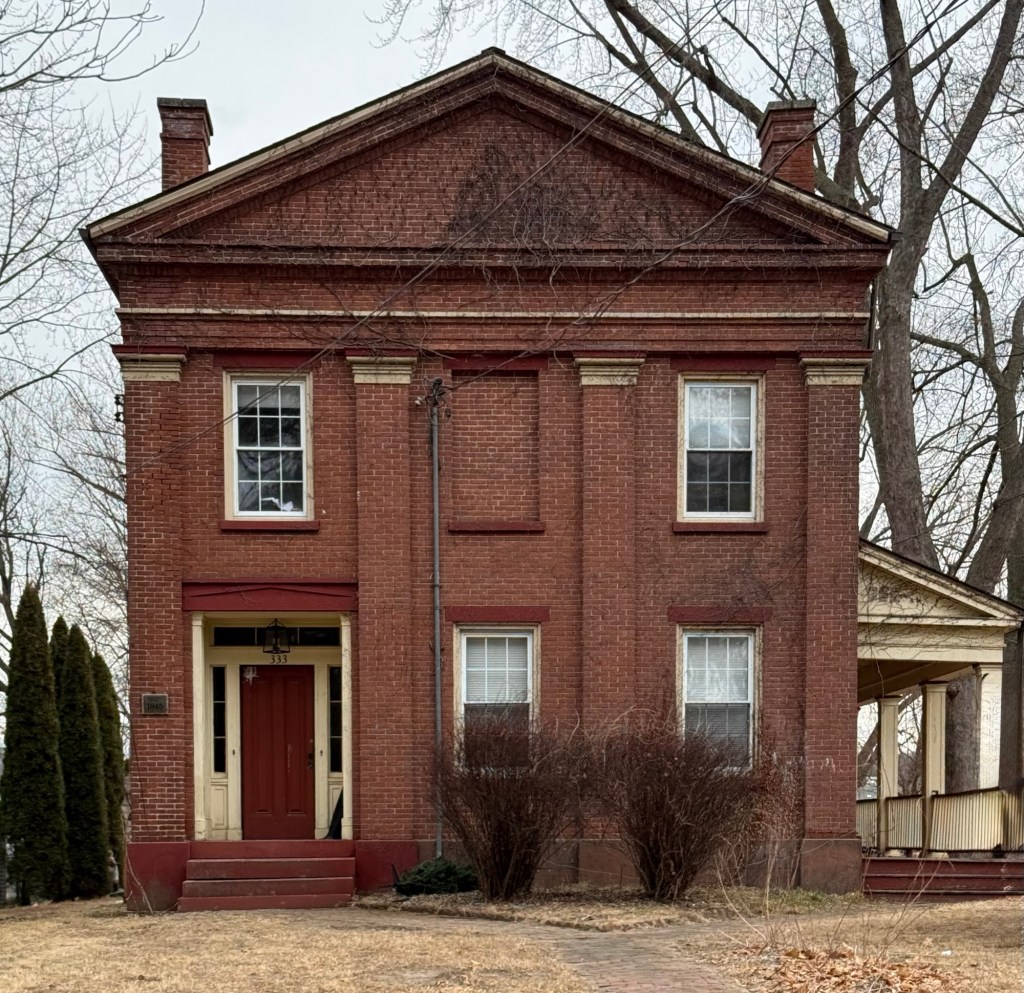
In 1843, Elias Gates (1801-1886) a young farmer, purchased land from the family of his wife, Mary A. Stedman, and had this handsome brick, Greek Revival style house built. The family would reside here less than ten years, and relocate to Albany, where Elias worked as a bookseller. The house was purchased numerous times throughout the 19th and 20th centuries, and operated as a farmhouse until much of the land was sold and subdivided for new housing. The Gates House is a great example of the Greek Revival style with a side hall plan, recessed entry with original sidelights and transom, and bold facade with brick pilasters dividing the bays with brick entablature and gable end facing the street.
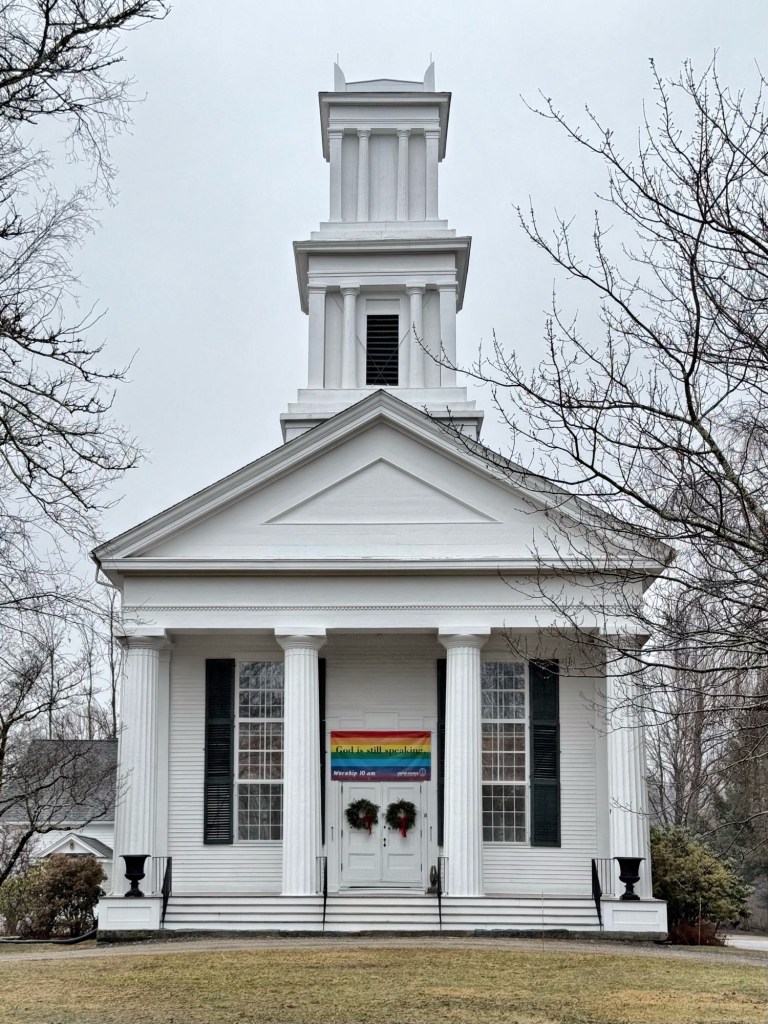
The Cornwall Congregational Church in Cornwall, Connecticut, was erected at 8 Bolton Hill Road in 1842, replacing the colonial-era meetinghouse which had first stood on Old Meetinghouse Hill at Cornwall Center. When members of the church split into two separate congregations due to religious differences, the original congregation moved to South Cornwall in 1790. Another Congregational church was built in North Cornwall for the other group. This wonderful Greek Revival church reflects the enormous popularity the style in the first half of the 19th century. The structure rests on a stone block foundation and is sheathed with clapboard siding. The building incorporates a central entry of paired doors with a Greek Revival surround, flanked by 20/20 windows. The street elevation of the building is dominated by a monumental portico with pedimented gable, broad frieze and fluted Doric columns. The showstopper is the two-stage square belfry, each stage Doric columns and pilasters. The church is active today as the United Church of Christ and is often utilized for town events.
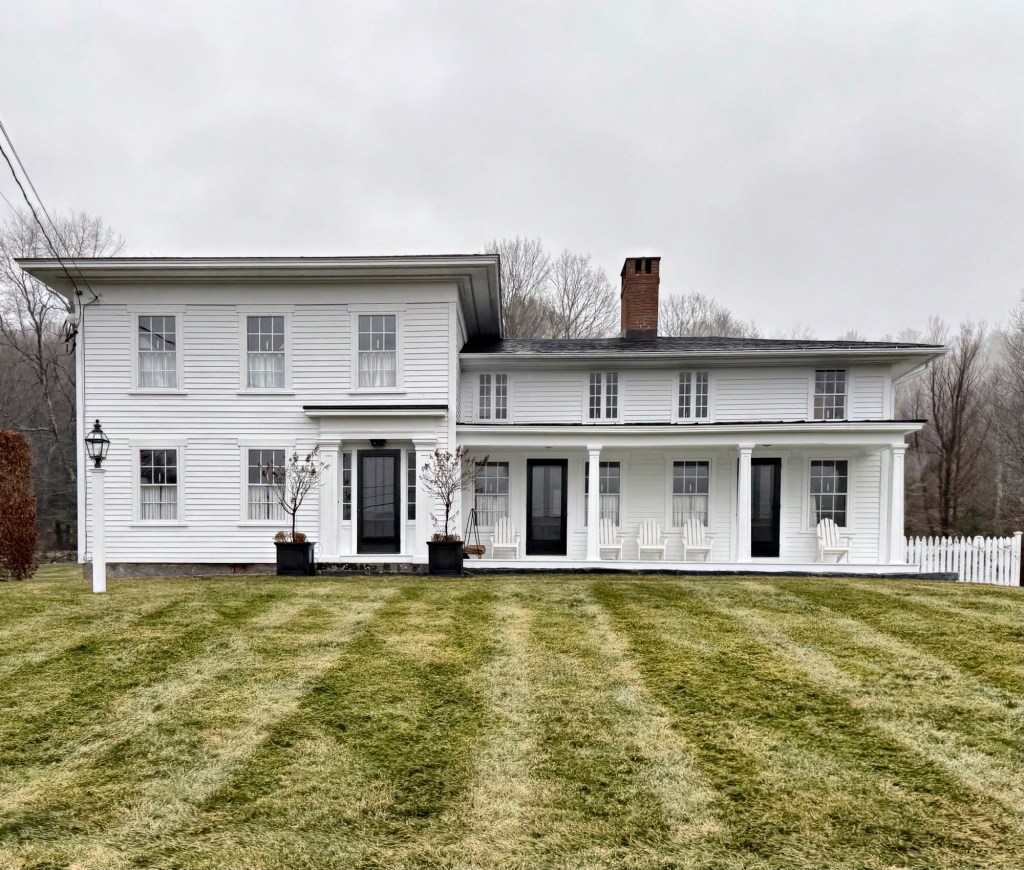
In about 1850, William Hopkins Harrison (1813-1878) purchased farmland from the Pierce Family of Cornwall, Connecticut, and built this stately Greek Revival style home upon it. The house was built around the same time as its neighbor, the Dwight W. Pierce House (last post), also an example of the Greek Revival style, but in a very different finish. The seven-bay residence has its main block at the end with a shallow hip roof and overhanging eaves, showcasing the emergence of the Italianate style form to come into popularity. The solidly Classical pilaster and entablature surround at the entry firmly places the house in the Greek Revival style.
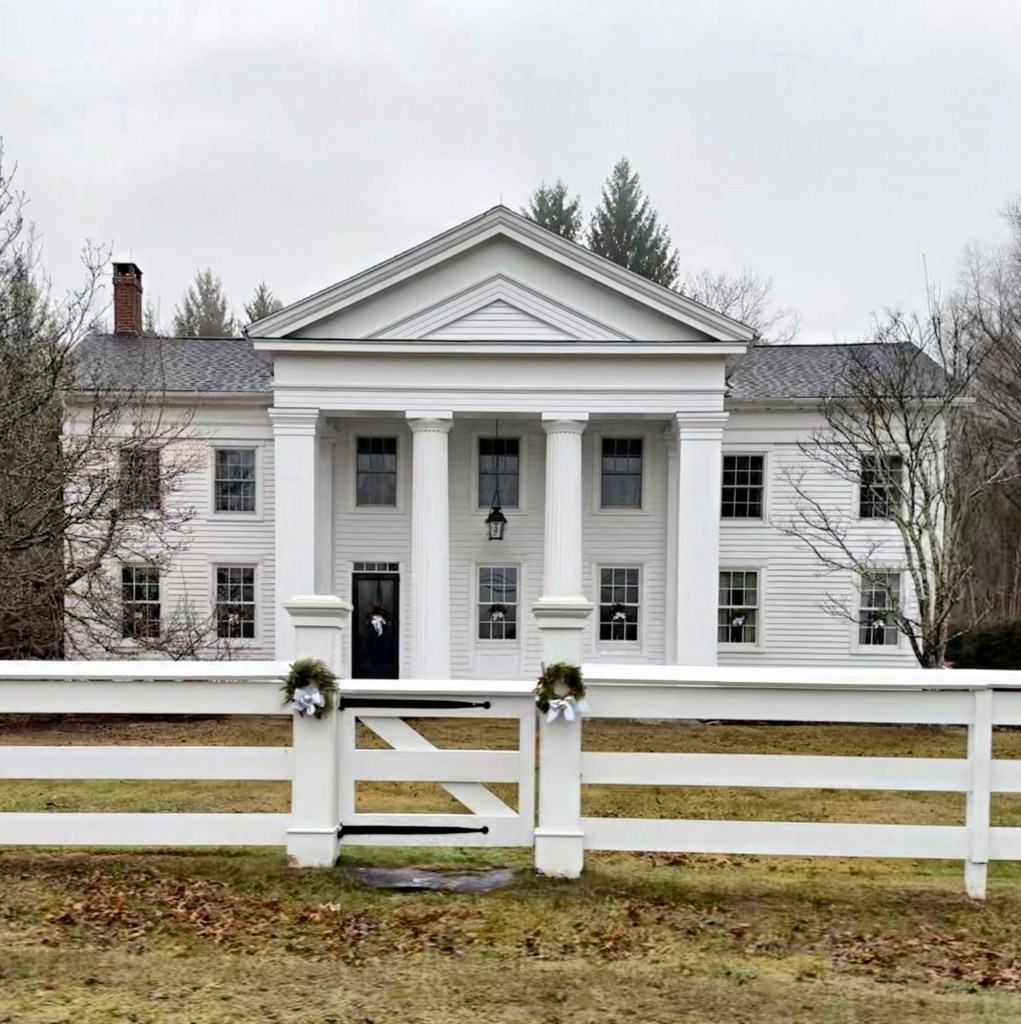
On land he acquired from family, Dwight Wellington Pierce (1816-1901) erected this large, temple-front Greek Revival estate just outside Cornwall Village in Litchfield County, Connecticut. Mr. Pierce farmed this land and built barns across the street from his residence on Popple Swamp Road, where he kept his livestock. The Pierce house is unique in Cornwall as a temple-front Greek Revival style house and features a two-story portico with four Doric columns, the center two are rounded and fluted with the ends square. The elongated house is seven bays wide and must have been quite the sight when it was built in the mid-19th century.
During the nineteenth century several small, rural settlements dotted the landscape of Cornwall, Connecticut. The hamlet of Cornwall Hollow this building, the Baptist Church, and contained a tannery, store, gristmill, sawmill and cemetery. The church at Cornwall Hollow was erected following dissolution of the Baptist congregation at nearby Cream Hill in 1843. A new church constitution was adopted in 1844 and this new meetinghouse erected the following year. At its height the congregation included 100 members. The Greek Revival style church once had a belfry, but it was removed sometime in the 20th century, likely due to repair costs. The interior included a curved ceiling, and windows line the side elevations. The congregation saw dwindling numbers and closed in the early 20th century. It is now privately owned, but lovingly preserved.
This attractive Greek Revival style residence with later porch was likely built in the 1840s and is one of the finest homes in the village of West Cornwall, Connecticut. The house was likely built for Stephen Foster (c.1816-1863), a merchant and railroad contractor who had constructed a portion of the Housatonic Line railroad near West Cornwall, further opening the village up to trade. Stephen and his wife, Helen, lived here for some time until around 1860 when they relocated to a larger, Italianate style mansion nearby. In 1867, this property was purchased by George Beck, a German immigrant and partner of the Vollmiller Shear Shop, who manufactured metal shears and scissors in West Cornwall. It is likely that Beck was owner of the house at the time the wrap-around porch with scroll-sawn columns.
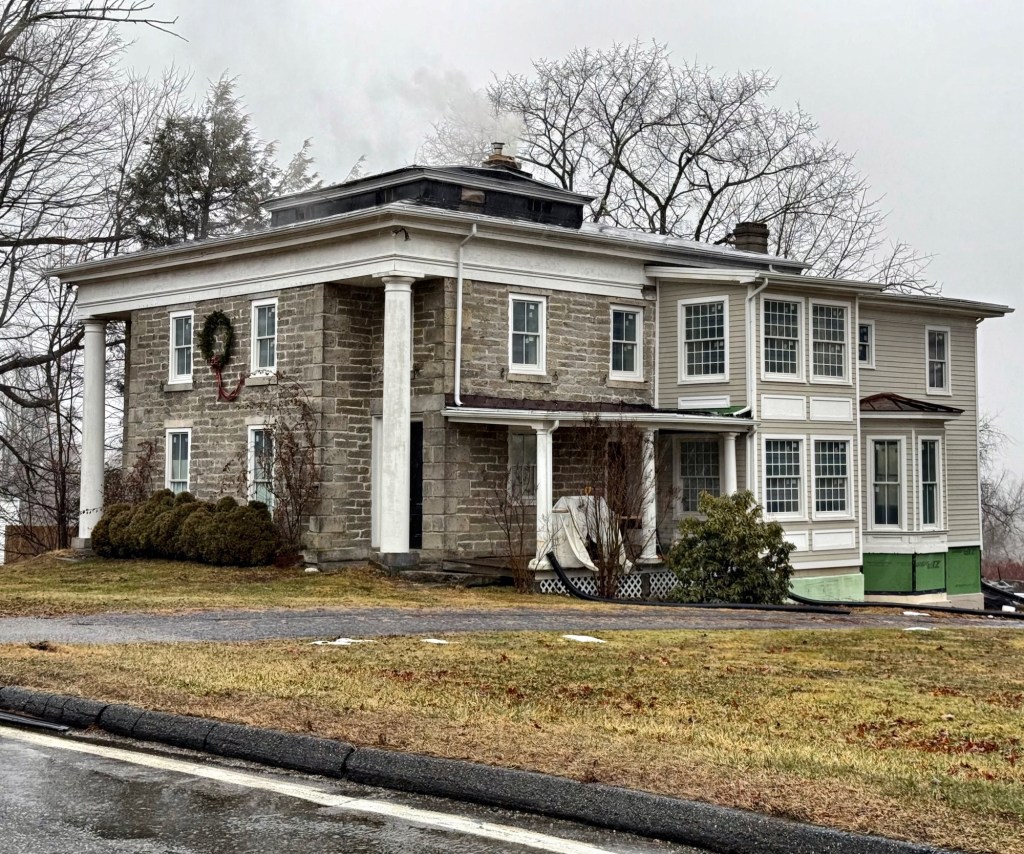
The Myron Norton House, built in 1840, is located in the central village in Goshen, Connecticut. Built of stone, the house is unique as the only example of a stone house in the village, and the only Greek Revival house that departs from the usual gable-roofed form, having a square plan and hipped roof with monitor. The home was built for Myron Norton (1788-1853) and his wife, Caroline (Marsh) Norton, who outlived her husband by 23 years, living here until her death in 1876. Myron Norton made his fortune patenting and selling pineapple cheese molds, where he pressed the curds from local cows in wooden pineapple-shaped molds to give them the desired shape. It is the house that cheese built!
The Israel Snow House stands at 9 Water Street in the South End of Rockland, Maine, and it is one of the region’s finest examples of late Greek Revival architecture. The residence was built for Captain Israel Snow (1801-1875), a mariner and captain of several vessels, including the schooner Maria (1829), the brig Snow (1835-36), the brig Lucy Ann (1842), and the Barque Star (1848). In 1850, he and his wife Lucy moved from Thomaston to Rockland, and he would build this stately mansion where they raised seven children. Some records put the construction of this house at 1861, but that seems very late for such an example of this style. In 1863, he founded Snow’s Point Shipyard on Mechanic Street in the South End. Rockland was the fourth largest seaport in the United States in terms of production and commerce at the time, and Snow’s shipyard was a large part of that production. This residence is now offices to the U.S. Fish and Wildlife Service’s Maine Coastal Islands National Wildlife Refuge Complex.
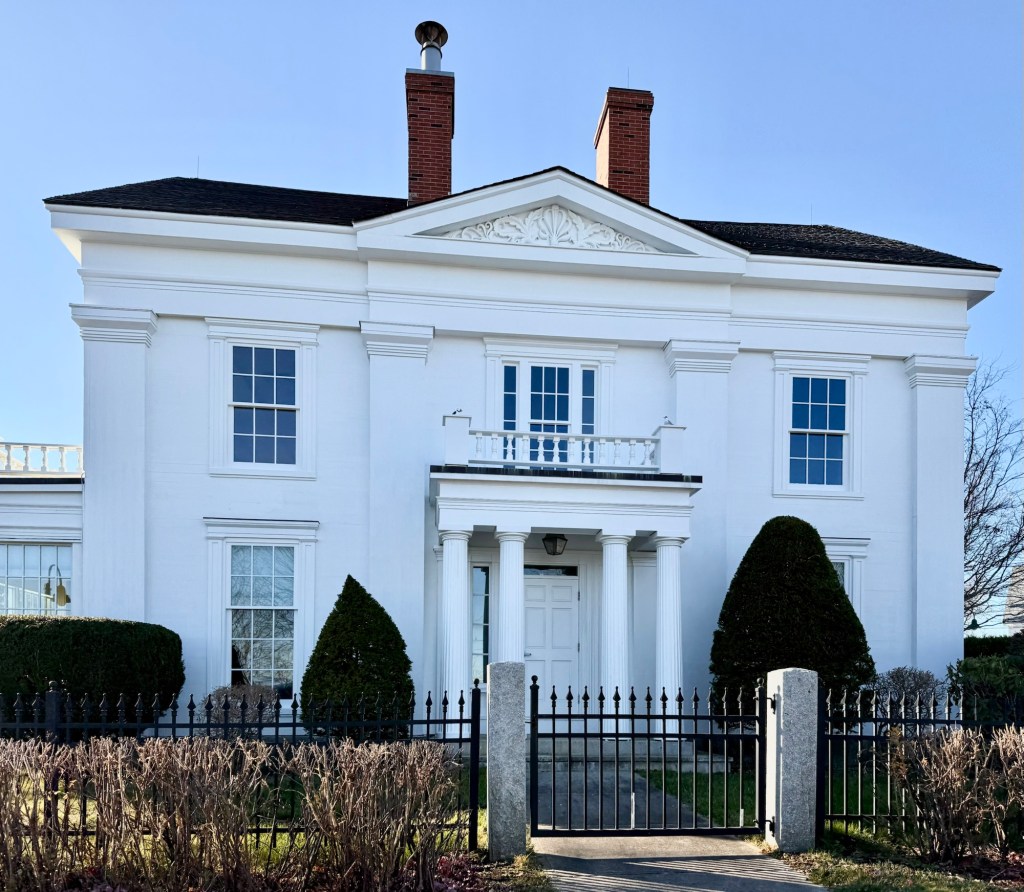
In about 1842, a Salem merchant, Joseph Adams, built this stately Greek Revival style mansion on Pine Street in Danvers, Massachusetts. Named “Overlook”, the house is a simplified adaptation of the temple-front form with three columns supporting an entablature and closed pediment above. Joseph Adams was an instrumental force who brought an Episcopal church to Danvers, bankrolling the new building there himself. By 1862, the house was owned by Milton P. Braman (1799-1882), who had just retired as pastor for the First Church of Danvers. Of particular note, when news reached Danvers of the assassination of President Lincoln, a gang of men there captured two men who had said unkind words of the late president, and tar and feathered them. A number of the mob were said to have planned to also go to Rev. Braman’s house here to do the same to him, as he was said to have been a “copperhead” a democrat who opposed the American Civil War and wanted an immediate peace settlement with the Confederates. Reverend Braman got wind of the plans of the local mob and had men stationed in the windows with shotguns, with the order to shoot anyone who entered the property. Luckily for all involved, the mob never showed. He would later move to Brookline and Newton. Overlook remains a significant country estate and very well-preserved by the owners.