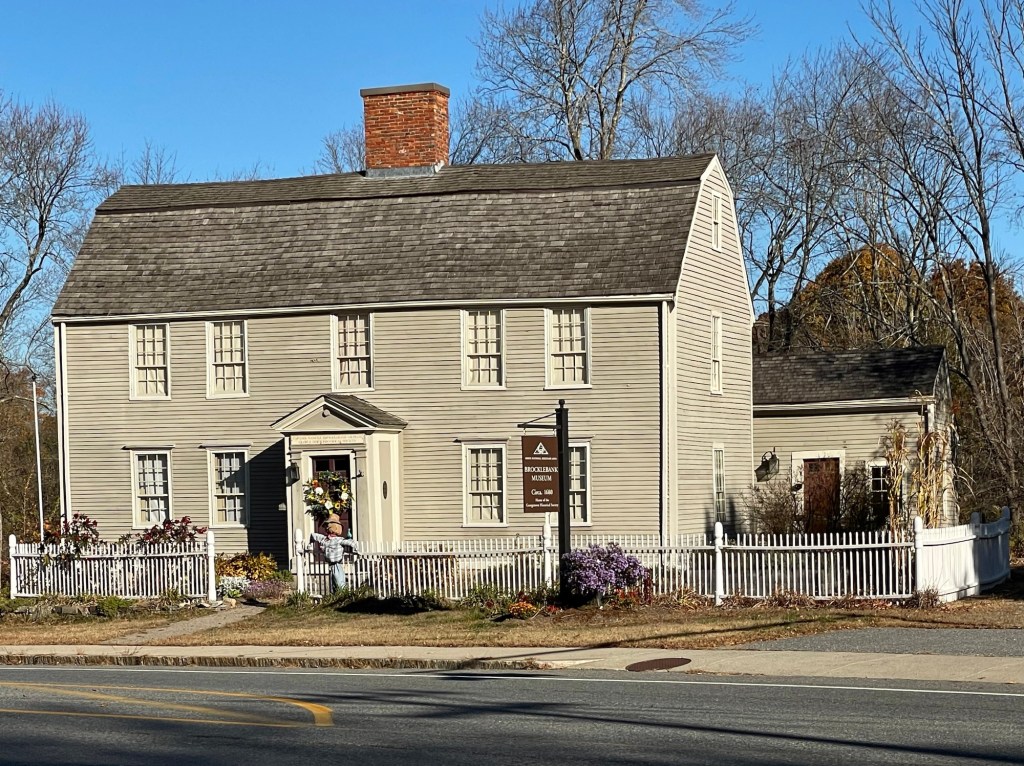
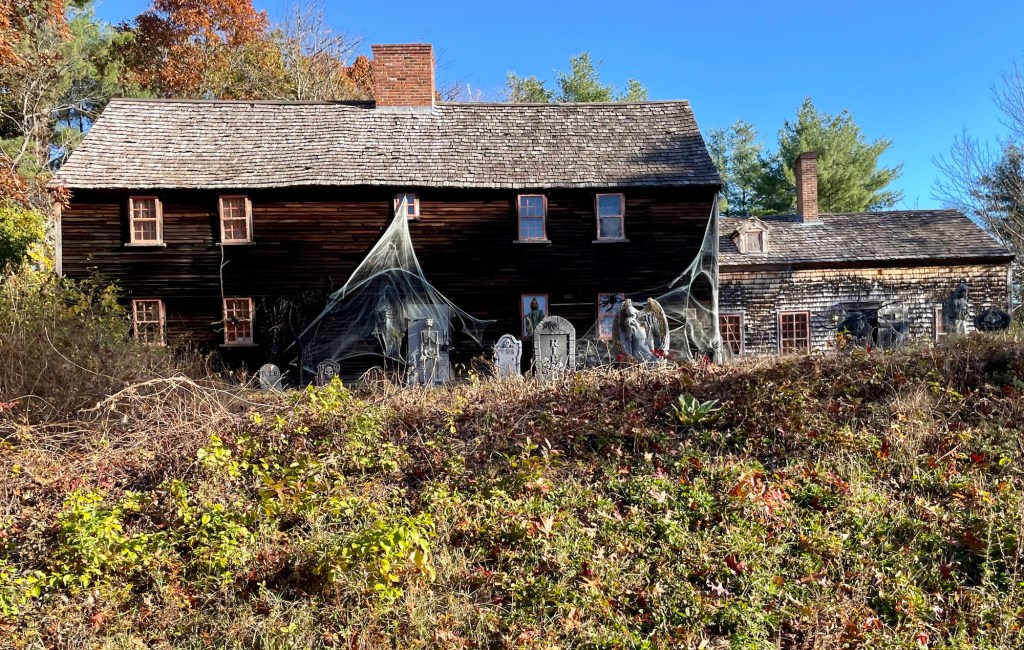
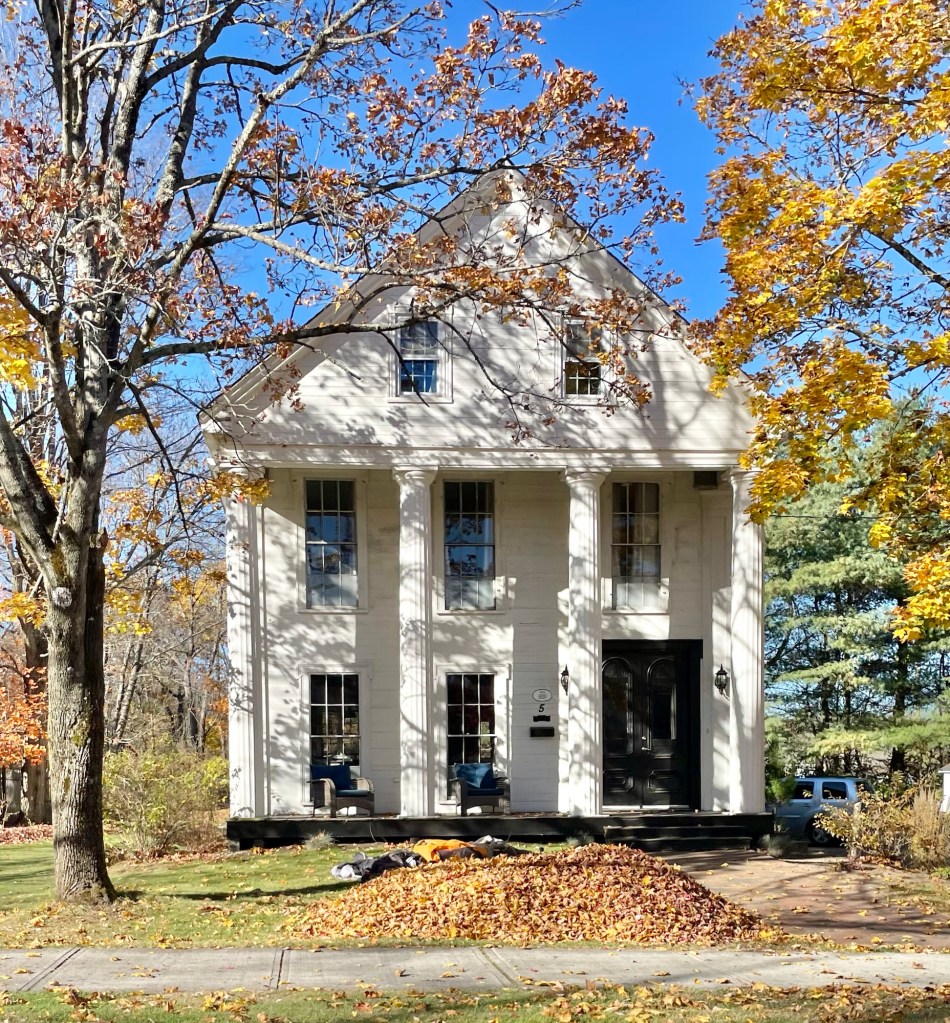
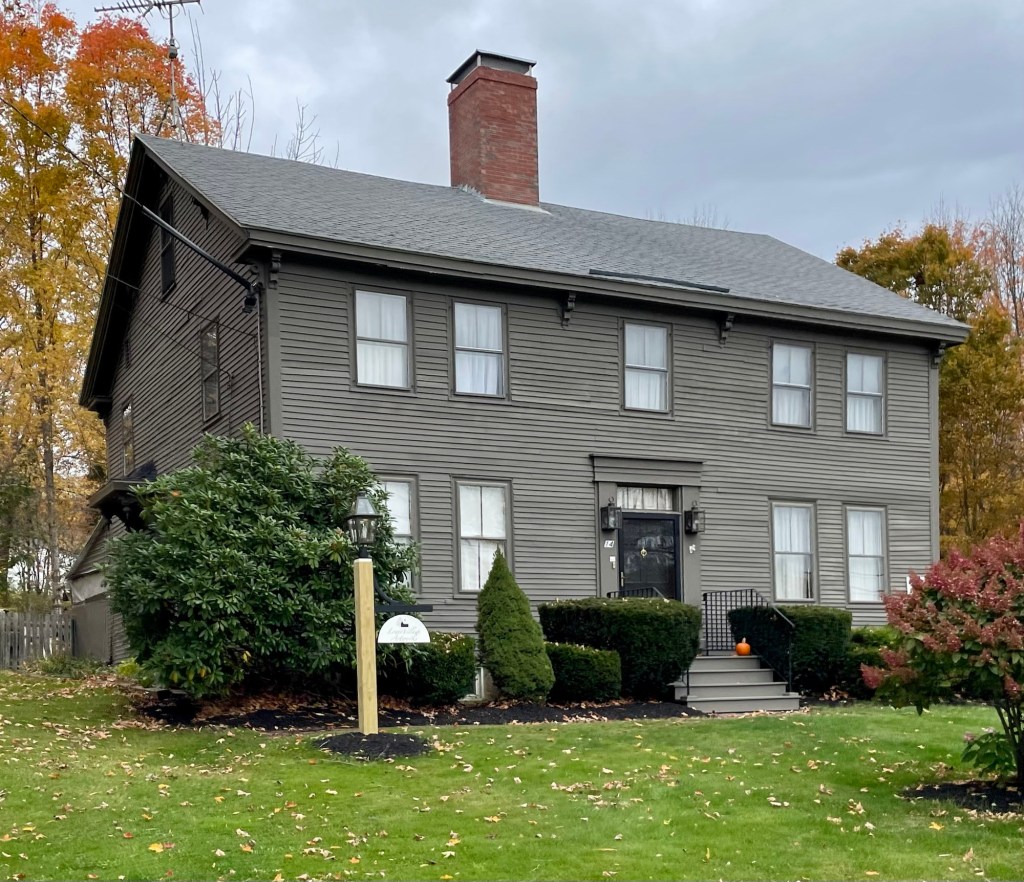
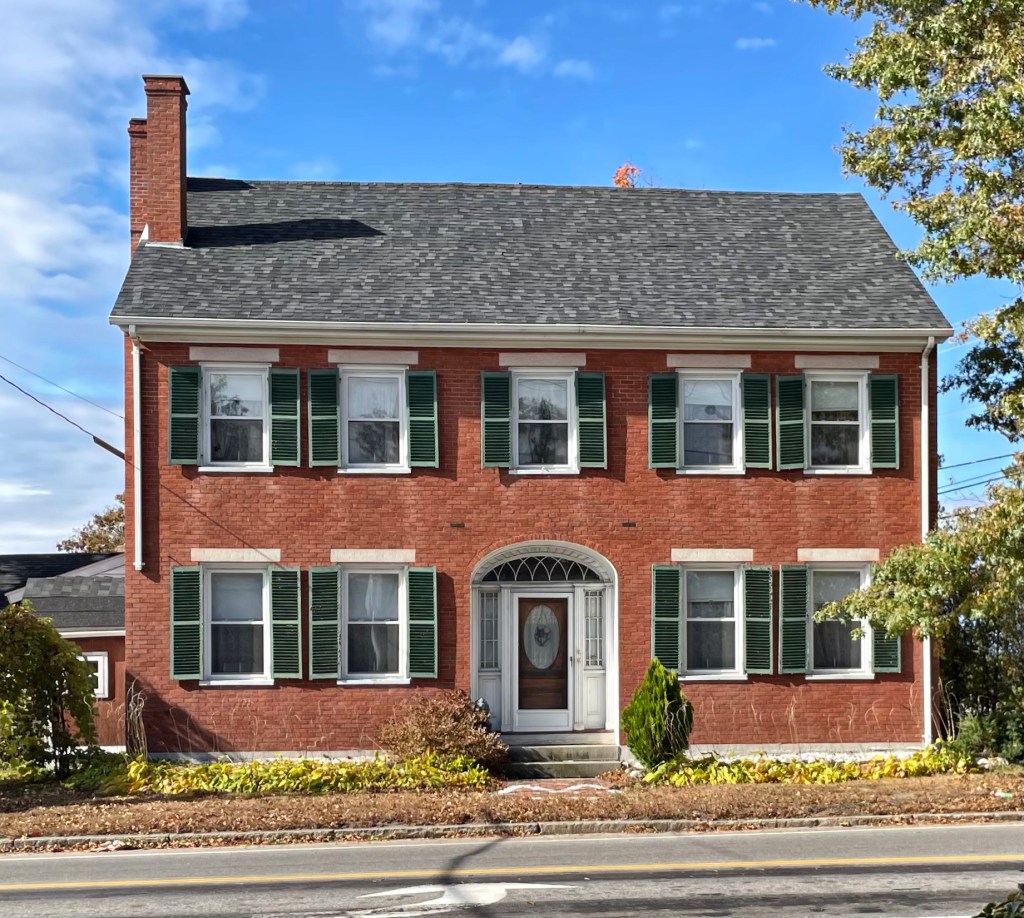
Edgar Hall House // 1889

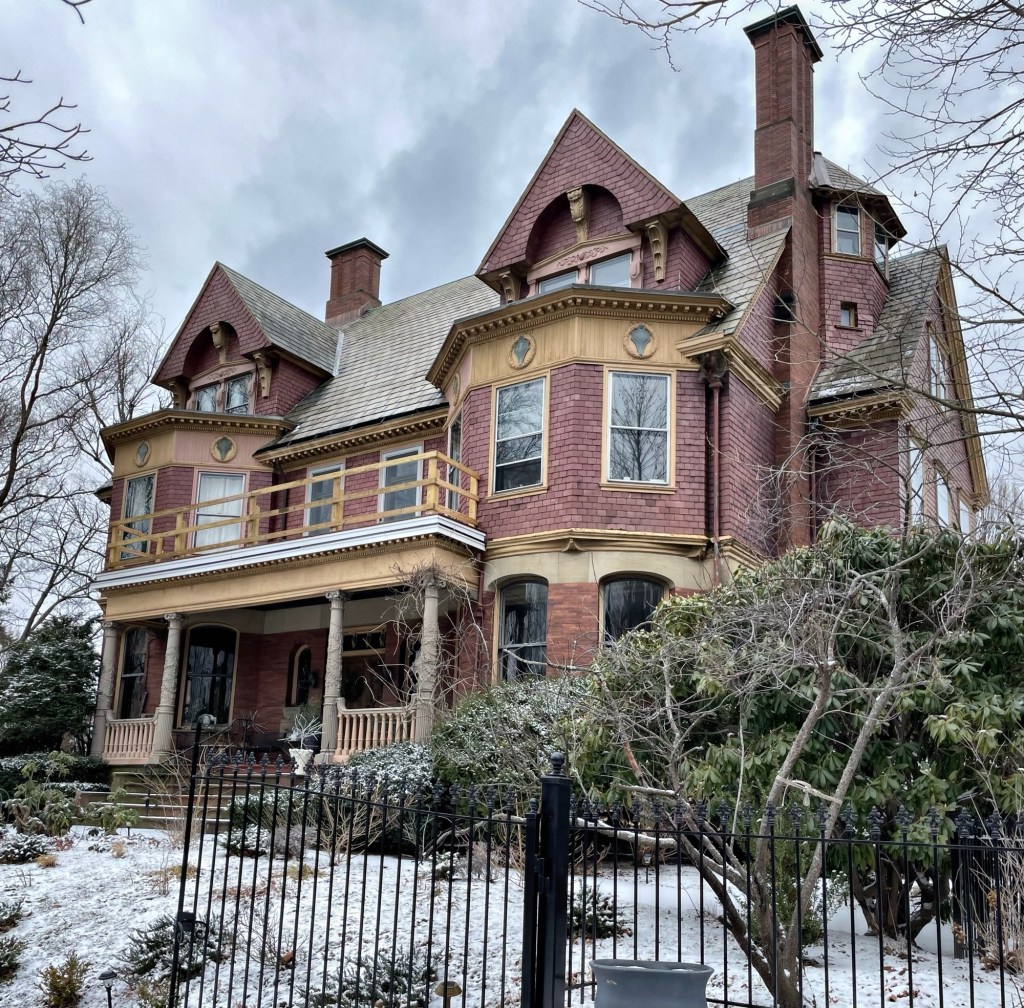
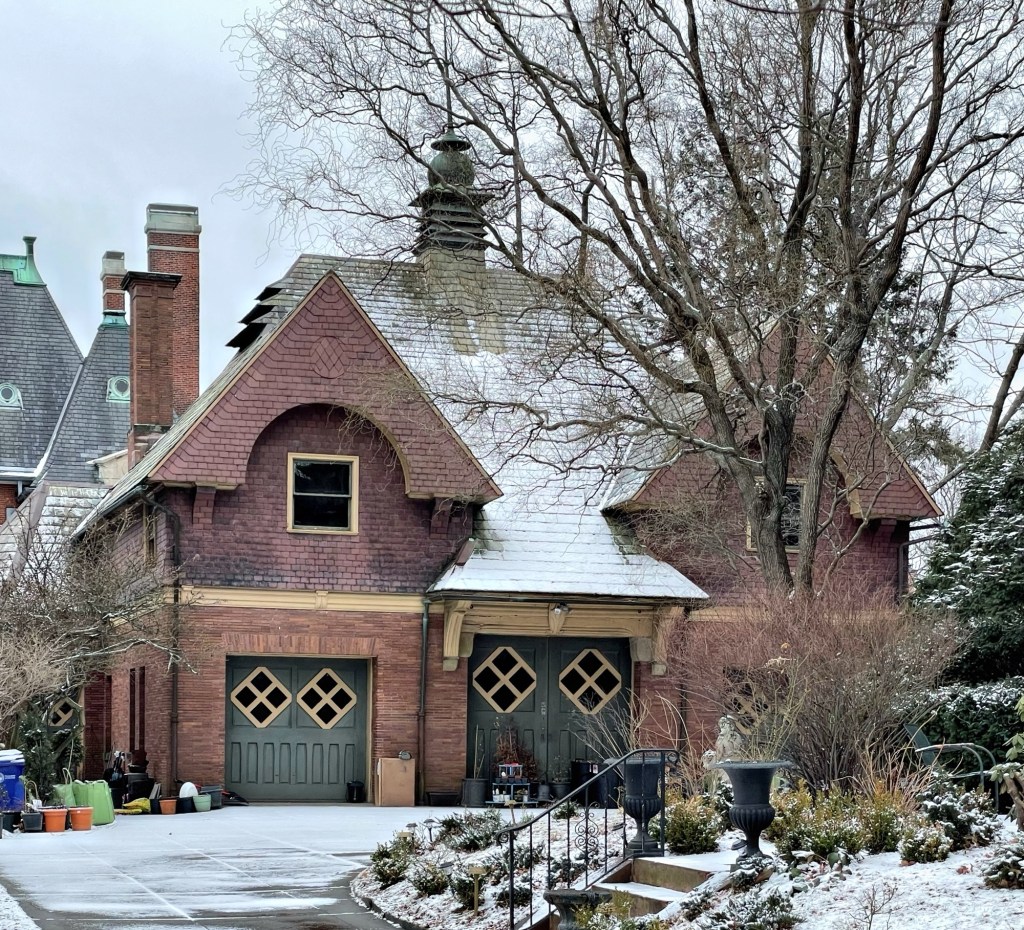
Another of Acton’s amazing old Queen Anne homes is the Edgar Hall House, an 1889 gem on Windsor Avenue. The house was built for Edgar Henry Hall and his wife Angelina who raised their daughter, Alice, in the home. Edgar and his brother inherited the family business from their father, Enoch Hall, and they produced wooden pails, tubs, clothing racks, and other wooden goods. The company employed over 30 workers in the early 20th century until it closed during the Great Depression. Edgar retired and relaxed from this stunning Victorian home until his death in 1954.

Simon Bradstreet House // 1723

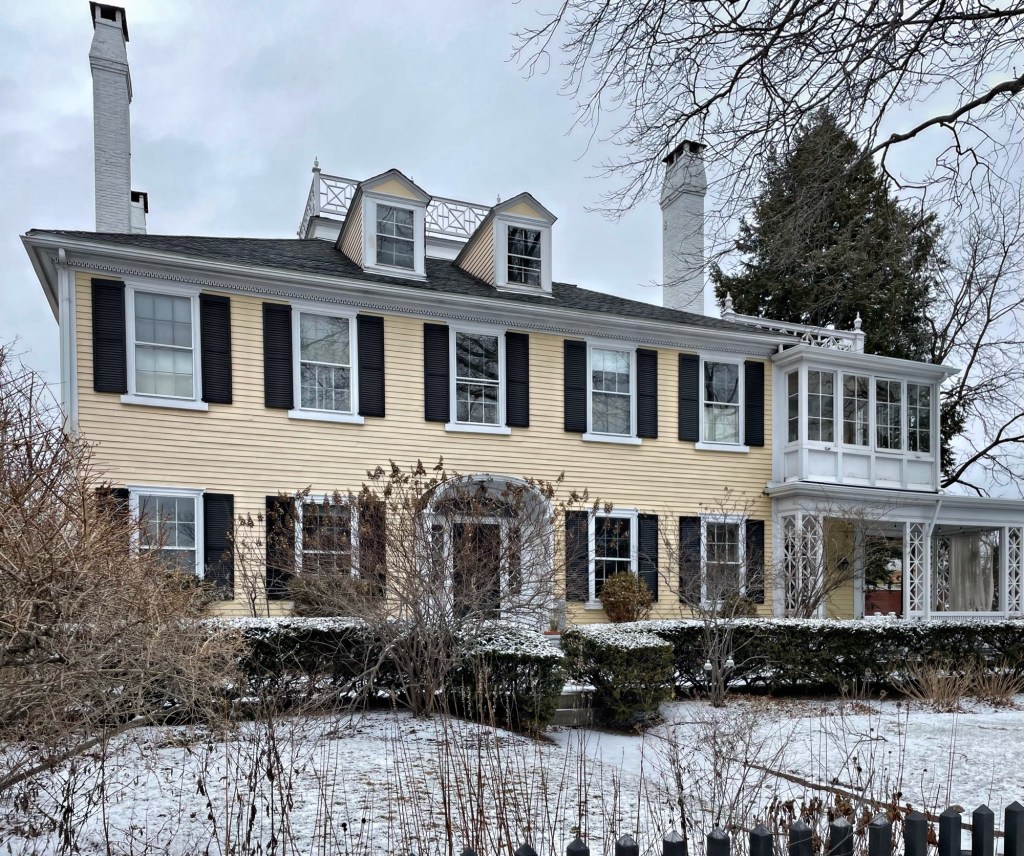
Walking the warren of tight streets and hidden alleys of Marblehead, Massachusetts, you are taken back centuries to a simple time, and of a town that has largely maintained its pre-automobile urban fabric. Many pre-Revolution homes still stand in town and have survived cycles of the coastal town’s prosperity and economic hardship, and the increased pressure of gentrification in more recent years! The Simon Bradstreet House sits right in the village and is a well-preserved Georgian-period home. The house was built in 1723 (earlier reports said in 1738) and it was later owned by Rev. Simon Bradstreet (1709-1771), who arrived to Marblehead to serve as the second minister of the Second Congregational Church a year prior. Reverend Bradstreet was the great-grandson of the last Bay Colony Governor of the same name. Chance Bradstreet, an enslaved African that was a subject of the “within these walls” exhibit at the National Museum of American History was born in this home in 1762. He was later sold to Abraham Dodge of Ipswich by Isaac Story, the third minister of the Second Congregational Church. Stories like this are necessary for us to remember that slavery was a huge part of New England’s economy historically.

Enoch Fuller Octagon // c.1850

Oh the Octagon! The very rare Octagon house was a unique house style briefly popular in the 1850s in the United States and Canada. The style can generally be traced to the influence of one man, amateur architect and phrenologist Orson Squire Fowler. In his book, The Octagon House: A Home for All of 1848 (and reprinted with more photos in 1853), Fowler advocated for the shape’s benefits for buildings in that the octagon allowed for additional living space, received more natural light, was easier to heat, and remained cooler in the summer. These benefits all derive from the geometry of an octagon: the shape encloses space efficiently, minimizing external surface area and consequently heat loss and gain, building costs etc. Some were convinced and built Octagon houses, but the style and its brief period of popularity, died by the 1860s. This example in Stoneham, Massachusetts was built around 1850 for and by Enoch Fuller, a close personal friend of P. T. Barnum, founder of the Barnum & Bailey Circus. Fuller visited Barnum’s octagonal home in Bridgeport, Connecticut and he decided to construct an octagon house in Stoneham. The home was owned by Col. Gerrry Trowbridge not long after completion. The home was built with a fireplace in every room, a spiral, “flying” staircase, and a sweeping veranda.

Holt House – Blue Hill Historical Society // 1815

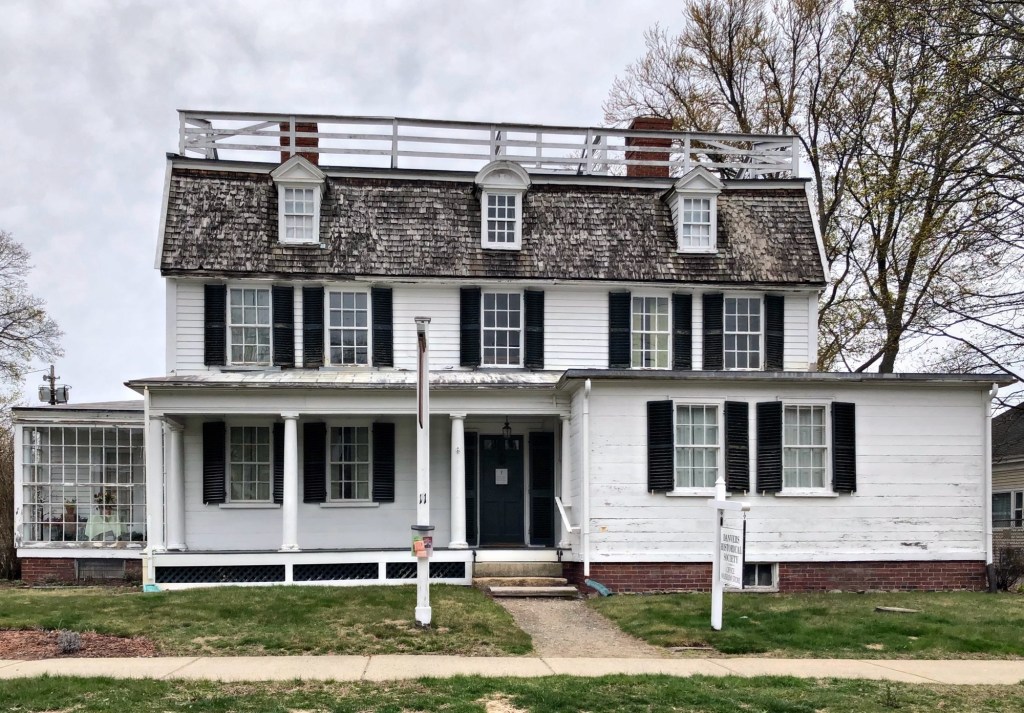
The Holt House in Blue Hill, Maine, was built in 1815 by Jeremiah Thorndike Holt, grandson of Nicholas Holt who brought Blue Hill’s fifth family from Andover, Massachusetts in 1765. Jeremiah was one of the first to locate at the head of the bay, in what is now the center of Blue Hill village. He was an influential businessman who kept a store at what became known as the Pendleton House, engaged in shipping, and became the town’s second postmaster. After Jeremiah died in 1832, his widow turned the house into the town’s only inn and tavern. In 1851 their son, Thomas Jefferson Napoleon Bonaparte Holt (what a name!) and his family occupied the house. It stayed in the family for over a hundred years until the Blue Hill Historical Society bought the Holt House and made it their headquarters in 1970. The Holt House remains as a well-preserved Federal style home in this part of Maine.

Esser Cottage // 1894

Hermann Esser (1845-1908) was born in Elbertfeld Germany and emigrated to the U.S. in the fall of 1866 and settling in Hoboken, NJ. On September 30, 1869, he married Bertha Michelmann of Hanover, Germany, who also emigrated to the U.S. years prior. In the states, Essen joined his old business partner Wilhelm J.D. Keuffel (also a German) and they ran the Keuffel & Esser Company, a scientific instrument manufacturing firm originally founded in New York City in 1867. Best known for its popularization of the slide rule, Keuffel & Esser was the first American company to specialize in the manufacture and sale of drafting and surveying tools. By the early twentieth century, it was one of the largest manufacturers of scientific instruments in the world. Their original store was located at 127 Fulton Street in Manhattan. Esser, with his wealth, decided to build a cottage in summer colony of Elka Park, New York, just north of Manhattan. The enclave was founded and has long been inhabited by wealthy German residents from New York City. This cottage was built for Mr. Esser in 1894, and is decidedly more Colonial Revival than many other cottages here. Esser only enjoyed a few summers here as he moved back to Germany in 1902, and died in 1908.

E. B. White House // 1795

The coast of Maine has long been a refuge for those looking for an easier way of life and access to natural splendor. One of the more well-known residents of Maine was author E.B. White, who lived on this farm in Maine for 48 years. The estate sits on 44-acres and was built in 1795 for William Holden by Captain Richard Allen, a local housewright. The property was purchased by E. B. White in 1933 as a summer residence, but it became a full-time home where he and his wife, New Yorker editor Katharine Angell, raised sheep, geese, chickens, pigs, even spiders all with a historic barn and tire swing. Sound familiar? It is from this house that he wrote the iconic children’s book, Charlotte’s Web (and Stuart Little) among others. White was a private person, and despite his internationally famous books, he did not advertise the location of his home while he was alive. In 1977, he convinced an interviewer to report that “he lives in ‘a New England coastal town’, somewhere between Nova Scotia and Cuba“. Katharine died in 1977, and E. B. in 1985. The property was inherited by their son, who summered there for years. The most recent owners, Robert and Mary Gallant of South Carolina, who have summered there for the past 30 years and preserved the house immaculately, selling it a few years ago.

Sarah and John Tillinghast House // 1904

This stately yellow brick Colonial Revival sits on the edge of the College Hill neighborhood of Providence, and I couldn’t help but to take a few photos! This residence was completed in 1904 for Sarah and John Tillinghast in the later years of John’s life (he died less than two years of moving into this home). The house exhibits a large semi-circular portico with balustrade above, the portico is flanked and surmounted by Palladian windows with elliptical reveals. The house was recently proposed to serve as a suboxone clinic, but that was shut down by neighbors. It appears to be divided into residential units now.

Woods-Gerry House // 1860

There are always those houses that just stop you in your tracks… For my last post (for the time being) on Providence, I wanted to share this significant property, known as the Woods-Gerry House, perched atop College Hill. Owner Marshall Woods, who married into the Brown family and was active in the affairs of Brown University. Locally he was also involved on the building committee for St. Stephen’s Church where he was a factor in selecting renowned architect Richard Upjohn to design the church. He must have liked Upjohn so much (or got a good deal) that he hired Richard Upjohn to design his new home on Prospect Street. The exterior of the three-story brick building stands out amongst the other Italianate mansions built in the same decade nearby, but is elevated design-wise with a bowed centerpiece on its east elevation with the handsome new front entrance renovated in 1931 by then-owner, Senator Peter Gerry, who was a great-grandson of Elbridge Gerry, the fifth Vice President of the United States (who had given his name to the term gerrymandering). Today, this significant building is owned by the Rhode Island School of Design and houses the Woods Gerry Gallery. The grounds are also very well designed.

Dutton Farmhouse // c.1840

Another one of the Landmark Trust USA properties in Dummerston, Vermont is the Dutton Farmhouse, a meticulously restored Greek Revival farmhouse from around 1840. The gable-roof farmhouse was possibly an addition to an earlier dwelling built decades earlier as a one-and-a-half-story center-chimney home, seen at the rear today. The first known owner of the farmhouse was Asa Dutton who farmed off the large orchards. Generations later, the farmhouse served as a dormitory for migrant laborers who worked nearby, with the interior being altered. The property was eventually gifted to the Landmark Trust USA, who began a massive restoration project on the home, uncovering original detailing and even historic wallpaper! The house has since been meticulously restored and preserved and is available for short-term rentals! The charming interiors and near silence outside is a perfect getaway from city life.

King Mansion // 1894

After the American Revolution, Lt. Joshua King settled in Ridgefield and built the King Mansion in 1801, a Federal style home that commanded the Main Street lot. King was born in Bridgewater, Massachusetts and fought in the Revolutionary War near the border of Connecticut and New York. After the war, he settled in Ridgefield and married one of the most eligible bachelorettes in town Anne Ingersoll. Anne was the daughter of the Rev. Jonathan Ingersoll, pastor of the Congregational Church of Ridgefield. After a long life running a store and raising a family, Joshua died in 1839, a year after his wife. The mansion was inherited by their son Joshua Jr. until his death in 1887. In 1889, a fire destroyed much of the house. When it burned down, The New York Times described it as “the grandest old mansion in the village.” It was quickly replaced by the current house, modeled after the original but larger, which was placed much farther back from the road in the Colonial Revival style. Fire damaged the house again in the 1990s, and the present structure was restored and enlarged from 2002-2004, its HUGE!