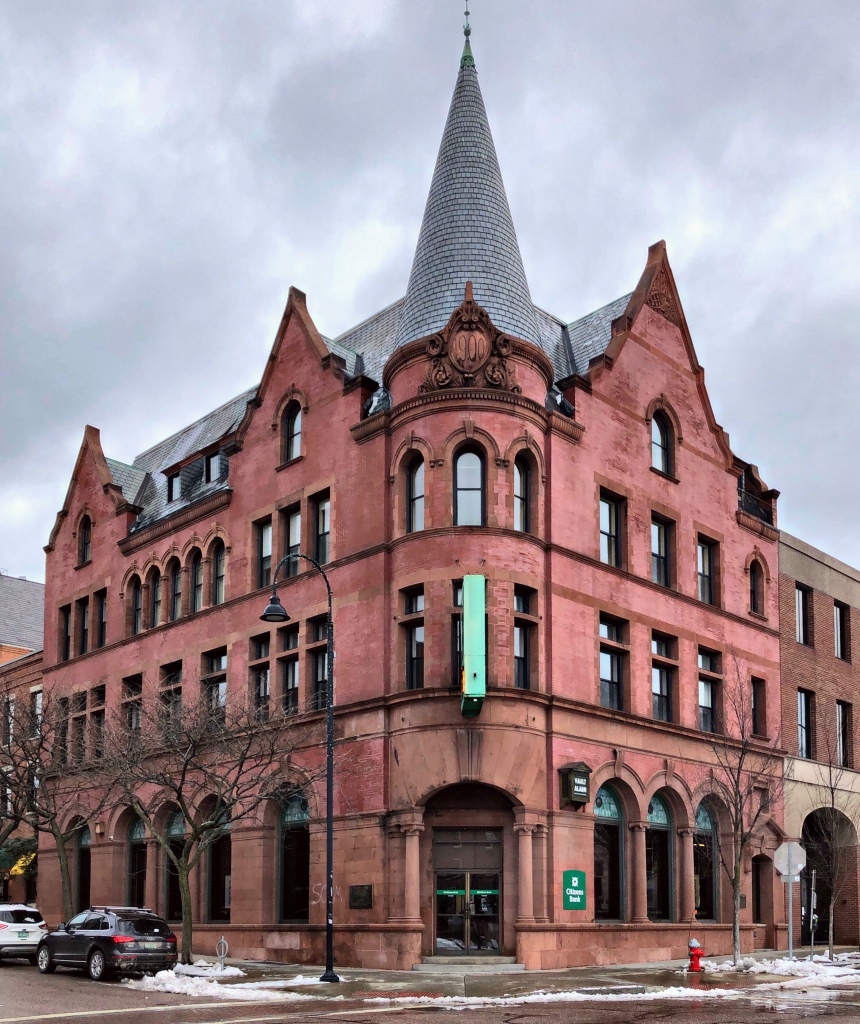
The Burlington Savings Bank building, constructed in 1900, is one of the most architecturally sophisticated buildings in Downtown Burlington, Vermont. The design uses a brick and brownstone facade with prominent wall dormers and a corner tower with conical roof which harkens back to the chateaus and estates of Europe. The recessed corner entrance is framed by free-standing Ionic columns which support a brownstone segmental arch, which helps command the corner presence. The Burlington Savings Bank opened for business on January 1, 1848, and operated under that title until 1988 when it merged with the Bank of Boston to become the Bank of Vermont, which in 1995, was purchased by KeyBank. The corner building is now occupied by Citizens Bank, which continues this buildings legacy as a castle of finance in the city.
This narrow, four-story commercial block is located near the Burlington City Hall, and fronts the park it sits on. Constructed in 1891 from local redstone in a unique Romanesque Revival style, the building stands out as one of the most unique in the commercial downtown area. The building was built for the Burlington Trust Company from plans by Clellan W. Fisher, an architect who soon after joined a firm with Stephen C. Earle in Worcester, MA. The design features an unusual checkerboard pattern of inlaid red and white ashlar paired with a stone cornice which similates dentils and brackets. The building is now home to a Burton snowboard retail store, a company started in Vermont in 1977, now the leading snowboard company in the country.
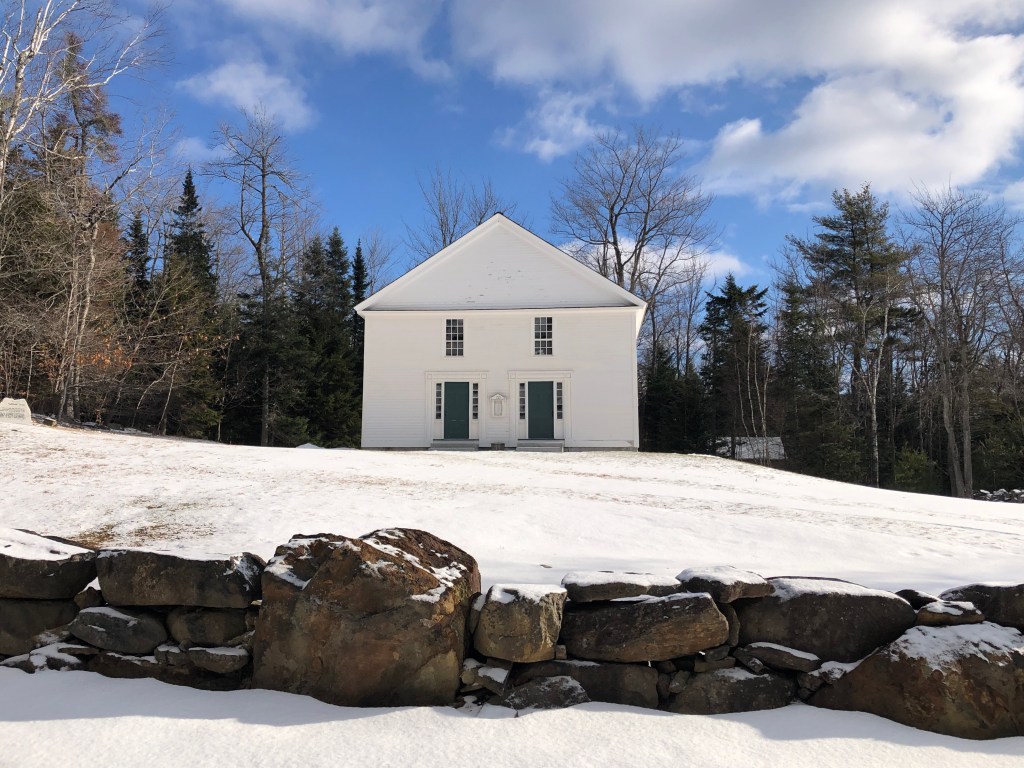
In the township of Washington, New Hampshire, about three miles from the Washington Town Green, stands a rural church building, a white wooden structure complimenting freshly fallen snow. This church is honored as the mother church of the first Seventh-Day Adventists. Its story started in 1842 by a local group of farmers calling themselves Christian Brethren, who dissented sharply from the strict Congregationalism of the Church in Washington Center. Many of the Christian Brethren became Adventists about the time this building was first used, and thereafter some of them began worshiping on the Seventh Day; and eventually the majority did so. In 1862 the official Seventh-day Adventist denomination was born at this place. Today, the building is a regular point of pilgrimage for members of the massive, international congregation.
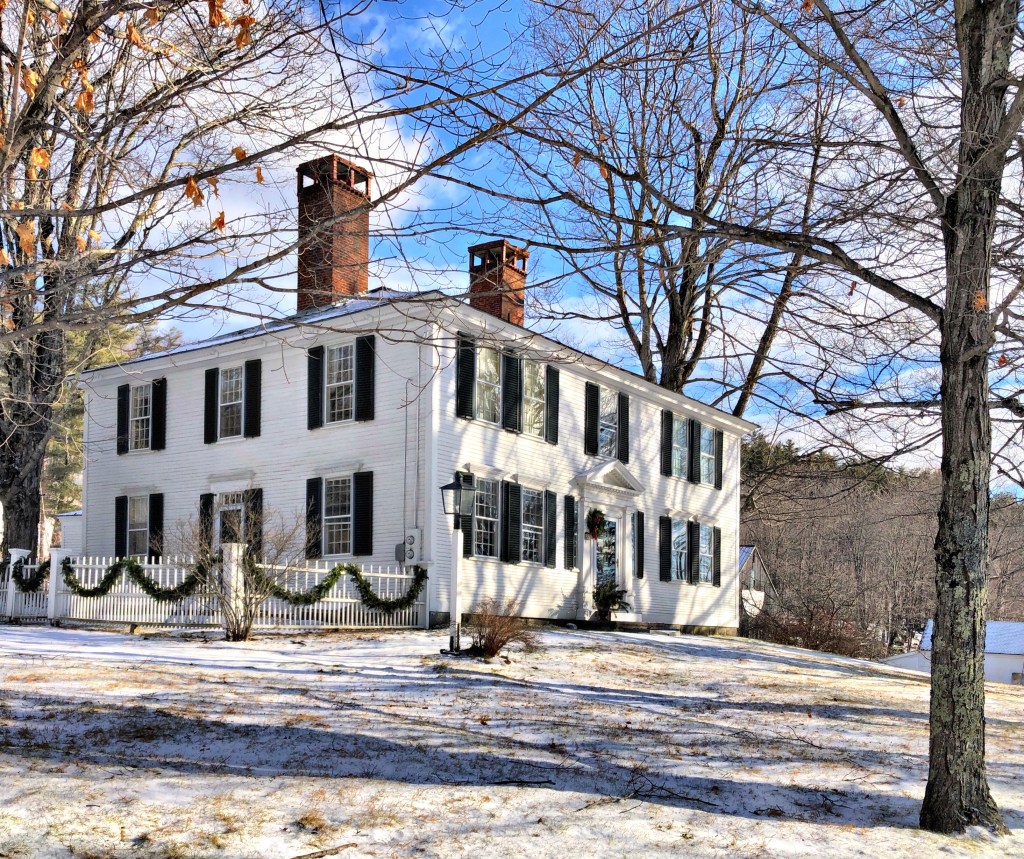
Located adjacent to the Washington Town Green, the Faxon House exemplifies the Georgian architectural style seen in small towns all over the region. The home was built in the early 1790s by a member of the Faxon family. By the early 19th century, the home was owned by Azariah Faxon a storekeeper and the schoolmaster at the District #1 School, which at that time was located between the Town Hall and the Congregational Church in the center of town before being replaced with a larger structure. In 1793, an eight-year-old Sylvanus Thayer moved up to Washington from his family home in Braintree, Massachusetts, to live with his uncle, attending school where he was a teacher. While there, impressionable Sylvanus met Benjamin Pierce, father of future President Franklin Pierce. Both General Pierce and Sylvanus’ Uncle Azaria, who had fought in the Revolutionary War, fed Sylvanus’ growing fascination with military matters, including the dazzling campaigns of Napoleon Bonaparte. Sylvanus later attended nearby Dartmouth College, and went on to become “the Father of West Point” as an early superintendent of the United States Military Academy at West Point and an early advocate of engineering education in the United States.
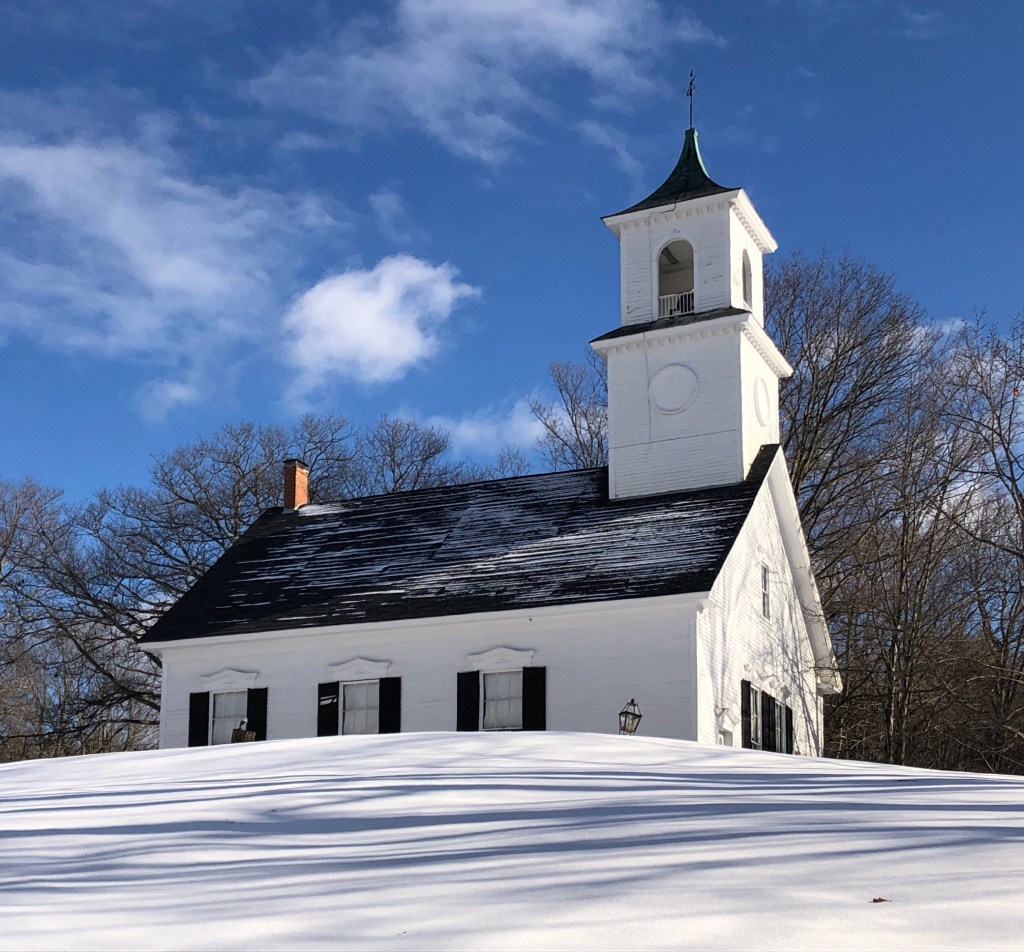
Residents in the eastern portion of the rural town of Washington, NH found it very inconvenient to attend church at the center of town. In 1800, a group of residents on the east side of town banded together to create a new congregation, building a church perched on a low hill soon by 1826. The church was used for decades until it burned in 1844, it was replaced a year later, but that burned as well. Undeterred, the small congregation had yet another church built in 1877. The church remains in great condition, and is still active.
Located in Washington, NH, the Shedd Free Library is the only Victorian Gothic building in town, and packs a punch for its small size. The library was named for Sarah Shedd, a Washington teacher and poet who went to work in the cotton mills of Lowell, Massachusetts to support her family and educate her siblings. When she died in 1867 she bequeathed $2,500 to her hometown to establish a free public library, an amazing gift! The gift did not appear to be enough as nothing was built until 1881, after Boston architect S. S. Woodcock was selected by Luman T. Jefts, a wealthy shoe manufacturer in Massachusetts, to design the library after a gift to his hometown.
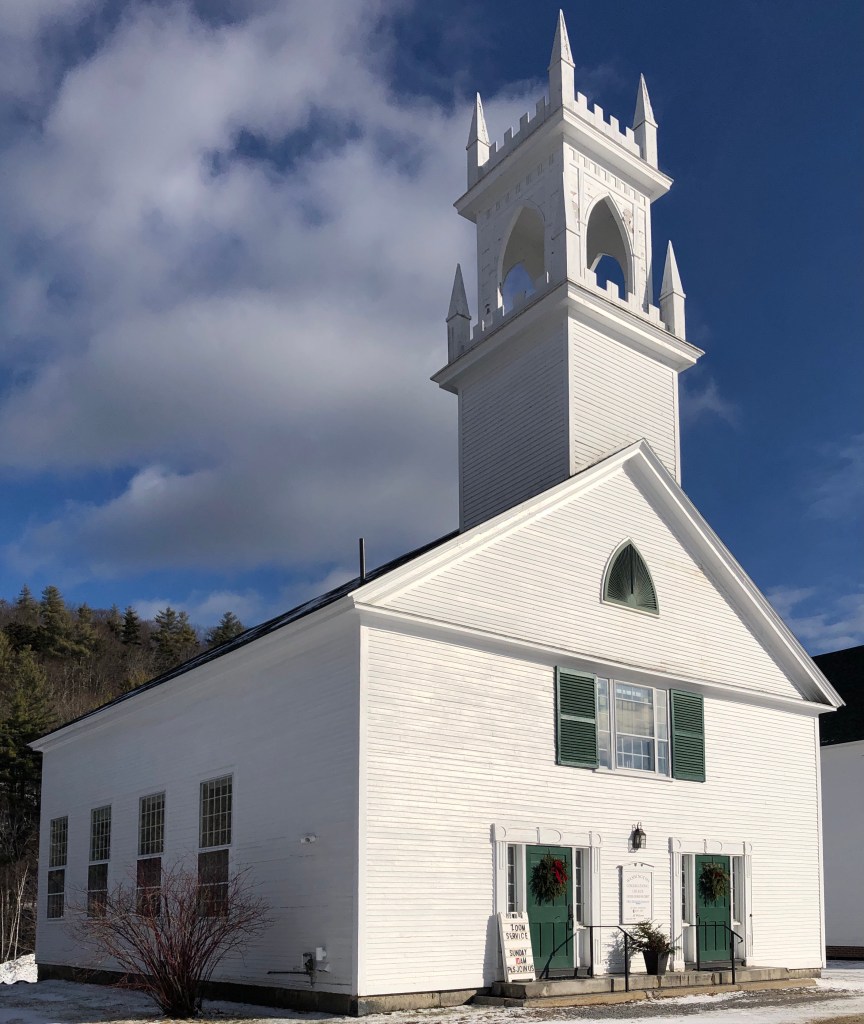
Located adjacent to the Washington Meeting House and Central Schoolhouse on the Washington, New Hampshire Town Green, the Washington Congregational Church perfectly compliments the collection of vernacular buildings here to create a very cohesive, three-building historic district. The church is dominated by a Gothic-inspired two stage square tower adorned by pointed pinnacles and crenellation. The building, constructed in 1840, is a great example of a Gothic Revival vernacular church building in rural New Hampshire and has been well-maintained over the years. In 1960, a fire in the church resulted in several thousand dollars worth of damage. A full basement was built under the church in 1985 to provide space for Sunday School classes and events. The simple arched sanctuary has remained in keeping with the original interior design, and features wide board wainscoting and wooden pews, taken from the old Meeting House.
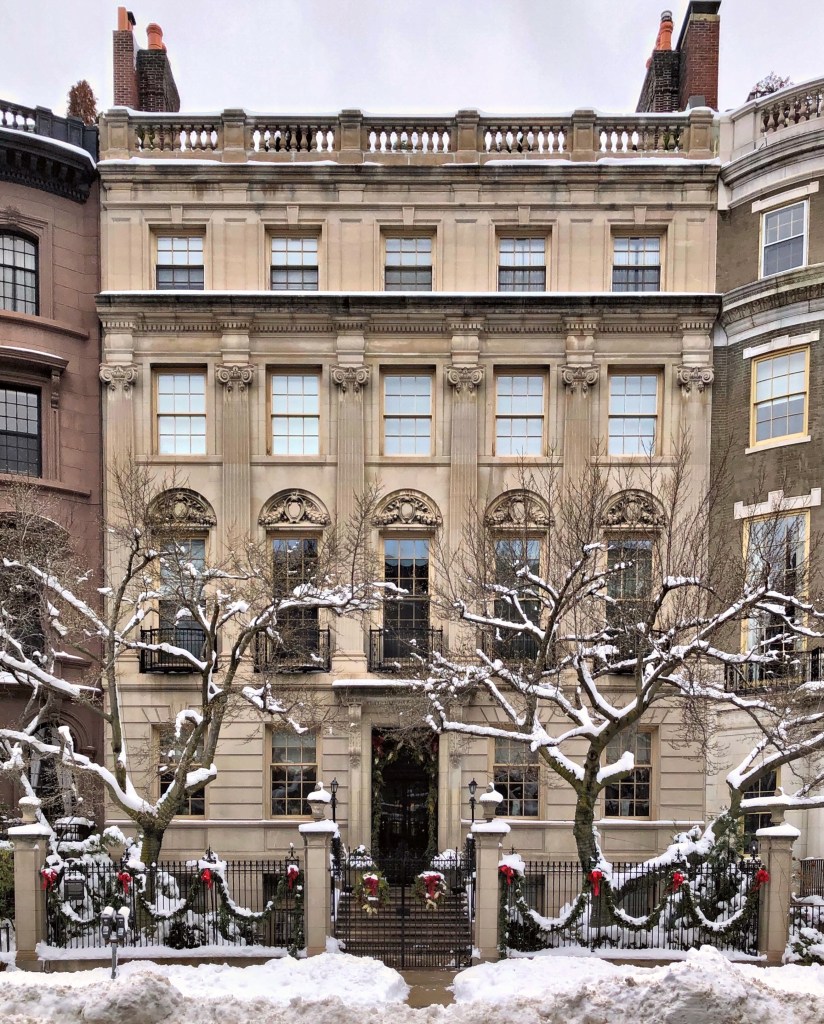
Adjacent to the Warren House (last post) on Beacon Street in Boston’s Back Bay neighborhood, this massive mansion is one of my favorites on the street. Built in 1905, and designed by architect Alexander Wadsworth Longfellow, Jr. an amazing local architect, and nephew of poet Henry Wadsworth Longfellow. The grand mansion was the home of Eben Sumner Draper and his wife, Nancy. Eben Draper was a manufacturer of cotton machinery in the Draper Corporation, founded by his father in Hopedale, MA. Draper graduated from MIT and entered his fathers business, which upon the time of his graduation, was the largest plant for manufacturing cotton machinery in the world. In 1905, Draper was nominated and elected as Lieutenant Governor of Massachusetts, the same year he had this mansion constructed. In 1908, Draper was elected Governor, and served two terms under the Republican Party, pushing a pro-business, and anti-reform agenda, a bill legalizing the merger of the Boston and Maine Railroad with the New York, New Haven and Hartford Railroad, signaling approval of what was seen as monopolistic business practices, something the Draper Corporation was known for in Hopedale. The former single-family home was converted to six condominium units in 2000. Fun fact: the Draper Mansion replaced the 1860 home David Stewart, a merchant from New York, built as a wedding present for his daughter, Isabella Stewart, and John (Jack) Lowell Gardner. Isabella would later create the beloved and iconic Isabella Stewart Gardner Museum. The couple purchased the adjacent townhome in 1880 to store their growing art collection.
This stunning townhouse on Beacon Street in the Back Bay neighborhood of Boston was constructed in 1913 for George Eddy Warren and his wife Frances Knowles Warren. The home, designed by Parker, Thomas & Rice, is one of the more elegant Classical Revival townhomes in the city, with its symmetrical, prominent bowfront, piano nobile with full-height windows, classical lintels, and thoughtful use of brick and stone construction. George E. Warren was a coal dealer, who was selected to head the U.S. Army’s Raw Materials Division during WWI for his expertise. During the war he was in charge of the fuel and forage division, overseeing an important aspect of 20th century warfare, petroleum manufacturing and distribution. His wife Frances was the daughter of Francis B. Knowles, a co-founder of Rollins College in Florida, the oldest institution of higher learning in the state of Florida. Frances volunteered her time in Boston as President of the YWCA, progressing women’s empowerment and social justice in the city. After successive ownership, the townhome was acquired by Emerson College and combined with its neighbor on the interior. In 2000, the home was reverted back to a residence and houses two condominium units.
The South Congregational Church in Newport, NH, is located (as its name suggests) south of the commercial and civic heart of downtown Newport. The church congregation was founded in 1779 and grew substantially in the early 19th century. The church’s location, outside the present downtown, is the result of a long-running dispute within the town of where its civic heart should be located, to the north or south of the Sugar River. The consequence of this disagreement resulted in the placement of the Baptist church at the town common (north of the present-day commercial downtown), and the placement of this church here. The resulting development to the north of the river left this massive, brick Federal style church towering over the small working-class homes, with a majority of the town’s other significant Federal buildings built years later, like the Eagle Hotel and Old County Courthouse to the north of the river. The 1823 church is thought to have been designed by Elias Carter, who designed many Federal-era churches in the New England area.
In December 1824, a law was passed by the New Hampshire Legislature removing the of the Supreme Court of Judicature from Charlestown, New Hampshire to Newport, which was located at the convergence of multiple stagecoach lines along the Sugar River. Soon after, Sullivan County was formed from the northern part of Cheshire County. At a meeting held January 13, 1825 the town of Newport voted to raise $2,000.00 to assist in building a courthouse and town hall, in the center of town. The building was erected in 1826 with the Newport Town Hall on the first floor and County Courthouse on the second. The building continued to be used as a court as well as social purposes until 1872, when it was deeded to the Town of Newport. Since then, the structure was used as a school and grange hall, and it now is home to a restaurant, appropriately called “The Old Courthouse”. The 1826 building is an excellent example of vernacular Federal style architecture.
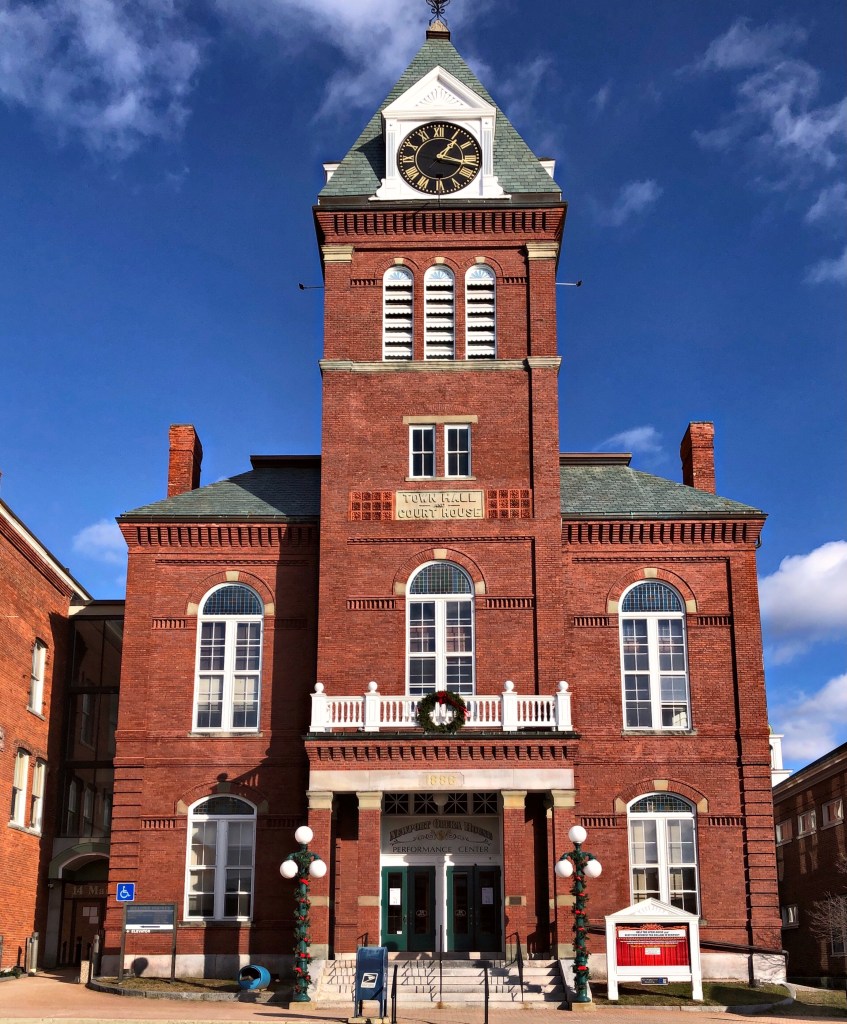
The architectural focal-point on Main Street in Newport, NH is the Newport Opera House, with its solid massing and prominent central tower. The town was growing after the American Civil War and its position as County Seat solidified that growth. A new large civic building was erected in 1872 which housed a new courthouse and town hall. A fire destroyed much of the buildings on Main Street in 1885, and destroyed the courthouse and town hall building. As a response to the loss of the building, a fire-proof structure was erected from designs by Hiram Beckwith, a regionally prominent architect from Claremont. The structure featured space for the county, town, and even an opera house! The jewel of the new building was the Opera House located on the second floor that housed a stage considered the largest north of Boston. The Newport Opera House soon became the center of entertainment in Sullivan County and patrons came from far away to enjoy the large variety of programs presented. The large hall played host to dances, boxing matches, weddings, political rallies, plays, school graduations and more! After a period of severe decline, a group of artists and residents of town worked together to restore the building and use the space as a performance center. It remains one of the finest buildings in this part of the state.
Following the granting of the royal charter in 1761, Newport, NH was incorporated and named after Henry Newport, a distinguished English soldier and statesman. With excellent soil for farming, and abundant water power from the Sugar River to run mills, Newport grew prosperous. The main street developed, leading to a proliferation of hotels and taverns that were soon situated along the length of Main Street to service the many travelers who stopped along the route, many such structures were wood frame construction. A fire devastated much of Main Street in Newport in 1885, leading to a massive rebuilding campaign by the town’s richest citizens. One of the earliest buildings constructed after the fire was the Lewis Block, developed by Frederick Lewis, who lived a block away, and his son Samuel DeWolf Lewis, who designed the block. The two-story building is broken up by brick pilasters with recessed corbelled detailing which give rise to buttresses capped by gablets (yes its a word), punctuating the flat roof profile.
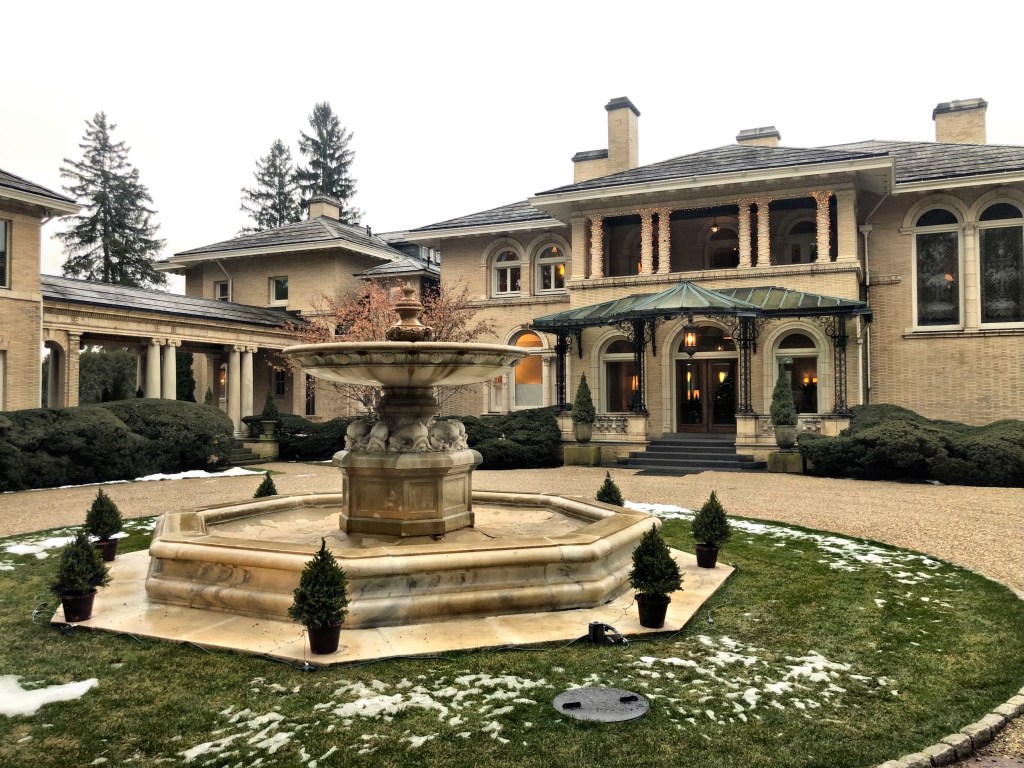
Designed in 1893 by the Boston architectural firm of Peabody and Stearns, Wheatleigh is an early example of Renaissance Revival architecture which became popular for country estates in the early 20th century. The estate was constructed for Henry Harvey Cook, who purchased over 250-acres of forest and lawns overlooking Lake Maheenac for his summer “cottage”. Cook was a New York-based businessman who made his fortune in the railroad and banking businesses, and he wanted a summer house to escape to every year. He named his home “Wheatleigh” as an homage to his family’s ancestral home, Wheatley, Oxfordshire. The mansion is approached by a circular drive that terminates in a formal entrance court partially enclosed by a buff brick wall and evergreen trees, centered on an octagonal marble fountain decorated with a shell and leaf motif. Upon Cook’s death in 1905 Wheatleigh passed to his daughter, Georgie, the Countess de Heredia. Under her ownership the formal garden was opened for evening worshipping services and musical events. Following de Heredia’s death in 1946 the property was divided and changed hands numerous times. In 1976 the mansion and 22 acres were opened as a resort hotel, known as the estates historic name. The Wheatleigh remains one of the most esteemed luxury hotels in the country.
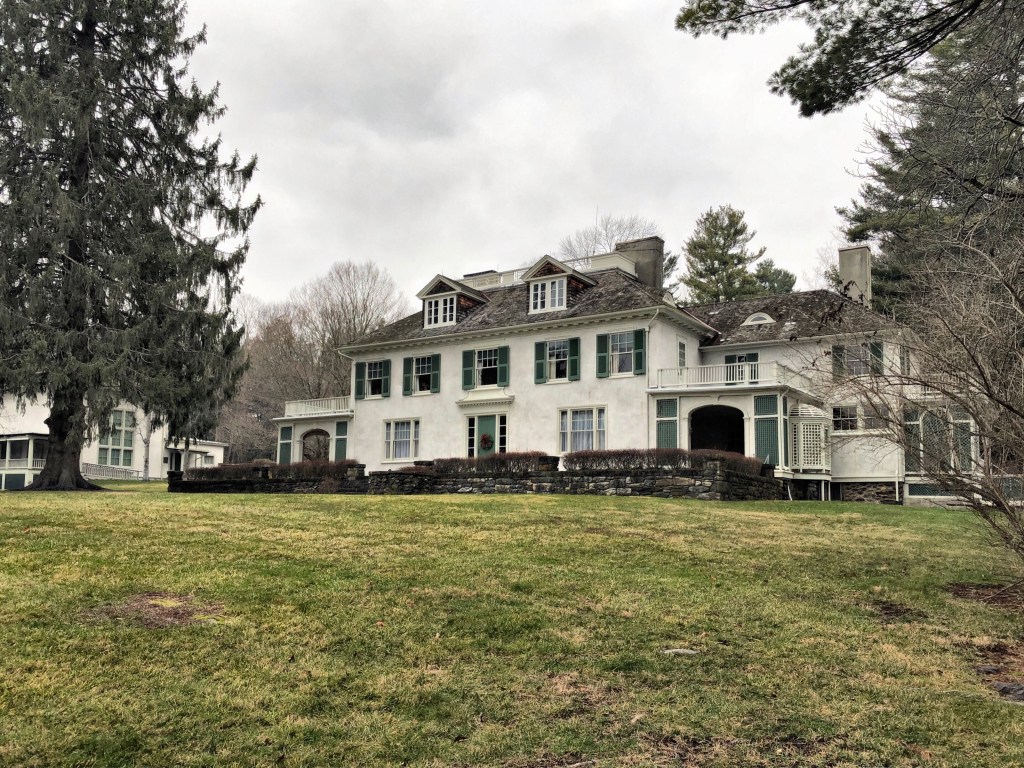
Chesterwood is the former summer home, studio and gardens of American sculptor Daniel Chester French (1850–1931), who is best known for creating two of our nation’s most powerful symbols: the Minute Man(1871–75) at the Old North Bridge in Concord, Massachusetts, John Harvard in Harvard Yard, and Abraham Lincoln (1911–22) for the Lincoln Memorial in Washington, D.C. Daniel Chester French was one of the most successful artists of the late 19th and early 20th centuries, producing more than 100 works of public sculpture. In the fall of 1895, he and his wife drove by horse and buggy and discovered the resort town of Stockbridge. They returned the next summer and purchased the Marshall Warner farm from the family who had purchased the land from Mohican Native Americans. The French family and two maids moved into the white clapboard farmhouse the next summer. To ensure that his summer would be productive as well as restful, he improvised a studio in the barn. He asked his friend and colleague, architect Henry Bacon, to design a studio for him (Bacon would later work with French on the Lincoln Memorial). Soon, in spite of renovation, the original farmhouse was deemed inadequate and French commissioned Bacon to design a residence, completed in 1901. The family owned the home for decades, even after Daniel Chester French’s death. Much of the credit for Chesterwood’s preservation and metamorphosis from summer retreat to public site belongs to Margaret French Cresson (1889–1973), the sculptor’s daughter. After her parents’ death, she maintained the property and began to use it year-round, assembled the work of her father, and established the estate as a historic site of the National Trust for Historic Preservation.





 Buildings of New England