Leet Store // 1909

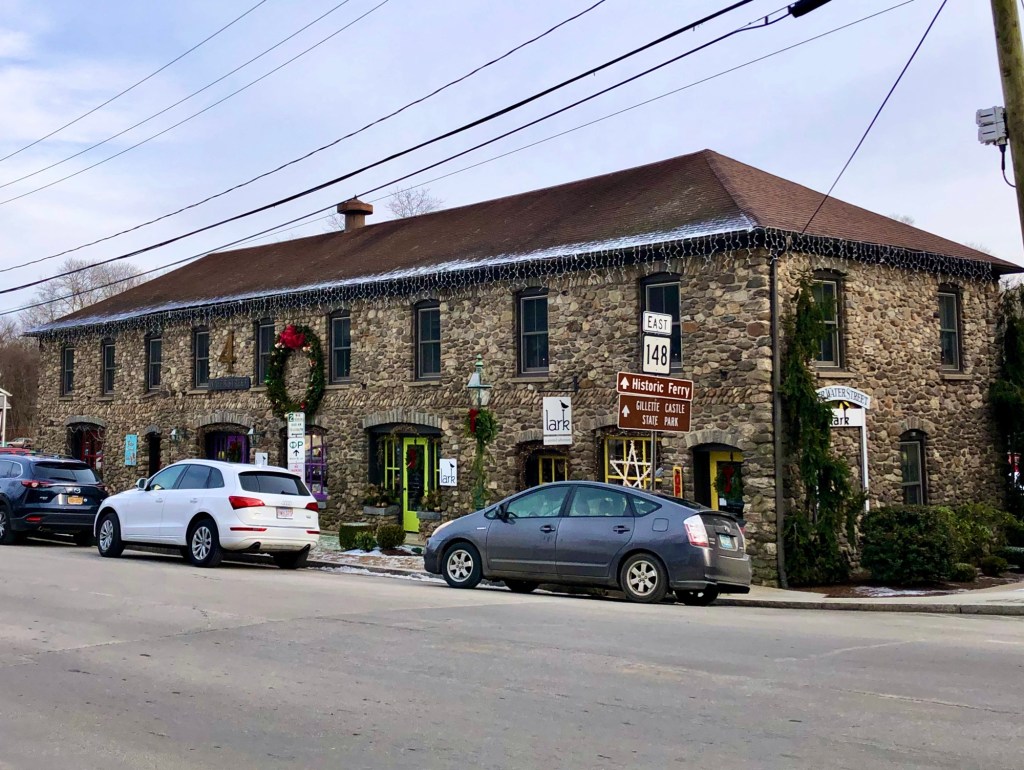
The handsome rubblestone commercial block at the corner of Main and Water streets in Chester, Connecticut, was built in 1909 by Italian stone masons for Joseph H. Leet and contained a grain and feed store, with other spaces in the building rented out. Decades later, the old Leet Store became a auto repair shop and the upstairs space was used as a meeting hall and theater for the community. The building was restored in 1979 and expanded at the rear with a two-story wood-frame addition for additional commercial space.

Chester House Hotel // c.1840

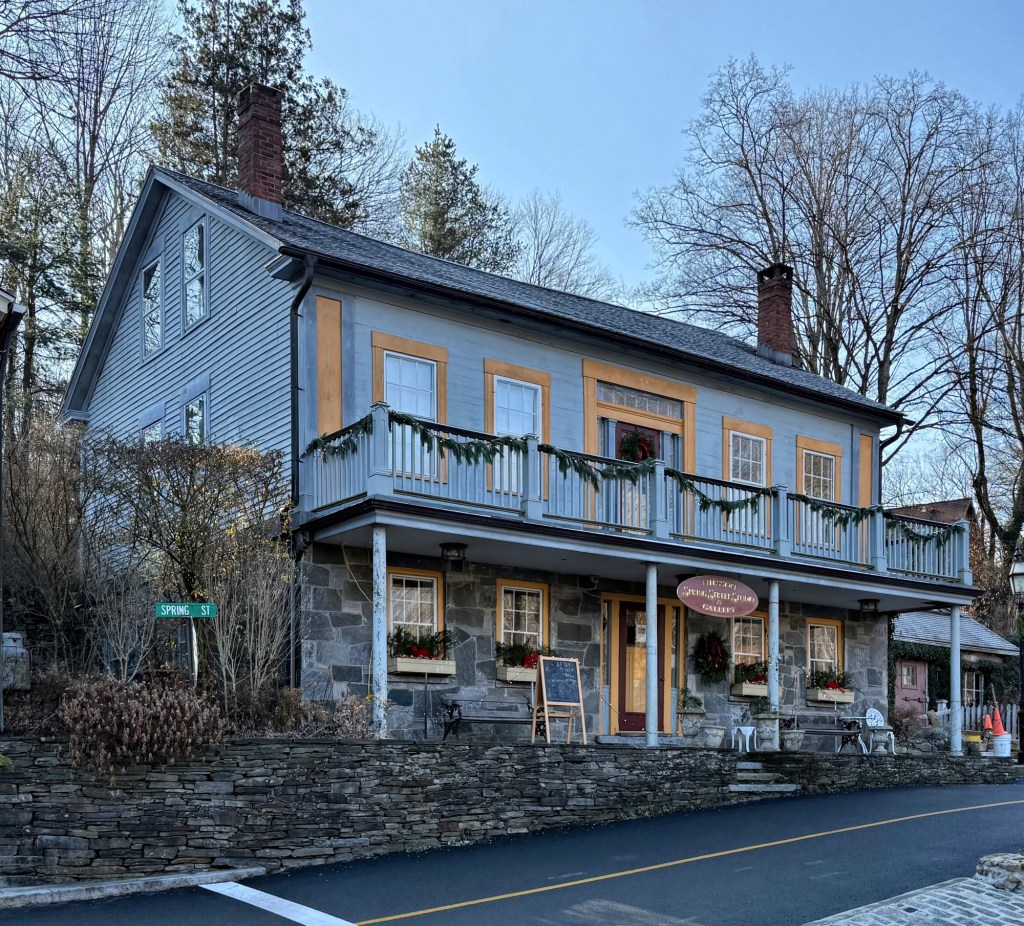
This altered building in the center of Chester Connecticut’s village Main Street, has historically been known as the Chester House, a hotel and tavern to provide lodging and drinks to travelers passing through the area in the mid-late 19th century. The structure, built atop a raised stone foundation, was constructed in the Greek Revival style around 1840, and long had a sheltered two-story portico supported by four monumental columns under a gabled roof which resembled a pediment. In 1903, a fire destroyed the upper floor and the roof was removed, creating a flat roof design. Later in the 20th century, a shallow side gable roof replaced the flat roof and the columns on the facade were also removed, giving the building the appearance we see today. The hotel closed, but the historic structure remains an anchor to the town’s vibrant commercial center, and houses a local business.

Chester Flatiron Building // 1913

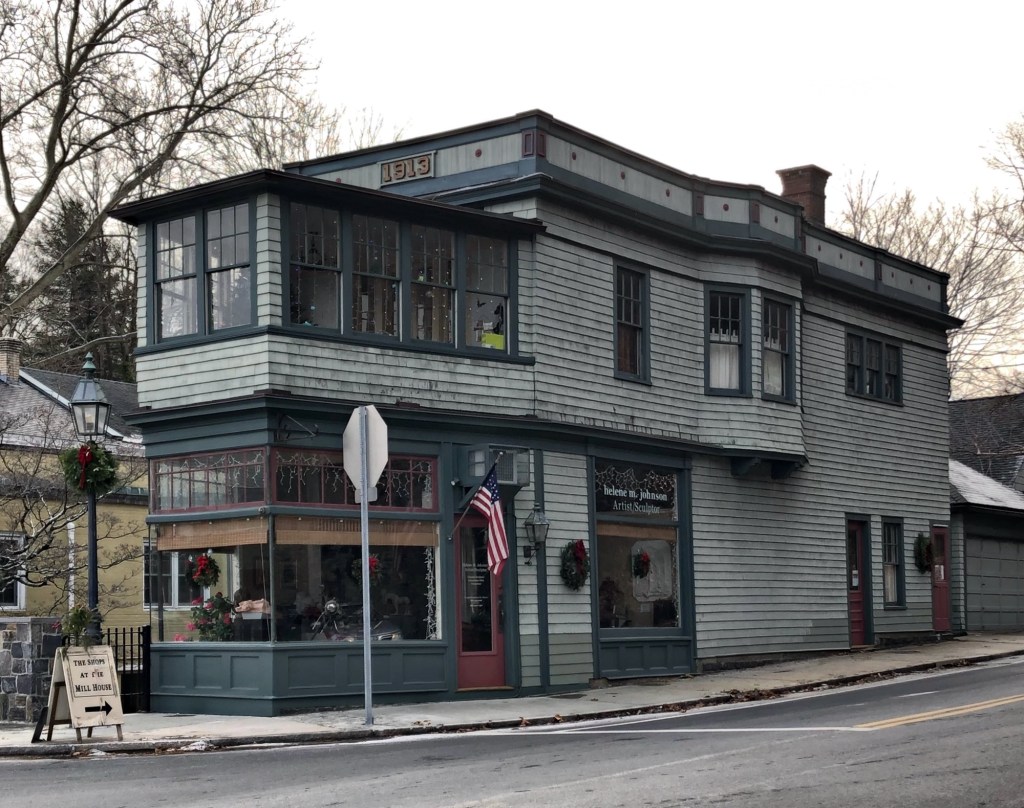
At the junction of West Main and Main Streets in Chester Village, Connecticut, this unique flatiron commercial building stands overlooking the Pattaconk Brook that cuts through the center of town. In 1913, this two-story block was built with ground floor retail and a second floor residence for owner, Elmer Pierce, who ran his pharmacy downstairs. By 1920, the building was owned by Jacob Feinstein, who raised his family on the second floor and had his clothing business, “Feinsteins” in the store below. Later, the retail space was occupied by Child Design, a wooden toy store, and after that, a lighting fixture store. Historic main street buildings are often incubators for small and local businesses, keep the chain stores near the highways!

Goodspeed Livery Stable // c.1870

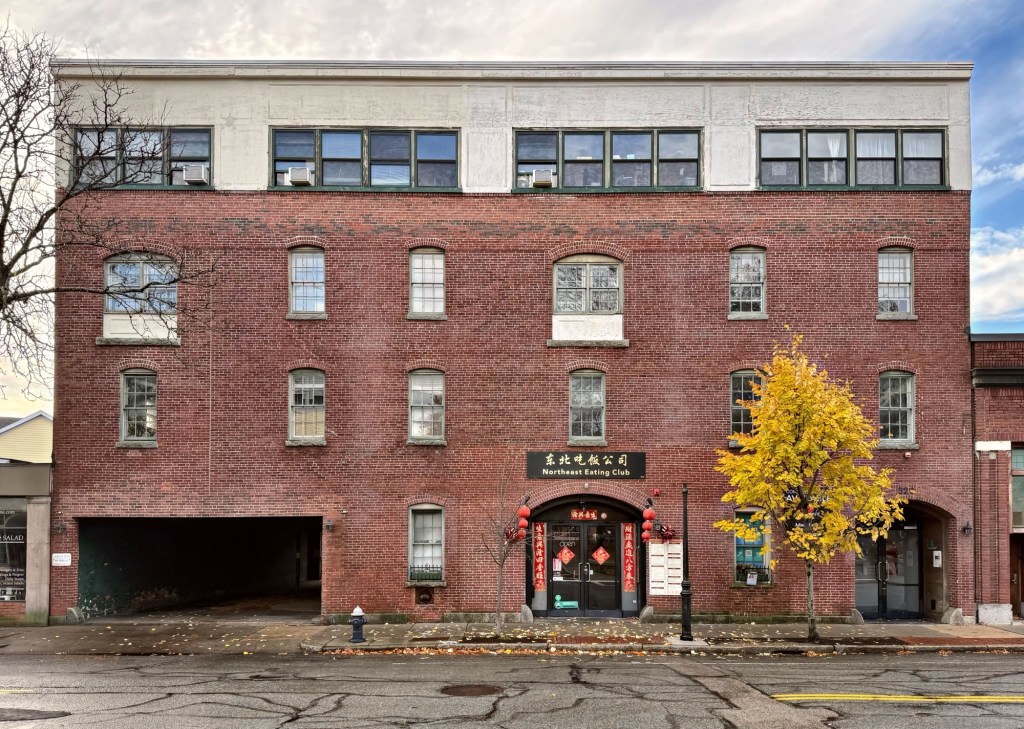
This somewhat unassuming brick building at 316-320 Washington Street in Brookline Village, which now houses offices and a Chinese barbecue restaurant, was for many years the home of a livery stable. Livery stables were facilities where horse owners would pay a weekly or monthly fee to keep their horses and sometimes carriages, with 24/7 staff who take care of and feed the horses. Liveries were essentially the 19th century equivalent of parking garages today, just with more hay and manure. This building was long-owned by Monroe Goodspeed (1842-1921) who originally found work with an express company, delivering packages by horse-drawn wagon. By 1874 Goodspeed was operating this stable, first in partnership with Grafton Stone, and later as sole proprietor. The building was originally a two-story wooden structure but was expanded by the 1880s and built of brick, to fireproof the building. Munroe Goodspeed was succeeded in the business by his son Carl, and remained in operation until the early 1930s. After this, the vehicular door was cut into the first floor for garage use and the upper floor was boxed off from the original gabled design. Two of the original wagon entrances remain on the facade and are now the entrances to the restaurant and to offices in the upper floors. 

Ousatonic Water Company Offices // c.1880

The Housatonic River (also spelled the Ousatonic) is, after the Connecticut and Merrimac, the most powerful river in New England. Its location in Derby, Connecticut, was seen as a benefit to local businessmen, who after the Civil War, created the Ousatonic Water Company. The new organization made up of industrialists and businessmen, set off to complete the Ousatonic Dam (on the Housatonic River) towards the end of 1870. The dam precipitated the rapid development of the industrial villages of Birmingham (Derby) and Shelton. Aptly built on the corner of Main and Water streets, this handsome Italianate style masonry building was constructed by the 1880s for the Ousatonic Water Company for their company offices. The company was absorbed into the Connecticut Light & Power Company in 1927. The former offices have since been repurposed for a local business.

Abington Savings Bank // 1930

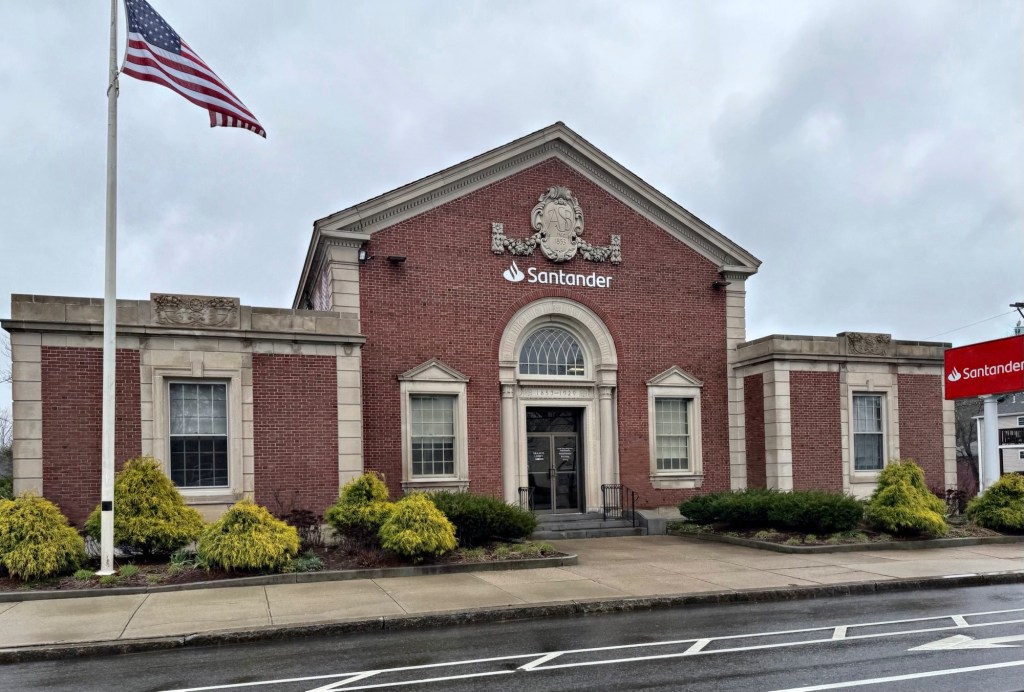
Built in 1930 for the Abington Savings Bank, this handsome Colonial Revival style building is located in the center of Abington, Massachusetts and has been a bank for almost 100 years! The bank was originally incorporated in 1853 and grew as Abington and adjacent towns saw suburban growth. The corporation hired the firm of J. Williams Beal & Sons, who specialized in commercial developments, to furnish plans for the building, resulting in the present structure. The firm also designed the Abington Mutual Fire Insurance Company Building (1931) across the street and the Dyer Memorial Library (1932), the town library. The brick and limestone building has three main bays, with the center rising above with a gable, resembling as a pediment of a Roman temple. In the gable, a shield with swags is adorned with the letters “ASB” (Abington Savings Bank) with the original incorporation date of 1853. The bank merged with others and eventually became a Sovereign Bank, and later Santander Bank, which remains in the building to this day.

Grader Block // 1885

Commercial districts and Main Streets in historic New England towns are full of amazing architecture that is meant for pedestrians. Strolling through these areas, the varied styles, materials, storefronts, and signage provides a sense of artistry and community that is impossible to achieve in suburban strip-malls and shopping centers. Historic buildings serve not only as visible anchors to communities, but are more often occupied by local, women, and/or minority-owned businesses compared to modern buildings and districts. Marblehead has many historic (sometimes Revolutionary-era) buildings that are commercial and contribute so much to the town’s vibrancy. This building was constructed in 1885 as a high-style Italian Renaissance Revival style commercial block, replacing a late 18th or early 19th century building. The Grader Block features a rounded corner, scored siding to resemble ashlar masonry construction, and Classically inspired design features like pilasters and pediments. Today, the storefronts are occupied by local small businesses.

Roswell B. Fitch Store // 1851

Roswell Burrows Fitch (1833-1908) was born in the seaside village of Noank to parents Elisha and Mary P. Fitch. At twelve years of age he commenced to be self-supporting, and from then until he was fourteen, occupied a clerkship in a general store in town. In his teens, summers were spent aboard ships fishing for a livelihood, and his winters attending school. Upon completing his education, he became clerk in a store, and was afterwards engaged to assume the management of a union store which was erected for the special purpose of being placed under his charge. This building was constructed as the union store in 1851 with eighteen-year-old Roswell becoming an active partner in the business. In his twenties, he slowly bought out, one-by-one, the twelve other owners, until he possessed absolute control. The eclectic Greek Revival and Italianate style building features classical detailing, but with a bracketed cornice and gambrel roof which is capped by a parapet. Mr. Fitch retired from business in 1890 and got to work “Victorianizing” his nearby home. Stay tuned for the next post which features his home in Noank.

Thompson Block // 1868

Another of Portland’s stunning mid-19th century commercial blocks is the Thompson Block, built in 1868. The structure is one of the most high-style commercial buildings in Maine and is in a great state of preservation. The building was designed by George M. Harding, a VERY busy architect after the disastrous Great Fire of 1866, which destroyed much of Downtown Portland. The building stands three-stories tall with a polychrome slate mansard roof providing a full fourth floor, a subtle and great way to get extra height without making a building too overbearing. The mansard is broken up at the facade by dormers with round-arch windows and keystoned and eared hoods. If only all cities held off urban renewal, we would have so many more structures like this!

Rackleff Block // 1867

Late 19th century commercial architecture in downtowns all across New England always transport me to the past because they evoke the days of carriages in the streets and the hustle and bustle of post Civil War American cities. After Portland’s Great Fire of 1866, many standing or damaged wooden buildings were replaced with fireproof construction in the event of another conflagration. Five years before the Great Chicago Fire, this was the greatest fire yet seen in an American city. It started in a boat house then spread across the city. Amazingly, only two people died in the fire, but ten thousand people were made homeless and 1,800 buildings were burned to the ground. This is one of the buildings constructed in the rebirth of the downtown/waterfront of Portland. The Rackleff Block was built in 1867 from plans by architect George M. Harding, who designed the building with details reading Italianate and Victorian Gothic. The building retains its original cast iron storefronts and ornate cornice with brackets.