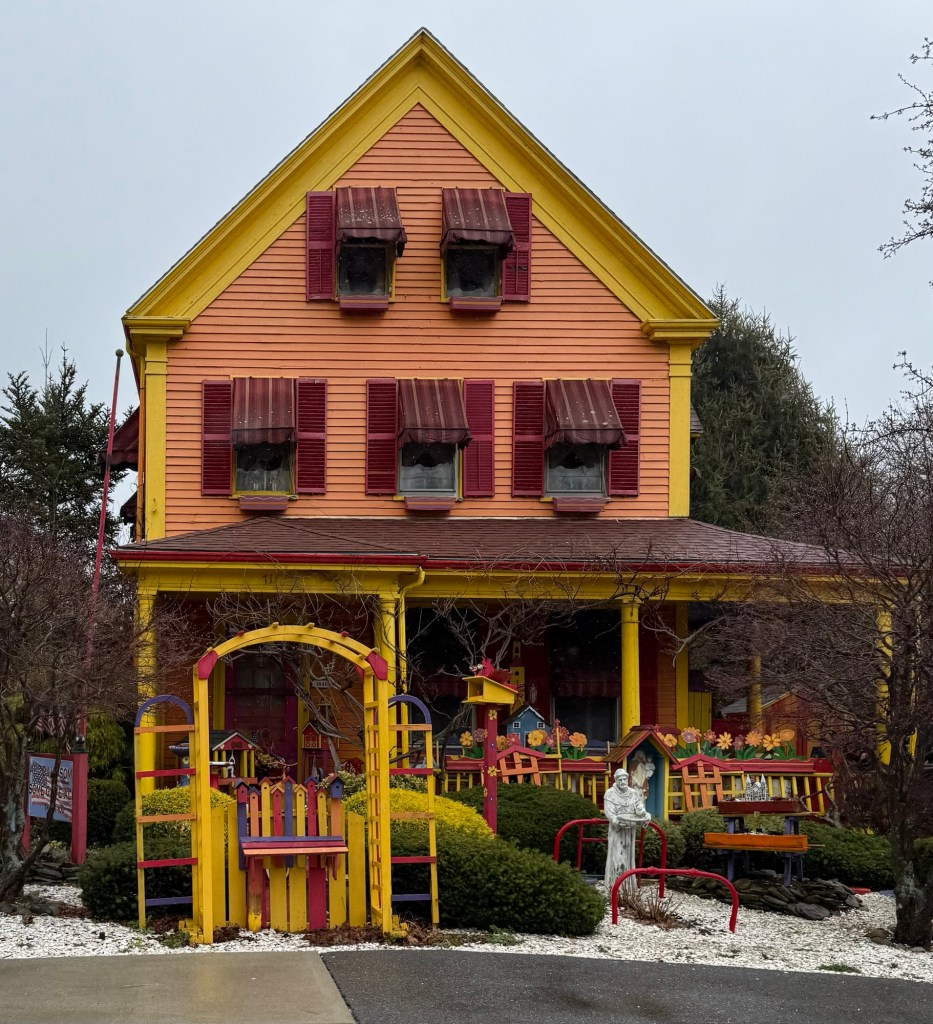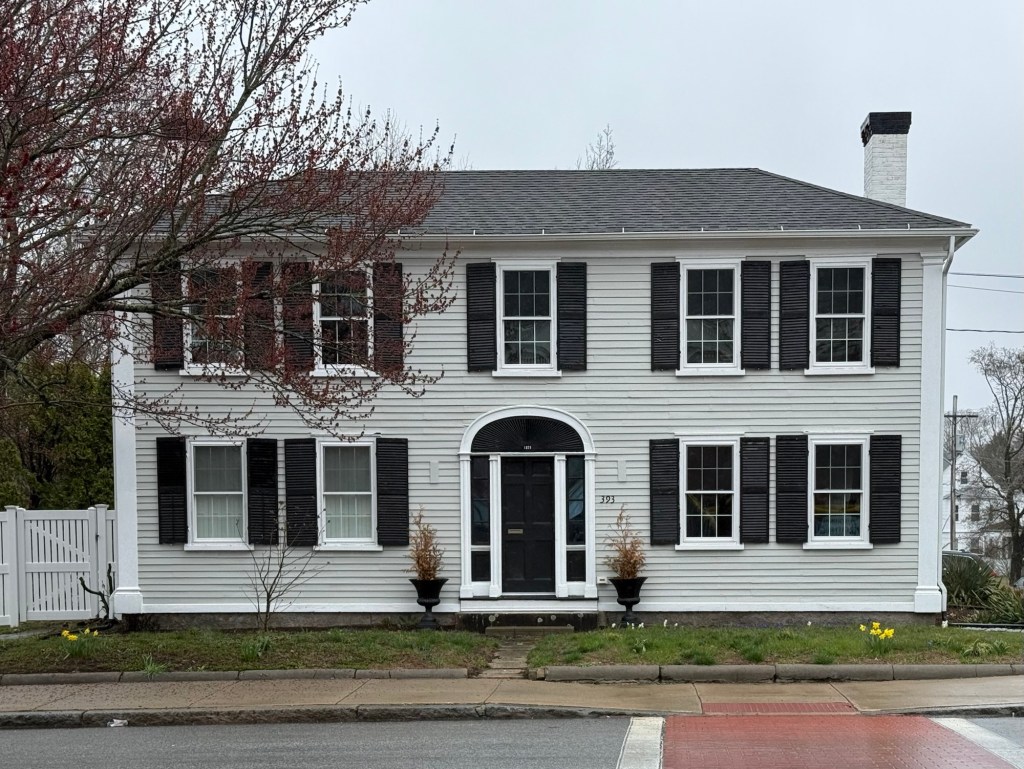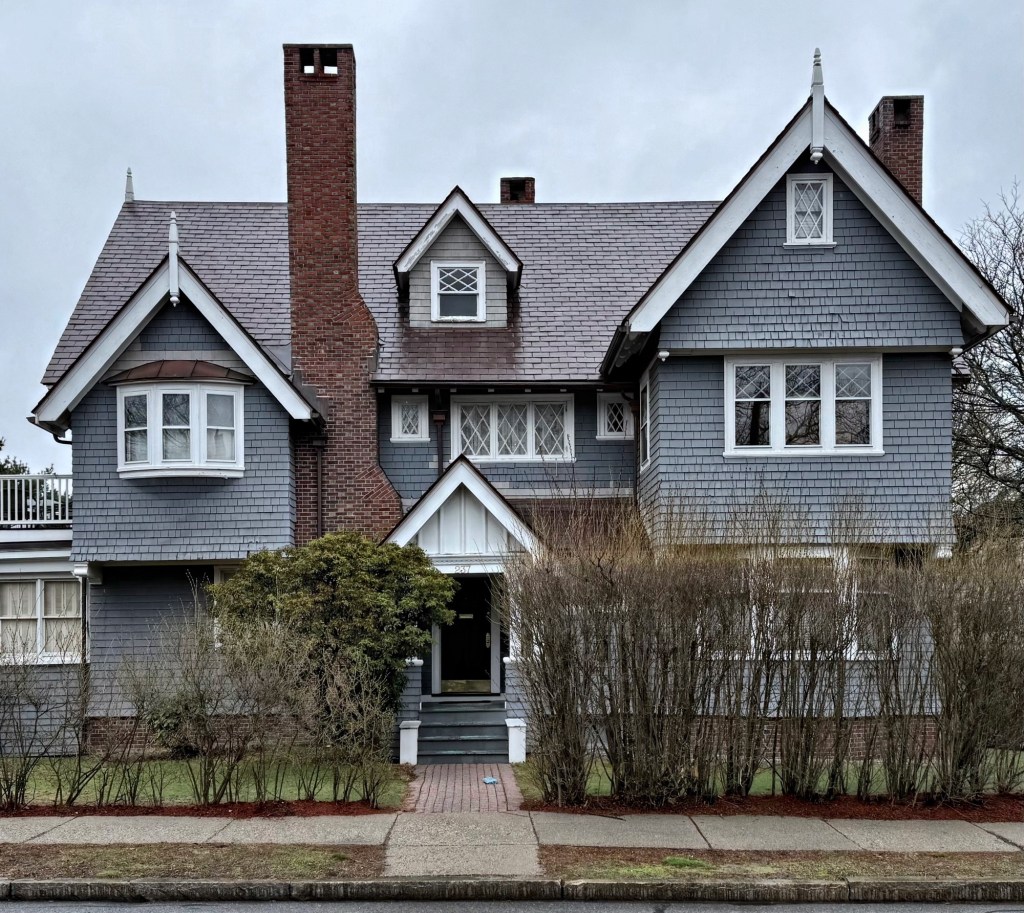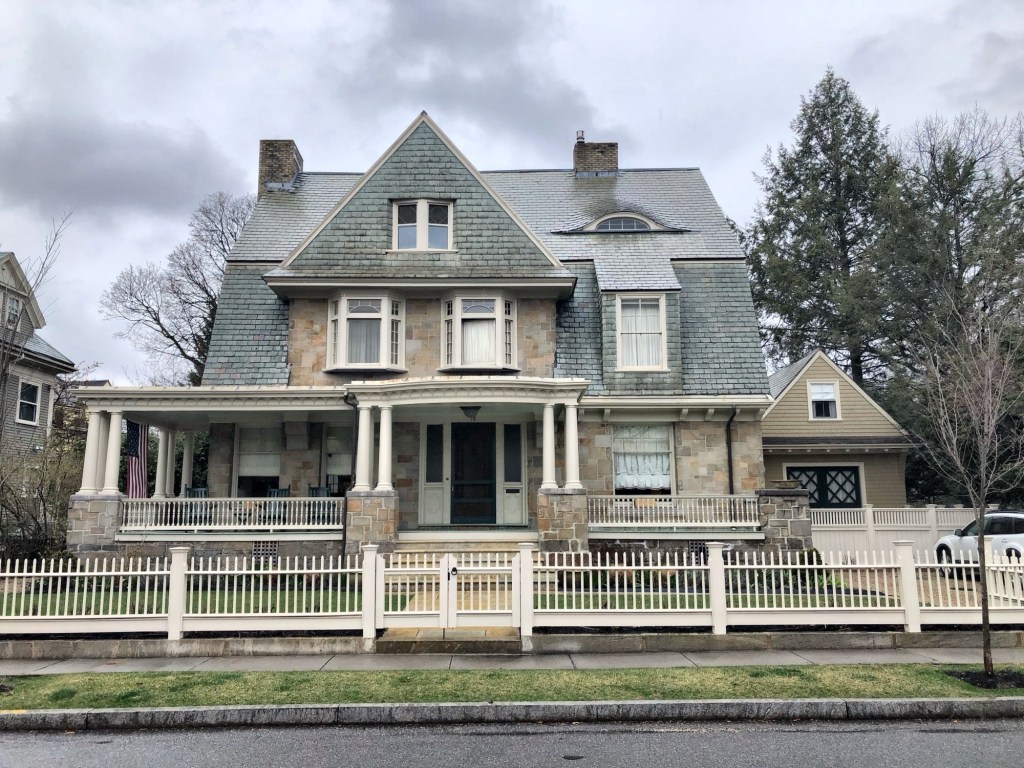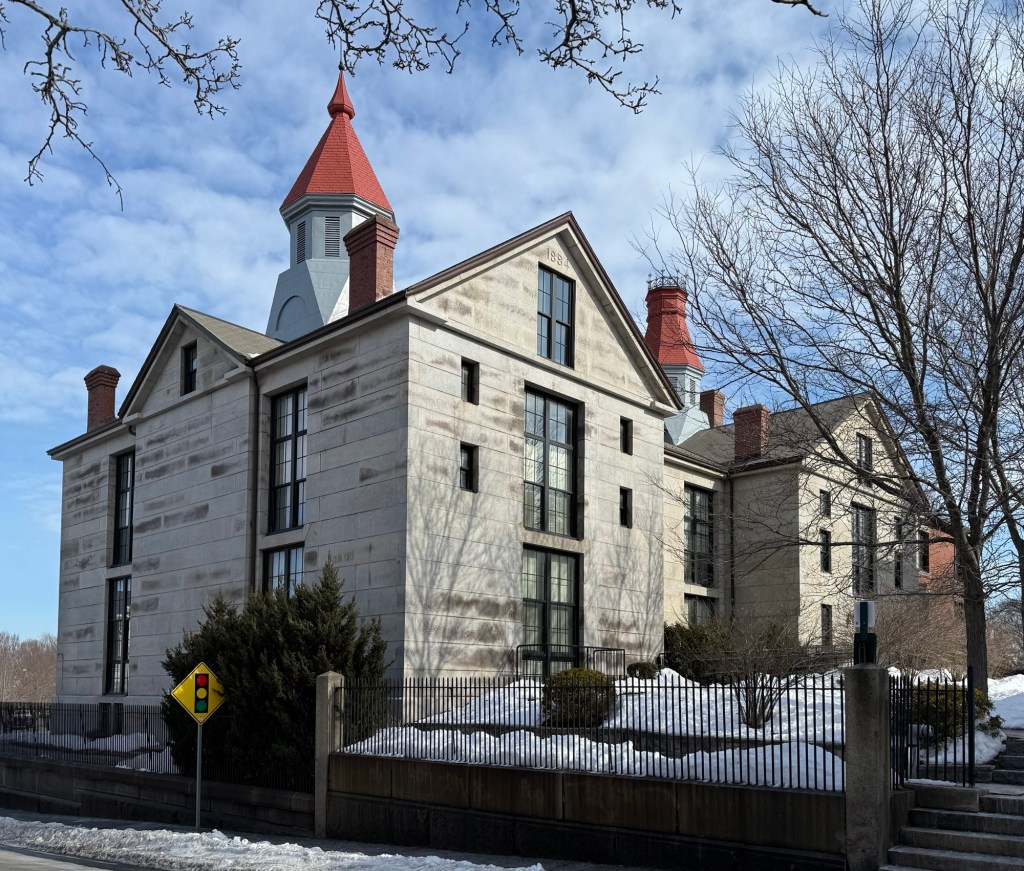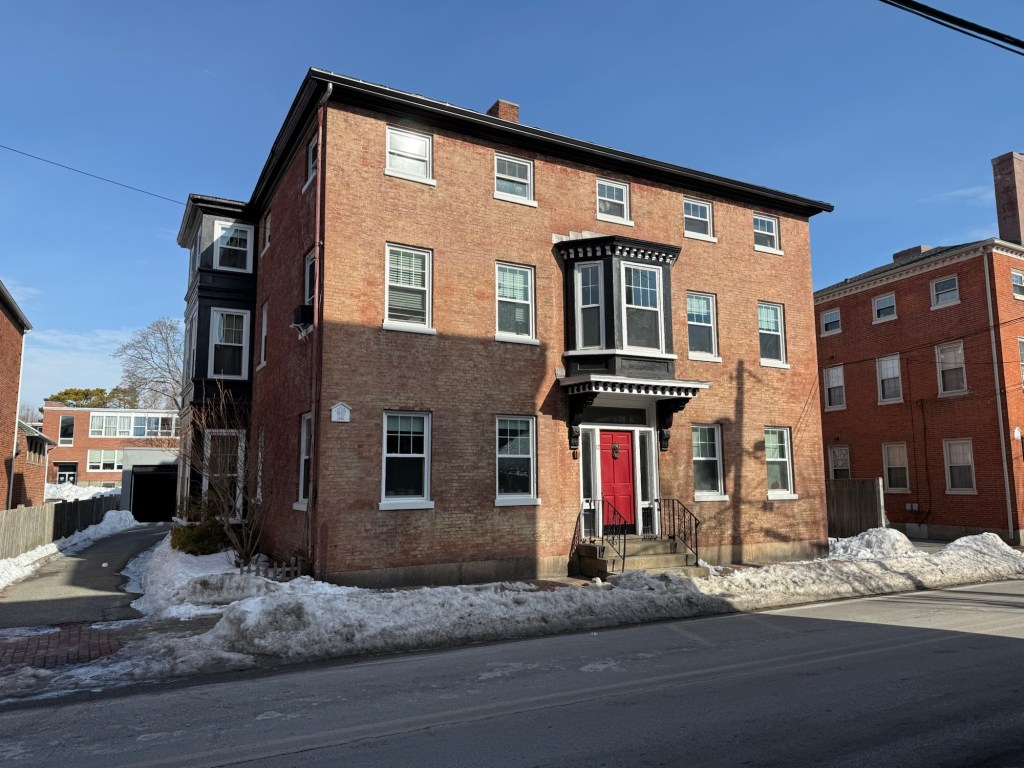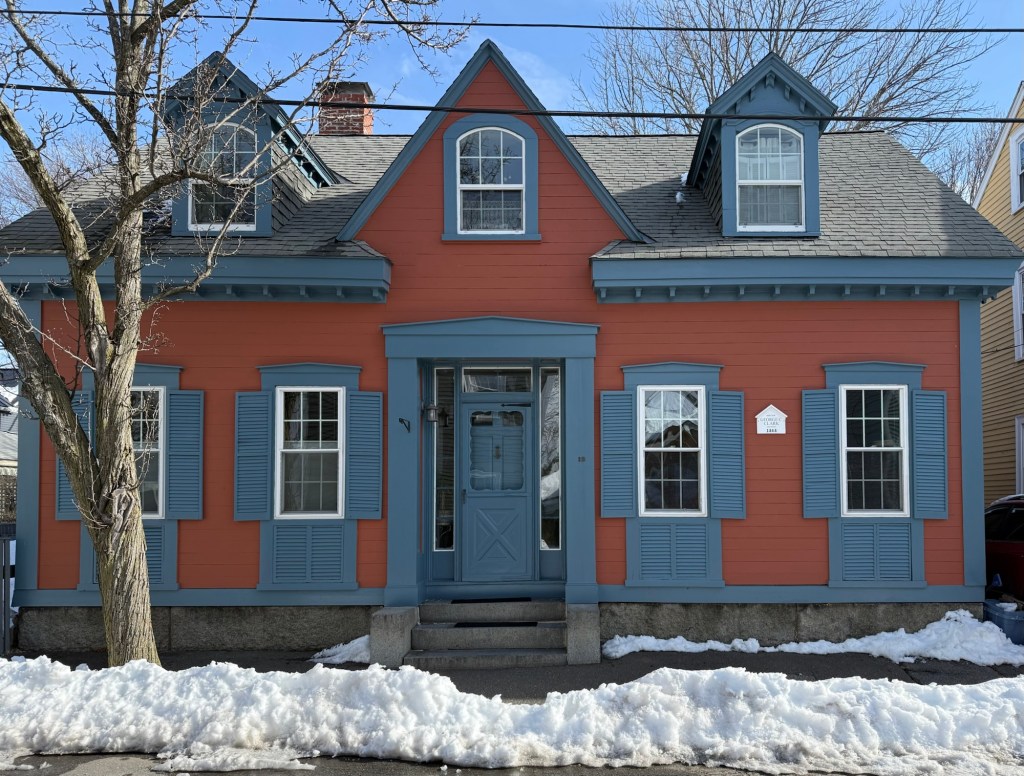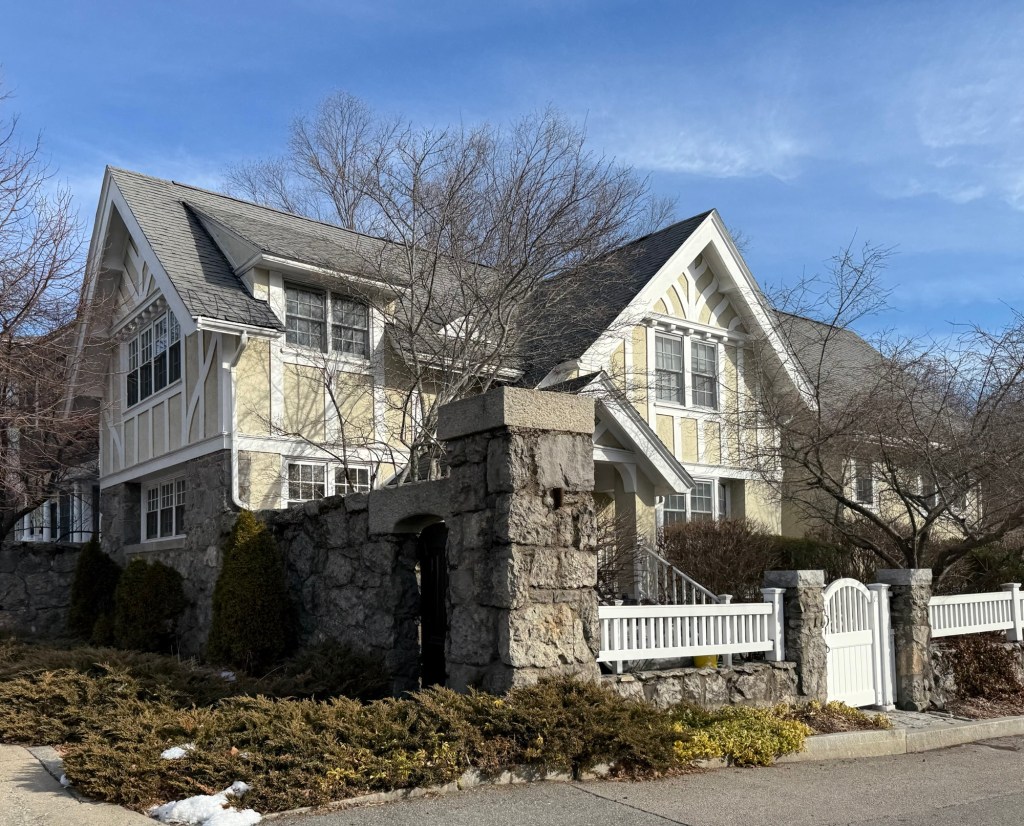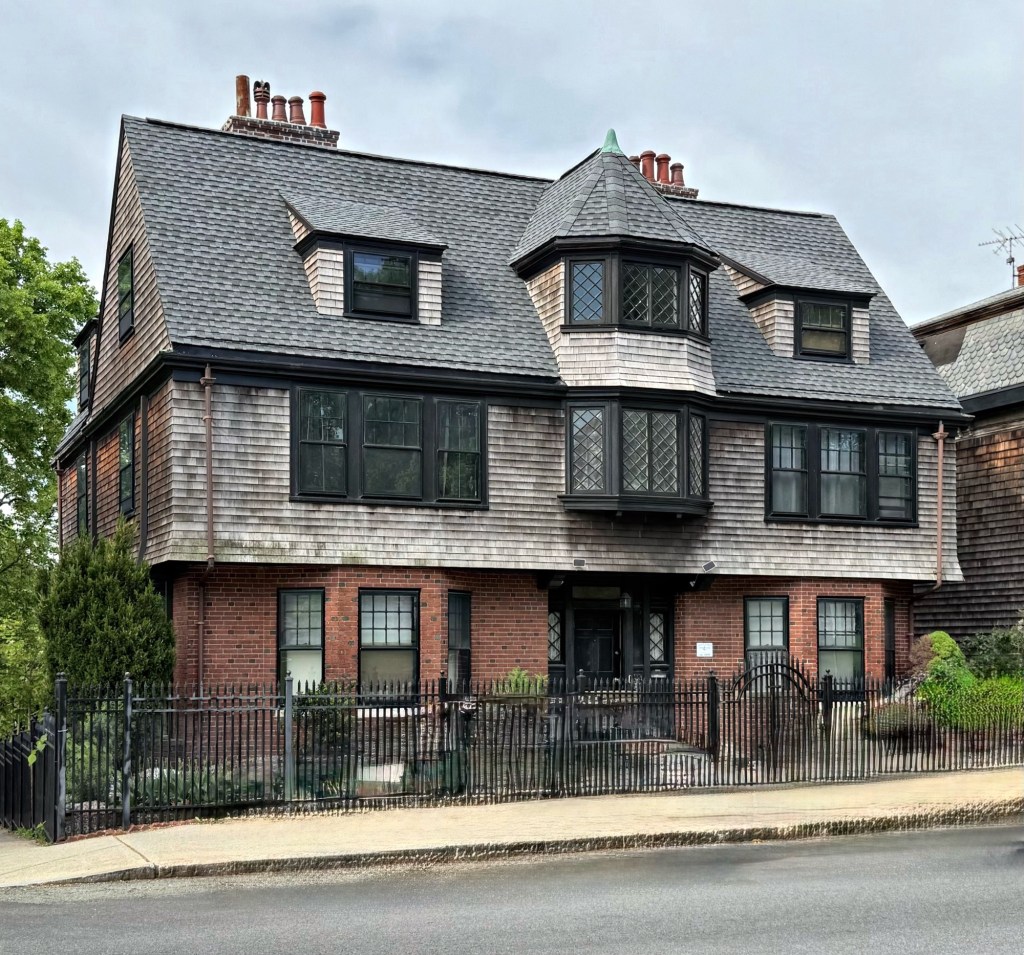
Edward Bellamy House // c.1840

The Edward Bellamy House is the only National Historic Landmark in Chicopee, Massachusetts. Its landmark designation was in honor of journalist and Utopian writer Edward Bellamy (1850–1898), whose home it was for most of his life. The house is located on Church Street in Chicopee Falls, an industrial village in town, which developed around mills and the Chicopee River. Built in for Harmon Rowley, a town selectman and local merchant around 1840, the house would later be purchased in 1852 by Rufus King Bellamy, a Baptist minister, moved the family into this house after its construction. The house, where Edward Bellamy spent much of his childhood is a well-preserved example of a late-Greek Revival residence, and today serves as a museum with rented offices that explores Bellamy’s ideas on social reform, economic justice, and the future of society. From this house, Edward Bellamy wrote  Looking Backward, a utopian novel that was instantly popular. Within a year it had sold 200,000 copies, and by the end of the 19th century had sold more copies than any other book published in America up to that time except for Uncle Tom’s Cabin by Harriet Beecher Stowe and Ben-Hur: A Tale of the Christ by Lew Wallace. His visionary work, which proposed a world free of poverty and class divisions, sparked a nationwide movement and influenced early American socialism. Edward Bellamy died of tuberculosis at his home, ten years after the publication of his most famous book. He was 48 years old. Today, the house stands as a reminder of Bellamy’s lasting legacy and his role in shaping conversations about social progress in the late 19th and early 20th centuries.

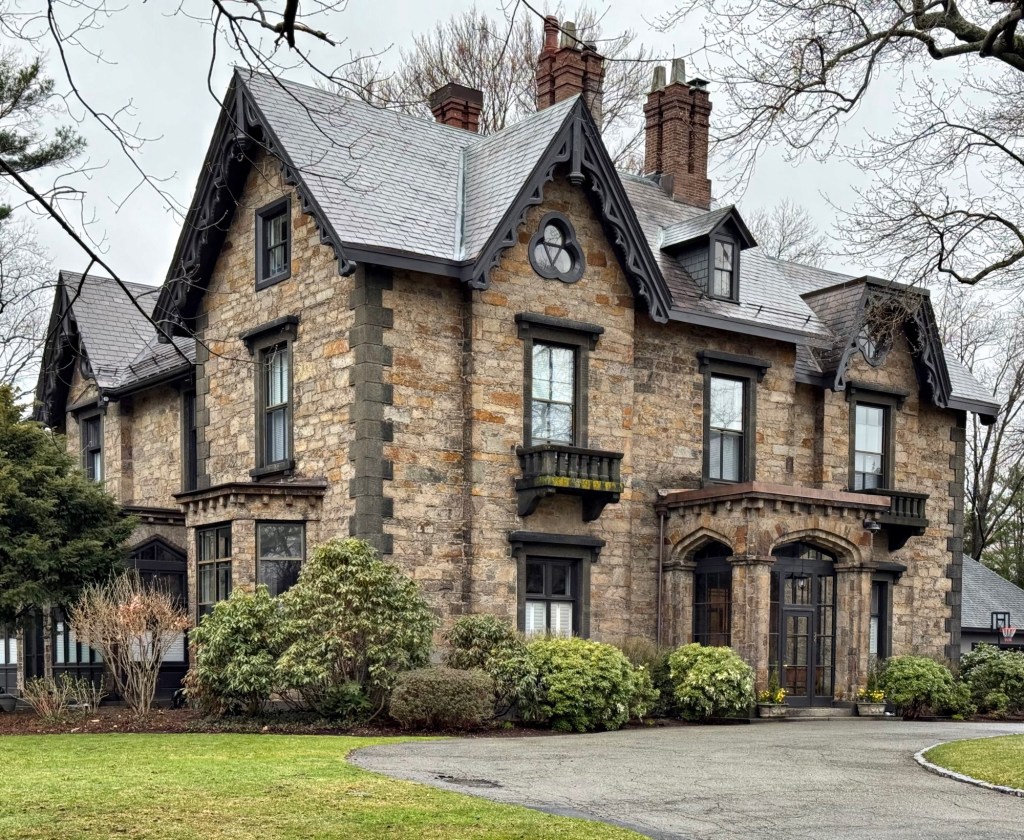
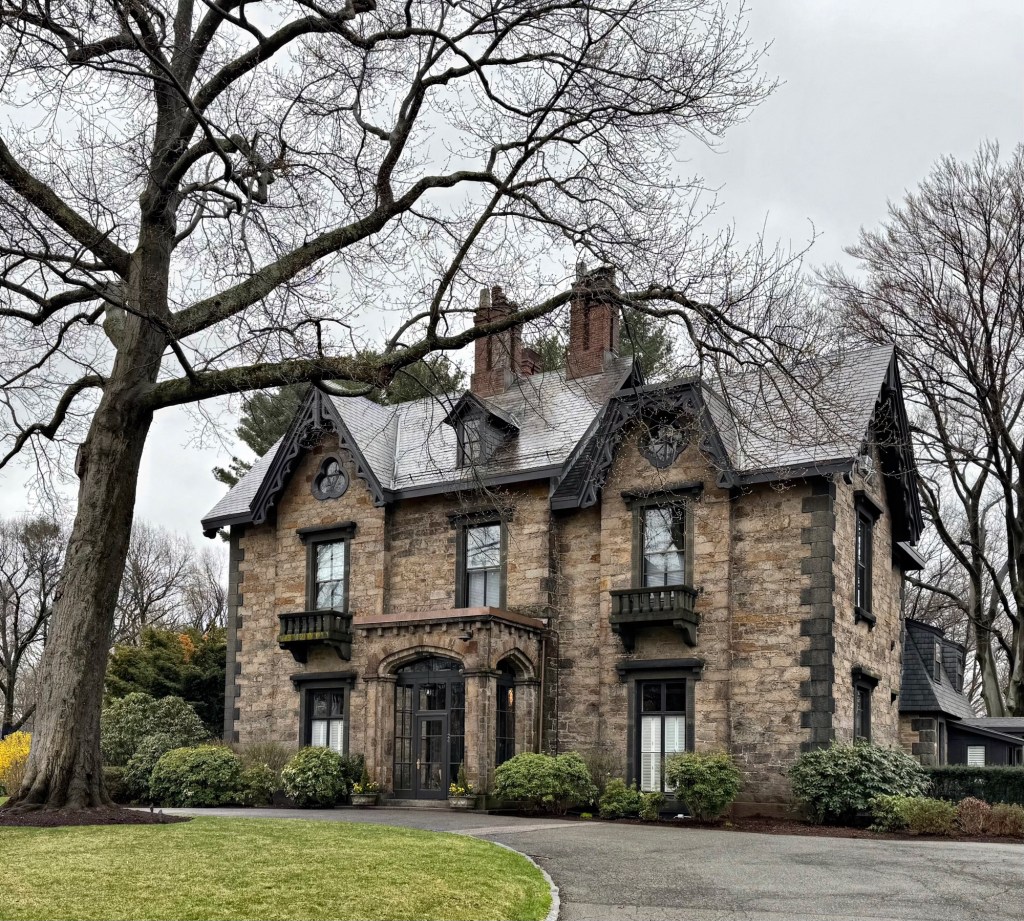
Glen Magna Farms // c.1790

Glen Magna Farms is a historic estate located in Danvers, Massachusetts, and it is one of the lesser-known historic properties of this stature. During the War of 1812, Joseph Peabody, the wealthiest Salem shipping merchant of his day, bought a 20-acre Danvers farm with a dwelling house. The c.1790 house was likely updated at this time in a higher example of the Federal style, and used as a summer residence the family would escape to during the warmer months. Peabody purchased additional property and Glen Magna grew to over 130-acres. William Crowninshield Endicott, who served as Secretary of War during the Grover Cleveland administration, married Ellen Peabody, granddaughter of Joseph Peabody in 1859. The couple would inherit Glen Magna and later hire the firm of Little, Browne, and Moore in the 1890s to renovate the mansion and update the gardens. Ellen Peabody Endicott would also have the Derby Summer House added to the grounds by 1901. In 1963, the Danvers Historical Society purchased the house and eleven acres of surrounding gardens which they painstakingly restored to their early 20th century condition. Glen Magna can now be rented out for weddings and other events!

Jeremiah Page House // 1754

In 1754, a 32-year-old brickmaker Jeremiah Page built this large, gambrel-roofed Georgian house in Danvers, Massachusetts, for his young family. Jeremiah and his first wife, Sarah, raised nine children here and dreamed of liberty from England. Following the Tea Act, passed by British Parliament in 1773 that granted the British East India Company Tea a monopoly on tea sales in the American colonies, Page was said to have demanded that “none shall drink tea in my house.” One evening when her husband was out, Sarah Page is said to have invited several women from the neighborhood up to the porch atop the Page House’s gambrel roof to enjoy tea. Larcom quotes Page as telling her friends, “Upon a house is not within it,” thereby finding a loophole around her husband’s directive. This legend was enshrined in the poem “The Gambrel Roof” (1874) by Lucy Larcom, who knew Sarah Page’s granddaughter. Jeremiah Page would fight in the Revolution, serving as a Captain. The Page House remained in the family for two more generations, Sarah Page’s daughter in-law, Mary Page died in 1876 and her will put the property into a trust with the stipulation that once there were no longer any Page descendants to live there, the historic house was to be torn down. After Mary Page’s daughter Anne Lemist Page died in 1913, the trustee planned to demolish it according to her wishes. The Danvers Historical Society sprung into action and sued to oppose the will, fighting to preserve this significant home. They won, and relocated the home a block from Elm Street to its present site on Page Street, where it stands today. The Danvers Historical Society maintain the structure to this day, including the “porch” at the roof where the tea party once took place.

Kennard Estate // 1907

A significant house and grounds are tucked away, hidden off Dudley Road in Newton, Massachusetts. This is the Kennard Estate. Frederic Hedge Kennard (1865-1937) was born in Brookline and attended Harvard College. He did graduate work for a time at the Bussey Institution and the Lawrence Scientific School, and entered the employ of Frederick Law Olmsted, the noted landscape architect, with his office in Brookline. By 1906, he decided to open his own landscape architecture office, opening locations in Boston and Philadelphia. He would purchase this expansive wooded property, and had this house built by 1907. He laid out the grounds, creating paths and gardens on the property and planted native trees. It is unclear who designed the house, sadly. Mr. Kennard was also a noted ornithologist (an expert on birds) and would host visiting scholars at his home, walking the grounds and studying birds there. After his death in 1937, the property was inherited by his son, Harrison Eisenbrey Kennard, and ultimately willed to the City of Newton upon his death in 1982. Since then, Newton Parks and Recreation have maintained the house (though they could be doing more to preserve it), and opened the grounds as Kennard Park, a free public park comprised of wooded trails and streams.

Spofford-Root House // c.1830

The Spofford Family was one of the earliest to settle in present-day Georgetown, with the earliest enclave of homes built along Andover Road in the western part of town. A few generations later, subsequent family members would built in the town center, taking advantage of the growing commercial and business community. This Federal period home (with later alterations) was built around 1830 for Greenleaf Spofford (1801-1887) the same year as his marriage to Emily Willmarth. The couple would move out of town and sold the home to Dr. Richmond Barbour Root (1846-1930),  the second of a highly respected, three generation family to practice medicine in Georgetown. The overlay of machine-sawn Stick Style decorative porch, bracketed cornice and bay windows were likely added by Root sometime after the Civil War. Unlike most owners of Federal and Greek Revival-style dwellings, Dr. Root may have held a valid professional interest in appearing as up-to-date as possible with a “modernized” home that also served as the site of his office and consulting rooms.

Moody-Hall House // 1830

Transitional Federal/Greek Revival style houses are among my favorite. You can see the emergence of Classical architecture blending with American architecture with features of both styles, which work well together. This example can be found on Elm Street in Georgetown, Massachusetts. The dwelling appears to have been built for Dr. George Moody, one of four physicians in Georgetown in 1840, who began his practice in town in 1830. In his first years there, he oversaw patients during Typhus and Dysentery outbreaks and was credited with having determined that a high sulphur content in the local water supply accounted for the increased cases. Dr. Moody died in 1866, and his widow continued to live in the house until her death in 1880, after which it was sold to Mrs. Charlotte Sawyer Hall, the widow of local shoemaker Seth Hall.

Eleazar Spofford House // 1765

One of the many pre-Revolutionary homes in Georgetown, Massachusetts, the Spofford House is located on Andover Road, an important route which was occupied by many residences of the Spofford Family. In 1667,  John Spofford and his family became the first permanent (European) residents in what would become Georgetown. Generations later his ancestor, Eleazar Spofford (1739-1828) would build this home in 1765 to be occupied by his new wife married that year, Mary Flint, and their new family. The Georgian farmhouse has been significantly altered since its original date of construction, but retains its general form and character even with later 19th and 20th century additions, porches, and windows. The Spofford’s had six children in this home and would later move to Jaffrey, New Hampshire after the Revolution, but returned and settled in nearby Groveland. Later generations of the Spofford’s would live-in and modify the home until it finally sold out of the family in the 20th century.

Wyman Tavern // c.1780

This large Colonial house sits on the Ashby town common adjacent to the town’s meetinghouse. The structure was built by Abijah Wyman, a Captain in the American Revolution, in about 1780 as a family home. In 1803 a turnpike was established and was well travelled by heavy wagons and stagecoaches travelling between Boston, NH, and VT. Taking advantage of the location, Abijah’s son John expanded the building and began operating a tavern from the house. It would become a drinking establishment, post office, and inn during the 19th century. Later owners modified and expanded the building further, adding a porch and connecting the tavern to the barn. The building is now occupied by commercial uses including the local post office!

Fred Holland Day House // 1892

The Day House is a significant landmark in Norwood, Massachusetts. Originally built in 1861 for Lewis Day (1835-1910), a wealthy Boston leather dealer who was born in town. The house was a two-story Second Empire style mansion with mansard roof and detached stable. During 1890-92 the Day House was rebuilt at the direction of the Lewis’ son, F. Holland Day, who hired Boston architect J. Williams Beal to remodel the house in the Tudor Revival style. Fred Holland Day (1864 – 1933) was a prominent photographer and publisher and was an early and vocal advocate for accepting photography as a fine art. Day’s life and works were controversial because he took an unconventional approach to religious subjects and often photographed males nude sometimes the photos being homoerotic, leading many to speculate he was gay, though he never “came out”. Fred Holland Day died in 1933 and the house is today owned and managed by the Norwood Historical Society as a historic house museum.

Bigelow-Stuntzner House // 1896

The Bigelow-Stuntzner House is a large, Colonial Revival style dwelling located on a side street in Norwood Center. The house was completed in 1896 for Waldo H. Bigelow (1856-1926), a lumber dealer with offices in Boston. Mr. Bigelow clearly used the best lumber for his own residence here in Norwood, and his Colonial Revival style house stands out for its gambrel gable which exhibits a modified Palladian window with diamond-shaped panes and a key stone arch. The central entrance is sheltered by a portico supported by Tuscan columns. In 1919, the house was sold to Guido Stuntzner (1876-1964), a German immigrant who arrived in the U.S. in 1887 and went on to become a successful Norwood businessman. The Stuntzer’s lived in the home through at least the 1960s.