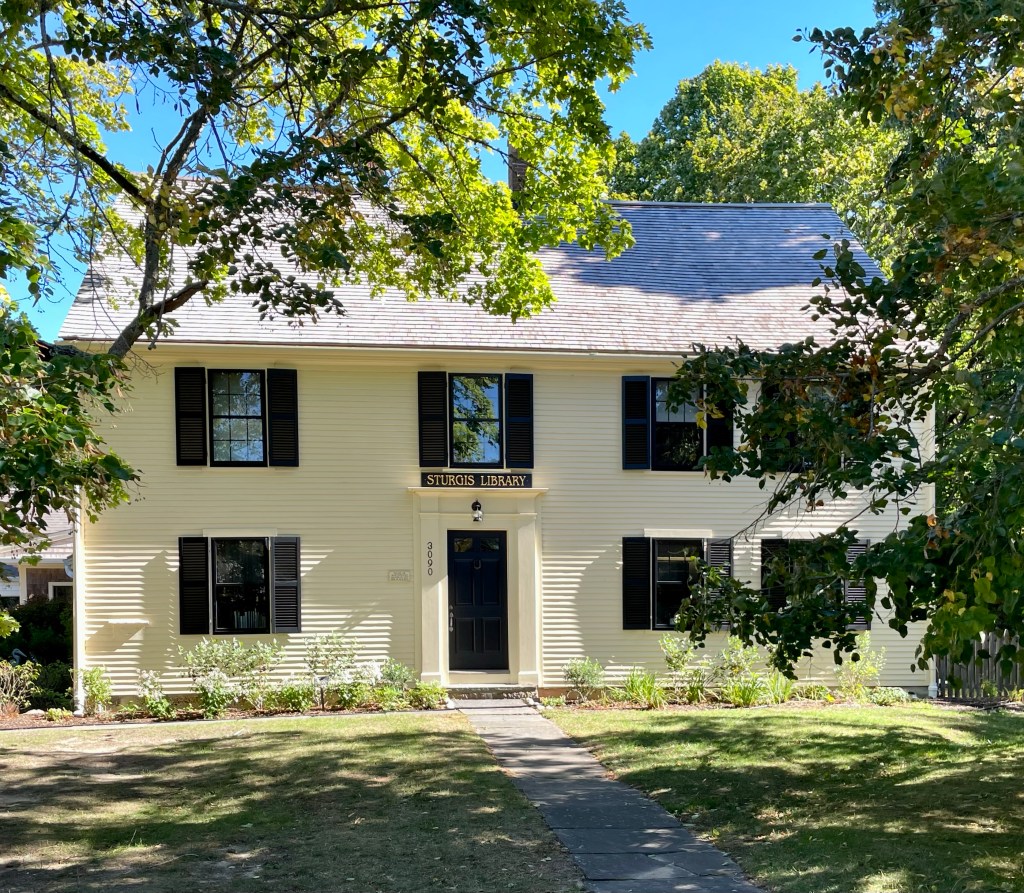
Sturgis Library // 1644

The original section of this building was the second dwelling house of Rev. John Lothrop (1584-1653), one of the first European settlers who settled in present-day Barnstable in 1639. The oldest part of this structure, built in 1644 (yes you read that correctly), is possibly the oldest extant house in the Town of Barnstable. The home was constructed as 21 feet long and 29 feet deep with a chimney on the west side of the house. Perhaps John Lothrop’s principal claim to fame is that he was a strong proponent of the idea of the Separation of Church and State (also called “Freedom of Religion”). This idea was considered heretical in England during his time, but eventually became the mainstream view of people in the United States of America, because of the efforts of Lothrop. His descendants today include six former presidents, Louis Comfort Tiffany (of the stained glass fame), J. P. Morgan, Clint Eastwood, Henry Wadsworth Longfellow, and many more recognizable names! The house was eventually owned by Isaac Chipman in the 19th century, and he modified the house close to its current conditions, adding on numerous times.

Captain William Sturgis, a mariner, businessman and politician, who was born in the house, purchased the property in 1862 from the heirs of Isaac Chipman. Sturgis left $15,000 along with this property in a trust to be gifted to the people of Barnstable for a public library. The library opened in 1867 in his honor, with 1,300 books. As the old Lothrop House is incorporated in the building, it makes the Sturgis Library the oldest building housing a public library in the USA. A great claim to fame for this town!


Ebenezer Lothrop House // c.1771

Ebenezer Lothrop (1743-1815) purchased land on the Old Kings Highway in Barnstable for 63 pounds, 6 shillings , 8 pence from Sturgis Gorham in 1771, building a home soon after. The old house was likely built as a one-story half cape with a door on the side with two windows to its left. When the house was moved in the 1820s by Ebenezer’s heirs, it is possible the second floor was added, which was followed later by the rear wings and wrap-around porch. The home is very well preserved and is excellently located on a raised lawn.

Daniel Davis Homestead // 1739

In 1739, recently married Daniel Davis (1713-1799) and Mehitable Lothrop Davis (1717-1764) inherited land in Barnstable Village from Mehitable’s father Thomas as their wedding present. The young couple broke ground on a new family home that year. Daniel Davis fought in the American Revolution and was was a selectman, assessor, town clerk, and treasurer for Barnstable and represented it at the Massachusetts House of Representatives and Council. Davis also held the position of Guardian of the Mashpee Indians, a position begun in 1746 when Massachusetts appointed white guardians to manage each Indian reservation in the province, the Mashpees protested. Daniel Davis died in the home in 1799. The house retains much of its original design from the multi-pane double-hung windows to the large, central chimney.

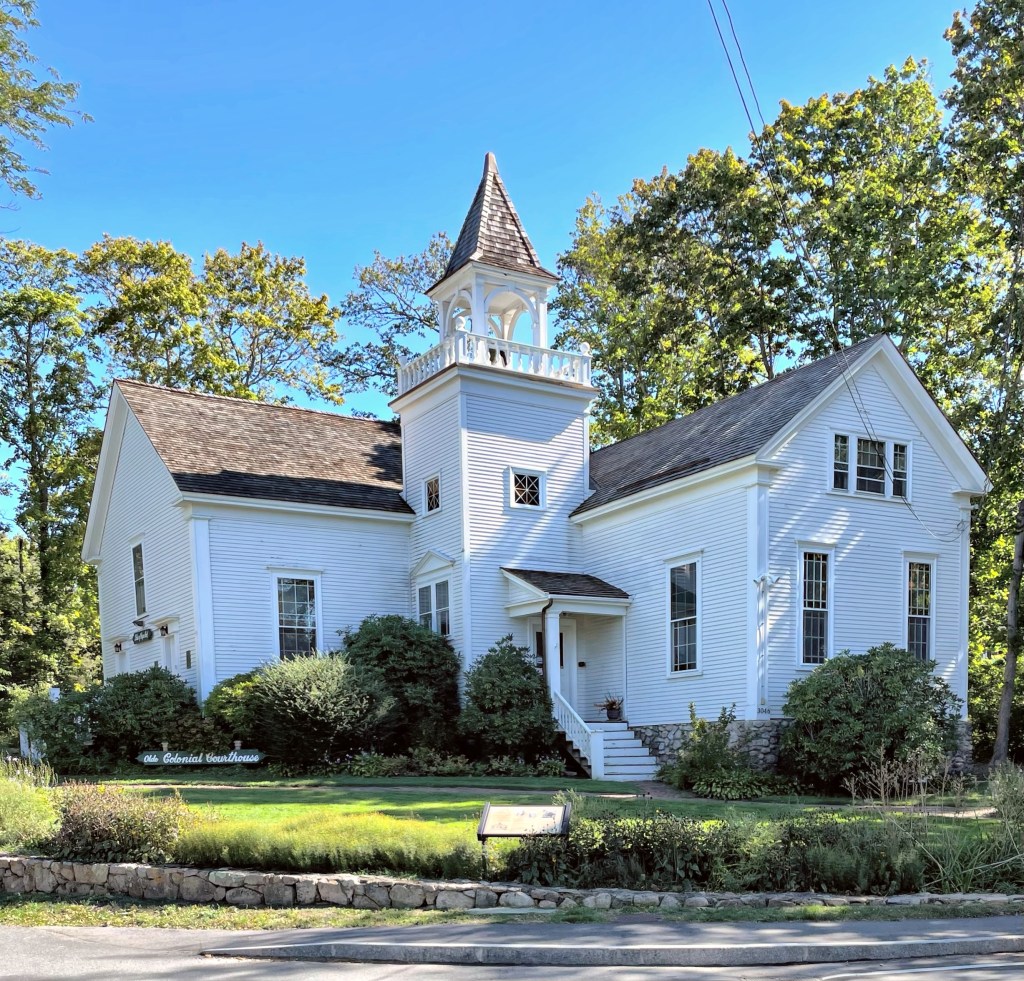
Barnstable Olde County Courthouse // 1763

This historic building was constructed in 1763 as the Barnstable County Courthouse replacing an even earlier courthouse building that was outgrown in the village. The building served primarily as a courtroom with jury deliberations carried out in one of the nearby taverns. Additionally, large town meetings were sometimes held in this building until it too was outgrown. This courthouse was the site of a mass protest on Sept. 27, 1774, after Britain revoked Massachusetts Bay’s 1691 charter — one of a series of Coercive Acts intended to punish the colonists for the Boston Tea Party the previous year. As a result of the protest, all Barnstable county officials agreed to ignore Parliament’s new rules, effectively freeing Cape Cod of British control. The significance of this building cannot be understated as the building is one of only two remaining Massachusetts colonial-era courthouses where such protests occurred. The county dedicated its new courthouse in the 1830s, consolidating all court functions in a large, granite structure closer to the present center of Barnstable Village (featured previously). This building was acquired by the Third Barnstable Baptist Church, who renovated the building at the time and again in 1905. After the church was disbanded in 1972, the building was purchased by Tales of Cape Cod, a nonprofit volunteer group committed to preserving the Cape’s history. What a building to be based out of!

Barnstable County Courthouse // 1831

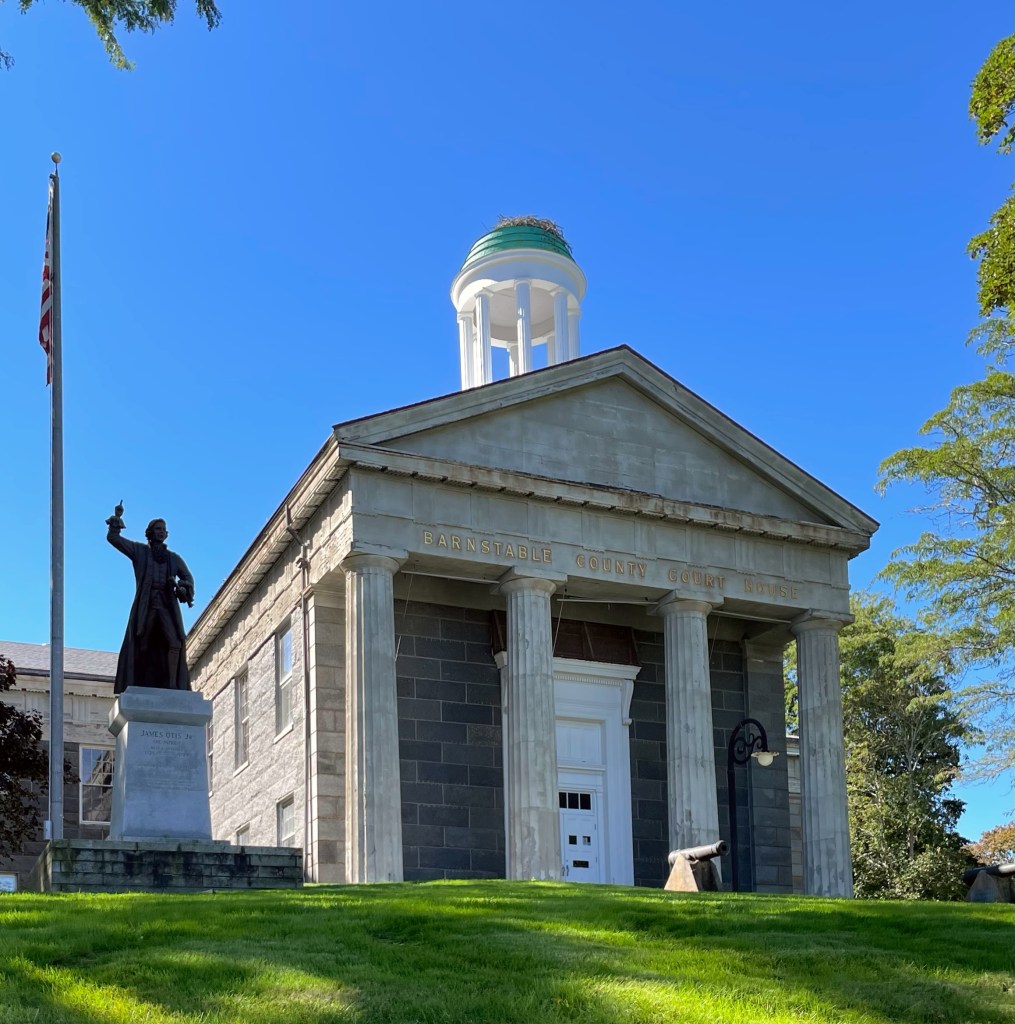
Perched atop a hill in Barnstable Village, the old town center of the historic Cape Cod town, the Barnstable County Courthouse sits proudly as a well-preserved example of the Greek Revival architectural style in a civic building. The building was constructed in 1831 from plans by renowned architect Alexander Parris, who designed the iconic Quincy Market in Boston just years earlier in the same style. Due to its highly visible location along the Old King’s Highway and public function, the courthouse was likely instrumental in popularizing the Greek Revival style on the Cape. The building was constructed of Quincy granite with a portico and fluted Doric columns made of wood fashioned to look like stone (which fooled me from the street). The building has been expanded five times between 1879 and 1971, with each addition made cognizant of the architectural significance of the building. At the front of the building, two bronze statues of Mercy Otis Warren and James Otis, Jr frame the building. The Barnstable Superior Court is located in the building today.

Langham Court // 1991

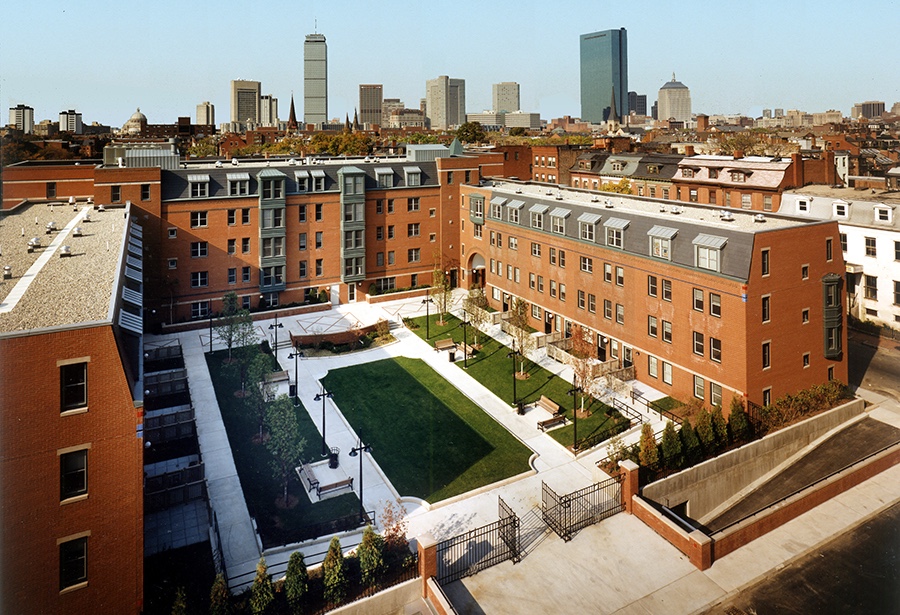
Image courtesy of Goody/Clancy

Appropriate infill construction can be a very difficult thing to accomplish, with some developments hitting the mark and others adversely impacting the historic neighborhoods where they were built. Boston is home to many examples of both occurrences, but I wanted to share a very successful infill project in the South End neighborhood, Langham Court. As the South End resurfaced as a desirable neighborhood, long-time residents were priced out, which led to the Boston Redevelopment Authority to fund projects to provide much-needed housing for the local community. This site which once housed over 20 townhouses, was razed by the 1960s in a period of urban renewal where existing housing was deemed unsafe and inadequate. The local design firm of Goody/Clancy was hired, and they masterfully designed a U-shaped complex of 84 mixed-income units that fits well within its surroundings. The design exhibits dormers, bays, arched and vaulted entries, a combination of mansard and flat roofs, stringer courses and textured brickwork, and a palette of well chosen materials all at a scale that blends in the 1990s building to its surroundings which came nearly 150 years prior. The complex remains as a testament to good-quality design even for affordable housing, which notoriously gets the short end of the stick design-wise.

Joshua Bennett Townhouse // 1834

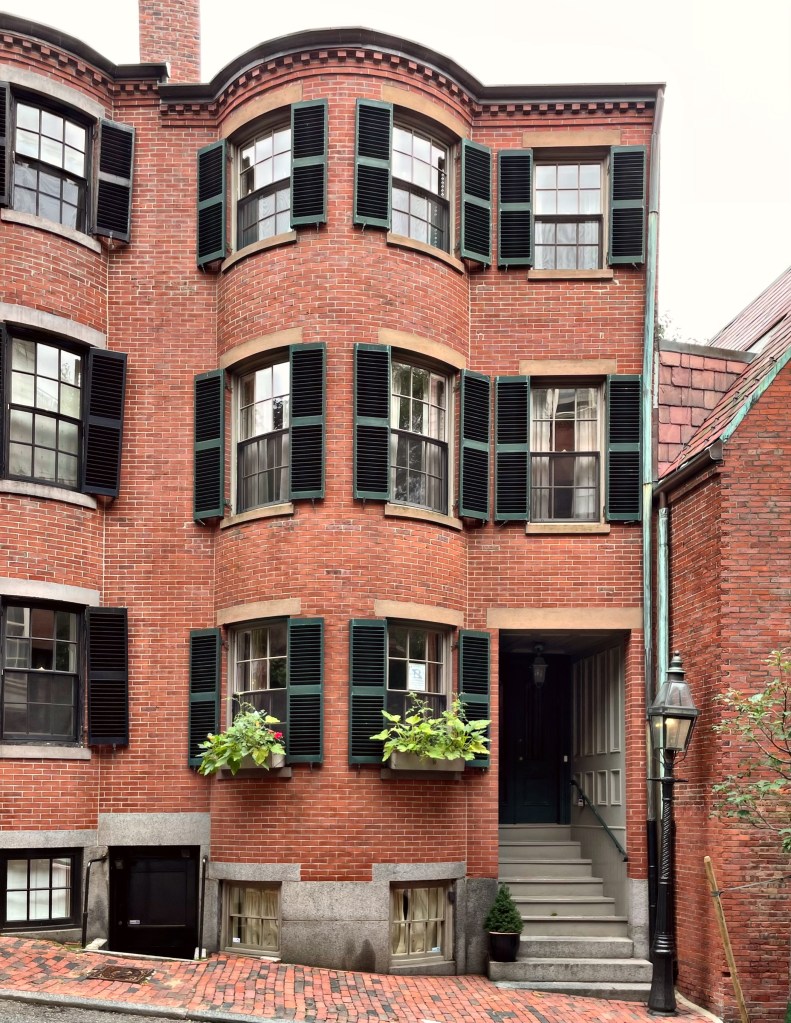
Just steps from the iconic Louisburg Square in Boston’s exclusive Beacon Hill neighborhood, a man named Joshua Bennett in 1834, purchased two recently completed townhouses built by housewrights Samuel H. Mitchell and Loring Dunbar. Joshua Holden Bennett (1792-1865) was born in Billerica, Massachusetts and split his time between his hometown and Boston. Bennett and his family owned the two identical bowfront houses until about 1930, likely renting them out to middle-upper class families. The home on the right (pictured) was later purchased by Benjamin B. Gillette an organist at a local church. After WWII, property values in Beacon Hill began to falter and this property and its neighbor became lodging houses of rented rooms to a more wealthy clientele than those on the North Slope of the hill. The home last sold in 1989 for $753,000 and is estimated at a value today at over $4,000,000!

Van Etten-Dumond “Spy” House // c.1726

One of my favorite houses in Hurley is the Dumond House (also known as the “Spy House”), a pre-Revolutionary stone cottage built in Dutch traditions. The house is one and one-half stories high, and is built of limestone. The limestone walls are of various thickness, from a nearby quarry, with the square ends laid up in mortar made of clay, and pointed with lime mortar outside. The house was built by Jacobus Van Etten (1696-1779) and used as a Guard House during the American Revolution. In 1777, it was famous for housing the convicted British spy, Lt. Daniel Taylor after he was caught carrying a message between British Generals Henry Clinton and John Burgoyne. Lt. Taylor was arrested as a British spy, convicted in court of spying and held in the basement of the Du Mond House as a prisoner. He was hung on October 18, 1777 from a nearby tree. American soldiers encamped in the area were paraded by the body as a warning to any potential British sympathizers. The home was later owned by the Dumond Family. It has been owned by the Kent family since 1933.

Woodstock Town Hall and Police Station // 1936

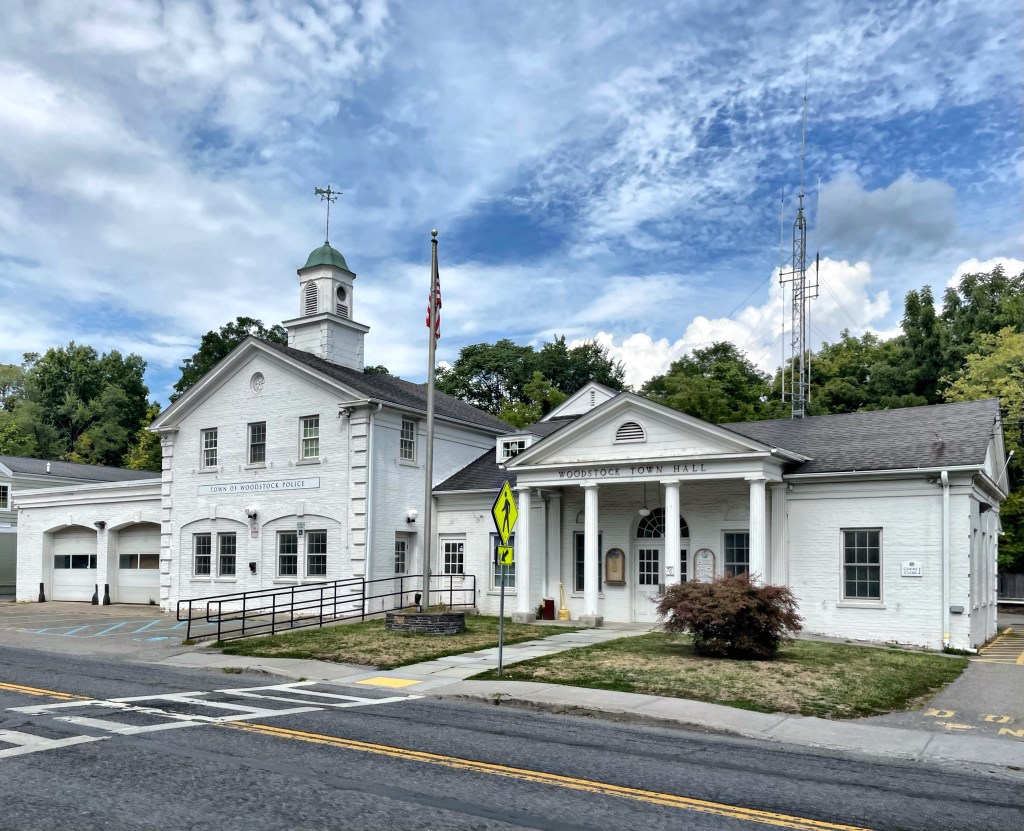
Buildings of New England hits the road! Occasionally, I like to explore and learn about towns and villages in places outside of New England, and one place that has always piqued my interest is Ulster County, NY. One of the more well-known towns in Ulster County is Woodstock, an absolutely vibrant and charming village in the mountains. The first European settlers in the Town of Woodstock were Dutch, along with a few Palatine Germans, who established farms on the fertile land. The town saw some industrial development along Sawkill Creek, but experienced substantial building growth in the early 20th century after the area attracted artists of all types to the area. The village saw population growth which necessitated new city facilities like a town hall and police station. In 1936, construction began on a combined town hall office and police station for the village, in the midst of the Great Depression (possibly using New Deal funds?) The Colonial Revival style building exhibits brick construction with corner quoins, Classical elements like the pediment and columned portico, and a cupola. The only notable alteration since its construction is the infill of the former fire station doors.

Lobster Point Lighthouse // 1948

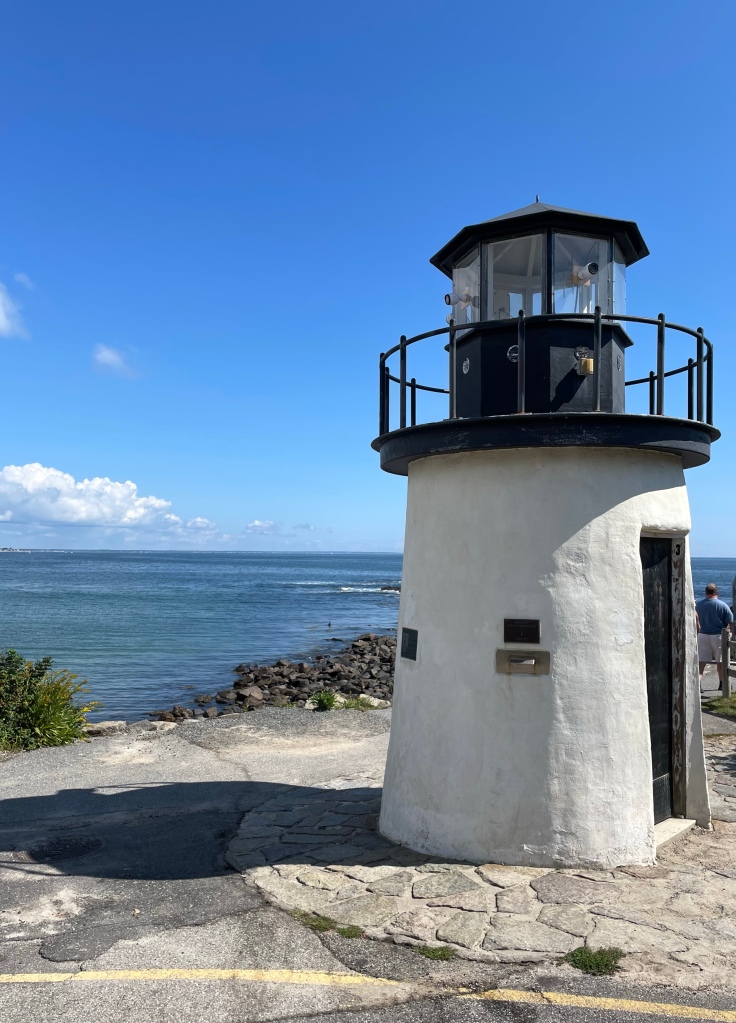
When you walk along Ogunquit’s Marginal Way cliff walk, it is missing one thing, an iconic Maine lighthouse… or is it? This mini lighthouse on the route always has people lining up to snap a picture and its quirky roadside attraction appeal is undeniable. The original Lobster Point Lighthouse was constructed in 1948 by Winfield C. Littlefield of the local family who first settled in the town. The “lighthouse” was designed by Grover S. Perkins. Much like the real lighthouses on the coast, the original structure was badly beaten by the salt air and high winds and parts of the structure were replaced. Notably, in 1993, the top (lantern) was replaced with fiberglass. Additionally, in 2009 the structure was upgraded, all from donations. The iconic roadside lighthouse will continue to ‘light the way’ for the droves of tourists and locals alike who navigate Marginal Way.

Ogunquit Public Library // 1897

One of Maine’s most charming libraries is right in the coastal village of Ogunquit, and like many of the greatest, it was built as a memorial to someone. George Mecum Conarroe was born Nov. 9, 1831. His father, George Washington Conarroe, was an accomplished Philadelphia portrait artist who provided his family with every advantage mostly from an inherited family fortune. The Conarroes and their cousins, the Trotters, who summered at Cape Arundel, had been associated in a very successful steel venture for several previous generations. George M. Conarroe apprenticed in a Philadelphia law firm and was admitted to the Bar in 1853. He ran a successful probate law practice and his prudent real estate development investments enhanced his formidable fortune. Nannie Dunlap, daughter of another leading Philadelphia lawyer married George M. Conarroe in 1868, they were inseparable. He built a summer estate in York Cliffs, a burgeoning Summer colony just south of Ogunquit (then a part of Wells). George died in 1896, and Nannie fought to keep her late husband’s legacy living in the coastal area he loved so much. She hired Philadelphia architect Charles M. Burns to design a new summer chapel in York and this beautiful village library in Ogunquit. The library was constructed of fieldstone taken from the site and is a lovely example of the Romanesque Revival and Queen Anne architectural styles in Maine.

Perkins Cove Drawbridge // c.1941

The Perkins Cove wooden footbridge in Ogunquit, overlooks one of the loveliest little harbors in the Maine coast and spans the narrow entrance to the port. The iconic bridge is perhaps the only double-leaf draw-footbridge in the United States and luckily for us, is right here in Maine! The small channel was once very shallow, but in about 1940, the cove was dredged to make room for larger fishing vessels. A new drawbridge was soon added to allow access to the small peninsula while also permitting fishing vessels to pass underneath. The bridge has been modified a couple times since it was constructed in the early 1940s. The new bridge spurred development of some of the area which was already a mix of fishing shacks and artist studios. Since then, many of the original fish shacks have been converted to restaurants or shops due to the high value of the land now. It was also announced this year that the bridge would soon be demolished and replicated with Federal funds with a new harbormaster building. Hopefully the replacement will closely match the existing, which is a huge draw (pun intended) for the tourists who flock to the area.

Winn House // c.1780

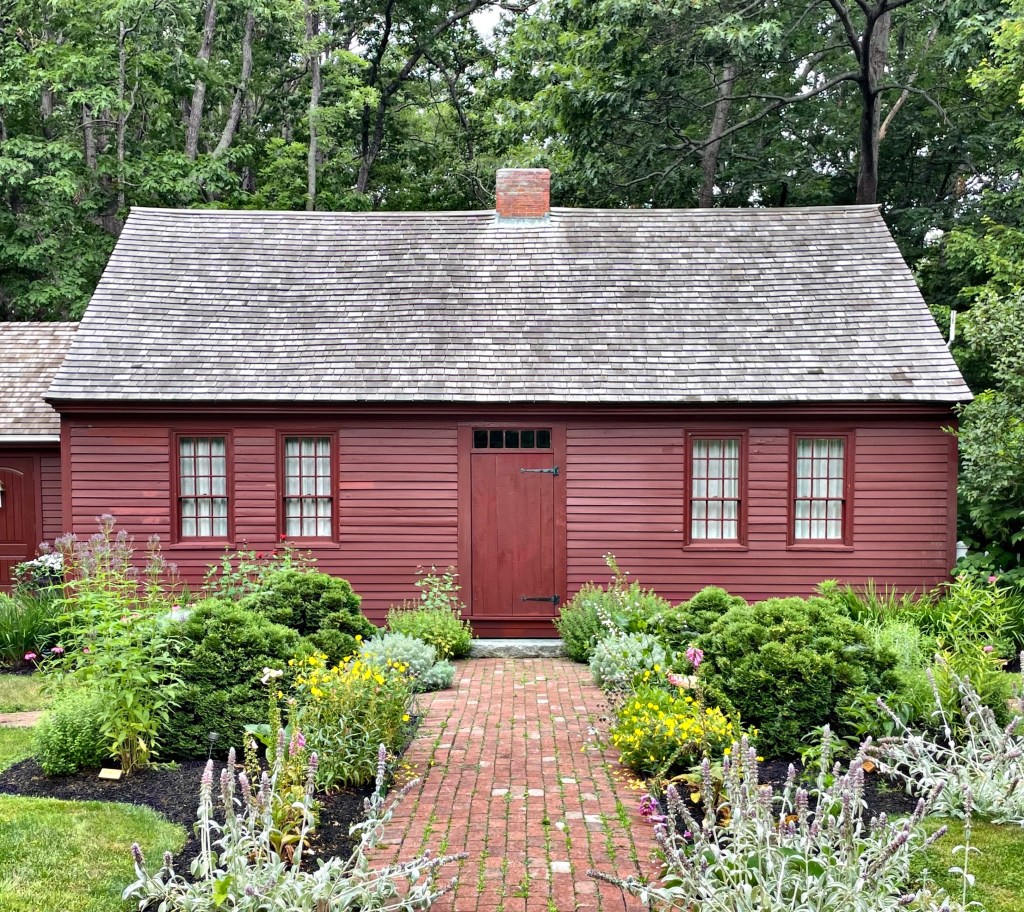
One of the oldest extant houses in the village of Ogunquit Maine is this charming Cape house thought to have been built in the 1780s. The house was later purchased by James Winn (1783-1861) and his wife Philadelphia Maxwell Winn (1785-1855), probably about the same time as the birth of their first child, James Winn Jr. in 1808. Both James Sr. and his son in 1846, launched a 161–ton brig out of Kennebunkport with Captain James at the helm. After several trips James Jr. succumbed to an illness that was aboard the vessel and died at the New York Marine Hospital. Over 150 years later, the house, largely untouched, was seemingly threatened by development pressure on the busy highway. In 1980, the home was donated to the town by then-owner, Phyllis Perkins, and moved nearby to a park on Obed’s Lane. It now houses the Ogunquit Heritage Museum.

Colonial Inn, Ogunquit // 1897

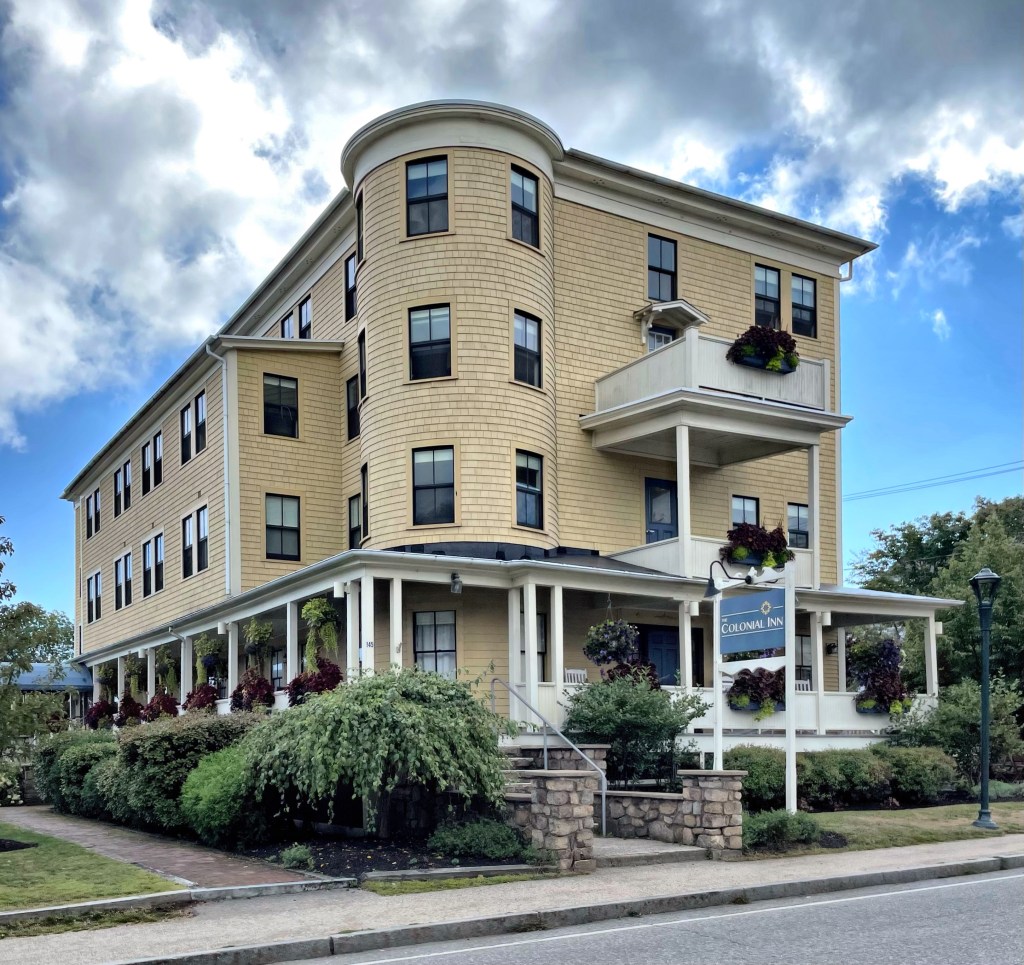
As Ogunquit surged in popularity as a coastal summer retreat in the late 19th century, the flocks of city-dwellers needed a places to rest their head after splashing in the crisp Maine ocean. The original structure began with a mid-19th century house, likely in the Greek Revival style. It was expanded in the 1880s when it opened as a hotel for tourists, equipped with a mansard roof. The hotel consistently sold out of rooms in the summer months and the proprietors decided to expand in about 1897 with a sizeable Queen Anne style addition. A fire in 1951 destroyed the rear wing of the building and the conical tower roofs were removed, resulting in the final form seen today. The hotel is historically significant because it is the only surviving 19th-century hotel in Ogunquit that still serves as a hotel and largely retains its historic appearance, enhanced following a 2013 restoration by the owners who worked with David Lloyd of Archetype Architects. Other hotels of the period have either been converted to condominiums or been engulfed by modern alterations. The hotel was thus placed on the National Register of Historic Places, a large, and worthy addition!

Nellie Littlefield House // 1889

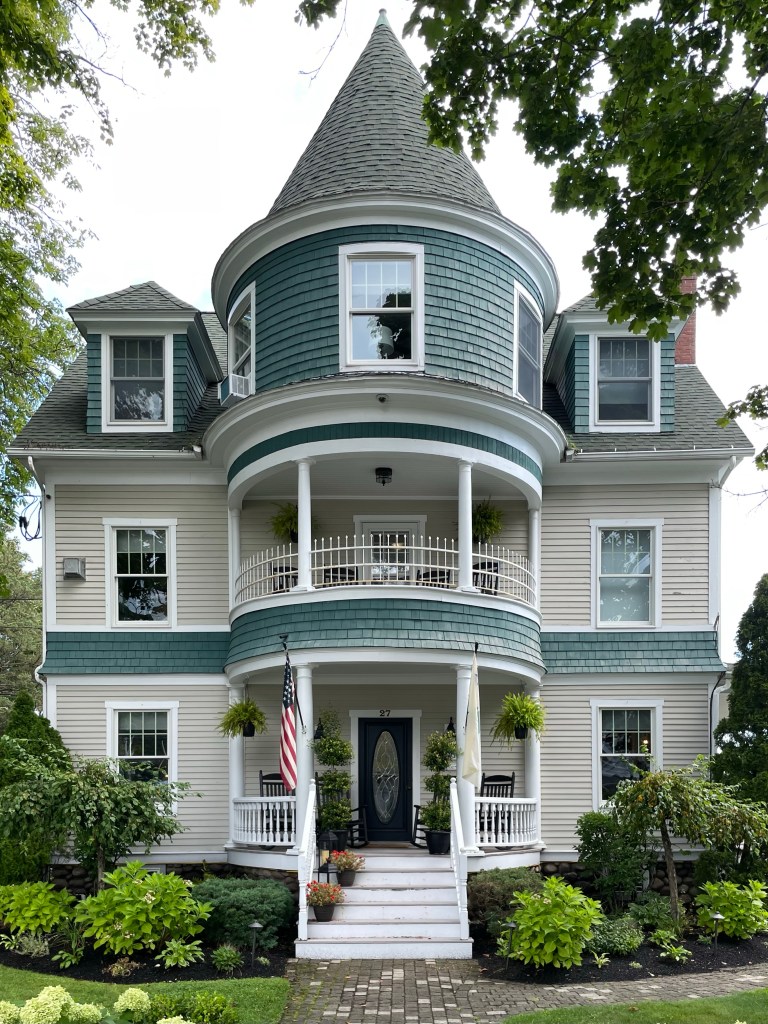
One of the most charming buildings in the quaint village of Ogunquit Maine has to be this Victorian inn, located right on Shore Road, the town’s main thoroughfare. The house had its beginnings in 1889 when Joseph H. Littlefield constructed it for his wife Ellen “Nellie” Perkins and their family of four children. Joseph was a member of the esteemed Littlefield Family, which goes back to before Edmund and Annis Littlefield and their six children traveled from England and settled in the town of Wells in 1641. The family was prosperous in the area, and Joseph used his wealth and position in local affairs to develop summer cottages and buildings at the beginning of the town’s large development boom in the late 19th century and early 20th, catering to summer residents and tourism. The Littlefield House was passed down to Joseph and Nellie’s children after their passing, last occupied by Roby Littlefield (1888-1988), who served in local and state politics. It was Roby who was instrumental to establishing the Ogunquit Beach District, which allowed the government to acquire the beachfront in Ogunquit, making it public. The old Littlefield House is now an Inn, known as the Nellie Littlefield Inn & Spa, and it retains so much of its original charm.