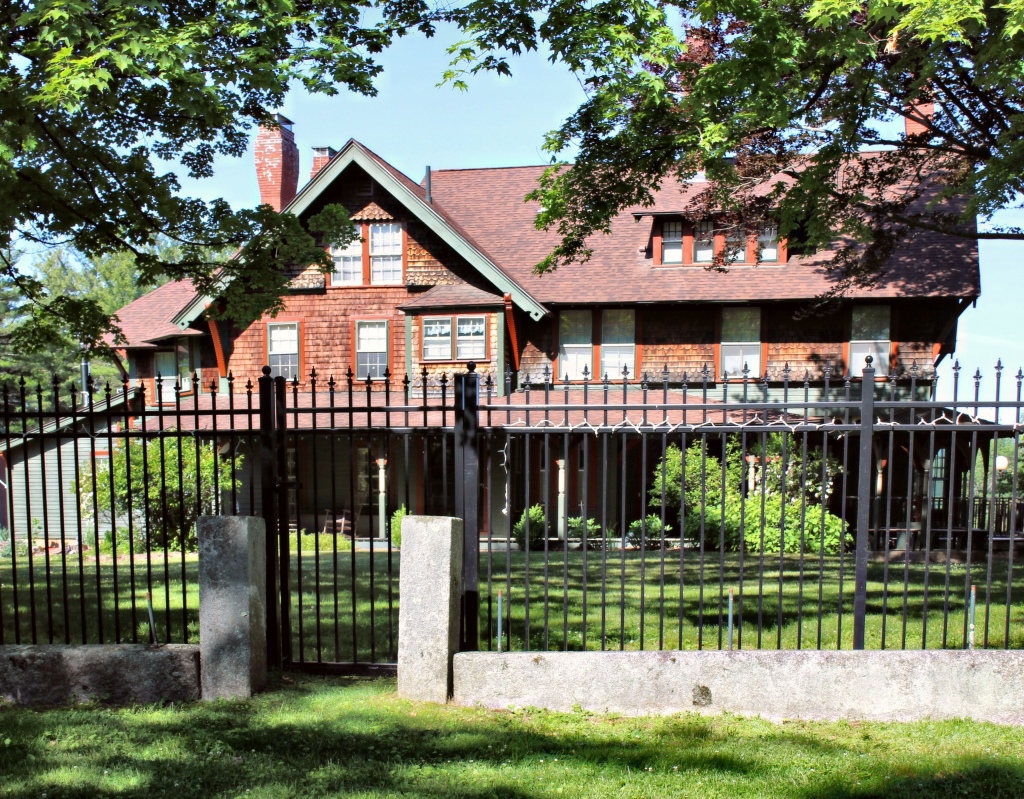
The earliest of Wilton New Hampshire’s summer “cottages” is Moors Manor Cottage, a turn-of-the-century mansion set on former farmland with views of the mountains in the distance! While Wilton never compared to Newport or Bar Harbor as the major summer resort towns for the wealthy, the upper-middle class would sometimes build summer homes in their familial towns where they would escape the hustle-and-bustle of city life. Luckily, this home has been very well-preserved inside and out (but I wish that big fence was gone it really obscures the beauty of the house).
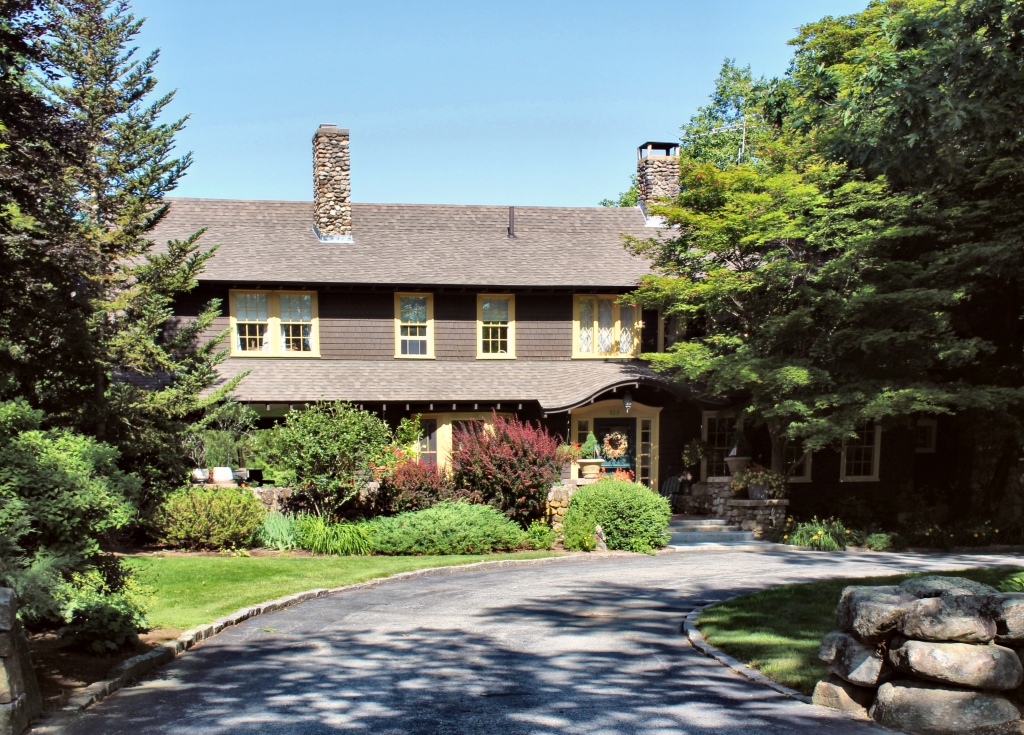
Harry A. Gregg, was the son of David Gregg, a lumber dealer and wooden goods manufacturer who built a mansion in Wilton’s East Village. Harry followed in his father’s footsteps, running the day-to-day business out of their Nashua, NH offices. With a lot of spare money, Gregg purchased pastoral land in Wilton Center and built a summer residence which may have also served as a gentleman’s farm. The Arts and Crafts style home showcases the best in the style with rubblestone, shingles, organic forms and exposed rafters. The house is pretty perfect!
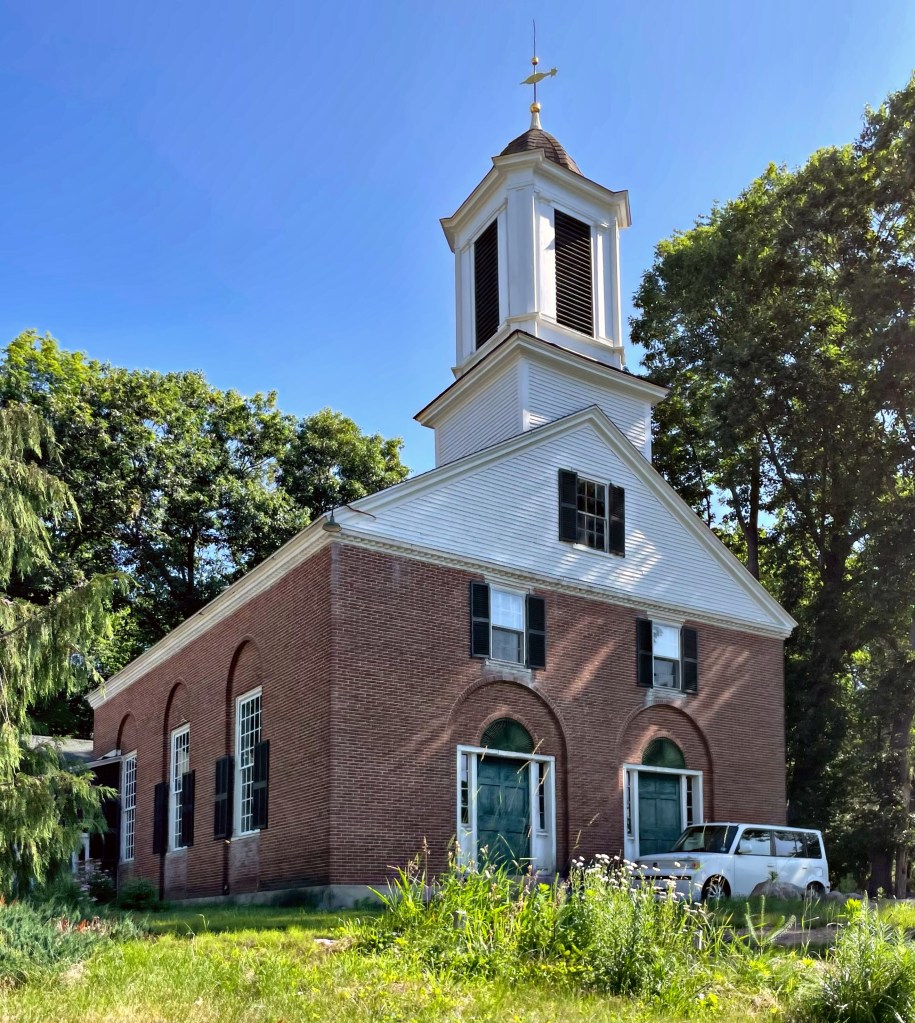
Located next to the Blanchard House, the old Wilton Center Baptist Church stands as one of the only brick buildings in Wilton Center, New Hampshire. Baptists in town originally met and worshipped in nearby Mason, NH, but eventually began services in town. By the 1820s, a new edifice was needed, and the members pooled resources, largely from wealthier members for funding for a new church. The Federal style brick church is stunning with its recessed arched panels surrounding the windows and doors, and its steeple. The building has been converted to residential use.
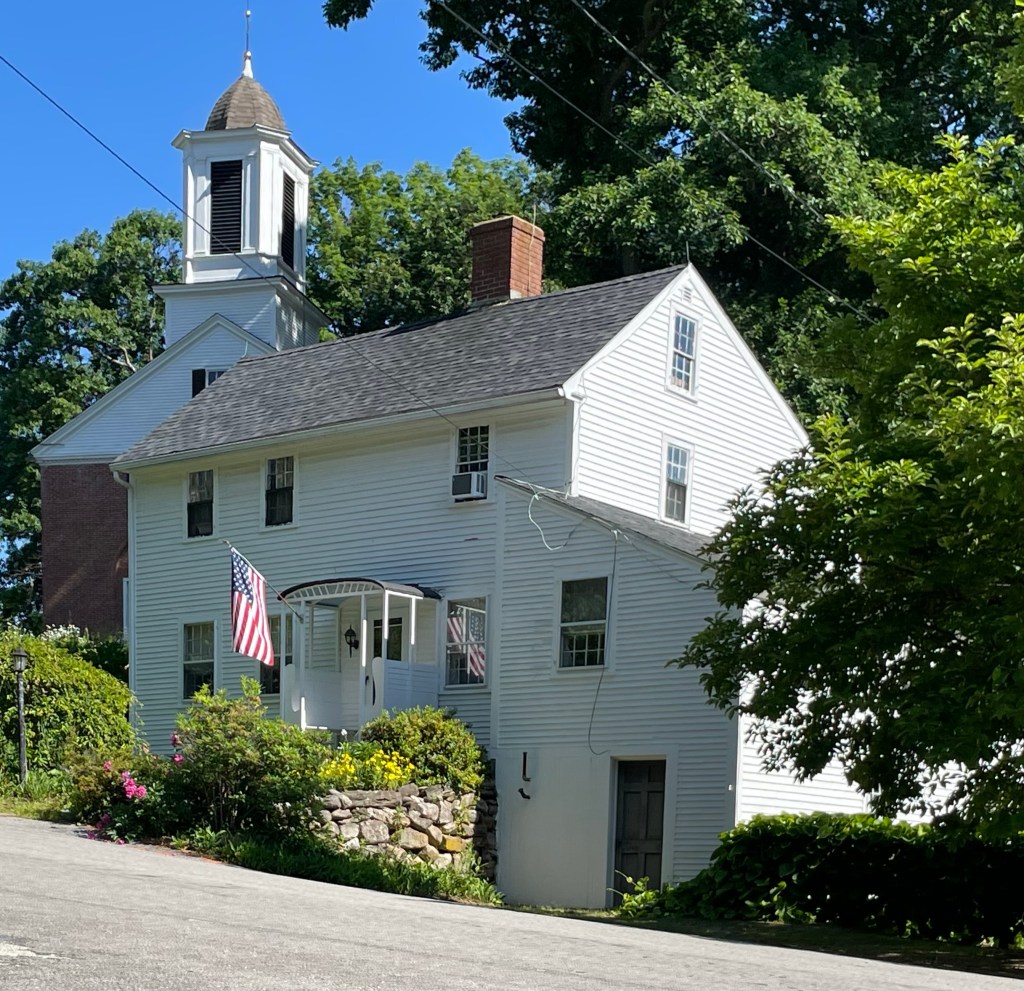
One of the oldest extant homes in Wilton Center is this Revolutionary-era Georgian house. The home was likely built in the 1770s and has a sloping saltbox roof at the rear. The house was the property of the Blanchard Family to this day. The house shows the more rural, vernacular Georgian style common in small towns in New Hampshire from the 1700s.
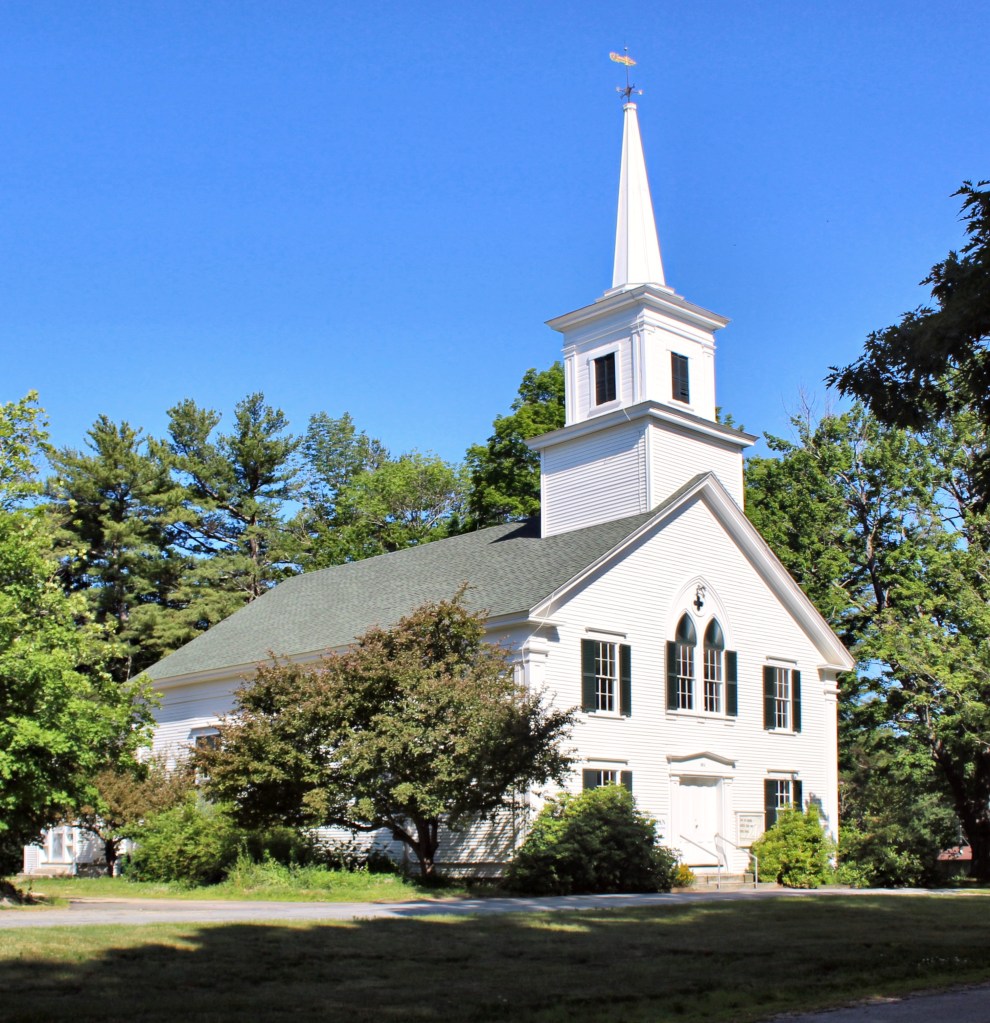
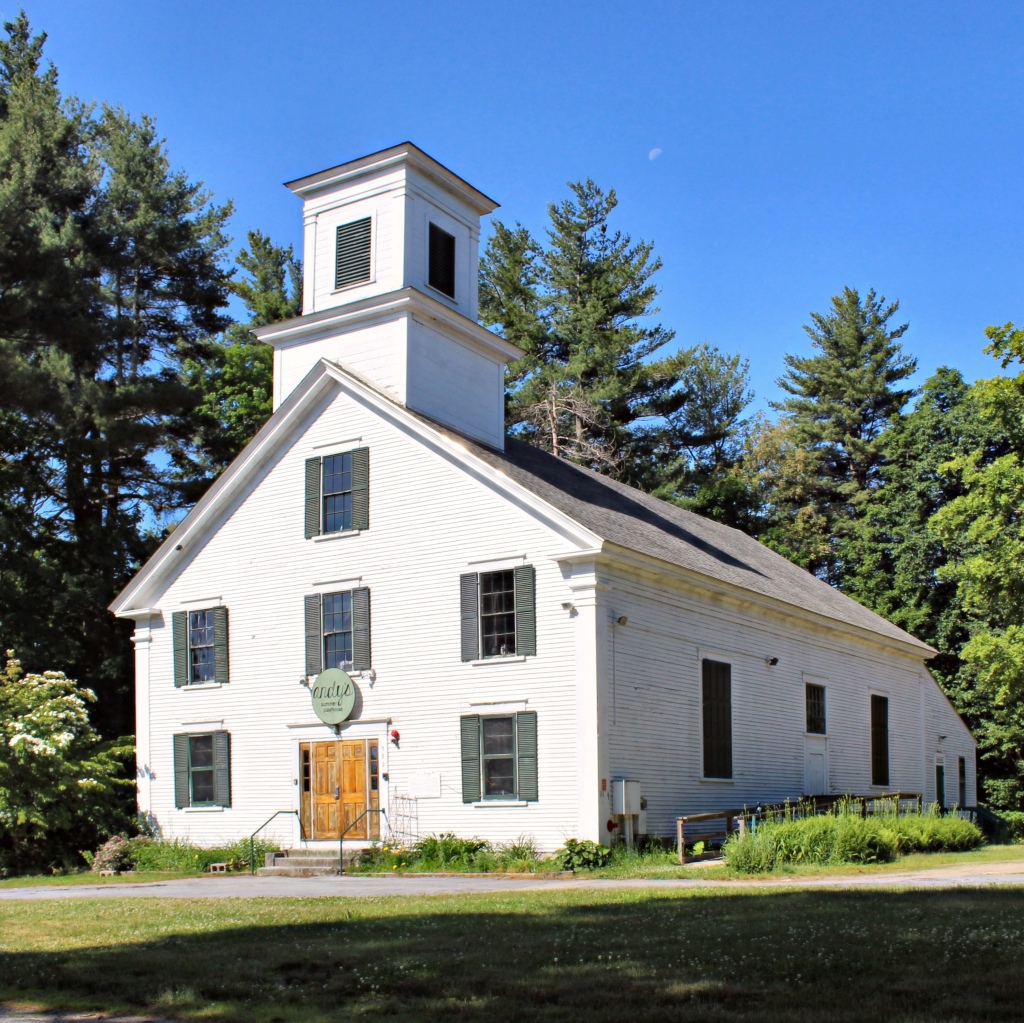
When Wilton, New Hampshire was settled and incorporated, a log structure was built to serve as a town meeting house. The structure in the center of town was deemed insufficient and was torn down and replaced with a larger meeting house in 1775. The second meeting house served the town for 80 years until it burned down in 1859. The town voted to build a third meeting house (this building) on the same spot, at a cost and the building was completed in 1860. The vernacular Greek Revival building was used as the town hall for just a couple decades, until the 1880s when East Wilton became the population and economic center of town, facilitating the move of the town hall there into a new building. The building would later serve various uses from a community hall to a grange hall, and it is now home to Andy’s Summer Playhouse, a youth theater and cultural hub for the region.
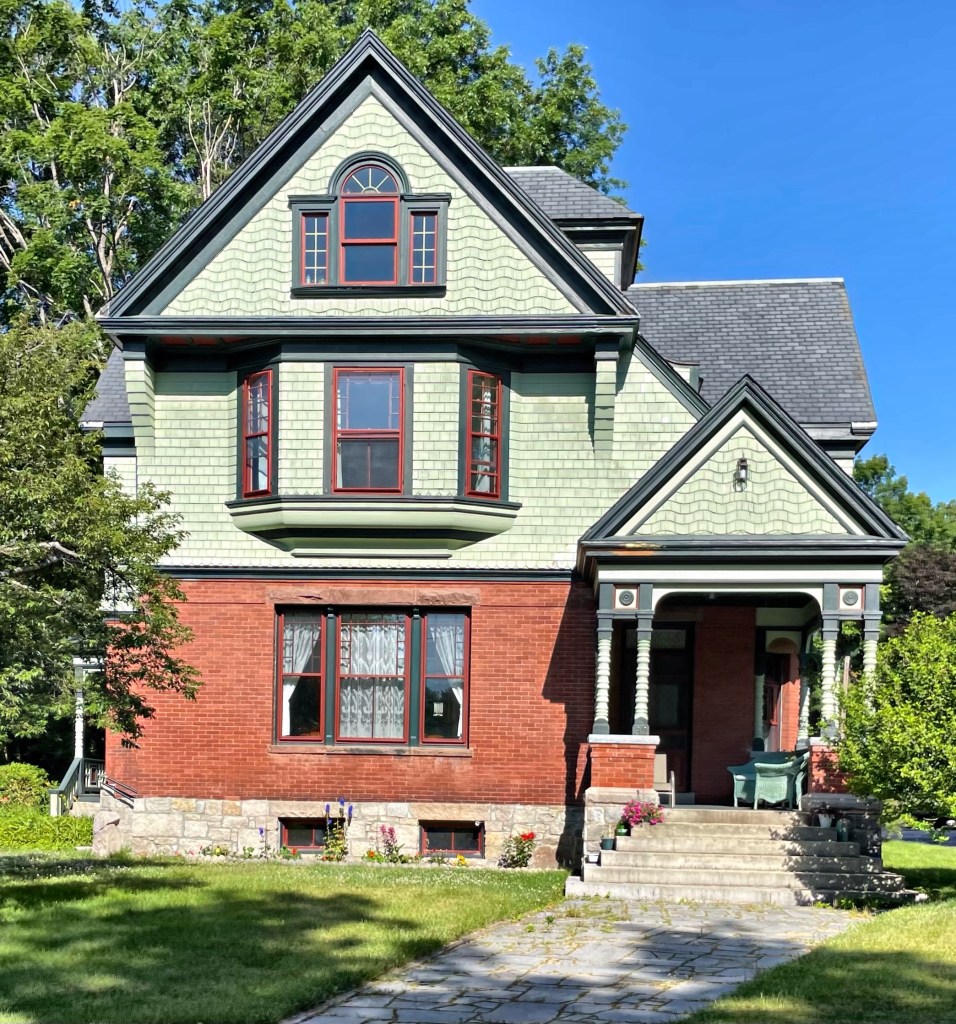
When you look up Queen Anne architecture on Google, this house in Wilton, NH should pop up! The Frederick Colony House was built around 1885 for the mill-owner who built a large cotton mill (last post) in town at the same time. Frederick Colony (1850-1925) was from a prominent textile and cotton mill-owning family based in Massachusetts and Keene, New Hampshire. Colony purchased land along the Souhegan River and built a new mill, there to make his own fortune, and that he did! The Frederick Colony House remains as one of the best-preserved homes in Wilton, and recently sold. Those interiors!
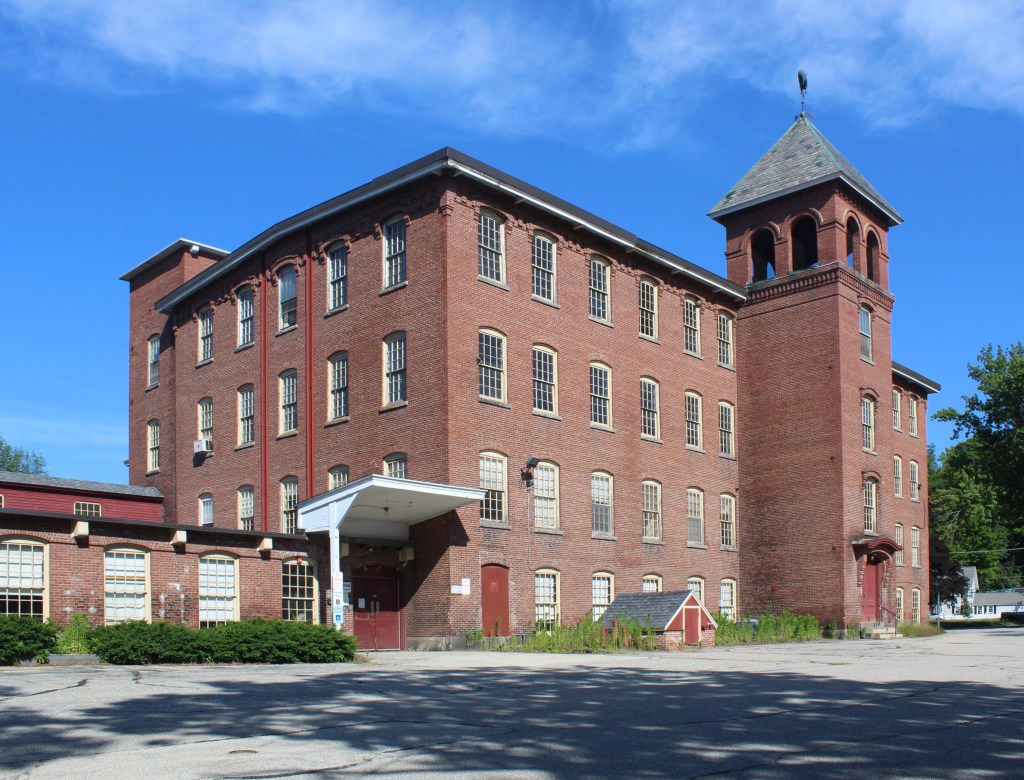
The site along the southern bank of the Souhegan River in East Wilton, NH has been the location of successive mills since 1814. These wooden mills were wiped out by fire, and the land was vacant until 1882, when members of the mill-owning Colony family of Keene, NH bought the site for a new cotton mill. That year they built a three-story brick mill building atop a raised basement level. Colony Bros., the company, began their manufacturing in early 1883. They produced woolen flannel and other woolen goods and employed 70 workers in the factory. The building was powered by steam and water from the adjacent Souhegan River. In 1894, the Colony Bros. mill passed into the hands of Philip Amidon, who formed the Wilton Woolen Company, who produced everything from traditional woolen goods to the finest cashmere. In 1932, the struggling mill was purchased by the Abbotts, owners of two local mills and others in Massachusetts. Abbott Worsted produced a very fine finished cloth, with much of their product going to New York City where it was made into fine men’s suits. The building was later purchased in 1971 by Leonard Peterson, to house his growing company, Label Art. The company has for many years been a nationwide distributor of pressure sensitive labels. Their occupancy likely saved the buildings from the wrecking ball, like so many others did at the time!
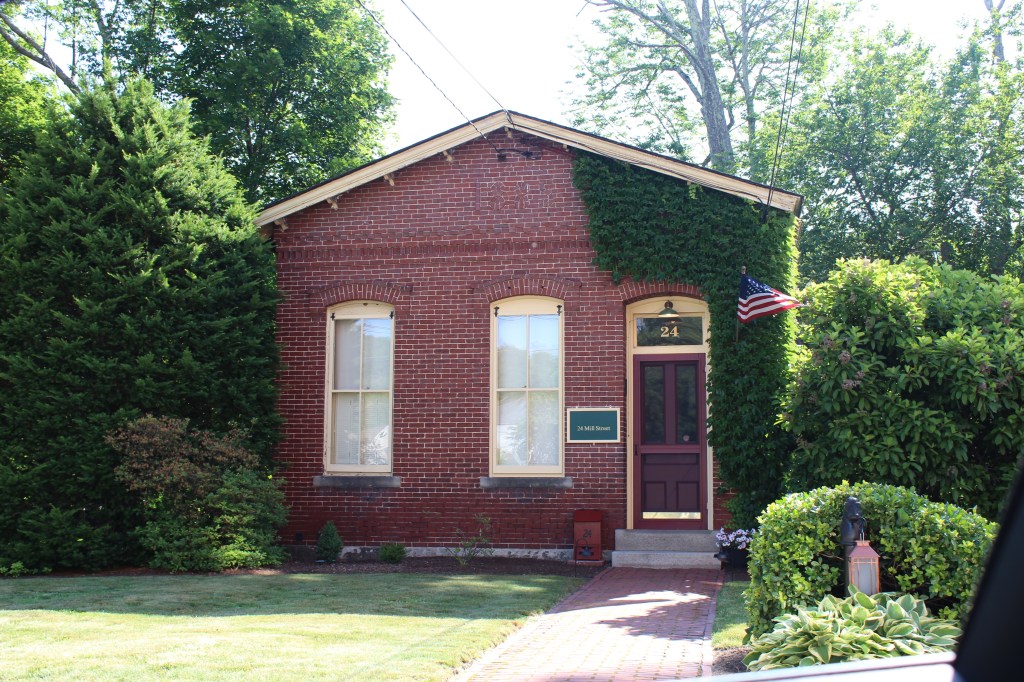
Oh, and how cute is the 1885 office for the mill?! The date is found in the brickwork!
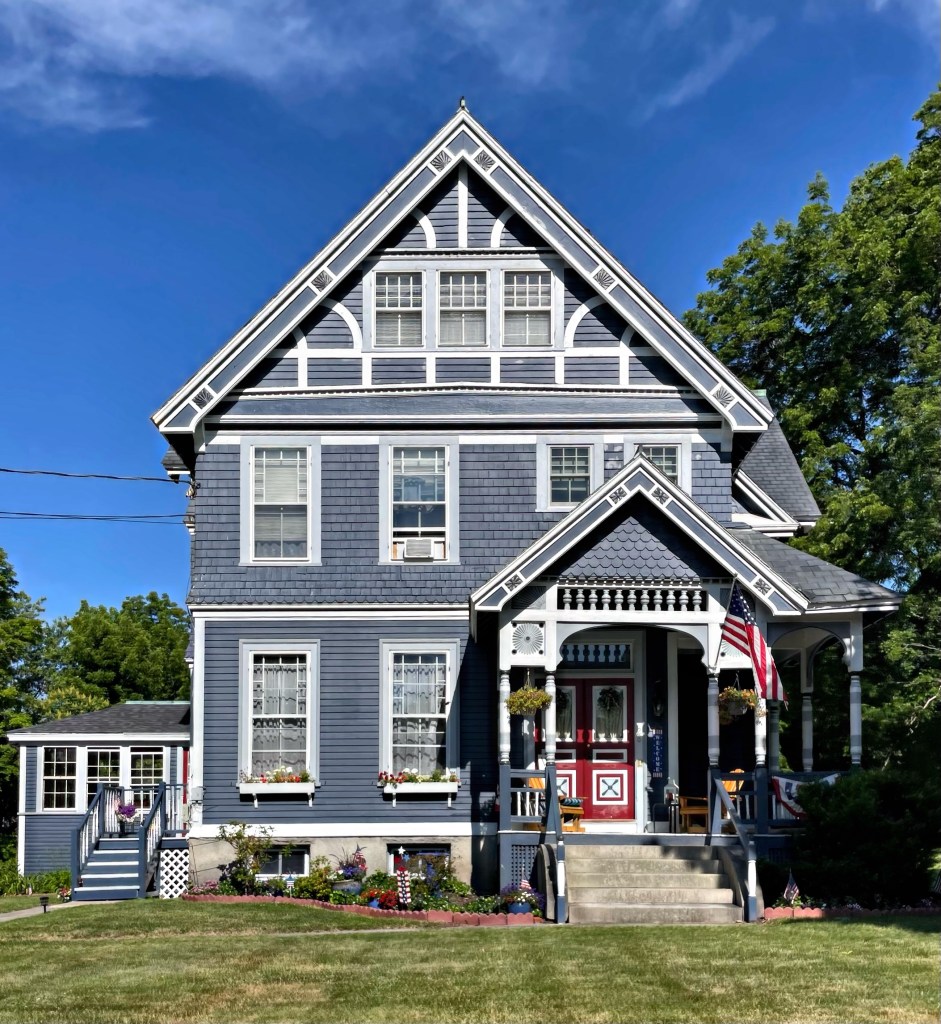
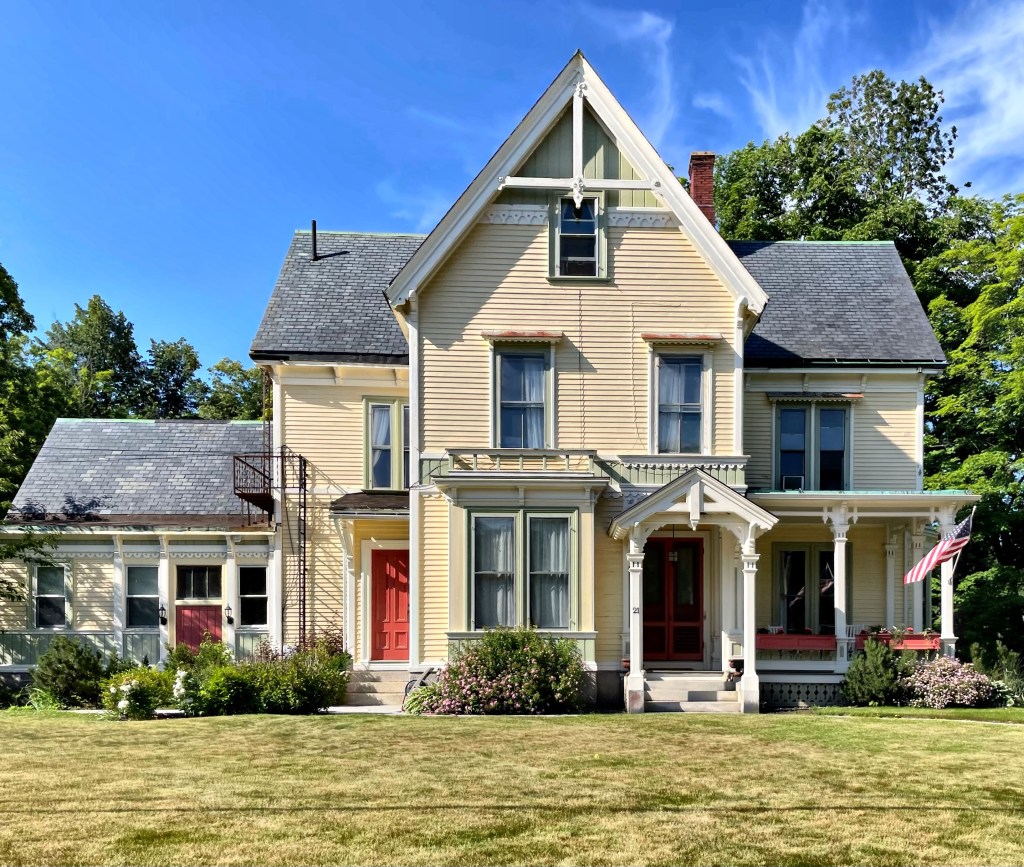
David Whiting (1810-1892) was one of the most prominent men in Wilton, NH in the 19th century. He was involved in local business and politics, eventually using his prominent land at a convergence on Main Street to erect the Whiting House, a large hotel. The building burned down in 1874, along with his other buildings nearby. He donated some of the land to the town, who built the present Town Hall, and he built a new home on another part of the site. This house was likely built for David Whiting as his own residence, shortly after the fire. The house was designed in the fashionable Stick style and represents the best in Victorian-era architecture.
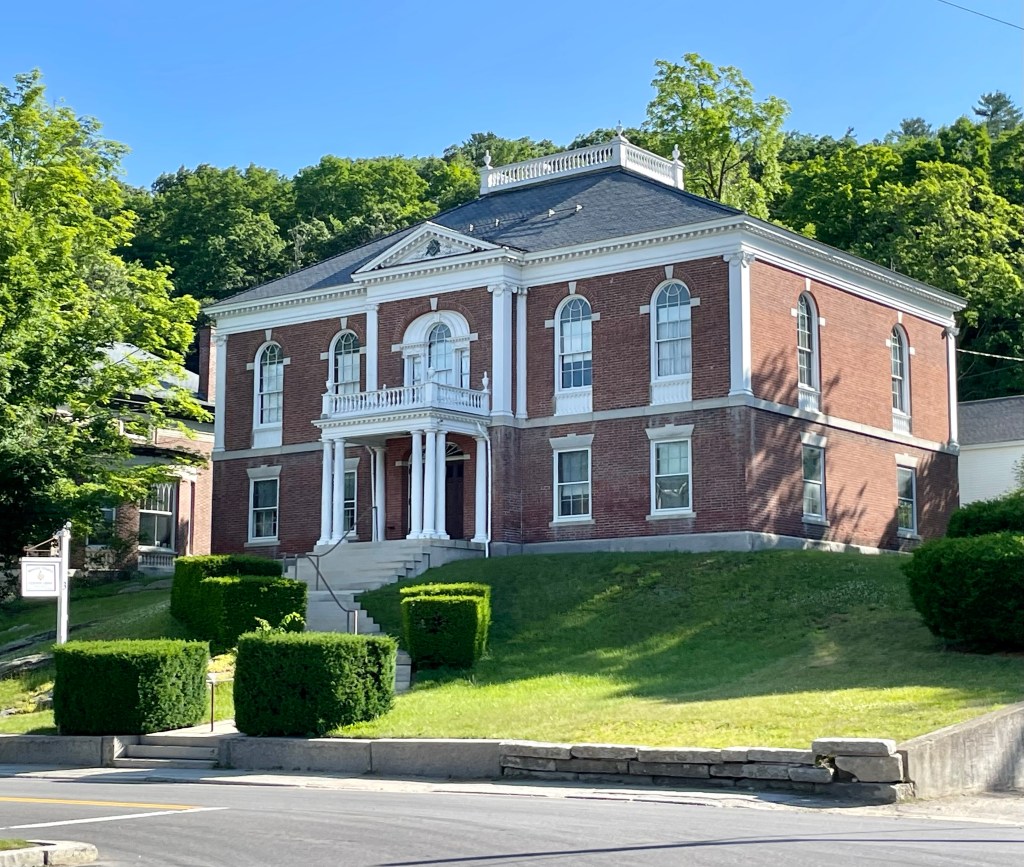
Located adjacent to the Gregg Free Library (Wilton’s Public Library), you will find the town’s Masonic Temple, a textbook example of Colonial Revival architecture. The building was dedicated in 1898 and sits on a prominence overlooking the Souhegan River, which supplied power and jobs to the East Wilton village. The brick building exhibits flared lintels, arched windows, a fanlight transom over the door, dentils, and prominent balustrade. The building appears to have been the work of architect Ernest Machado, an unsung specialist in Colonial Revival designs.
The Wilton Public and Gregg Free Library is the public library for the town of Wilton, New Hampshire and is among the town’s most grand architectural designs. The library was the gift of David Almus Gregg (1841-1928), a native of Wilton who owned a successful building parts business in Nashua manufacturing doors, window blinds, and window sashes with his father, David Sr., who lived in the home featured previously. Gregg was significantly involved in the design and construction of the building, providing the highest quality building materials and contractors to the project, which was estimated to cost $100,000 when completed in 1907. The architectural firm of McLean and Wright was commissioned to design the building, who completed it in the Classical Revival style, like many of their other library designs in New England.
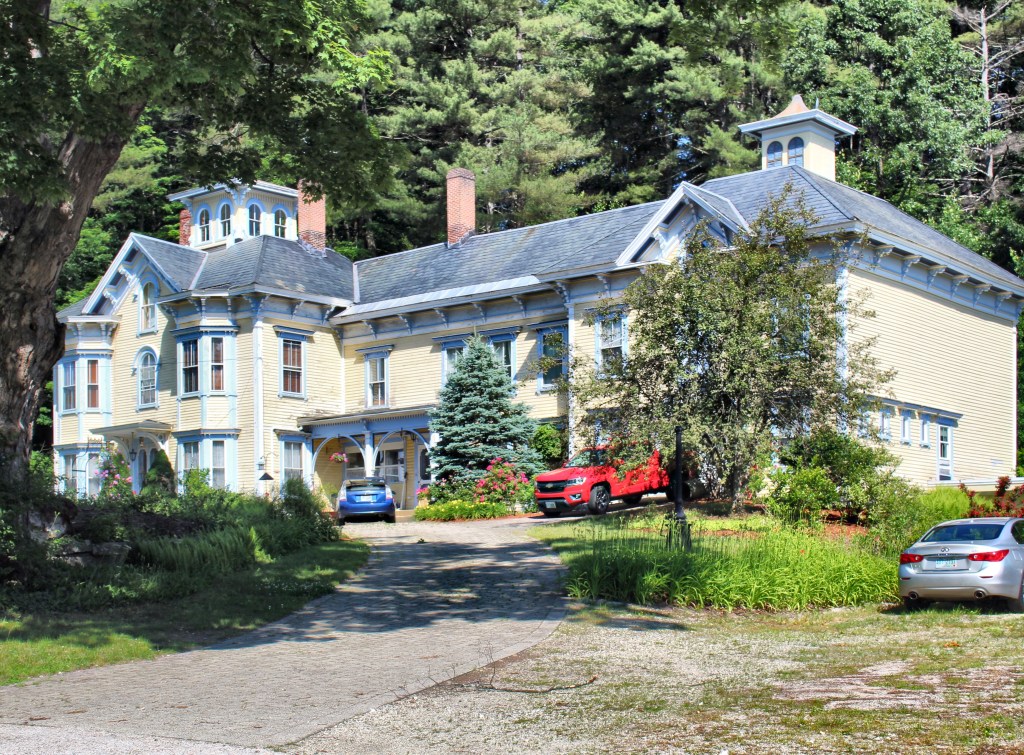
Located in the western part of the East Village of Wilton, New Hampshire, this stunning Italianate manse stands out as one of the most architecturally grand in the area. The home was built for David Gregg (1816-1880), a merchant who was engaged in lumber dealing in Michigan as an investment. His company was based out of Nashua and manufactured wooden blinds, doors, window sashes and was co-owned by David and his son, David Jr. David was likely retiring from business by the late 1860s and built this large home on a hill outside the village. At about this time, he became involved with local politics, which he was involved with until his death in 1880. The Italianate style home features round arched windows, brackets, a belvedere at the roof, and what appears to be an attached, converted carriage house. The home was eventually turned into a bed and breakfast, but it has since been converted back to a private home.
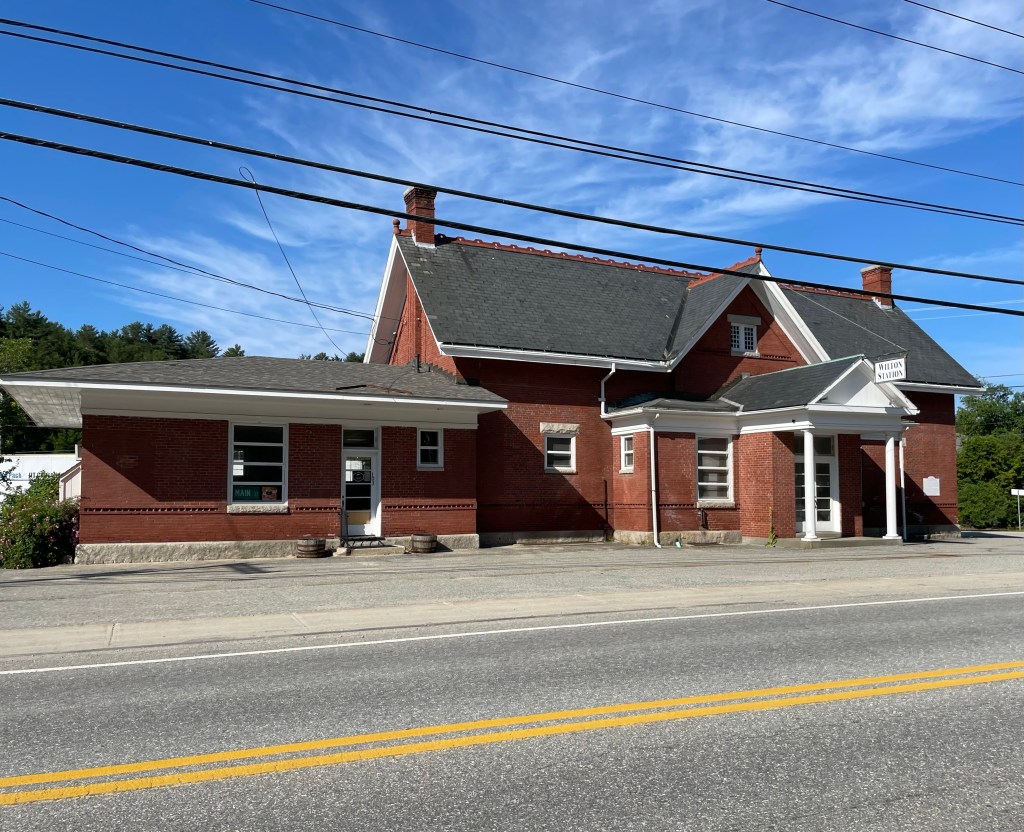
The coming of the railroad to Wilton, New Hampshire was largely due to the rapid increase in the number of mills and factories built in and around the East Village along the river beginning in the early 19th century. This increase was the impetus to Wilton business leaders of the time to petition the state for a charter to form the Wilton Railroad Company which was granted in 1844. The first official run of a wood-burning steam engine from Nashua City Station to the newly constructed Wilton Station occurred on Dec. 1, 1851. The small, wood-frame station was deemed obsolete, and replaced by 1860 with a more substantial structure. In this time, the town prospered, and the local mills cranked out everything from worsted yarn to wooden boxes and furniture. After thirty years of use, however, this second station began to show its age; the tin roof was rusting and it leaked. In 1888, a derrick on a wrecker train caught the side of the building and heavily damaged it, requiring the demolition of the station. By 1892, it was replaced by this new brick station. Between the World Wars, automobile use dominated the American transportation landscape, shifting demands from rail to road. In the late 40’s, a restaurant opened in part of the building, operating until the early-to-mid 50’s. The station was closed when passenger service finally ended and the building, undergoing “adaptive re-use”, into a medical center. It operated for some time as a scenic, heritage railroad stop from 2003-2006.


 Buildings of New England
