Governor Goodwin Mansion // 1811

The Goodwin Mansion of Portsmouth, New Hampshire, is a landmark example of the Federal style of architecture and served as the home of Ichabod Goodwin and his wife, Sarah Parker Rice Goodwin. The home was built in 1811 and was originally located elsewhere in town, across from Goodwin Park, until it was moved to Strawbery Banke, saving the home from demolition. Ichabod Goodwin (1794-1882), a retired sea captain, purchased the home in 1832 and moved in with his wife, Sarah, and daughter, Abigail. The same year, he partnered with Samuel Coues to establish the shipping firm of Coues & Goodwin, importing raw materials, such as cotton, produced by enslaved people in the Southern States and elsewhere. Mr. Goodwin was the governor of New Hampshire upon the outbreak of the Civil War and was a prominent businessman until his death. Ichabod’s wife, Sarah, raised their children and planned the elaborate garden, which Strawbery Banke recreated where the mansion stands today. The Goodwins kept their home updated with all the latest technology, such as gas lighting, coal grates and running water from the Portsmouth Aqueduct Company, which brought water into houses through wooden pipes. It remains a significant house museum and architectural landmark in Portsmouth.
Benjamin Holmes Jr. House // c.1795

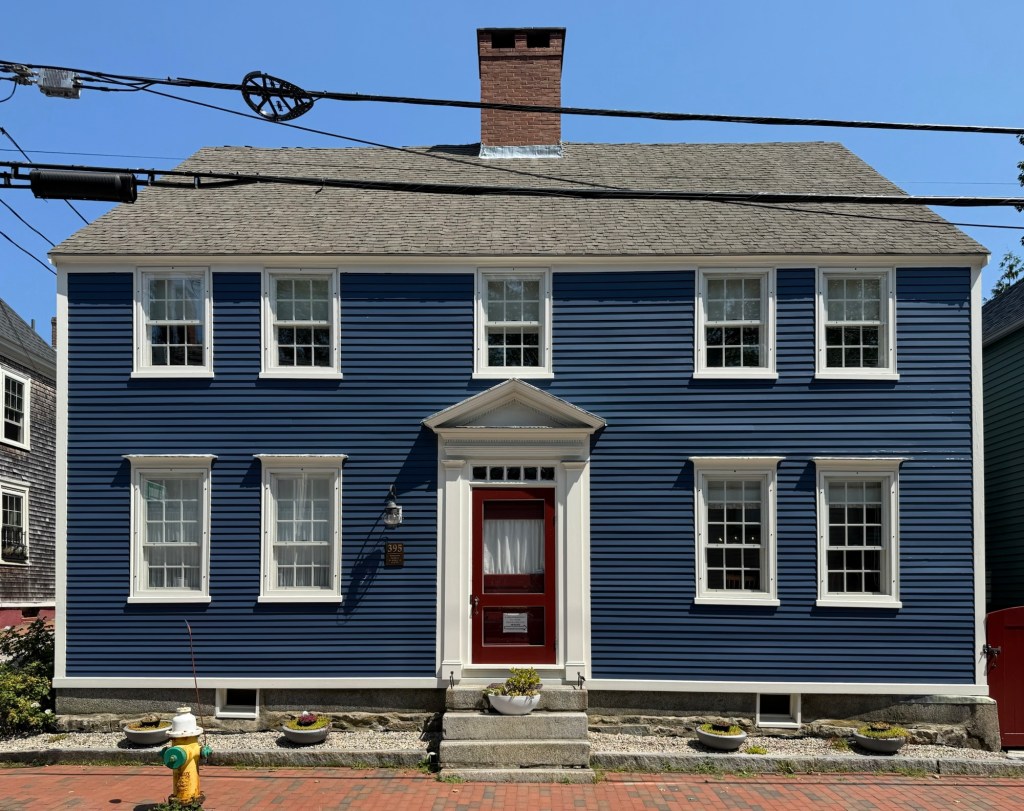
The Benjamin Holmes Jr. House at 395 Pleasant Street in Portsmouth, is a two-story, five-bay, residence with symmetrical facade with a central pedimented entry. In 1795, Benjamin Holmes (1768-1837) married Esther Lewis, and the couple moved into this residence. The late-Georgian house follows the typical form and finishes of many other coastal New England residences of the late 18th century and is in a great state of preservation.

Capt. Charles Blunt House // c.1795

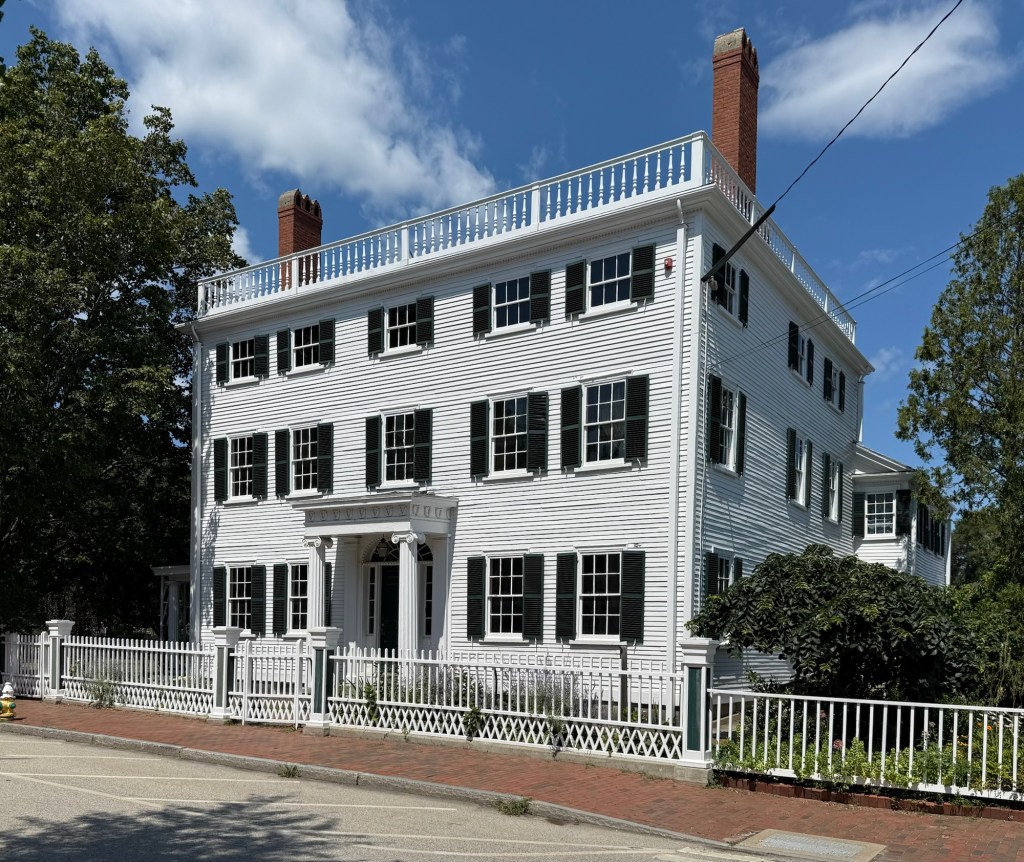
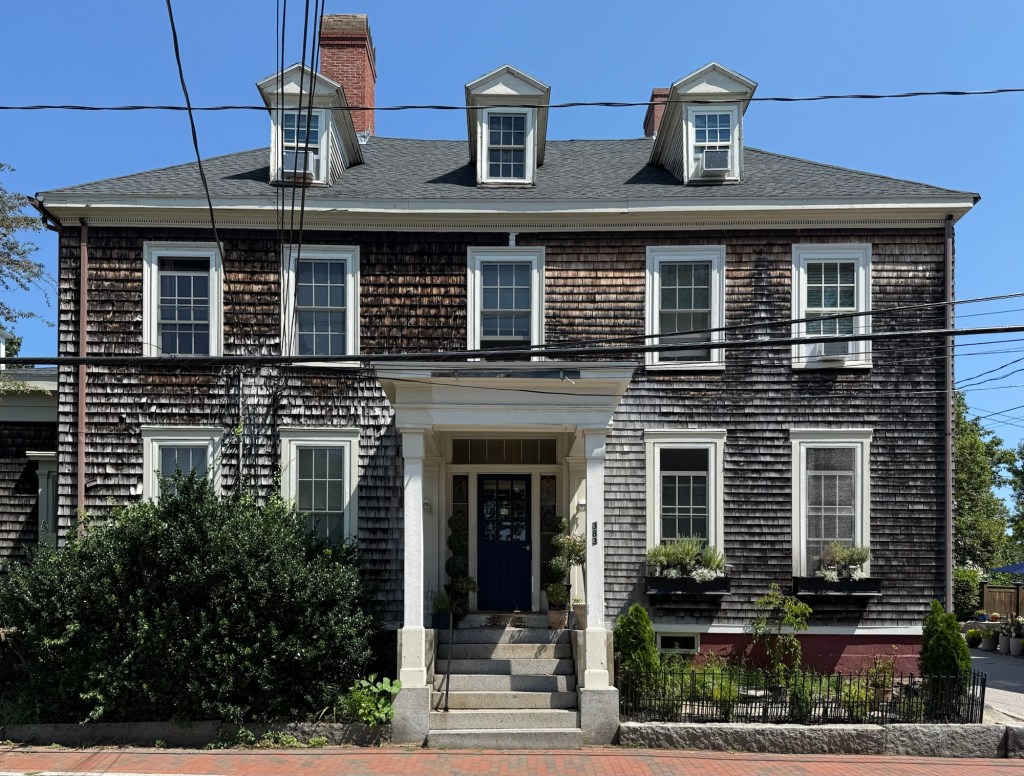
Master mariner Charles E. Blunt Sr. (1768-1823) built this large Federal period home on Pleasant Street in Portsmouth, New Hampshire near the turn of the 19th century for his bride, Abigail Laighton, and their new family. Charles Blunt was a wealthy sea captain who would be out at sea for months at a time, trading in the west indies. On a voyage near Havana Cuba in March, 1823, his vessel was boarded in the night by two piratical boats, with six men each, and Captain Charles Blunt was brutally murdered and thrown overboard. The ship’s cook was stabbed, and fed to the hogs on the brig, with the remainder of the crew maltreated and the goods plundered. The Captain Blunt House follows a symmetrical, five-bay, center entrance form, with cedar shake shingles, three pedimented dormers and large portico over the door.

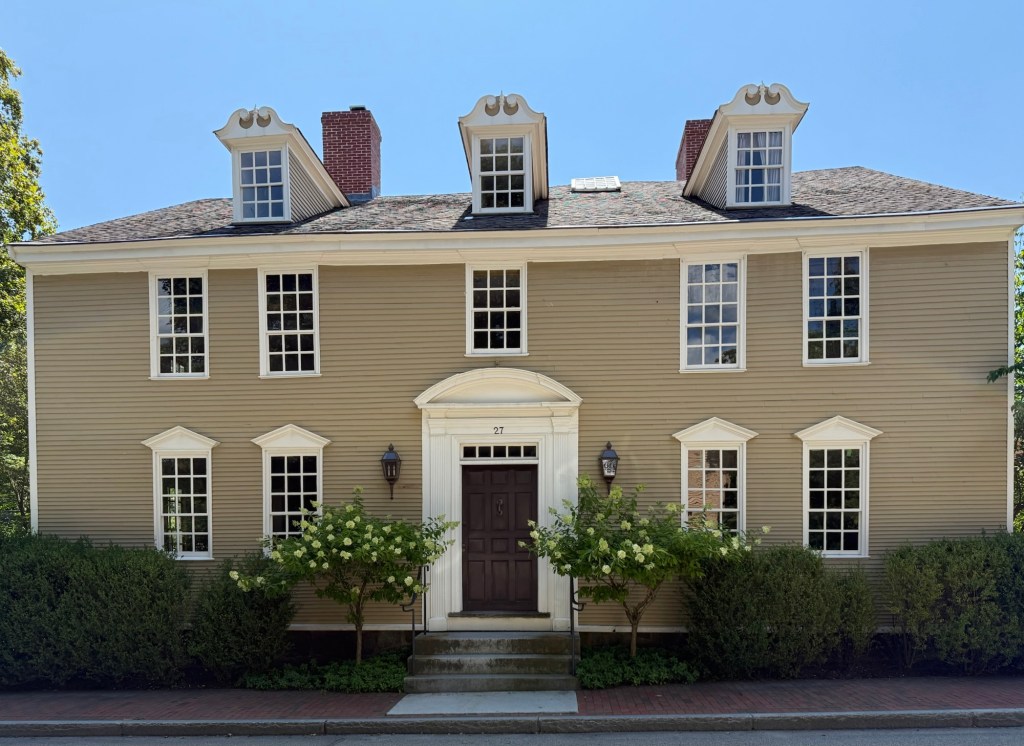
Joshua Wentworth House // 1770

The Joshua Wentworth House at 27 Hancock Street in Portsmouth, New Hampshire, is a high-style Georgian residence built before the American Revolution, and was almost demolished in the name of “urban renewal.” The house has a side-gable roof with three broken-pediment dormers and a wood paneled door with segmental entablature, pilasters, and a five-light transom. Joshua Wentworth (1742–1809) the namesake of the house, was a grandson of John Wentworth (1671–1730), who had served as an early Lieutenant Governor for the Province of New Hampshire, and was himself, a merchant and State legislator. The house was originally located in the North End of Portsmouth, but in the 1970s, urban renewal and local politicians sought to raze portions of the town to “revitalize” the port town. If only they knew that Portsmouth would be the largest tourist draw in the state just for people to see historic, walkable neighborhoods! Businessman Harry Winebaum acquired the house and sought to preserve it. The solution: move the house by barge to the south side of town near Strawberry Banke. Luckily for us, the house was moved in 1973 and was restored. It is a private residence.

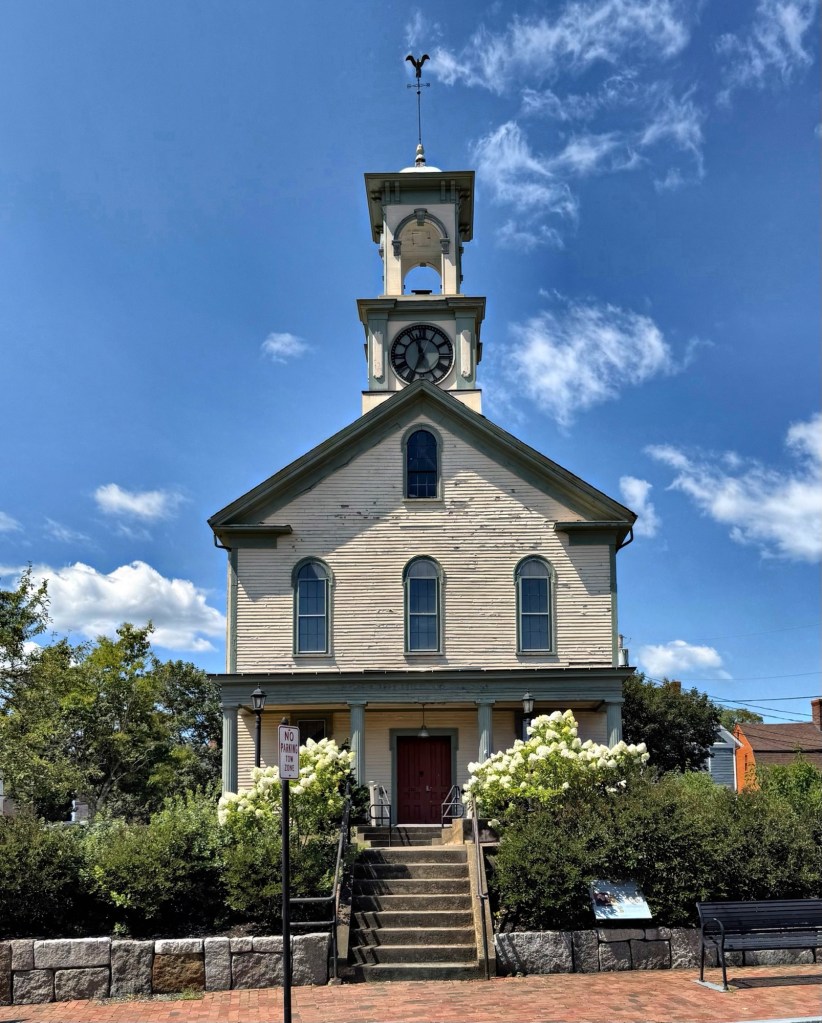
South Meeting House, Portsmouth // 1866

The South Meeting House was built in Portsmouth in 1866 and it is significant as a high-style Italianate building in the coastal town, and as the meeting place for the first African American church congregation in New Hampshire. The present building is the second building on this site. The initial structure was the Old South Meeting House, which was built for the South Church in 1731. The City demolished it in 1863 for the construction of the present building in 1866 as a Ward Hall for the Southern area of the community. The building’s upper level serves as a large public meeting space, and has seen use for political meetings, ward elections, and religious services The structure was the home of the People’s Baptist Church, the first African American church in New Hampshire, which organized in 1873, when the Freewill Baptists congregated on the second floor of this building. The church relocated in 1915 to 45 Pearl Street when the congregation raised money and bought their own building. In the late 19th century and early 20th century, the building continued to serve as a church, school, and community center until at least 1915. After World War II, it was boarded up due to economic circumstances and endured a period of neglect. In 1966, Strawbery Banke leased the building from the city for about fifteen years, during which it returned as a community resource and was renamed the South Meeting House. The city invested around $67,000 for repair work that also exposed further damage issues. In 1982, the city approved a proposal for the building to become a Children’s Museum. The community contributed to the required materials and labor that allowed the Museum to welcome the public from 1983-2008. Today, the city is still permitting restoration projects to preserve the historic building.

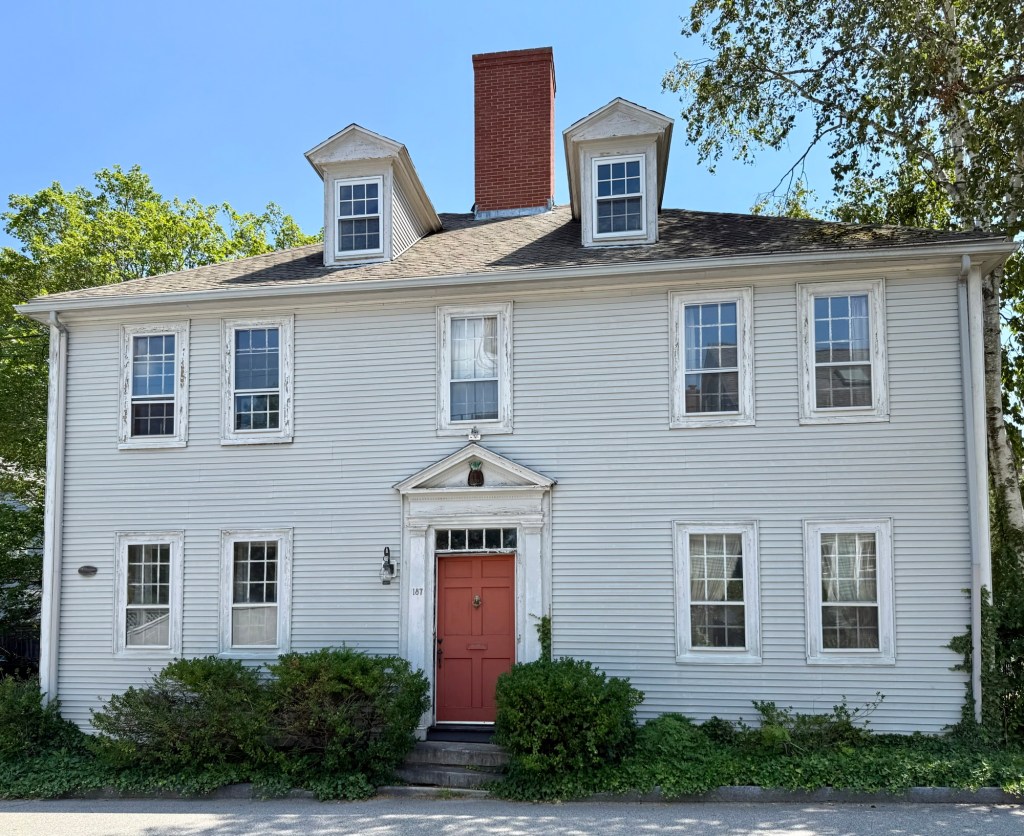
Tredick House // c.1802

The Tredick House is located at 187 Marcy Street in Portsmouth, New Hampshire and was built in 1802 for Captain Jonathan Martin Tredick (1777-1803) and his new wife, Martha Marshall on land gifted to them by Jonathan’s father, William Tredick. In a tragic shift of fortune, Captain Jonathan Tredick never got to live in his new house as he died at sea, with accounts differing, either from fever or being swept overboard. At the time, Jonathan and Martha had two children, 2 year-old Catherine Marshall Tredick (1801-1822) and newborn Jonathan Marshall Tredick (1802-1875). Martha, a sudden widow at the age of 26 with two children, was aided by her family and that of her late husband, and operated a store nearby to supplement her income until her death at home in 1872, she was 96 and never remarried. The late Georgian style house features a hipped roof with central chimney, pedimented dormers and a pedimented entry and 9-over-six sash windows on the house.

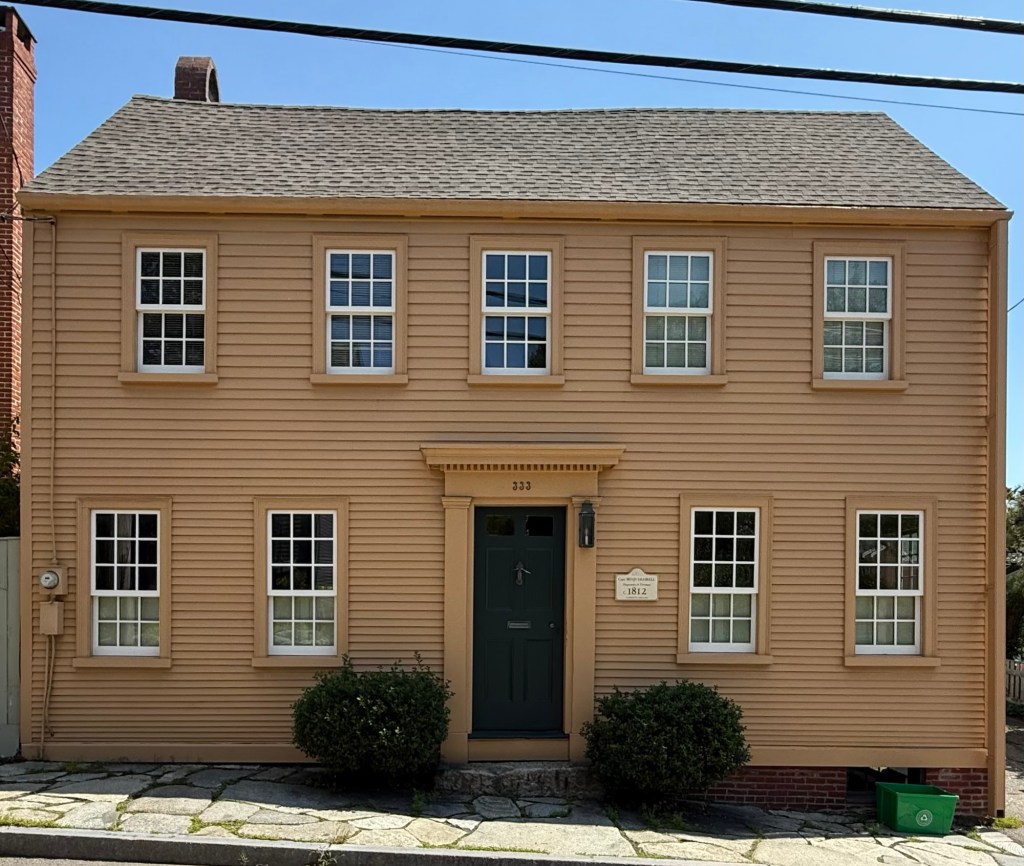
Captain Benjamin Damrell House // c.1812

The people and buildings of Portsmouth, New Hampshire, have always been closely tied to the sea. Many old houses and commercial buildings here were built for merchants, ship builders, sea captains, and fishermen, who made their living from the charming port town. This historic house at 333 Marcy Street in the Downtown area of Portsmouth, was built around 1812 for Benjamin Damrell (1781-1821) a sea captain, privateer during the War of 1812, and member of the Portsmouth Marine Society and Alert Fire Society of Portsmouth, a volunteer fire fighting group. Captain Damrell died in 1821 while at sea and his property was inherited by his widow, Lucy, who appears to have remained here for some time, raising their daughter.

Joshua Delano House // c.1785

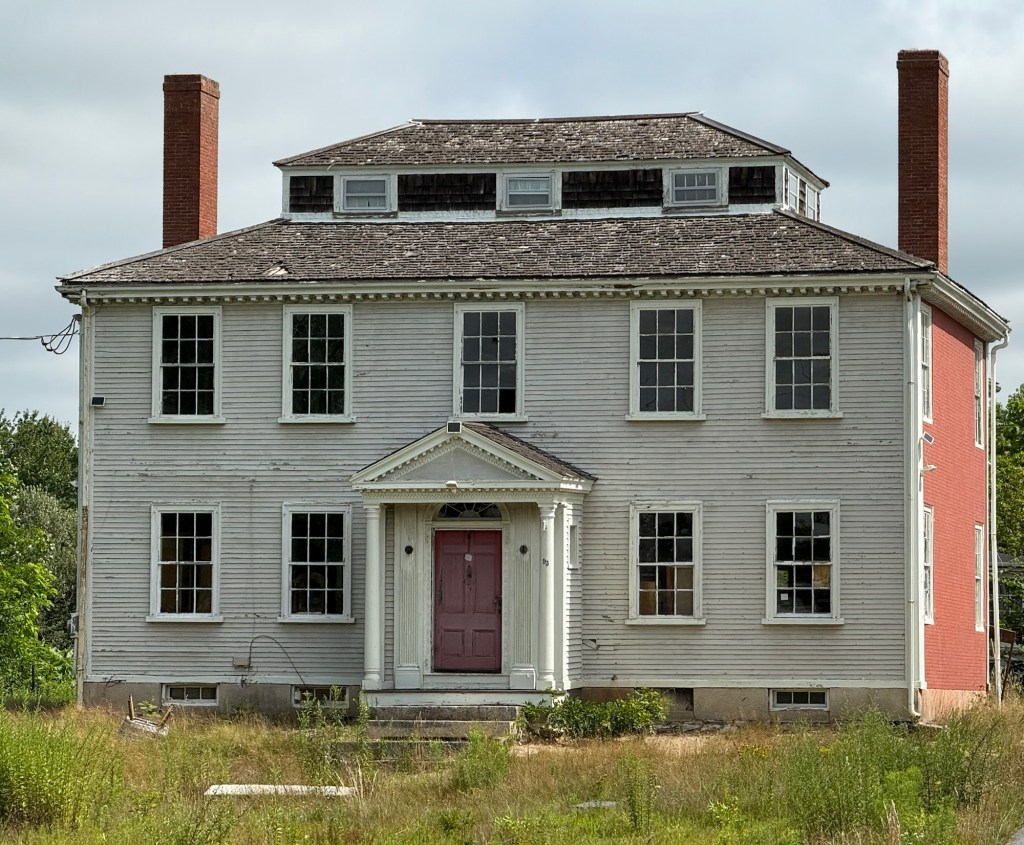
One of the finest Federal period houses in Kingston, Massachusetts, a town full of amazing Federal homes, can be found at 93 Main Street, set away from the street on a sizable lot. The residence here was likely built in the 1780s or 1790s as one of a series of Delano Family houses near Rocky Nook, a peninsula at the end of the Jones River, where many new ships were built and traversed their way to Plymouth Bay and ports in the Indies and beyond. The Delano Family had built the Delano Wharf and Warehouse and operated extensive salt works just north of the wharf on the Nook, along with owning many seafaring vessels, many of which were built by Kingston shipbuilders. This house was seemingly built for Joshua Delano and is architecturally unique with brick end walls, hip roof with a monitor which projects in the center of the hip, and a classical entry portico sheltering the projecting door surmounted by a fanlight transom. The property has recently been purchased. Hopefully the new owners treat this architecturally and historically significant residence with the care she deserves. 

Delano Warehouse and Wharf // 1803

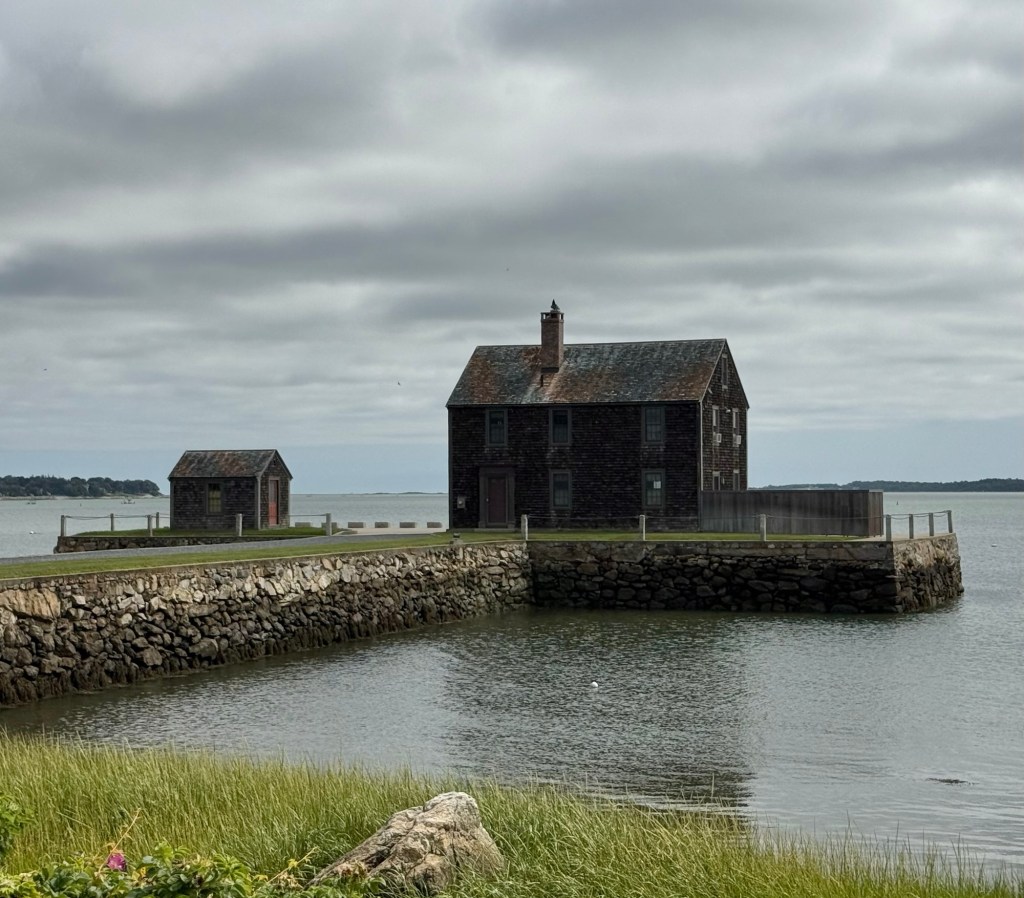
In 1802, Kingston-based merchants and landowners Benjamin Delano and brother-in-law Peter Winsor built this stone wharf and warehouse at Rocky Nook, a small peninsula at the end of the Jones River where it meets Plymouth Bay. The Rocky Nook had several warehouses in the early 1800’s which were used to hold cargo for the busy Kingston vessels that carried passengers and goods all down the eastern seaboard for transit, with larger vessels sent to the West Indies for trade. Benjamin Delano and his son Joshua either owned or partly owned 37 vessels between 1803 and 1882 and were a wealthy family that built their fortune on shipbuilding and trade. The warehouse, built at the end of the wharf was used to store goods and also served as a ship chandlery, a store selling goods needed for newly outfitted ships that were berthed up the Jones River.  A combination of the coming of the railroad and the need for faster and bigger vessels caused the decline of the shipping business in Kingston in the late 19th century with the shipbuilding industry largely evaporating by the 20th century. The Delano warehouse at the end of the wharf has since been converted to a private residence yet retains its unique character and siting with arguably the best view in town. 

Major John Bradford Homestead // 1674

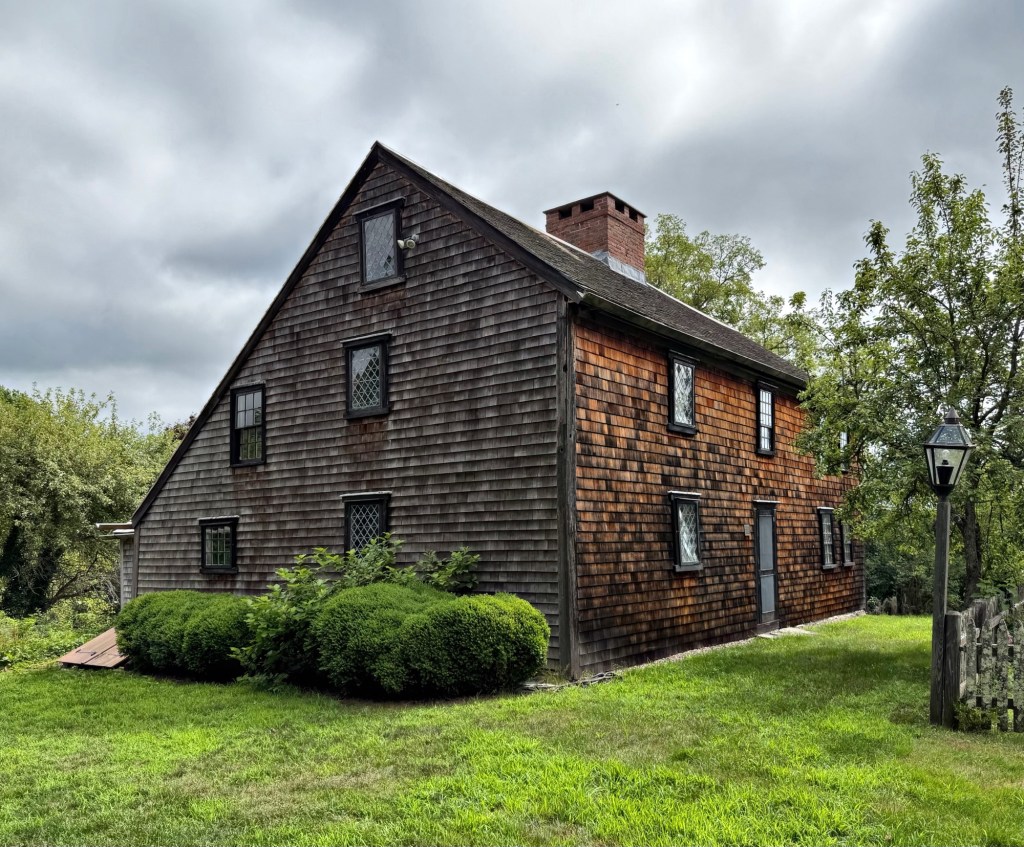
The Major John Bradford Homestead (also known as the Bradford House) is a stellar and well-preserved example of a First Period house in Kingston, Massachusetts. The house was reportedly built by Major William Bradford (1624-1704), the son of Governor William Bradford  who arrived to Plymouth via the Mayflower in 1620 and served as Governor of the Plymouth Colony between 1621 and 1657, purportedly built the west (left) half of the house in 1674 for his eldest son John Bradford and his bride, Mercy Warren. John Bradford (1653-1736) served as selectman, a deputy from Plymouth, and as a representative in the Boston General Court, who in 1717, led in the establishment of Kingston as a new town by donating land for the meeting house, school house, burial ground, training green, and minister’s house. In around 1715, John Bradford expanded this house which was not sufficient to house his wife and seven children. After centuries, the house began to show its age, and in 1921, coinciding with the tercentenary of the Pilgrims arriving to Plymouth, the Bradford House was thoroughly documented and restored by Frank Chouteau Brown and George Francis Dow. Since 1921, the property (including a historic barn moved here from a nearby site) has been owned and preserved by the Jones River Village Historical Society, who operate the property as house museum.