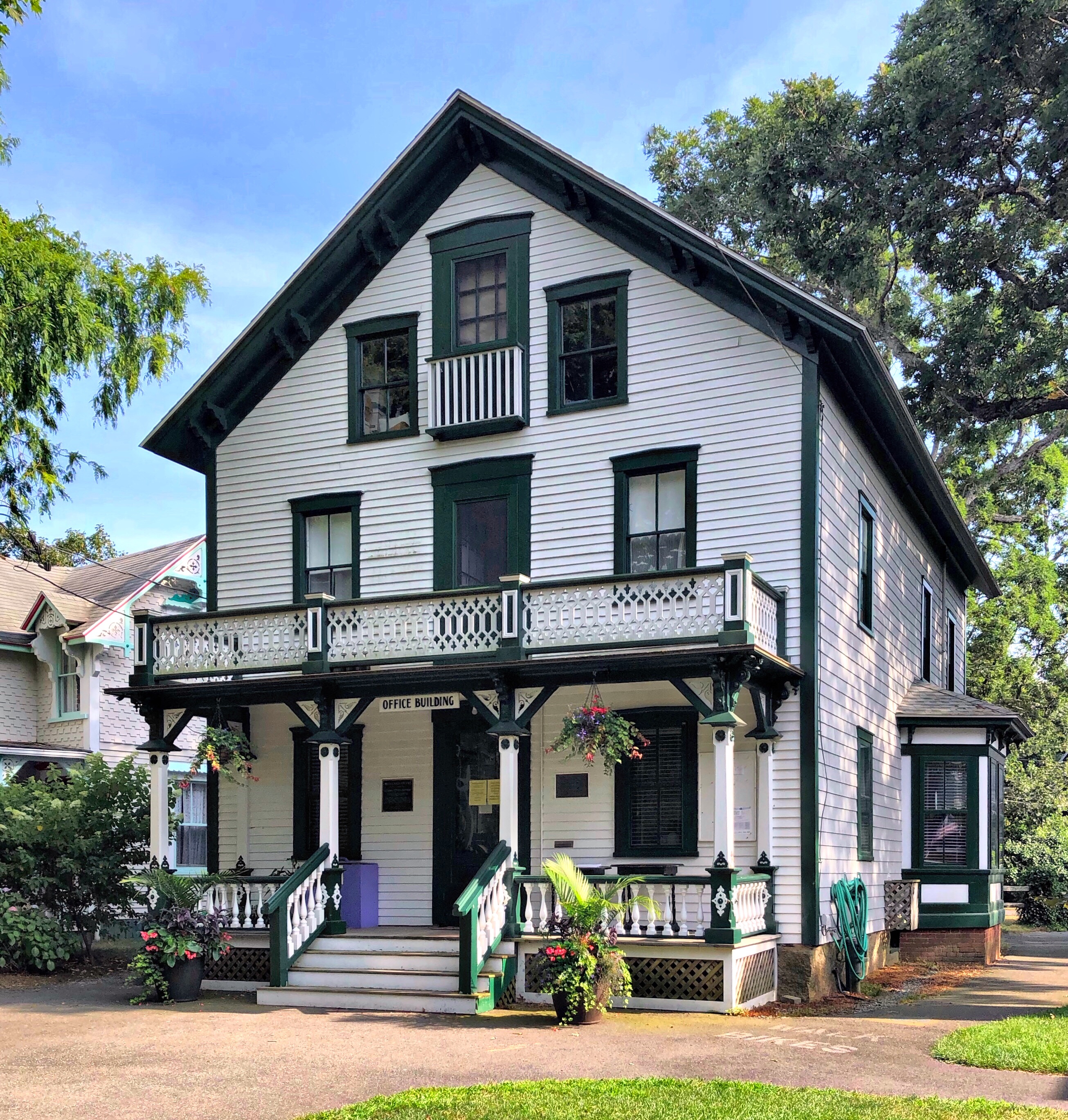
Located at the center of the Wesleyan Grove, – the Martha’s Vineyard Camp Meeting Association – this Italianate building has long served as a hub of the active summer community. The building was constructed in 1859, before any cottages were built in the newly formed summer colony. The office building was not only the headquarters for the Camp Meeting Association, it also served as a storage space for the baggage of the many who stayed in tents, many who didn’t have the means to purchase or rent a cottage. The building even was home to the associations’ post office. It now houses the Association director’s offices and contains the lease holders records back to 1864, a great way to learn about the diverse groups of people who visited and worshiped in this camp.
This charming little cottage in Oak Bluffs was built in 1876 for Charles N. Jones, a resident of Medford, MA who had a home built there in 1872. His family’s summer cottage on Martha’s Vineyard was designed by the Ripley Brothers, Alonzo and Walter, carpenters who lived in town and designed and built many of the charming little summer homes there. The home features a wrap-around porch, a covered balcony at the second floor, and pierced board balustrade and cornerboards. Oh, and the paint scheme is perfect!
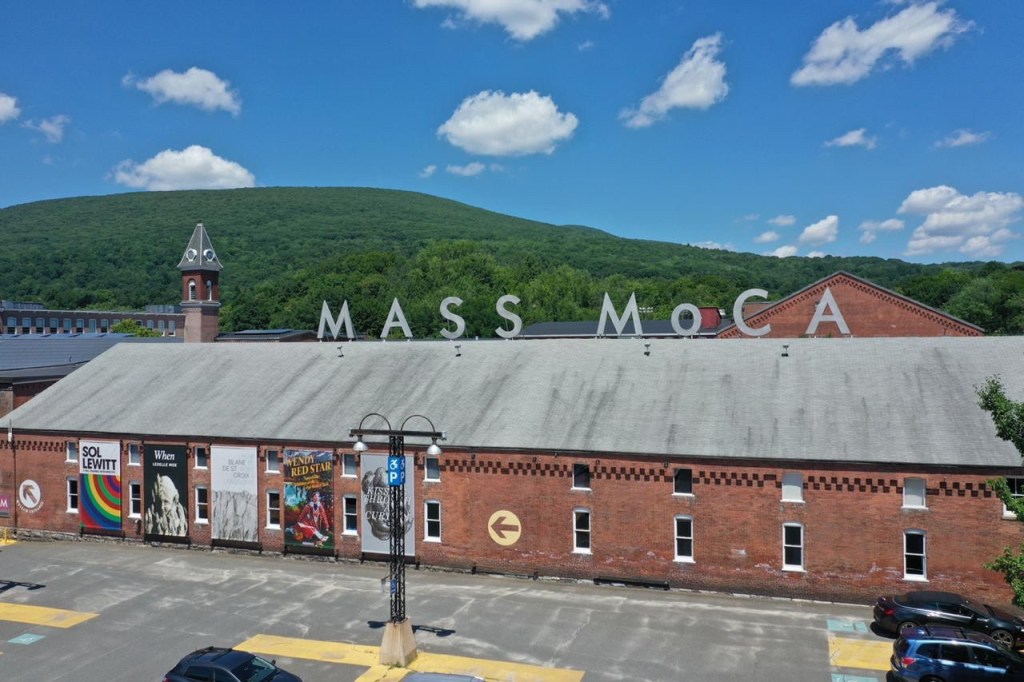
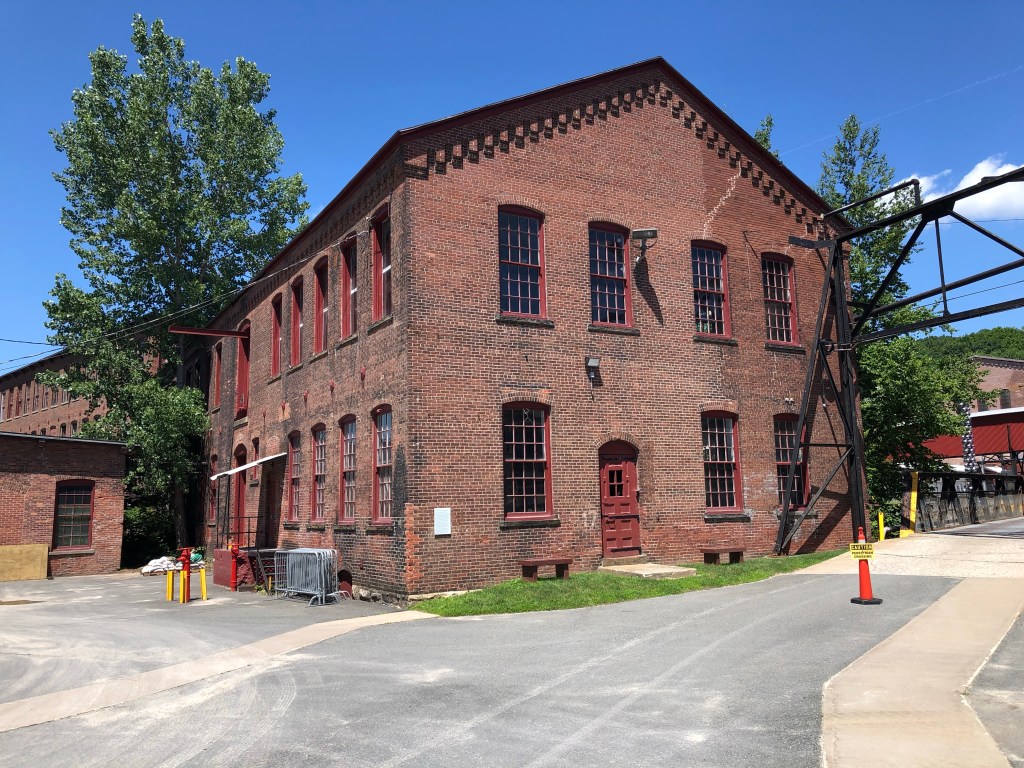
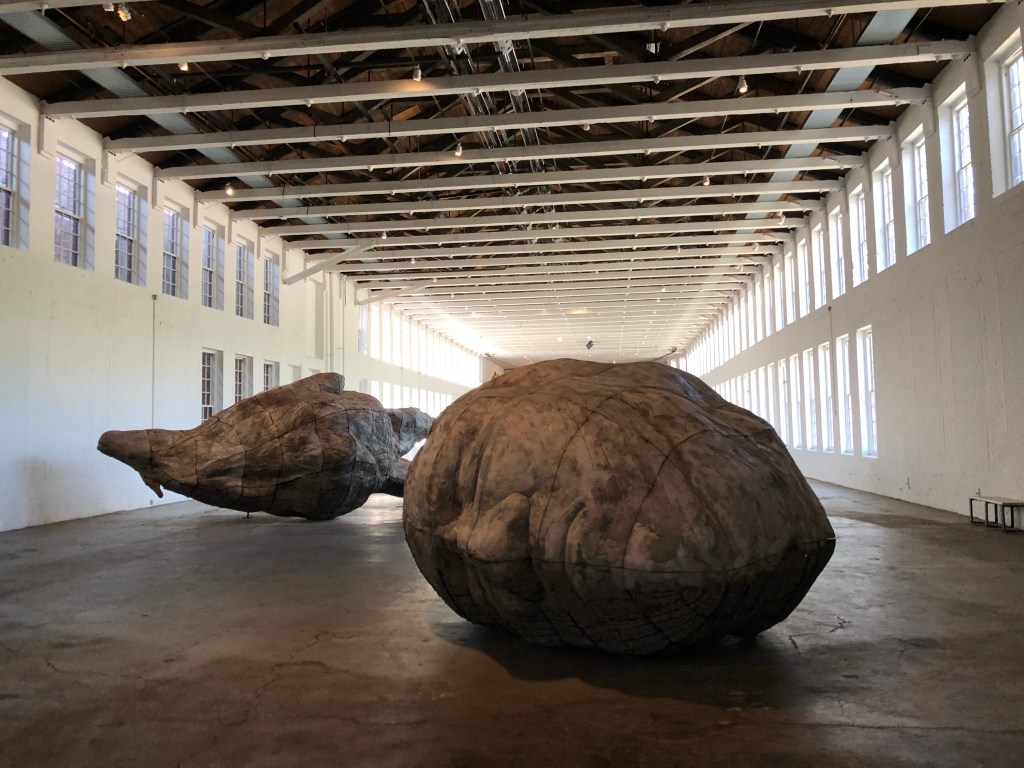
On a last-minute trip to the Berkshires, I couldn’t help but stop at the recently re-opened Massachusetts Museum of Contemporary Art (Mass MoCA) in North Adams. Being a huge nerd for industrial history and repurposed mills and factories, it was an absolute treat to walk through the large brick and steel buildings and wings lined with steel casement windows providing the perfect scenery for some amazing artworks. What is now known as Mass MoCA, – one of the premier art museums in New England – was once Arnold Print Works, a one time world leader in textile manufacturing with offices in New York City and Paris.
The Arnold Print Works were built on the Hoosac River near the center of North Adams. The company was the town’s largest industry during the city’s economic heyday from the Civil War until the early 20th century. The company was founded in 1861 by the John, Oliver, and Harvey Arnold, who began production of printed cloth at an existing cotton mill. At the dawn of the American Civil War, the newly formed company became flush with money due to government contracts for manufacturing Union Army uniforms. The company expanded after the war until a fire destroyed nearly all of the wooden buildings on the site. After the fire, a majority share of the company was purchased by Albert Charles Houghton, who became the first mayor of North Adams, and he oversaw the expansion and prosperity of the company, starting with new buildings of fire-proof construction.
By the early 20th century, many textile and cotton manufacturing shifted to the American South severely crippling the mill’s profits. In 1929, Sprague Electric Company moved to North Adams from Quincy, Massachusetts, and began buying the Arnold Print Works buildings. The print works moved much of its operation to nearby Adams and concentrated on a few particular products in its North Adams plant. The print works was finally sold in 1942 for just $1.9 million dollars, a far departure from its once prosperous past. The plant was shortly thereafter acquired by Sprague Electric Company.
While largely leaving the building exteriors as they were, Sprague made extensive modifications to the interiors to convert the former textile mill into an electronics plant. Sprague physicists, chemists, electrical engineers, and skilled technicians were called upon by the U.S. government during World War II to design and manufacture crucial components of some of its most advanced high-tech weapons systems, including the atomic bomb.
[Outfitted with state-of-the-art equipment, Sprague was a major research and development center, conducting studies on the nature of electricity and semi-conducting materials. After the war, Sprague’s products were used in the launch systems for Gemini moon missions, and by 1966 Sprague employed 4,137 workers in a community of 18,000, existing almost as a city within a city. From the post-war years to the mid-1980s Sprague produced electrical components for the booming consumer electronics market, but competition from lower-priced components produced abroad led to declining sales and, in 1985, the company closed its operations on Marshall Street.] (Mass MoCA History)
The complex sat vacant briefly before the Williams College Museum of Art, led by its director, Thomas Krens—who would later become Director of the Solomon R. Guggenheim Museum—advocated for a museum space for contemporary art that would not fit in traditional art galleries. The nearby Arnold Mills seemed like a perfect, yet daunting task to repurpose. Bruner/Cott Architects of Cambridge were hired to repurpose the mills and oversee the massive adaptive reuse project which today totals nearly 300,000 square feet of galleries and art venues.
One of my favorite commercial buildings in Downtown Boston is the former Yankee Publishing Building on Union Street, for its architecture and the fact its surrounded by some great pubs! The building was constructed in 1874 for Cyrus Carpenter (1821-1893), a prominent manufacturer and dealer of furnaces and stoves in Boston. He owned the building, but ended up leasing the space to a competing furnace company, Walker & Pratt Manufacturing Company. Carpenter owned the building until his unexpected death in 1893 when he was run over by a Back Bay horse car, when it was conveyed to his wife until her death. The building was later purchased by the long-time tenants who continued to sell furnaces and other goods out of the store with offices above.
The business by which the building is currently known is Yankee Publishing. It is an independent family-owned business that was founded in 1935 and based out of Dublin, New Hampshire. It publishes Yankee Magazine ten times a year (the magazine has a paid circulation of 500,000; subscribers primarily residing in the Northeast) as numerous travel guides and other publications in print and online to guide locals and tourists of New England alike.
William Jefferds Jr. was born August 30, 1779 in Kennebunk. On October 25, 1802 he married Sarah (Sally) Walker who was born in Arundel on March 4, 1783. Twenty years later, in 1803, Captain Daniel Walker gifted his son-in-law, Captain William Jefferds, Jr., “80 square rods of land, with love and affection” on the lane leading to Walker’s Wharf (he also gifted land to his other son in law, Nathaniel Lord. In 1804 the 2-story, Federal-style building that now houses Captain Jefferds Inn was built as their private home.
Capt. Jefferds was a ship owner and captain in the West Indian trade; he later became a merchant in Kennebunkport. He and Sarah had 11 children, and their family was considered one of the most aristocratic in Kennebunkport. Following Sarah’s death at age 88 in 1871 (her husband had predeceased her in 1851), the household furniture was sold at public auction and the home sold outside of the family.
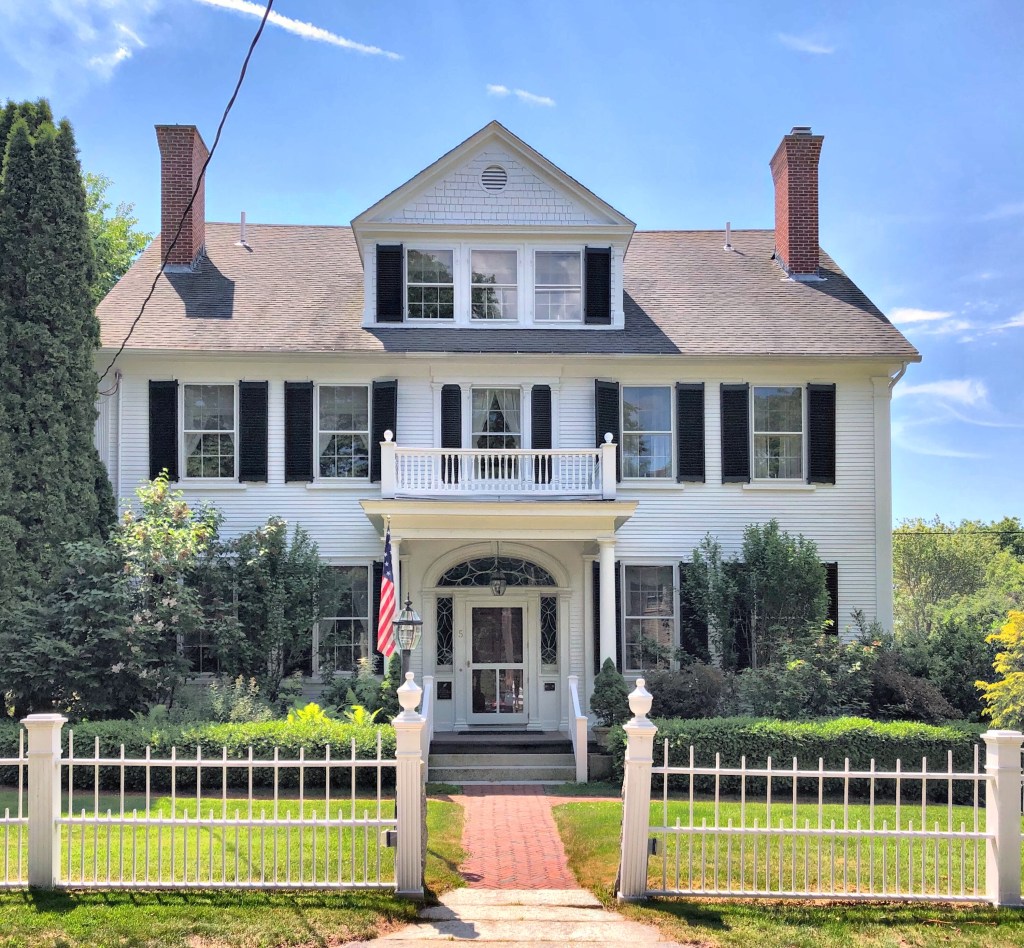
The house was a two-story hipped roof Federal style dwelling, somewhat outdated by the latter half of the 19th century. By the 1880s, the Agnew Family who owned it at the time, had the home remodeled with Colonial Revival detailing, including the portico and large central dormer. The home was eventually converted to an inn, and is known as the Captain Jefferds Inn.
Check the Inn’s website for more images and history!
Away from the busy coast of Kennebunkport, Clock Farm, a mid-19th century farmhouse with an odd clock-tower caught my eye while driving by. Clock Farm is a rambling extended farm complex that remains a landmark in the more rural section of town. According to historians, the oldest part of the complex was a home that was later converted to one of the ells, was built in 1773 by a Peter Johnson. By the 1850s, the 1 1/2-story Greek Revival home and barn were built. In the late 19th century, the property was purchased as a summer residence by Thomas Lemmons, factory owner in Lawrence, MA. The story associated with the clock is that originally was mounted on his factory, but kept such bad time that his employees complained. In the early 20th century Emmons had the tower specially built to house the clock, which was transported here from Lawrence.
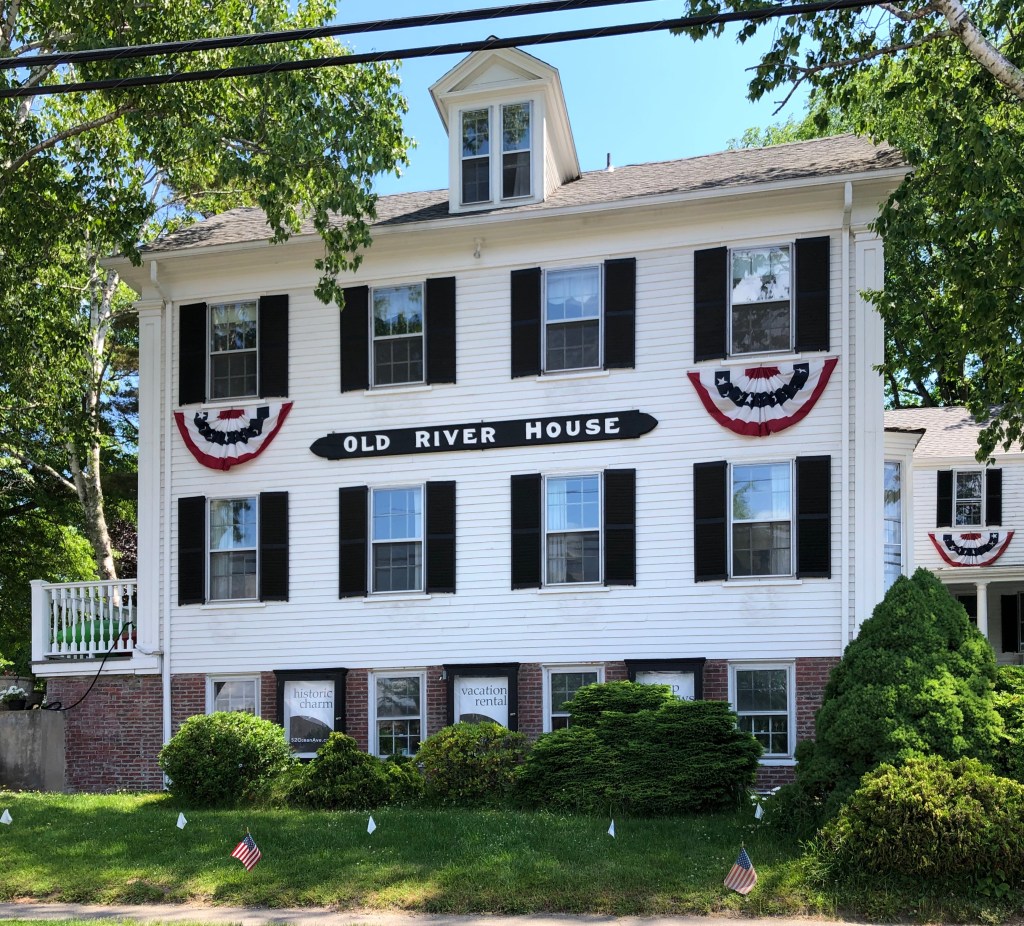
This Greek Revival home was built around 1848 for Thomas Maling, a rigger (person who installs the system of ropes and chains for a ships mast and sails). The home is built upon a raised brick foundation, likely to elevate it from the rising and receding nature of the Kennebunk River just across the street. By the 1890s, the home was converted to an inn, known as the Maling’s Inn, after the original owner. Today, the inn is known as the Old River House. On the lot, the old rigging loft remains and has been converted on the inside as additional rooms.
Built in 1824, the South Church in Kennebunkport Village looked very much as it does today, with the exception of the portico, which was added in 1912. In the early 19th century, architects were seldom employed in such remote areas therefore, builders often used manuals and examples of other churches in addition to their own experience gained from working the large shipbuilding yards adjacent to the Kennebunk River. The cupola, restored in 1991, is designed after an example by Christopher Wren and the steeple retains the original 1824 Aaron Willard clock with its unique wooden face, still keeps accurate time and rings on the hour. The church remains as an active space with a growing congregation in the summer months.
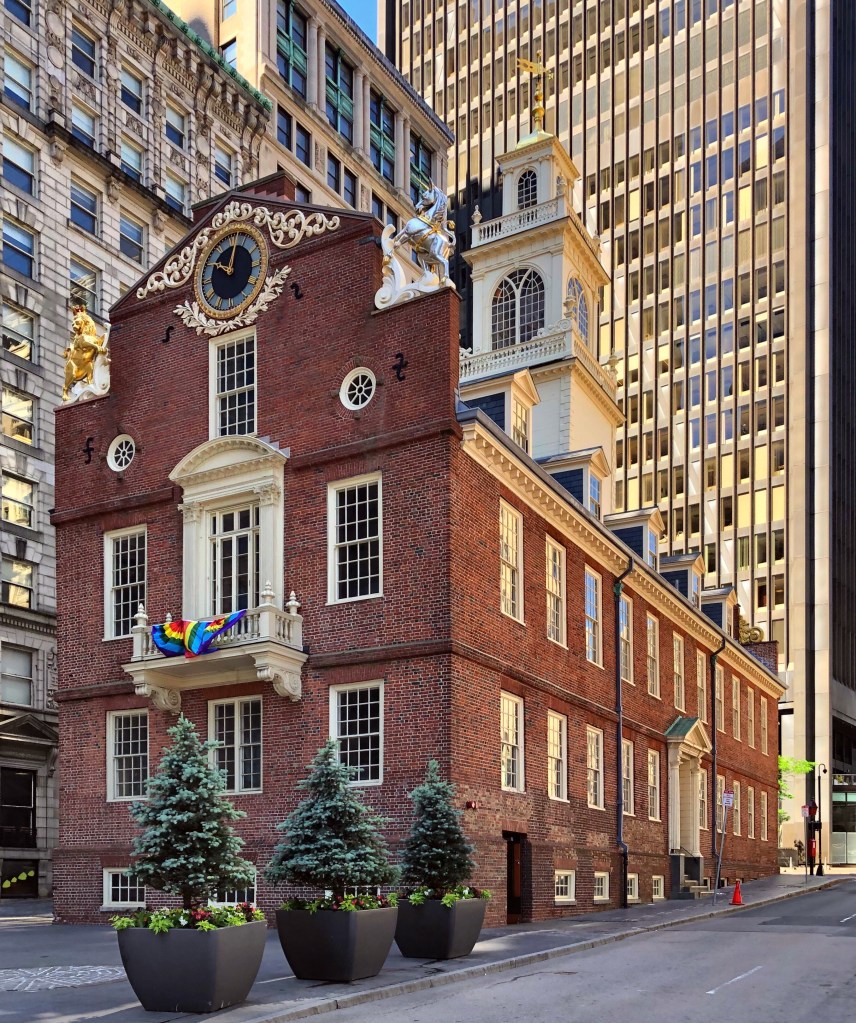
Nestled among the towering skyscrapers of Downtown Boston, the Old State House stands proudly, giving us a glimpse into pre-Revolutionary life and events. Happy Fourth of July!
Built in 1713, the “Town House” as it was originally known, served as a merchants’ exchange on the first floor and the seat of colonial and later state government on the second floor throughout the 1700s. The royal governor, appointed by the King of Great Britain, held his office in the building until 1775, and from the balcony gave voice via decrees and speeches to the King 3000 miles removed from London. Above the balcony, a lion and unicorn—royal symbols of the King of Great Britain—graced the main façade facing the public square.
“A cobblestone circle beneath the Old State House balcony marks the site of the 1770 Boston Massacre. Tensions ran high in Boston in early 1770. More than 2,000 British soldiers occupied the city of 16,000 colonists and tried to enforce Britain’s tax laws, like the Stamp Act and Townshend Acts. American colonists rebelled against the taxes they found repressive, rallying around the cry, “no taxation without representation.” On the frigid, snowy evening of March 5, 1770, Private Hugh White was the only soldier guarding the King’s money stored inside the Custom House on King Street. It wasn’t long before angry colonists joined him and insulted him and threatened violence. Calling reinforcements, a group of British soldiers stood near the Town House and were pelted with snowballs and rocks, with one soldier firing out of panic. Once the first shot rang out, other soldiers opened fire, killing five colonists–including Crispus Attucks, a local dockworker of mixed racial heritage–and wounding six. The event was one of the flashpoints which began the American Revolution.
Six years later, on July 18, 1776, Colonel Thomas Crafts read the Declaration of Independence from the balcony of the Old State House as a statement of strength from where the King’s declarations were given just years prior.
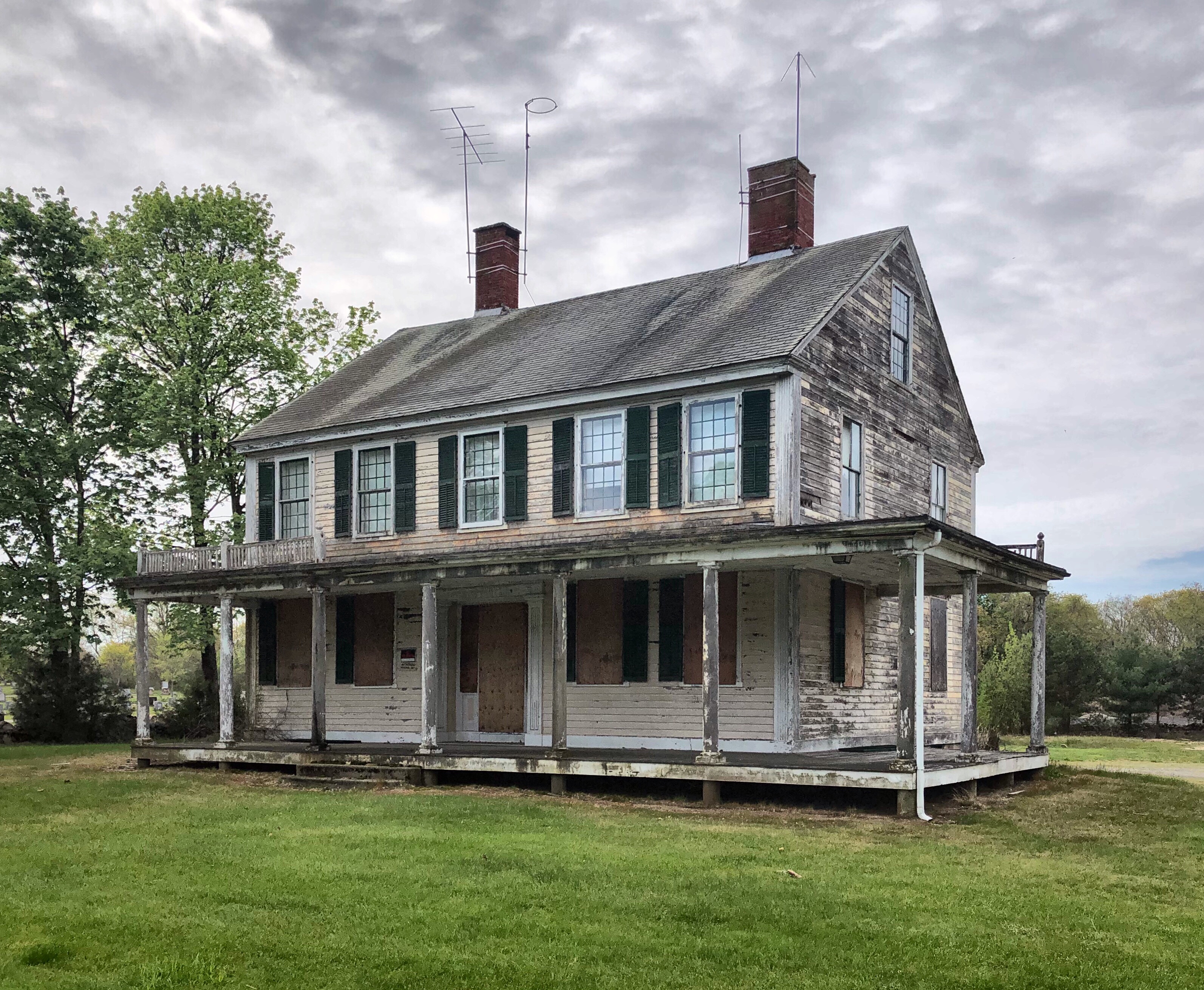
This old farmhouse in Swansea, MA, was built by 1820 for Preserved Gardner (1795-1873), one of five sons of Peleg Gardner, who owned much of Gardners Point. Preserved lived in the home until his death in 1873, and the home and acres of farmland were willed to his only son to live past childhood, Ira Gardner (1836-1901). Ira donated a large tract of land adjacent to the farmhouse to the town in 1882 for a cemetery, in which his father was buried. Later, the farm was purchased by Thomas D. Covel a bank president of Fall River who operated it as a gentleman’s farm and made the house his summer home. A ‘gentleman farmer‘ utilized their farms for pleasure rather than for sustenance or profit. After WWII, the land was purchased by the town to be used as a park and the property is still owned by the town. The Federal home with its veranda that wraps around the side has been neglected by the town for decades while the parks adjacent are maintained adequately.
The town has weighed various options for the home ranging from demolishing it, to preserving the front facade and converting it to a garage and storage shed (with a small museum on the second floor). I hate that idea personally. This seems like an ideal candidate for the town to allow a private individual or developer to move the home and restore it back to its original grandeur. Thoughts?






 Buildings of New England