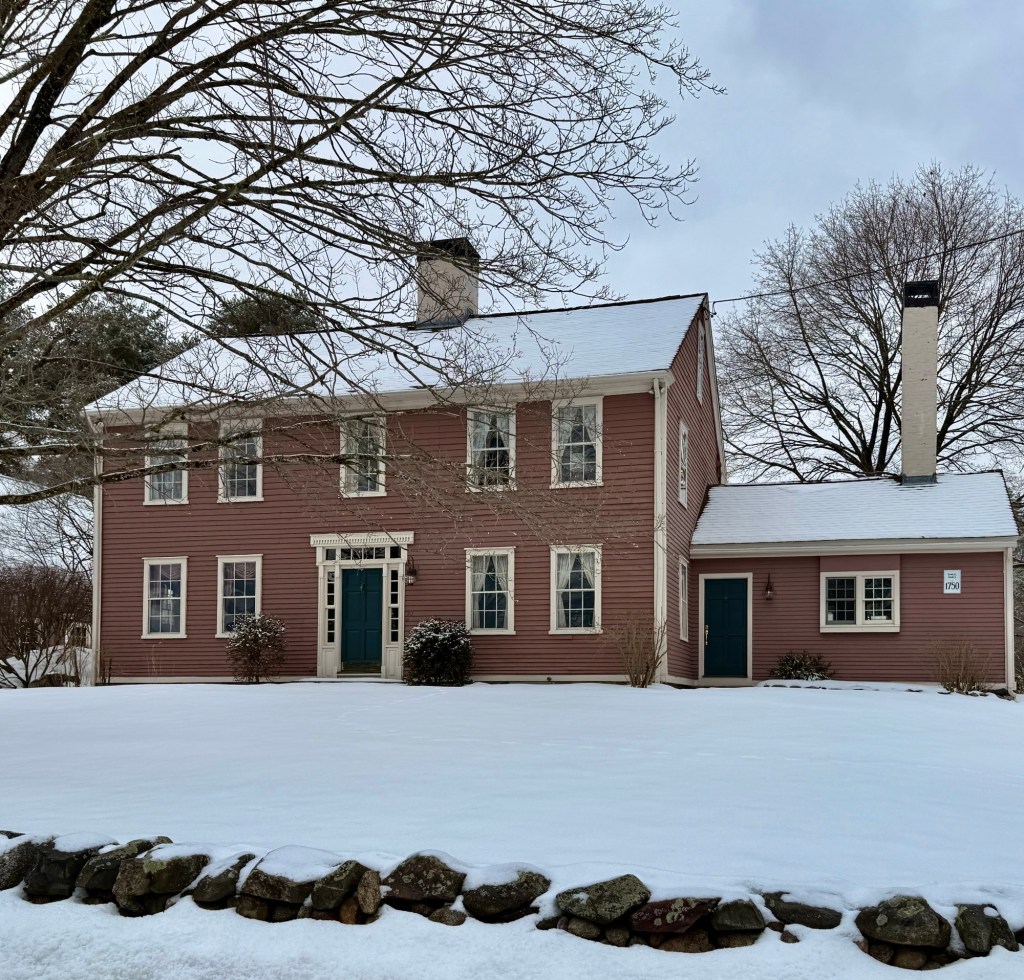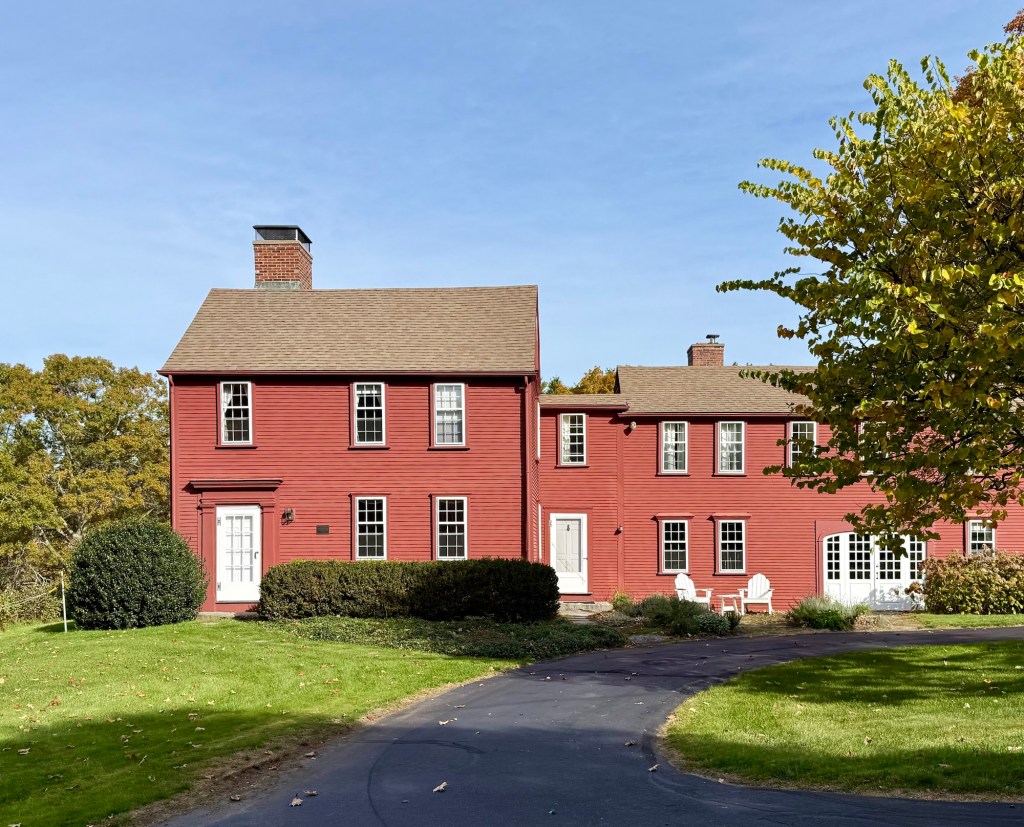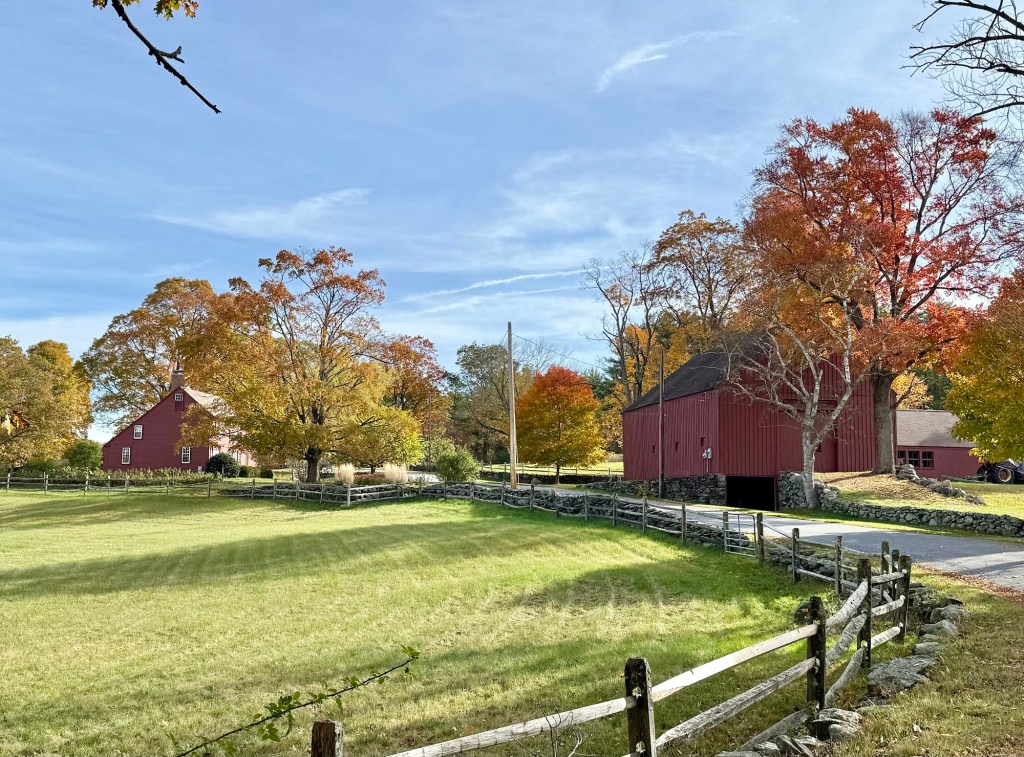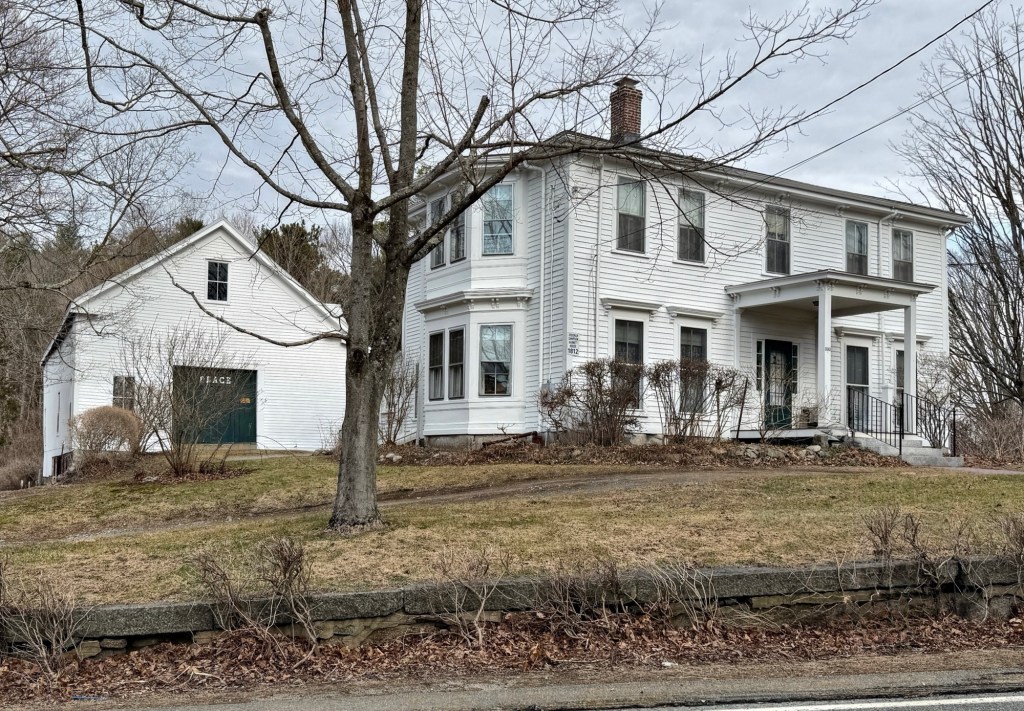
Benjamin Adams Farmhouse // 1775

Benjamin Adams (1750-1843) was born in Milton, but relocated to East Sudbury (later renamed Wayland) and purchased property here from a Bezaleel Moore, a tanner and farmer. Soon after moving to town, in 1775, he mustered with the minutemen under the command of Capt. Nathaniel Cudworth. After the conclusion of the war, Benjamin married Elizabeth “Betsy” Adams and they expanded the old farmhouse (today at 34 Lincoln Road) and raised their children here. The property remained in the family until 1873 when it was purchased and operated as a dairy farm. In the 1920s, the farmhouse was expanded with Colonial Revival additions and a renovation for use as a summer residence and gentleman’s farm. It is believed that some of the interior wood paneling inside the house was added at this time and was salvaged from the Pequod Inn, which was razed around that time.

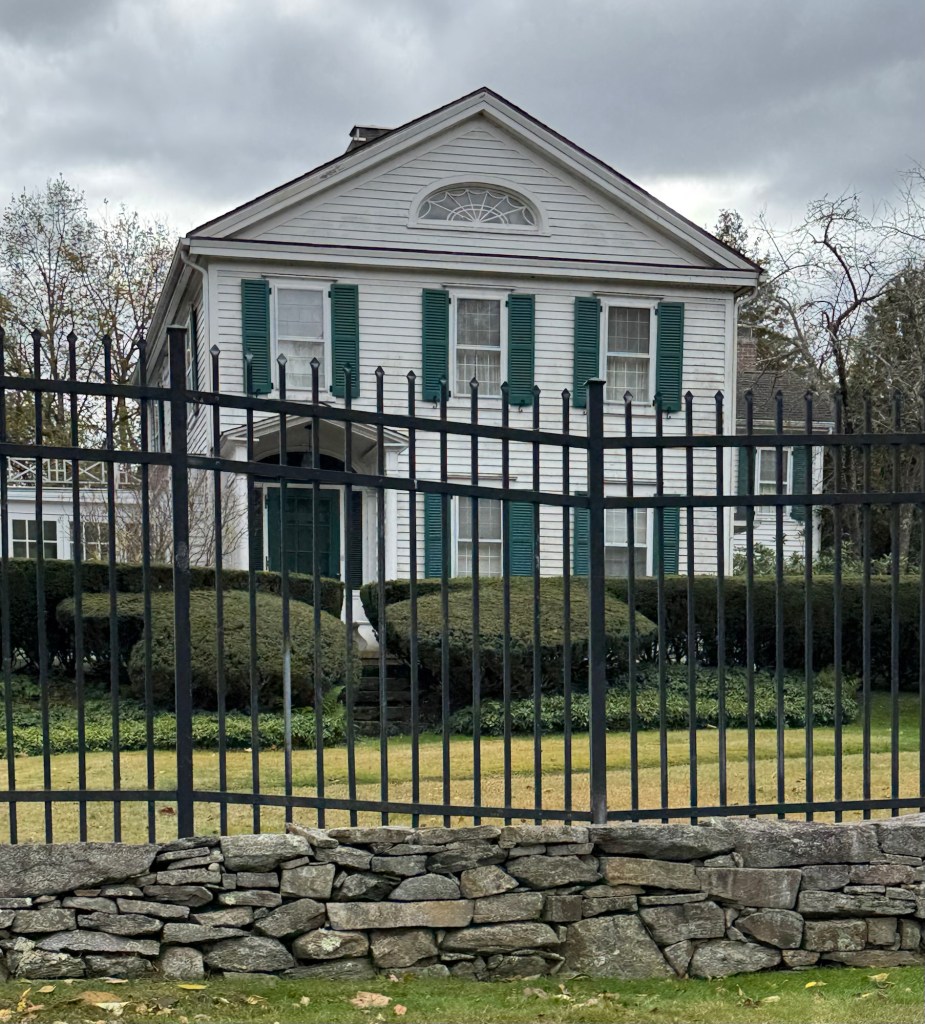
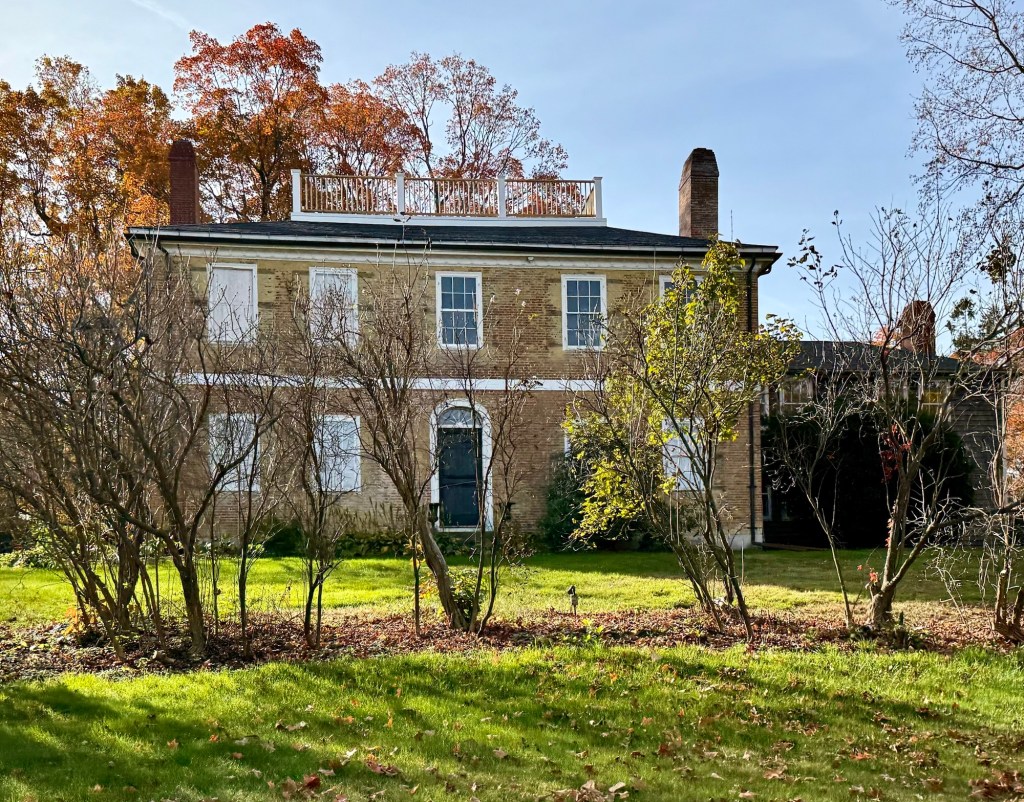
Osborne Homestead // c.1840

This Greek Revival style farmhouse in Derby, Connecticut, was originally built around 1840, though little is known about its first occupants. In 1867, Wilbur Osborne (1841-1907), who owned and ran several industries in Derby, Ansonia and Bridgeport, and his wife, Ellen Lucy Davis, moved to the house, who together, also ran a dairy farm on their farmland. Their only daughter to survive to adulthood, Frances E. Osborne (1876-1956) took over the farm after her father’s death and became a prominent businesswoman. At age 16, Frances lost the vision in one eye due to an accident, and, as a result, never completed her public school education. Frances Osborne, in an era when women were denied leadership opportunities in the business world, succeeded through pure determination and an excellent business sense. Her achievements included becoming president of Union Fabric Company, vice president of Connecticut Clasp, and treasurer of the F. Kelly Company. She was also a founding partner of Steels and Busks of Leicester, England. She married Waldo Stewart Kellogg in 1919, and he took charge of the dairy, using selective breeding to make the herd “famous throughout New England for quality milk production.” Waldo and Frances Kellogg enlarged and remodeled the house to its current form between 1919 and 1925 adding wings and renovating the interiors in the Colonial Revival style. Waldo Kellogg died in 1928, but Frances stayed in the house until her death in 1956. Just before she died, she deeded her entire 350-acre (140 ha) estate, including Osbornedale, to the State of Connecticut. The state now operates the house and grounds as the Osborne Homestead Museum; the surrounding land comprises Osbournedale State Park.

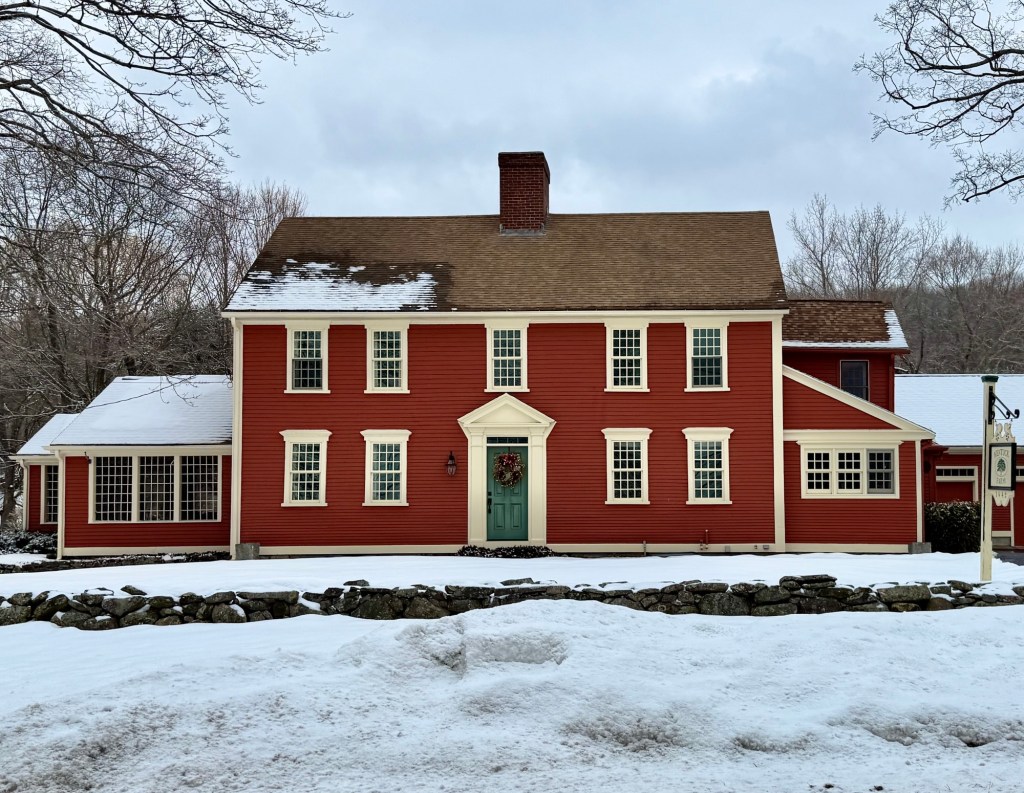
Whitcomb Inn and Farm // c.1708

The Whitcomb Inn and Farm in Bolton, Massachusetts, is believed to be the oldest extant building in the rural community and is believed to have been built around 1708. The oldest portion of the farmhouse, the three-bay, two-story, side-hall house, was likely built when David Whitcomb (1668-1730) acquired the land from his father. David married Mary Hayward in 1700 and the couple had many children, necessitating additions to the old farmhouse, including the rear saltbox with a “Beverly jog” (a section of the rear addition projecting beyond the side of the original structure) that was built in the 1710s. The building underwent stylistic changes in the 19th century, most of which were removed during a major restoration in 1937–38 by Philip Phillips, a Harvard professor in Archaeology, who drew the plans for the restoration of the old house and 1850s barn. Professor Phillips was also a conservationist, and donated some of his land, which directly abuts the highway (built in 1962) was donated to the town and is now known as Split-Rock Trail. The Old Whitcomb Inn and Farm was listed on the National Register of Historic Places in 2002, ensuring that any future highway expansion or re-routing would require preservation of this significant home.

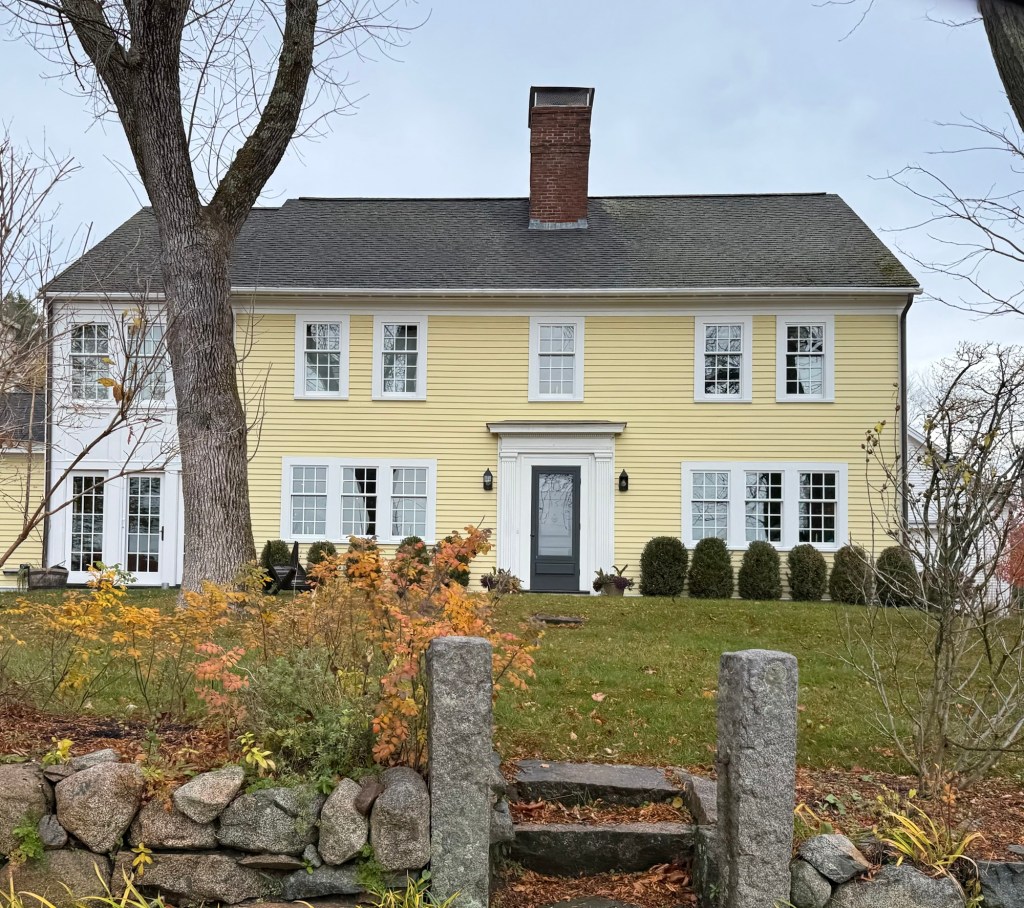
Captain Caleb Moore House // c.1795

This stately Federal style residence constructed of brick sits atop a lovely hill in the town of Bolton, Massachusetts, and has been lovingly maintained by its owners for over 225 years. The home was built by Caleb Moore (1768-1826) just before his marriage to Achsah Whitney in 1796. Caleb was a merchant and later a shareholder and president of the Lancaster & Bolton Turnpike Corporation, chartered in 1805, to collect tolls for travellers from or to Boston from central Massachusetts. Caleb and Achsah had eight children, sadly, five of their children died as teenagers or young adults. The farmhouse was inherited by Alpheus Moore (1802-1882), who operated his late-father’s store and held a liquor license, possibly running the home as a tavern along the turnpike.

Bailey Farmhouse // c.1767

One of the oldest homes in Weare, New Hampshire is this large, Georgian farmhouse apparently constructed around 1767 by Samuel Bailey. Samuel’s father, Ebenezer Bailey, had purchased a property called “Lot 54, Range 1” in Weare, New Hampshire, which he then divided among his sons, Daniel, Samuel and Ebenezer Jr. for their own settlement in about 1767. Samuel received this lot in South Weare, upon which, the twenty-two-year-old and his wife established a farm and a family of at least eight children. Samuel died in 1824 and the farm was inherited by his son, Amos Wood Bailey, who continued operations here. Today, the large five-bay Georgian farmhouse is connected to a massive barn. It is a really spectacular property.

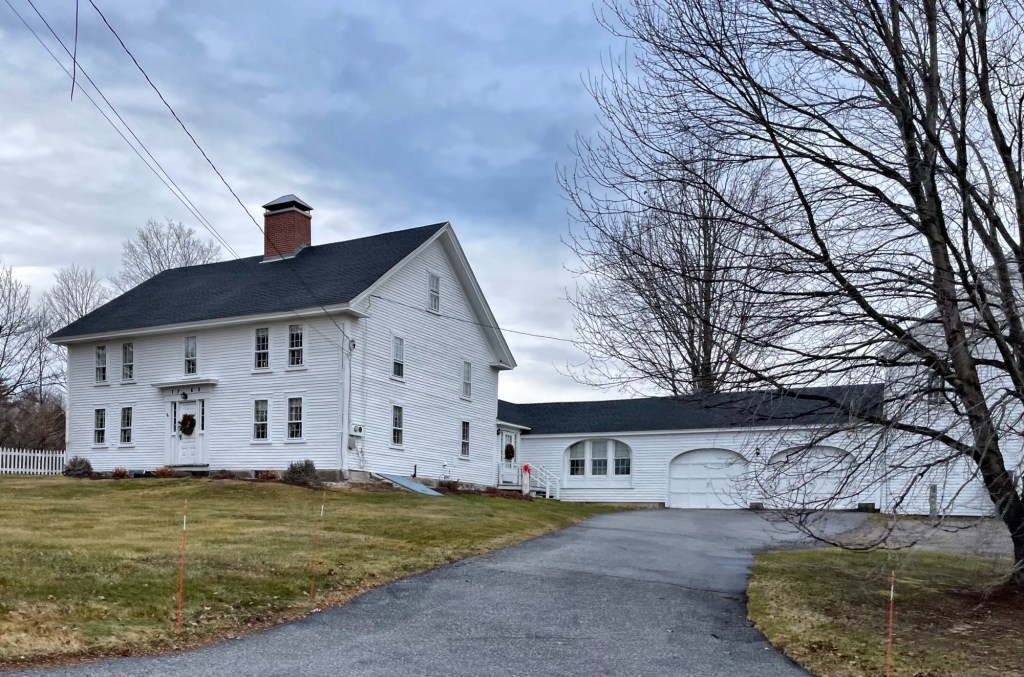
Cory House // c.1859

I stumbled upon this Greek Revival farmhouse located on one of many dirt roads in Landgrove, Vermont and had to snap a few photos! I couldn’t find much on the history of the house besides the fact it was listed on an 1869 atlas as the property of an “I. Cory”. The five-bay farmhouse has an elaborate door treatment and bold corner pilasters all perched behind a historic stone wall. The house telescoped outward with additions, eventually connecting it to what is now a garage. This farmhouse purchased in the 20th century by John A. Brown, who worked as Dean of Students at Princeton University.

Atherton Farmstead // c.1840

This beautiful farmhouse in Cavendish, Vermont is located along a winding dirt road and has ties to one of the town’s original family’s. A home was built here in 1785 and changed hands numerously over the first few decades of its existence. The farmhouse that was built also served as a tavern for travellers along the newly laid out Wethersfield Turnpike. It is possible that the cheap land and rural character of the new town was appealing to some, but reality away from true commerce may have made many sell the farm after a few years, which could explain why the property was bought and sold so often early on. The property was purchased by Jonathan Atherton, a Revolutionary War veteran, farmer, surveyor and lawyer, who acquired large landholdings in Cavendish. In 1821, Jonathan Atherton was sued in court by his neighbor, Jedediah Tuttle for beating Tuttle’s wife Lydia. In order to finance the bonds, Atherton mortgaged all his real estate in Cavendish to his brother Joseph, and Elihu Ives, Jonathan Atherton Jr.’s father-in-law. Atherton St. lost the case and had to pay a fine. The property was eventually inherited by Stedman Atherton, the youngest son of Jonathan, who seems to have demolished the old homestead and constructed the present home on the site. The original dwelling was also the childhood home of Henry B. Atherton, a staunch abolitionist and soldier in the American Civil War, who later served as a lawyer and state legislator for New Hampshire, and his sister Eliza (Atherton) Aiken, a Civil War nurse who has been referred to as America’s own “Florence Nightingale”. The old Atherton farmstead was recently renovated.

Dutton Farmhouse // c.1840

Another one of the Landmark Trust USA properties in Dummerston, Vermont is the Dutton Farmhouse, a meticulously restored Greek Revival farmhouse from around 1840. The gable-roof farmhouse was possibly an addition to an earlier dwelling built decades earlier as a one-and-a-half-story center-chimney home, seen at the rear today. The first known owner of the farmhouse was Asa Dutton who farmed off the large orchards. Generations later, the farmhouse served as a dormitory for migrant laborers who worked nearby, with the interior being altered. The property was eventually gifted to the Landmark Trust USA, who began a massive restoration project on the home, uncovering original detailing and even historic wallpaper! The house has since been meticulously restored and preserved and is available for short-term rentals! The charming interiors and near silence outside is a perfect getaway from city life.

Bond Farmhouse // c.1800

This farmhouse is unreal… Located on a rural back road in Millbury, I came across this rambling old Cape house with a stone wall and everything! The home appears to have been built in the late 18th or early 19th century, possibly as a half-cape (with the door and two windows to the right) for Emery Bond, or possibly his father, Oliver Bond. The home (like many Cape houses) was added onto as the family grew and finances could necessitate a more substantial house. It likely added the two bays to the left of the front door next, then bumping out the sides by the 20th century to give it the present, elongated appearance. It’s not often that a once-modest Cape house stops me in my tracks!

Littlefield Farm // c.1843

One thing I really love about small towns in New England is the prevalence of amazing old homes on the winding back roads. Located in Boxborough, MA, the Jacob Littlefield Farmhouse showcases the agricultural character and charm seen in the town. The farmhouse and outbuildings were built by Jacob Littlefield, who likely hired a housewright from town as the home is a near match to a home built on a nearby street. Mr. Littlefield was a farmer from Wells, Maine with seven children and a wife named Anna. After his death, his wife Anna owned the farm, until her death in 1896. Their son Albert ran the farm from about 1896-1922, after which time Jacob’s grandson Earl was the owner. Earl was taxed in 1928 for ownership of two horses, 17 cows, a bull, the house, barn and shed, tool house, ice house, root house, hen house, garage, and a second house on 101 acres. He resided here until 1929 when it was sold out of the family. Since then, subsequent owners have restored the home and the various outbuildings to maintain the architectural and historic integrity of the property. We need more stewards of old homes like this!