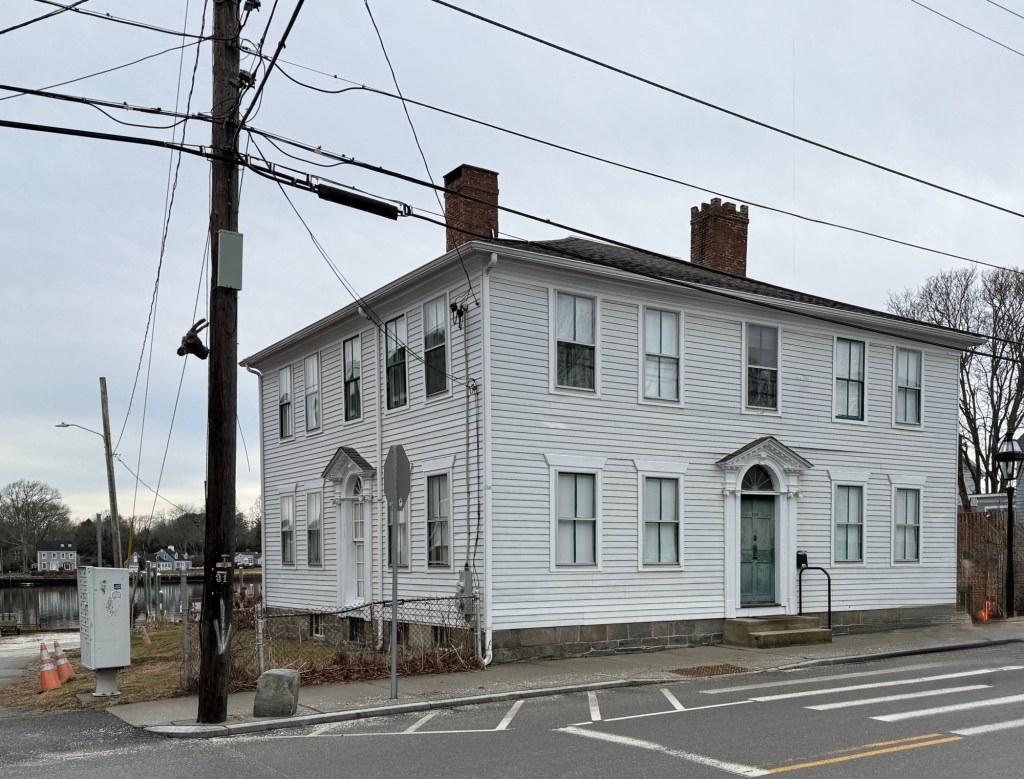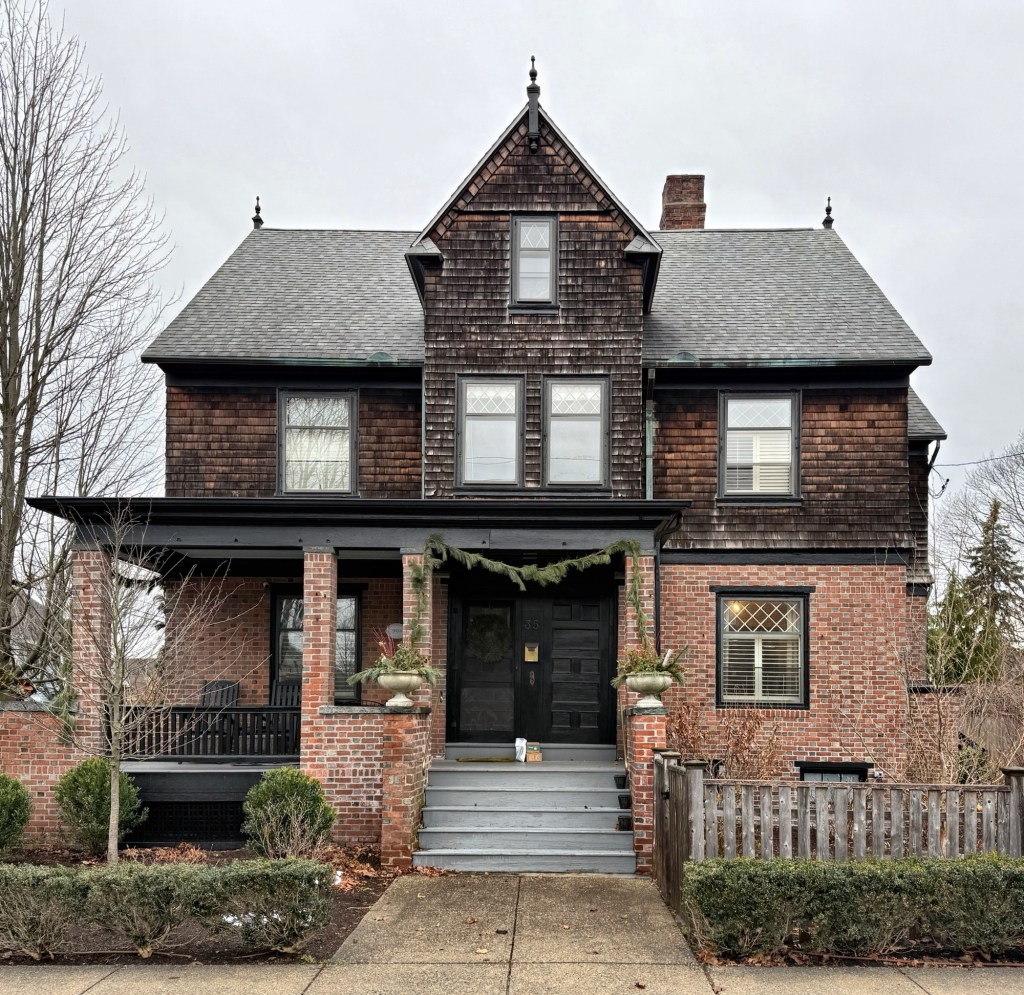
John Larchar House // c.1820

The John Larchar House at 282 Benefit Street in Providence is one of the many stately Federal period homes in the city designed by great architect, John Holden GreeneJohn Larchar (also spelled Larcher), was born in Providence in 1787 and worked in local businesses, eventually becoming a bank director that was involved in many mercantile pursuits. The residence remained in John’s family long after his death in 1863, and has been maintained so well by subsequent owners. The 2½-story, brick Federal house features stone trim, four chimneys, a central elliptical fanlight doorway, modillion cornice and amazing 12-over-12 windows. The cupola at the roof appears to be a is a mid-19th-century addition, possibly after John’s death. The garage and two-story side addition dates to the 1960s but does not detract from the architectural integrity of the home. 

Stephen Hopkins House // 1743

The Stephen Hopkins House is a Colonial-era house in the East Side neighborhood of Providence, and has survived waves of commercialization and redevelopment for nearly 300 years. The home is associated with Founding Father of the United States, Stephen Hopkins (1707–1785), who served as Governor of the Colony of Rhode Island and Providence PlantationsChief Justice of the Rhode Island Supreme Court, and was a signer of both the Continental Association and Declaration of Independence. In 1742, Stephen Hopkins purchased a one-story cottage built in 1707 on Main Street, and enlarged the original house to its present size by 1743, incorporating the original cottage as the rear ell. The eight-room residence was occupied by Gov. Hopkins, his family, as well as enslaved Africans who lived under the same roof until his death in 1785. During his ownership, George Washington slept here, twice. After 150 years of successive ownership, in 1928, the house was moved to its current location at the corner of Hopkins and Benefit Streets to facilitate the construction of the new Providence County Courthouse complex. The Hopkins House was restored by architectural historian and architect, Norman M. Isham, and is owned by The National Society of the Colonial Dames of America, operating it as a historic house museum. The Gov. Stephen Hopkins House is a National Historic Landmark.

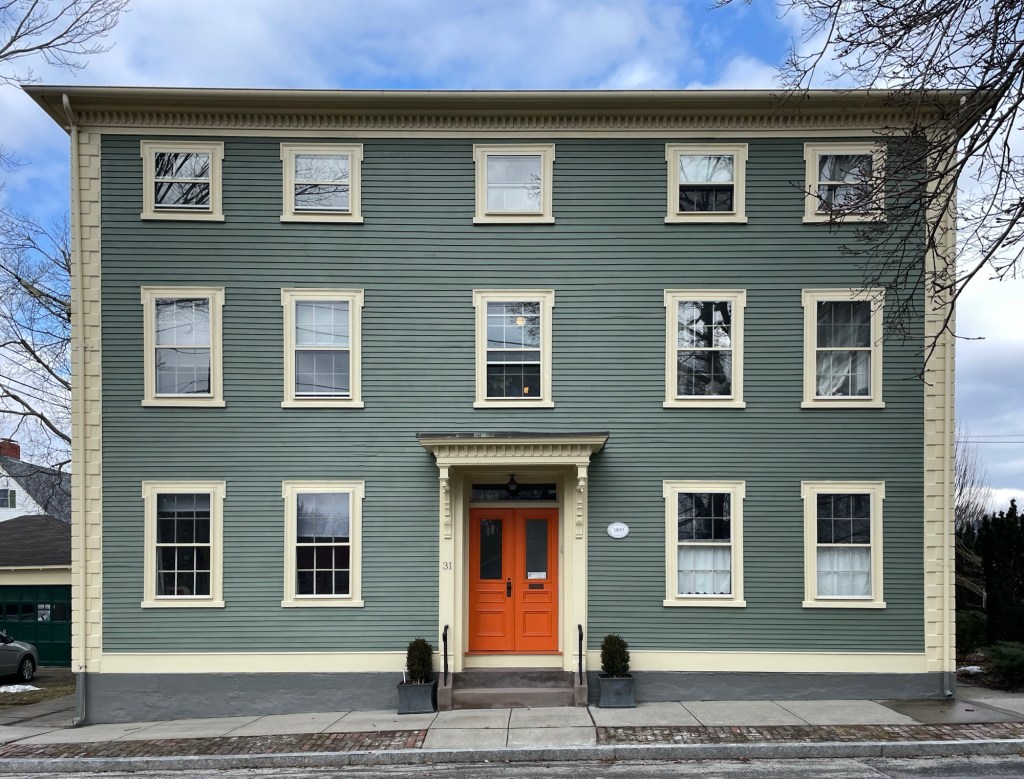
Thomas Peckham House // c.1824

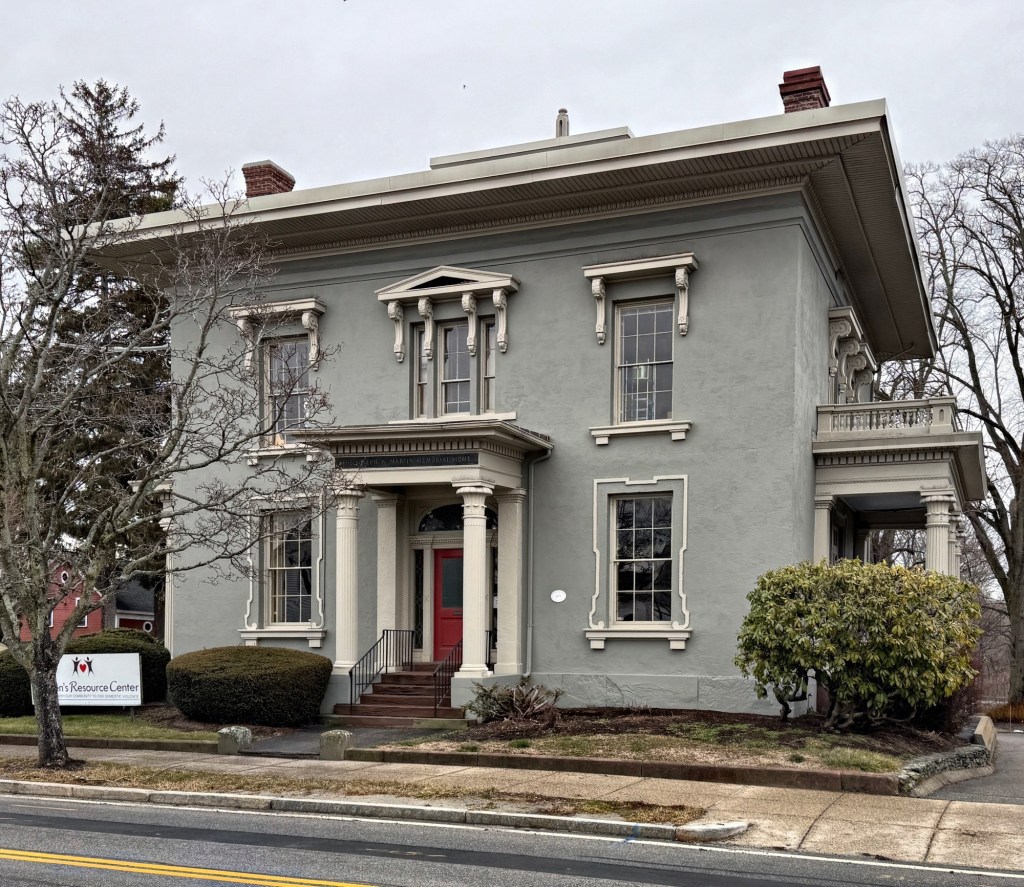
The Thomas Peckham House at 395 Benefit Street is a stately, modified Italianate style residence typical of the middle-upper-class residents of Providence’s East Side neighborhood in the middle of the 19th century. The house here was built sometime before 1824, likely around that time for Thomas Peckham (1783-1843), who worked as the Deputy Collector of the port of Providence. The Peckham House was likely built as a brick, two-story Federal style house, that was expanded by his heirs in 1853 in the Italianate style, boxing off the building’s roof. Emblematic of the large Italianate homes on College Hill in Providence, the Peckham House features a boxy form, shallow hip roof with monitor, and bracketed cornice and door hood, which has engaged columns. 

Brown-Crocker House // c.1836

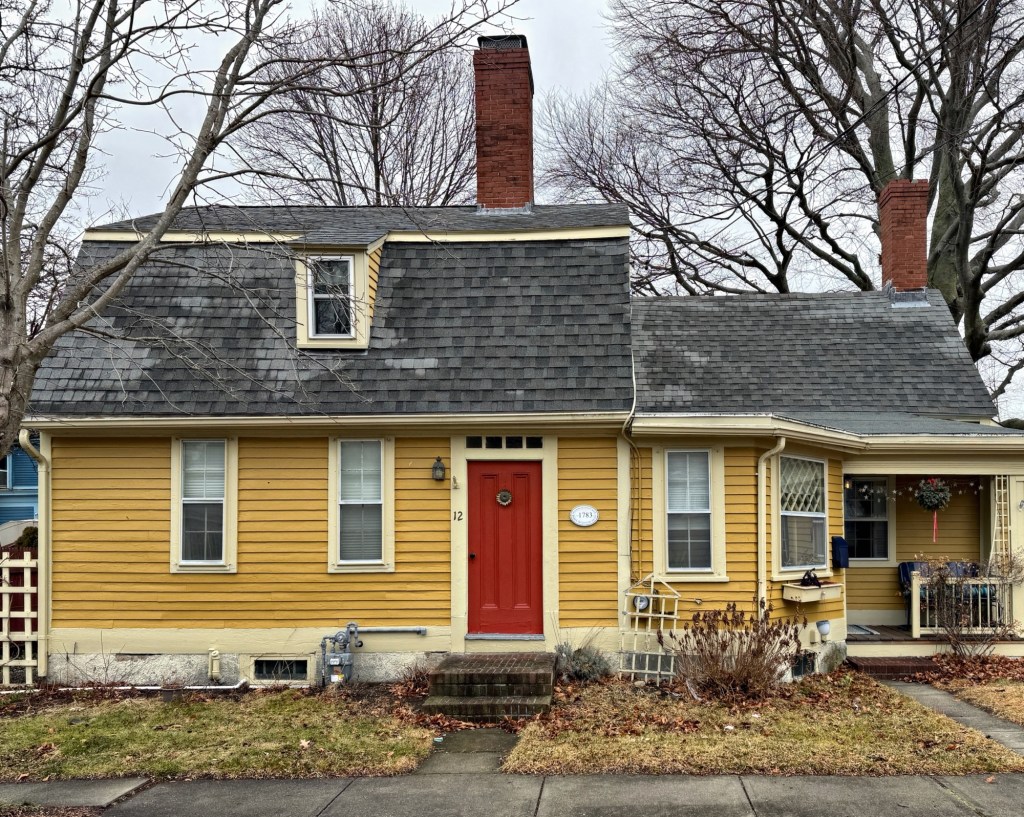
In 1829, Riley Brown, a housewright, purchased a house lot at the corner of Thayer and Transit streets in Providence, and by 1836, built this charming gambrel-roofed cottage, which is one of the most charming in the city. Riley Brown lived in the house next-door at 6 Thayer Street (1829) and on available land, built this 1-1/2-story dwelling on a full-height raised basement on speculation. It is possible that the house could have dated to the 18th century, and was possibly moved to the site from a nearby location, given the distinct gambrel roof and Georgian qualities. The residence here was sold in 1836 to John Crocker, who resided here with his family until his death in 1865. The Brown-Crocker House stands out for its unusually high basement of brick and stone, with a stair ascending up to the central entry and the gentle saltbox roof off the rear. Two shed dormers were likely added in the 20th century to make the house’s second floor more liveable.

Tillinghast House // c.1800

The Tillinghast House at 10 James Street in Providence, Rhode Island, was built around 1800 by Captain Joseph Tillinghast (1734-1816), and it was occupied by a number of his children in the early 19th century. By 1818, with Joseph already deceased, the Federal style home was owned by two of his daughters, Mary, and Amey Tillinghast, who operated a small store from the basement. The two-and-a-half-story, brick Federal house is set on a high basement all with brownstone trim at the stringcourse (between first and second stories) and at the entrance. The house was restored in the late 1970s, along with a new clapboard addition by designers, Luigi Bianco and Georgia Patterson Boomer, of Bianco/Boomer. Without nearly as much ornate detail as many other Federal style homes in the East Side area of Providence, this residence proves that high-quality materials and strong proportions can make a home truly stand out!

William Smith House // c.1826

The William Smith House at 18 James Street in the Fox Point neighborhood of Providence’s East Side, is similar to its neighbor, the William Woodward House in style and design details. Smith, a carpenter by trade, possibly built this house himself, with inspiration or plans by local architect, John Holden Greene, who designed many similar homes in the city around this time. The residence was built around 1826 and it was built into the steeply sloping hill on its raised granite foundation. Besides its elegant proportions, the house features a shallow hipped roof with monitor, fanlight over the door, and brownstone sills and lintels.

William Mason House // c.1812

This oversized brick Federal style house in Providence looks like it belongs more on the iconic Benefit Street rather than a quieter side street like Transit Street, but its history informs us as to why. Located at 136 Transit Street, the Benjamin Mason House stands as one of the finest (and largest) brick houses in the Fox Point neighborhood of Providence. The residence was built around 1812 by William Mason, who appropriately worked as a bricklayer and builder in 19th century that put his talents to work to build his own home seen here. The large brick residence was not only a family home, but marketed his abilities as a mason to area residents who were in need of his services. Benjamin Mason lived here until he moved to a new house down the street with his wife, Ann. Benjamin died by 1828 and the brick residence was purchased at auction and later sold to Reverend William Phillips. The house retains much of its original fabric, and even includes a stunning courtyard garden bounded by – you guessed it – a brick wall. 

Simeon Ingraham House // 1795

Simeon Ingraham (1749-1840), a housewright (house builder) purchased a corner lot on Wickenden Street in the Fox Point area of Providence in 1795, and constructed this absolutely stunning late-Georgian home that has survived centuries of commercialization and Urban Renewal of the surrounding area. In the early decades, Simeon purchased lots nearby and built houses, selling them for profit, and repeating this until his death in 1840. Simeon left no will, and the property was eventually purchased by his eldest son, Solomon, who bought out all of his other heirs for their shares of the property. Solomon allowed his widowed stepmother to reside in the home until her death in 1851. Solomon operated a store nearby, and it was likely he who jacked up the house, adding the brick ground floor for commercial purposes in the 1850s, coinciding with the increased commercialization of Wickenden Street. When the house was raised, the former center entry (now on the second floor) was turned into a window, with the doorway placed in the new brick level. Changes like these showcase how buildings are vessels of history, informing later generations of the layers of history that our cities and towns experience over time.

Joseph Brown House // 1774

Constructed in 1774 by architect Joseph Brown (1733-1785) of the Brown family of Rhode Island as his personal residence, the John Brown House of Providence, stands as one of the oldest (if not the oldest) house built by an American architect for his own use. Joseph Brown, while a member of the Brown Family, was not as much in the shipping business as others in his family, instead turning his attention to scientific matters, becoming an expert in astronomy, electrification, and architecture. He was an architect in the Thomas Jefferson-gentleman mode, owning English architectural books from which he selected motifs for inclusion in his designs. It is believed that the eccentric curved ogee gable that caps the façade was adapted from the roof design of a garden house published in William Salman’s Palladio Londinensis, owned by Joseph Brown’s builder, Martin Seamans. The same ogee gable was later replicated in the Colonial Revival period in Providence. The residence’s entrance was originally raised above ground and accessed via symmetrical flights of stairs; in the late 18th century, the entrance was moved to street level in the brownstone basement level. Over a decade after Joseph’s death in 1785, the structure was acquired by the Providence Bank, an enterprise founded by Brown’s brothers John and Moses, and used as an office. The bank occupied the structure until 1929, and the Joseph Brown House was subsequently owned by the Counting House Corporation, and still appears to be owned by descendants of the Brown Family.

George M. Thornton House // c.1870

One of the finest homes in Central Falls, Rhode Island, is this eclectic Victorian residence on Clay Street. The home was seemingly built around 1870 and modified by the end of the 19th century by later owner, George Mumford Thornton (1850-1916). Mr. Thornton was an industrialist who was elected as one of the first aldermen when Central Falls incorporated in 1895. The well-preserved house features varied siding, a rounded corner tower with spiral-columned porch and conical roof, and original multi-light sash windows. What a spectacular home.