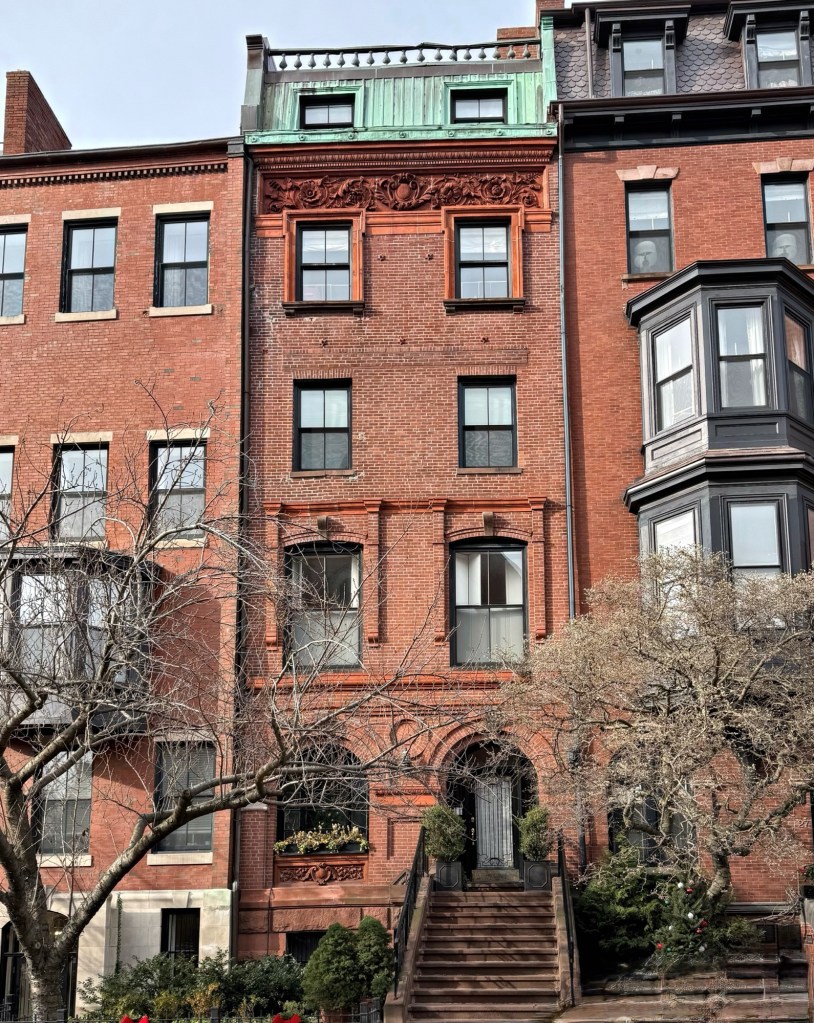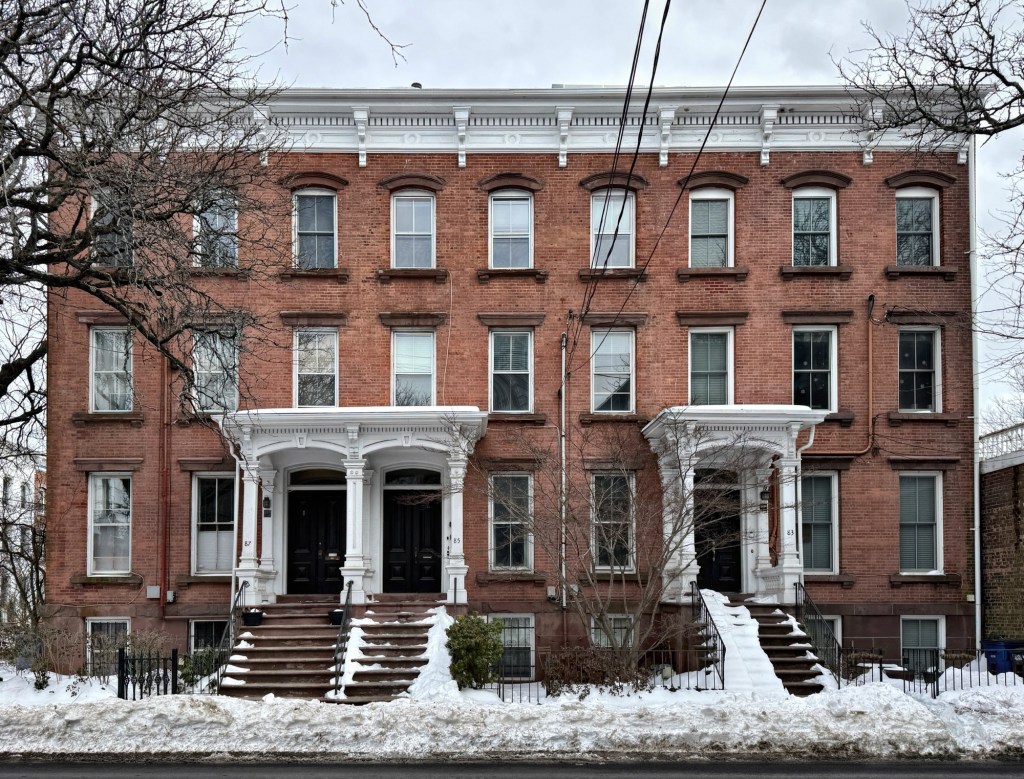
Pope-Barron Townhouse // 1871

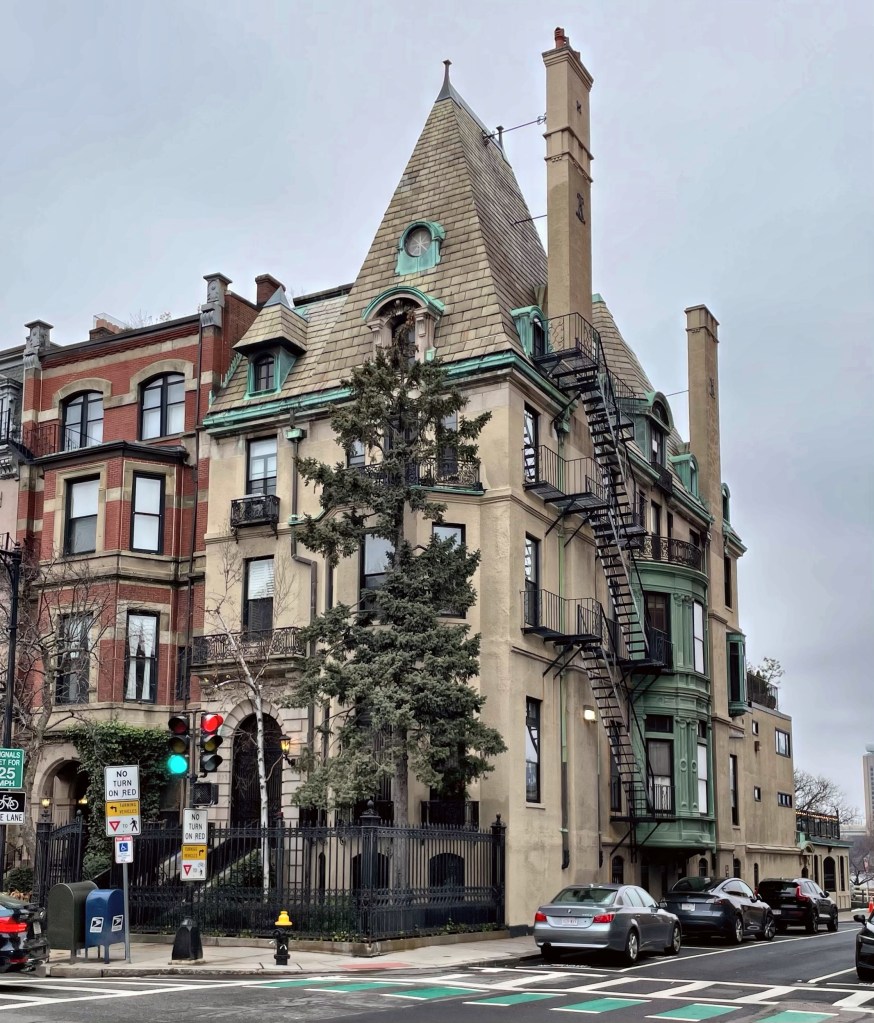
Merry Christmas to those who celebrate! As there is no snow on the ground in Boston, I wanted to share a house with a prominent pine tree, which resembles an oversized urban Christmas tree on Beacon Street. This house at the corner of Beacon and Fairfield streets was built in 1871 by architect and builder Frederick B. Pope on speculation. It did not sell as quickly as he would have hoped, and it took two years for it to finally sell at public auction in 1873. The relatively modest brick Second Empire style house was bought and sold numerous times until March 1905, when the residence was purchased by Clarence Walker Barron, a prominent publisher and journalist. In 1903, he purchased Dow Jones & Company and from 1912 until his death in 1928, he was its president. During this period, he was also de facto manager of The Wall Street Journal, he expanded its daily circulation, modernized its printing press operations, and deepened its reporting capabilities. In 1921, he founded Barron’s National Financial Weekly, later renamed Barron’s Magazine. Barron pushed for the intense scrutiny of corporate financial records, and for this reason is considered by many to be the founder of modern financial journalism. In 1920, he investigated Charles Ponzi, inventor of the “Ponzi scheme”. His aggressive questioning and common-sense analysis helped lead to Ponzi’s arrest and conviction. For his Boston townhouse, Barron hired the firm of Cram, Goodhue & Ferguson to completely renovate the dwelling with an extra floor, limestone facades, and more bold roof design.

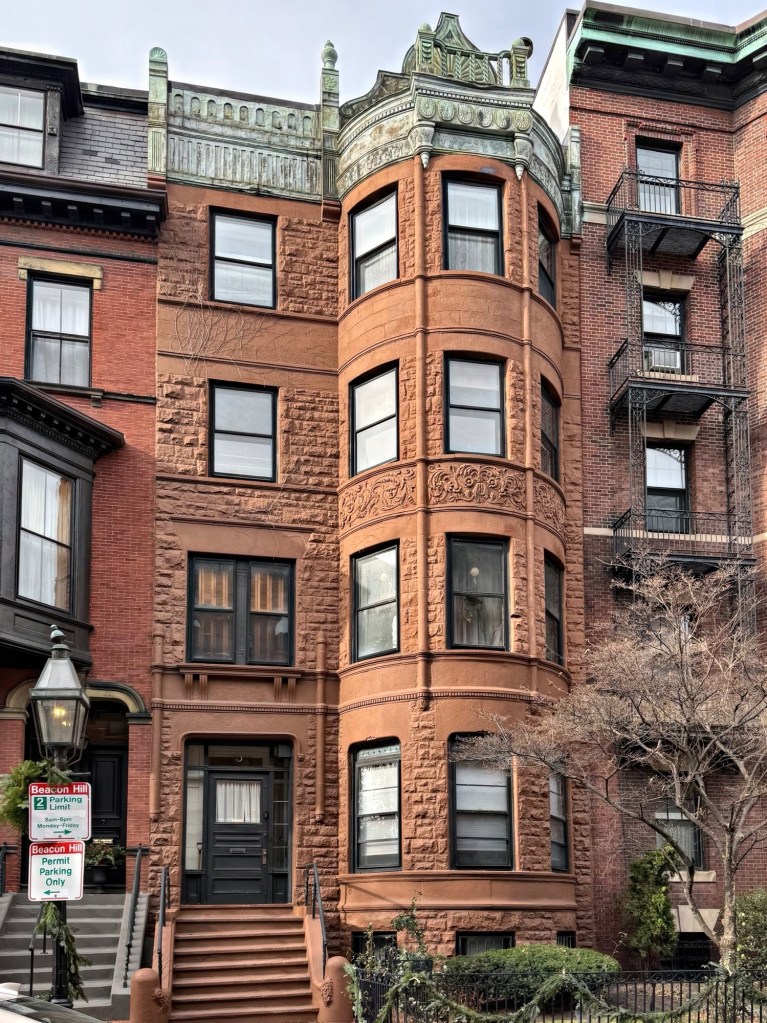
Derby Townhouse // 1886

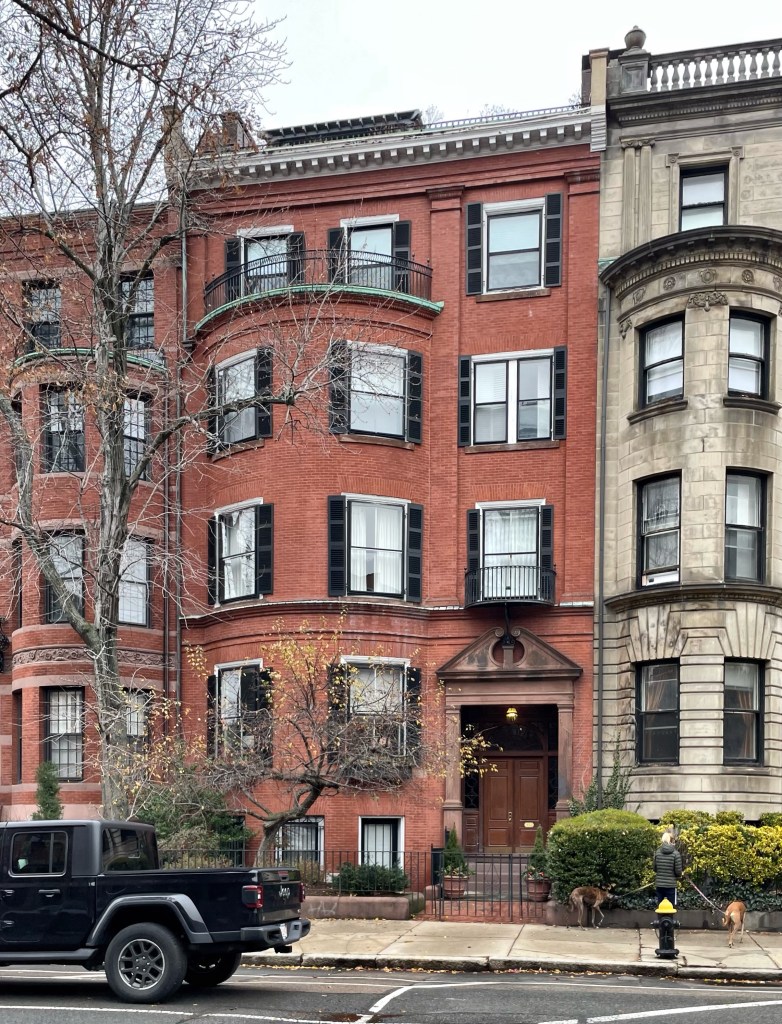
Hasket Derby (1835-1914), was the grandson of Elias Hasket Derby, a prominent trader in Salem, MA., who was thought at one time to be the richest man in the United States. Hasket married Sarah Mason and the family lived in Boston. Dr. Hasket Derby was a renowned opthamologist and had this townhouse built in the Back Bay of Boston in 1886. He hired architect William Ralph Emerson, who ditched his prototypical Shingle style for the urban townhouse in the Colonial Revival style. The townhouse exhibits a brownstone swans neck pediment at the entry, three-story rounded bow, dentilled cornice and brick pilasters framing the bays. Its an often overlooked house in Back Bay, but so very special.

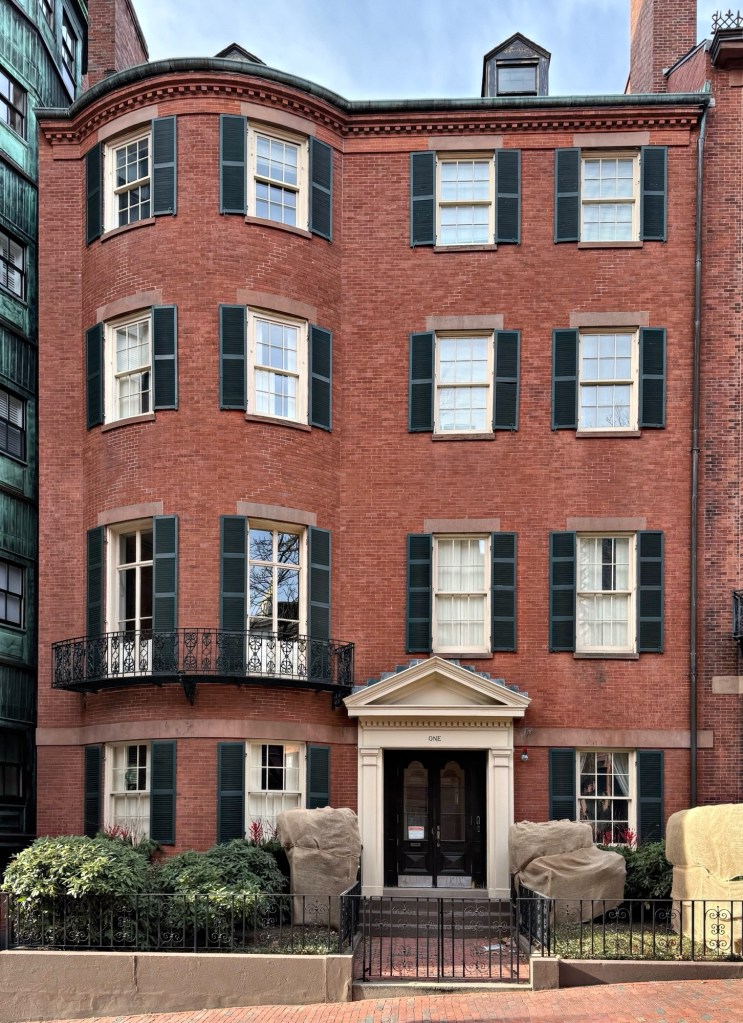
Gouldsboro Townhouse // 1884

Welcome to Gouldsboro, Maine! The town is a charming community made up of many small fishing villages and neighborhoods dotting the rugged Maine coastline. Land in what was then part of Massachusetts, was given to Colonel Nathan Jones, Francis Shaw and Robert Gould in 1764 by the General Court of the Commonwealth of Massachusetts. Francis Shaw and Robert Gould were both merchants from Boston. Francis Shaw had worked hard to develop Gouldsboro, and reportedly died broke because of it, and his son Robert Gould Shaw returned to his parents’ native Boston. Development in the area was slow and never really took-off due to the distance from Boston, but fishing, mills, and villages were built and remain to this day. Now, much of the area is home to summer residents flocking to the area from urban areas. This building was Gouldsboro’s second townhouse. It was constructed in 1884, soon after the first townhouse burned a year prior. The structure was used for town meetings and elections until 1983. It is now owned by the Gouldsboro Historical Society. It is a late, vernacular example of a Greek Revival townhouse.

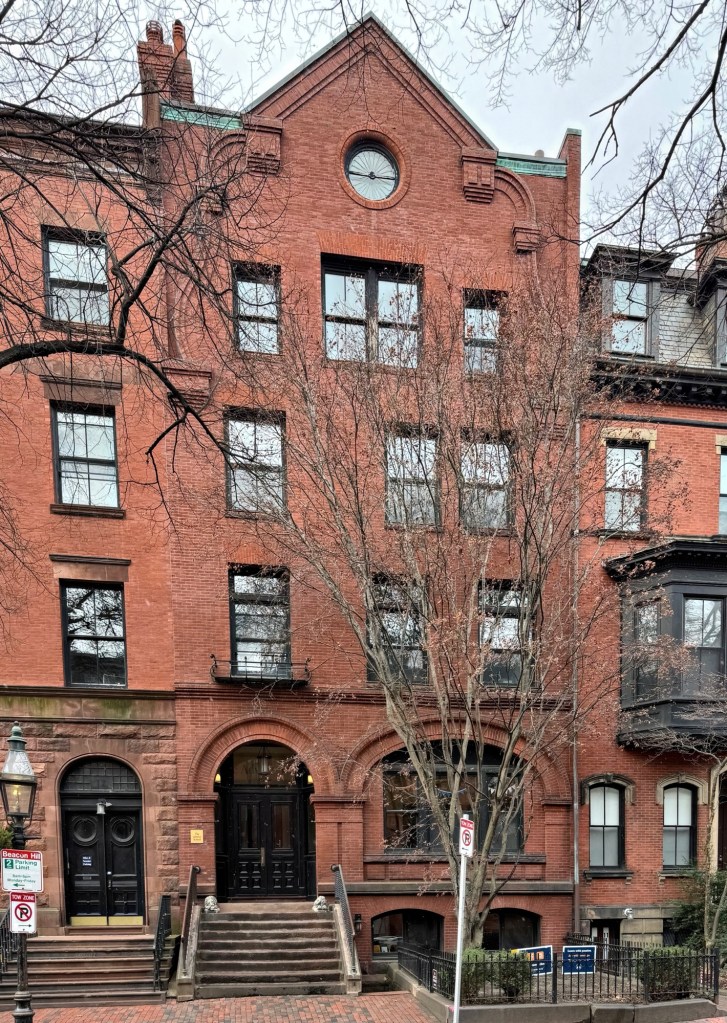
Atkins-Chandler Houses // 1860

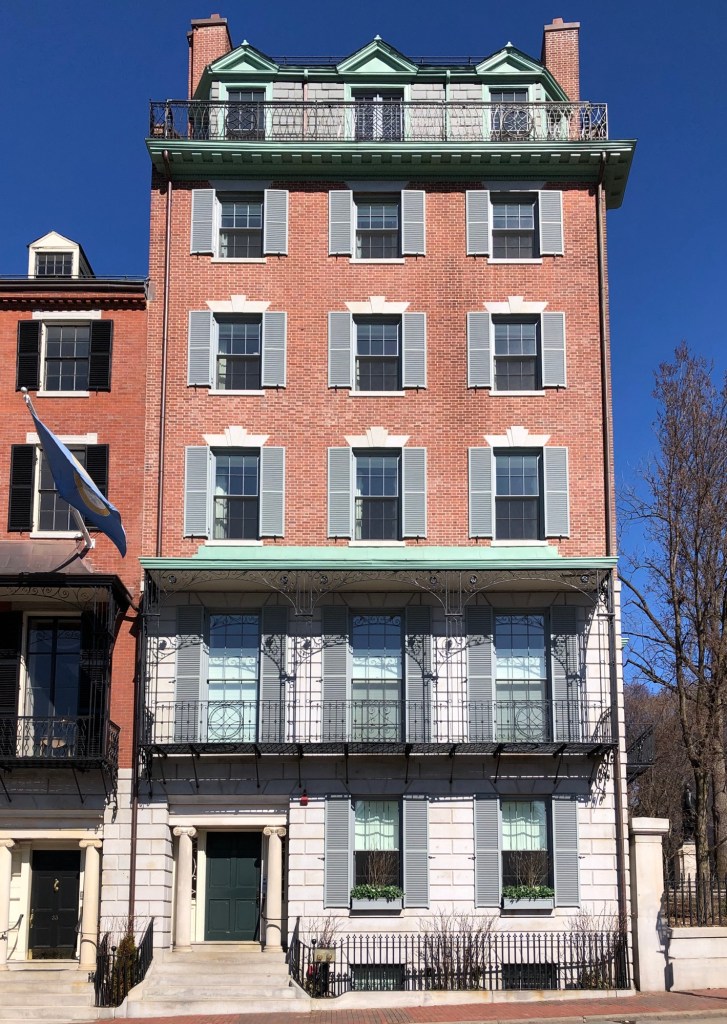
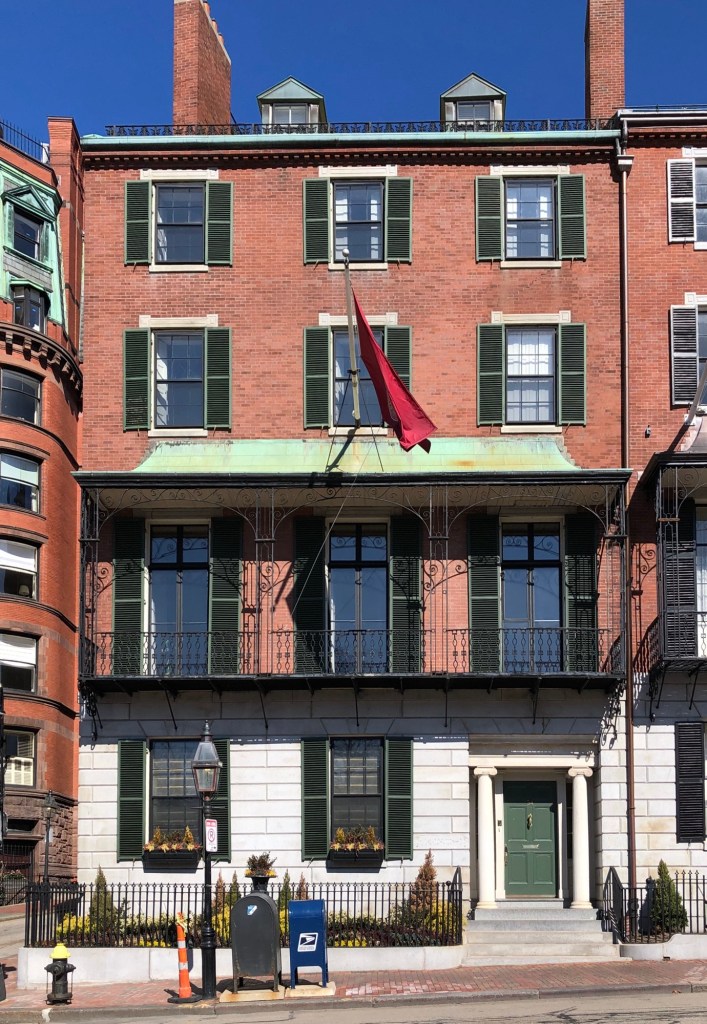
These two townhouses were built in 1860 and were once part of a row of four matching homes constructed for wealthy Bostonians. The end units feature stronger detailing with the center two homes being slightly recessed and less ornate, all four constructed of brick with brownstone facades. The original owners wanted to ensure that their new homes would be harmonious in design, both with each other and with the other houses being built nearby.The property already was subject to restrictions contained in the deeds from the Commonwealth of Massachusetts, who sold much of the land in the Back Bay for development, but the owners added further stipulations. Among them that “the front of said houses shall be of free stone and the height not less than three stories” and “the cornice and roof of all the houses shall be uniform, and shall conform to a plan to be hereinafter agreed upon.” The right house seen here was occupied by Henry Atkins, a grocer and importer of wines and spirits. The left home was occupied by John Chandler, a dry goods merchant and his wife. They both died at a young age in 1875 and 1876 respectively, and the home was sold off by their children’s guardian to Charles Porter, a physician and surgeon. He served as a doctor of anatomy at Harvard Medical School under Dr. Oliver Wendell Holmes, and worked as Chief Surgeon at Mass. General Hospital. His wife, Margaret Cochran Dewar, who also was a physician and was resident surgeon at Sheffield Hospital in England. She had graduated from the University of Glasgow in 1894, among the first women in Scotland to receive a university degree and the first to receive a university medical qualification. In 1925, the two homes here were purchased and combined to one multi-family apartment building and remodelled the structure with ugly brick additions. By 1996, a developer purchased the building and restored them by installing a new façade and fenestration more consistent with the historical nature of the building, making their heights identical once again.

Isabella Stewart Gardner Townhouse // 1860

152 Beacon (center) and 150 Beacon (right) demolished. Courtesy of Boston Athenaeum.

In 1860, David Stewart, a merchant from New York, built a townhouse on Beacon Street in Boston’s Back Bay neighborhood as a wedding present for his twenty year old daughter, Isabella Stewart, and her new husband, John (Jack) Lowell Gardner. The house was originally numbered 126 Beacon, but re-numbered as 152 Beacon ca. 1862 when homes were built on the south side of the street. The home was the city dwelling of the young couple, who also owned “Green Hill” in Brookline, and an estate on the North Shore. Isabella Stewart Gardner began amassing a large collection of art and their Back Bay home was insufficient to display it all. In 1880, John purchased the neighboring home at 150 Beacon from Andrew Robeson, a wealthy merchant from Fall River, who’s main home is now the headquarters of the Fall River Historical Society. Soon thereafter they combined the two houses, with the address of 152 Beacon, to provide greater space for the display of the growing art collection being assembled by Isabella. After her husband’s death in late 1898, Isabella Gardner pursued plans for a new home that would provide a suitable setting for her art collection. She purchased land in the Fenway and began construction on her mansion, Fenway Court, now the Isabella Stewart Gardner Museum. One year after completion of Fenway Court, the two townhomes were purchased by Eben Draper, who razed them for his mansion in 1904 (see last post).