Graham Apartments // 1904

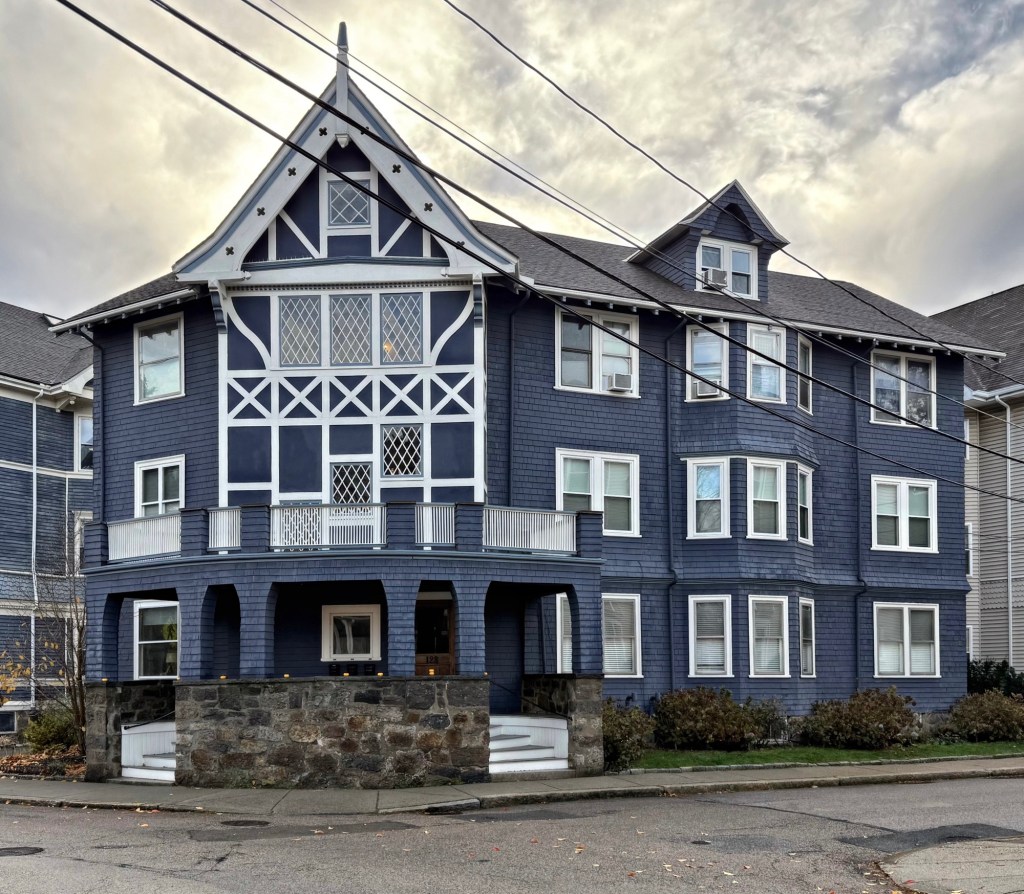
This handsome, and unique example of a three-decker in the English Revival style is located on a corner lot at 128 Davis Avenue in the Emerson/Brookline Village neighborhood of Brookline, Massachusetts. Built in 1904 from plans by architect and genealogist, J. Gardner Bartlett, whose work focused on colonial New England and the English origins of colonial families. Trained as an architect at MIT, he gave up architecture for genealogy, but still occasionally designed buildings in the Boston area. The building here was developed for Richard Graham, an Irish immigrant, who along with his wife, operated a laundry business in the village. The use of a shingle and stone entrance porch and entrance bay with stucco half-timbering and diamond-pane casement windows stand out architecturally as one of the few examples of a three-decker built in this style in New England.

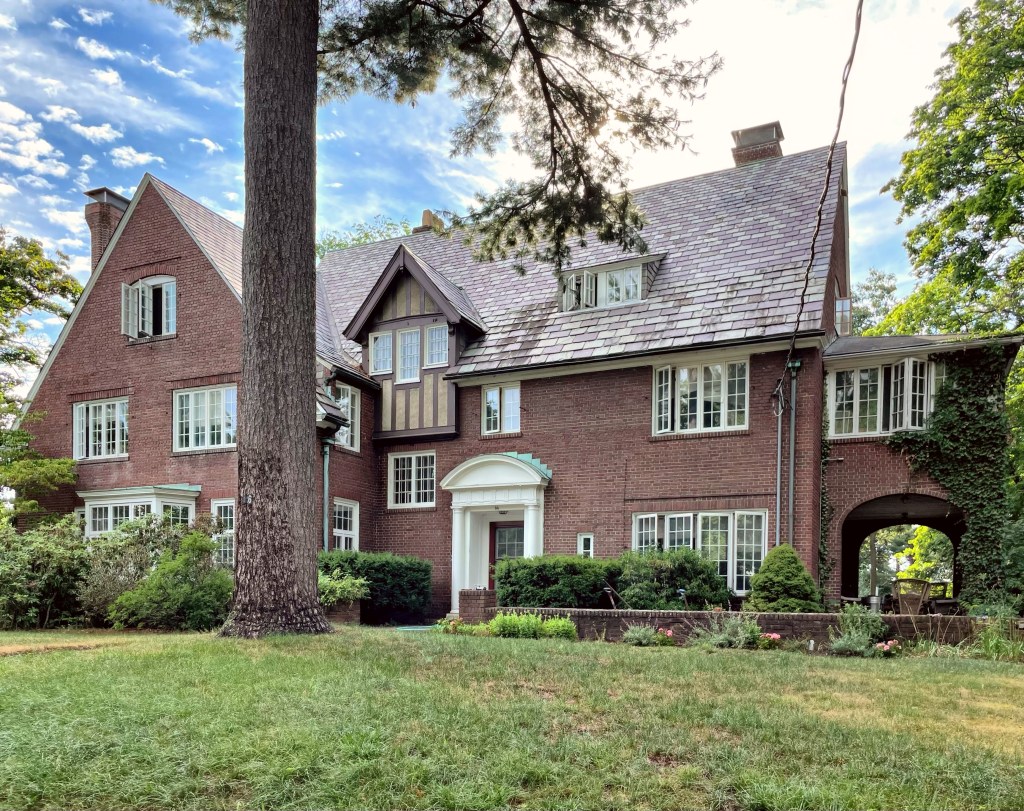
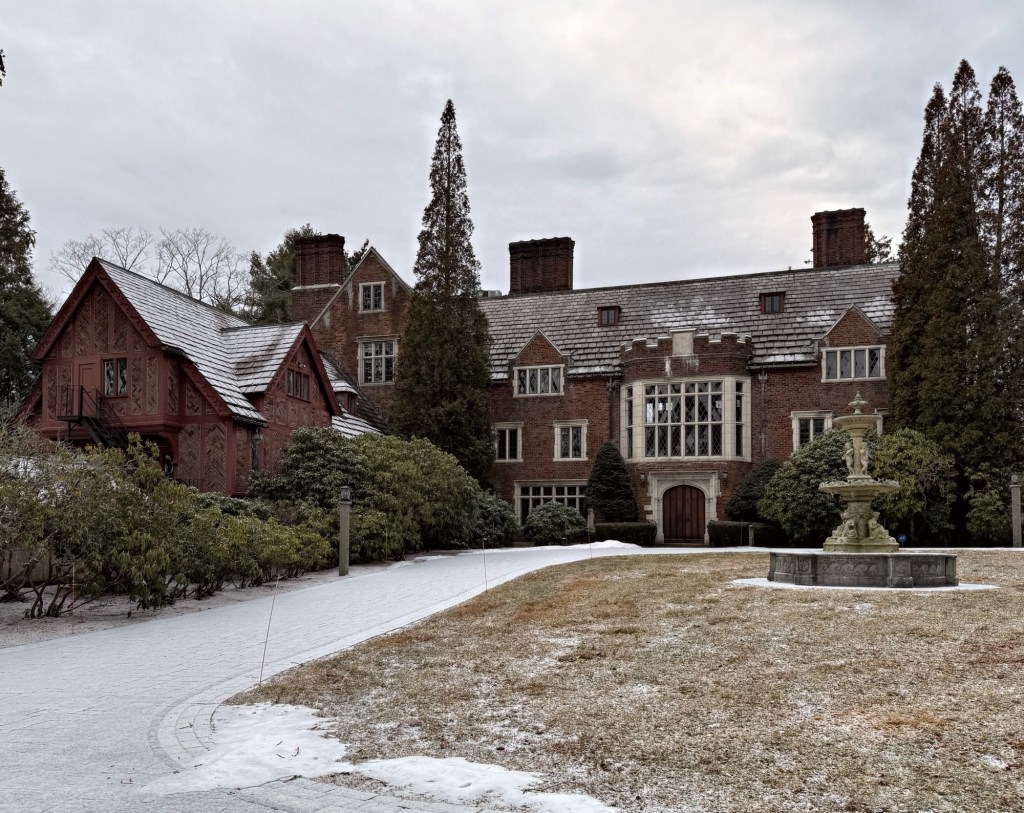
Irving-Strauss Mansion // 1906

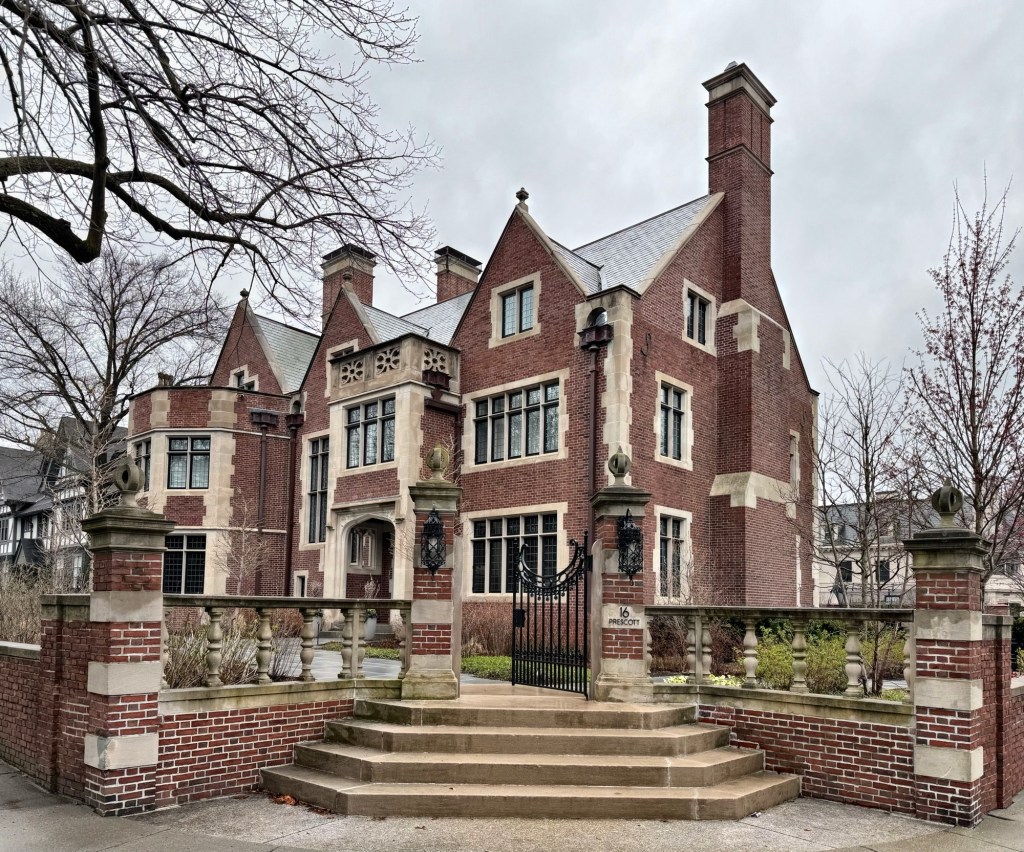
This unique Tudor Revival style house in the Cottage Farm neighborhood of Brookline was built in 1906 for Irving J. Sturgis (1873-1924), a banker and broker originally from Michigan. Architect Joseph Everett Chandler, specialized in the Colonial Revival style and historic restorations, but was clearly adept at other styles as evidenced in this stately manor for Mr. Sturgis. After WWI, the property sold to Mr. Leon Strauss, who worked in dry goods. The Irving-Strauss mansion is constructed of brick with cast stone trim and features classic ornamentation seen in the Tudor Revival style. Steeply pitched gable roofs have stone
coping, metal windows are casement or fixed with small pained lights and are framed in cast stone trim. Framing the entranceway is a brick and stone gateway, of which, a garden wall extends around the property, with a stately garden gate surmounted by stone finials displaying the flair of the style.

Curtis House – Boston University Children’s Center // 1904

Built in 1904 as one of the finest Tudor Revival style residences in the Boston area, this residence in the Cottage Farm neighborhood of Brookline showcases all of the important elements of the iconic architectural style. The residence was built for Harry and Carrie Curtis, with Mr. Curtis being a partner with Curtis & Sederquist, bankers and brokers, with offices on Congress Street in Boston and in New York City. The couple hired architects Howard B. Prescott and William Sidebottom of the firm, Prescott & Sidebottom, to design the house. Rectangular in plan with massing enlivened by numerous cross gables and dormers, the house is decorated with exterior walls covered with wood shiplap at first story and half-timbered stucco at second story. The property was sold to Helen and Edward Mills by 1913. Mr. Mills was president and treasurer of the Edward C. Mills Leather Company. By 1931, the residence was owned by Erland F. Fish (1883-1942), a prominent lawyer and politician as well as the son of Frederick Fish, who owned the house across the street. Boston University purchased the property in 1964 as part of their institutional expansion into this neighborhood. Originally used as an alumni house, it later became the location for the Department of African American Studies. After an extensive expansion and restoration by Studio MLA (now Ashley McGraw Architects) and Kaplan Construction, the Tudor mansion is now a children’s daycare for Boston University faculty, staff, and graduate students.

William and Kathleen Fuller House // 1905

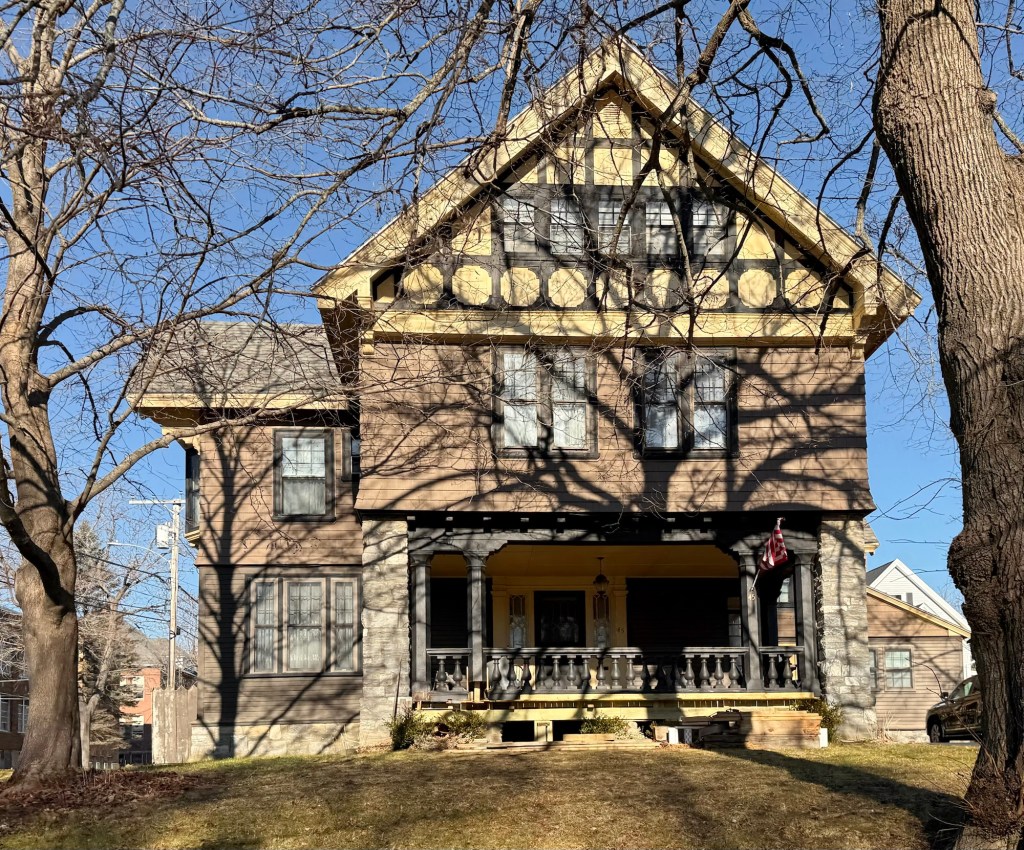
This handsome Tudor residence was built around 1905 for William Oliver Fuller (1856-1941) and his wife, Kathleen Stephens Fuller (1869-1948), and can be found at the corner of Beech and Lincoln streets in the finest neighborhood in Rockland, Maine. Although an architect could not be established at this time, the high-style residence features half-timbered gables, an inset front porch framed by stone pillars, and an absolutely perfect color palette. William Fuller was a newspaper publisher, who created his first newspaper, the Rockland Enterprise when he was 18 years old and in high school. He would go on to become the editor and publisher of the Courier-Gazette, the region’s main newspaper. Kathleen Fuller frequented the newspaper herself through her published poetry and columns and would later become an associate editor and co-owner of the paper.

Longwood Towers // 1925

No trip to Longwood in Brookline would be complete without checking in on one of the finest multi-family housing developments of New England… This is Longwood Towers. The development was originally built in 1925 from plans by architectural/engineering firm Kenneth DeVos and Co. who built three near-identical developments in the early 1920s: Detroit (1922)Brookline (1925), and finally Philadelphia (1928). The complexes were all originally called Alden Park Manor. Kenneth DeVos worked with local architects for each project to oversee construction details and furnish interior detailing as needed. For Brookline, he hired Harold Field Kellogg, who earlier served as the first director of the Boston Housing Authority. The design is Tudor Revival in style with towers connected by social spaces and a lobby linking the towers with a dining room for residents, a ballroom, lounge, day care facilities, barber and beauty shops, and a garage. The idea of a parking garage incorporated into an apartment complex was a very new idea when these were built, so much so it was written about as a new amenity for future developments to emulate. Another interesting tidbit about the complex is that it was featured in architectural journals in 1926 as it solved the “garbage problem” with trash chutes on each floor which terminated down in a brick incinerator (no longer in use). The Longwood Towers in Brookline were eyed as innovative and set trends for later developments, here’s to hoping future developers take cues to what makes good design and finishes rather than just profit with so many new boxy, uninspiring 5-over-1 apartment buildings going up all over the region.

Harriswood Crescent // 1889

Harriswood Crescent was built in 1889-90 at the height of Roxbury’s development as a streetcar suburb which coincided with the electrification of the streetcar lines in Boston. The area of Roxbury in which the Crescent is located, known at the time as Boston Highlands due to its rocky terrain and steep grades, was an extremely desirable residential location. As land values raised, middle and upper-class families looked for varied housing types that fit their demands. Seen as a great investment of the family estate, the heirs of wealthy businessman Horatio Harris (1821-1876) redeveloped lots on one side of a rocky park for fine townhouses, which were named Harriswood Crescent. The name was probably chosen for its historical associations with Boston’s Tontine Crescent and the great Georgian crescents of London and Bath in England. Architect J. Williams Beal designed the row, which was one of his first commissions upon returning to Boston in 1888 after employment as a draftsman at McKim, Mead & White and a long study in England to view architecture. Built at 15 separate units, the row of Tudor style houses is among the only of such developments in Boston, and New England at large.

LeClear House // c.1915

Waban in the late 19th and early 20th centuries was a hotbed for architect-designed houses as their own residences. This Colonial Revival/Tudor Revival style estate was designed by Gifford LeClear (1874–1931), a prominent architect in the Boston area. Gifford LeClear was born in Rutherford, New Jersey to Thomas and Cornelia (King) LeClear. He was educated in the private schools in Boston before entering Harvard University. He graduated with a Bachelor of Arts degree in 1895 and Master of Arts in 1896. He then worked for a year in the engineering department of the West End Street Railway before forming his partnership with Densmore in 1897. The partnership of Densmore & LeClear was formed in April 1897, practicing as mechanical and electrical engineers. One of the firm’s major projects in this role was the design of the building systems for the new campus of the Harvard Medical School in Boston.

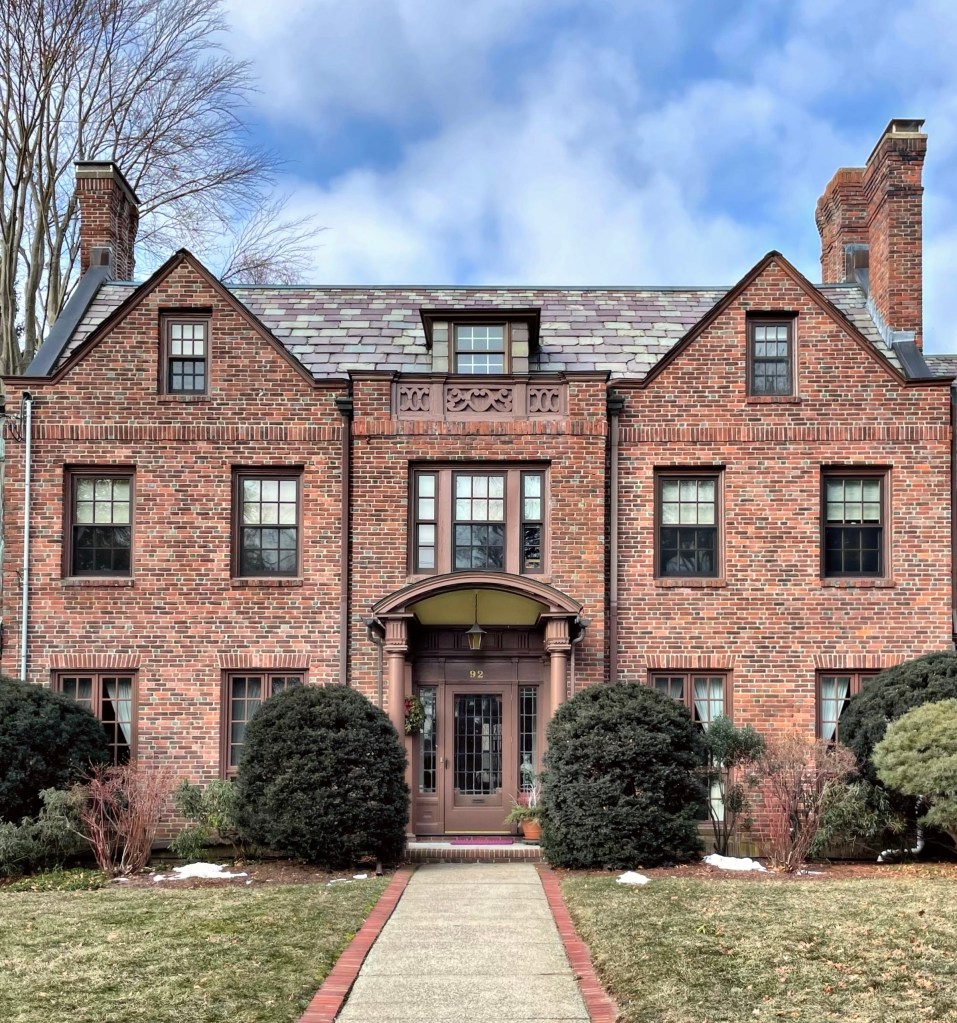
Emmett House // 1917

This refined brick Tudor Revival house in the Waban Village of Newton was built in 1917 for Lila and James Emmett. The couple hired Boston architect Edward B. Stratton to furnish plans for the home, which fits in to the early 20th century neighborhood. The symmetrical home has two gables at the facade which frame the central bay with a segmental pediment at the entrance.

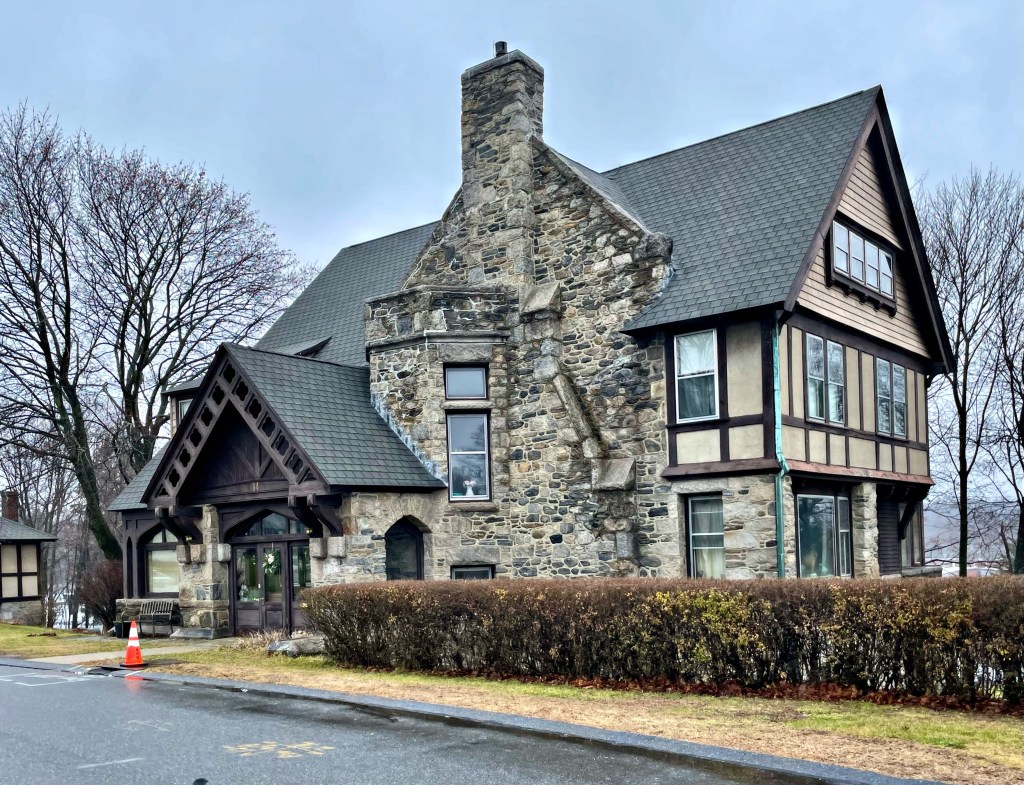
Windle House // c.1912

William “Willie” Winfred Windle (yes that is a real name) was born in Millbury at the height of the town’s industrial growth and prosperity. He ran the W.W. Windle Mill just west of downtown and with his wealth, was able to buy a house lot on one of the most fashionable residential streets in town. His home was built in the early 20th century and is a stunning example of Tudor Revival architecture. In 1911, Windle traveled to England to inspect mills there and was likely inspired by some of the residential architecture he viewed on the trip. The house elegantly blends stone walls with half-timbered wood, with a prominent entry. The timber and stone entrance porch which has decorative bargeboard and corbels, has been enclosed. The home remained in the Windle family at least into the 1940s, when it was occupied by William Winfred Windle’s son, Winfred Woodward Windle. By the 1970s, the home was occupied as the Millbury Society of District Nursing.

Fairholme // 1875

One of a handful of massive summer cottages in Newport that have always remained a single-family house is this beauty, known as Fairholme. Originally built in 1875, the summer cottage was built in the popular Stick style for Philadelphia arts patron and engineer Fairman Rogers by architect Frank Furness, also of Philadelphia. The estate was purchased, expanded and modernized at the turn of the 20th century by Philadelphia banker John R. Drexel (1863-1935) and his wife, Alice Troth (1865-1947). It is likely that Philadelphia architect Horace Trumbauer was hired by the Drexel’s to modernize the home, as he was hired in 1903 to design their Manhattan townhome. The enlarged home in the Tudor Revival style saw a couple successive owners, all uber wealthy bankers and industrialists. The waterfront mansion which neighbors The Breakers and Anglesea (both featured on here previously), sold in 2016 for $16.1 Million!