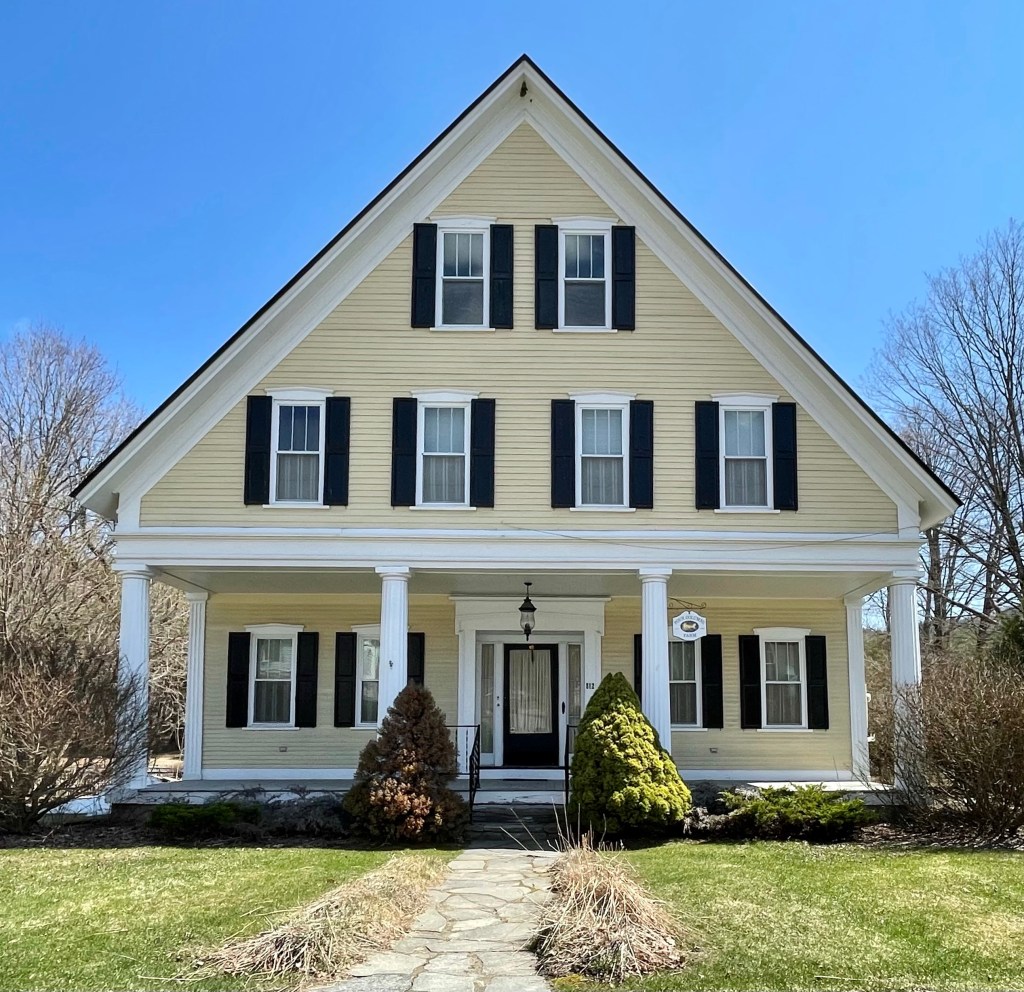
This Greek Revival home in Reading, Vermont was built around 1853 for Levi Fay Hartshorn, and is an excellent example of a vernacular Greek Revival house in Central Vermont. Levi F. Hartshorn moved to Reading, Vermont and opened up a store, also built this home for his family. It appears that Mr. Hartshorn gifted the village one of his shops to be used as a local library, before the present building was constructed.
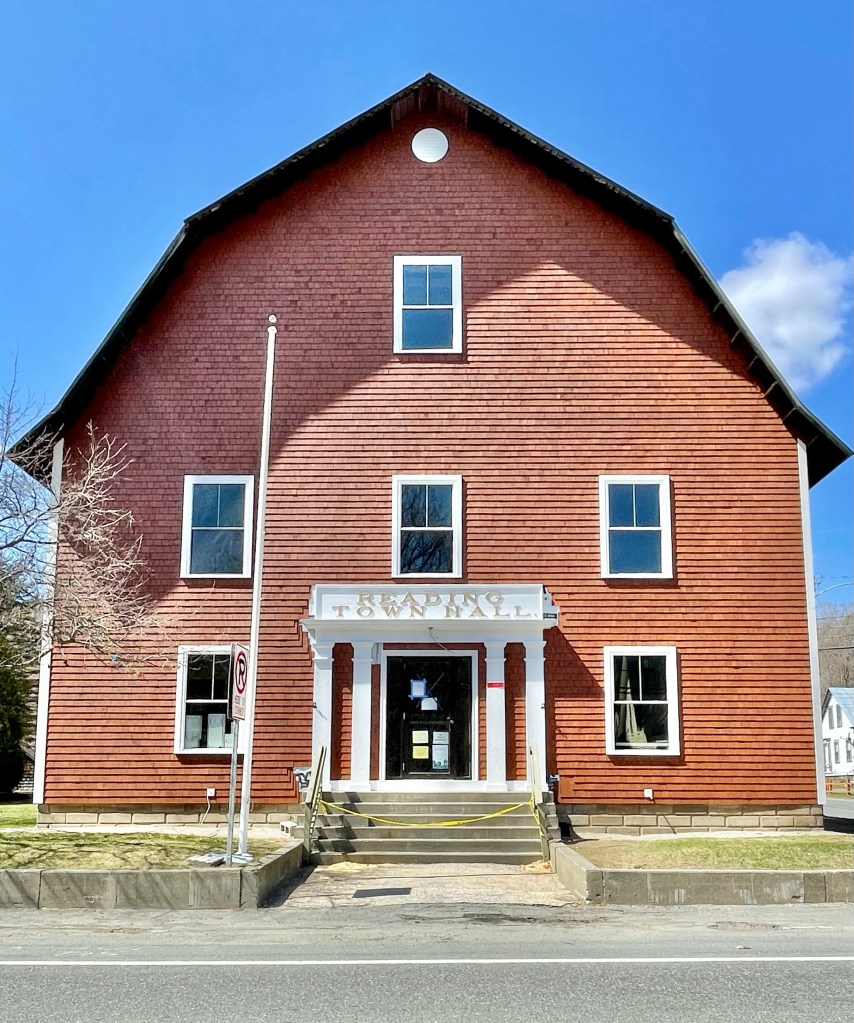
The Reading Town Hall in Reading, Vermont is an imposing shingle-clad, gambrel roof building which sits in the village of Felchville. The hall was built in 1911 as a gift to the citizens of Reading by Wallace F. Robinson. Wallace Robinson was born in Reading in 1832. He went to Boston as a young man and entered into the provisions (groceries) market, and became quite successful, expanding into the wholesale provisions business and meat packing. He was active in civic and business affairs of Boston, most notably as the President of the Boston Chamber of Commerce and as a State Representative in the Legislature for two terms. By around 1900, Robinson had retired and had taken up a life of philanthropy, spending much of his wealth on memorial buildings and to places that had a lasting impact on him, including Robinson Hall at Dartmouth College and renovations at UVM. The design for the Reading Town Hall is especially notable for the fact that it was designed to resemble historic gambrel roofed barns found in the state.
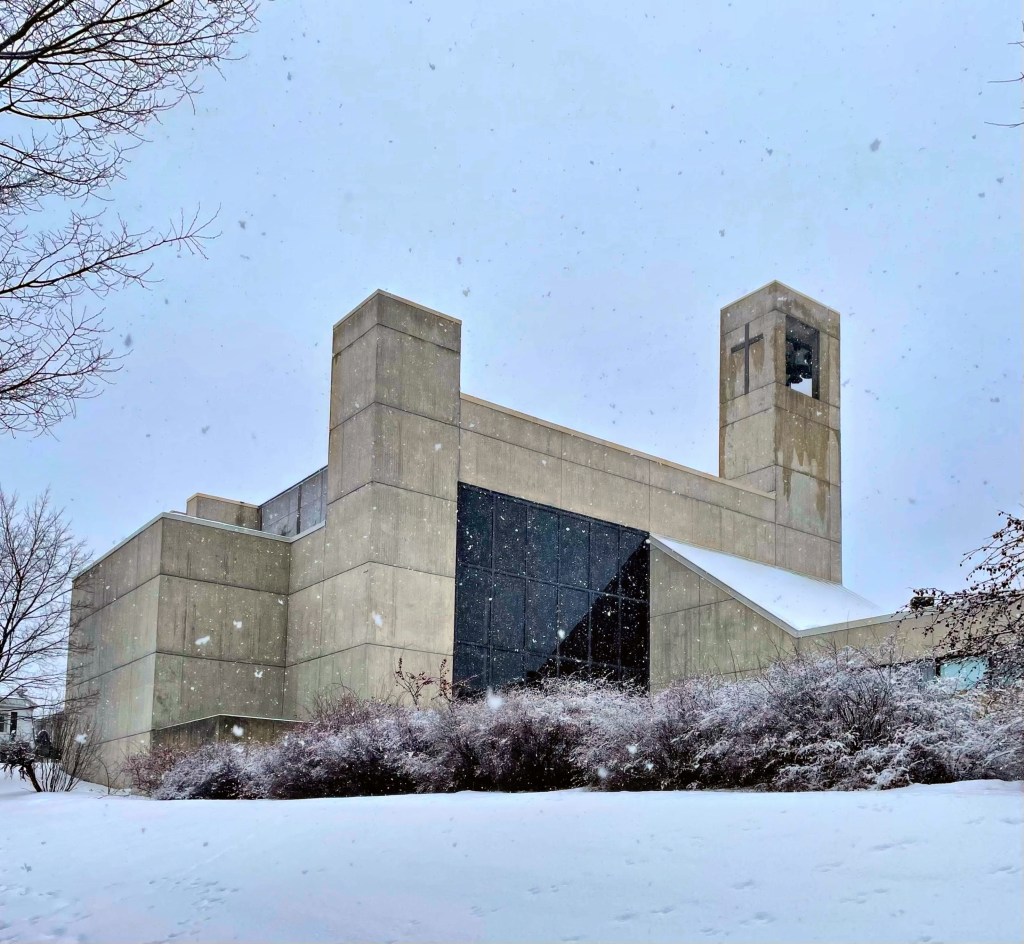
St. Paul’s Church in Burlington, Vermont, was organized in 1830, when Burlington’s population was about 3,500. About 55 Episcopalians met at a local hotel and laid the groundwork for the parish. In 1832, the fledgling parish dedicated its new building, a neo-Gothic limestone structure, which was enlarged multiple times as the congregation grew as the city did. In 1965, the Diocesan Convention voted that St. Paul’s Church be designated a Cathedral Church of the Diocese (one of two in the state). Just six years later, it was destroyed by fire, sparked by an electrical malfunction in the basement, leading to a new evolution of the church. At the time of the fire, the City of Burlington was engaged in massive urban renewal projects. As a part of this program, the City offered to swap the land on which Old St. Paul’s had stood for a spacious new tract overlooking Lake Champlain and the Adirondacks. Although the decision to change locations was a contentious one, the parish did accept the offer. When discussing designs for a new cathedral, there was a strong desire to make a new statement in architecture, diverging from the traditional Gothic or Colonial designs seen all over the country. An international competition was held to determine the architect of the new Cathedral. The winner was the local firm Burlington Associates, now Truex, Cullins & Partners. Completed in 1973, the Cathedral is made of stressed concrete. The structure stands strong and firm, yet is welcoming. Windows provide sweeping views of Lake Champlain and the distant Adirondacks.
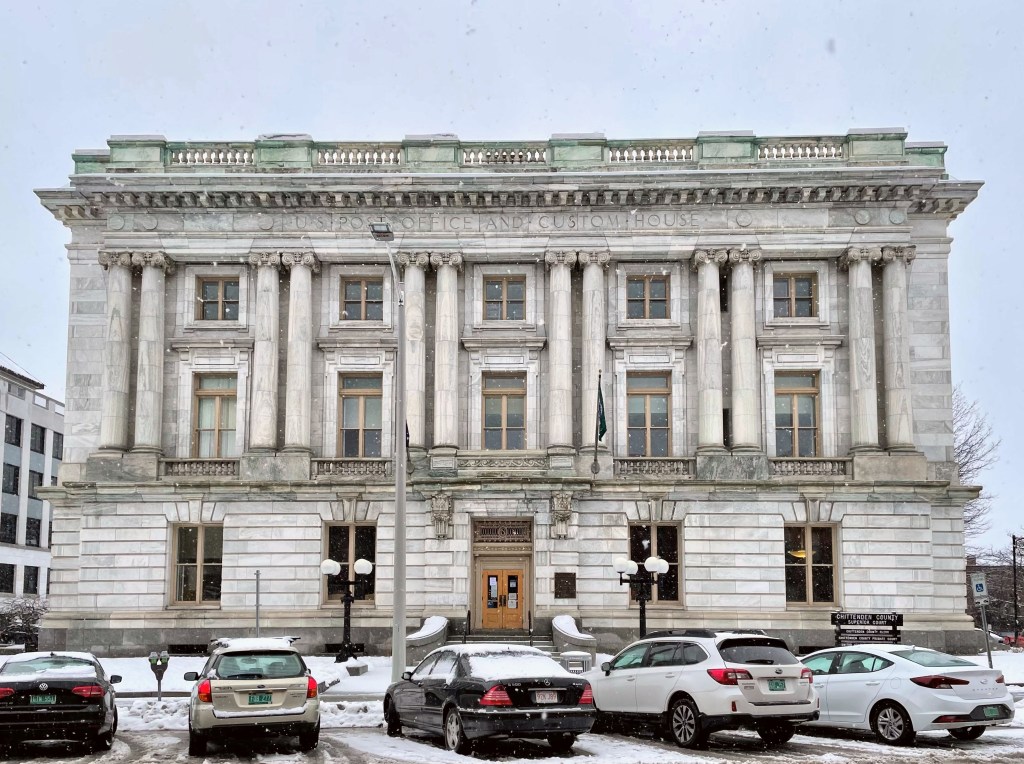
The Chittenden County Superior Courthouse in Burlington, Vermont was built in 1906 and is one of the most bold architectural designs in the city. The building was actually constructed as the U.S. Post Office and Custom House for Burlington, but changed use in the 1980s after the Old County Courthouse was destroyed by fire. The building was the work of U.S. Treasury architect James Knox Taylor. Taylor designed, many major eastern federal buildings during the late 19th and early 20th centuries. He provided plans for this Beaux Arts structure with a well-appointed exterior finished in marble and dressed granite. Beaux-Arts architecture depended on sculptural decoration along conservative modern lines, blossoming in the United States in the early 20th century after many American architects studied at the École des Beaux-Arts in Paris, particularly from the 1830s to the end of the 19th century.
This beautifully designed Romanesque Revival church consists of a large rectangular block with a steeply pitched gable roof and a square tower surmounted by a spire. The church is constructed of Willard’s Ledge stone (a locally quarried purplish limestone) with trimmings of Isle La Motte grey sandstone from quarries north of Burlington. This church is the only Romanesque Revival style church in the city and just one of four pre-1880 churches in Burlington. Architect Alexander R. Esty (1826-1881) designed the building and was a noted New England architect working during the late nineteenth century. He was trained in Boston and opened his own office in 1850 in Framingham, Massachusetts. The congregation remains active and welcoming.
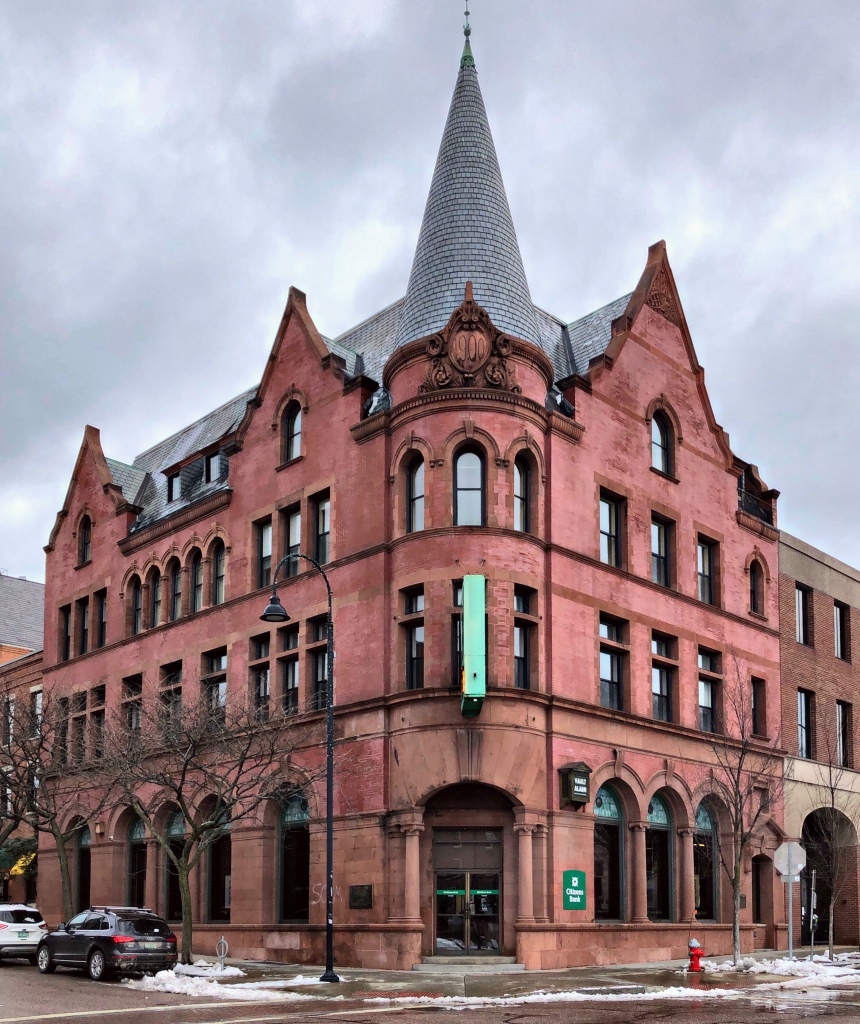
The Burlington Savings Bank building, constructed in 1900, is one of the most architecturally sophisticated buildings in Downtown Burlington, Vermont. The design uses a brick and brownstone facade with prominent wall dormers and a corner tower with conical roof which harkens back to the chateaus and estates of Europe. The recessed corner entrance is framed by free-standing Ionic columns which support a brownstone segmental arch, which helps command the corner presence. The Burlington Savings Bank opened for business on January 1, 1848, and operated under that title until 1988 when it merged with the Bank of Boston to become the Bank of Vermont, which in 1995, was purchased by KeyBank. The corner building is now occupied by Citizens Bank, which continues this buildings legacy as a castle of finance in the city.
This narrow, four-story commercial block is located near the Burlington City Hall, and fronts the park it sits on. Constructed in 1891 from local redstone in a unique Romanesque Revival style, the building stands out as one of the most unique in the commercial downtown area. The building was built for the Burlington Trust Company from plans by Clellan W. Fisher, an architect who soon after joined a firm with Stephen C. Earle in Worcester, MA. The design features an unusual checkerboard pattern of inlaid red and white ashlar paired with a stone cornice which similates dentils and brackets. The building is now home to a Burton snowboard retail store, a company started in Vermont in 1977, now the leading snowboard company in the country.
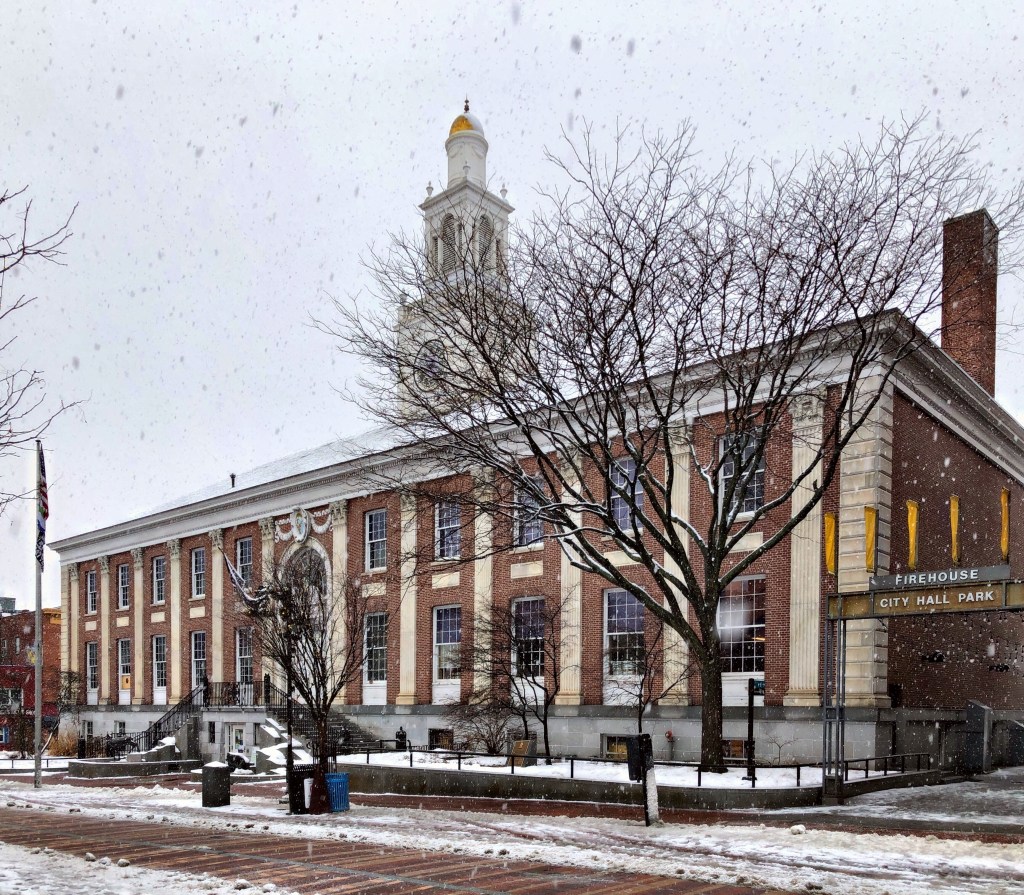
One of the largest, most grand buildings in Downtown Burlington, Vermont is its City Hall building, constructed in 1928, just before the Great Depression. The brick facade with extensive carved marble trim is Neo-classical in style, with virtually all the finish materials – brick, marble, roofing slate, and granite produced in Vermont. The building replaced the 1850s City Hall, which was poorly constructed and suffered from deterioration, exacerbated by an earthquake in 1925. Architect William M. Kendall was hired to complete the designs of the large, bold Classical building. Kendall spent his career with the New York firm of McKim, Mead & White, the leading American architectural practice at the turn of the century, and showcased the best of that firm with the design of this building.
The Universalist Society of Strafford, founded in 1798, is the second oldest in Vermont and fourth oldest in the nation. In the early years, Universalists met in Strafford’s Town House, sharing the building with other denominations. Eventually the Universalists, Baptists, and Congregationalists all built their own churches, with the Universalists building a structure in 1833 in South Strafford Village. The white clapboarded church sits high on a hill with a gorgeous belfry and large stained glass windows.
In 1833, Jedediah H. Harris, who had run a general store in Strafford village since 1803, commissioned a local contractor to build a new brick and granite store. Harris and his then-partner, Justin Morrill, opened the store in late fall 1834, selling provisions to locals and visitors to the small town. Morrill would later go on to construct a stunning Gothic home nearby and become a leading U.S. Senator. For more than one hundred years the store passed through a succession of owners, until C. William Berghorn Jr. closed it in 1951 to make it his residence. The building has since been converted to the local post office branch, with a residential unit likely above.
Designed and built by Senator Justin Morrill in 1883, this building was donated to the town of Strafford by Morrill in memory of his mentor Jedidiah Harris. It was given to the town as a public library in part to house the Harris Library, which in turn had been created by a bequest from Harris. This structure remained a library until the Morrill Memorial Library building was completed in 1928 and its collection was joined with Morrill’s. It is currently used as the Town Office building providing space for the Town Clerk/Treasurer and Town Records, and town boards. The white clapboarded building has Victorian detailing with the spindled posts at the porch with a prominent gambrel roof covered in slate. Cute!
Perched atop a hill at the edge of the town common in Strafford, Vermont, the Strafford Town House epitomizes rural New England charm. The town house was constructed in 1799 by local carpenters as a place to do public business and served for a brief period in the early days as a meeting house for various local congregations. The building is one of the oldest meeting houses in Vermont and was one of the first meeting houses to put the entrance at the tower-end and the pulpit at the other end of the building. The change from a side-entrance orientation reflected a time when New Englanders were clearly deciding to separate their political business from their ecclesiastical affairs.
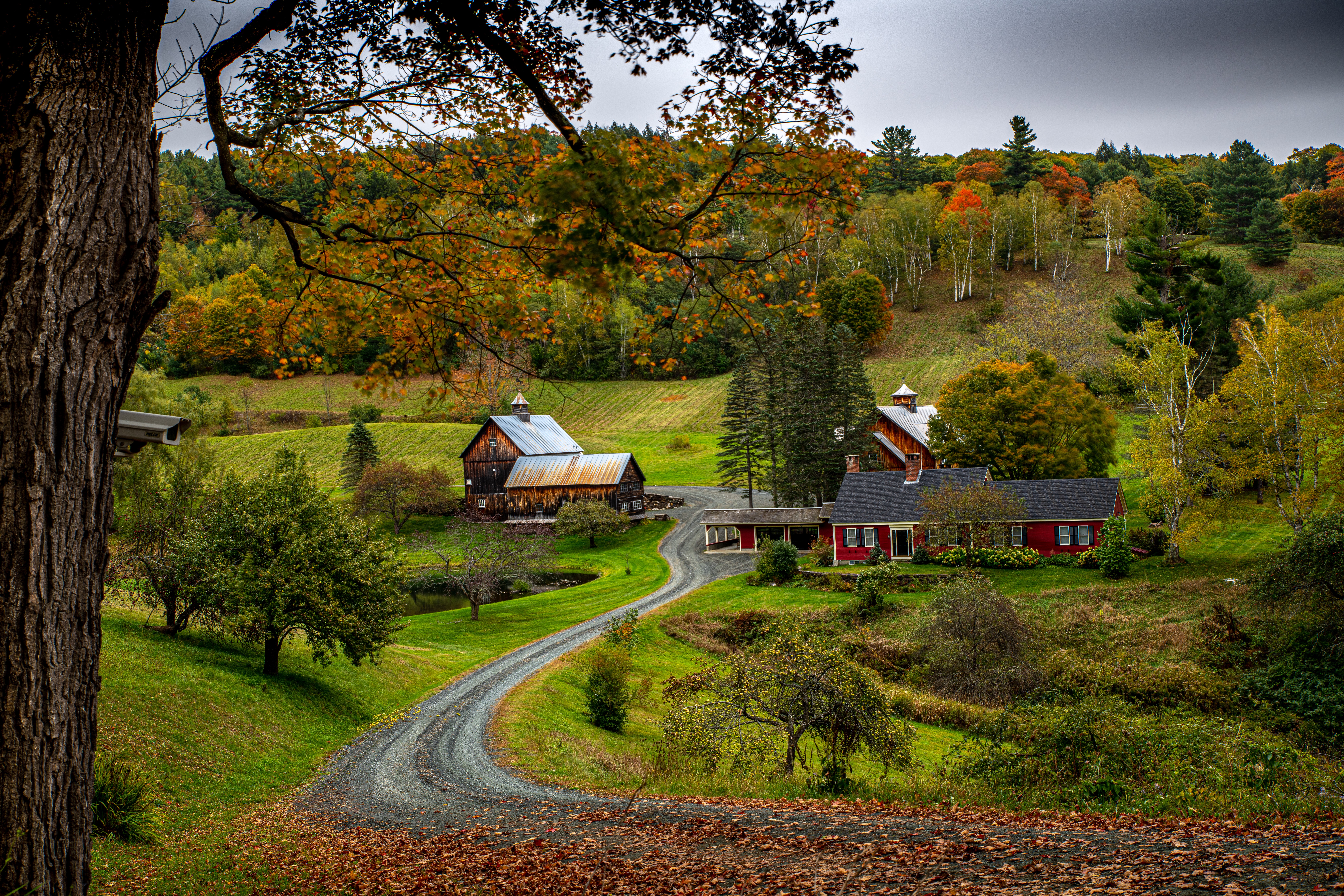
Without question, this property is the most photographed site in the tiny town of Pomfret, Vermont, if not the state. The property dates to the late 18th century when John and Samuel Doten moved to the newly settled town of Pomfret Vermont, overlooking the growing town of Woodstock in the valley below. The two brothers acquired vast farmland on the hills of Pomfret and each built farmhouses adjacent to eachother, with Samuel getting elevated land and John developing the land sunken off what is now known as Cloudland Road into this stunning property. Sleepy Hollow Farm remained in the Doten family for centuries until the 1950s, when the owners sold the property to move to Woodstock and work for Laurance Rockefeller, the famous philanthropist and conservationist, who later donated his Summer home in Woodstock to the National Park Service. The property sold numerous times in the late 20th century, and is presently owned by Aerosmith guitarist Joe Perry and his wife, Billie. They are clearly great stewards to the property’s rich history and various outbuildings, and must not care too much to have swarms of photographers at the end of their driveway year-round!
Located in North Pomfret, Vermont, the North Pomfret Congregational Church is one of many white clapboard church buildings constructed in the mid 19th century. Built in 1847 by the Church of Christian Brothers and the Congregationalists, the church was used by the two religious societies as a joint meeting house, each society holding services in the church on alternating Sundays. The Greek Revival style church features a prominent tiered, boxed bell tower with louvered lancet openings and a slender octagonal spire.
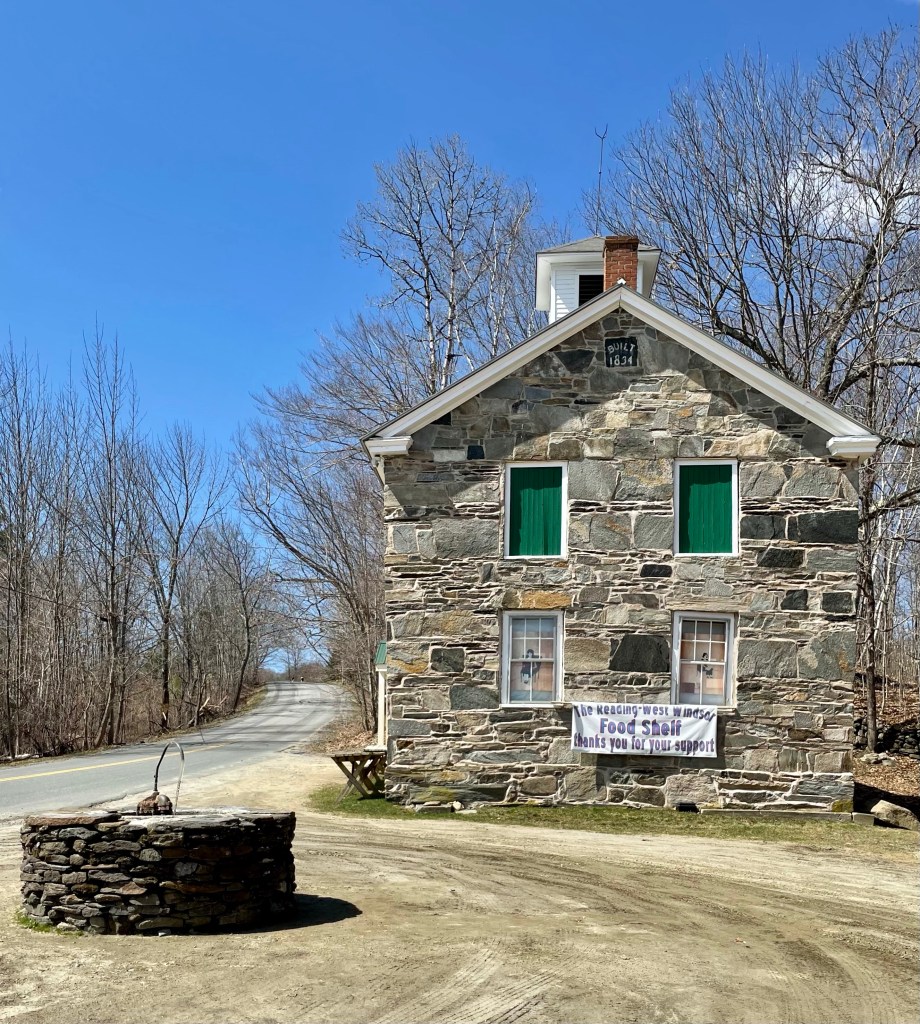
This little brick building may appear like a schoolhouse, but it was actually built to house the 1761 Town Charter for Pomfret, Vermont. The building is believed to have been built in honor of Hosea Doten (1809-1886), who was an engineer, school teacher, and land surveyor in Windsor County Vermont, with his former students constructing the building. It was built nearby the Town Hall and Clerk’s Office and features a fire-proof walk-in vault inside.