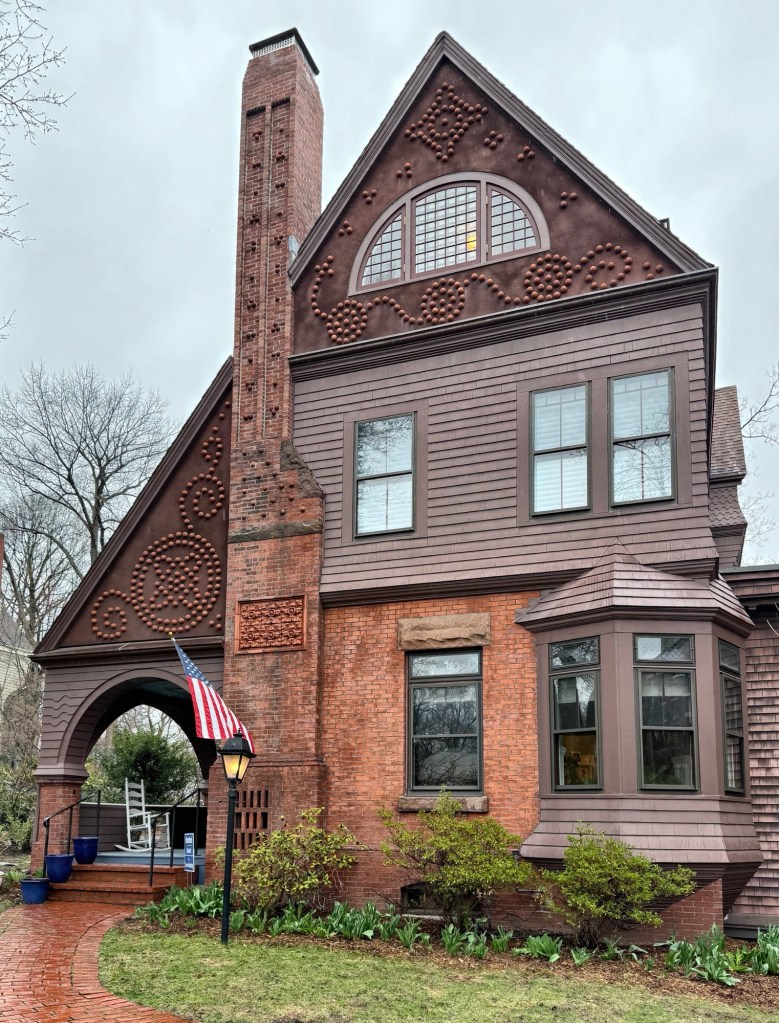
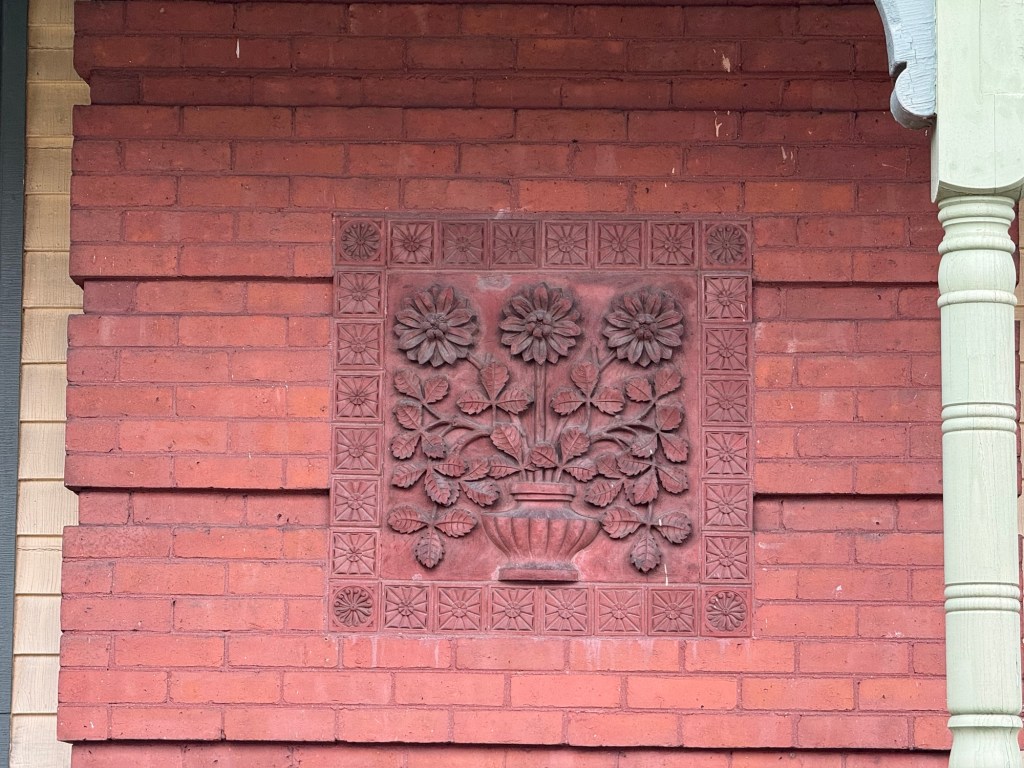
John Wales House // c.1885

In the mid-1880s, John Wales, a wealthy hardware dealer with offices in Downtown Boston, purchased house lots in the Cottage Farm area of Brookline from Amos A. Lawrence, and set out develop the site with two stately Victorian homes. This lovely home was first occupied by John’s son, George Wales and his wife, Mabel, the year of their marriage in 1885. While the architect is unclear, it is probable that the design can be attributed to architect William Whitney Lewis, who was hired by John Wales the year prior to design a stable near his home in an adjacent neighborhood. The house was rented by Wales and subsequent owners for years. The elaborate Queen Anne style house exhibits an asymmetrical plan with recessed entrance set within an arched opening, shinged and brick walls with a prominent chimney at the facade containing a decorative terra cotta panel, and the most unique stucco gables containing what appear to be terracotta balls in geometric forms. This house is a perfect example of what is so special about the Queen Anne style!

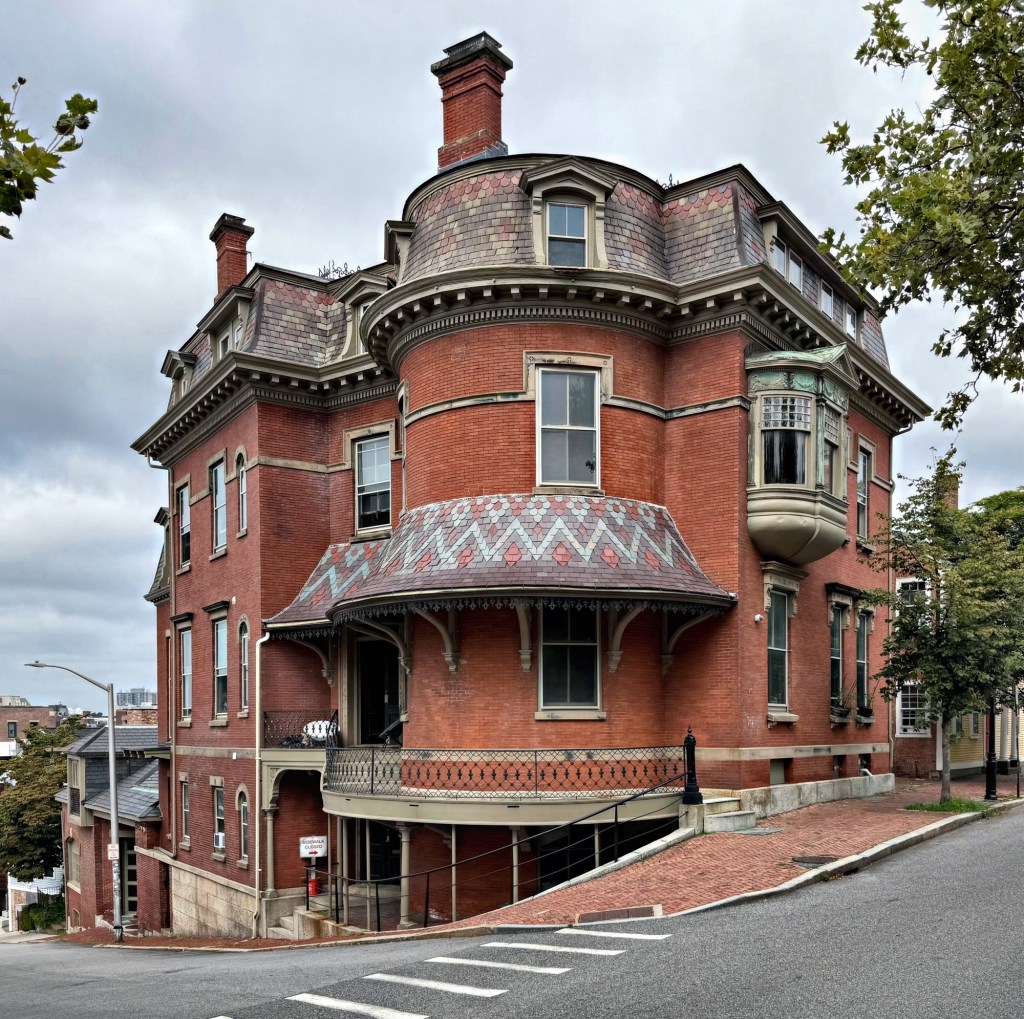
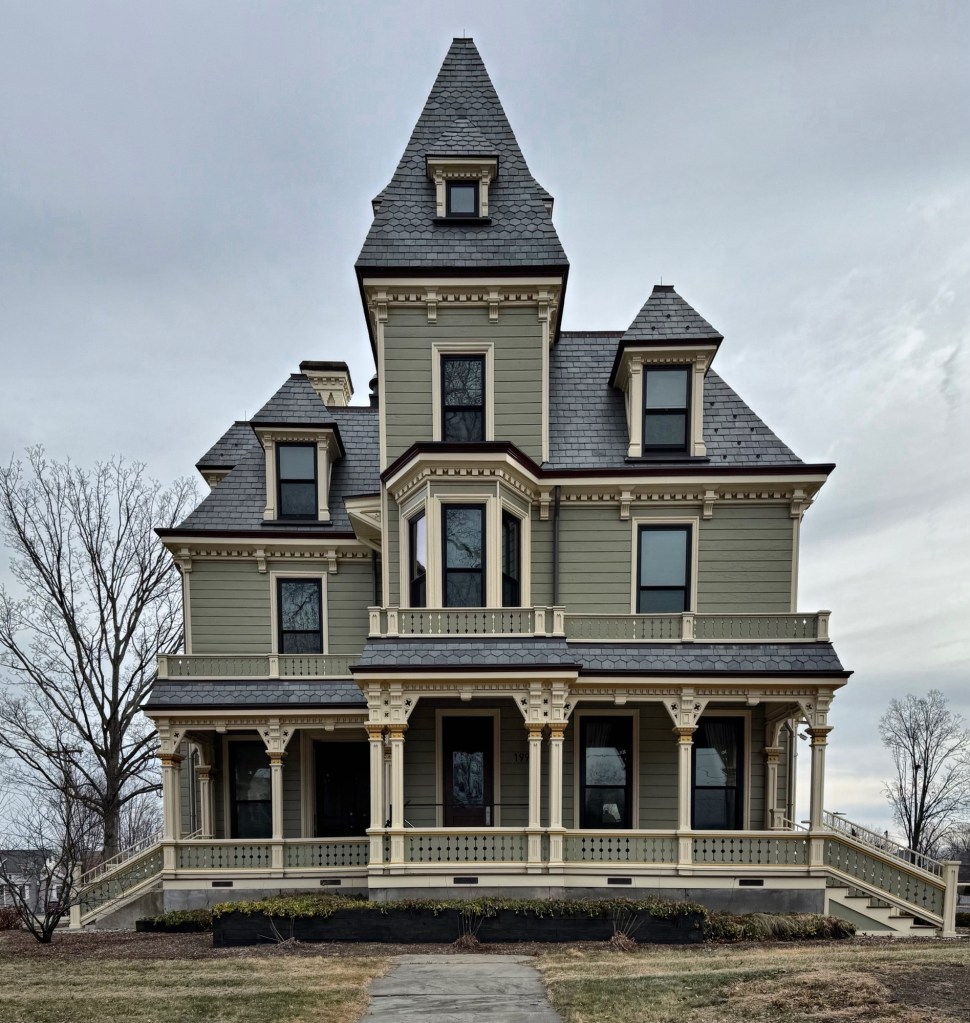
Emerson Gaylord Mansion // c.1871

Emerson Gaylord (1817-1899) was a businessman and politician from Chicopee, Massachusetts, who operated the Gaylord Manufacturing Company and later, the Ames Sword Company, furnishing military swords and other goods for the Union during the Civil War. His business did extremely well and he became one of the wealthiest men in the industrial city. In 1856, Gaylord purchased the property at the corner of Springfield Street and Fairview Avenue and resided in a home here until years following the war, when he demolished the original structures on the site in 1870 to build a new home currently known as the Gaylord Mansion, worthy of his stature and notoriety in Chicopee. In 1962, Elms College purchased the Gaylord Mansion for $50,000. In 1997, an Elms College Cornerstone Campaign raised $100,000 to refurbish the exterior of this historical treasure. In February 2020, the Gaylord mansion underwent another renovation by the college to transform the interior into a classroom-meeting space with dorm residences on the top floors dubbing it “Living-Learning, Community and Cultural Center”.

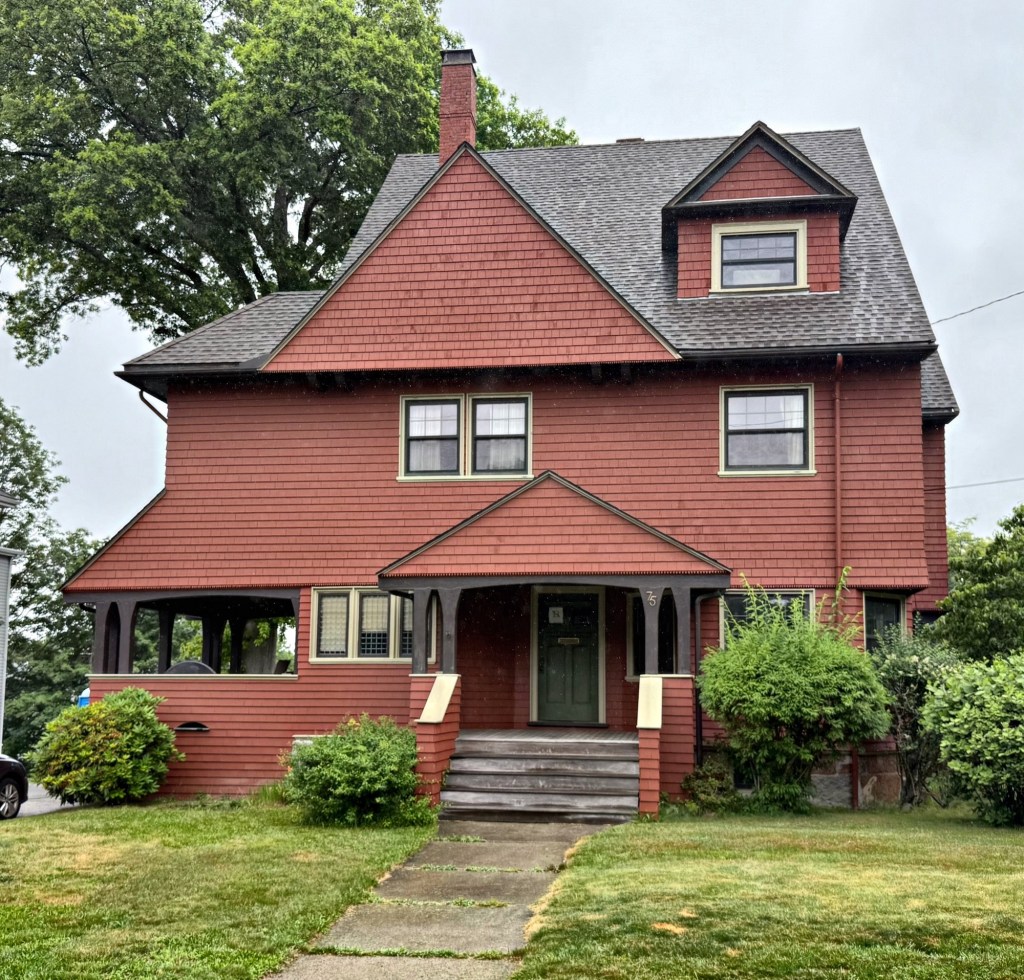
Blaisdell-Carter House // 1890

The Blaisdell-Carter House is a great example of a Queen Anne style home in Chicopee, Massachusetts. The house was built in 1890 for Harriet P. Blaisdell following the death of her husband, Samuel Blaisdell, a cotton broker, in 1888. Mrs. Blaisdell hired David B. Griggs, a builder in Chicopee under the firm D. B. Griggs & Sons, to design and build the residence, which sat across the street from Griggs’ own home. Harriet would pass away just three years after her home was built, and the property would eventually be sold to Nathan P. Ames Carter (1864-1959). The residence sits on a large lot and exhibits varied siding, asymmetrical plan with porches, additions, and steep gable roofs, and the use of irregular windows of varied sizing and locations. While the second floor porch has been enclosed, the house retains much of its original fabric and has not been covered by vinyl or aluminum siding, a rarity in Chicopee.

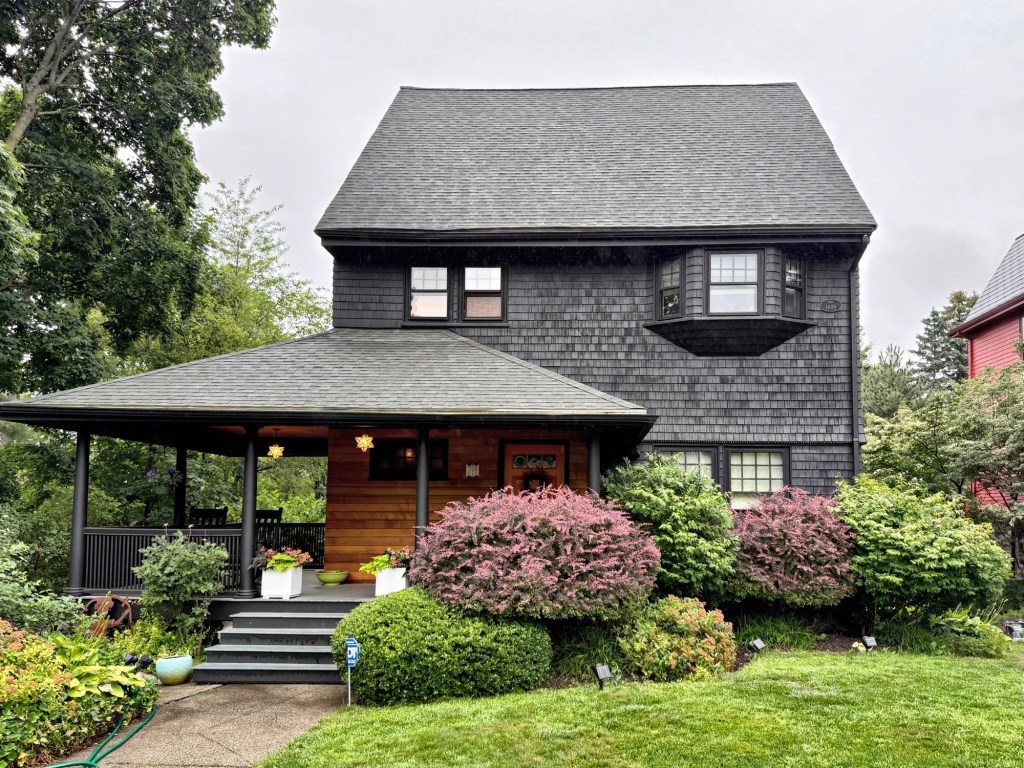
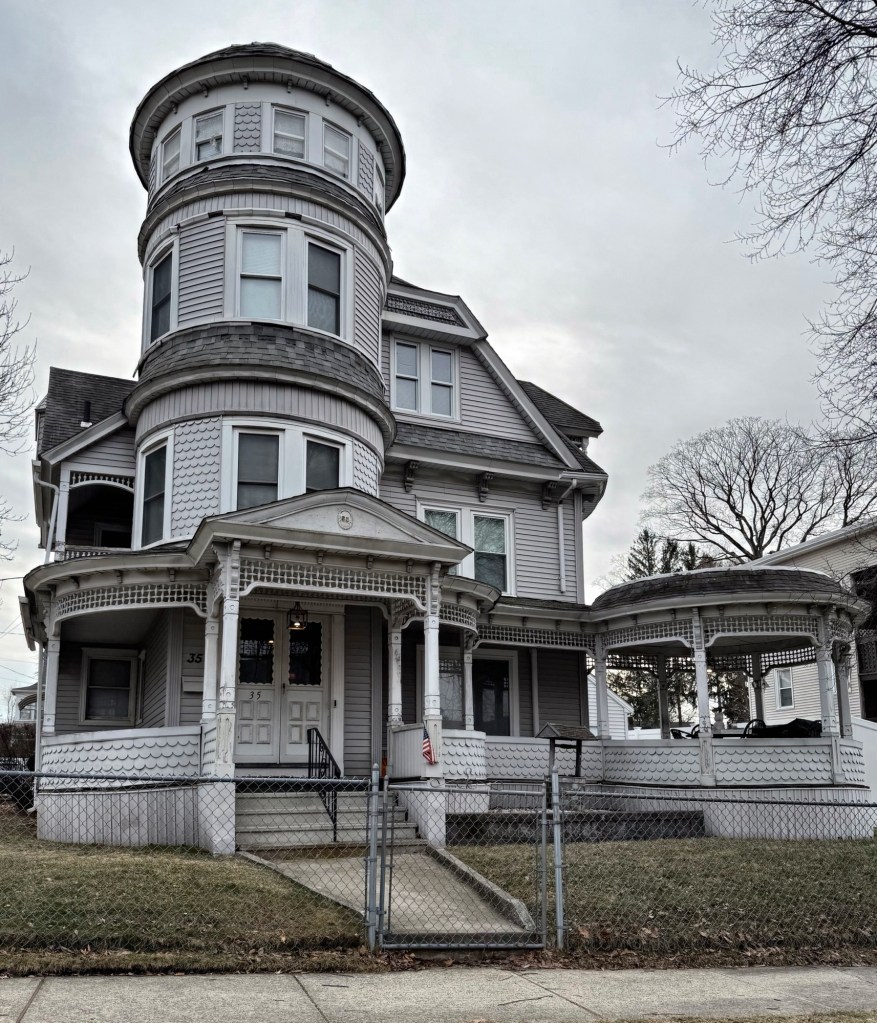
Griggs House // 1891

This fancy Queen Anne Victorian residence can be found in Chicopee Falls, Massachusetts, and is one of the most unique houses in the industrial city. This property was built and occupied by David B. Griggs, a builder in Chicopee under the firm D. B. Griggs & Sons. The firm was very busy in the late 19th and early 20th centuries, as Chicopee saw rapid industrial prosperity followed by a population boom, growing in population from over 9,000 residents in 1870 to 36,000 in 1920. Builders like David Griggs were able to grow to upper-middle class and buy property on desirable house lots and build large homes for their family, as was the case here. David Griggs died in 1896, five years after his home was built, and the property was inherited by his son, Millard Griggs. While the residence is covered in vinyl siding (original siding and trim is likely underneath the present siding), the house retains much of its original fabric including the brackets, delicate open friezes at the porches, and four-story tower.

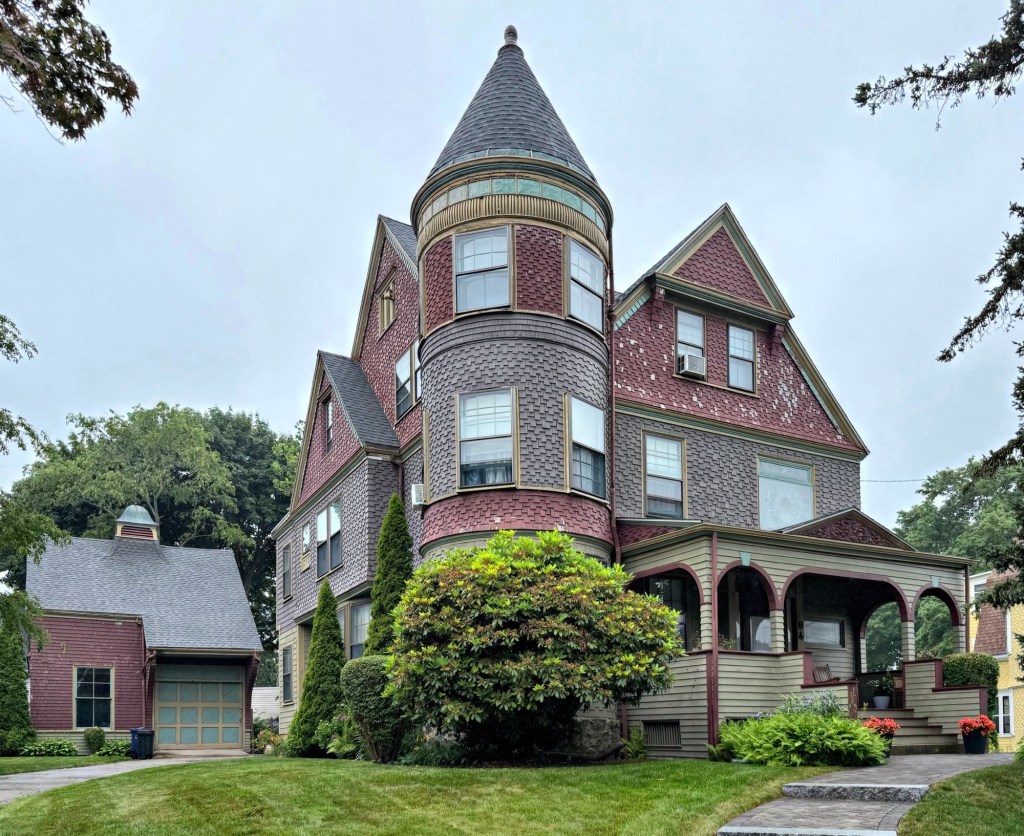
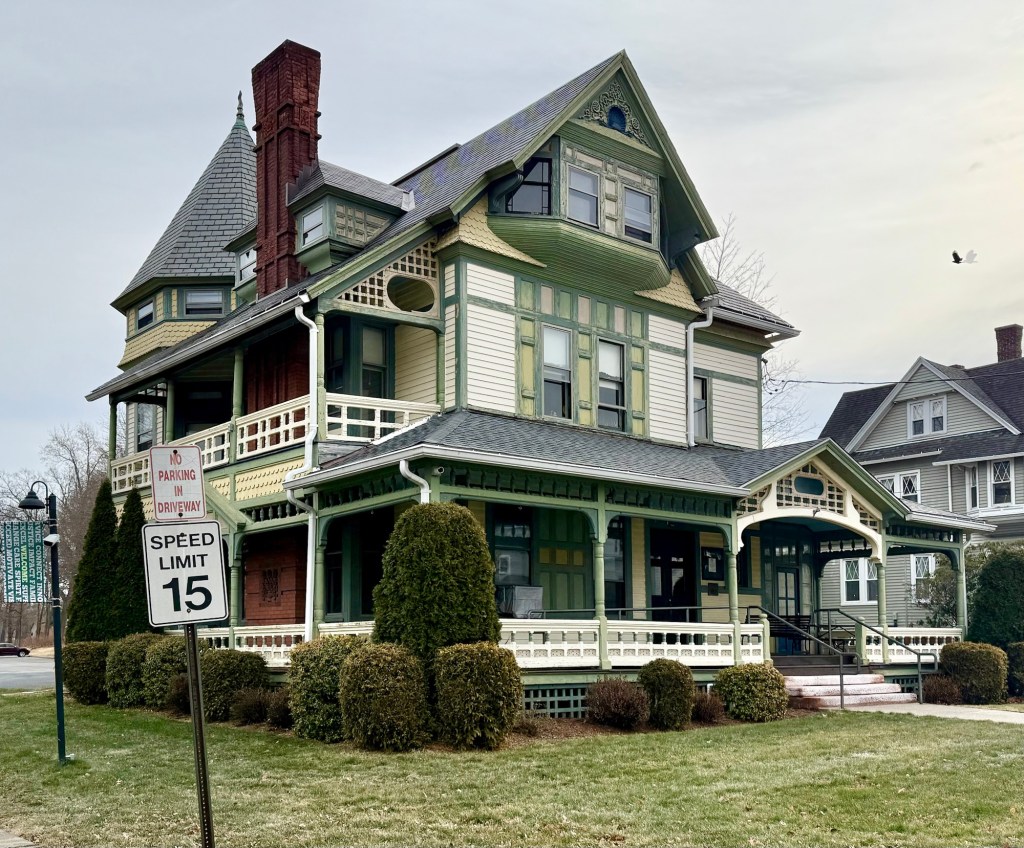
Justin and Sarah Spaulding House // 1886

Justin Spaulding and his wife, Sarah (Cooley) Spaulding erected this house on Springfield Street in Chicopee, Massachusetts, in 1886, and would later be known for their philanthropic gifts to their home city. Justin Spaulding (1838-1906) was a wealthy grocer who amassed a small fortune operating stores in the industrial Lower Pioneer Valley. The Spaulding House is one of the finest Queen Anne style buildings in Chicopee, and is notable for its asymmetrical form, tower, ornate gable detailing, porches with original balustrade, and the chimney with inlaid terracotta tiles. Justin Spaulding died in 1906, and Sarah C. Spaulding (1840-1907) would pass away a year later. They had no children. In her will, Sarah bequeathed funds for the first purpose-built library in Chicopee and money for a memorial chapel in a local cemetery. The Spaulding House was acquired by the Academy of Our Lady of the Elms (now Elms College), moved to its present location in 1920, and was converted to the Office of Admissions for the College. Besides the need for a new coat of paint, the house is lovingly preserved!