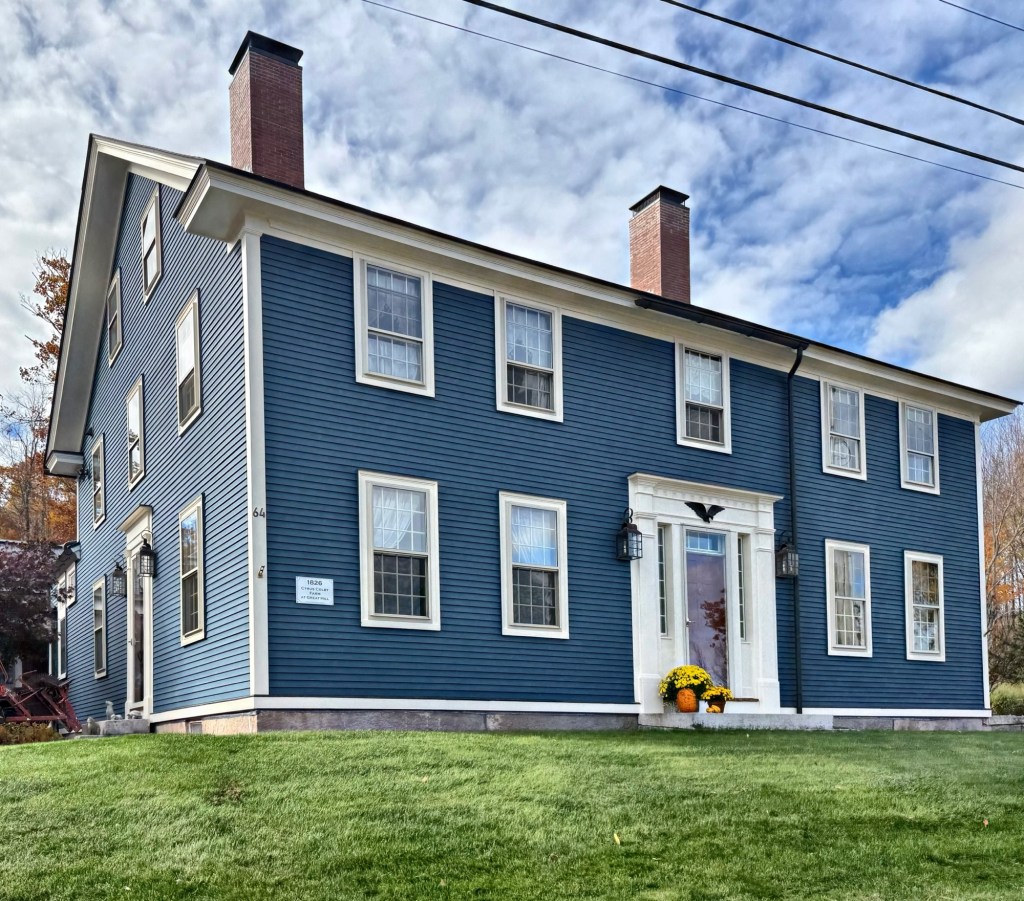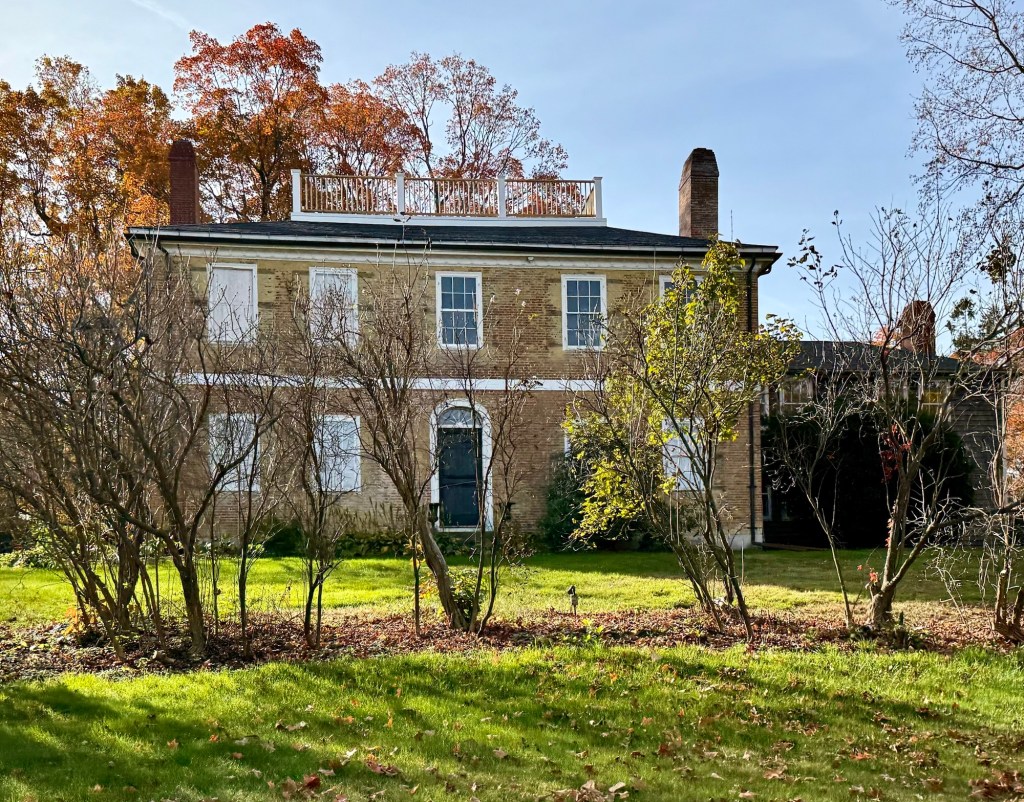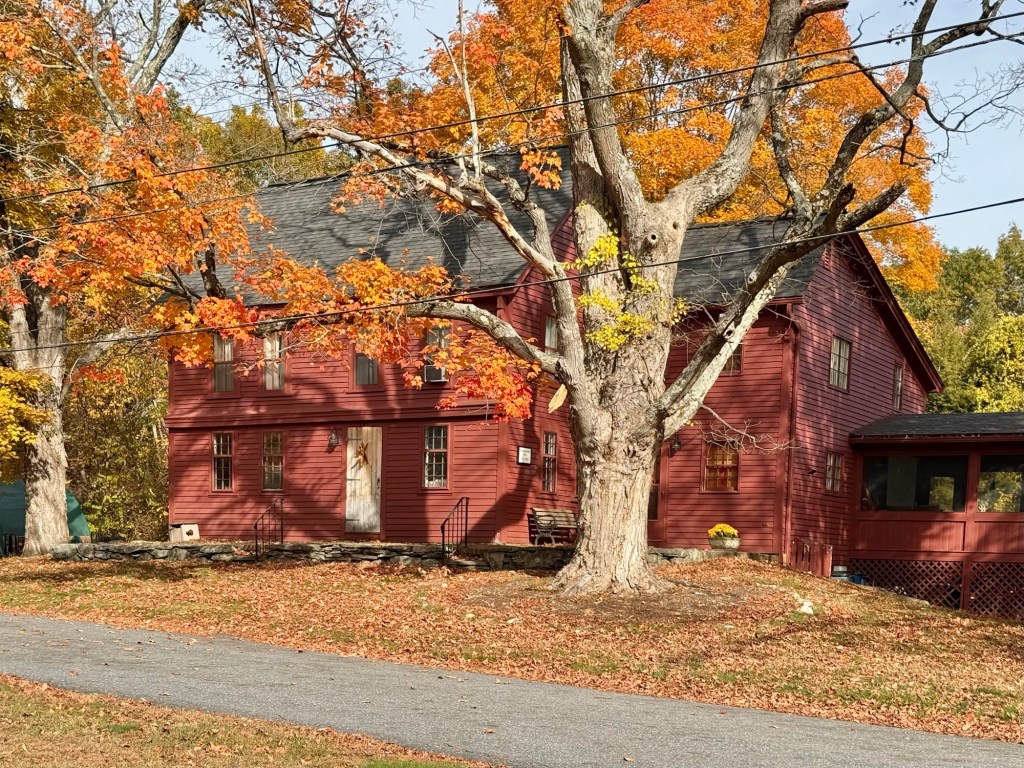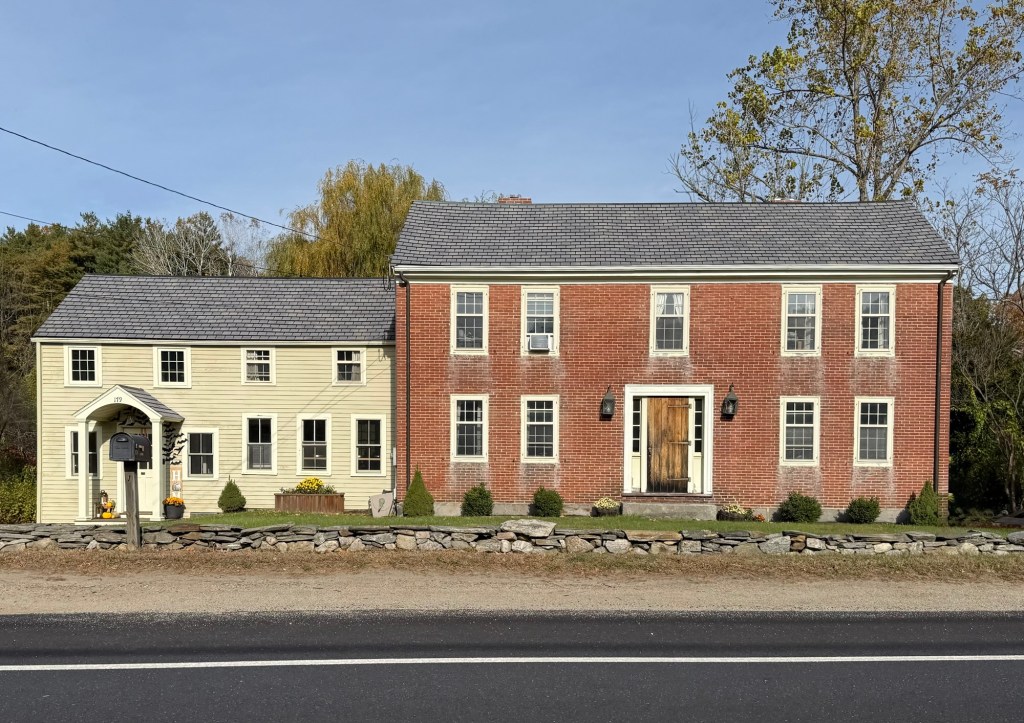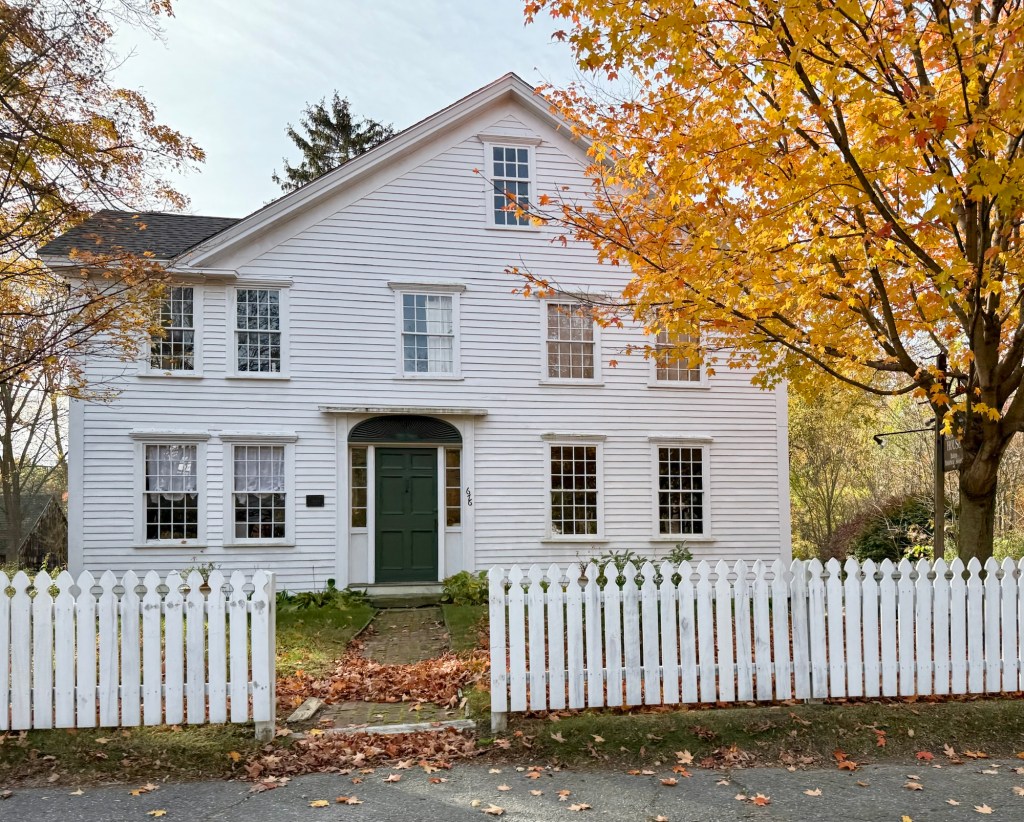
Abraham Wilder House // 1827

This exceptional vernacular example of a brick, Federal period house in Bolton, Massachusetts, sits on the town’s Main Street in the East Bolton village. Built in 1827, this house with attached wooden ell was the home to Abraham Wilder, a local blacksmith who followed his father’s footsteps in his professional pursuits. The house is two-stories with historic six-over-nine sash windows. The main center entry, rather than displaying a common elliptical fanlight for the period, is surrounded by trim boards, four-pane sidelights and a vertical-board door. Abraham’s blacksmith shop was once located next-door but was moved and reassembled in Old Sturbridge Village in 1957.

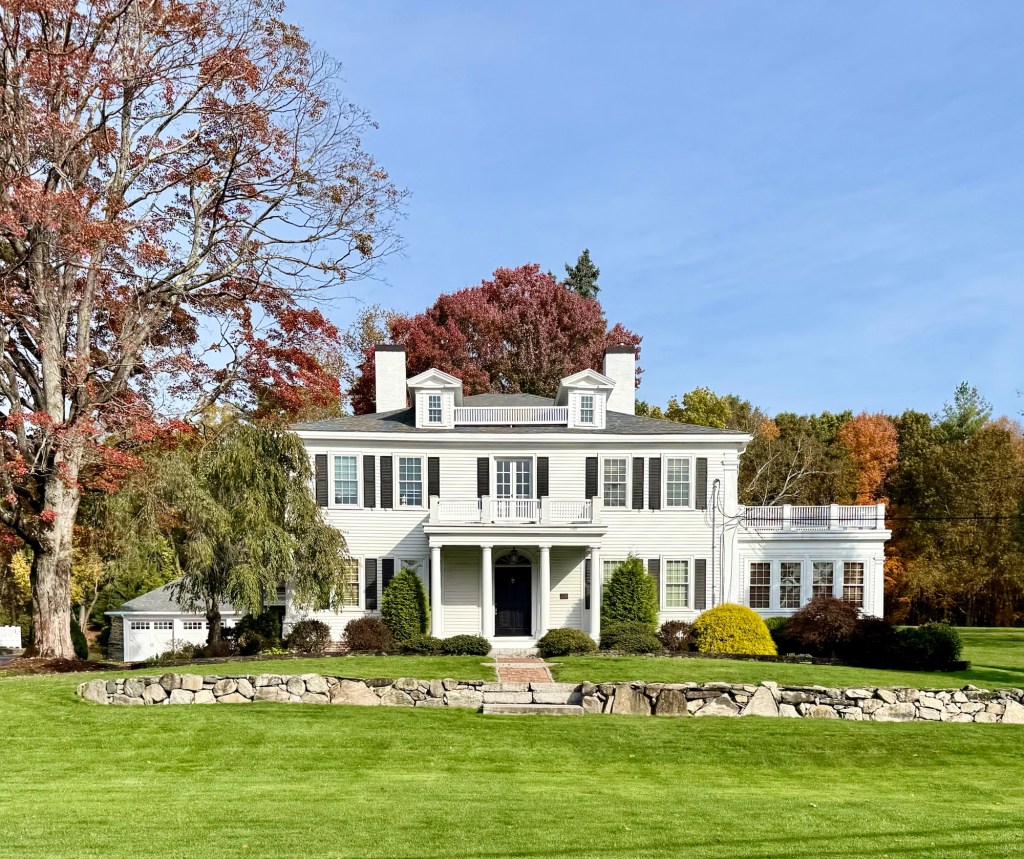
Captain Samuel Blood House // c.1793

This grand federal-period house was built around 1793 by Capt. Samuel Blood (1749-1834), who had served in the American Revolution. He came to Bolton from Lancaster by 1788, and purchased a farm here, where he began working as a hat manufacturer, building a large shop where he made beaver and silk hats. The land As his business grew, his original house was demolished to make way for this more stately, Federal-period home which dates to around 1793. Samuel Blood and his wife, Lucretia (Heywood) had twelve children. Their eldest son, Thomas (1774-1848) became a doctor and settled in Peterborough, New Hampshire, but returned to Bolton to take charge of the factory as his father got older. The family sold the home and the property, then about 120-acres, operated as a farm by subsequent owners. In 1916, the property was sold to Howard Atwood, who had been a successful Boston wool merchant, and he raised pedigreed cattle, thoroughbred horses, and sheep on this property, possibly as a gentleman’s farm. He and his wife, Rose, built a large new barn near the main house where they held many parties and barn dances over the years. The couple also renovated the old house, adding the dormers, porticos and side additions, creating the current composition we see today. The property has been owned by a corporation and appears to be offices today.


Nourse-Sawyer House, Bolton Historical Society // c.1805

The building that became the Bolton Historical Society in Bolton, Massachusetts had unusual beginnings. According to town records, this residence-turned-historical society was built around 1805 as an addition to the famed Holman Inn, which stood in town from 1767 until its demolition in the 1870s. The wing contained a ballroom on the first floor, and guest chambers on the second. The main part of the inn was eventually torn down in 1874, but the east wing, this structure, was moved down the street to the present site, where it was converted to a house by owners Charles S. Rich, a Civil War veteran, and his wife Mary. In 1904, the house was bought by Arthur H. Nourse, who enlarged the property by purchasing adjacent land from his uncle, and bought two small buildings from the Town of Bolton, the historic engine house and old hearse house, which he moved to the site. The house was purchased in 1923 by Perley and Florence Sawyer. Mrs. Sawyer was a charter member of the Bolton Historical Society at its founding in 1962, and later, by 1970, she gave the house, with over three acres of land, to the Society. The property is still owned by the Historical Society, which operates it as a house museum and a repository for local historical documents.

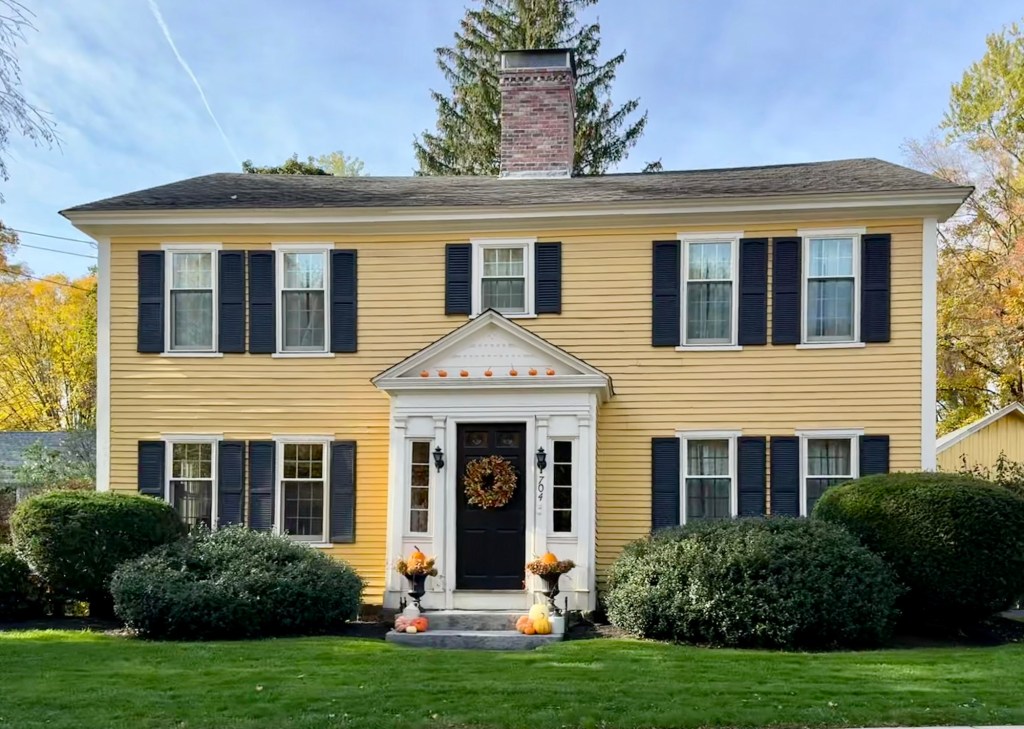
Dr. Amos Parker House // 1801

Built in 1800-1801, this house on Main Street in Bolton, Massachusetts, had multiple owners in quick succession until 1806, when it was purchased by Dr. Amos Parker. Amos Parker (1777-1861) was born in Hubbardston and later moved to Bolton to work as the town’s doctor, and also served as Bolton’s first Postmaster, from an ell that was once attached to this residence. Dr. Parker and his wife, Elizabeth (Whitney,) had at least four children, who of which died as infants and two daughters remained unmarried. Elizabeth Lydia Parker (1809-1882) and Louisa Jane Parker (1812-1900) inherited their parent’s home and lived here until their deaths. Louisa worked as a teacher in Bolton schools, and was forced to remain unmarried to keep her teaching position by law. In 1904, the Parker home was acquired by the local Baptist church and occupied as a parsonage and was later sold to private owners who restored the home to its near-original condition.

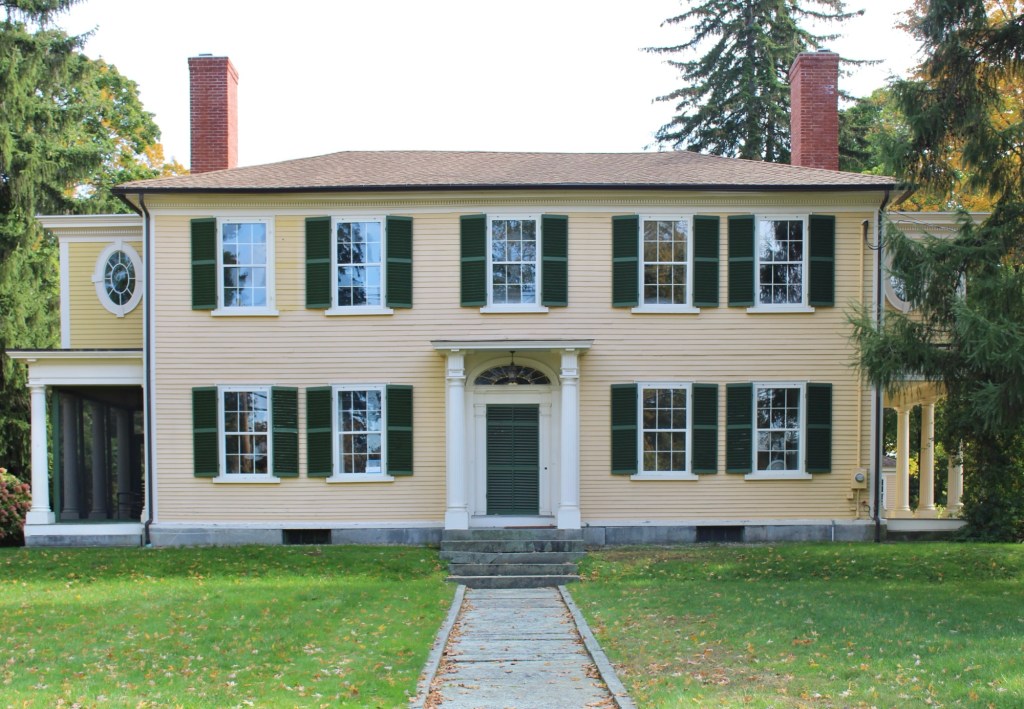
Rice-Carter House // 1796

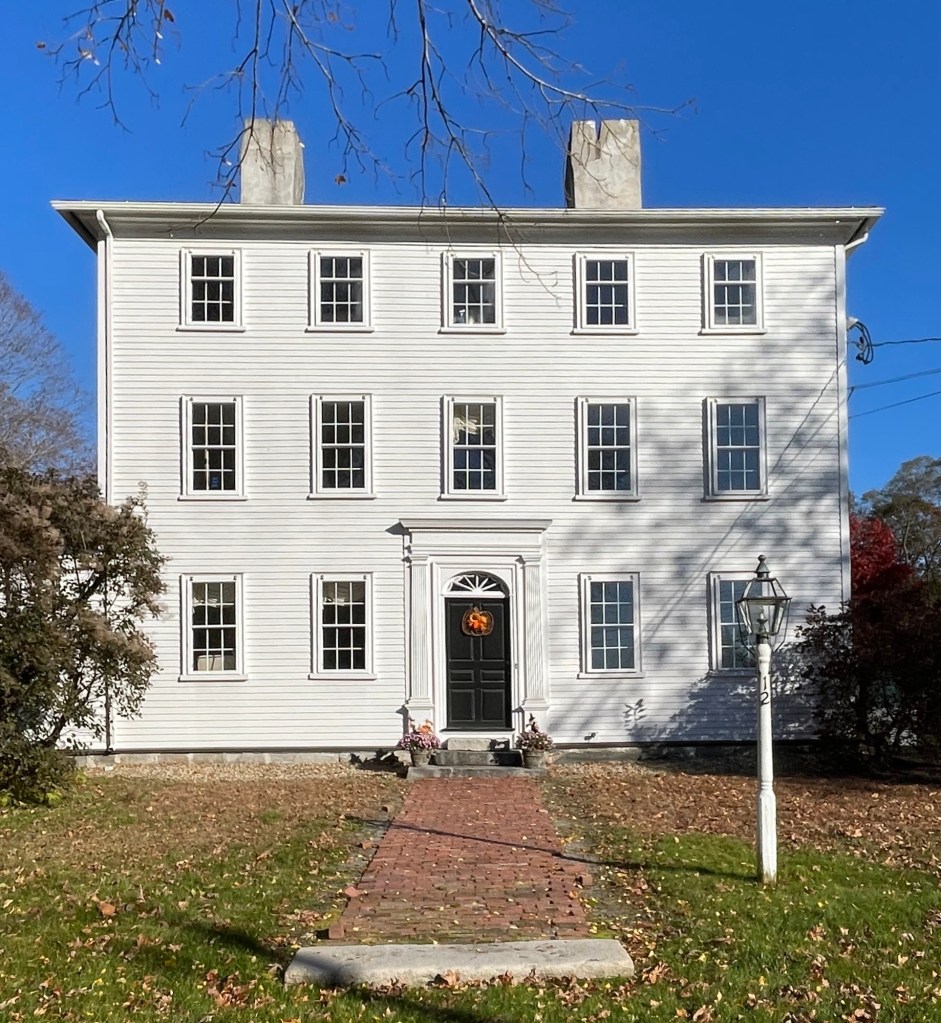
In 1796, attorney Merrick Rice (1764-1819) built this stately Federal style farmhouse on Main Street in Lancaster. The house exhibits a symmetrical facade with hipped roof and twin chimneys and portico at the entrance sheltering the front door with fanlight transom. The house has end porches which may have been added sometime in the 19th century. The property was later purchased by Rev. Asa Packard, who rented the residence to his daughter, Ann, and her husband, James Gordon Carter, a state representative and education reformer who wrote Influence of an Early Education in 1826, and in 1837, as House Chairman of the Committee on Education, contributed to the establishment of the Massachusetts Board of Education, the first state board of education in the United States. The Rice-Carter House is excellently preserved both inside and out.

Willard-Stedman Mansion // c.1760

This stately Federal period mansion in Lancaster, Massachusetts, was originally constructed as a Georgian, two-story, five-bay house for Levi Willard (1727-1775), the son of a major landholder and descendant of one of the earliest settlers in the town. The residence is said to have been built by Levi’s cousin, Aaron Willard around 1760. Sometime after Levi’s death in 1775, the property was acquired by William Stedman (1765-1831), a notable attorney who served as town clerk of Lancaster 1795-1800, later becoming a member of the Massachusetts House of Representatives from 1802-1810. It was during Representative Stedman’s ownership that the house was remodelled into the fashionable Federal style appearance we see today, with the third floor added with shallow hip roof and classical entrance with pilasters and fanlight. In the mid-19th century, the house was operated as different boarding schools, though more information is needed. Today, the residence has been preserved and maintained as a single-family home, contributing to the charming Lancaster Center Village.

First Church of Lancaster // 1816

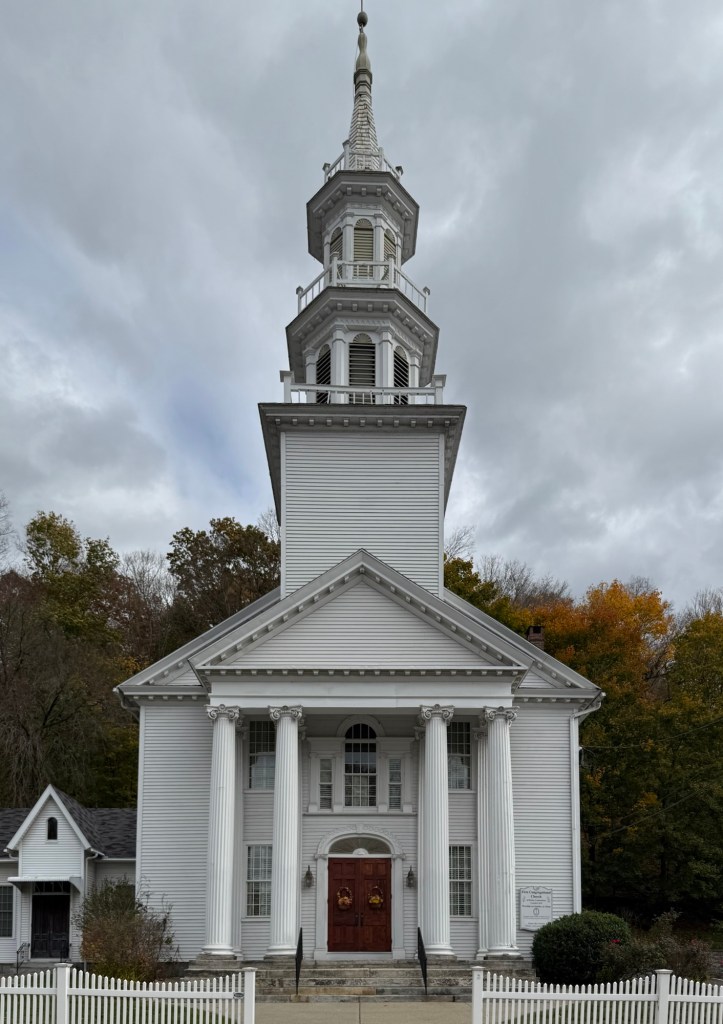
Built in 1816, the First Church of Lancaster is one of just two extant church buildings designed by famed American architect, Charles Bulfinch, and is said to be one of the finest churches in the Federal style in the United States. The fifth meetinghouse of the Unitarian First Church of Christ in Lancaster, this building was constructed of local brick, slate, and lumber from master-builder, Thomas Hearsey. Hearsey is said to have modified Bulfinch’s design, which had proposed one tall center arch flanked by two lower arches to reflect the unequal heights of the three vestibule doors behind them; instead going with three, identical arches. Other than this change, the church remains substantially as originally built, even without artificial lighting or central heat inside. Besides the iconic arched portico, the two- stage brick tower topped by a beautifully proportioned wood cupola surrounded by Roman Ionic columns, and fronted by a giant arcuated portico, is especially noteworthy. The congregation, which dates back to 1653 as a Puritan congregation was the first parish established in Central Massachusetts and remains active to this day.

Mason C. Richardson House // c.1839

The Stone Village of Chester, Vermont, is said to be the largest collection of stone buildings in the state. Built around 1839, the Mason C. Richardson House is one of a few dozen “snecked ashlar” buildings in the region, where rubblestone is laid up with mortar using small long stones called “snecks” to tie an outer and an inner wall together. The construction method is said to have been brought to the area by masons from Scotland and Ireland which is known there as ‘Celtic Bond’. Oral tradition state that Scottish masons from Canada introduced the technique to local masons while erecting a mill in nearby Cavendish in 1832. Local Chester resident, Dr. Ptolemy Edson became such a fan of the building that in 1834, he had his home, the first stone building in Chester, built in this method. He then would influence the rest of the North Village of Chester, where many of his neighbors, as well as the church and schoolhouse, built their structures in snecked ashlar. Designed in the Federal style, the Richardson House is a vernacular, five-bay, two-story residence with central entrance and arched fanlight transom over the front door. Mason Richardson (1811-1881) was a merchant who lived here with his family while operating a store nearby.

Granville and Aurora Spaulding House // 1838

The Stone Village of Chester, Vermont, is said to be the largest collection of stone buildings in the state. Built around 1838, Granville and Aurora Spaulding House is one of a few dozen “snecked ashlar” buildings in the region, where rubblestone is laid up with mortar using small long stones called “snecks” to tie an outer and an inner wall together. The construction method is said to have been brought to the area by masons from Scotland and Ireland which is known there as ‘Celtic Bond’. Oral tradition state that Scottish masons from Canada introduced the technique to local masons while erecting a mill in nearby Cavendish in 1832. Local Chester resident, Dr. Ptolemy Edson became such a fan of the building that in 1834, he had his home, the first stone building in Chester, built in this method. He then would influence the rest of the North Village of Chester, where many of his neighbors, as well as the church and schoolhouse, built their structures in snecked ashlar. The Spaulding House is unique in that the main entrance does not face the street, as it fades the south east (side) facade. The couple married in 1839 and moved into this recently completed house to raise their family and work their farm. Like many other early stone houses built nearby in the 1830s, the Spaulding house blends Federal and Greek Revival motifs from the gable end facing the street and eaves returning to serve as a pediment as a nod to the emerging Greek Revival style, while retaining an arched entry off the street which echoes Federal period taste. 

Gideon M. Lee House // c.1836

The Stone Village of Chester, Vermont, is said to be the largest collection of stone buildings in the state. Built around 1836, the Gideon Lee House is one of a few dozen “snecked ashlar” buildings in the region, where rubblestone is laid up with mortar using small long stones called “snecks” to tie an outer and an inner wall together. The construction method is said to have been brought to the area by masons from Scotland and Ireland which is known there as ‘Celtic Bond’. Oral tradition state that Scottish masons from Canada introduced the technique to local masons while erecting a mill in nearby Cavendish in 1832. Local Chester resident, Dr. Ptolemy Edson became such a fan of the building that in 1834, he had his home, the first stone building in Chester, built in this method. He then would influence the rest of the North Village of Chester, where many of his neighbors, as well as the church and schoolhouse, built their structures in snecked ashlar. The first residence besides Dr. Edson’s home built this way in the village was this home, built nextdoor for Dr. Edson’s friend, Gideon Merrick Lee (1811-1880). Designed in a more vernacular version of the Federal style with emerging Greek Revival side-hall form, the Lee House features a charming entry with sidelights and a blind fan over the door.